

Tarantulas are some of the most fascinating and misunderstood spiders in the world. Known for their large size and hairy appearance, they often seem intimidating, but they have many unique traits that make them truly remarkable. From their long lifespans to their unusual defense mechanisms, tarantulas have adapted in impressive ways to survive in different environments. They are found in warm regions across the globe and play an important role in ecosystems. In this article, you will discover 15 interesting facts that reveal the surprising world of tarantulas.
1. Tarantulas Are Among the Largest Spiders in the World
Tarantulas are famous for their impressive size, making them some of the largest spiders on Earth. Their large bodies and long legs often make them appear intimidating, but their size also plays an important role in how they survive in the wild. Compared to most other spiders, tarantulas stand out due to their physical presence.
How Big Can Tarantulas Get?
Some tarantula species can have a leg span of up to 30 centimeters (about 12 inches). Their bodies are also quite heavy compared to other spiders, giving them a bulky appearance. This large size helps them overpower prey more easily and defend themselves against threats.
Why Is Their Size Important?
Their size allows tarantulas to hunt a wider range of prey, including insects, small reptiles, and amphibians. It also helps deter predators, as many animals avoid larger creatures. This physical advantage contributes to their success in various environments where they live.
2. Tarantulas Belong to a Group Called Mygalomorphs

Tarantulas are part of a special group of spiders known as mygalomorphs. This group includes some of the oldest and most primitive spider species still living today. Their classification helps scientists understand how spiders have evolved over millions of years and what makes tarantulas different from more common spiders.
What Are Mygalomorphs?
Mygalomorphs are a subgroup of spiders characterized by their large size and strong, downward-pointing fangs. This group also includes trapdoor spiders and funnel-web spiders. Unlike many modern spiders, mygalomorphs tend to have more robust bodies and live longer lifespans.
How Are They Different from Other Spiders?
The main difference lies in their fang structure and behavior. Mygalomorph spiders have fangs that move vertically, while most other spiders have fangs that move sideways. They are also generally slower-moving and rely more on strength than speed, making them unique among spider species.
3. Tarantulas Have Fangs That Move Up and Down
Tarantulas have a unique fang movement that sets them apart from many other spiders. Instead of moving side to side, their fangs move in an up-and-down motion. This difference affects how they capture and subdue their prey, making their hunting style distinct.
How Do Tarantula Fangs Work?
Tarantula fangs are large, powerful, and point downward. When attacking, they strike vertically, driving their fangs into prey to inject venom. This motion allows them to deliver a strong, controlled bite, which is effective for immobilizing their target.
Why Is This Fang Movement Important?
This vertical fang movement provides greater force and penetration, helping tarantulas handle larger or tougher prey. It also reflects their classification as more primitive spiders. This adaptation gives them an advantage in ambush hunting, where strength matters more than speed.
4. Most Tarantulas Are Harmless to Humans
Despite their large size and intimidating appearance, most tarantulas are not dangerous to humans. Their venom is generally mild and designed to affect small prey rather than large animals. While they may look frightening, they are usually calm and prefer to avoid confrontation.
Are Tarantula Bites Dangerous?
A tarantula bite can cause mild pain, swelling, or irritation, similar to a bee sting. Serious reactions are rare and usually occur only in sensitive individuals. Most species do not have venom strong enough to cause significant harm to humans.
Do Tarantulas Attack Humans?
Tarantulas rarely attack humans unless they feel threatened or provoked. They often rely on defensive behaviors like retreating or flicking hairs before biting. In general, they are non-aggressive and will try to escape rather than engage in conflict.
5. Tarantulas Are Covered in Sensitive Hairs
Tarantulas are covered in tiny, sensitive hairs that play an important role in their survival. These hairs are not just for appearance—they help tarantulas sense their environment and detect nearby movement. This is especially useful since many tarantulas rely less on vision and more on touch.
What Do These Hairs Do?
The fine hairs on a tarantula’s body are highly sensitive to vibrations and air currents. They allow the spider to detect approaching prey or predators even in low-light conditions. This sensory system helps them respond quickly to changes in their surroundings.
Are These Hairs Used for Defense?
Yes, some tarantulas use special hairs as a defense mechanism. They can flick these irritating hairs toward predators, causing discomfort or itching. This helps scare off threats without the need for direct physical confrontation.
6. Some Tarantulas Can Flick Irritating Hairs at Predators
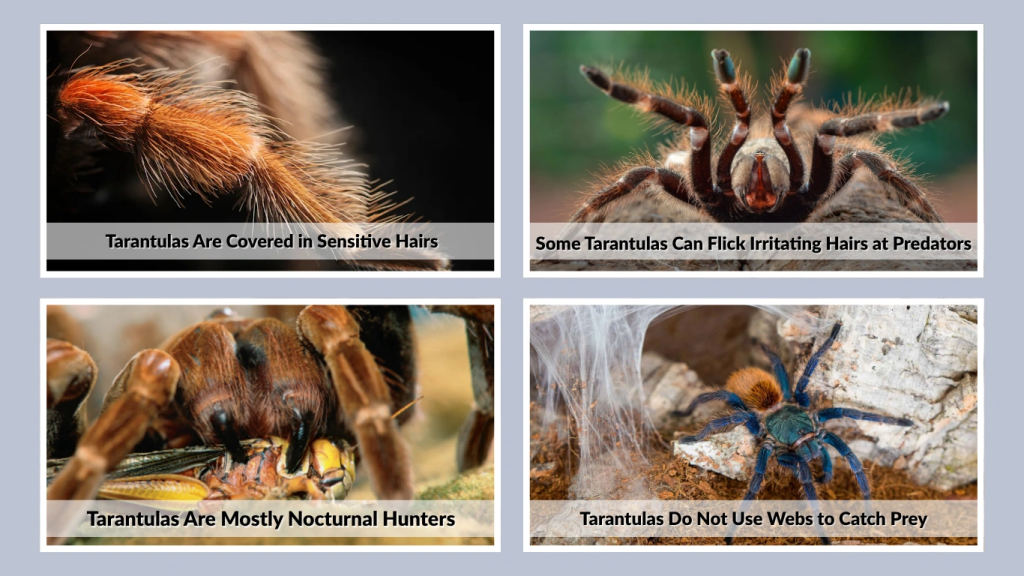
Certain tarantulas have a unique defense mechanism that involves releasing tiny, irritating hairs from their bodies. These hairs can cause discomfort to predators, making them an effective way to avoid danger without direct confrontation. This ability is mainly found in New World tarantulas.
How Do Tarantulas Flick These Hairs?
Tarantulas use their back legs to brush specialized hairs, called urticating hairs, off their abdomen. These hairs are extremely small and can become airborne easily. When they come into contact with skin or eyes, they can cause itching and irritation.
Why Is This Defense Effective?
This method allows tarantulas to defend themselves from a distance without risking injury. Predators that experience irritation are likely to retreat and avoid the tarantula in the future. It is a safe and energy-efficient way for the spider to protect itself.
7. Tarantulas Are Mostly Nocturnal Hunters
Tarantulas are primarily active at night, making them nocturnal hunters. This behavior helps them avoid daytime predators and extreme heat, especially in warm climates. Being active in the dark also gives them an advantage when hunting unsuspecting prey.
Why Do Tarantulas Hunt at Night?
Hunting at night reduces the risk of being seen by predators such as birds and reptiles. Cooler nighttime temperatures also help them conserve energy. Darkness provides better cover, allowing tarantulas to move more freely and safely.
How Do They Hunt in the Dark?
Tarantulas rely on their sensitive hairs and vibrations rather than vision to detect prey. They wait patiently near burrows or hiding spots and ambush passing insects or small animals. This stealthy approach makes them effective hunters even without strong eyesight.
8. Tarantulas Do Not Use Webs to Catch Prey
Unlike many other spiders, tarantulas do not rely on webs to trap their food. Instead, they are active hunters that use strength and stealth to capture prey. Their hunting style is based on ambush rather than waiting for insects to get stuck in silk.
Why Don’t Tarantulas Build Hunting Webs?
Tarantulas are built for ground hunting, with strong legs and powerful fangs that make web-trapping unnecessary. Building webs requires energy and maintenance, so tarantulas have evolved to hunt directly instead. They may still use silk for lining burrows or protecting eggs.
How Do Tarantulas Catch Their Prey?
Tarantulas wait quietly near their hiding spots and attack quickly when prey comes close. They use their fangs to inject venom, which immobilizes the target. This ambush method allows them to capture insects and small animals efficiently without using webs.
9. Tarantulas Eat a Variety of Prey
Tarantulas have a diverse diet that allows them to survive in different environments. They are opportunistic predators, meaning they will eat whatever suitable prey is available. Their size and strength enable them to consume more than just small insects.
What Do Tarantulas Commonly Eat?
Tarantulas mainly feed on insects such as crickets, beetles, and grasshoppers. Larger species may also eat small animals like lizards, frogs, and even tiny rodents. Their diet depends on their size, habitat, and the availability of prey in their surroundings.
How Do They Handle Their Prey?
Once a tarantula captures its prey, it uses its fangs to inject venom that immobilizes it. Then, like other spiders, it digests the prey externally before consuming it. This method allows them to extract nutrients efficiently from a wide range of food sources.
10. Female Tarantulas Can Live for Over 20 Years
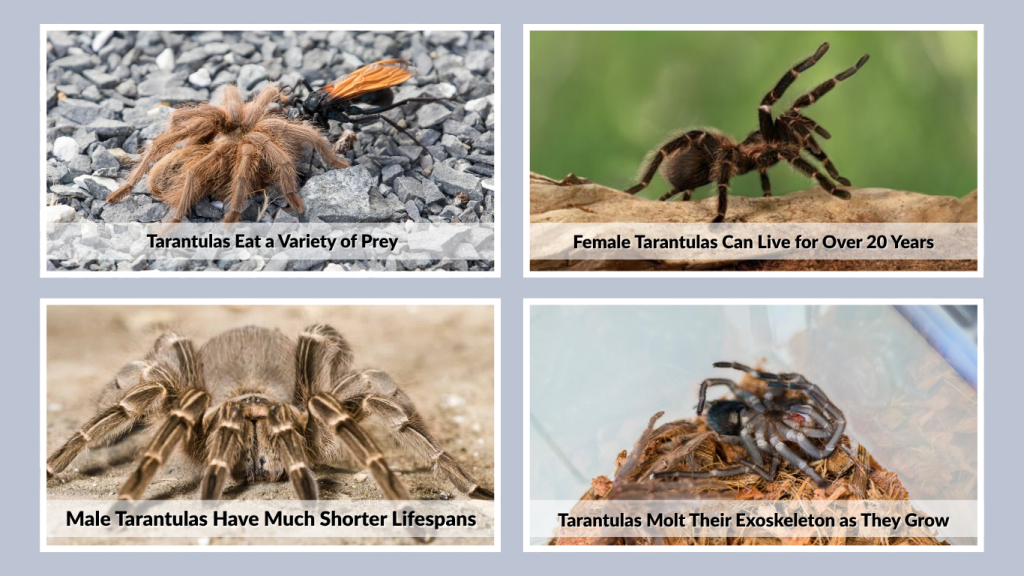
Female tarantulas are known for their long lifespans, especially compared to most other spiders. While many spiders live only a few years, female tarantulas can survive for decades under the right conditions. This longevity makes them unique among arachnids.
Why Do Female Tarantulas Live So Long?
Female tarantulas grow slowly and invest energy in long-term survival and reproduction. Their larger size and more stable lifestyle, often staying in one territory, help reduce risks. This allows them to live much longer than many other spider species.
How Does Their Lifespan Compare to Males?
Male tarantulas have much shorter lifespans, often living only a few years. After reaching maturity, males focus on finding a mate and may die shortly afterward. This difference highlights a strong contrast in life strategies between males and females.
11. Male Tarantulas Have Much Shorter Lifespans
Male tarantulas live significantly shorter lives compared to females. While females can survive for decades, males often live only a few years. Their shorter lifespan is mainly due to their different role in reproduction and behavior after reaching maturity.
Why Do Male Tarantulas Live Less?
Once male tarantulas reach maturity, their main goal becomes finding a mate. They leave their burrows and travel long distances, exposing themselves to predators and environmental dangers. This risky lifestyle reduces their chances of long-term survival.
What Happens After Mating?
After mating, many male tarantulas die within a short time. Some may be eaten by the female, while others simply weaken and die naturally. Their life cycle is focused more on reproduction than longevity, unlike females who continue living and reproducing over many years.
12. Tarantulas Molt Their Exoskeleton as They Grow
Tarantulas grow by shedding their outer skeleton in a process called molting. Since their exoskeleton does not expand, they must replace it periodically to increase in size. This process is essential for their development and overall health.
What Happens During Molting?
During molting, a tarantula lies on its back and slowly sheds its old exoskeleton. It carefully pulls its legs and body out, revealing a new, soft exoskeleton underneath. This process can take several hours and leaves the tarantula vulnerable until the new layer hardens.
Why Is Molting Important?
Molting allows tarantulas to grow and repair damaged body parts, such as lost legs. It also helps maintain their overall condition by replacing worn-out external layers. Without molting, tarantulas would not be able to develop into fully grown adults.
13. Tarantulas Can Regrow Lost Legs
Tarantulas have the remarkable ability to regrow lost legs over time. If a leg is damaged or lost due to injury or predator attacks, the spider can gradually regenerate it through future molts. This ability increases their chances of survival in the wild.
How Does Leg Regrowth Work?
When a tarantula loses a leg, a small new limb begins to form during the next molting cycle. With each subsequent molt, the leg becomes larger and more functional. Eventually, it can return to nearly its original size and appearance.
Why Is This Ability Important?
Regrowing legs allows tarantulas to recover from injuries that might otherwise be fatal. It helps them maintain mobility, hunt effectively, and defend themselves. This adaptation is especially useful in environments where physical damage can occur frequently.
14. Tarantulas Are Found in Warm Regions Around the World
Tarantulas are commonly found in warm climates, where environmental conditions support their survival. They thrive in regions with moderate to high temperatures and suitable shelter. These spiders have adapted to a wide range of habitats within these warm areas.
Where Do Tarantulas Live?
Tarantulas are found in parts of North and South America, Africa, Asia, and Australia. They live in environments such as rainforests, deserts, and grasslands. Many species prefer to stay in burrows or natural hiding spots to protect themselves from predators and extreme weather.
Why Do They Prefer Warm Climates?
Warm temperatures help regulate their body functions and activity levels. Cold environments can slow them down and make survival difficult. Living in warmer regions allows tarantulas to hunt more effectively and maintain their energy levels throughout the year.
15. Some Tarantulas Can Produce a Hissing Sound
Some tarantulas are capable of producing a hissing or rasping sound as a form of defense. This behavior, known as stridulation, is used to warn predators and signal that the spider feels threatened. It adds another layer to their already impressive defensive strategies.
How Do Tarantulas Make This Sound?
Tarantulas create this sound by rubbing certain body parts together, such as their legs against their body. This friction produces a faint but noticeable hissing noise. The sound is not very loud but can be enough to startle nearby threats.
Why Do They Use This Defense?
This sound acts as a warning signal to predators, helping the tarantula avoid direct conflict. Instead of immediately attacking, the spider uses this method to scare off potential danger. It allows them to defend themselves without risking injury.
FAQs
Are tarantulas dangerous to humans?
Most tarantulas are not dangerous to humans. Their venom is usually mild and causes effects similar to a bee sting. Serious reactions are rare. They are generally calm spiders that prefer to avoid humans rather than attack unless they feel threatened.
Do tarantulas make good pets?
Yes, tarantulas are popular as pets because they are low-maintenance and require minimal space. They do not need frequent feeding and can live long lives, especially females. However, they are not interactive pets and should be handled with care.
How often do tarantulas eat?
Tarantulas do not need to eat frequently. Depending on their size and age, they may eat once a week or even less. Some can go weeks or months without food, especially during molting periods or colder conditions.
Can tarantulas bite?
Yes, tarantulas can bite, but they rarely do so unless provoked. Their bite is usually not dangerous to humans and may cause mild pain or irritation. They prefer to use defensive behaviors like retreating or flicking hairs instead of biting.
Why do tarantulas stay still for long periods?
Tarantulas often remain still to conserve energy and avoid attracting attention from predators. They are ambush predators, so staying motionless helps them catch prey more effectively. This behavior is normal and does not mean the spider is inactive or unhealthy.