

Spiders are fascinating creatures that often spark curiosity and fear at the same time. Despite their small size, they possess incredible abilities that make them unique in the animal world. From producing ultra-strong silk to using clever hunting techniques, spiders have evolved in remarkable ways over millions of years. They can be found in almost every environment on Earth, each species adapted to its surroundings. In this article, you will discover 25 interesting facts that reveal the surprising and impressive world of spiders.
1. Spiders Are Not Insects
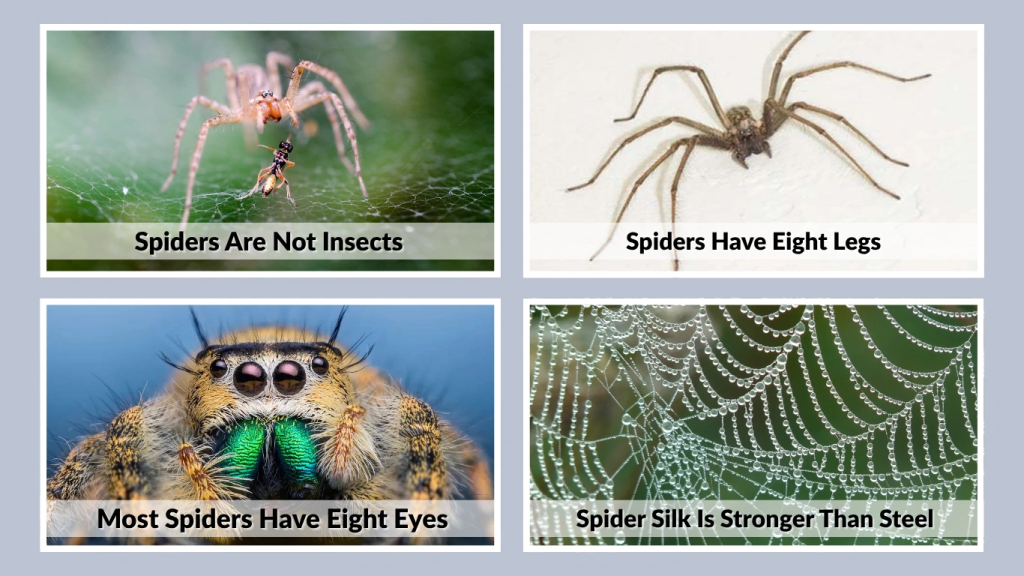
Spiders are often confused with insects, but they belong to a completely different classification in the animal kingdom. This distinction is important because it explains many of their unique physical traits and behaviors. While both spiders and insects are arthropods, they differ significantly in structure, biology, and evolution. Recognizing these differences helps in understanding how spiders function and why they stand apart from typical insects.
What Class Do Spiders Belong To?
Spiders belong to the class Arachnida, a group that also includes scorpions, ticks, and mites. Arachnids are characterized by having eight legs, no wings, and no antennae. Their bodies are divided into two main parts: the cephalothorax and the abdomen. This classification sets them apart from insects, which belong to the class Insecta. Arachnids also have specialized features such as fangs (chelicerae) used to inject venom into prey.
How Are Spiders Different from Insects?
Spiders differ from insects in several key ways. Insects have six legs, three body segments, and usually possess antennae and wings. In contrast, spiders have eight legs, two body segments, and lack both antennae and wings. Additionally, spiders produce silk and use venom to capture prey, which are traits not found in insects. These structural and functional differences clearly separate spiders from insects in biological classification.
2. Spiders Have Eight Legs
One of the most recognizable features of spiders is their eight legs, which clearly sets them apart from insects and many other small creatures. These legs are not just for walking—they play a crucial role in movement, hunting, sensing the environment, and even communication. Each leg is highly flexible and adapted to suit the spider’s lifestyle.
Why Do Spiders Have Eight Legs?
Spiders evolved with eight legs as part of their arachnid body structure. This design provides better stability and balance, especially when navigating webs or uneven surfaces. The extra legs also allow spiders to move quickly and efficiently, whether they are chasing prey or escaping danger. Evolution has shaped this feature to support their survival in diverse environments.
How Do Spiders Use Their Legs?
Spiders use their legs for multiple purposes beyond movement. Tiny sensory hairs on their legs detect vibrations, helping them sense prey or predators nearby. Some legs are used to manipulate silk while building webs, while others assist in capturing and handling prey. This multifunctional use makes their eight legs essential tools for survival.
3. Most Spiders Have Eight Eyes
Spiders are known for having multiple eyes, and many species have eight of them. These eyes are arranged in different patterns depending on the species, helping spiders adapt to their environment. While their vision varies widely, their eyes play an important role in survival, especially for detecting movement and light.
Do All Spiders Have Eight Eyes?
Not all spiders have exactly eight eyes, although it is the most common number. Some species have six, four, two, or even no eyes at all. Cave-dwelling spiders, for example, may lack eyes entirely because they live in complete darkness. The number and arrangement of eyes depend on the spider’s habitat and lifestyle.
How Good Is a Spider’s Vision?
Spider vision differs greatly between species. Web-building spiders usually have poor eyesight and rely more on vibrations in their webs. In contrast, jumping spiders have excellent vision and can see in sharp detail, allowing them to accurately hunt prey. Overall, spiders depend on a mix of vision and sensory input to navigate their surroundings.
4. Spider Silk Is Stronger Than Steel
Spider silk is one of the most remarkable natural materials found in the animal kingdom. Despite being incredibly thin and lightweight, it has exceptional strength and flexibility. This unique combination allows spiders to build durable webs, capture prey, and protect their eggs, making silk essential to their survival.
How Strong Is Spider Silk?
Spider silk is often compared to steel because, pound for pound, it can be stronger than steel of the same thickness. It can absorb a large amount of energy without breaking, which helps webs withstand impacts from flying insects. This strength also allows silk to stretch significantly without snapping.
Why Is Spider Silk So Special?
The secret lies in its protein structure, which gives it both strength and elasticity. Different types of silk are produced for different purposes, such as building webs, wrapping prey, or creating egg sacs. Scientists are studying spider silk to develop advanced materials for medical, industrial, and technological uses.
5. Spiders Can Produce Multiple Types of Silk
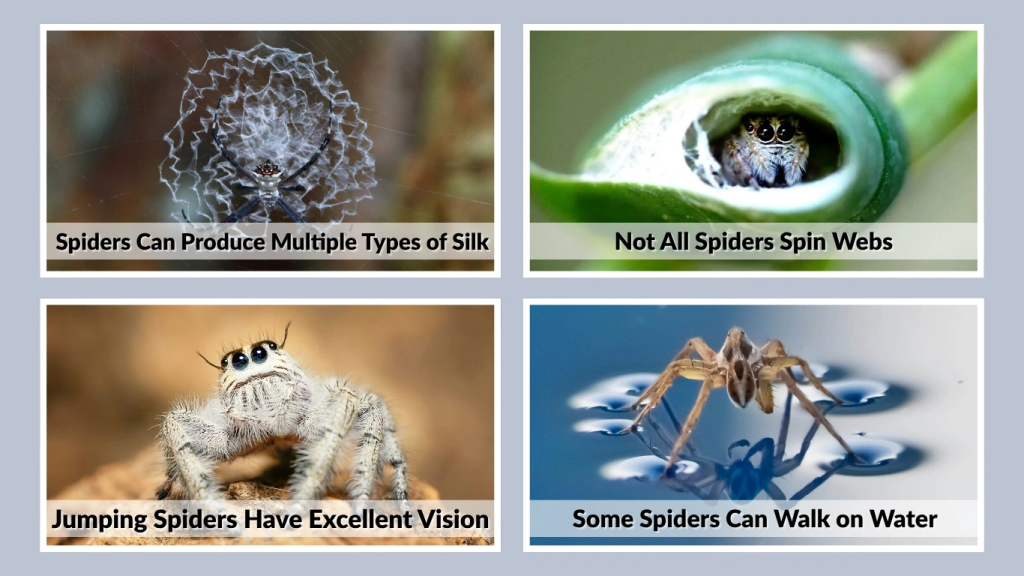
Spiders are capable of producing different types of silk, each designed for a specific purpose. This ability makes them highly efficient builders and hunters. Instead of using one kind of thread for everything, spiders switch between silk types depending on their needs, which adds to their survival advantage.
How Many Types of Silk Can Spiders Make?
Most spiders can produce several types of silk, sometimes up to seven or more. Each type comes from different silk glands in their bodies. For example, some silk is used for building webs, while other types are used for wrapping prey or protecting eggs. This variety allows spiders to adapt their silk use for different situations.
What Are the Uses of Different Silk Types?
Different silk types serve unique functions. Sticky silk is used to trap insects, while strong dragline silk helps spiders move safely and build the framework of webs. Some silk is soft and used for egg sacs, providing protection for spider offspring. This specialization makes spider silk an incredibly versatile tool.
6. Not All Spiders Spin Webs
While many people associate spiders with webs, not all spiders rely on web-building to catch their prey. In fact, a large number of species are active hunters that chase or ambush their targets. This diversity in hunting strategies shows how adaptable spiders are in different environments.
Why Don’t Some Spiders Build Webs?
Some spiders have evolved to hunt instead of building webs because it suits their habitat and lifestyle better. Web-building requires time and energy, and in certain environments, it may not be effective. Hunting spiders rely on speed, camouflage, or stealth to capture prey directly.
How Do Hunting Spiders Catch Their Prey?
Hunting spiders use various techniques to catch food. Jumping spiders rely on excellent vision and powerful leaps to grab prey, while wolf spiders chase their targets on the ground. Others use ambush tactics, staying still until an unsuspecting insect comes close. These methods allow them to survive without webs.
7. Jumping Spiders Have Excellent Vision
Jumping spiders are known for their remarkable eyesight, which is far superior to that of most other spider species. Unlike web-building spiders that rely heavily on vibrations, jumping spiders depend on their vision to hunt and navigate their surroundings with precision. This makes them one of the most visually advanced arachnids.
How Good Is a Jumping Spider’s Vision?
Jumping spiders have large front-facing eyes that provide sharp, detailed vision. They can see colors and even detect ultraviolet light, which helps them identify prey and mates. Their ability to judge distance accurately allows them to make precise jumps when attacking or moving between surfaces.
How Do They Use Their Vision?
These spiders use their excellent eyesight to actively hunt during the day. They carefully observe their target, plan their approach, and then leap onto their prey with accuracy. Their vision also helps them avoid predators and communicate through visual signals, such as body movements and displays.
8. Some Spiders Can Walk on Water
Certain spiders have the amazing ability to walk on water, allowing them to move across ponds, lakes, and slow-moving streams. This skill helps them hunt, escape predators, and explore new areas. It is made possible by a combination of their body structure and the physical properties of water.
How Do Spiders Walk on Water?
Spiders can walk on water due to surface tension, which creates a thin “skin” on the water’s surface. Their lightweight bodies and specially adapted legs distribute their weight evenly, preventing them from sinking. Tiny water-repellent hairs on their legs also help them stay afloat and move smoothly.
Why Is This Ability Useful?
Walking on water gives spiders access to food sources that other predators may not reach. They can catch insects trapped on the surface or even detect vibrations caused by prey. It also provides a quick escape route from land-based threats, increasing their chances of survival in the wild.
9. The Largest Spider by Leg Span Is the Goliath Birdeater
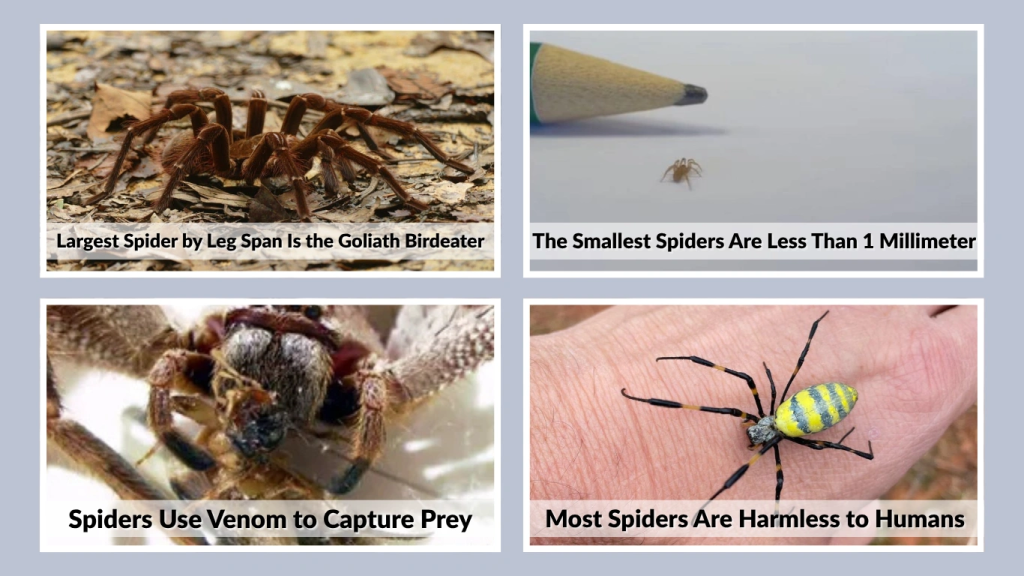
The Goliath birdeater is considered the largest spider in the world when measured by leg span. Native to South America, this massive spider can appear intimidating due to its size and hairy body. Despite its name, it rarely eats birds and mostly feeds on insects and small animals.
How Big Is the Goliath Birdeater?
The Goliath birdeater can have a leg span of up to 30 centimeters (about 12 inches). Its body alone can grow quite large, and it can weigh over 150 grams. This makes it one of the heaviest spiders as well, contributing to its reputation as a giant among arachnids.
What Does It Eat?
Although its name suggests otherwise, the Goliath birdeater mainly eats insects, worms, and small amphibians. Occasionally, it may prey on small birds or rodents, but this is rare. It uses its powerful fangs and venom to subdue prey, then consumes it using external digestion like other spiders.
10. The Smallest Spiders Are Less Than 1 Millimeter
While some spiders are enormous, others are so tiny that they are nearly invisible to the naked eye. The smallest spiders measure less than 1 millimeter in length, making them incredibly difficult to spot. Despite their size, they are fully functional predators with the same basic features as larger spiders.
How Small Can Spiders Get?
The tiniest spiders belong to a group called dwarf spiders. Some species are so small they can fit on the head of a pin. Their microscopic size allows them to live in environments that larger spiders cannot access, such as leaf litter, moss, or soil layers.
How Do Tiny Spiders Survive?
Even at such a small size, these spiders can hunt and survive effectively. They feed on even smaller prey like mites and tiny insects. Many of them use a technique called “ballooning,” where they release silk threads to catch the wind and travel through the air to new locations.
11. Spiders Use Venom to Capture Prey
Spiders rely on venom as a primary tool for hunting and survival. Instead of chewing their food, they use venom to immobilize or kill their prey quickly. This adaptation allows them to handle insects and other small animals efficiently, even if the prey struggles.
How Does Spider Venom Work?
Spider venom is injected through specialized mouthparts called fangs. Once delivered, the venom affects the prey’s nervous system or tissues, causing paralysis or death. This process prevents the prey from escaping and makes it easier for the spider to consume it safely.
Is Spider Venom Dangerous to Humans?
Most spider venom is not harmful to humans and is designed to affect small insects. Only a few species have venom strong enough to cause serious effects in people. In general, spiders avoid humans and use venom mainly for hunting rather than defense.
12. Most Spiders Are Harmless to Humans
Although spiders often have a frightening reputation, the vast majority are harmless to humans. Out of thousands of known species, only a small number possess venom that can cause serious health issues. Most spiders prefer to avoid human contact and will only bite in self-defense.
Why Are Most Spiders Not Dangerous?
Spider venom is primarily designed to target small insects, not large animals like humans. Their fangs are often too small or weak to penetrate human skin effectively. Even when a bite occurs, it usually results in mild irritation similar to a mosquito bite rather than anything severe.
Do Spiders Usually Bite Humans?
Spiders rarely bite humans unless they feel threatened or trapped. They are generally shy creatures that try to escape rather than attack. Bites typically happen accidentally, such as when a spider is pressed against the skin. Overall, encounters with spiders are far less dangerous than commonly believed.
13. Spiders Digest Food Outside Their Bodies
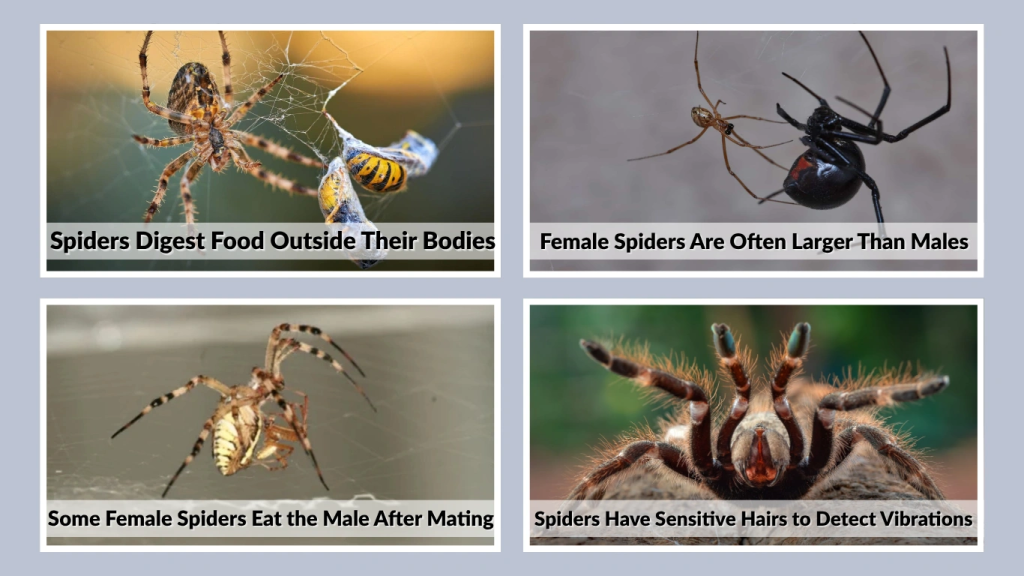
Spiders have a unique way of eating that is very different from most animals. Instead of chewing and swallowing solid food, they break it down outside their bodies. This process allows them to consume prey efficiently, even without teeth designed for chewing.
How Does External Digestion Work?
After capturing prey, a spider injects digestive enzymes into it using its fangs. These enzymes break down the internal tissues of the prey into a liquid form. Once the contents are liquefied, the spider sucks up the nutrients, leaving behind the outer shell or exoskeleton.
Why Do Spiders Use This Method?
Spiders lack the mouthparts needed to chew solid food, so external digestion is essential for survival. This method also helps them extract maximum nutrients from their prey. It allows spiders to consume animals larger than what they could otherwise handle internally.
14. Female Spiders Are Often Larger Than Males
In many spider species, females are noticeably larger than males. This size difference, known as sexual dimorphism, plays an important role in reproduction and survival. Larger body size helps females produce more eggs and increases their chances of successfully raising offspring.
Why Are Female Spiders Bigger?
Female spiders are typically larger because they need more energy and body capacity for egg production. A bigger abdomen allows them to carry and develop eggs more effectively. This size advantage also helps them survive longer, giving them more opportunities to reproduce.
How Does Size Affect Male Spiders?
Male spiders are usually smaller and more mobile, which helps them travel in search of females. However, their smaller size can make them vulnerable, especially during mating. In some species, males must approach females carefully to avoid being mistaken for prey.
15. Some Female Spiders Eat the Male After Mating
In certain spider species, females may eat the male after or even during mating. This behavior, known as sexual cannibalism, may seem extreme, but it serves a biological purpose. It provides the female with extra nutrients that can support egg production and improve offspring survival.
Why Does This Behavior Happen?
Sexual cannibalism can occur because the female requires a high amount of energy to produce eggs. By consuming the male, she gains additional nutrition. In some cases, it may also reduce competition or increase the chances of successful fertilization.
Do All Spiders Do This?
Not all spider species practice this behavior. It is relatively rare and mostly observed in species like black widows and praying mantis-like spiders. Many male spiders have developed strategies to avoid being eaten, such as approaching cautiously or escaping quickly after mating.
16. Spiders Have Sensitive Hairs to Detect Vibrations
Spiders may not rely heavily on hearing like humans, but they have an incredible way of sensing their environment. Their bodies are covered with tiny, sensitive hairs that help them detect even the slightest vibrations and air movements. This ability is essential for survival, especially for detecting prey and avoiding danger.
How Do These Hairs Work?
The fine hairs, called setae, are extremely sensitive to movement. When an insect gets caught in a web or walks nearby, it creates vibrations that travel through surfaces or silk threads. These vibrations are picked up by the spider’s hairs, allowing it to quickly locate the source with precision.
Why Is This Important for Spiders?
This sensory system allows spiders to function effectively even with poor eyesight. It helps them identify prey, sense approaching predators, and communicate through subtle movements. For many species, detecting vibrations is more important than vision, making these tiny hairs a crucial survival tool.
17. Some Spiders Can Change Color
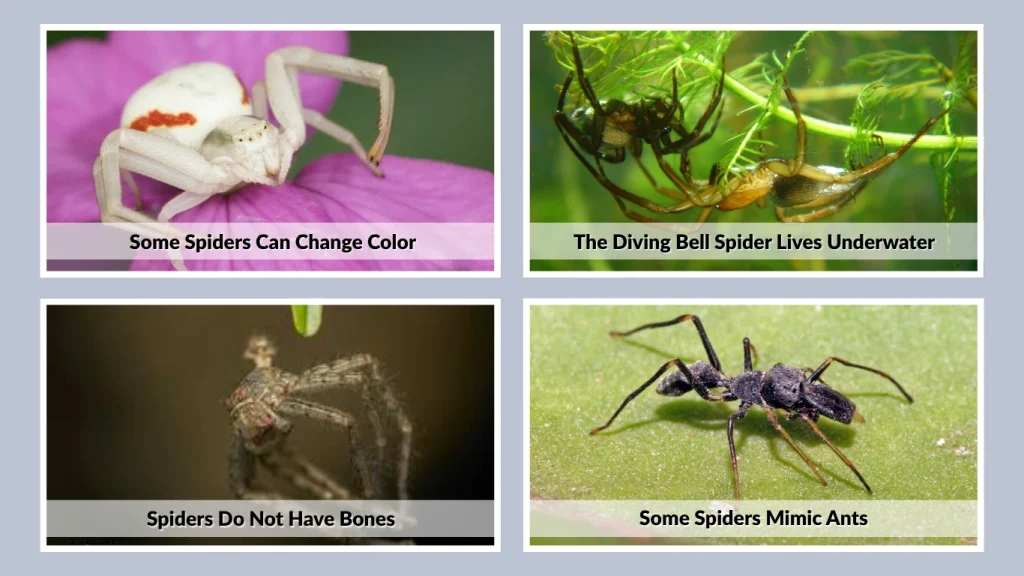
Certain spiders have the ability to change their color, allowing them to blend into their surroundings. This adaptation helps them avoid predators and become more effective hunters. By matching the colors of flowers, leaves, or other surfaces, these spiders can remain almost invisible.
How Do Spiders Change Color?
Color-changing spiders adjust pigments in their bodies over time rather than instantly like a chameleon. This process can take hours or even days, depending on the environment. The change is controlled by biological mechanisms that respond to light, background color, and other external factors.
Why Is Color Change Useful?
This ability provides excellent camouflage, helping spiders hide from predators and ambush prey. For example, some crab spiders can match the color of the flowers they sit on, making it easier to catch unsuspecting insects. This adaptation increases both their survival and hunting success.
18. The Diving Bell Spider Lives Underwater
The diving bell spider is a unique species that spends most of its life underwater. Unlike other spiders that live on land, it has adapted to an aquatic lifestyle. It creates a special air-filled structure that allows it to breathe and survive beneath the surface.
How Does the Diving Bell Spider Breathe Underwater?
This spider builds a silk “diving bell” and fills it with air carried from the surface using tiny hairs on its body. The air bubble acts like a temporary lung, supplying oxygen while the spider stays submerged. It returns to the surface occasionally to replenish the air.
Why Does It Live Underwater?
Living underwater helps the diving bell spider avoid many land predators and access aquatic prey. It hunts small insects and larvae in ponds and slow-moving waters. This unusual lifestyle makes it one of the few spiders fully adapted to life beneath the water’s surface.
19. Spiders Do Not Have Bones
Spiders do not have bones like humans or other vertebrates. Instead, they have an external skeleton called an exoskeleton, which supports and protects their bodies. This unique structure also plays a role in how they move, making their movement system very different from animals with internal bones.
How Do Spiders Move Without Bones?
Spiders use a hydraulic system to move their legs. Instead of muscles pulling against bones, they pump fluid into their legs to extend them outward. Muscles are then used to pull the legs back in. This combination allows spiders to move quickly and with great flexibility.
Why Is This System Effective?
This hydraulic movement system allows spiders to make fast, precise movements, which is useful for hunting and escaping danger. It also reduces the need for heavy internal structures, keeping their bodies lightweight. However, this is why dead spiders often curl up—the hydraulic pressure is no longer maintained.
20. Some Spiders Mimic Ants
Some spiders have evolved to look and behave like ants, a strategy known as mimicry. This clever adaptation helps them avoid predators and sometimes even sneak closer to prey. Because ants are often aggressive and unappealing to predators, resembling them provides a survival advantage.
How Do Spiders Mimic Ants?
Ant-mimicking spiders copy both the appearance and behavior of ants. They may have narrow bodies, move in a zigzag pattern, and even lift their front legs to imitate antennae. Their coloration also closely matches that of the ants they mimic, making the illusion more convincing.
Why Is Ant Mimicry Useful?
This mimicry protects spiders from predators that avoid ants due to their strong defenses and group behavior. In some cases, it also allows spiders to move among ants without being attacked. This unique adaptation increases their chances of survival in environments where ants are common.
21. Orb-Weaver Spiders Rebuild Their Webs Daily
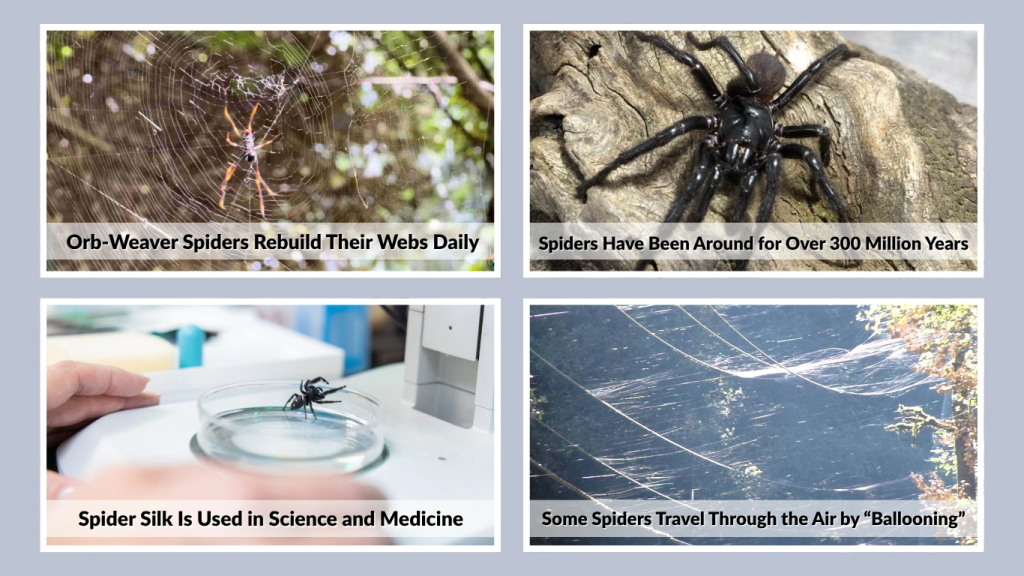
Orb-weaver spiders are known for their beautiful circular webs, but these structures are not permanent. Many orb-weavers take down and rebuild their webs regularly, often every day. This behavior helps keep their webs effective and ready for catching prey.
Why Do They Rebuild Their Webs?
Over time, webs can become damaged by wind, debris, or trapped insects. Rebuilding allows spiders to repair these weaknesses and maintain a strong, sticky structure. It also helps ensure the web remains efficient for capturing prey.
What Happens to the Old Web?
Instead of wasting materials, orb-weaver spiders often eat their old webs. This allows them to recycle the proteins used to produce silk, conserving energy. After consuming the old web, they spin a fresh one, usually in the same location or nearby.
22. Spiders Have Been Around for Over 300 Million Years
Spiders are ancient creatures that have existed on Earth for more than 300 million years. They appeared long before dinosaurs and have survived multiple mass extinctions. Their long history shows how well they have adapted to changing environments over time.
When Did Spiders First Appear?
The earliest spiders evolved during the Carboniferous period. Fossil evidence shows that early spiders already had features similar to modern ones, such as silk-producing organs. Over millions of years, they continued to evolve into the diverse species we see today.
Why Have Spiders Survived So Long?
Spiders have survived for so long because of their adaptability. They can live in a wide range of environments, from forests and deserts to homes and even underwater in rare cases. Their ability to produce silk, use venom, and adapt hunting strategies has helped them remain successful for millions of years.
23. Spider Silk Is Used in Science and Medicine
Spider silk is not only useful for spiders but also valuable to humans. Scientists study it because of its incredible strength, flexibility, and lightweight nature. These properties make it a promising material for use in advanced technology, medicine, and engineering.
How Is Spider Silk Used in Medicine?
Researchers are exploring spider silk for medical purposes such as sutures, wound dressings, and tissue engineering. Its strength and biocompatibility make it ideal for supporting healing without causing harm to the body. It may also be used in creating artificial ligaments and implants.
Why Are Scientists Interested in It?
Spider silk combines strength and elasticity in a way few materials can. It is also biodegradable and environmentally friendly. These qualities make it a strong candidate for developing sustainable materials in industries like textiles, construction, and healthcare.
24. Some Spiders Travel Through the Air by “Ballooning”
Some spiders have an unusual way of traveling long distances through the air, known as ballooning. This method allows them to move to new locations without walking. It is commonly seen in young spiders, but some adults can do it as well.
How Does Ballooning Work?
To balloon, a spider climbs to a high point and releases fine strands of silk into the air. The wind catches these silk threads and lifts the spider off the ground. The spider can then drift through the air, sometimes traveling great distances before landing.
Why Do Spiders Use This Method?
Ballooning helps spiders spread to new habitats, reducing competition for food and space. It also allows them to escape unfavorable conditions, such as overcrowding or lack of prey. This method of travel has helped spiders colonize many parts of the world.
25. There Are Over 45,000 Known Species of Spiders
Spiders are one of the most diverse groups of animals on Earth, with over 45,000 known species identified by scientists. They can be found in nearly every habitat, from forests and deserts to mountains and even human homes. This diversity shows how adaptable and widespread spiders are across the globe.
Why Are There So Many Spider Species?
Spiders have evolved over millions of years, adapting to different environments and ecological roles. Their ability to use silk, venom, and various hunting techniques has allowed them to survive in many conditions. This has led to the development of a wide variety of species with unique characteristics.
Where Can Spiders Be Found?
Spiders are found on every continent except Antarctica. They live in a wide range of environments, including underground burrows, tree canopies, and freshwater areas. Some species thrive in extreme conditions, showing their remarkable ability to adapt to different ecosystems.
FAQs
Are all spiders dangerous to humans?
No, most spiders are harmless to humans. Only a small number of species have venom strong enough to cause serious harm. In general, spiders avoid human contact and bite only when threatened. Most bites result in mild irritation and do not require medical attention.
Why do spiders build webs?
Spiders build webs mainly to catch prey. The sticky threads trap insects, making it easier for spiders to capture food without chasing it. Some spiders also use webs for shelter or to protect their eggs, showing that silk serves multiple important purposes.
How long do spiders live?
The lifespan of a spider varies by species. Many small spiders live for about one to two years, while larger species like tarantulas can live for over a decade. Environmental conditions and predators also play a role in how long a spider survives.
Do spiders sleep?
Spiders do not sleep in the same way humans do, but they do have periods of rest. During these times, their activity levels decrease, and their metabolic rate slows down. This allows them to conserve energy while remaining alert to their surroundings.
What do spiders eat?
Spiders mainly eat insects such as flies, mosquitoes, and beetles. Some larger species can also eat small animals like frogs, lizards, or even small birds. They use venom to immobilize prey and then consume it through external digestion.