

The Greenbottle Blue tarantula (Chromatopelma cyaneopubescens) is one of the most colorful and popular pet tarantulas in the hobby. Native to Venezuela, this species is famous for its bright blue legs, orange abdomen, and green carapace. It is also known for its heavy webbing behavior and active nature. Unlike many tarantulas, it thrives in dry conditions and is relatively easy to care for, making it a great choice for beginners and experienced keepers alike.
What Is a Greenbottle Blue Tarantula?
The Greenbottle Blue tarantula is a unique species that combines both terrestrial and semi-arboreal behaviors. It spends time on the ground but also builds extensive web structures above the substrate.
Scientific Classification
- Scientific name: Chromatopelma cyaneopubescens
- Family: Theraphosidae
- Type: Semi-arboreal / terrestrial tarantula
Common Names
- Greenbottle Blue Tarantula
- Venezuelan Greenbottle Blue
Greenbottle Blue Tarantula Size, Lifespan and Growth
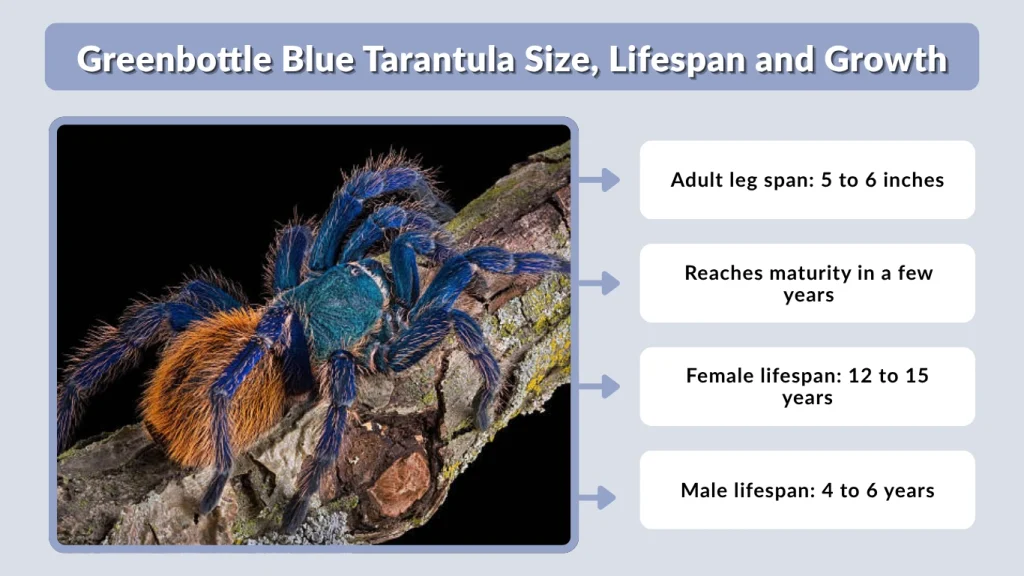
This species is moderately sized and grows faster than many slow-growing tarantulas, making it rewarding for keepers who want to see visible development over time.
Size and Growth Rate
- Adult leg span: 5 to 6 inches
- Growth rate: Moderate
- Reaches maturity in a few years
Lifespan
- Female lifespan: 12 to 15 years
- Male lifespan: 4 to 6 years
Greenbottle Blue Tarantula Appearance and Colors
The Greenbottle Blue tarantula is widely considered one of the most visually stunning tarantulas in the world. Its vibrant coloration makes it stand out in any collection.
Color Features
- Metallic blue legs
- Bright orange to reddish abdomen
- Shimmering green carapace
Why It Stands Out
- High contrast coloration
- Color intensifies after molts
- Attractive at all life stages
Greenbottle Blue Tarantula Habitat and Natural Environment
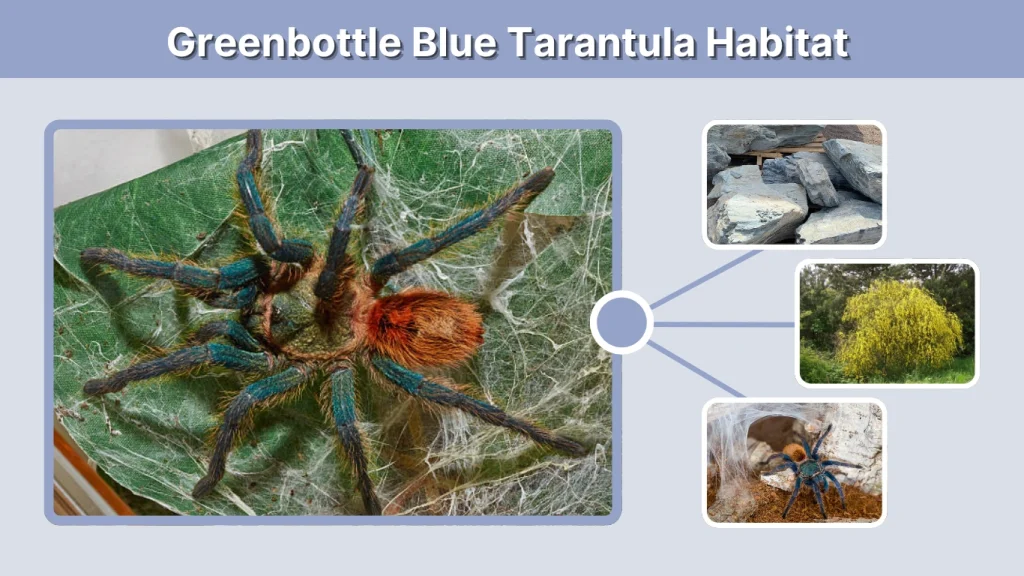
In the wild, this species lives in the dry regions of Venezuela where humidity is low and vegetation is sparse. It prefers open environments where it can create web structures between rocks, shrubs, and other surfaces.
Unlike burrowing tarantulas, the Greenbottle Blue relies heavily on webbing to create a secure living space. It uses silk to build tunnels, retreats, and hunting platforms. This behavior helps it adapt to harsh, dry climates where shelter options are limited. Replicating this environment in captivity is key to keeping the spider healthy and stress-free.
Behavior and Temperament
The Greenbottle Blue tarantula is known for being active and alert. While it is not typically aggressive, it can be fast and skittish, which may startle inexperienced keepers.
Key Behavior Traits
- Very active compared to many tarantulas
- Fast movement and quick reactions
- Prefers to flee rather than attack
Temperament Overview
- Generally not aggressive
- May show defensive posture if disturbed
- Better observed than handled
Greenbottle Blue Tarantula Care Guide
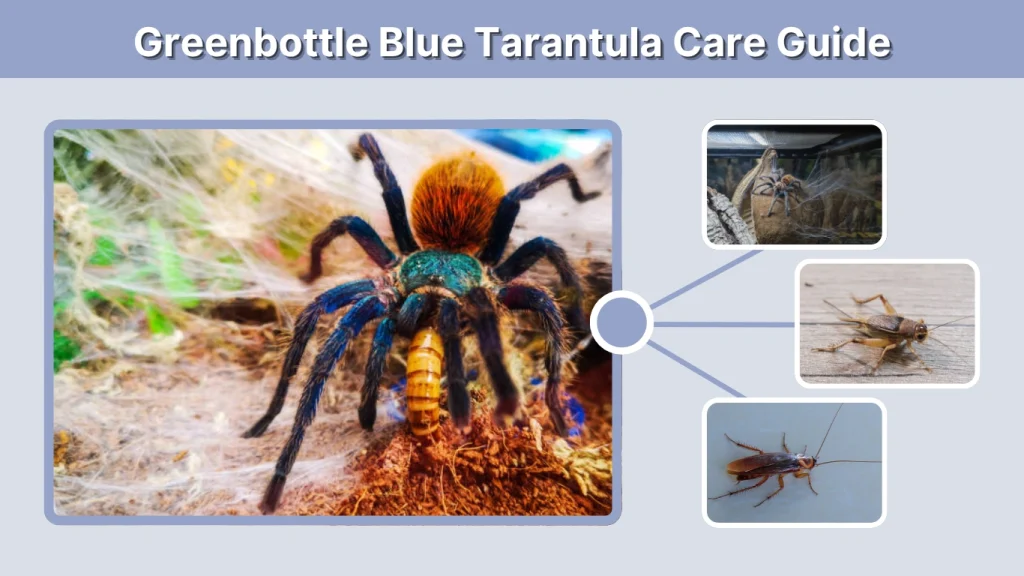
Caring for a Greenbottle Blue tarantula is relatively simple, but proper setup is important to support its natural webbing behavior.
Enclosure Setup
- Use a well-ventilated enclosure
- Provide anchor points for webbing
- Include both ground space and height
Temperature and Humidity
- Temperature: 24–28°C
- Humidity: Low (40–60%)
- Avoid overly damp conditions
Diet and Feeding
- Feeds on crickets and roaches
- Juveniles eat more frequently
- Adults feed once every 1–2 weeks
Webbing Behavior and Unique Traits
The Greenbottle Blue tarantula is famous for its extreme webbing behavior, which sets it apart from many other species. Instead of relying on burrows, it creates thick layers of silk throughout its enclosure. This webbing acts as both shelter and a hunting tool, allowing the spider to detect vibrations from prey.
Webbing Characteristics
- Builds dense, layered web structures
- Covers most of the enclosure over time
- Uses webbing for hiding and hunting
Why Webbing Is Important
- Provides security and reduces stress
- Helps detect prey movement
- Mimics natural habitat behavior
Greenbottle Blue Tarantula Bite and Venom Information
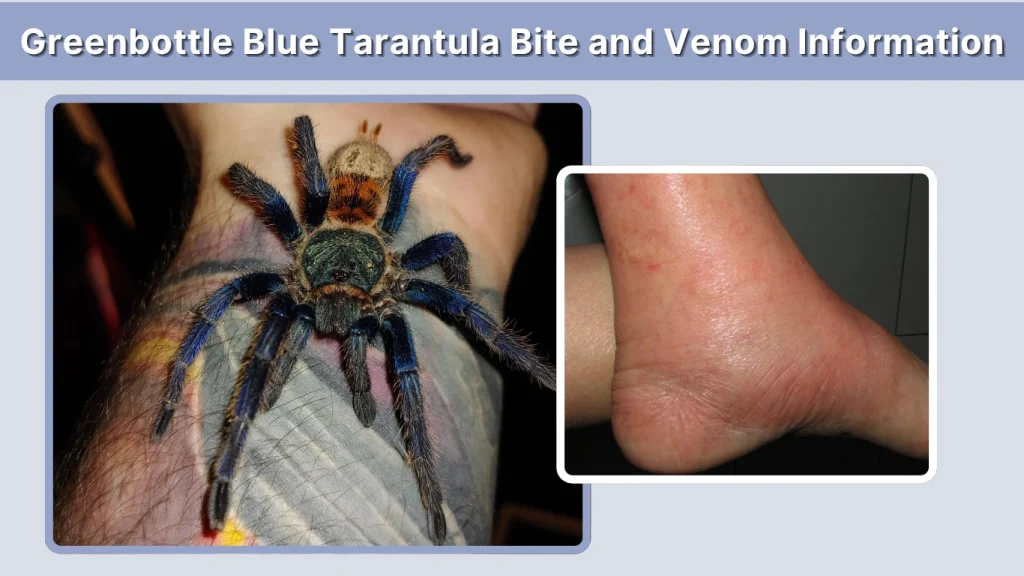
Although the Greenbottle Blue tarantula looks intimidating, it is not considered dangerous to humans. Like most New World tarantulas, it prefers to avoid conflict and will usually run away instead of biting.
Bite Facts
- Bites are rare
- Usually occurs only if provoked
- More likely to flee than attack
Venom Effects
- Mild pain similar to a bee sting
- Minor swelling or irritation
- No serious medical risk for most people
Greenbottle Blue Tarantula Price and Buying Guide
If you are considering adding a Greenbottle Blue tarantula to your collection, understanding the price range and buying options is important. Prices vary based on size, age, and gender.
Average Price Range
- Sling (baby): $30–$60
- Juvenile: $60–$120
- Adult female: $150+
Where to Buy
- Reputable breeders
- Exotic pet stores
- Online tarantula shops
Buying Tips
- Choose active and healthy specimens
- Check for proper webbing behavior
- Avoid sellers with poor reviews
Greenbottle Blue Tarantula Pros and Cons as a Pet
The Greenbottle Blue tarantula is a favorite among hobbyists, but it still has both advantages and limitations. Understanding these can help you decide if it is the right species for you.
Pros
- Extremely vibrant and attractive colors
- Heavy webbing creates a beautiful display
- Relatively easy to care for
Cons
- Fast and can be skittish
- Not ideal for handling
- Requires good ventilation setup
FAQs
Is the Greenbottle Blue tarantula good for beginners?
Yes, it is considered a beginner-friendly species due to its hardy nature and simple care requirements. However, its fast movements may surprise new keepers, so careful observation and patience are important when maintaining its enclosure.
Why does the Greenbottle Blue tarantula make so much web?
This species relies heavily on webbing for shelter, protection, and hunting. It creates dense silk structures to detect vibrations and secure prey, making webbing an essential part of its natural behavior.
How big does a Greenbottle Blue tarantula get?
An adult Greenbottle Blue tarantula typically reaches a leg span of about 5 to 6 inches. It is considered a medium-sized tarantula with a balanced growth rate compared to other species.
Is the Greenbottle Blue tarantula dangerous?
No, it is not dangerous to humans. Its venom is mild and generally causes only minor irritation. Bites are rare, as the spider prefers to escape rather than defend itself aggressively.
What does a Greenbottle Blue tarantula eat?
It primarily feeds on insects such as crickets and roaches. In captivity, feeding once every one to two weeks is sufficient for adults, while younger tarantulas may require more frequent meals.