

The black lace weaver spider is one of the most fascinating — and often misunderstood — arachnids found across the UK. With its glossy dark body and intricate web patterns, it’s no surprise this species gets mistaken for the infamous black widow or black orb weaver. But the truth is far more interesting than the myths. From its unique web structure to the bizarre behavior of spiderlings eating their mother, this spider is a curious study in survival and adaptation. In this article, we’ll discuss everything you need to know about the black lace weaver spider — including its bite, behavior, habitat, and how to identify it correctly.
What is the Black Lace Weaver Spider?

The black lace weaver spider (Amaurobius ferox) is a nocturnal species found mainly in the UK and parts of Europe. It builds lace-like webs in sheltered spots like walls, fences, and sheds.
Often confused with black widow spiders due to its dark body, this spider is not dangerous to humans. It’s shy, rarely bites, and only comes out at night to hunt small insects.
Its name comes from the unique, woolly texture of its web, which looks like black lace. This non-sticky silk helps trap prey by tangling them rather than using glue.
Identification of the Black Lace Weaver Spider
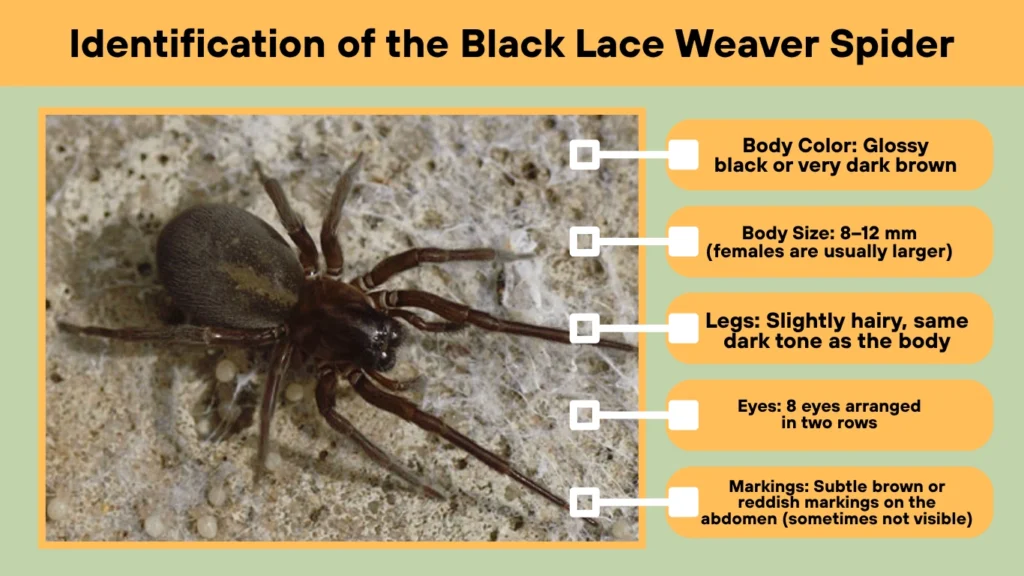
The black lace weaver spider has a glossy, dark appearance and is easy to spot once you know what to look for. While it may resemble other black spiders, a few key traits make it stand out. Below are the main features that help identify this species.
Identification Features
- Body Color: Glossy black or very dark brown
- Body Size: 8–12 mm (females are usually larger)
- Legs: Slightly hairy, same dark tone as the body
- Eyes: 8 eyes arranged in two rows
- Markings: Subtle brown or reddish markings on the abdomen (sometimes not visible)
Web Type
The spider spins a woolly, lace-like web using cribellate silk. This web is not sticky but traps prey through texture and structure. It’s often found in corners of fences, sheds, or under stones.
Male vs. Female Appearance
Males are slimmer with longer legs and often wander in search of mates, while females remain near their webs. Females are darker and more robust in shape.
Here’s the next section: Behavior and Life Cycle with H2, short overview, and organized H3 subsections.
Behavior and Life Cycle

The black lace weaver spider leads a quiet, hidden life, mostly active at night. It doesn’t chase prey but waits patiently in its web. Its life cycle includes some surprising behaviors, especially during reproduction.
Nocturnal Behavior and Hunting Style
This spider is nocturnal and prefers darkness and damp environments. It stays hidden in its web during the day and comes out at night to catch small insects. It rarely bites and avoids confrontation.
Matriphagy: Babies Eat the Mother
One of the most shocking behaviors of this spider is matriphagy — where spiderlings eat their mother after hatching. The mother willingly offers herself as the first meal to nourish her offspring, a rare survival strategy in the spider world.
Reproduction and Growth Stages
Females lay eggs in a silk sac, often hidden deep in the web. Once hatched, the spiderlings remain with the mother for a short time before dispersing. The young go through several molts before reaching adulthood.
Habitat and Distribution
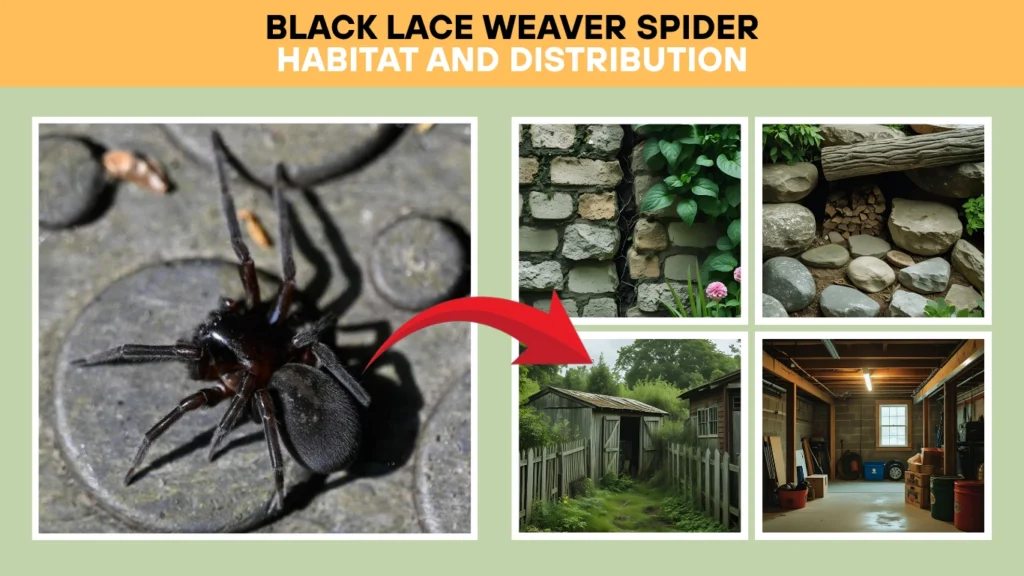
The black lace weaver spider prefers dark, quiet places where it can safely build its woolly web. It’s a common species across the UK and thrives in areas close to human dwellings.
Common Habitats
This spider is usually found:
- In cracks and gaps in garden walls
- Under stones, logs, or garden furniture
- Around fences, sheds, and old buildings
- Occasionally indoors, in basements or garages
Geographic Range
It is widely distributed throughout the UK and parts of northern and central Europe. It has also been introduced to North America, where it survives in similar climates.
Seasonal Activity
You’re more likely to spot this spider during spring and early summer, especially during mating season when males wander. Females can be seen year-round, usually hiding within their webs.
Here’s the next section: Are Black Lace Weaver Spiders Poisonous? with a short overview and structured H3 subsections.
Are Black Lace Weaver Spiders Poisonous?
The dark color and name of the black lace weaver spider often cause unnecessary fear. While it may look intimidating, it poses very little risk to humans.
Venom and Human Risk
Black lace weaver spiders do have venom, like most spiders, but it’s mild and not harmful to humans. Their venom is meant to subdue small insects, not larger animals. Bites are rare and usually happen only when the spider is provoked.
Bite Symptoms
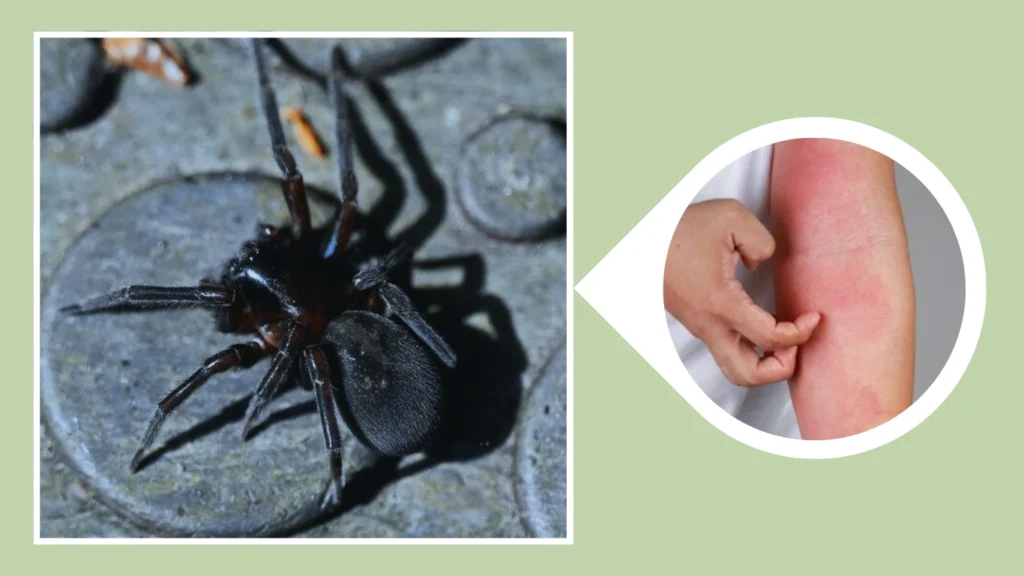
If a bite does occur, symptoms may include:
- Mild redness or irritation
- Itching or slight swelling
- No lasting effects or serious reactions
Not the Same as a Black Widow
Although often confused with black widow spiders, the black lace weaver is not closely related and does not carry the same toxic venom. It’s harmless in comparison and should not be a cause for alarm.
Black Lace Weaver Spider vs. Other Similar Spiders
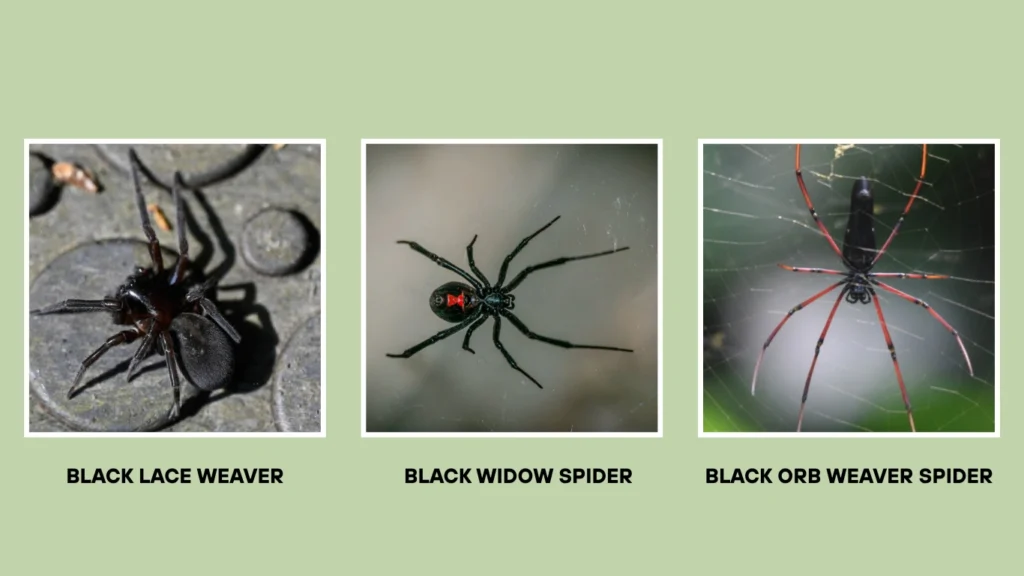
Many people mistake the black lace weaver spider for other dark-colored spiders, especially the black widow and black orb weaver. Here’s a clear comparison to help you tell them apart:
Spider Comparison Table
| Feature | Black Lace Weaver | Black Widow Spider | Black Orb Weaver Spider |
| Color | Glossy black or dark brown | Shiny black with red hourglass | Matte black or dark brown |
| Size | 8–12 mm | 7–15 mm (females larger) | 6–20 mm depending on species |
| Web Type | Woolly, lace-like funnel web | Irregular sticky web | Classic round orb web |
| Venom to Humans | Not harmful | Potentially dangerous | Harmless |
| Behavior | Shy, nocturnal | Shy but may bite when disturbed | Passive, web-bound |
| Location (UK) | Common | Rare (mainly imported) | Found in gardens and bushes |
This table should help you quickly identify which spider you’re looking at and understand their key differences.
What Spiders Weave Lace-Like Webs?
Not all spiders spin the classic round webs we often imagine. Some produce woolly, lace-like webs using a special silk-spinning structure. These webs trap prey with their texture rather than stickiness.
Spiders Known for Lace-Like Webs
- Black Lace Weaver (Amaurobius ferox): The most well-known lace web spider in the UK, creating funnel-shaped, cribellate silk webs.
- Lace Webbed Spider (Amaurobius similis): Very similar to A. ferox, often found in and around buildings in Britain.
- Other Amaurobiidae Family Members: Several related spiders in this family also spin similar woolly-textured webs using cribellum silk.
- Hacklemesh Weavers (Family Desidae): Some species outside Europe create disorganized, fuzzy webs with a lace-like appearance.
These spiders are often found in dark, undisturbed places where their unique web type can stretch safely between surfaces.
Absolutely! Here’s the expanded FAQ section with more detailed, natural-sounding answers suitable for a full blog article:
FAQ
Is the black lace weaver spider dangerous to humans?
No, the black lace weaver spider is not dangerous to humans. While it does have venom like most spiders, it uses it only to immobilize small insect prey. The venom is not potent enough to harm people. In the rare event of a bite, symptoms are usually limited to mild redness, itching, or a slight swelling that goes away on its own within a day or two. It’s a very shy species and will only bite if it feels severely threatened.
Where are black lace weaver spiders found in the UK?
Black lace weaver spiders are quite common across the UK, especially in gardens, old walls, fences, garages, sheds, and beneath stones or logs. They prefer cool, damp, and dark environments where they can safely build their lace-like funnel webs. You’re more likely to see them during the warmer months when males begin to roam in search of mates. Indoors, they’re sometimes found in basements or along skirting boards but remain hidden and inactive during the day.
Do black lace weaver spider babies eat their mother?
Yes, this spider exhibits a rare behavior called matriphagy, where newly hatched spiderlings eat their mother. After laying eggs, the female stays with the egg sac and protects the spiderlings once they hatch. She doesn’t leave the web or hunt anymore. Eventually, the spiderlings begin to consume her body for nourishment. While this may sound disturbing, it’s a natural survival strategy that ensures the young get a strong nutritional start before they disperse and become independent.
How big does a black lace weaver spider get?
Adult female black lace weavers usually grow to about 10–12 mm in body length, not including the legs. Males are a bit smaller, typically between 8–10 mm. Their compact size, dark coloration, and hairy texture make them look bulkier than they are. Although not large compared to some garden spiders, their glossy appearance can make them seem more intimidating at first glance.
What’s the difference between a black lace weaver and a black widow?
The black lace weaver and the black widow are completely different spiders, although people often confuse them because of their dark coloring. The black widow (Latrodectus) is far more dangerous, with venom that can cause serious symptoms in humans. It’s also identifiable by a red or orange hourglass marking on its abdomen and a more rounded, shiny black body. In contrast, the black lace weaver (Amaurobius ferox) lacks these markings, has a flatter body, and builds woolly, lace-like webs instead of sticky ones. It is not medically significant and poses no real threat to humans.
