

The funnel-web spider is one of the most famous and feared spiders in the world. Known for its powerful venom and aggressive defense behavior, this spider is native mainly to Australia. Funnel-web spiders are especially recognized for their distinctive funnel-shaped webs and strong fangs that can deliver a dangerous bite. While encounters with humans are rare, their venom has made them one of the most medically significant spiders on Earth. Understanding their appearance, habitat, and behavior can help people stay safe while also appreciating the important role these spiders play in nature.
What Is a Funnel-Web Spider?
A funnel-web spider is a type of venomous spider that belongs to the Atracidae family. These spiders are primarily found in Australia and are named after the unique funnel-shaped webs they build. The web typically leads into a silk-lined burrow where the spider waits for prey.
Funnel-web spiders are known for their strong bodies, large fangs, and potent venom. They are ground-dwelling spiders and usually live in moist, sheltered environments such as forests, gardens, and under rocks. Although there are many species of funnel-web spiders, some are more dangerous than others, particularly those found near populated areas.
Scientific Classification
Funnel-web spiders belong to the family Atracidae, which includes several genera and multiple species. The most well-known genera include Atrax, Hadronyche, and Illawarra.
Among these species, the Sydney funnel-web spider (Atrax robustus) is the most notorious. It is considered one of the most dangerous spiders to humans due to the potency of its venom. Scientists have identified dozens of funnel-web spider species across eastern Australia, though not all of them pose a serious threat to humans.
Physical Characteristics of Funnel-Web Spiders
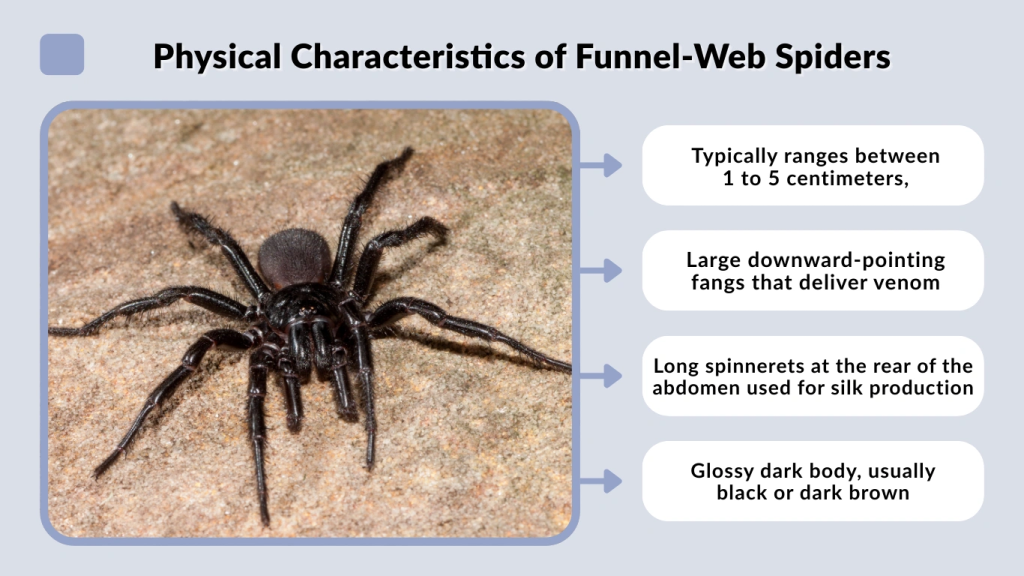
Funnel-web spiders have a strong and distinctive appearance that helps differentiate them from many other spider species. Their bodies are usually dark brown to black, often with a shiny or glossy surface. The body length typically ranges between 1 to 5 centimeters, although some species can appear larger when their legs are included.
These spiders have thick legs, powerful jaws, and a robust body structure designed for hunting and defense. Their strong fangs are capable of piercing tough surfaces, which makes their bite particularly effective.
Key Identification Features
Several features help identify a funnel-web spider:
- Large downward-pointing fangs that deliver venom
- Long spinnerets at the rear of the abdomen used for silk production
- Glossy dark body, usually black or dark brown
- Thick and powerful legs designed for movement in burrows
Another notable difference is between male and female funnel-web spiders. Male spiders are usually smaller but have longer legs and a spur on their second pair of legs, which helps them during mating. Interestingly, males are often considered more dangerous because their venom is typically more toxic to humans.
Habitat and Distribution
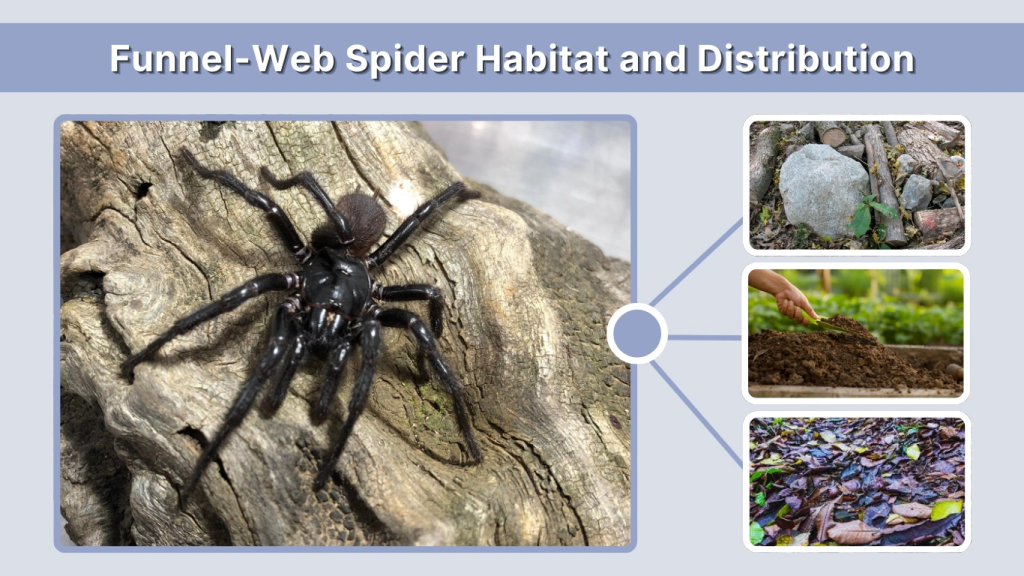
Funnel-web spiders are mainly found in eastern Australia, including regions such as New South Wales, Queensland, Victoria, and South Australia. They prefer environments that provide moisture and protection, which helps them survive and hunt effectively.
These spiders are commonly found in forests, coastal regions, and suburban gardens. Because urban areas often provide suitable shelter and food sources, funnel-web spiders sometimes live close to human homes.
Where They Build Their Webs
Funnel-web spiders build silk-lined burrows that connect to a funnel-shaped web opening. These webs act as both a home and a trap for prey.
Common locations where funnel-web spiders build their webs include:
- Under rocks and logs
- In moist soil and garden beds
- Inside forest leaf litter
- In crevices or sheltered ground areas
The spider usually stays inside the burrow with only part of its body near the entrance. Silk threads extending from the funnel act like trip lines, allowing the spider to detect vibrations when insects walk across them.
Funnel-Web Spider Web Structure

The web of a funnel-web spider is unique compared to many other spiders. Instead of creating a wide web suspended in the air, funnel-web spiders construct a tunnel-like structure that leads directly into their burrow.
This web typically consists of a silk-lined tube that spreads outward into a funnel shape at the surface. From this funnel, several silk strands extend outward across the ground.
How They Catch Prey
Funnel-web spiders are ambush predators. They rely on vibrations transmitted through the silk threads to detect nearby insects or other small animals.
When prey touches the silk lines, the spider quickly rushes out of the funnel and grabs the victim with its powerful fangs. The spider injects venom to immobilize the prey before dragging it back into the burrow to consume later.
This hunting strategy allows funnel-web spiders to capture prey quickly while staying protected within their underground shelter.
Behavior and Lifestyle
Funnel-web spiders are mostly nocturnal, meaning they are active during the night and spend most of the day inside their burrows. Their underground homes provide protection from predators, extreme temperatures, and dehydration.
These spiders are known for their defensive behavior. When threatened, a funnel-web spider may raise its front legs and expose its fangs as a warning. Unlike many spiders that try to escape danger, funnel-web spiders are more likely to stand their ground and defend themselves.
Male funnel-web spiders behave differently from females during the breeding season. Mature males often leave their burrows and wander in search of females, which increases the chances of them encountering humans.
Why Humans Encounter Them
Although funnel-web spiders usually avoid people, certain situations can bring them into contact with humans.
Some common reasons include:
- Male spiders searching for mates, especially during warmer months
- Heavy rain, which can flood their burrows and force them to move
- Urban development, which overlaps with their natural habitat
Because of this, funnel-web spiders may sometimes be found in gardens, garages, shoes left outside, or swimming pools.
Funnel-Web Spider Venom
Funnel-web spider venom is considered among the most potent spider venoms in the world. The venom contains powerful neurotoxins that affect the human nervous system.
One reason the venom is particularly dangerous is that it can interfere with nerve signals, causing rapid and severe symptoms. Interestingly, the venom affects humans and other primates much more strongly than it does many other animals.
Another unusual fact is that male funnel-web spiders are often more venomous than females. Scientists believe this difference may be related to their behavior and biological roles.
Despite their dangerous venom, medical science has developed effective treatments that have significantly reduced the risk of death from funnel-web spider bites.
Funnel-Web Spider Bite
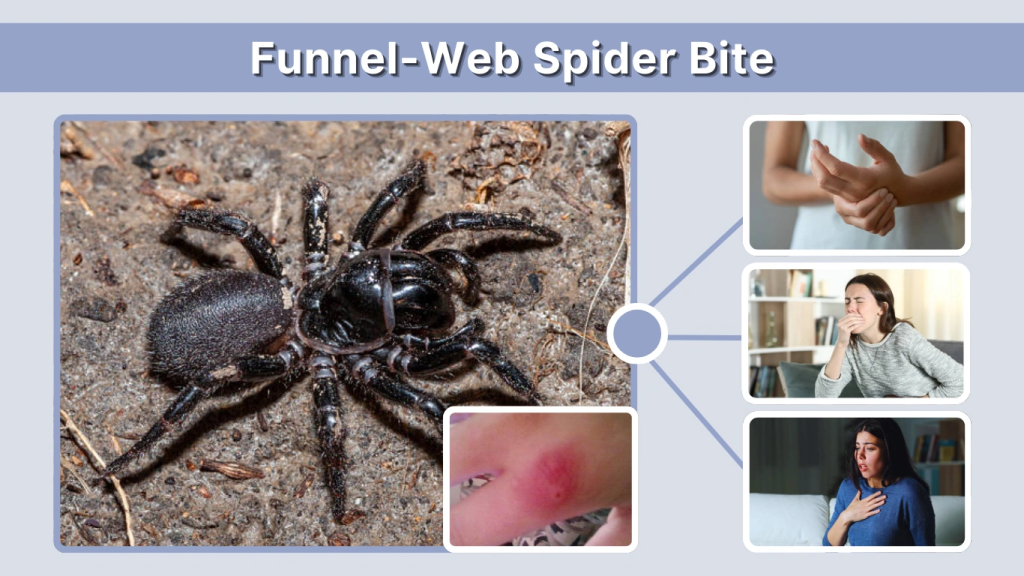
A funnel-web spider bite is considered a medical emergency, although bites are relatively rare. When a bite occurs, it can deliver a significant amount of venom through the spider’s large fangs.
Bite Symptoms
Symptoms of a funnel-web spider bite can appear quickly and may include:
- Intense pain at the bite site
- Sweating and tingling sensations
- Muscle twitching or spasms
- Nausea and vomiting
- Difficulty breathing
In severe cases, symptoms may worsen rapidly, which is why immediate medical attention is important.
Bite Treatment and First Aid
If someone is bitten by a funnel-web spider, quick action is essential.
Recommended first aid steps include:
- Apply a pressure immobilization bandage to slow the spread of venom
- Keep the affected limb still and avoid unnecessary movement
- Stay calm and seek emergency medical help immediately
Doctors may administer funnel-web spider antivenom, which was developed in 1981. Since the introduction of this treatment, fatalities from funnel-web spider bites have become extremely rare.
Diet and Hunting Habits
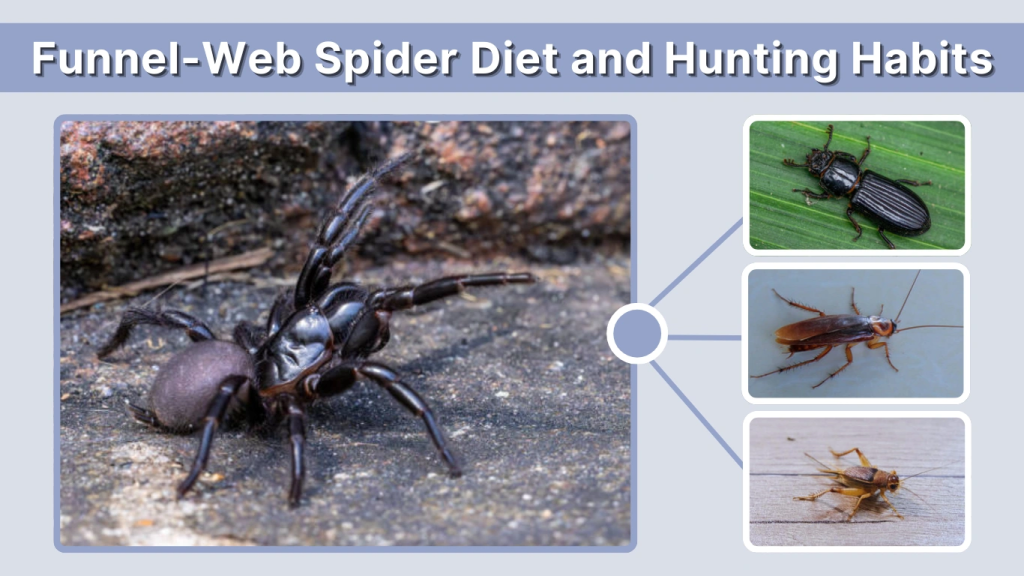
Funnel-web spiders are carnivorous predators that mainly feed on small animals. Their diet mostly consists of insects and other invertebrates, although larger species may occasionally capture small vertebrates.
Common prey includes:
- Beetles
- Cockroaches
- Crickets
- Insect larvae
Once prey touches the spider’s web, the spider rushes out and delivers a venomous bite. The venom quickly immobilizes the prey, allowing the spider to safely drag it back into its burrow.
Interesting Funnel-Web Spider Facts
Funnel-web spiders have several fascinating characteristics that make them unique among spiders.
Some interesting facts include:
- They are considered among the most venomous spiders in the world.
- The Sydney funnel-web spider is the most dangerous species.
- Male funnel-web spiders are usually more toxic than females.
- Funnel-web spiders can survive underwater for several hours by trapping air around their bodies.
- Their venom helped scientists develop a life-saving antivenom that protects bite victims.
How to Avoid Funnel-Web Spiders
Although funnel-web spiders are dangerous, simple precautions can reduce the chances of encountering them.
Here are some safety tips:
- Wear gloves when gardening or handling soil and rocks
- Shake out shoes and clothing that have been left outside
- Keep gardens clean and free of debris where spiders might hide
- Seal cracks and gaps around homes to prevent spiders from entering
Being aware of their habitat and habits can help people avoid accidental encounters.
Conclusion
Funnel-web spiders are fascinating yet potentially dangerous creatures that live mainly in Australia. Their powerful venom, strong fangs, and defensive behavior have made them one of the most well-known spider groups in the world. However, thanks to modern medical advances and the development of antivenom, the risk from funnel-web spider bites has been greatly reduced.
Understanding where these spiders live, how they behave, and how to respond to a bite can help people stay safe while respecting the role these spiders play in controlling insect populations and maintaining ecological balance.
FAQs
What is the most dangerous funnel-web spider?
The Sydney funnel-web spider (Atrax robustus) is considered the most dangerous species. Its venom is highly toxic to humans and can cause severe symptoms if untreated. Fortunately, modern antivenom treatment has made fatalities extremely rare.
Where do funnel-web spiders live?
Funnel-web spiders mainly live in eastern Australia, particularly in moist environments such as forests, gardens, and areas under rocks or logs. They build silk-lined burrows in the soil where they hide and wait for prey.
How dangerous is a funnel-web spider bite?
A funnel-web spider bite can be very dangerous because its venom affects the nervous system. Symptoms may appear quickly, including pain, sweating, and muscle spasms. Immediate medical treatment and antivenom greatly improve survival.
What should you do if bitten by a funnel-web spider?
If bitten, apply a pressure immobilization bandage, keep the affected limb still, and seek emergency medical help immediately. Quick treatment and the use of antivenom are highly effective in preventing serious complications.