

Spider bites are relatively rare, but they can occur when a spider feels threatened or accidentally gets trapped against the skin. In most cases, spider bites cause mild symptoms such as redness, swelling, itching, and minor discomfort. However, some species—like black widow or brown recluse spiders—can cause more serious reactions that require medical attention. Understanding how to identify and treat a spider bite can help reduce pain, prevent infection, and promote faster healing. With the right first aid steps and proper care, most spider bites can be managed safely at home.
Understanding Spider Bites
A spider bite happens when a spider injects venom through its fangs into the skin. Unlike many insects, spiders usually bite only in self-defense. Most spiders are harmless to humans, and their bites typically cause mild, localized symptoms that resolve within a few days.
Spider bites can occur indoors or outdoors, especially in areas where spiders commonly hide. Basements, garages, woodpiles, storage boxes, and dark corners are common places where spiders live. People may get bitten while cleaning, gardening, moving stored items, or putting on clothes or shoes where a spider may be hiding.
The severity of a spider bite often depends on the species of spider and a person’s reaction to the venom. While the majority of bites are minor, certain spiders produce venom that can cause stronger symptoms. For example, bites from a black widow spider may cause muscle pain and cramping, while brown recluse bites can sometimes lead to skin damage around the bite area.
Understanding the basic characteristics of spider bites helps people recognize when a bite is harmless and when it may require medical attention.
Identifying a Spider Bite

Identifying a spider bite can sometimes be difficult because its symptoms often resemble other insect bites. Many people do not see the spider that bit them, which makes it harder to confirm the cause. However, certain signs can suggest that a spider bite may have occurred.
A typical spider bite often appears as a small red bump on the skin. The area may become slightly swollen, itchy, or tender. Some bites may show two small puncture marks where the spider’s fangs entered the skin. Mild pain or a burning sensation may also occur shortly after the bite.
In most cases, these symptoms remain localized to the bite area and improve within a few days. The redness and swelling usually decrease gradually as the skin heals.
However, more serious spider bites may produce stronger symptoms. These can include severe pain, spreading redness, blistering, muscle cramps, fever, nausea, or fatigue. In rare cases, people may experience allergic reactions that cause difficulty breathing or swelling beyond the bite area.
Because spider bites can look similar to other skin irritations, it is important to monitor the bite closely. If symptoms worsen or unusual reactions appear, medical advice may be necessary.
Immediate First Aid for Spider Bites
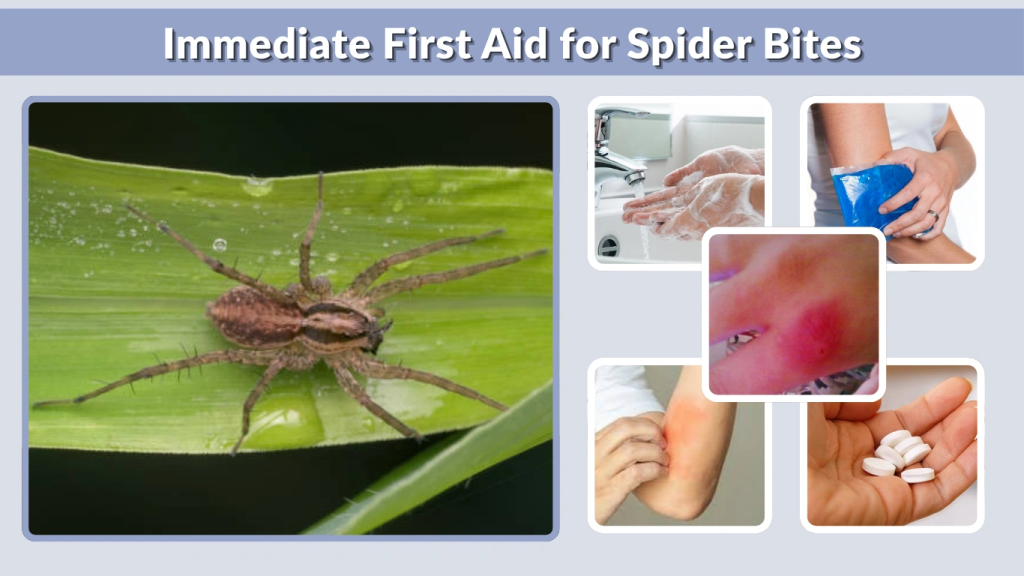
Providing proper first aid soon after a spider bite can help reduce discomfort and lower the risk of complications. Most mild spider bites can be treated using simple care methods at home.
The first step is to gently wash the bite area with soap and clean water. Cleaning the wound helps remove bacteria and reduces the chance of infection. After washing the area, pat it dry with a clean towel.
Applying a cold compress or an ice pack wrapped in a cloth can help reduce swelling and relieve pain. The cold compress can be applied for about 10 to 15 minutes at a time and repeated several times throughout the day.
If the bite occurs on an arm or leg, elevating the affected area can also help minimize swelling. Keeping the limb slightly raised improves blood circulation and reduces inflammation.
It is important to avoid scratching the bite, even if it becomes itchy. Scratching can irritate the skin and increase the risk of infection. Keeping the area clean and protected allows the bite to heal more quickly.
Most mild spider bites improve within a few days with these simple first aid measures. However, if the pain increases or unusual symptoms appear, further treatment may be needed.
Home Remedies to Relieve Symptoms
In addition to basic first aid, several home remedies and over-the-counter treatments can help relieve the symptoms of a spider bite. These treatments focus on reducing itching, swelling, and discomfort while the skin heals.
Over-the-counter pain relievers such as acetaminophen or ibuprofen can help manage mild pain or inflammation caused by the bite. These medications are commonly used to reduce discomfort and help people feel more comfortable during the healing process.
Antihistamines may also be helpful if the bite causes itching or mild allergic reactions. These medications work by reducing the body’s histamine response, which is responsible for itching and swelling.
Topical creams such as hydrocortisone cream or calamine lotion can provide additional relief from itching and irritation. Applying these products directly to the bite area may help calm the skin and reduce redness.
Keeping the bite clean and lightly covered with a bandage can also help protect it from irritation. Regularly checking the bite ensures that it continues healing normally without signs of infection.
For most people, these simple treatments are enough to manage symptoms until the bite fully heals.
Warning Signs of a Serious Spider Bite
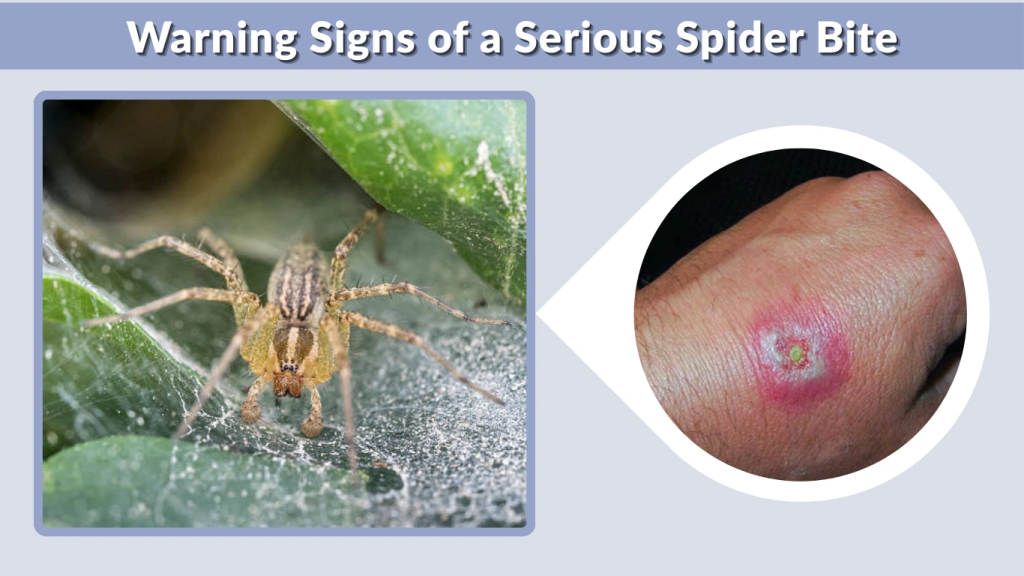
While most spider bites are mild and heal without complications, some bites can cause more serious symptoms. Certain spiders have venom that can trigger stronger reactions in the body, and recognizing these warning signs early is important.
One of the first signs of a serious spider bite is intense or worsening pain around the bite area. Unlike mild bites that improve within a day or two, a dangerous bite may cause pain that spreads to nearby muscles or becomes increasingly severe.
Another warning sign is significant swelling or redness that continues to expand. The skin around the bite may become warm, tender, or develop blisters. In some cases, the bite area may turn dark or develop an open sore, which can indicate tissue damage.
Systemic symptoms can also occur in more serious cases. These may include muscle cramps, nausea, vomiting, fever, chills, sweating, or headaches. Some people may also feel tired, weak, or dizzy after being bitten by a venomous spider.
Allergic reactions are another concern. If someone experiences difficulty breathing, swelling of the face or throat, rapid heartbeat, or severe dizziness, emergency medical care should be sought immediately. These symptoms may indicate a serious allergic reaction that requires urgent treatment.
Monitoring the bite closely during the first 24 to 48 hours can help determine whether the symptoms remain mild or begin to worsen.
When to Seek Medical Attention
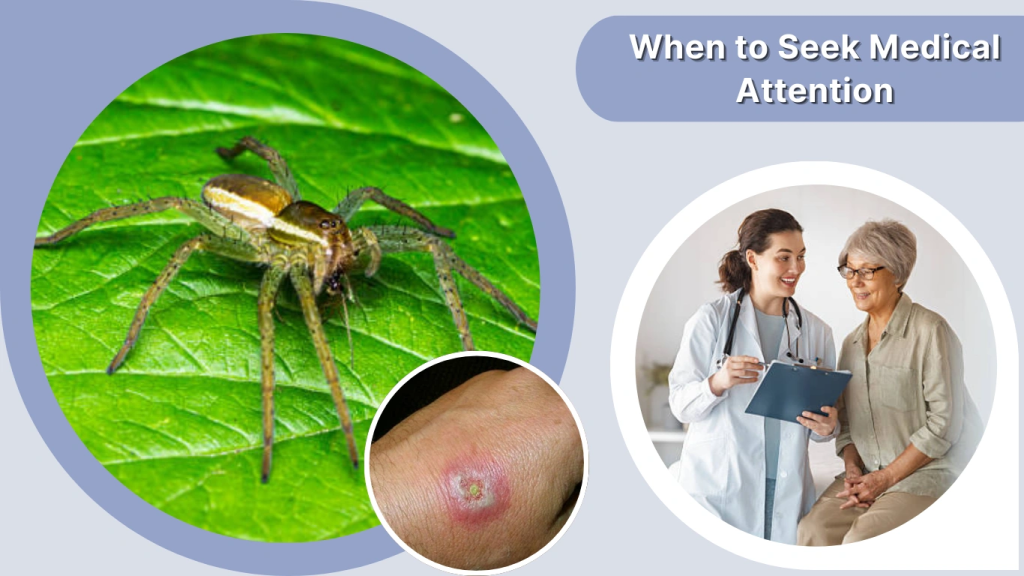
Although many spider bites can be treated at home, some situations require professional medical care. Knowing when to seek help is important for preventing complications.
Medical attention may be necessary if the bite causes severe pain that does not improve with basic treatment. Persistent or worsening pain could indicate a venomous bite or another underlying issue that requires evaluation.
If the bite area continues to grow larger, becomes increasingly swollen, or develops signs of infection—such as pus, warmth, or spreading redness—it is important to contact a healthcare provider. These symptoms may suggest bacterial infection that needs treatment.
People should also seek medical care if they develop symptoms that affect the entire body. Fever, muscle cramps, severe fatigue, nausea, or breathing problems may indicate a more serious reaction to spider venom.
Children, older adults, and individuals with weakened immune systems should be especially cautious. Because their bodies may react differently to venom or infection, they may require medical evaluation sooner than healthy adults.
If possible, identifying the spider responsible for the bite can help doctors determine the best treatment. However, it is not necessary to capture the spider if doing so is unsafe.
Preventing Spider Bites
Preventing spider bites largely involves reducing contact with spiders and keeping living areas clean and well-maintained. Since spiders prefer dark, quiet spaces, minimizing clutter can make homes less attractive to them.
Regular cleaning helps remove webs and discourages spiders from settling indoors. Vacuuming corners, under furniture, and inside storage areas can reduce the likelihood of encountering spiders inside the home.
When handling firewood, gardening supplies, or stored items, wearing gloves can provide protection against accidental bites. Spiders may hide inside boxes, woodpiles, or equipment that has not been used for a long time.
It is also helpful to shake out clothing, shoes, or blankets that have been stored or left unused. This simple habit can prevent a spider from being trapped against the skin.
Sealing cracks in walls, windows, and doors can also help keep spiders from entering the home. Properly sealed screens and doors reduce the chances of spiders finding their way indoors.
By maintaining a clean environment and taking simple precautions, the risk of spider bites can be significantly reduced.
Long-Term Care and Healing
After a spider bite, proper care during the healing process helps prevent complications and promotes faster recovery. Most mild bites begin to improve within a few days, with redness and swelling gradually decreasing.
Keeping the bite area clean is one of the most important steps. Washing the area daily and avoiding irritation allows the skin to heal naturally. If the bite forms a small wound or scab, it should be left undisturbed so the skin can repair itself.
In some cases, the skin may remain slightly discolored or sensitive for a short period after healing. This usually fades over time as the skin returns to normal.
If a bite leaves a noticeable scar or prolonged irritation, a healthcare provider may recommend additional treatments to support healing. However, most spider bites do not cause long-term damage when properly cared for.
Monitoring the bite until it fully heals ensures that any unusual changes are noticed early. With proper attention and care, most spider bites resolve without lasting problems.
FAQs
How long do spider bites usually take to heal?
Most spider bites heal within three to seven days. Mild redness, swelling, and itching typically improve as the skin recovers. However, bites from venomous spiders or bites that become infected may take longer to heal and may require medical treatment.
Can I treat a spider bite at home?
Yes, many spider bites can be treated at home using basic first aid. Cleaning the bite with soap and water, applying a cold compress, and using over-the-counter medications for pain or itching are usually effective. Medical care may be necessary if symptoms worsen or unusual reactions occur.
What does a dangerous spider bite look like?
A dangerous spider bite may cause severe pain, spreading redness, blistering, or a dark wound around the bite area. Other symptoms can include muscle cramps, fever, nausea, or weakness. These signs may indicate a bite from a venomous spider and should be evaluated by a healthcare professional.
Should I squeeze a spider bite?
No, squeezing a spider bite is not recommended. Doing so can irritate the skin and increase the risk of infection. Instead, keep the area clean, avoid scratching, and use soothing treatments like cold compresses or anti-itch creams to reduce discomfort.