
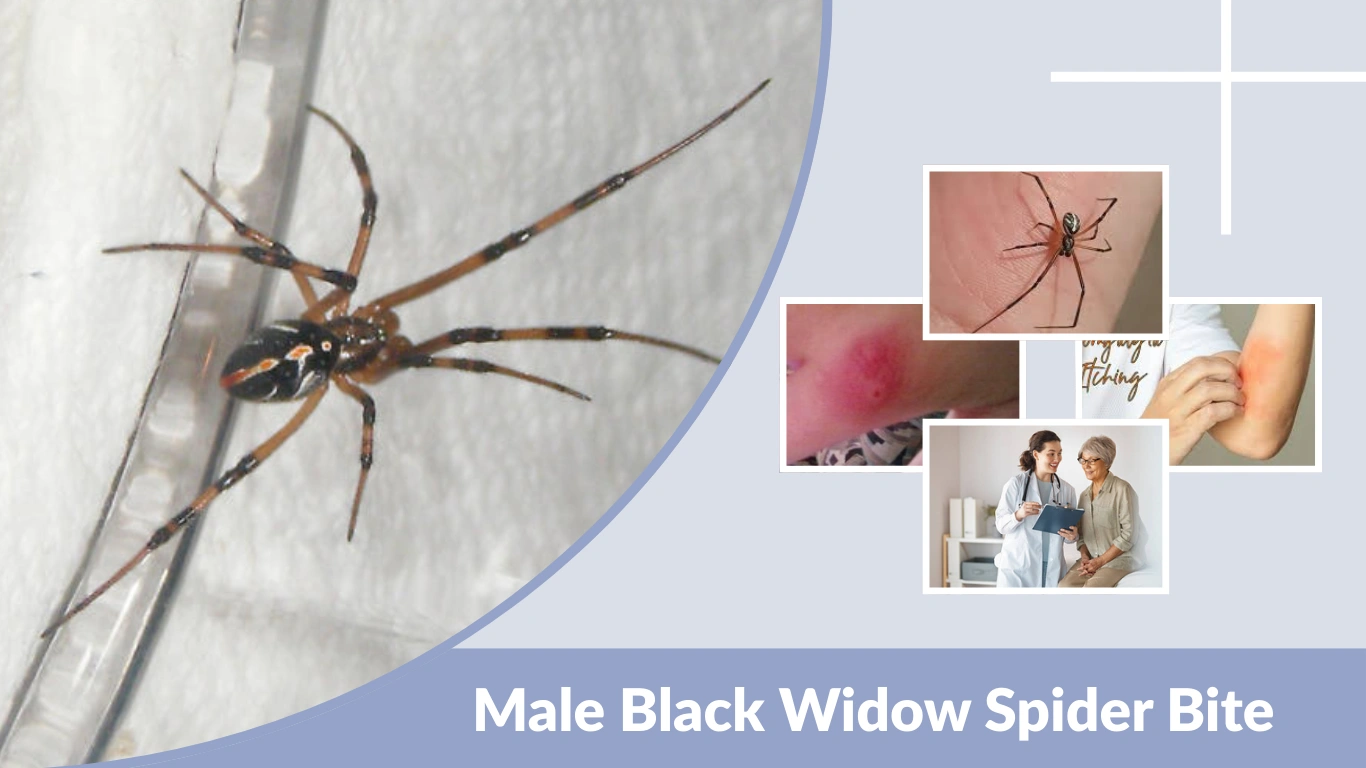
A male black widow spider bite is much less dangerous than a bite from a female black widow. While black widow spiders are known for their potent venom, the male spider rarely bites humans and usually causes only mild symptoms if a bite does occur. Male black widows are smaller, less aggressive, and their venom is not considered medically significant in most cases. Understanding the differences between male and female black widows, recognizing bite symptoms, and knowing how to respond can help reduce fear and ensure proper care if a bite happens.
What Is a Male Black Widow Spider?
The male black widow spider is the smaller and less noticeable counterpart to the well-known female black widow. While most people recognize the female by its shiny black body and red hourglass marking on the abdomen, male black widows look quite different.
Male black widow spiders are typically much smaller, usually about half the size of females or even smaller. Instead of a solid black color, males often have brown, gray, or tan bodies with white, red, or yellow markings on their backs. Their legs are also longer and more slender compared to females.
Another key difference is the strength of their fangs. Male black widows have smaller fangs that often cannot easily penetrate human skin. Because of this, bites from male black widows are extremely rare.
Male black widows are usually found near the webs of female spiders. Their primary role is reproduction, and they spend much of their time searching for female webs rather than hunting prey. Like females, they prefer dark and sheltered environments such as garages, basements, sheds, woodpiles, and outdoor storage areas.
Can a Male Black Widow Spider Bite Humans?

Male black widow spiders can bite humans, but it is very uncommon. In most situations, male spiders are shy and avoid human contact whenever possible.
Because their fangs are small and weak, male black widows often struggle to pierce human skin. Even if they do bite, the amount of venom they inject is extremely small compared to the venom delivered by females.
Most bites occur only when the spider becomes trapped against the skin or feels threatened. For example, this may happen if a spider is accidentally pressed against the body inside clothing or gloves.
Unlike female black widows, which may bite when disturbed in their webs, male black widows are much less defensive. They usually try to escape rather than bite.
For these reasons, confirmed male black widow spider bites are rarely reported.
How Dangerous Is a Male Black Widow Spider Bite?
A male black widow spider bite is generally considered harmless. Although males do possess venom, it is much weaker than the venom produced by female black widows.
Female black widows produce a powerful neurotoxin that affects the nervous system and can cause severe muscle cramps and other systemic symptoms. Male spiders, however, inject very small amounts of venom that rarely cause significant medical problems.
In many cases, a male black widow bite may feel similar to a minor insect bite or a small pinprick. Some people may not even notice that they have been bitten.
The symptoms are usually limited to mild irritation around the bite site. Serious reactions are extremely rare, and most people recover quickly without medical treatment.
However, individuals with allergies or sensitive skin may experience stronger local reactions such as swelling, itching, or redness.
Symptoms of a Male Black Widow Spider Bite
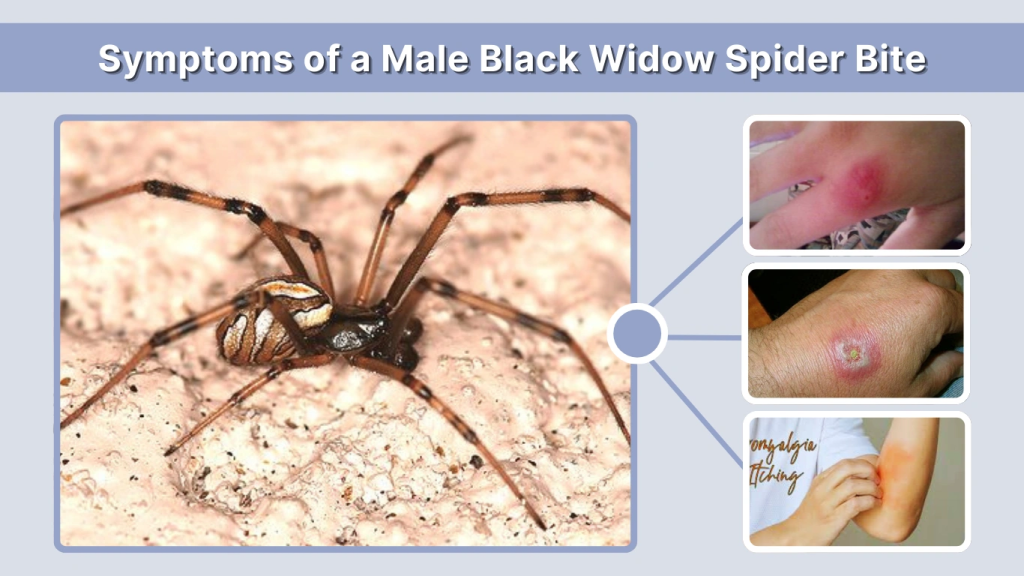
The symptoms of a male black widow spider bite are usually mild and localized. Because the venom is weak and the bite itself may not penetrate deeply, most people experience only minor discomfort.
One of the first symptoms is a slight pinching or stinging sensation at the bite site. This may be followed by mild redness or swelling in the surrounding skin.
Other possible symptoms include:
- Minor pain or irritation
- Slight swelling around the bite
- Redness or small bumps on the skin
- Mild itching or tenderness
These symptoms typically appear within a short time after the bite and usually fade within a few hours or days.
In rare situations, a person may experience a stronger reaction due to individual sensitivity. This could include increased swelling, temporary muscle discomfort, or mild headache.
However, severe symptoms such as intense muscle cramps, nausea, or difficulty breathing are extremely unlikely from a male black widow spider bite. If such symptoms occur, the bite may have come from a female black widow or another venomous spider.
What Does a Male Black Widow Bite Look Like?
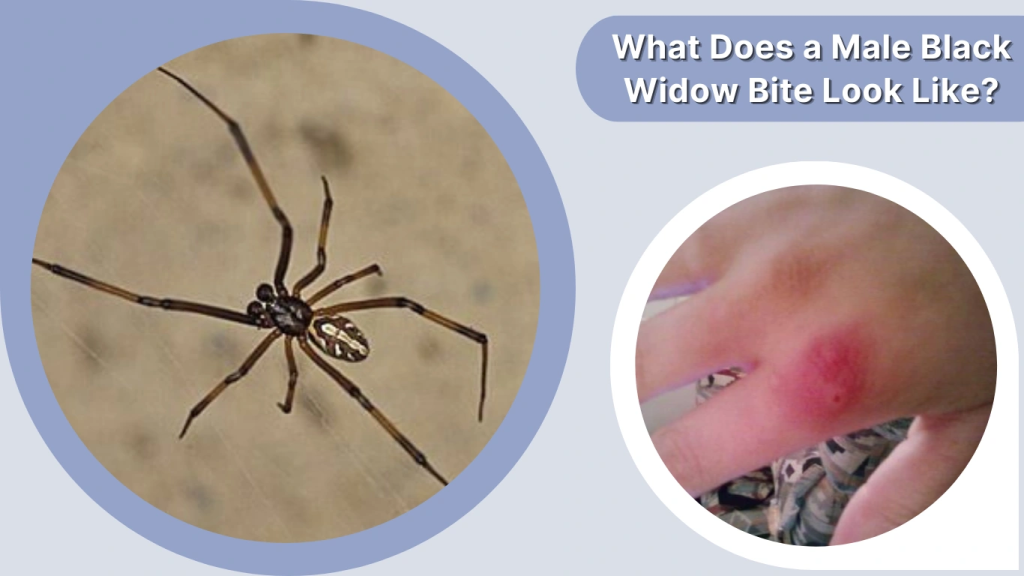
A male black widow spider bite usually appears small and mild compared to bites from more dangerous spiders. The bite may leave two tiny puncture marks where the spider’s fangs touched the skin.
The surrounding area may show slight redness or minor swelling. In many cases, the bite resembles a mosquito bite or small insect sting.
Some people may notice a small raised bump or a slightly irritated patch of skin. The area might feel warm or tender for a short period.
Unlike bites from female black widow spiders, male bites rarely cause severe pain or spreading muscle cramps. The skin reaction usually remains limited to the immediate area around the bite.
Because the symptoms are mild, many people may not realize they were bitten by a male black widow spider. Monitoring the bite site and watching for unusual symptoms is usually enough to ensure proper recovery.
First Aid for a Male Black Widow Spider Bite
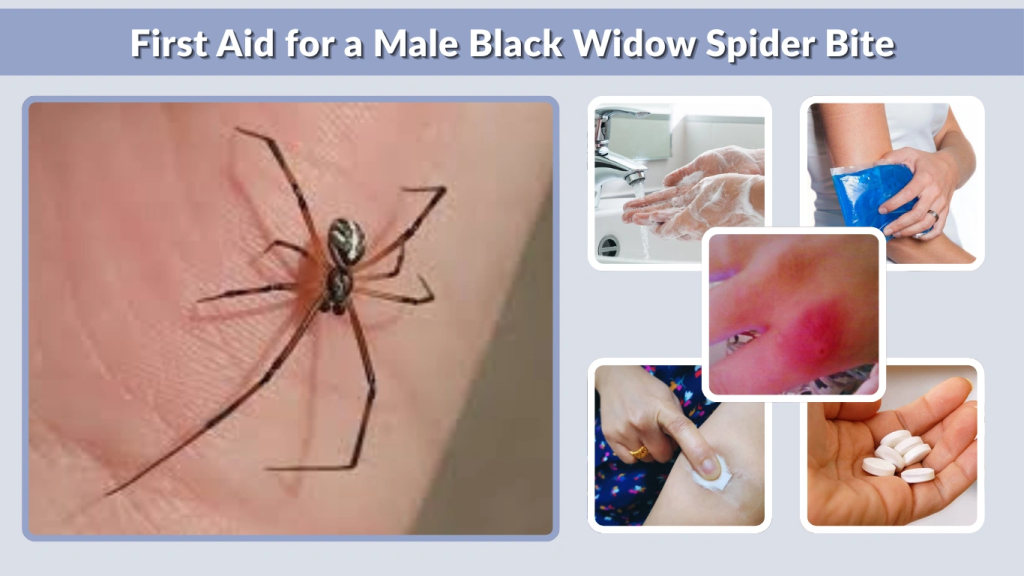
If you believe you have been bitten by a male black widow spider, the first step is to remain calm. Because these bites are usually mild, basic first aid is often enough to manage the symptoms.
Start by washing the bite area gently with soap and warm water. This helps remove bacteria from the skin and lowers the risk of infection.
After cleaning the area, apply a cold compress or an ice pack wrapped in a cloth. Keeping the cold pack on the bite for about 10 to 15 minutes at a time can help reduce swelling and relieve discomfort.
If the bite feels itchy or irritated, an over-the-counter antihistamine or a mild anti-itch cream may help calm the skin. Pain relievers such as ibuprofen or acetaminophen can also be used if there is mild pain or tenderness.
It is important to avoid scratching the bite, as this can irritate the skin and increase the chance of infection. In most cases, the symptoms will improve on their own within a short time.
Monitoring the bite area for any unusual changes is also recommended. If the swelling increases or the symptoms do not improve after a couple of days, medical advice should be sought.
When to See a Doctor
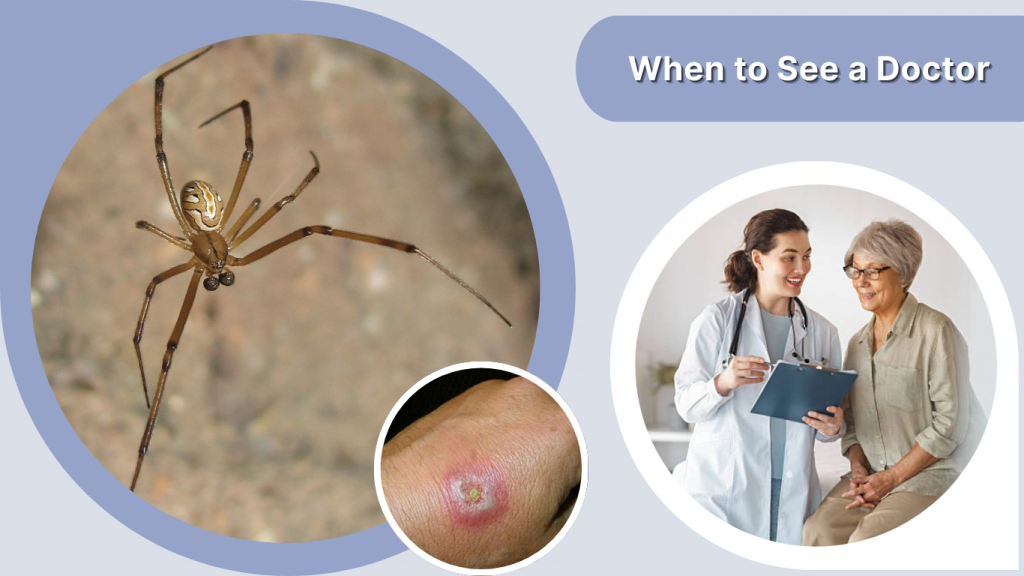
Although male black widow spider bites are generally harmless, there are situations where medical attention may be necessary.
If the bite area becomes increasingly red, swollen, or painful, it could indicate an infection or a stronger reaction to the bite. In these cases, a healthcare professional should examine the wound.
People who develop signs of an allergic reaction should seek immediate medical help. These symptoms may include difficulty breathing, severe swelling, dizziness, or a widespread rash.
Medical attention may also be recommended for young children, elderly individuals, or people with weakened immune systems if they are bitten and develop unusual symptoms.
If severe muscle cramps, nausea, or intense pain occur, the bite may have come from a female black widow or another venomous spider. In such cases, prompt medical care is important.
How to Prevent Black Widow Spider Bites
Preventing black widow spider bites involves reducing contact with areas where these spiders commonly live. Both male and female black widows prefer dark, quiet spaces that are rarely disturbed.
Keeping storage areas clean and organized can help reduce hiding places for spiders. Garages, basements, sheds, and woodpiles should be checked regularly and cleared of clutter.
When working in areas where spiders may live, wearing gloves and protective clothing can help prevent accidental contact. This is especially important when handling firewood, gardening tools, or stored boxes.
It is also helpful to shake out shoes, clothing, and blankets that have been stored in garages or outdoor spaces before using them. Spiders may hide inside these items when they are not being used.
Sealing cracks and gaps around doors, windows, and foundations can prevent spiders from entering the home. Keeping outdoor lights away from doors and windows may also reduce the number of insects that attract spiders.
Taking these precautions can greatly reduce the chances of encountering black widow spiders and prevent unwanted bites.
FAQs
Can a male black widow spider kill you?
No, a male black widow spider cannot kill a human. Their venom is much weaker than that of female black widows, and their fangs often cannot penetrate human skin effectively. Most male black widow bites cause only mild irritation or redness.
Are male black widow spiders venomous?
Yes, male black widow spiders do have venom, but it is much less potent than the venom of females. Even when a male bites, the amount of venom delivered is very small and rarely causes serious symptoms.
How do you tell a male black widow from a female?
Male black widows are smaller and usually lighter in color, often brown or gray with red or white markings. Female black widows are larger, shiny black, and have a distinctive red hourglass mark on the underside of their abdomen.
What should you do if a male black widow bites you?
Clean the bite area with soap and water, apply a cold compress, and monitor the symptoms. Most bites only cause mild irritation and heal quickly. If unusual symptoms develop or the swelling worsens, it is best to consult a doctor.
Are male black widow spiders aggressive?
No, male black widow spiders are not aggressive. They are shy and usually try to avoid humans. Most bites occur only when the spider becomes trapped against the skin or feels threatened.