




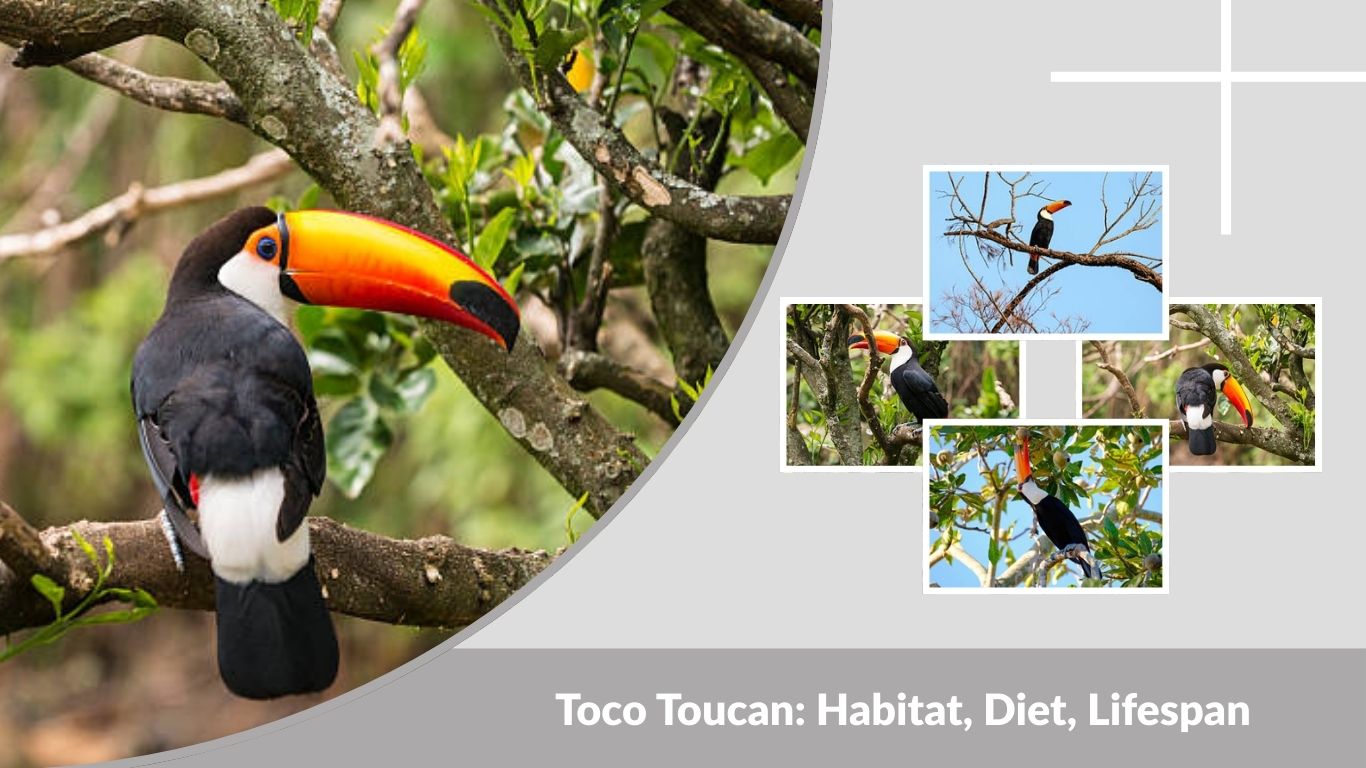
The toco toucan is one of the most recognizable birds in the world, famous for its oversized orange beak and striking black-and-white feathers. As the largest member of the toucan family, this tropical bird has become a symbol of South American wildlife. Found mainly in open forests and savannas, toco toucans are known for their playful behavior, loud calls, and surprisingly lightweight bills. Beyond their colorful appearance, these birds have fascinating adaptations that help them survive in the wild, making them a favorite subject for nature lovers and wildlife photographers alike.
What Is a Toco Toucan?
The toco toucan (Ramphastos toco) is the largest species of toucan, reaching lengths of up to 25 inches, including its beak. Its body is mostly black, with a bright white throat and chest, blue skin around the eyes, and a vivid orange beak tipped with black. While many people use the term “toucan” broadly, toco toucans are distinct from other species due to their size, habitat preferences, and bill structure.
One of the most interesting toco toucan facts is that despite its massive appearance, the bird’s beak is extremely light. It is made of keratin and supported by a honeycomb-like internal structure, allowing the toucan to move with ease while flying and feeding.
Toco Toucan Habitat and Where They Live
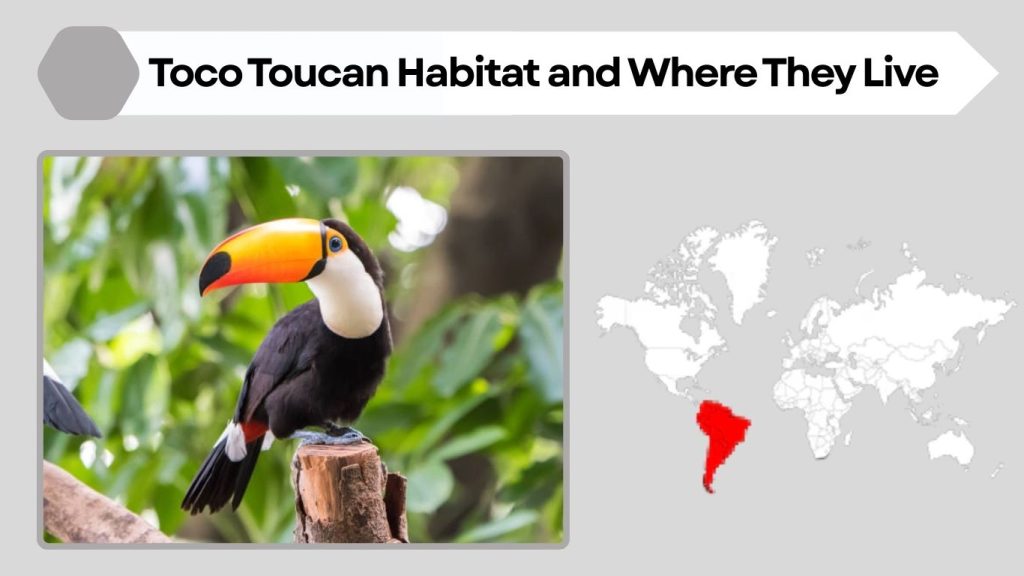
The toco toucan habitat is more open than that of many other toucan species. Rather than living deep in dense rainforests, these birds prefer woodland edges, tropical savannas, grasslands, and lightly forested regions. They are especially common in areas with scattered trees, which provide both food and nesting sites.
Toco Toucan in Brazil and South America
The toco toucan in Brazil is a familiar sight, particularly in the Pantanal wetlands and the Cerrado savanna. Their range also includes Argentina, Bolivia, Paraguay, and parts of northern Uruguay. Brazil hosts one of the largest populations, making it a key country for the species’ survival. These birds are adaptable and can often be seen near farms and human settlements, as long as trees remain available for nesting.
The Iconic Toco Toucan Beak
The most defining feature of the bird is the toco toucan beak, which can measure up to 8 inches long. While it may look heavy, the beak is surprisingly light and well-balanced. One of its main purposes is feeding, allowing the toucan to reach fruit on thin branches that would not support its body weight.
The beak also helps regulate body temperature. Blood vessels near the surface allow excess heat to escape, acting almost like a built-in cooling system. During courtship, toucans may also use their beaks in displays or gentle tapping, strengthening social bonds.
Toco Toucan Diet and Feeding Habits
The toco toucan diet is primarily frugivorous, meaning fruit makes up most of what it eats. However, these birds are opportunistic feeders and will also consume insects, small reptiles, nestling birds, and eggs. Using their long beaks, they pluck fruit and toss it into the air before swallowing it whole.
This feeding behavior plays an important ecological role. Toco toucans help disperse seeds across large distances, contributing to forest regeneration and plant diversity throughout their habitat.
Toco Toucan Lifespan and Survival
In the wild, the toco toucan lifespan typically ranges from 10 to 15 years, depending on environmental conditions and predation. In captivity, where food and medical care are consistent, they may live up to 20 years. Predators include large birds of prey, snakes, and mammals that raid nests. Habitat loss remains one of the biggest threats to wild populations today.
Toco Toucan Eggs, Babies, and Family Life
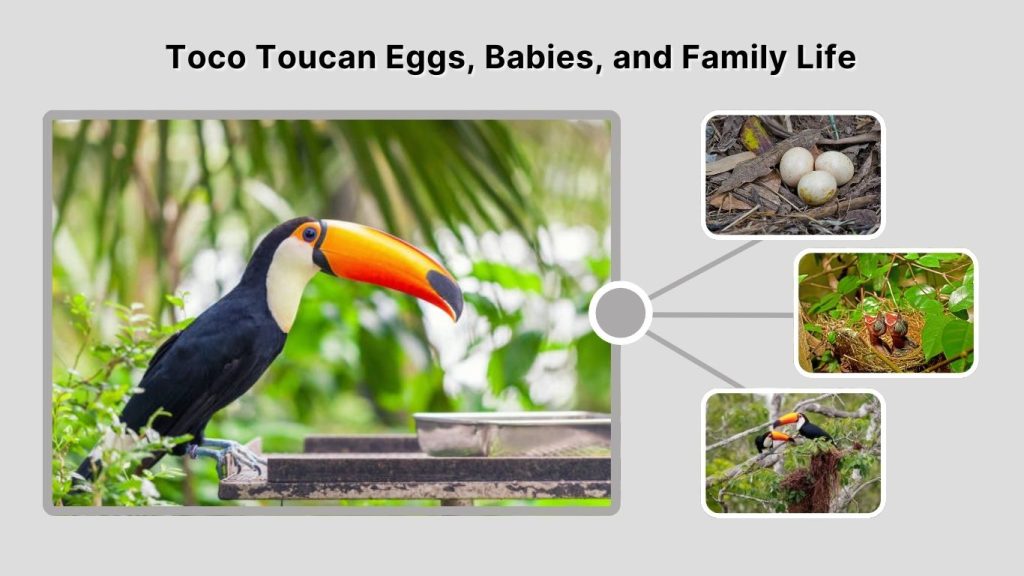
Toco toucans do not build traditional nests. Instead, they rely on natural tree cavities or abandoned woodpecker holes to raise their young. During the breeding season, a pair will choose a secure hollow high above the ground to protect their offspring from predators.
Toco Toucan Eggs
The female typically lays two to four toco toucan eggs, which are white and oval-shaped. Both parents share incubation duties, keeping the eggs warm for about 16 to 18 days. This shared responsibility strengthens the bond between mates and improves the survival rate of the chicks.
Toco Toucan Baby Development
A toco toucan baby hatches blind and featherless, completely dependent on its parents. In the first few weeks, the chicks grow rapidly and develop protective pads on their heels to prevent injury from the hard nest floor. Parents feed them regurgitated fruit and small prey until their beaks and feathers are fully developed. After about eight weeks, the young toucans are ready to leave the nest.
Male and Female Toco Toucan Differences
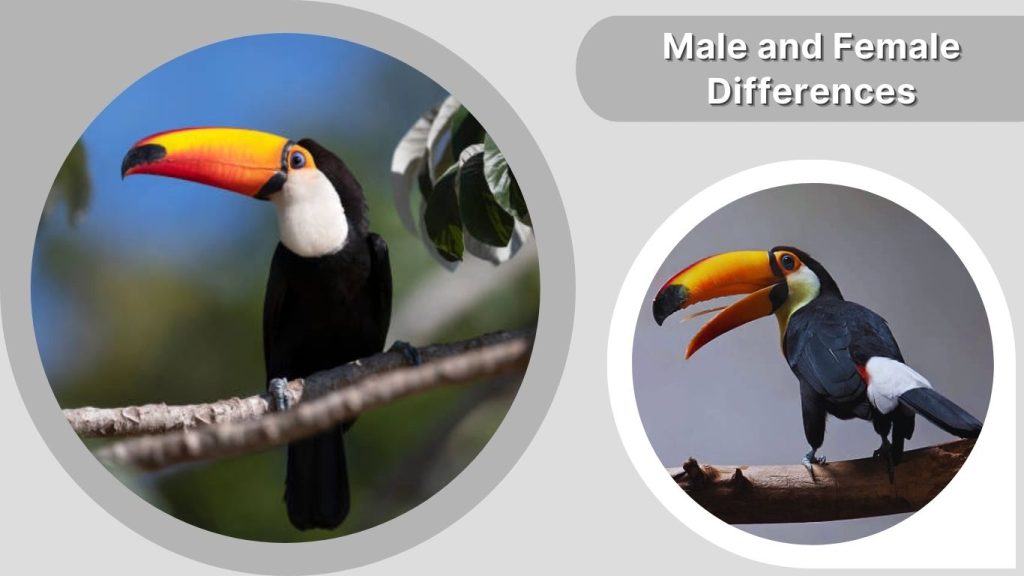
Visually, male and female toco toucans look almost identical, which makes them difficult to tell apart in the wild. However, the toco toucan female is usually slightly smaller than the male and may have a shorter beak. These differences are subtle and often only noticeable when a pair is seen side by side. Behaviorally, both sexes play equal roles in nesting, feeding, and protecting their young.
Can Toco Toucans Fly?
Despite their large beaks, toco toucan flying ability is impressive. They are capable of flight but tend to travel short distances. Their flight pattern consists of quick wing beats followed by gliding, allowing them to move efficiently between trees. On the ground, they prefer hopping rather than walking. This style of movement suits their arboreal lifestyle and keeps them agile in forested environments.
Are Toco Toucans Dangerous?
Many people wonder, are toco toucans dangerous? In general, they are not aggressive toward humans. Toco toucans are shy and prefer to avoid confrontation. While their beaks are strong enough to crack fruit and defend themselves if threatened, attacks on people are extremely rare. Most defensive behavior involves loud calls or beak displays meant to scare off potential predators rather than cause harm.
Fun and Educational Toco Toucan Facts
Toco toucans are full of surprises, making them especially popular in wildlife education and documentaries.
Toco Toucan Facts for Kids
- The toco toucan has the largest beak of any bird relative to its body size
- Its beak is lightweight, not heavy
- Toco toucans love fruit but also eat bugs and small animals
- They often sleep with their beak tucked under their wings
These simple toco toucan facts for kids help explain why the bird looks unusual but functions perfectly in nature.
Toco Toucan Facts (National Geographic Style)
According to well-documented toco toucan facts often highlighted in wildlife research and National Geographic–style features, the bird’s beak helps regulate body temperature and plays a key role in communication. Their seed-spreading behavior also makes them an important species for maintaining healthy ecosystems across South America.
Toco Toucan in Art and Illustration
The bold colors and dramatic beak of the bird make the toco toucan bird drawing a popular subject for artists, illustrators, and children’s books. Wildlife artists often use toucans to represent tropical environments, biodiversity, and conservation themes. Their instantly recognizable shape makes them ideal for educational posters and nature-inspired artwork.
Why the Toco Toucan Is So Special
The toco toucan is more than just a beautiful bird. Its unique adaptations, from its lightweight beak to its seed-dispersing diet, play a vital role in the ecosystems of South America. Whether seen in the wild, studied in documentaries, or admired through art, toco toucans continue to capture human curiosity. Protecting their habitats ensures that future generations can enjoy and learn from one of nature’s most remarkable birds.
FAQs
What do toco toucans eat in the wild?
Toco toucans mainly eat fruit, making them frugivorous birds. However, their diet also includes insects, small reptiles, bird eggs, and nestlings. This varied toco toucan diet helps them get enough protein and allows them to survive in different habitats.
Why is the toco toucan’s beak so big?
The toco toucan beak looks large and heavy, but it is actually very lightweight. It helps the bird reach fruit on thin branches, regulate body temperature, and communicate with other toucans. The beak is a key survival adaptation rather than just a visual feature.
Are toco toucans dangerous to humans?
No, toco toucans are not dangerous to humans. They are generally shy and avoid close contact. While their beaks are strong, they are rarely aggressive and use their beaks mainly for feeding and self-defense when threatened.
How long do toco toucans live?
The average toco toucan lifespan is about 10 to 15 years in the wild. In captivity, where predators and food shortages are not an issue, they can live up to 20 years with proper care.
Where do toco toucans live?
The natural toco toucan habitat includes open forests, savannas, and wetlands in South America. They are most commonly found in Brazil but also live in Argentina, Bolivia, Paraguay, and nearby regions.