




The Chestnut-eared Aracari (Pteroglossus castanotis) is a striking member of the toucan family and one of the most recognizable birds of the South American rainforests. Known for the rich chestnut patch behind its eye and its brightly colored bill, this agile bird thrives in lush tropical environments. Beyond its vivid appearance, the Chestnut-eared Aracari plays an important ecological role as a fruit eater and seed disperser. This article explores its habitat, diet, geographic range, and the behaviors that make it such a fascinating species.
Taxonomy and Classification
Scientifically named Pteroglossus castanotis, the Chestnut-eared Aracari belongs to the family Ramphastidae, which includes toucans and aracaris. Within the genus Pteroglossus, this species is closely related to several other aracaris that share similar body shapes and feeding habits. Subspecies have been described across its wide range, mainly distinguished by subtle differences in plumage coloration and size. Like other aracaris, it is smaller and more streamlined than the large toucans, allowing it to move efficiently through dense forest canopies.
Physical Description and Identification
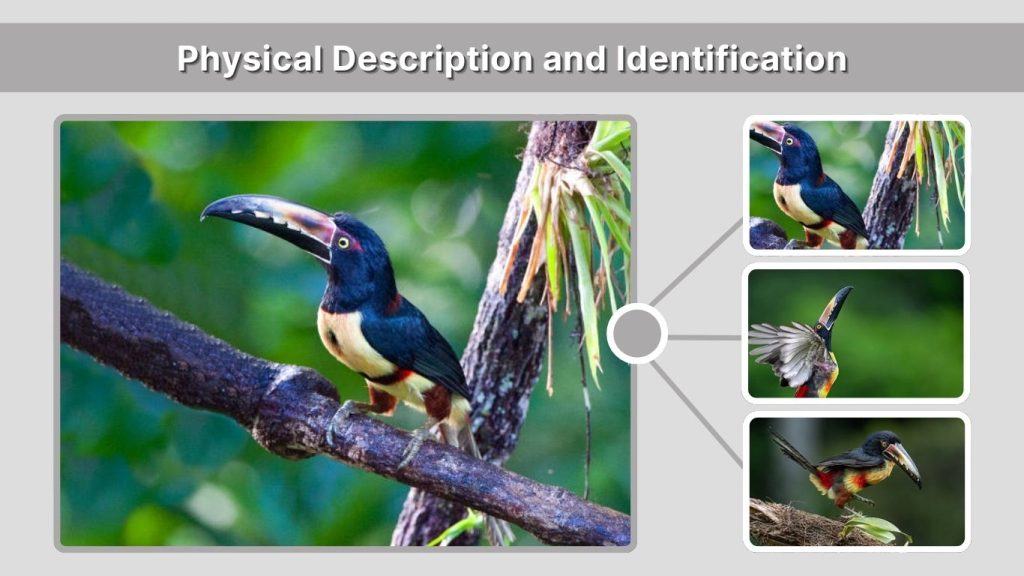
The Chestnut-eared Aracari is a medium-sized bird, typically measuring around 33 to 43 centimeters (13–17 inches) in length. Its body is slim, with a long tail and relatively short legs, giving it an agile and balanced appearance suited for arboreal life.
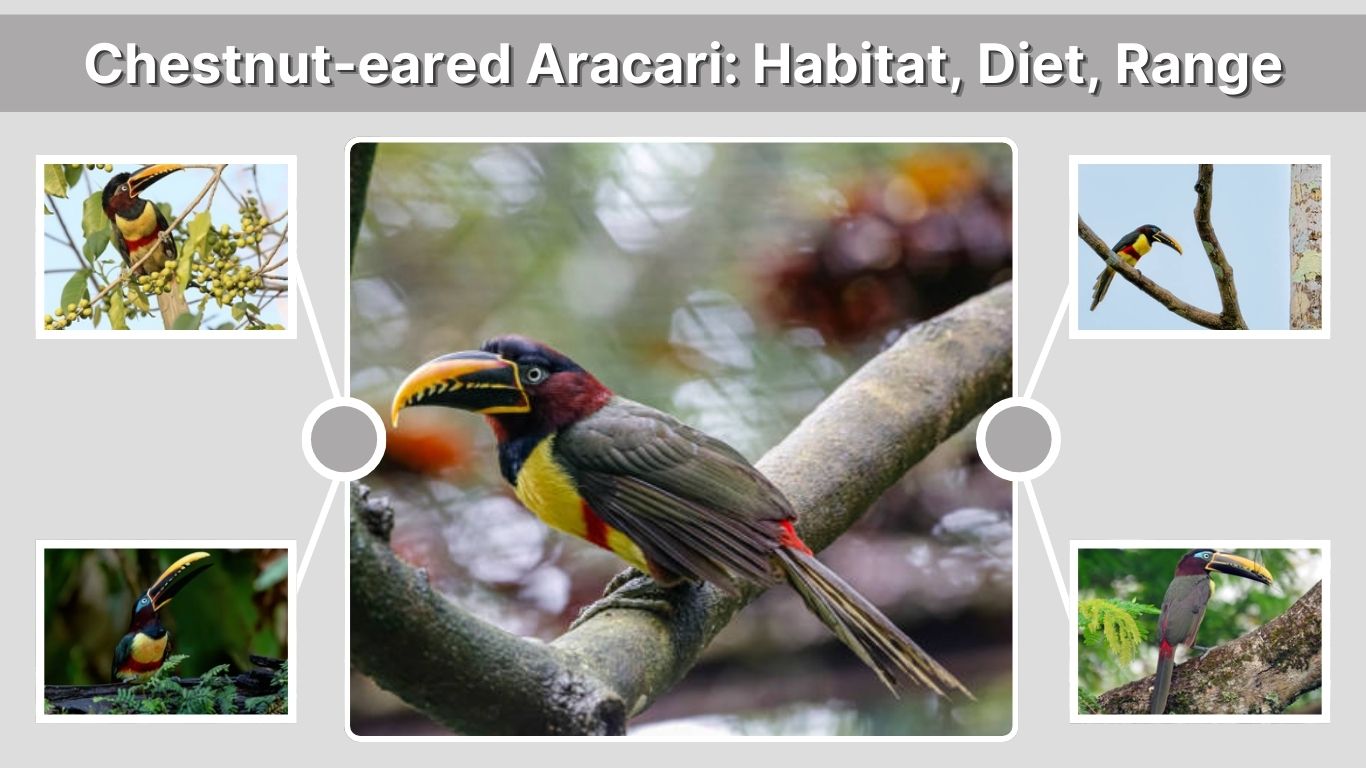
Its plumage is bold yet harmonious. The head and upper body are mostly black, while the most distinctive feature—the chestnut-colored ear patch—stands out clearly behind each eye. The chest is bright yellow, often marked with a narrow black band, while the wings are green with darker edging. The tail feathers commonly show chestnut or maroon hues, adding to the bird’s rich color palette.
The bill is large but lightweight, displaying a mix of yellow, red, and black. This oversized bill is not just for display; it plays an important role in feeding and temperature regulation. Males and females look very similar, though males generally have slightly larger bills.
Habitat and Preferred Environment
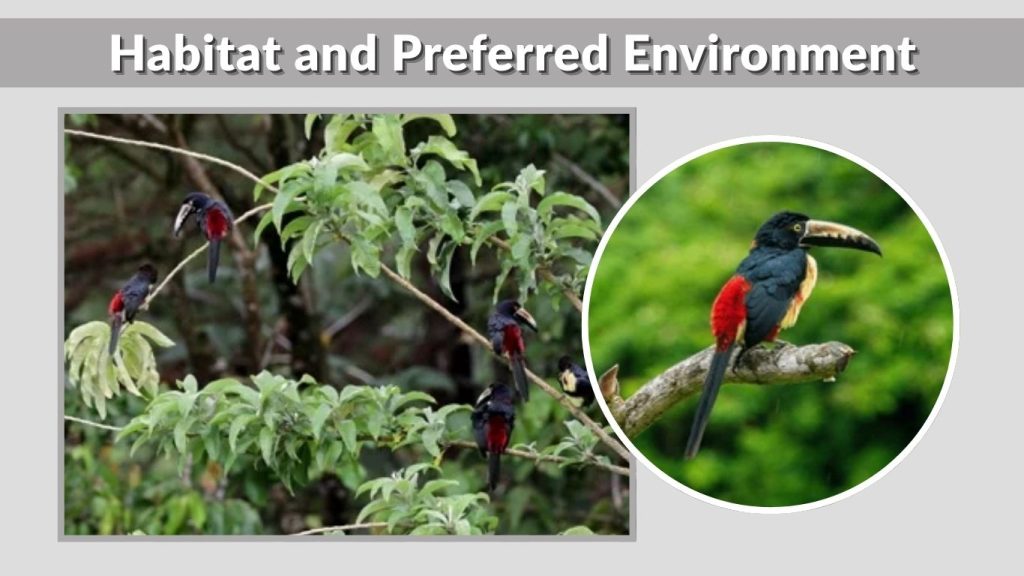
Chestnut-eared Aracaris are strongly associated with lowland tropical rainforests, especially within the Amazon Basin. They inhabit evergreen forests, seasonally flooded forests such as várzea and igapó, and forest edges where fruiting trees are plentiful.
Although they prefer dense forest, these birds show a degree of adaptability. They are often found in secondary growth, forest clearings, and areas near rivers. Their presence in disturbed habitats depends largely on the availability of large trees, which provide essential nesting cavities.
Most individuals are found at low elevations, typically below 1,000 meters. In some regions, they may occur in foothill forests, but they are far less common at higher altitudes.
Geographic Range and Distribution
The Chestnut-eared Aracari has an extensive range across northern and central South America. It is widely distributed throughout the Amazon rainforest, including Brazil, Peru, Bolivia, Ecuador, Colombia, Venezuela, and the Guianas.
Within this vast region, the species is generally common, particularly in well-preserved forest habitats. It often shares its range with other aracari species, but differences in habitat use and feeding height help reduce competition. The Chestnut-eared Aracari is non-migratory, though individuals may move locally in response to seasonal changes in fruit availability.
Diet and Feeding Behavior
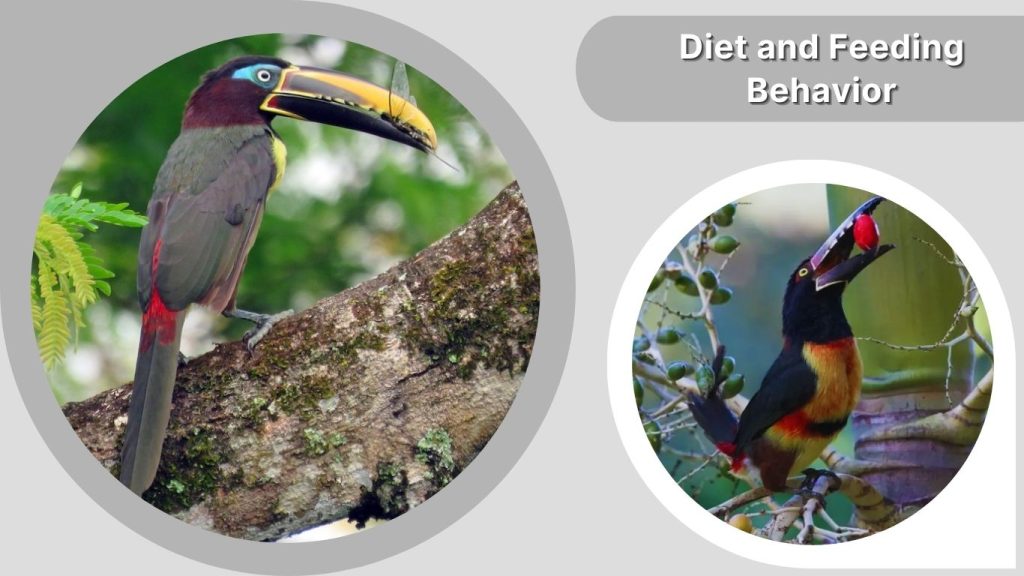
Fruits form the bulk of the Chestnut-eared Aracari’s diet. It consumes a wide variety of berries, figs, and palm fruits, swallowing many of them whole. By dispersing seeds across the forest, the bird plays a vital role in maintaining plant diversity and supporting forest regeneration.
In addition to fruit, it feeds on animal matter to meet its protein needs. Insects, spiders, and other arthropods are commonly eaten, along with small reptiles and amphibians. Like many aracaris, it may occasionally raid nests for eggs or nestlings, particularly during the breeding season.
Foraging typically occurs in the mid to upper canopy. Chestnut-eared Aracaris are often seen feeding in pairs or small groups, moving quickly between trees. Their bills are used skillfully to grasp, toss, and position food before swallowing.
Behavior and Social Structure
Chestnut-eared Aracaris are social and active birds. They are most often observed in pairs or small family groups, though larger flocks may form when food sources are abundant. Strong pair bonds are common, and mates frequently remain together throughout the year.
They are diurnal, spending daylight hours feeding, calling, and interacting with group members. Their vocalizations include a range of yelps, rattles, and chattering calls used to maintain contact and signal excitement or alarm. At night, these birds often roost communally inside tree cavities, a behavior that reflects their social nature and helps conserve body heat.
Breeding and Reproduction
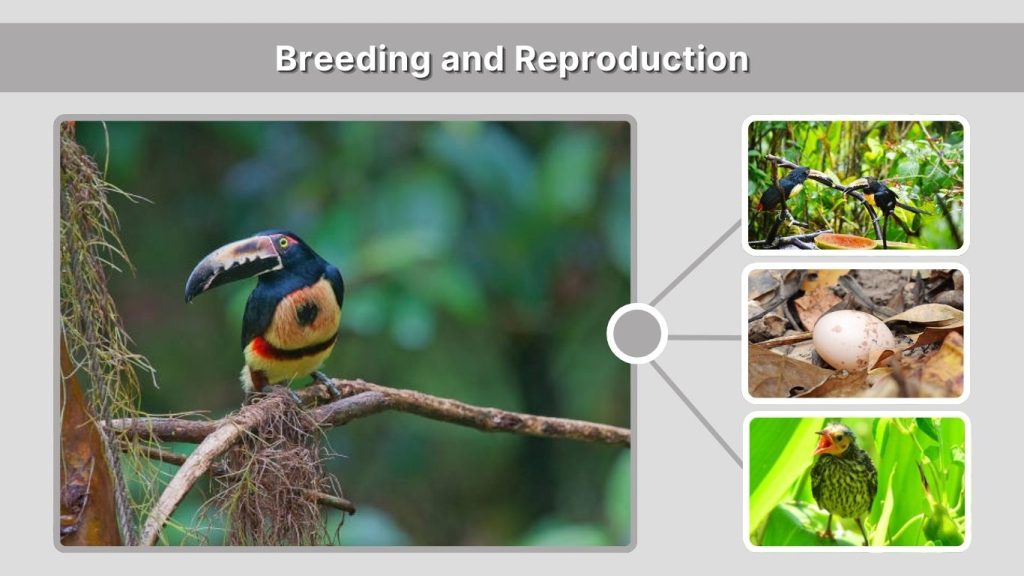
The breeding cycle of the Chestnut-eared Aracari is closely tied to seasonal changes in the rainforest, particularly periods of high fruit availability. In much of its range, breeding coincides with or follows the rainy season, when food resources are abundant and conditions are favorable for raising young.
Courtship behavior strengthens the long-term bonds between mates. Pairs frequently engage in food-sharing, where one bird offers fruit or insects to the other. Mutual preening and close physical contact are also common during this period. These behaviors help maintain pair cohesion and prepare both partners for the demands of nesting.
Chestnut-eared Aracaris nest in natural tree cavities, often using hollows created by woodpeckers or decay. The female typically lays two to four white eggs on the bare floor of the cavity. Both parents share incubation duties, which last roughly two weeks. After hatching, the chicks are blind and completely dependent on their parents. Adults feed them a combination of regurgitated fruit and animal prey, ensuring rapid growth. The young fledge after several weeks but may remain with their parents for some time before becoming fully independent.
Ecological Importance
As primarily fruit-eating birds, Chestnut-eared Aracaris are essential seed dispersers within the Amazon rainforest. By consuming fruit and transporting seeds across wide areas, they help regenerate forest gaps and support plant diversity. Many tropical trees rely on birds like aracaris to spread their seeds away from the parent plant, reducing competition and increasing survival rates.
Their mobility and wide-ranging foraging behavior make them especially important in fragmented landscapes, where they help maintain ecological connections between forest patches. Because they depend on large trees and healthy fruit supplies, their presence often indicates relatively intact forest ecosystems.
Conservation Status and Threats
The Chestnut-eared Aracari is currently classified as Least Concern by the IUCN, reflecting its wide distribution and generally stable population. It remains common in many parts of the Amazon Basin, particularly within protected areas.
Despite this favorable status, the species faces ongoing threats. Deforestation caused by logging, agriculture, and infrastructure development continues to reduce suitable habitat across parts of South America. Habitat fragmentation can limit nesting opportunities by reducing the number of large, cavity-bearing trees. In some areas, individuals are captured for the illegal pet trade, though this threat is localized and less significant than habitat loss.
Long-term conservation of the Chestnut-eared Aracari depends on preserving large tracts of rainforest, enforcing wildlife protection laws, and promoting sustainable land-use practices.
Fascinating Facts About the Chestnut-eared Aracari
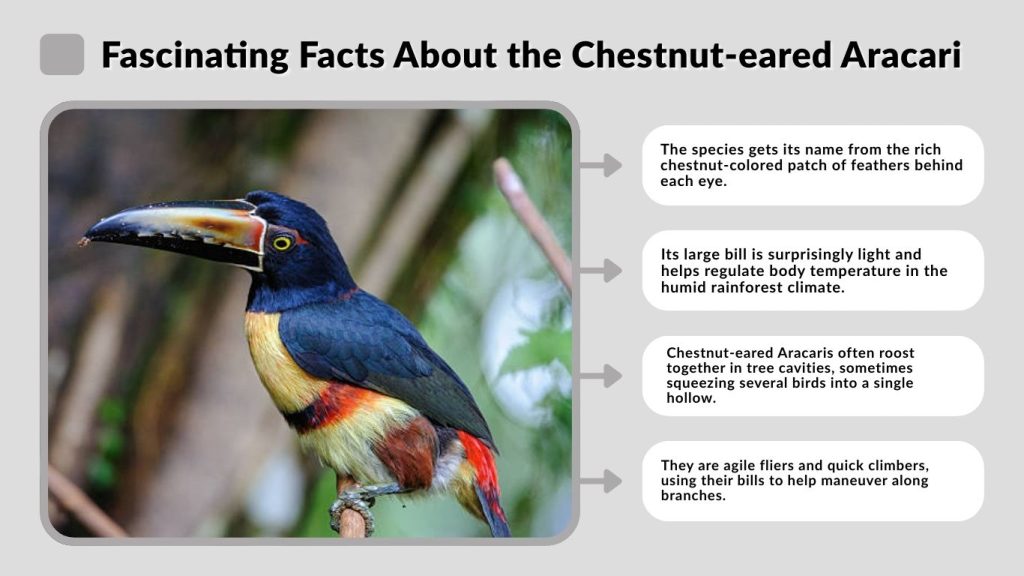
- The species gets its name from the rich chestnut-colored patch of feathers behind each eye.
- Its large bill is surprisingly light and helps regulate body temperature in the humid rainforest climate.
- Chestnut-eared Aracaris often roost together in tree cavities, sometimes squeezing several birds into a single hollow.
- They are agile fliers and quick climbers, using their bills to help maneuver along branches.
- In captivity, they have been known to live for over 20 years under proper care.
Chestnut-eared Aracari vs. Similar Species
The Chestnut-eared Aracari is sometimes confused with other aracari species, such as the Collared Aracari. However, it can be distinguished by its chestnut ear patch and its primarily South American range. While both species share similar diets and social behaviors, the Chestnut-eared Aracari is more strongly associated with the Amazon rainforest and flooded forest habitats.
FAQs
Is the Chestnut-eared Aracari a toucan?
Yes. The Chestnut-eared Aracari is a member of the toucan family, Ramphastidae. Aracaris are smaller, slimmer relatives of the larger toucans.
Where does the Chestnut-eared Aracari live?
It lives throughout much of the Amazon Basin in South America, including Brazil, Peru, Colombia, Ecuador, and neighboring countries.
What does the Chestnut-eared Aracari eat?
Its diet consists mainly of fruit, supplemented with insects, small reptiles, amphibians, and occasionally eggs or nestlings.
Is the Chestnut-eared Aracari endangered?
No. It is currently listed as Least Concern, although habitat loss remains a long-term threat.
How long do Chestnut-eared Aracaris live?
In the wild, they typically live around 10 to 15 years, with longer lifespans reported in captivity.