


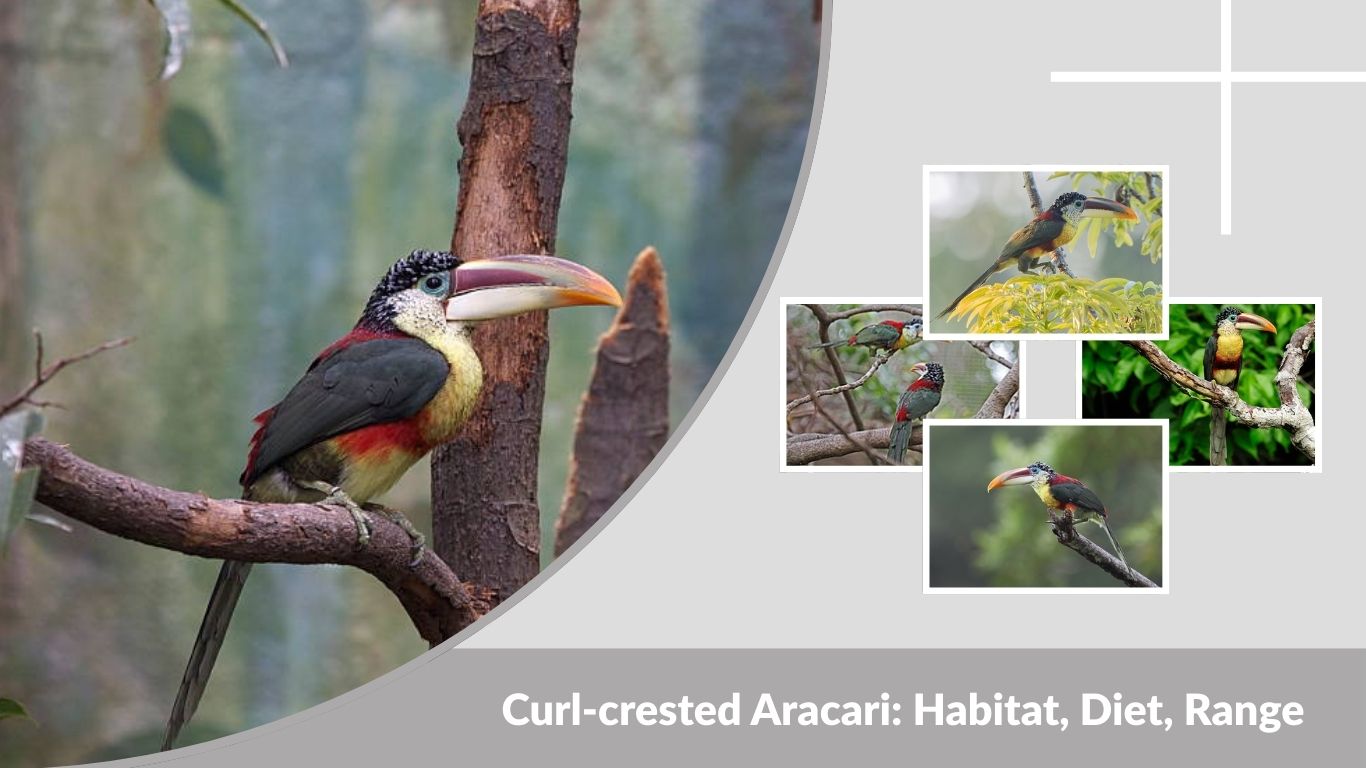
The Curl-crested Aracari (Pteroglossus beauharnaesii) is one of the most unusual and eye-catching members of the toucan family. Instantly recognizable by the stiff, curled feathers that form a distinctive crest on its head, this bird is found deep within the Amazon rainforest. Although less well known than some of its relatives, the Curl-crested Aracari plays an important role in its ecosystem as a fruit eater and seed disperser. This article explores its habitat, diet, geographic range, and the behaviors that make it such a remarkable species.
Taxonomy and Classification
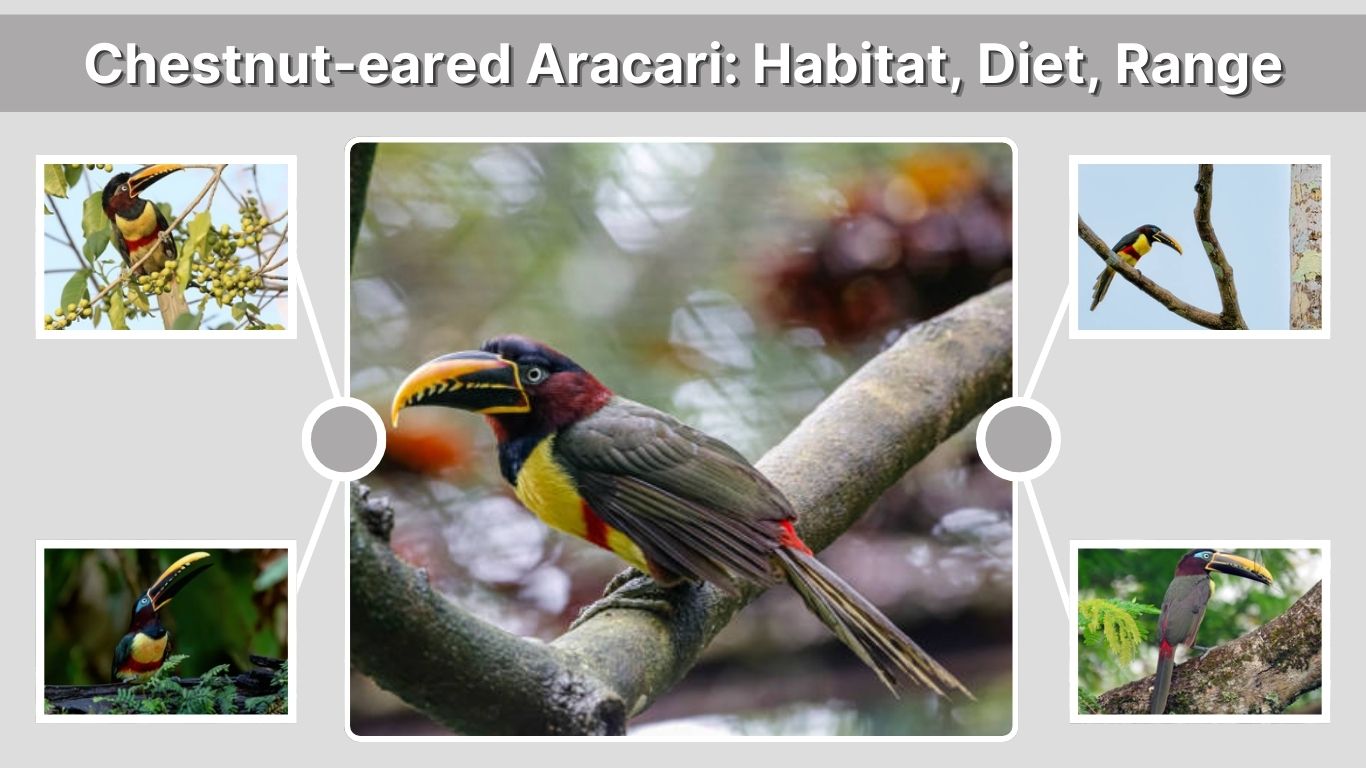
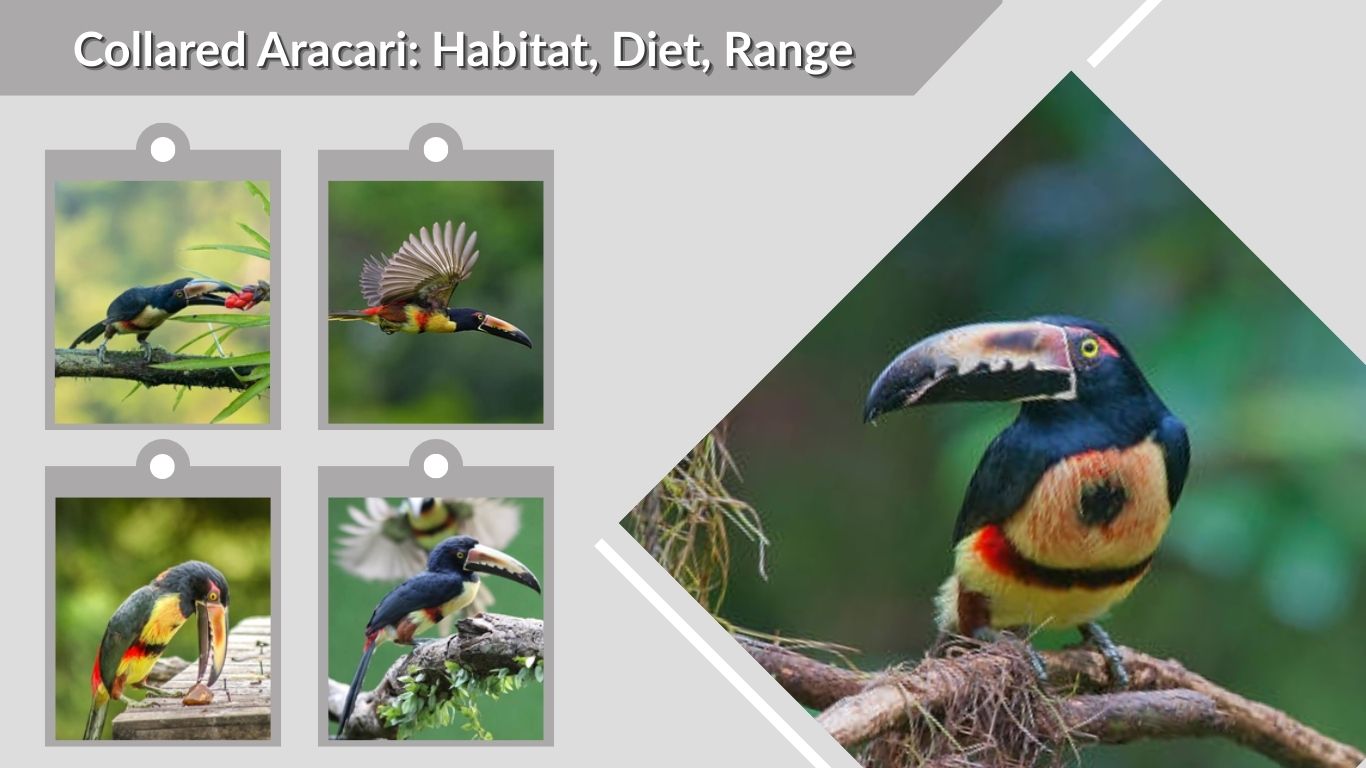
The Curl-crested Aracari is scientifically classified as Pteroglossus beauharnaesii and belongs to the family Ramphastidae, which includes toucans and other aracaris. Within the genus Pteroglossus, it is closely related to species such as the Chestnut-eared and Collared Aracaris but stands apart due to its unique crest. Unlike many widespread aracari species, the Curl-crested Aracari has a more limited and patchy distribution, making it one of the less frequently encountered members of the group.
Physical Description and Identification
The Curl-crested Aracari is a medium-sized bird, measuring approximately 35 to 40 centimeters (14–16 inches) in length. Its body is slim with a long tail, allowing it to move efficiently through the forest canopy.
Its most distinctive feature is the curled crest that covers the top of its head. These feathers are stiff, glossy, and appear almost plastic-like, curling forward rather than lying flat like typical feathers. The rest of the plumage is equally striking. The head, throat, and upper body are glossy black, contrasting sharply with the bright yellow chest, which is often crossed by a narrow black band. The wings are deep green, while the tail feathers show reddish or chestnut tones.
The bill is large yet lightweight, patterned in yellow, black, and red. Like other aracaris, this oversized bill is highly functional, helping the bird manipulate food and regulate body temperature. Males and females look very similar, though males tend to have slightly larger bills.
Habitat and Preferred Environment
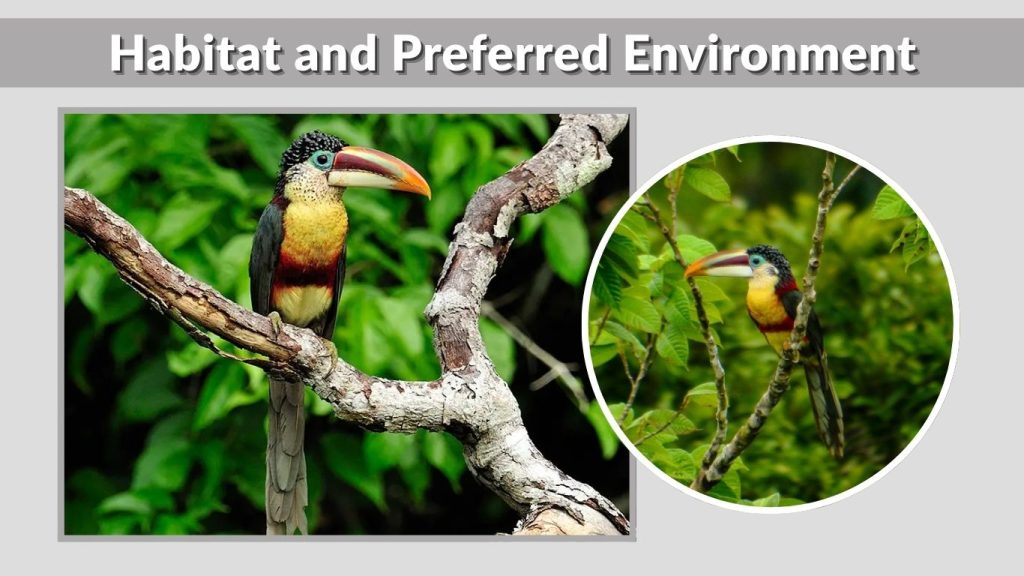
Curl-crested Aracaris are strongly associated with lowland Amazon rainforest, where dense vegetation and abundant fruiting trees provide ideal conditions. They are most commonly found in terra firme forests that do not experience seasonal flooding, though they may occasionally venture into nearby forest edges.
This species shows less tolerance for habitat disturbance than some other aracaris. It relies heavily on mature forests with large trees that offer suitable nesting cavities and stable food supplies. As a result, intact rainforest is essential for its survival.
The Curl-crested Aracari typically occurs at elevations below 1,000 meters. It is rarely found in foothill or montane forests, reinforcing its close association with lowland Amazonian ecosystems.
Geographic Range and Distribution
The Curl-crested Aracari has a relatively restricted range within the western and central Amazon Basin. It is found primarily in parts of Brazil, Peru, and Bolivia, though its distribution within these countries is patchy.
Compared to other aracaris, this species is generally uncommon. Even within suitable habitat, it may be encountered less frequently, likely due to its low population density and preference for undisturbed forest. The Curl-crested Aracari is non-migratory, but individuals may move locally in response to seasonal changes in fruit availability.
Diet and Feeding Behavior
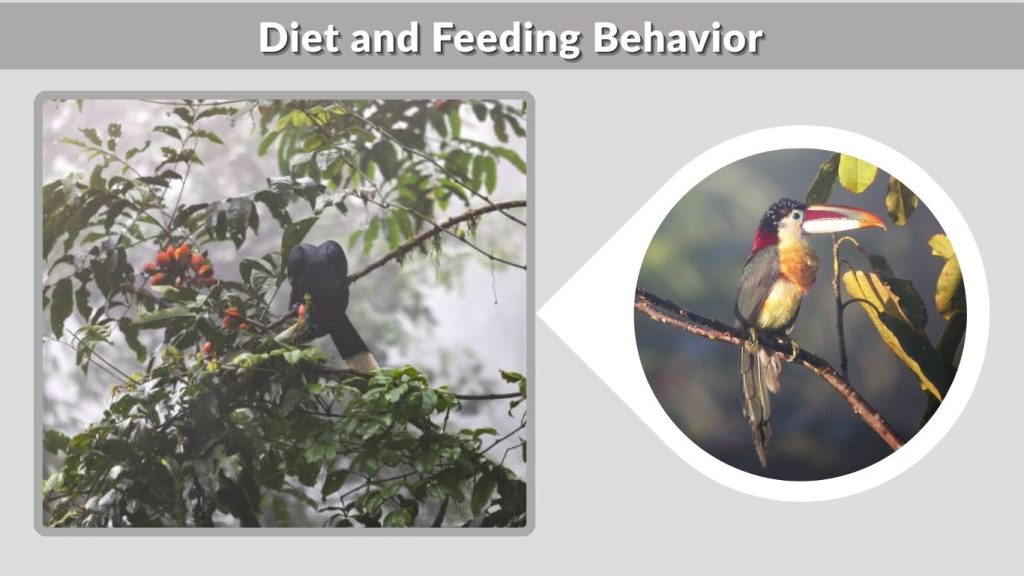
Fruit makes up the majority of the Curl-crested Aracari’s diet. It feeds on a wide variety of rainforest fruits, including figs and palm fruits, swallowing many of them whole. Through this feeding behavior, the bird plays a key role in dispersing seeds and maintaining forest diversity.
In addition to fruit, the Curl-crested Aracari supplements its diet with animal matter. Insects, spiders, and other arthropods are commonly consumed, along with small vertebrates such as lizards and tree frogs. Like other aracaris, it may occasionally prey on eggs or nestlings, particularly during the breeding season when protein demands increase.
Foraging usually takes place in the mid to upper canopy. Curl-crested Aracaris are often seen feeding in pairs or small groups, moving quietly through the trees and using their bills with precision to grasp and position food.
Behavior and Social Structure
Curl-crested Aracaris are social but somewhat less gregarious than some other aracari species. They are most often observed in pairs or small family groups rather than large flocks.
They are diurnal birds, active during daylight hours and resting at night. Vocalizations include sharp calls and rattling sounds used to maintain contact between mates and group members. At night, Curl-crested Aracaris often roost inside tree cavities, sometimes sharing these spaces with other individuals—a behavior that reflects both their social nature and reliance on suitable nesting trees.
Breeding and Reproduction
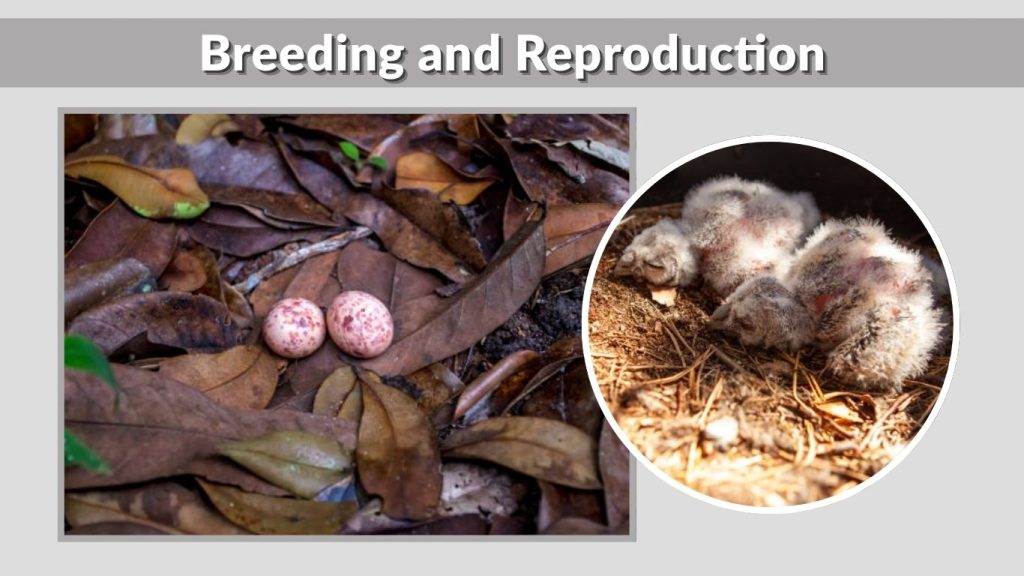
The breeding season of the Curl-crested Aracari is closely linked to rainfall patterns in the Amazon Basin. Nesting typically occurs during periods when fruit is abundant, ensuring that adults can meet the nutritional demands of raising chicks. While the exact timing varies by region, breeding generally takes place during or shortly after the rainy season.
Courtship behavior in this species is subtle but meaningful. Pairs engage in food-sharing, with one bird offering fruit or small prey to the other, reinforcing their long-term bond. Mutual preening and close perching are also common during this period.
Curl-crested Aracaris nest in natural tree cavities, often those formed by woodpeckers or natural decay. The female usually lays two to four white eggs on the bare cavity floor. Both parents share incubation duties, which last approximately two weeks. After hatching, the chicks are blind and featherless and depend entirely on their parents for warmth and food. Adults feed them regurgitated fruit and protein-rich prey until they fledge several weeks later.
Ecological Importance
As primarily fruit-eating birds, Curl-crested Aracaris play an essential role in Amazonian ecosystems. By dispersing seeds across wide areas, they help regenerate forest gaps and maintain plant diversity. Many tropical tree species depend on birds like aracaris to transport their seeds away from the parent plant, improving seed survival rates.
Because this species relies heavily on intact forest and large fruiting trees, its presence often indicates relatively healthy rainforest conditions. In this way, the Curl-crested Aracari serves as a valuable indicator species for conservationists monitoring forest health.
Conservation Status and Threats
The Curl-crested Aracari is currently listed as Least Concern by the IUCN. However, its relatively limited range and preference for undisturbed habitat make it more vulnerable to environmental change than some other aracari species.
Deforestation poses the greatest threat, particularly in parts of the Amazon where logging, agriculture, and road development continue to reduce forest cover. Habitat fragmentation can isolate populations and decrease the availability of nesting cavities. Although the species is not commonly targeted in the pet trade, any removal from the wild can have a disproportionate impact due to its lower population density.
Protecting large, continuous areas of Amazon rainforest is critical for the long-term survival of the Curl-crested Aracari.
Fascinating Facts About the Curl-crested Aracari
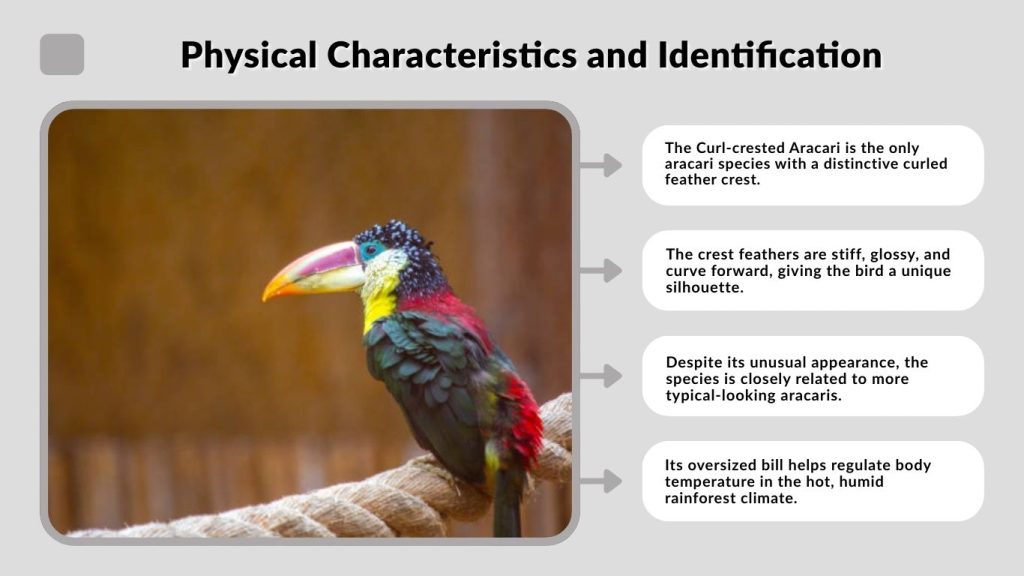
- The Curl-crested Aracari is the only aracari species with a distinctive curled feather crest.
- The crest feathers are stiff, glossy, and curve forward, giving the bird a unique silhouette.
- Despite its unusual appearance, the species is closely related to more typical-looking aracaris.
- Its oversized bill helps regulate body temperature in the hot, humid rainforest climate.
- Curl-crested Aracaris often roost communally in tree cavities, sometimes sharing space with multiple individuals.
Curl-crested Aracari vs. Other Aracaris
Compared to other aracari species, such as the Chestnut-eared and Collared Aracaris, the Curl-crested Aracari is more specialized in its habitat preferences. While many aracaris tolerate disturbed forests, this species is more strongly associated with mature, intact rainforest. Its curled crest makes it unmistakable, and its limited range sets it apart from more widespread relatives.
FAQs
What makes the Curl-crested Aracari unique?
Its stiff, curled crest feathers are unlike those of any other toucan or aracari, making it instantly recognizable.
Where does the Curl-crested Aracari live?
It is found in parts of the western and central Amazon Basin, primarily in Brazil, Peru, and Bolivia.
What does the Curl-crested Aracari eat?
It eats mostly fruit, supplemented with insects, small vertebrates, and occasionally eggs or nestlings.
Is the Curl-crested Aracari rare?
It is generally considered uncommon due to its limited and patchy distribution, though it is not currently endangered.
Is the Curl-crested Aracari endangered?
No. It is listed as Least Concern, but habitat loss remains a significant long-term threat.