




Beluga whales are one of the most recognizable marine mammals in the Arctic. Known for their bright white color and expressive faces, these whales are often called the “sea canaries” because of their wide range of vocal sounds. Highly social and well adapted to icy waters, belugas play an important role in Arctic ecosystems. In this guide, you’ll learn about beluga whale habitat, diet, lifespan, unique features, and where these fascinating whales live.
What Is a Beluga Whale?
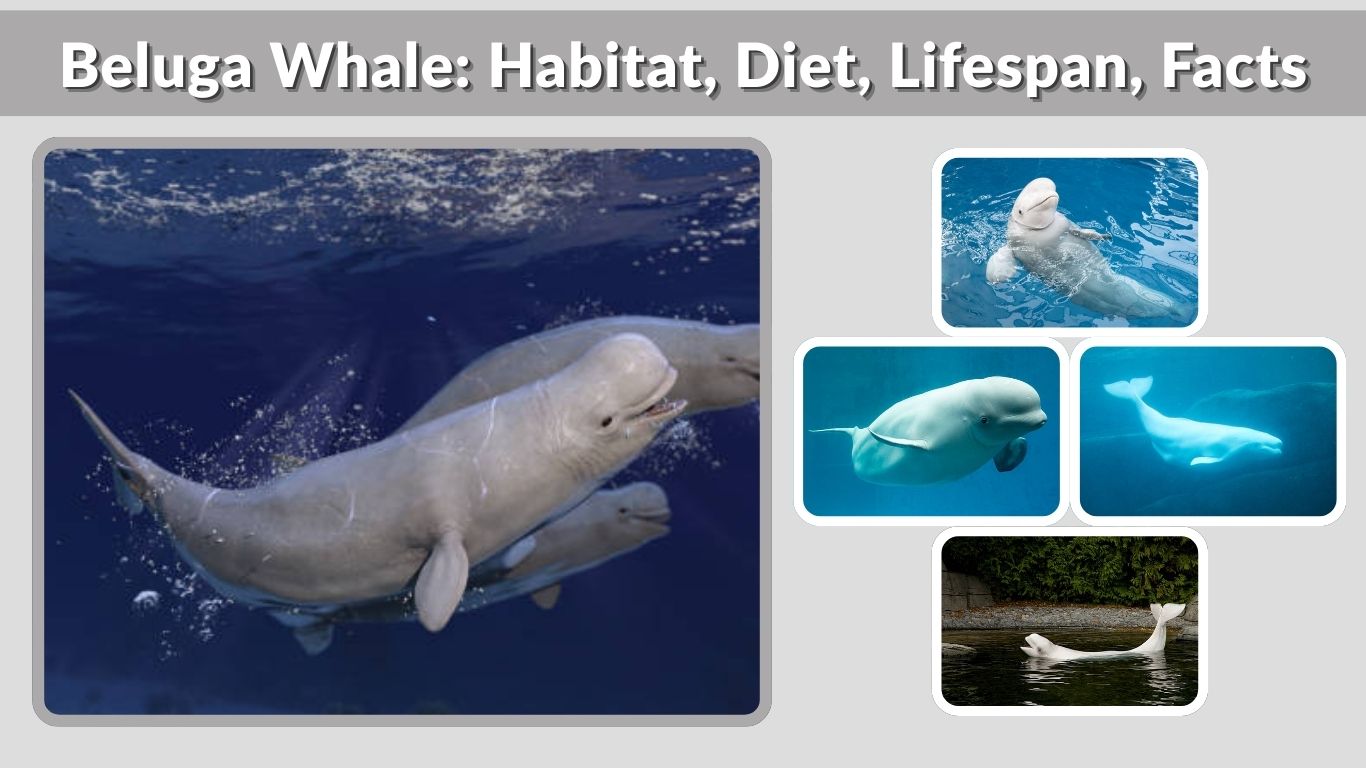
The beluga whale (Delphinapterus leucas) is a medium-sized toothed whale that belongs to the family Monodontidae, which it shares with the narwhal. Unlike many other whale species, belugas do not have a dorsal fin. This adaptation allows them to swim easily beneath sea ice without the risk of scraping or injury.
Belugas are often referred to as “sea canaries” because they produce a wide range of whistles, clicks, chirps, and squeals. These sounds are used for communication, navigation, and locating food in murky Arctic waters.
They are highly social animals, typically traveling in pods that can range from just a few individuals to several hundred during migration or feeding periods.
Beluga Whale Identification Guide
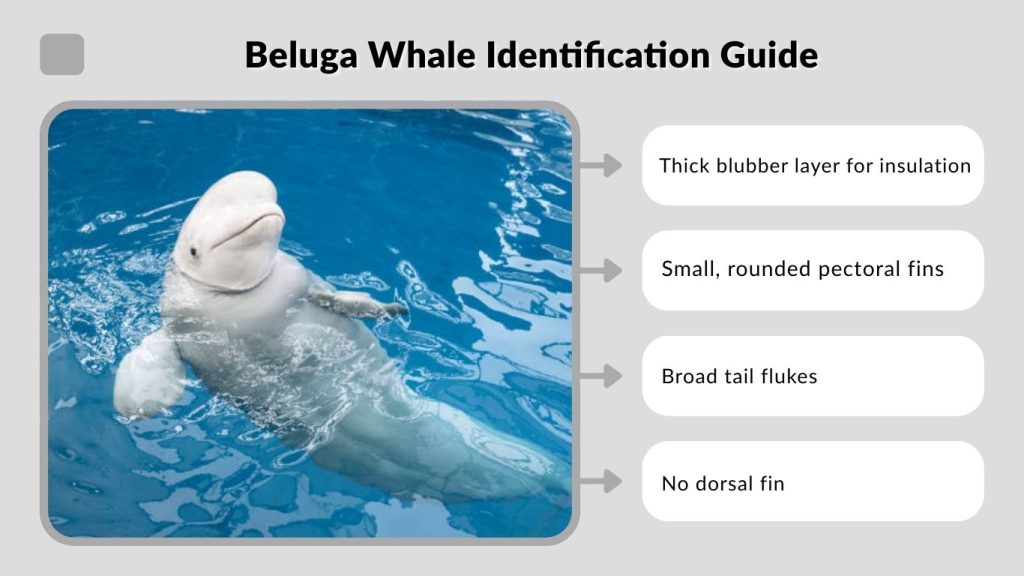
Beluga whales are easy to identify due to their distinctive appearance and behavior.
Beluga Whale Face and Unique Features
One of the most notable features of the beluga whale is its rounded forehead, known as the “melon.” This flexible structure helps focus sound waves for echolocation. The melon also contributes to the whale’s expressive facial appearance.
Unlike most whales, belugas have a flexible neck because their neck vertebrae are not fused. This allows them to turn their heads from side to side, giving them a wide range of movement. Their upturned mouth shape often makes them appear to be smiling, which adds to their friendly look.
Physical Characteristics
Adult beluga whales are bright white, a coloration that provides camouflage against Arctic sea ice. In contrast, calves are born dark gray or brown and gradually lighten as they mature.
Other key features include:
- Thick blubber layer for insulation
- Small, rounded pectoral fins
- Broad tail flukes
- No dorsal fin
Their thick blubber, which can be several inches deep, protects them from freezing temperatures and stores energy during food-scarce seasons.
Size and Weight
Beluga whales typically measure between 10 and 18 feet in length. Males are generally larger than females. Adult belugas weigh between 1,100 and 3,500 pounds, depending on age and sex.
Despite their solid build, they are agile swimmers and capable of navigating narrow ice channels and shallow coastal waters.
Where Do Beluga Whales Live?
Beluga whales are primarily found in cold Arctic and sub-Arctic waters. Their range is closely linked to sea ice patterns and seasonal migrations.
Global Distribution
Belugas inhabit regions including:
- The Arctic Ocean
- Coastal Alaska
- Northern Canada
- Greenland
- Northern Russia
Some populations are year-round Arctic residents, while others migrate seasonally between offshore winter habitats and coastal summer areas.
Beluga Whale Habitat
Belugas prefer shallow coastal environments during the summer months. They are often found in:
- Bays
- Estuaries
- River mouths
- Nearshore coastal waters
These areas may provide warmer water temperatures, protection from predators, and abundant food sources.
During winter, belugas move to deeper offshore waters covered by sea ice. Their lack of a dorsal fin and strong bodies allow them to swim beneath ice sheets and surface through breathing holes.
Seasonal Migration Patterns
Beluga whales migrate seasonally in response to ice formation and food availability. In summer, they gather in large groups in shallow coastal regions. In winter, they move toward deeper Arctic waters where cracks in the ice allow access to air.
Their ability to adapt to extreme seasonal changes is one of the reasons they thrive in some of the harshest marine environments on Earth.
Beluga Whale Diet Explained
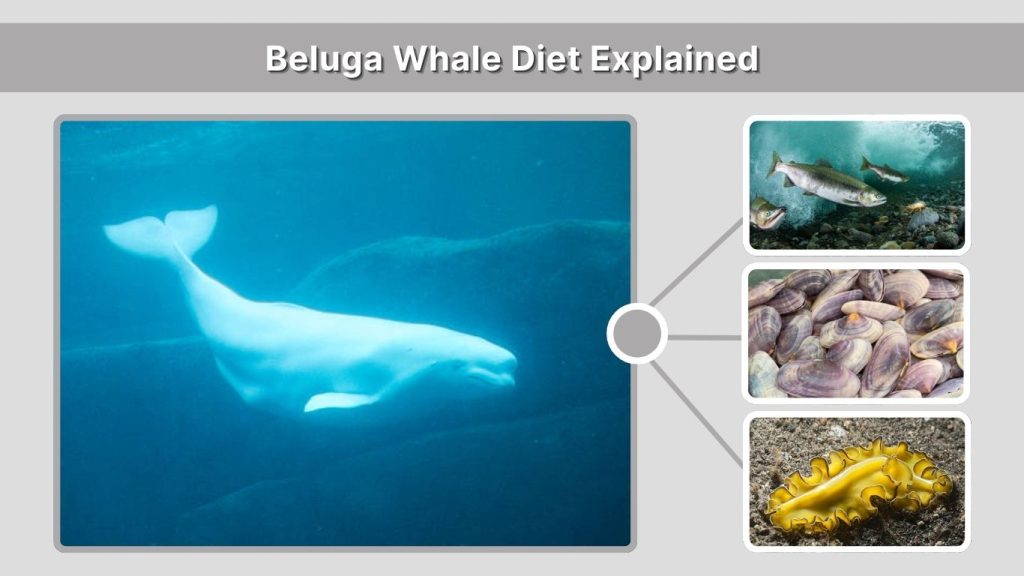
Beluga whales are carnivorous and rely on a varied diet of marine animals found in Arctic waters.
What Do Beluga Whales Eat?
Beluga whale diet typically includes:
- Fish such as salmon, cod, and herring
- Crustaceans
- Shrimp
- Squid
- Marine worms
Their diet can vary depending on region and season. In coastal estuaries, they may feed more heavily on fish species that migrate into rivers.
Hunting and Feeding Behavior
Belugas use echolocation to locate prey in dark or murky waters. They emit sound waves that bounce off objects and return as echoes, helping them determine the size, shape, and distance of potential food.
They are skilled divers and can reach depths of over 2,000 feet when searching for prey. However, many feeding dives are much shallower.
Belugas may hunt alone or cooperatively within pods. In some cases, they work together to herd fish into tight groups, making them easier to capture.
Beluga Whale Lifespan and Reproduction
Beluga whales are relatively long-lived marine mammals. Their lifespan depends on environmental conditions, food availability, and human impacts such as pollution or habitat disturbance.
Beluga Whale Lifespan
On average, beluga whales live between 35 and 50 years in the wild. Some individuals may live even longer under favorable conditions. Females often live slightly longer than males, especially in stable populations with minimal threats.
Because belugas mature slowly and produce relatively few calves during their lifetime, population recovery can take many years if numbers decline.
Reproduction and Calves
Beluga whales typically mate in late winter or early spring. After a gestation period of about 14 to 15 months, females give birth to a single calf.
Newborn calves measure around 4 to 5 feet long and are usually dark gray or brown. This darker coloration gradually fades to white as they grow older. Calves nurse for up to two years and remain close to their mothers during early development.
Belugas are highly social, and calves benefit from group protection within pods. Other females may assist in caring for young whales, strengthening social bonds.
Growth Stages
Beluga whales progress through three main stages:
- Calf stage – Dependent on mother for milk and protection
- Juvenile stage – Learning hunting and social behaviors
- Adult stage – Reproductive maturity and pod leadership roles
This gradual development supports their complex social structure and survival in harsh Arctic environments.
Are Beluga Whales Endangered?
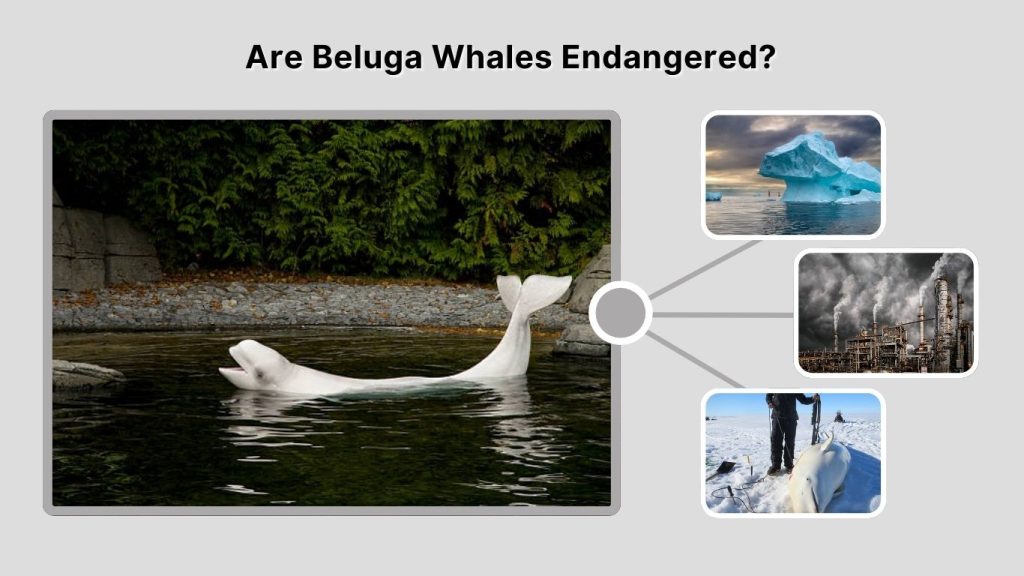
The conservation status of beluga whales varies by region. Globally, they are currently listed as Near Threatened by the International Union for Conservation of Nature (IUCN), but some local populations are considered endangered.
Major Threats
Beluga whales face several modern challenges:
- Climate change – Melting sea ice alters migration patterns and prey availability
- Pollution – Industrial contaminants accumulate in Arctic waters
- Noise pollution – Increased shipping traffic disrupts communication and navigation
- Hunting – Subsistence hunting by Indigenous communities continues in some regions
Because belugas rely heavily on sound for communication and hunting, underwater noise can significantly affect their survival.
Conservation Efforts
Various conservation measures aim to protect beluga populations:
- Marine protected areas
- Monitoring and research programs
- Restrictions on commercial hunting
- Indigenous co-management strategies
Ongoing research helps scientists understand migration patterns, health indicators, and population trends to guide future protection efforts.
Fascinating Beluga Whale Facts
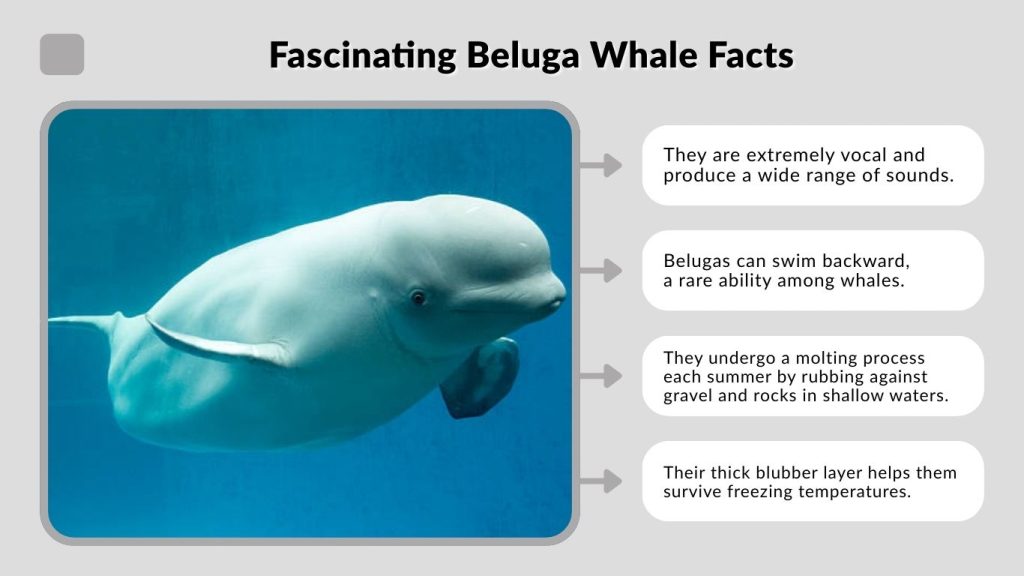
Beluga whales are among the most unique marine mammals in the Arctic. Here are some interesting facts:
- They are extremely vocal and produce a wide range of sounds.
- Belugas can swim backward, a rare ability among whales.
- They undergo a molting process each summer by rubbing against gravel and rocks in shallow waters.
- Their thick blubber layer helps them survive freezing temperatures.
- They are known for their curious nature and sometimes approach boats or divers.
Their social and communicative behavior makes them one of the most studied Arctic whale species.
FAQs
What do beluga whales eat?
Beluga whales eat a variety of marine animals, including fish such as cod and salmon, as well as shrimp, squid, crustaceans, and marine worms. They use echolocation to locate prey in dark or icy waters.
Where do beluga whales live?
Beluga whales live in Arctic and sub-Arctic regions, including Alaska, northern Canada, Greenland, and Russia. They prefer coastal bays and estuaries during summer and deeper offshore waters in winter.
Are beluga whales endangered?
Beluga whales are listed as Near Threatened globally, but some regional populations are endangered. Climate change, pollution, and human activity pose significant risks to certain groups.
How long do beluga whales live?
Beluga whales typically live between 35 and 50 years in the wild. Females often live slightly longer than males, especially in stable environments.
Why do beluga whales look like they are smiling?
Beluga whales appear to smile because of the natural curve of their mouths and their flexible facial structure. Their rounded melon and expressive movements enhance this friendly appearance.