




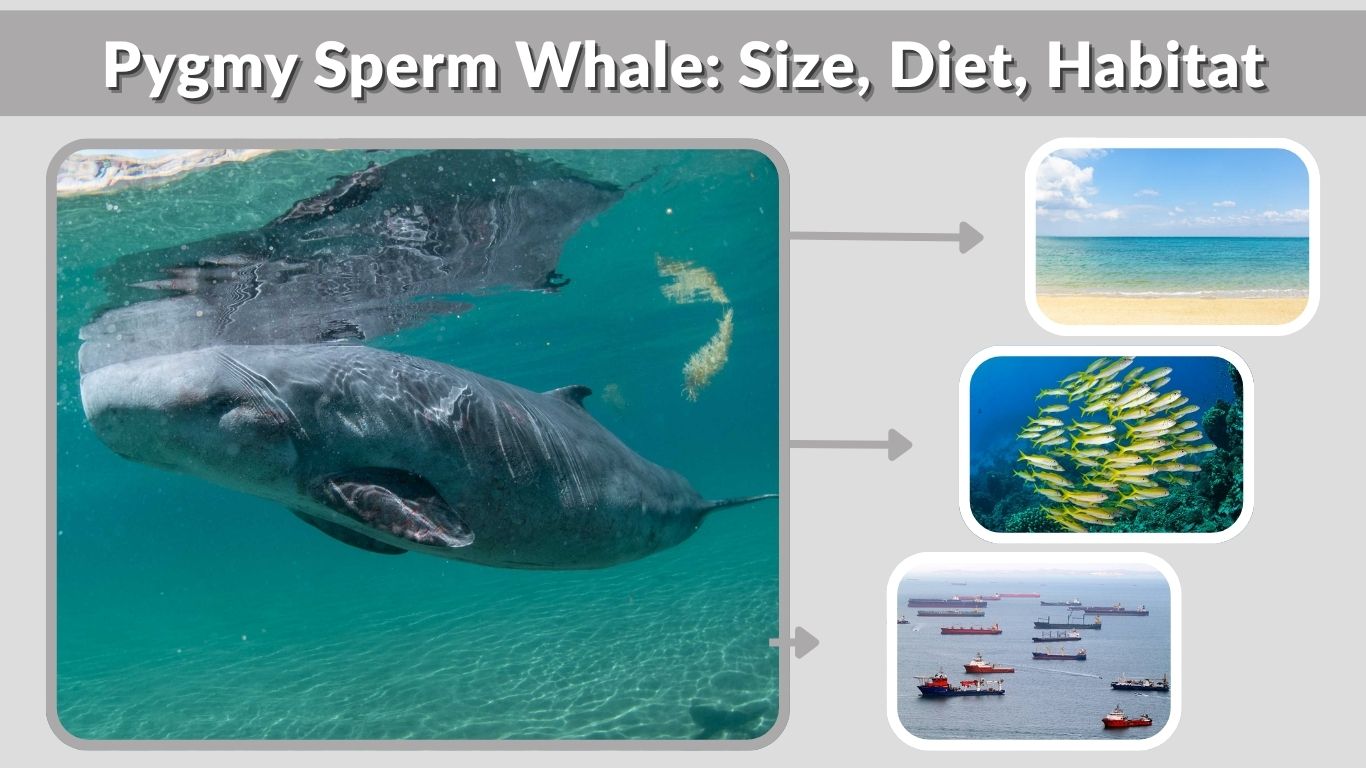
The pygmy sperm whale is one of the smallest and most mysterious members of the whale family. Despite belonging to the same group as the giant sperm whale, it is rarely seen in the wild due to its deep-sea lifestyle and shy behavior. Found in warm oceans around the world, this elusive whale has unique features and fascinating adaptations. In this guide, we’ll explore its identification, size, diet, habitat, lifespan, and key facts.
Pygmy Sperm Whale Identification
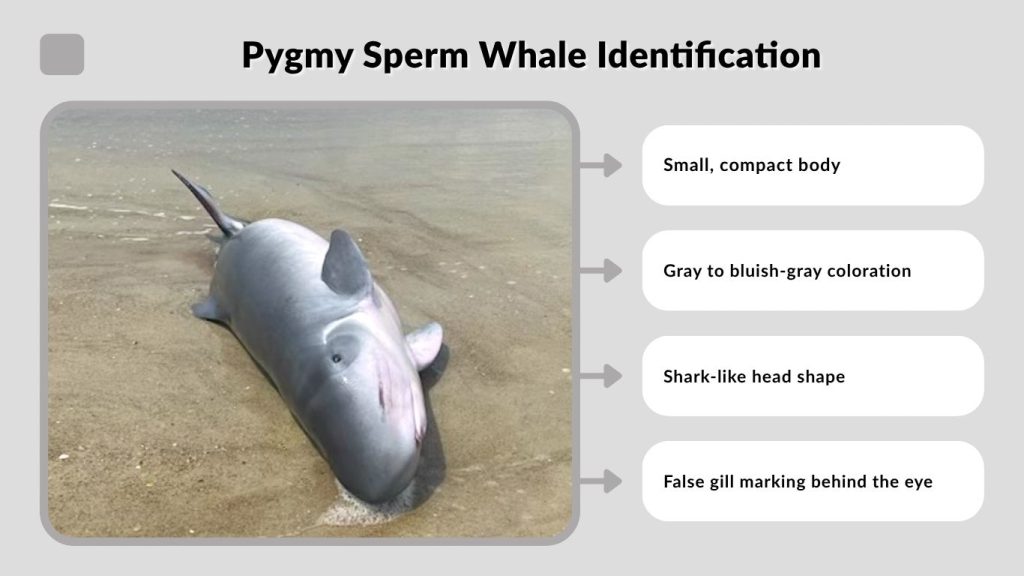
Pygmy sperm whales are small, elusive whales that can be difficult to spot and identify in the wild. However, their unique body shape and subtle markings make them distinguishable from other small whales and dolphins. They are often mistaken for sharks at first glance due to their head shape and quiet surfacing behavior.
Quick Identification Features
- Small, compact body with a rounded shape
- Gray to bluish-gray coloration with a lighter underside
- Shark-like head shape with a blunt snout
- False gill marking behind the eye (distinctive feature)
- Small dorsal fin located toward the back
Behavioral Clues
- Slow and quiet surfacing
- Low profile in the water (only part of the body visible)
- Rarely shows tail flukes when diving
- Usually seen alone or in very small groups
- Prefers deep offshore waters
These features—especially the false gill marking and shark-like head—are key indicators for identifying a pygmy sperm whale, even though sightings are rare.
Pygmy Sperm Whale Size
Average Length
Pygmy sperm whales are relatively small, typically measuring between 3 and 3.5 meters (10 to 11.5 feet) in length. This makes them one of the smallest whale species.
Weight Range
They usually weigh between 300 and 400 kilograms. Their small size allows them to move efficiently in deep ocean environments.
Size Comparison
Compared to the giant sperm whale, which can grow over 15 meters (49 feet), pygmy sperm whales are tiny. They are closer in size to large dolphins than to most whales.
This smaller size is an advantage for navigating deep waters and hunting smaller prey.
Growth Stages
At birth, calves are already well-developed and begin life in deep ocean environments. They grow steadily during their early years, supported by their mother’s milk.
As they mature, they reach full size relatively quickly compared to larger whale species.
Pygmy Sperm Whale Diet
What Do Pygmy Sperm Whales Eat?
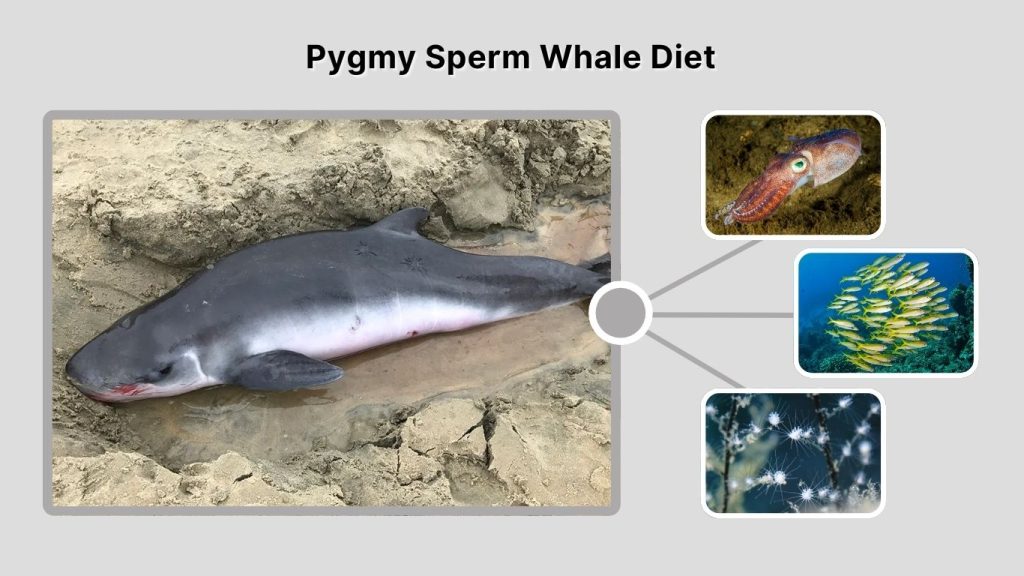
Pygmy sperm whales primarily feed on squid, which makes up the majority of their diet. They also consume small fish and other deep-sea organisms found in their habitat.
Because they live in deep ocean waters, their diet mainly consists of creatures that inhabit the dark, midwater zones of the ocean.
Feeding Techniques
These whales use suction feeding to capture their prey. Instead of chasing fast-moving animals, they create a vacuum with their mouths to pull in squid and fish.
They are also capable of deep diving, which allows them to reach prey that lives far below the ocean surface. This feeding strategy is well-suited to their slow and stealthy nature.
Seasonal Feeding Patterns
Unlike many large whales, pygmy sperm whales do not rely heavily on seasonal feeding patterns. Because they live in deep waters where food is available year-round, they can feed consistently without long migrations.
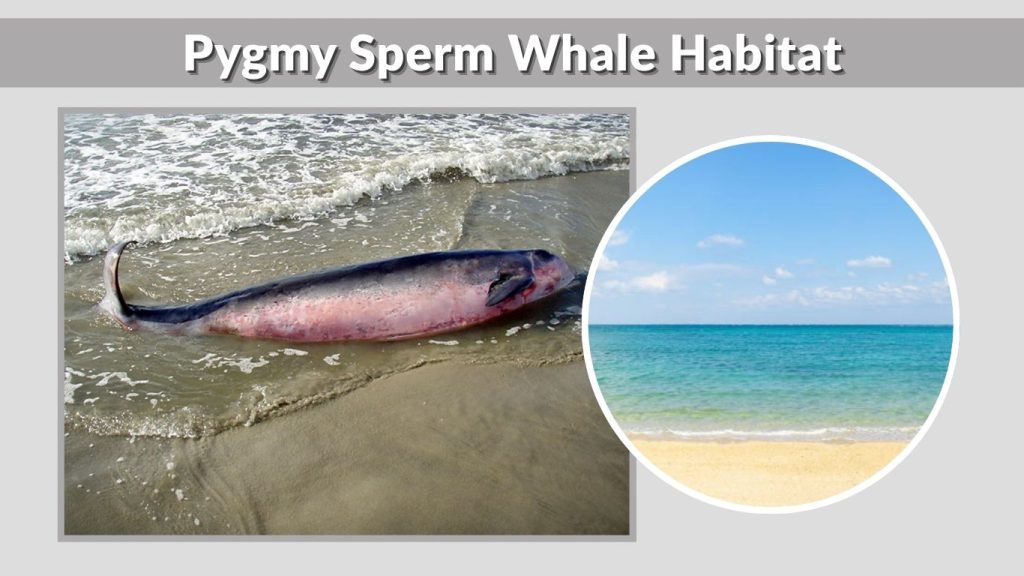
Pygmy Sperm Whale Habitat
Global Distribution
Pygmy sperm whales are found in tropical and temperate oceans around the world. Their distribution is widespread, but sightings are rare due to their deep-water lifestyle.
Preferred Environment
These whales prefer deep offshore waters, particularly along continental slopes where the ocean floor drops off sharply. These areas are rich in deep-sea prey like squid.
They avoid shallow coastal waters and are rarely seen near shore unless stranded.
Movement Patterns
Pygmy sperm whales do not follow large migration routes like many other whale species. Instead, they tend to remain within deep-water regions where food is consistently available.
Their movements are influenced more by prey availability than by seasonal changes.
Pygmy Sperm Whale Lifespan
Average Lifespan
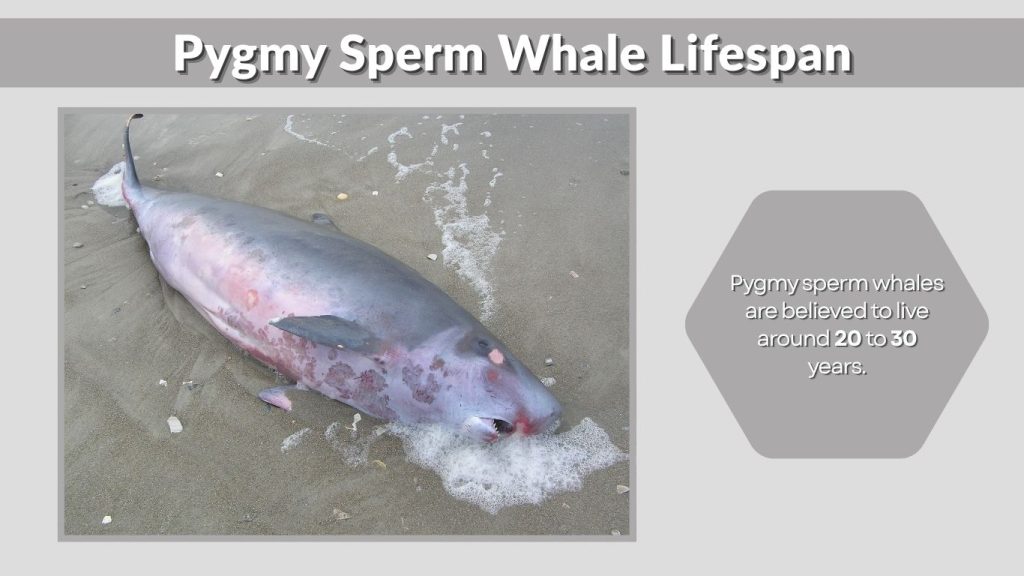
Pygmy sperm whales are believed to live around 20 to 30 years in the wild, although exact data is limited due to their elusive nature.
Life Cycle
After a gestation period of about 9 to 11 months, females give birth to a single calf. The calf stays close to its mother and depends on her milk during the early stages of life.
As it grows, the young whale gradually learns to hunt and becomes independent.
Factors Affecting Lifespan
Natural predators, such as large sharks and orcas, may pose a threat, especially to younger whales. However, human-related factors also impact their survival.
Ocean pollution, noise disturbance, and accidental capture in fishing gear can all affect their lifespan.
Conservation Status & Threats
Current Status
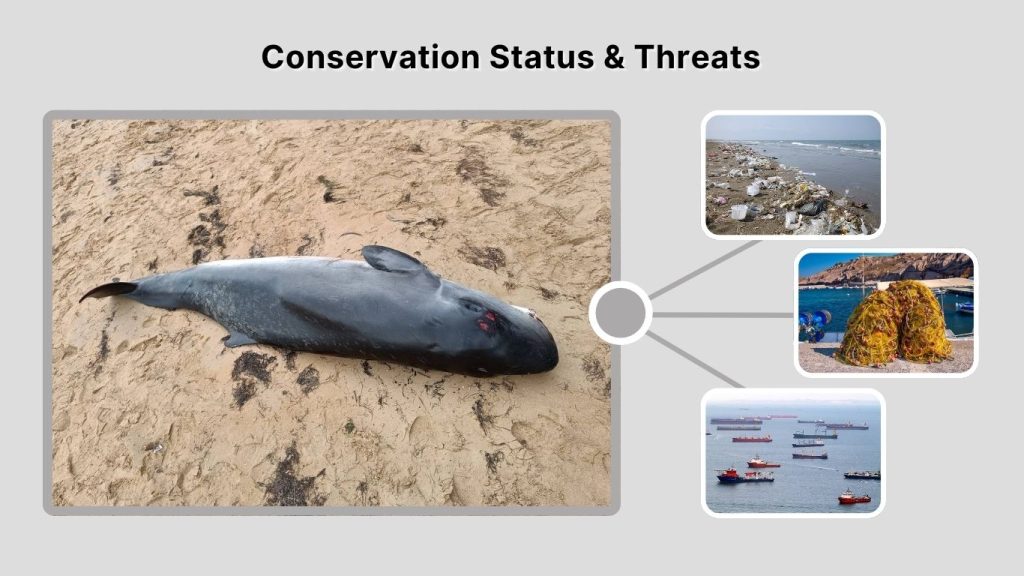
The conservation status of pygmy sperm whales is generally considered to be of least concern or data deficient, depending on the region. However, their population is not well understood due to limited sightings.
Major Threats
- Ocean pollution, including plastic waste
- Bycatch in fishing gear
- Noise pollution from ships and sonar
- Habitat disturbance
Protection Efforts
Conservation efforts focus on monitoring strandings, protecting marine habitats, and reducing human impacts such as pollution and fishing-related threats.
Researchers continue to study these whales to better understand their population and behavior.
What Do Pygmy Sperm Whales Eat? (Focused Section)
Main Food Sources
Their diet mainly consists of squid, along with small fish and deep-sea organisms.
Feeding Behavior
They use suction feeding and deep diving to capture prey in dark ocean depths.
Ecological Role
Pygmy sperm whales help regulate populations of deep-sea organisms and play a role in maintaining balance within ocean ecosystems.
Pygmy Sperm Whale Facts
General Facts
Pygmy sperm whales belong to the same family as sperm whales but are much smaller and less well-known. They are considered one of the most elusive marine mammals.
Because they spend most of their time in deep offshore waters, much of what scientists know about them comes from stranded individuals rather than direct observation.
Behavior and Social Life
These whales are generally solitary or found in very small groups. They are shy and avoid boats and human activity, which contributes to their mysterious reputation.
They are slow swimmers and tend to stay underwater for long periods, surfacing only briefly to breathe.
Defense Mechanism
One of the most unusual traits of pygmy sperm whales is their ability to release a dark, ink-like fluid when threatened. This behavior is similar to that of squid and helps them escape predators by creating a cloud that obscures visibility.
Interesting Facts
Pygmy sperm whales are rarely seen in the wild, making them one of the least studied whale species. Most sightings occur accidentally or during strandings.
They are also deep divers, capable of descending to great depths in search of food, which further limits human observation.
Conclusion
The pygmy sperm whale is a small but fascinating marine mammal known for its elusive nature and unique adaptations. From its shark-like appearance and deep-diving abilities to its specialized diet and habitat, it stands out among whale species. Although much about this whale remains a mystery, understanding its behavior, size, and ecological role highlights its importance in the ocean. Continued research and conservation efforts are essential to protect this remarkable species.
FAQs
How can you identify a pygmy sperm whale?
Pygmy sperm whales can be identified by their small size, shark-like head, and the distinctive false gill marking behind the eye. Their quiet surfacing behavior also helps distinguish them.
What is the false gill marking on a pygmy sperm whale?
The false gill marking is a pale, curved patch located behind the eye. It resembles a fish’s gill and is one of the most unique identification features of this species.
Do pygmy sperm whales have a dorsal fin?
Yes, they have a small dorsal fin located toward the back of their body, which is visible when they surface.
Are pygmy sperm whales easy to spot?
No, they are very difficult to spot because they live in deep offshore waters and surface quietly without much movement.
How are pygmy sperm whales different from dolphins?
Unlike dolphins, pygmy sperm whales have a more rounded, bulky body, a blunt head, and the distinctive false gill marking. They are also much more elusive and less active at the surface.