




The blue whale is the largest animal ever known to have lived on Earth. Even bigger than the largest dinosaurs, this ocean giant can reach lengths of up to 100 feet and weigh as much as 200 tons. Despite their massive size, blue whales feed on tiny shrimp-like creatures called krill. Found in oceans around the world, these marine mammals are both powerful and surprisingly graceful. In this guide, you’ll learn about blue whale weight, diet, habitat, lifespan, and fascinating facts.
What Is a Blue Whale?
The blue whale (Balaenoptera musculus) is a baleen whale belonging to the rorqual family (Balaenopteridae). Rorquals are known for the pleated grooves along their throats, which expand during feeding. Among them, the blue whale stands out as the largest species.
Blue whales are marine mammals, meaning they breathe air, give birth to live young, and nurse their calves with milk. They spend their entire lives in the ocean but must surface regularly to breathe through their blowholes.
These whales play an important role in marine ecosystems. By feeding on krill and cycling nutrients through their waste, they help support ocean food webs. Their presence contributes to the overall health of marine environments.
Blue Whale Identification Guide
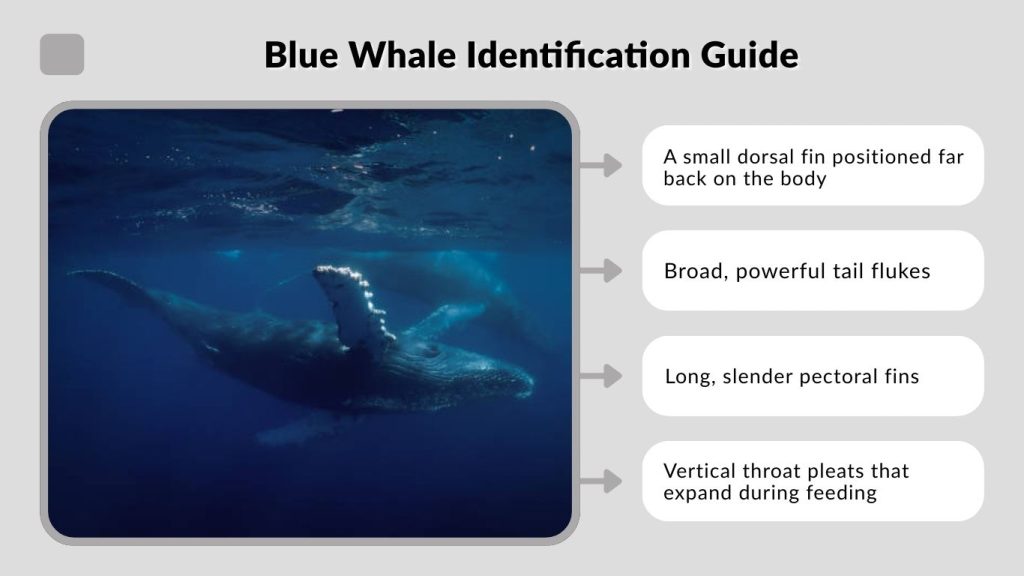
Blue whales have a distinct appearance that sets them apart from other whale species.
Physical Characteristics
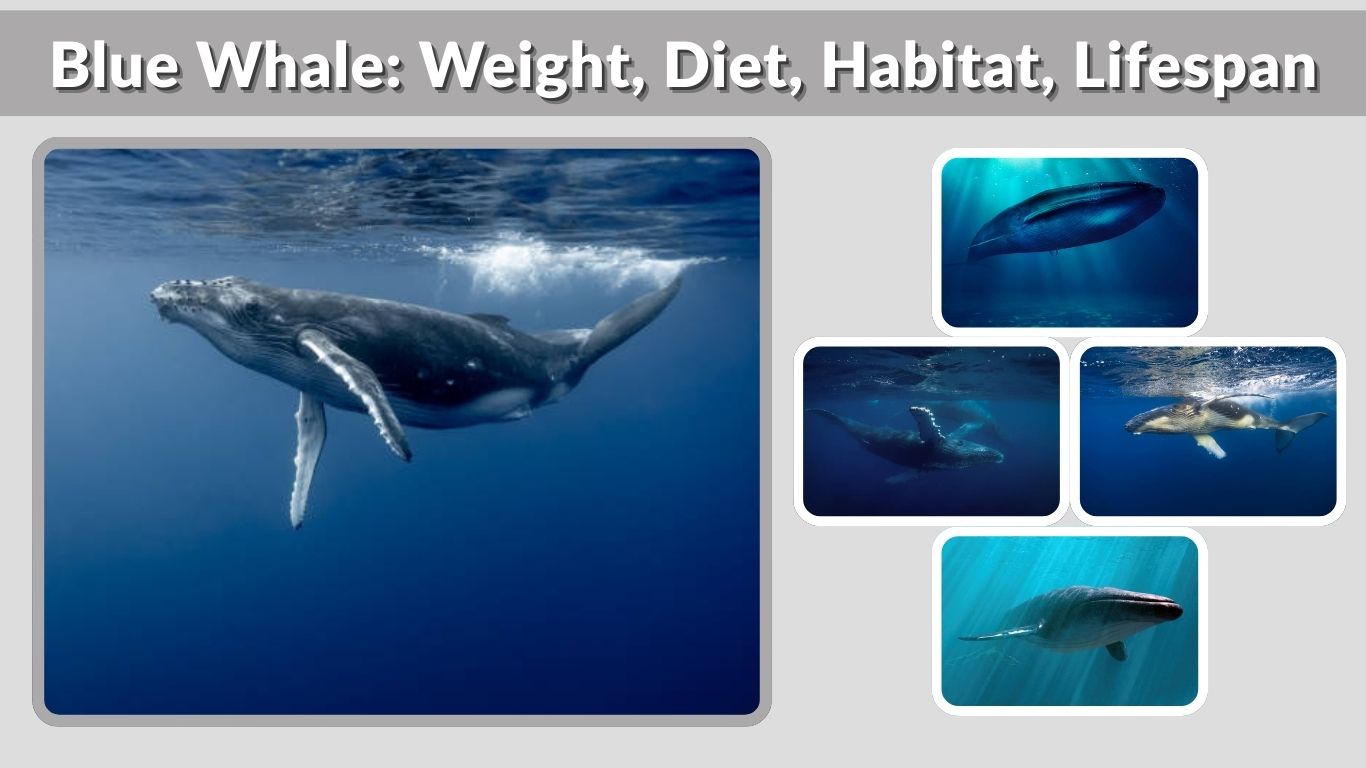
Blue whales have long, streamlined bodies designed for efficient swimming. Their coloration is generally blue-gray with lighter mottled patterns across their skin. Underwater, their color appears vividly blue, which is how they earned their name.
Other key features include:
- A small dorsal fin positioned far back on the body
- Broad, powerful tail flukes
- Long, slender pectoral fins
- Vertical throat pleats that expand during feeding
Unlike toothed whales, blue whales have baleen plates instead of teeth. These baleen plates hang from the upper jaw and are used to filter food from seawater.
Blue Whale Weight and Size
Blue whale weight is one of their most astonishing traits. Adult blue whales typically weigh between 100 and 200 tons (200,000–400,000 pounds). Some exceptionally large individuals may weigh even more.
In terms of length, most adults measure between 70 and 100 feet long. Females are generally slightly larger than males, which is common among baleen whales.
To better understand their size:
- A blue whale’s heart can weigh around 400 pounds and is often compared to the size of a small car.
- Their tongue alone can weigh as much as an elephant.
- A newborn calf can weigh 2 to 3 tons at birth.
These measurements make the blue whale not only the largest whale, but the largest animal ever recorded in Earth’s history.
How Blue Whales Compare to Other Animals
Even the largest dinosaurs are believed to have been smaller or lighter than today’s blue whales. A blue whale is longer than a basketball court and heavier than multiple fully loaded airplanes.
Despite their enormous mass, blue whales move smoothly through the water thanks to their streamlined bodies and powerful tail flukes.
Where Do Blue Whales Live?
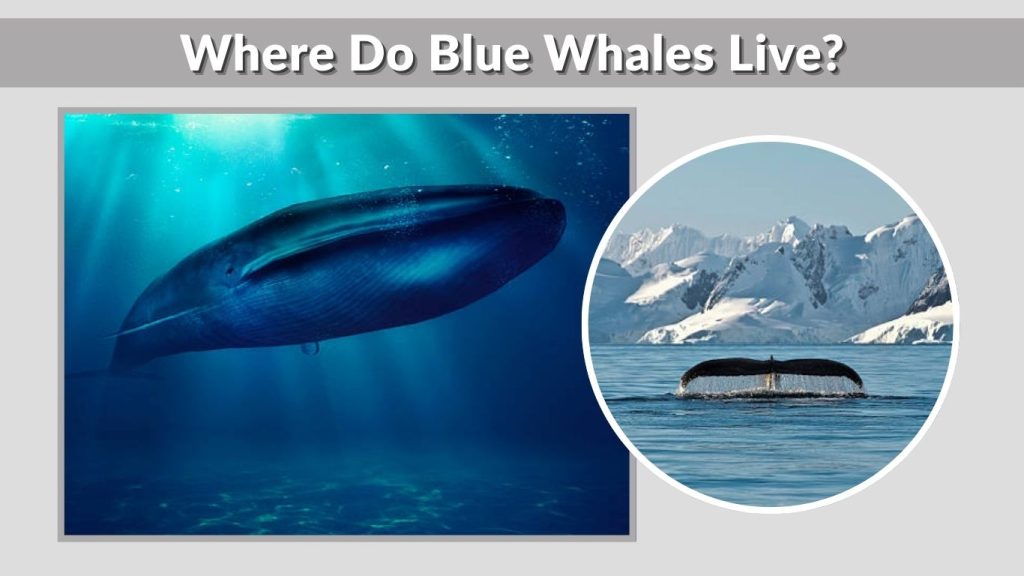
Blue whales are found in oceans around the world, though their populations are spread out and often migrate long distances.
Global Distribution
Blue whales inhabit:
- The Pacific Ocean
- The Atlantic Ocean
- The Indian Ocean
- The Southern Ocean around Antarctica
There are several subspecies of blue whales, each adapted to different ocean regions.
Blue Whale Habitat
Blue whale habitat consists mainly of the open ocean, also known as pelagic zones. They rarely approach shorelines unless migrating or feeding in productive coastal areas.
Their habitat shifts depending on the season. Blue whales prefer cold, nutrient-rich waters during feeding periods and warmer waters during breeding and calving seasons.
Migration Patterns
Blue whales are long-distance migrators. During the summer months, they travel to polar or temperate waters where krill populations are abundant. These feeding grounds allow them to consume massive quantities of food.
In winter, they migrate to warmer tropical or subtropical waters to breed and give birth. Unlike feeding grounds, breeding areas often have less food available, so whales rely on stored fat reserves.
These migrations can span thousands of miles each year, making blue whales some of the most widely traveled animals on Earth.
Blue Whale Diet Explained
Despite their enormous size, blue whales feed almost exclusively on tiny crustaceans called krill.
What Do Blue Whales Eat?
The blue whale diet consists mainly of:
- Krill (small shrimp-like crustaceans)
- Occasionally other tiny planktonic organisms
They do not hunt large fish or marine mammals. Instead, they rely on dense swarms of krill found in cold ocean waters.
Blue Whale Feeding Method
Blue whales use a technique known as lunge feeding. They accelerate toward a dense swarm of krill and open their mouths wide, taking in a massive gulp of water and prey.
The pleated grooves along their throats expand to hold enormous volumes of water. Then, the whale pushes the water out through its baleen plates, which trap the krill inside. The trapped krill are then swallowed.
This feeding strategy allows blue whales to efficiently consume large amounts of food in a short time.
How Much Do Blue Whales Eat Per Day?
Because krill are small and low in calories individually, blue whales must eat enormous quantities to meet their energy needs. During peak feeding season, an adult blue whale can consume up to 4 tons of krill per day.
They feed intensely during the summer months in cold, nutrient-rich waters where krill populations explode. This allows them to build thick layers of blubber, which serve as stored energy. During migration and breeding season, when food is scarce, blue whales rely heavily on these fat reserves.
This seasonal feeding pattern is essential to their survival and supports their long-distance migrations.
Blue Whale Lifespan and Reproduction
Blue whales are long-lived marine mammals with slow reproductive rates, which makes population recovery challenging.
Blue Whale Lifespan
The average blue whale lifespan is estimated to be between 70 and 90 years, though some individuals may live even longer. Scientists estimate their age by examining earwax plugs, which form layers similar to tree rings.
Because they grow slowly and mature later in life, blue whales are especially vulnerable to threats that impact adult populations.
Reproduction and Calves
Blue whales typically mate during the winter months in warmer waters. After a gestation period of about 11 to 12 months, females give birth to a single calf.
Newborn calves are already enormous, measuring around 20 to 25 feet long and weighing approximately 2 to 3 tons at birth. They are among the largest babies in the animal kingdom.
Calves nurse on their mother’s rich milk, gaining up to 200 pounds per day during early development. The nursing period lasts about 6 to 7 months before the young whale begins feeding independently.
Growth and Maturity
Blue whales reach sexual maturity between 5 and 15 years of age, depending on the population and environmental conditions. Because females typically give birth every two to three years, population growth is naturally slow.
This slow reproduction rate makes conservation efforts particularly important.
Fascinating Blue Whale Facts
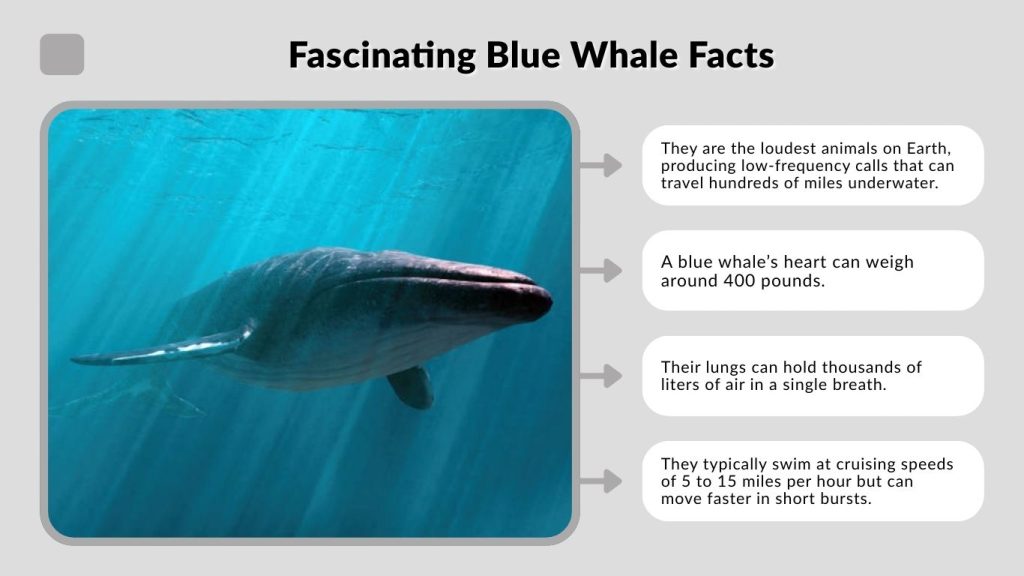
Blue whales are full of extraordinary traits that highlight their uniqueness.
- They are the loudest animals on Earth, producing low-frequency calls that can travel hundreds of miles underwater.
- A blue whale’s heart can weigh around 400 pounds.
- Their lungs can hold thousands of liters of air in a single breath.
- They typically swim at cruising speeds of 5 to 15 miles per hour but can move faster in short bursts.
- Their blow (exhaled air) can rise nearly 30 feet into the air.
Despite their immense size, blue whales are gentle giants that feed exclusively on tiny krill.
Are Blue Whales Endangered?
Blue whales were once abundant in oceans worldwide, but commercial whaling in the 19th and 20th centuries drastically reduced their numbers.
Historical Whaling Impact
Industrial whaling operations targeted blue whales for their oil and blubber. By the mid-20th century, populations had declined by more than 90% in many regions.
International protection measures were introduced in the 1960s, banning commercial hunting of blue whales.
Current Conservation Status
Today, blue whales are classified as Endangered by the International Union for Conservation of Nature (IUCN). Although populations are slowly recovering, they remain far below historical levels.
It is estimated that only 10,000 to 25,000 blue whales exist globally.
Modern Threats
Blue whales continue to face several threats:
- Ship strikes
- Climate change affecting krill populations
- Ocean noise pollution
- Entanglement in fishing gear
- Chemical and plastic pollution
Ongoing conservation programs focus on monitoring populations, reducing ship traffic in key habitats, and protecting feeding grounds.
Blue Whale vs Other Whales
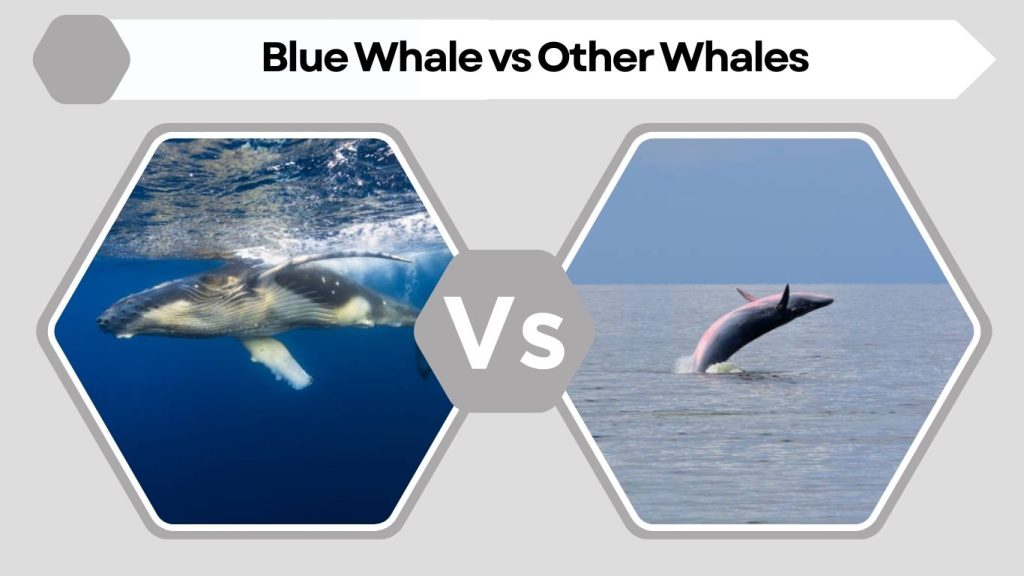
Blue whales are often compared to other large whale species.
Blue Whale vs Fin Whale
Fin whales are the second-largest whale species, but they are still smaller and lighter than blue whales. While fin whales are faster swimmers, blue whales hold the record for size and weight.
Blue Whale vs Humpback Whale
Humpback whales are known for acrobatic behaviors and complex songs. However, humpbacks are much smaller, typically reaching around 50 feet in length compared to the blue whale’s 100 feet.
In terms of weight, diet, and sheer physical presence, blue whales remain unmatched.
FAQs
How much does a blue whale weigh?
An adult blue whale typically weighs between 100 and 200 tons, or 200,000 to 400,000 pounds. Some exceptionally large individuals may weigh even more.
What do blue whales eat?
Blue whales primarily eat krill, small shrimp-like crustaceans. During feeding season, they may consume up to 4 tons of krill per day.
How long do blue whales live?
Blue whales usually live between 70 and 90 years. Scientists estimate age by examining layers in earwax plugs collected from deceased whales.
Where do blue whales live?
Blue whales live in oceans worldwide, including the Pacific, Atlantic, Indian, and Southern Oceans. They migrate seasonally between cold feeding grounds and warmer breeding areas.
Are blue whales endangered?
Yes, blue whales are classified as Endangered. Although protected from commercial whaling, they still face threats such as ship strikes, climate change, and ocean noise.