




The whale shark (Rhincodon typus) is the largest fish in the ocean and one of the most fascinating marine creatures on Earth. Despite its enormous size, this gentle giant feeds mainly on tiny plankton and poses no threat to humans. Found in warm oceans around the world, whale sharks are known for their unique spotted patterns, slow swimming speed, and long lifespan. In this article, we’ll explore whale shark habitat, diet, weight, size, and early life stages in detail.
What Is a Whale Shark?
The whale shark is a slow-moving, filter-feeding shark species that belongs to the family Rhincodontidae. Although its name includes the word “whale,” it is not a whale. It is a true shark, meaning it is a cartilaginous fish rather than a mammal.
Scientific Classification
- Kingdom: Animalia
- Phylum: Chordata
- Class: Chondrichthyes
- Order: Orectolobiformes
- Family: Rhincodontidae
- Species: Rhincodon typus
Unlike whales, whale sharks breathe through gills, are cold-blooded, and lay eggs internally. Their classification clearly places them among sharks, even though their feeding behavior resembles that of baleen whales.
Physical Characteristics
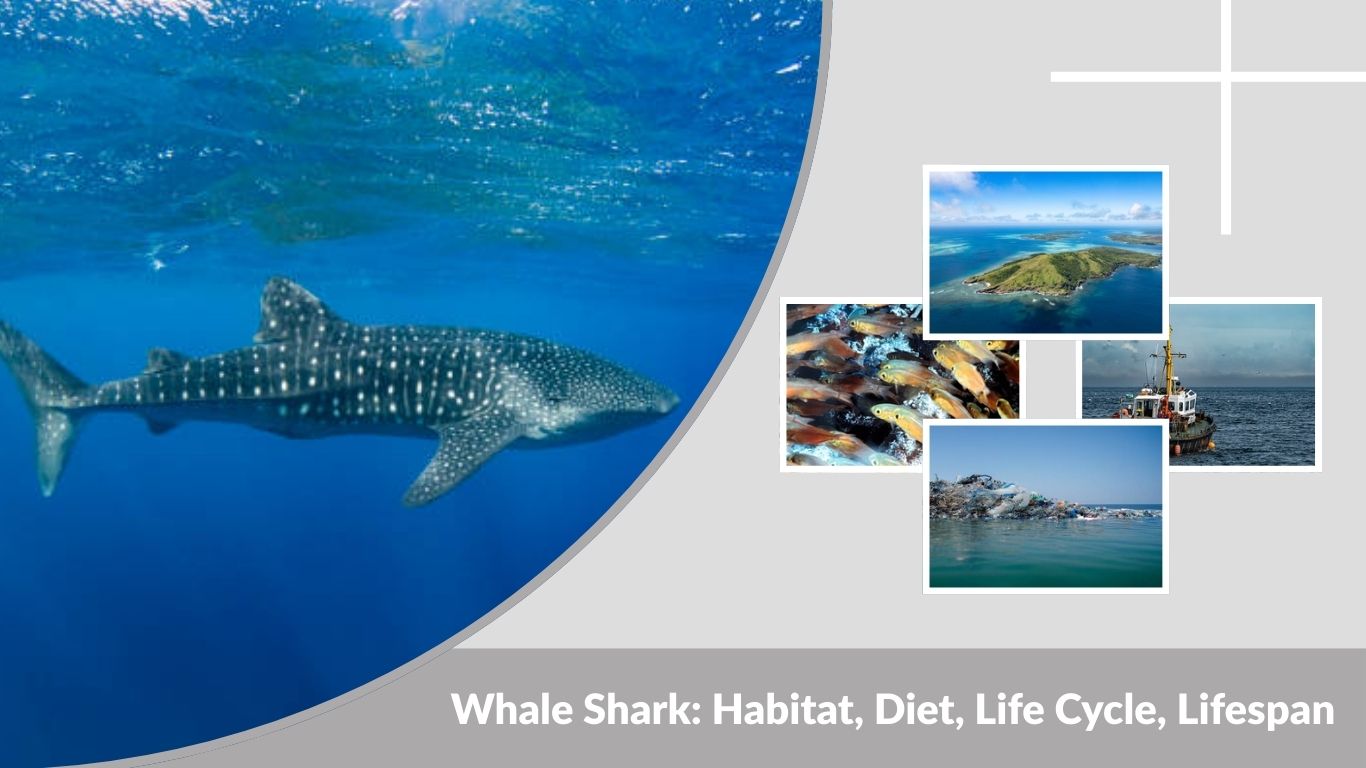
Whale sharks are instantly recognizable due to their enormous size and distinctive white spot patterns. Each whale shark has a unique pattern of spots and stripes, much like a human fingerprint. Scientists use these patterns to identify individuals.
They have:
- A broad, flat head
- Small eyes positioned on the sides of the head
- A massive mouth that can stretch up to 5 feet wide
- Five large gill slits
Their bodies are grayish-blue with white markings, which help them blend into the ocean from above and below.
Why It’s Called a “Whale” Shark
The name “whale shark” comes from its immense size and feeding method. Like whales, it feeds by filtering tiny organisms from the water. However, unlike whales, it is a fish and not a mammal. This combination of whale-like size and shark-like biology explains its unique name.
Whale Shark Habitat
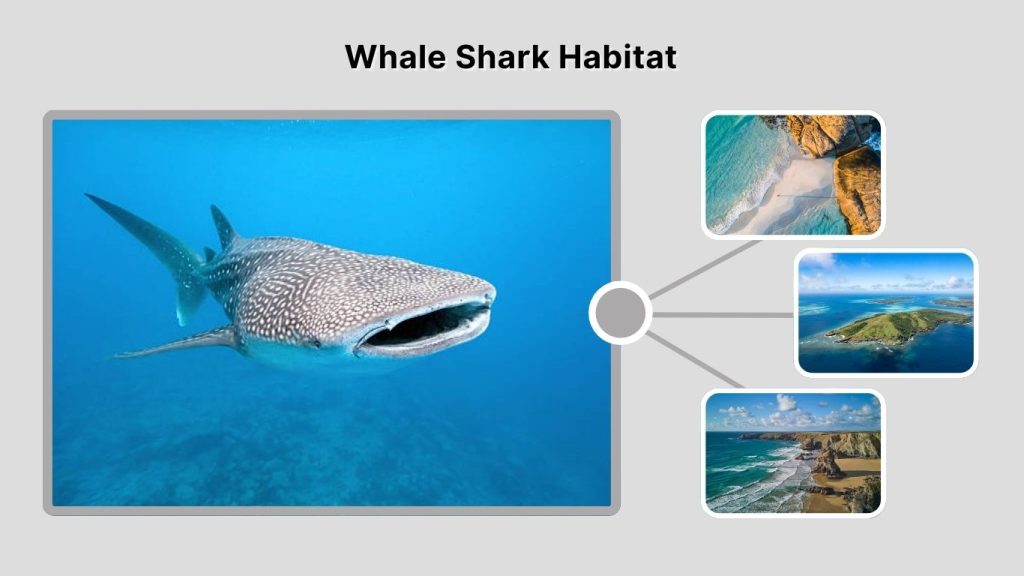
Whale shark habitat is mainly limited to tropical and warm temperate oceans. They prefer warm waters and are commonly seen near the surface, although they are capable of deep dives.
Global Distribution
Whale sharks are found in:
- The Indian Ocean
- The Pacific Ocean
- The Atlantic Ocean
They are especially common in coastal regions where plankton is abundant. Some of the most famous whale shark hotspots include Mexico (Isla Holbox), the Maldives, the Philippines, and Western Australia.
Preferred Environmental Conditions
Whale sharks thrive in water temperatures between 21°C and 30°C (70°F–86°F). They are often seen swimming near the surface, particularly in areas where plankton blooms occur. However, tracking studies show that they can dive deeper than 1,000 meters, possibly to search for food or regulate body temperature.
They are usually found in:
- Open ocean waters
- Coastal feeding zones
- Areas rich in nutrients
Seasonal Migration Patterns
Whale sharks are highly migratory animals. They travel long distances across oceans to find feeding opportunities. Many populations gather seasonally in areas where plankton and fish eggs are plentiful.
These feeding aggregations make it easier for researchers to study them, but much of their migration behavior remains a mystery.
Whale Shark Diet
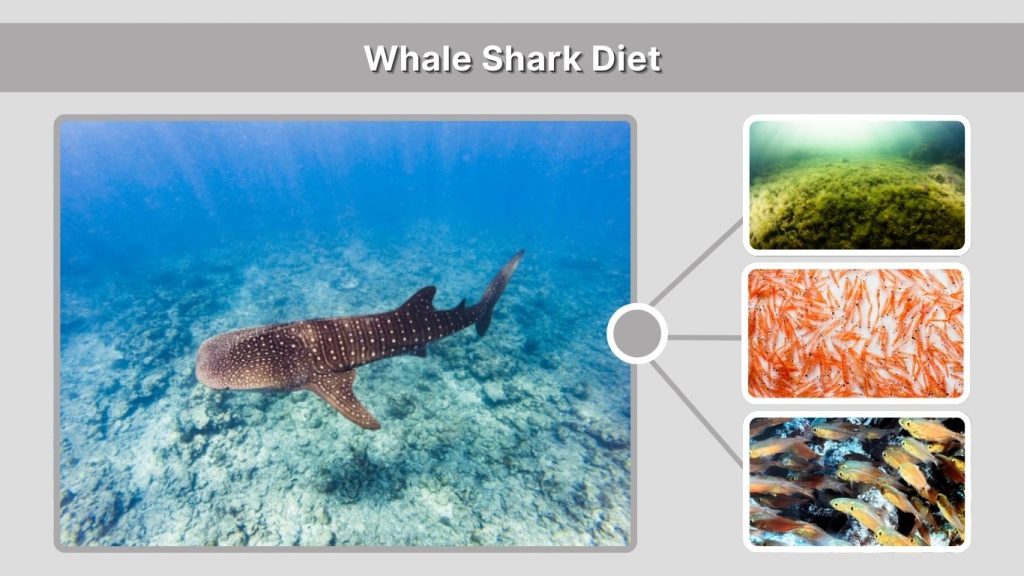
The whale shark diet mainly consists of small organisms, despite its massive body size. It is a filter feeder, meaning it strains food from the water rather than hunting large prey.
What Do Whale Sharks Eat?
Their diet includes:
- Plankton
- Krill
- Fish eggs
- Small schooling fish
- Tiny crustaceans
They often feed in areas where fish spawn, taking advantage of large concentrations of eggs.
How Whale Sharks Feed
Whale sharks use two primary feeding methods:
- Ram feeding – Swimming forward with their mouth open to filter water continuously.
- Suction feeding – Opening and closing their mouth to draw in water and trap food.
Special filtering pads inside their mouths trap food while water exits through the gills. This efficient system allows them to consume thousands of tiny organisms in a short period.
Daily Food Intake
Although exact numbers are difficult to measure, scientists estimate that whale sharks can consume over 40 pounds (18 kilograms) of plankton per day. Their feeding activity increases during plankton blooms when food is abundant.
Whale Shark Weight and Size
Whale shark weight and size are among the most impressive features of this species. They hold the title of the largest fish alive today.
Average Whale Shark Weight
An adult whale shark typically weighs between 15 and 20 tons. Some exceptionally large individuals may exceed this range, although accurate measurements are rare due to their size and ocean habitat.
Their massive weight is supported by a thick body and large liver, which helps with buoyancy.
Length and Growth Range
Most adult whale sharks measure between 18 and 32 feet (5.5 to 10 meters) in length. However, some reports suggest that the largest individuals may reach up to 40 feet or more.
Whale sharks grow slowly, and it can take decades for them to reach full maturity. Their slow growth rate makes them especially vulnerable to population decline.
Whale Shark Life Cycle
The whale shark life cycle is still not fully understood, but researchers have uncovered important details about how these giant fish reproduce and grow. Because they spend much of their lives in open ocean waters, studying their breeding behavior is challenging.
Reproduction Process
Whale sharks are ovoviviparous, meaning eggs develop and hatch inside the mother’s body. Instead of laying eggs externally, the female gives birth to live young.
In a rare documented case, a single female was found carrying hundreds of embryos at different stages of development. This suggests that whale sharks may give birth to large numbers of pups over time rather than all at once.
However, mating behavior and breeding grounds remain largely unknown, making this area of research especially important for conservation.
Birth and Early Development
At birth, whale shark pups measure about 2 feet (60 centimeters) in length. Despite being small compared to adults, they are fully formed and capable of surviving on their own.
Scientists believe that juvenile whale sharks may use specific nursery areas for protection, although confirmed nursery habitats are still being studied. Young whale sharks tend to stay in coastal waters where food is plentiful and predators are fewer.
Growth and Maturity
Whale sharks grow slowly and may take 25 to 30 years to reach sexual maturity. This slow development makes them vulnerable to environmental threats and fishing pressures.
Because they reproduce later in life, any significant population loss can take decades to recover. Their slow life cycle is one of the main reasons they are considered at risk globally.
Whale Shark Lifespan
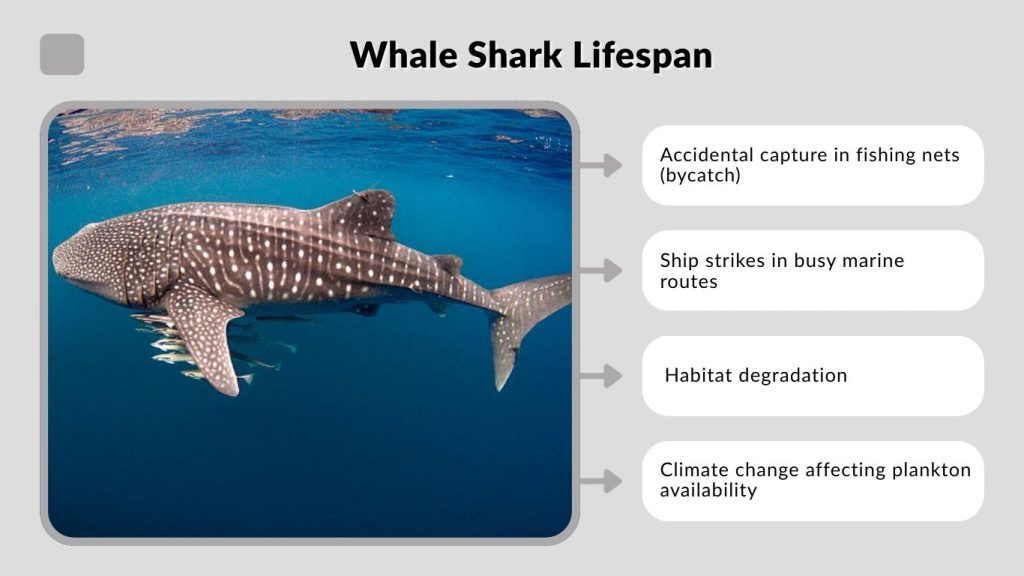
The whale shark lifespan is estimated to be quite long compared to many other fish species.
How Long Do Whale Sharks Live?
Current research suggests that whale sharks can live between 70 and 100 years, and possibly even longer. Some scientific studies analyzing growth rings in vertebrae indicate they may reach a century in age.
Their long lifespan, combined with slow reproduction, means conservation efforts are crucial to ensure stable populations.
Factors That Influence Lifespan
While whale sharks have few natural predators as adults, several threats can impact their longevity:
- Accidental capture in fishing nets (bycatch)
- Ship strikes in busy marine routes
- Habitat degradation
- Climate change affecting plankton availability
Juveniles are more vulnerable to larger predators such as other sharks, but adult whale sharks face the greatest risks from human activities.
Conservation Status and Threats
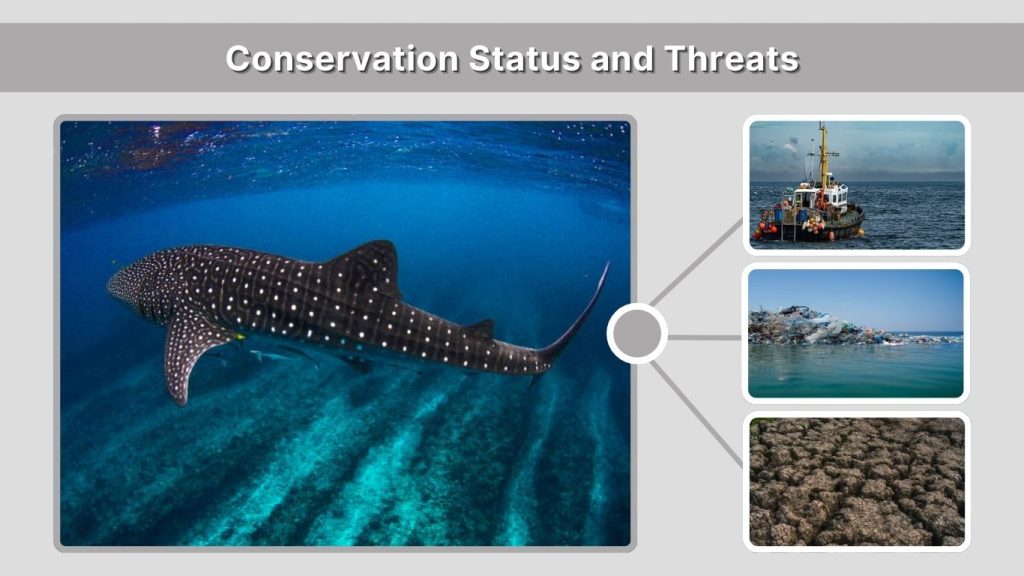
Whale sharks are currently listed as Endangered on the IUCN Red List. Their population has declined in many regions due to overfishing and human impact.
Major threats include:
- Targeted fishing in some countries
- Accidental bycatch in commercial fisheries
- Marine pollution, including plastic waste
- Boat collisions in tourist areas
- Climate change disrupting feeding grounds
In response, many countries have introduced protective laws, and whale shark tourism is now carefully regulated in several regions. Responsible ecotourism can help fund conservation while raising awareness about these gentle giants.
Interesting Facts About Whale Sharks
- Each whale shark has a unique spot pattern, like a fingerprint.
- They can dive deeper than 1,000 meters (3,280 feet).
- Despite their size, they swim slowly at about 3 miles per hour.
- They are harmless to humans and often tolerate nearby divers.
- They are the largest fish species alive today.
These fascinating traits continue to capture the interest of scientists and ocean lovers alike.
FAQs
How big is a whale shark?
A whale shark typically grows between 18 and 32 feet long and can weigh 15 to 20 tons. Some exceptionally large individuals may reach up to 40 feet. This makes the whale shark the largest fish species in the world.
Where do whale sharks live?
Whale sharks live in tropical and warm temperate oceans worldwide. They are commonly found in the Indian, Pacific, and Atlantic Oceans, especially in coastal areas with abundant plankton such as Mexico, the Maldives, and Australia.
What do whale sharks eat?
The whale shark diet mainly consists of plankton, krill, fish eggs, and small schooling fish. They feed by filtering large amounts of water through their gills, trapping tiny organisms inside their mouths.
How long do whale sharks live?
Whale sharks are believed to live between 70 and 100 years, possibly longer. Their slow growth and late maturity contribute to their long lifespan but also make them vulnerable to population decline.
Are whale sharks dangerous to humans?
No, whale sharks are not dangerous to humans. They are gentle filter feeders and do not hunt large prey. Many divers swim alongside them safely in regulated tourism areas.
Conclusion
The whale shark is a truly remarkable marine species, combining enormous size with gentle behavior. From its warm ocean habitat and plankton-based diet to its slow life cycle and long lifespan, every aspect of this giant fish highlights the importance of conservation. As the largest fish in the world, the whale shark plays a vital role in marine ecosystems. Protecting it ensures that future generations can continue to admire one of the ocean’s most extraordinary creatures.