




The Goliath frog is the largest frog in the world, and it truly lives up to its name. Native to the rainforests of West Africa, this giant amphibian can grow bigger than many house cats and weigh as much as a newborn baby. The Goliath frog of West Africa fascinates scientists and wildlife lovers alike due to its enormous size, unique nesting behavior, and powerful build. But how big is a Goliath frog exactly, and where does it live? Let’s explore.
What Is the Goliath Frog?
Goliath Frog Scientific Name
The scientific name of the Goliath frog is Conraua goliath. It belongs to the family Conrauidae and is officially recognized as the largest living frog species on Earth. Unlike many frogs that are small and delicate, this species is muscular, heavy, and incredibly strong.
West African Goliath Frog Overview
The West African Goliath frog is found primarily in Cameroon and Equatorial Guinea. It lives in remote rainforest regions near fast-flowing rivers. Because of its massive size and limited distribution, it has become one of the most famous amphibians in the world. Despite its intimidating appearance, it is a shy and elusive creature.
How Big Is a Goliath Frog?
One of the most searched questions about this species is: how big is a Goliath frog? The answer is astonishing.
Goliath Frog Size
The Goliath frog can grow up to 12–13 inches (32 cm) in body length, not including its legs. When its legs are fully extended, it can measure over 30 inches long. That makes it significantly larger than most other frogs on Earth.
To put it in perspective, most common frogs measure only 2 to 4 inches long. Even large species like bullfrogs are much smaller in comparison.
Goliath Frog Weight
The Goliath frog weight can reach up to 7 pounds (3.2 kilograms). That’s heavier than many small pets and roughly the weight of a newborn baby. Its strong bones and muscular legs allow it to jump impressive distances despite its heavy body.
Because of its size and weight, the Goliath frog is often called a “giant river frog.”
Goliath Frog Size Comparison
When comparing frog species, the Goliath frog stands in a class of its own.
- Goliath frog vs African bullfrog: The African bullfrog is large and stocky, but it typically weighs around 2 pounds — far less than the Goliath frog.
- American bullfrog vs Goliath frog: The American bullfrog is considered large in North America, but it rarely exceeds 8 inches in length.
- Beelzebufo vs Goliath frog: Beelzebufo was an extinct prehistoric frog sometimes called the “devil frog.” Fossils suggest it may have been comparable in size or possibly larger, but it no longer exists today.
Among living frogs, the Goliath frog remains the undisputed champion of size.
Where Does the Goliath Frog Live?
Goliath Frog Location
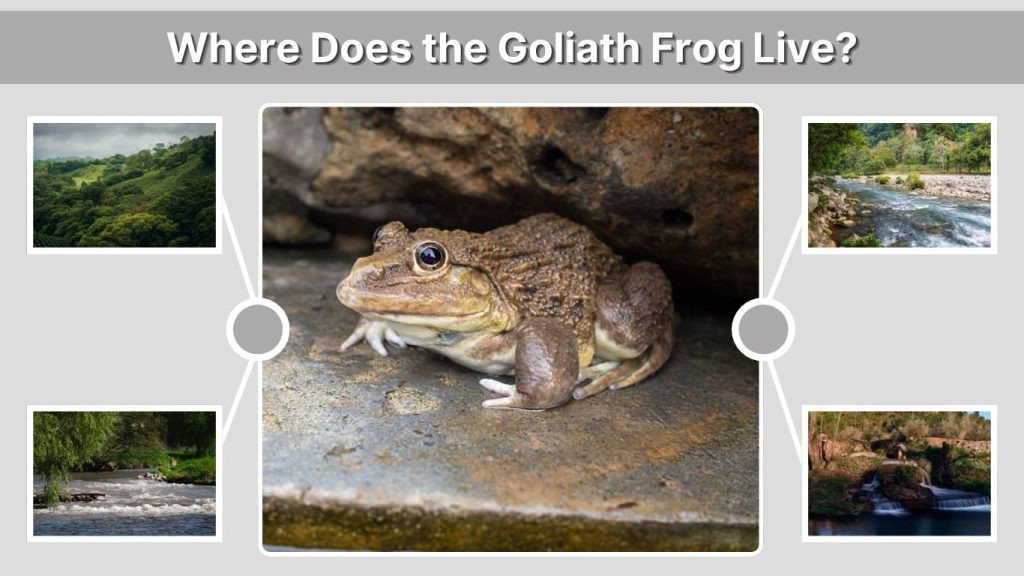
The Goliath frog location is limited to West Africa. It is primarily found in:
- Southern Cameroon
- Northern Equatorial Guinea
This limited range makes the species especially vulnerable to environmental changes.
Goliath Frog Habitat
The Goliath frog habitat consists of fast-flowing rivers within dense tropical rainforests. Unlike many frogs that live in ponds or swamps, this species depends on clean, oxygen-rich water.
It prefers:
- Rocky riverbanks
- Areas near waterfalls
- Humid rainforest environments
- Clear, fast-moving streams
These conditions provide both protection and a steady food supply.
Goliath Frog – Where Do They Live Exactly?
If you’re wondering, “where does the Goliath frog live exactly?” the answer is very specific: it lives along rivers with strong currents. The frogs often sit on rocks near the water, blending into their surroundings with greenish-brown camouflage.
They avoid polluted or slow-moving water, which is one reason habitat destruction poses such a serious threat.
Goliath Frog Diet – What Does the Goliath Frog Eat?
Another common question is: what does the Goliath frog eat?
Goliath Frog Diet in the Wild
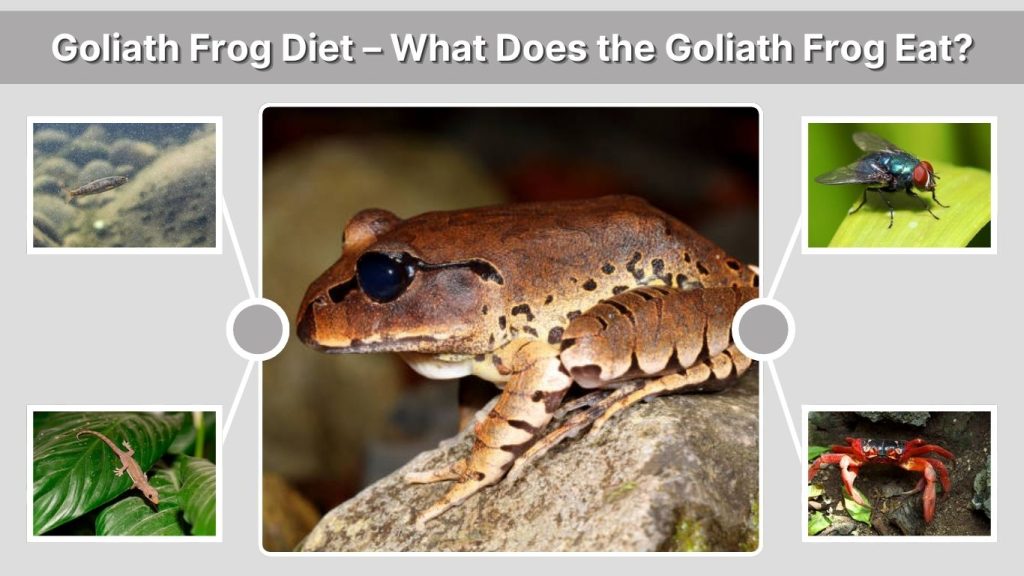
The Goliath frog diet consists mainly of:
- Insects
- Crabs
- Small fish
- Other frogs
- Small reptiles
Because of its large size, it can consume much larger prey than most frogs. Its powerful jaws help it capture and swallow prey whole.
Goliath Frog Eating Behavior
Goliath frog eating behavior is typical of ambush predators. The frog remains still and waits patiently for prey to come close. When the opportunity arises, it launches forward with surprising speed.
Despite its massive body, it is agile in water and can make strong, sudden movements. Like most frogs, it does not chew its food but swallows it whole.
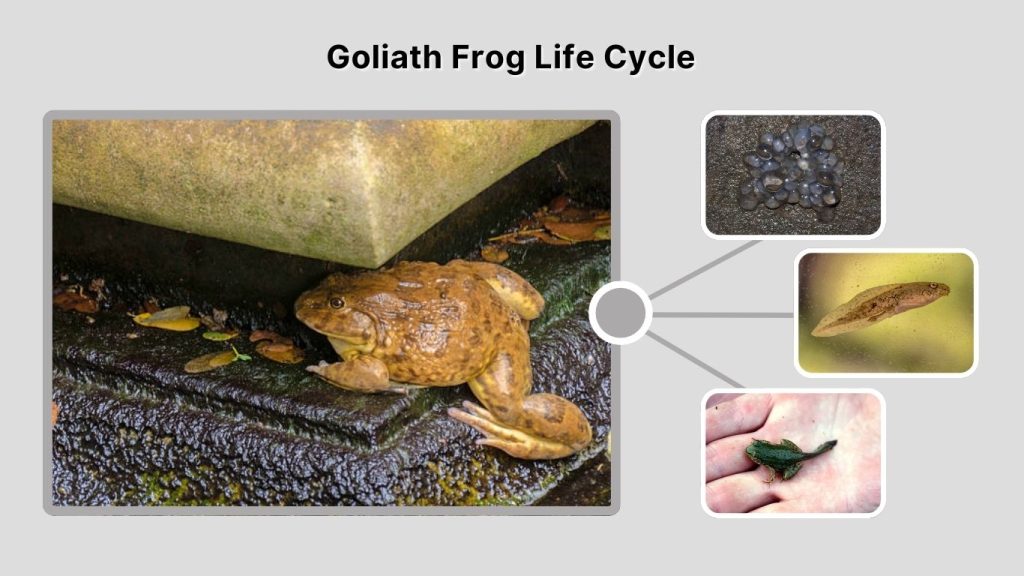
Goliath Frog Life Cycle
Goliath Frog Eggs
The Goliath frog eggs are laid in specially prepared nesting areas near rivers. Females can lay hundreds of eggs at a time, usually in shallow pools connected to flowing water.
Goliath Frog Nest
One of the most fascinating behaviors of this species is nest building. The Goliath frog nest is created by moving rocks to form small, protected pools along riverbanks. This behavior is rare among frogs and shows surprising strength.
From Tadpole to Adult
After hatching, tadpoles develop in these pools before transforming into juvenile frogs. As they grow, they gradually move into stronger currents and begin hunting larger prey.
Goliath Frog Lifespan
The Goliath frog lifespan in the wild is estimated to be around 10 to 15 years. However, exact data is limited because these frogs live in remote rainforest regions and are difficult to study long-term.
Several factors affect their lifespan, including:
- Habitat quality
- Availability of food
- Predators
- Human activity
Young frogs are more vulnerable to predators such as snakes, birds, and large fish. Adult Goliath frogs have fewer natural predators due to their size, but humans pose a significant threat through hunting and habitat destruction.
Are Goliath Frogs Dangerous?
Because of their massive size, many people wonder: are Goliath frogs dangerous?
Are Goliath Frogs Poisonous?
No, Goliath frogs are not poisonous. They do not produce toxic skin secretions like some brightly colored poison dart frogs. They are also not venomous and do not inject toxins through bites or skin.
Despite their intimidating appearance, they are harmless to humans.
Are Goliath Frogs Dangerous to Humans?
Goliath frogs are generally shy and avoid human contact. If threatened, they may attempt to escape by jumping into water. In rare cases, they could bite defensively, but they are not aggressive animals.
Their large size may look alarming, but they pose no real danger to people.
Goliath Frog vs African Bullfrog
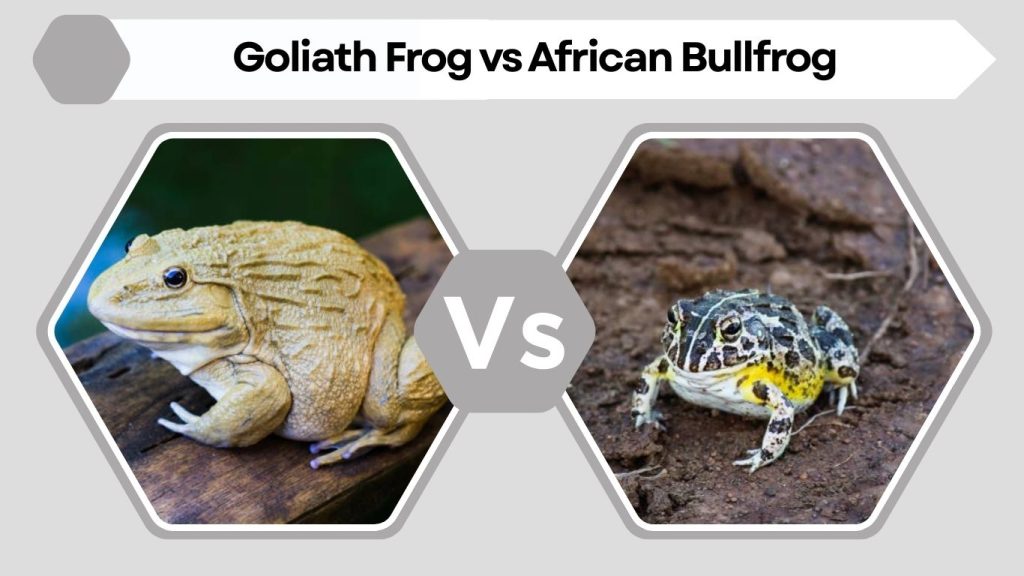
The comparison between the Goliath frog vs African bullfrog is common because both are large African species.
Size Differences
The Goliath frog is significantly larger. While the African bullfrog can weigh up to 2 pounds, the Goliath frog can reach 7 pounds. In terms of length, the Goliath frog also surpasses the bullfrog by several inches.
When comparing the American bullfrog vs Goliath frog, the difference is even more dramatic. American bullfrogs typically reach about 8 inches long and weigh much less.
Temperament Differences
African bullfrogs are known for being aggressive and territorial. They may even bite if provoked. In contrast, the Goliath frog is more reserved and less confrontational.
Habitat Differences
- African bullfrog: Savannas and seasonal wetlands
- Goliath frog: Fast-flowing rainforest rivers in West Africa
The African bullfrog can survive in harsher, drier conditions, while the Goliath frog depends heavily on clean river systems.
Can You Keep a Goliath Frog as a Pet?
The idea of owning a Goliath frog pet may sound exciting, but it is not recommended.
Is the Goliath Frog a Good Pet?
Goliath frogs require very specific environmental conditions:
- Large, flowing water systems
- High humidity
- Tropical temperatures
- Specialized diet
Replicating a fast-moving rainforest river inside a home is extremely difficult.
Legal and Conservation Concerns
In many regions, exporting or owning a Goliath frog is restricted due to conservation concerns. The species is considered endangered, and removing individuals from the wild can harm already declining populations.
For these reasons, Goliath frogs are rarely found in the pet trade and are unsuitable for most private owners.
Goliath Frog Hunting and Conservation

Why Are Goliath Frogs Hunted?
Goliath frog hunting occurs mainly for:
- Bushmeat
- Local consumption
- Occasional illegal wildlife trade
Because of their large size, they are considered a valuable food source in some areas.
Conservation Status
The Goliath frog is listed as endangered due to:
- Habitat destruction from logging and agriculture
- River pollution
- Overhunting
- Human expansion
Since their habitat is limited to specific areas of West Africa, environmental changes can quickly impact populations.
Protection Efforts
Conservation programs in Cameroon and Equatorial Guinea aim to protect rainforest habitats and regulate hunting. Preserving river ecosystems is critical for the survival of this remarkable amphibian.
Biggest Goliath Frog in the World
Stories about the biggest Goliath frog in the world often circulate online. Verified records show individuals reaching nearly 13 inches in body length and weighing around 7 pounds.
While exaggerated claims sometimes appear, scientifically documented specimens confirm that this species is the largest living frog on Earth. Size can vary depending on diet, genetics, and habitat quality.
Fascinating Goliath Frog Facts
Here are some interesting Goliath frog facts:
- It is the largest frog species in the world.
- It cannot croak like many smaller frogs due to lacking vocal sacs.
- It builds rock nests for its eggs.
- It has extremely powerful legs for jumping and swimming.
- It relies on camouflage to avoid predators.
These unique characteristics make it one of the most extraordinary amphibians on the planet.
Goliath Frog Picture and Appearance

If you look at a Goliath frog picture, you will notice its impressive physical features:
- Greenish-brown skin for camouflage
- A broad, flat head
- Large golden or brown eyes
- Massive webbed hind feet
- Muscular legs
Its body is built for power rather than speed on land. In water, however, it is strong and agile. Its coloration helps it blend into wet rocks and riverbanks in West African rainforests.
FAQs
How big is a Goliath frog compared to other frogs?
The Goliath frog is the largest living frog species. It can grow up to 13 inches long and weigh up to 7 pounds. Most common frogs measure only a few inches in length, making the Goliath frog several times larger than typical species.
Where does the Goliath frog live?
The Goliath frog lives in West Africa, primarily in southern Cameroon and northern Equatorial Guinea. It inhabits fast-flowing rainforest rivers with clean, oxygen-rich water and rocky riverbanks.
What does the Goliath frog eat?
The Goliath frog diet includes insects, crabs, small fish, other frogs, and small reptiles. It is an ambush predator that swallows its prey whole using its powerful jaws.
Are Goliath frogs dangerous?
Goliath frogs are not dangerous to humans. They are shy animals and prefer to avoid contact. While they may bite defensively if handled, they are not aggressive.
Are Goliath frogs poisonous?
No, Goliath frogs are not poisonous or venomous. Unlike poison dart frogs, they do not produce harmful toxins and pose no chemical threat to humans.
Can you keep a Goliath frog as a pet?
Keeping a Goliath frog as a pet is not recommended. They require specialized river habitats and are protected in many areas due to their endangered status.