




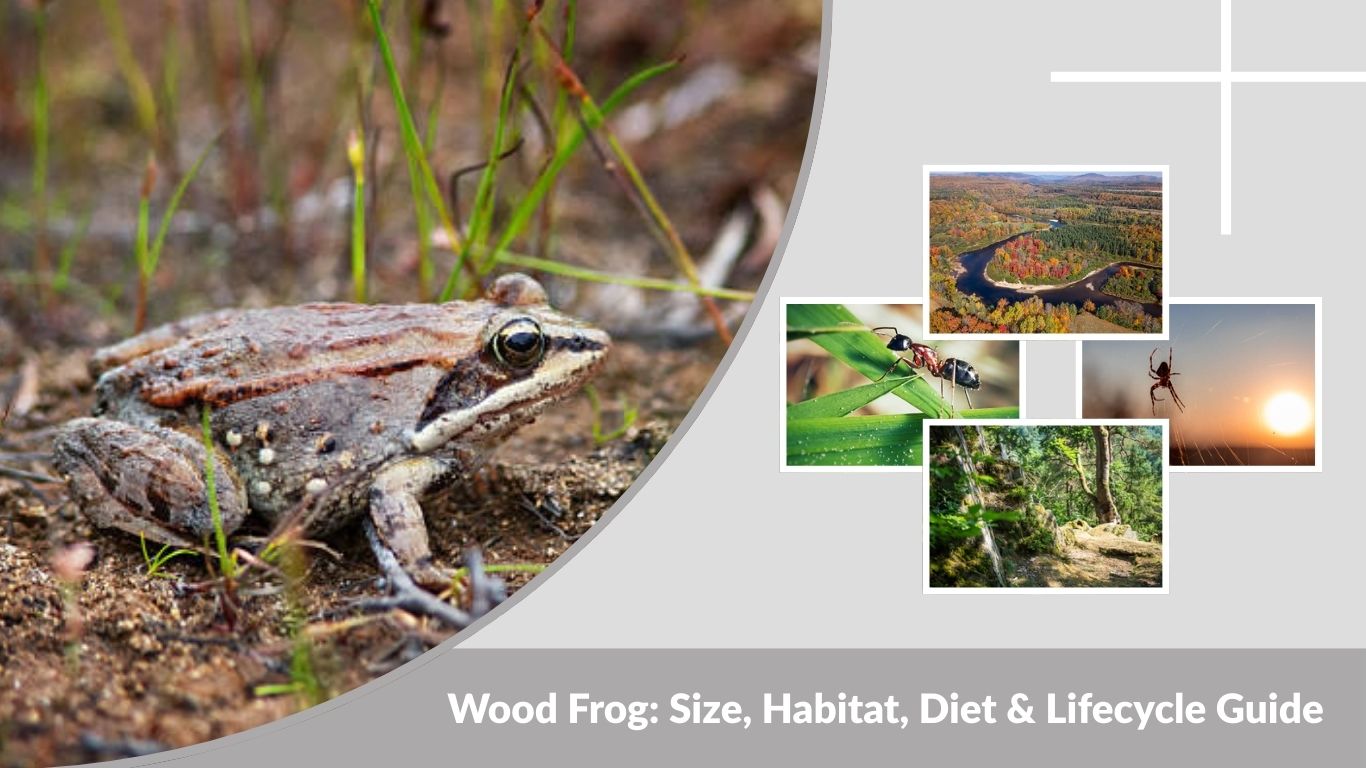
The Wood Frog is one of North America’s most remarkable amphibians. Best known for its ability to survive being partially frozen during winter, this hardy frog thrives in some of the coldest regions on the continent. Found from the northeastern United States to Alaska and even into the Arctic Circle, the Wood Frog is a true forest specialist. Its early spring breeding calls are often among the first signs that winter is ending in northern woodlands.
What Is a Wood Frog?
The Wood Frog (Lithobates sylvaticus) is a medium-sized amphibian belonging to the true frog family, Ranidae. The species name sylvaticus means “of the forest,” reflecting its strong connection to woodland habitats.
Unlike tree frogs, Wood Frogs spend most of their lives on the forest floor rather than climbing trees. They are highly terrestrial outside of breeding season and rely on leaf litter, logs, and moist soil for shelter. Their adaptability to cold climates makes them one of the northernmost-ranging amphibians in North America.
Wood Frogs are especially famous for their extreme freeze tolerance, a rare survival strategy that allows them to endure harsh winters without burrowing deep underground.
Physical Characteristics
Size and Weight
Wood Frogs typically measure between 1.5 and 3 inches in length. Females are generally larger than males, especially during breeding season when they carry eggs. Their sturdy build and strong hind legs make them capable jumpers.
Color and Markings
Their coloration varies widely, helping them blend into forest environments. Common shades include:
- Brown
- Tan
- Reddish-brown
- Gray
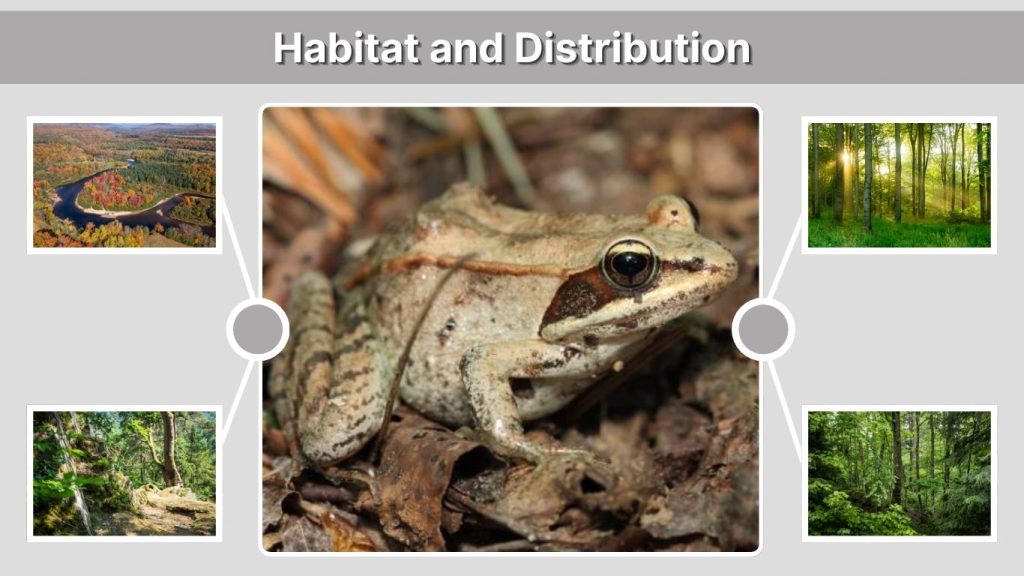
The most recognizable feature of a Wood Frog is the dark “mask” that stretches across its eyes, resembling a bandit’s mask. This marking sharply contrasts with a pale upper lip stripe that runs along the jaw.
Their smooth skin and earthy tones provide excellent camouflage among fallen leaves and woodland debris.
Body Shape and Build
Wood Frogs have long, muscular hind legs adapted for jumping. Unlike tree frogs, they lack large adhesive toe pads, as they are not specialized climbers. Their bodies are streamlined for ground movement rather than vertical climbing.
Habitat and Distribution
Geographic Range
Wood Frogs have one of the broadest ranges of any North American amphibian. They are found across:
- The northeastern and northern United States
- The Midwest
- Much of Canada
- Alaska
- Regions extending into the Arctic Circle
Their ability to survive freezing temperatures allows them to inhabit areas where few other amphibians can live.
Preferred Habitats
Wood Frogs are closely associated with forests, particularly:
- Deciduous forests
- Mixed woodlands
- Boreal forests
- Woodland edges
They prefer moist environments with abundant leaf litter for cover. During breeding season, they depend on shallow, temporary wetlands known as vernal pools.
Vernal pools are seasonal bodies of water formed by snowmelt and spring rains. Because these pools typically dry up later in the year, they lack fish, making them safer breeding sites for frog eggs and tadpoles.
Seasonal Habitat Changes
For most of the year, Wood Frogs remain in upland forest habitats. They shelter under leaves, logs, and forest debris, emerging during cool and damp conditions to feed.
In very early spring—often while patches of snow still remain—they migrate to nearby vernal pools to breed. This migration can occur quickly and in large numbers following the first warm rains of the season.
After breeding concludes, adults return to the forest floor for the remainder of the year.
Behavior and Activity
Diurnal and Nocturnal Activity
Unlike many frog species that are strictly nocturnal, Wood Frogs can be active during both day and night. They are most active during cool, moist weather, especially in spring and fall.
On warm summer days, they may retreat beneath leaf litter to conserve moisture and avoid overheating.
Early Spring Migration
Wood Frogs are among the earliest amphibians to breed each year. As soon as temperatures rise above freezing and snow begins to melt, they travel to breeding pools.
Their breeding period is short but intense, often lasting only a few weeks. Because this activity happens so early, their calls are frequently heard before trees have fully leafed out.
Calling Behavior
Male Wood Frogs produce a distinctive call that sounds like a soft quacking duck. Unlike the long musical trills of tree frogs or the sharp peeps of chorus frogs, their call is low, short, and somewhat raspy.
During breeding season, males gather in shallow water and call to attract females. Large groups may create a chorus of overlapping quacks that echo through forest wetlands.
Diet and Feeding Habits
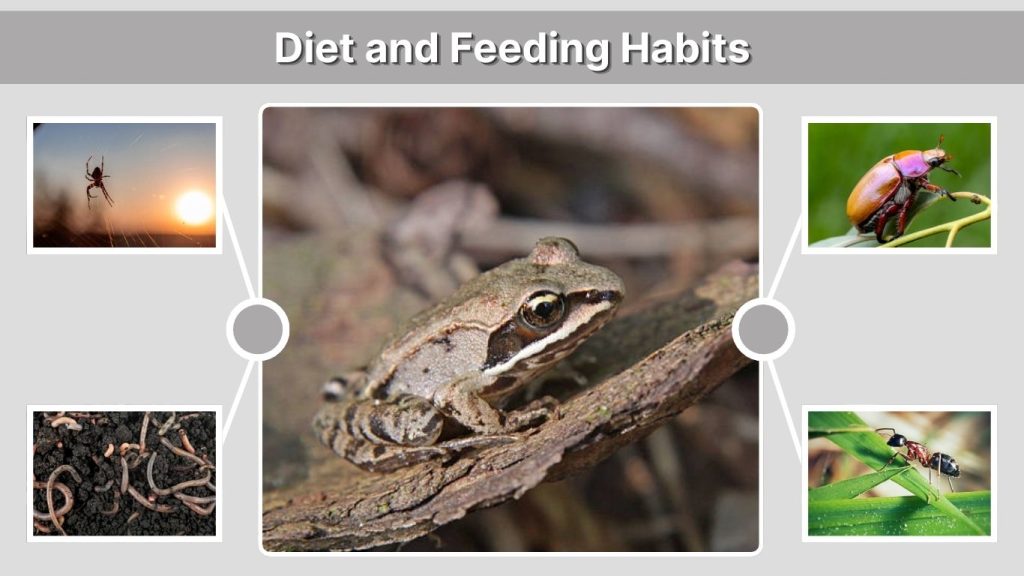
Wood Frogs are carnivorous as adults and actively hunt on the forest floor. Their diet includes a variety of small invertebrates, such as:
- Beetles
- Ants
- Spiders
- Worms
- Caterpillars
- Small insects
They rely on quick tongue strikes to capture prey and often hunt by moving slowly through leaf litter.
As tadpoles, their diet differs significantly. Young Wood Frogs feed primarily on algae, plant matter, and organic debris found in their aquatic environment. This diet supports rapid growth before metamorphosis.
Lifecycle and Reproduction
Breeding Season
Wood Frogs are explosive breeders, meaning their breeding season is short and highly synchronized. In many regions, breeding begins immediately after snowmelt, often in March or April. In northern areas, it may begin slightly later.
Because they breed so early, ice may still line the edges of ponds when males begin calling. The entire breeding period often lasts only two to three weeks, making it one of the most concentrated reproductive events among amphibians.
Mating and Egg Masses
Males gather in shallow vernal pools and call to attract females. Once a female chooses a mate, the pair enters amplexus, with the male clasping the female as she releases eggs.
Females lay large, jelly-like egg masses attached to submerged vegetation. Each mass can contain 1,000–3,000 eggs. Multiple females often deposit their egg masses in the same area, forming communal clusters that float near the water’s surface.
These groupings may help regulate temperature and increase survival rates, as the combined mass absorbs sunlight and warms more quickly.
Tadpole Development
Eggs typically hatch within one to three weeks, depending on water temperature. Tadpoles begin feeding immediately on algae and organic matter.
The tadpole stage usually lasts about 6–12 weeks. Because vernal pools are temporary and may dry out by mid-summer, rapid development is critical. As metamorphosis progresses, tadpoles grow hind legs, then front legs, while their tails gradually shrink.
By early summer, newly transformed froglets leave the water and disperse into surrounding forest habitats.
Lifespan
In the wild, Wood Frogs generally live 3–5 years, although some individuals may survive longer under ideal conditions. Survival depends on habitat quality, predation levels, and environmental stability.
Freeze Tolerance: An Extreme Survival Strategy
The Wood Frog’s most extraordinary adaptation is its ability to survive freezing solid.
How Wood Frogs Survive Freezing
As temperatures drop in autumn, Wood Frogs settle beneath leaf litter on the forest floor. Unlike many amphibians, they do not burrow deeply underground.
When winter temperatures fall below freezing, ice begins forming in their body cavities and beneath their skin. Up to 65–70% of their body water can freeze. During this time:
- Their heart stops beating
- Breathing ceases
- Brain activity pauses
To prevent cellular damage, Wood Frogs produce large amounts of glucose, which acts as a natural antifreeze. This glucose protects vital organs and cells from dehydration and ice crystal damage.
When spring arrives and temperatures rise, the frog thaws. Its heart resumes beating, organs begin functioning again, and it returns to normal activity—often within hours.
This remarkable freeze tolerance allows Wood Frogs to survive in regions where winter temperatures drop far below freezing for extended periods.
Overwintering Locations
Wood Frogs typically overwinter:
- Beneath leaf litter
- Under logs
- In shallow soil
- Among forest debris
These locations expose them to freezing air temperatures, yet their biological adaptations ensure survival.
Predators and Threats
Natural Predators
Throughout their life cycle, Wood Frogs face numerous predators.
Eggs and tadpoles may be eaten by:
- Aquatic insects
- Salamanders
- Birds
- Small mammals
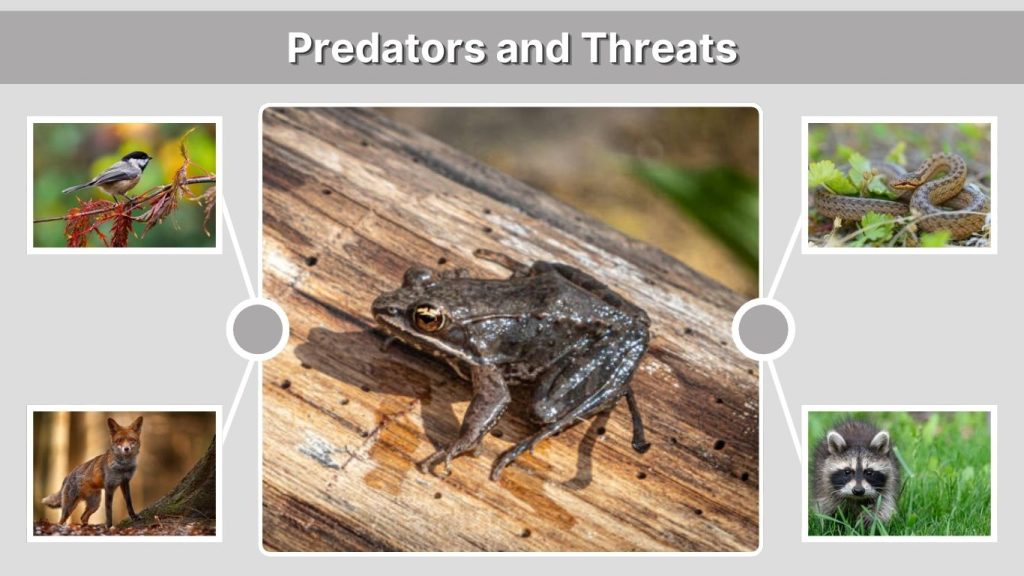
Adults are preyed upon by:
- Snakes
- Birds
- Raccoons
- Foxes
- Larger mammals
Their brown coloration and eye mask help camouflage them against forest floors, reducing visibility to predators.
Environmental Threats
Although Wood Frogs are currently listed as Least Concern, they face localized threats such as:
- Wetland destruction
- Loss of vernal pools
- Road mortality during spring migration
- Pollution from agricultural runoff
- Climate change affecting snowmelt timing
Because they rely heavily on temporary woodland pools, any disruption to these habitats can impact reproduction.
Wood Frog vs. Similar Species
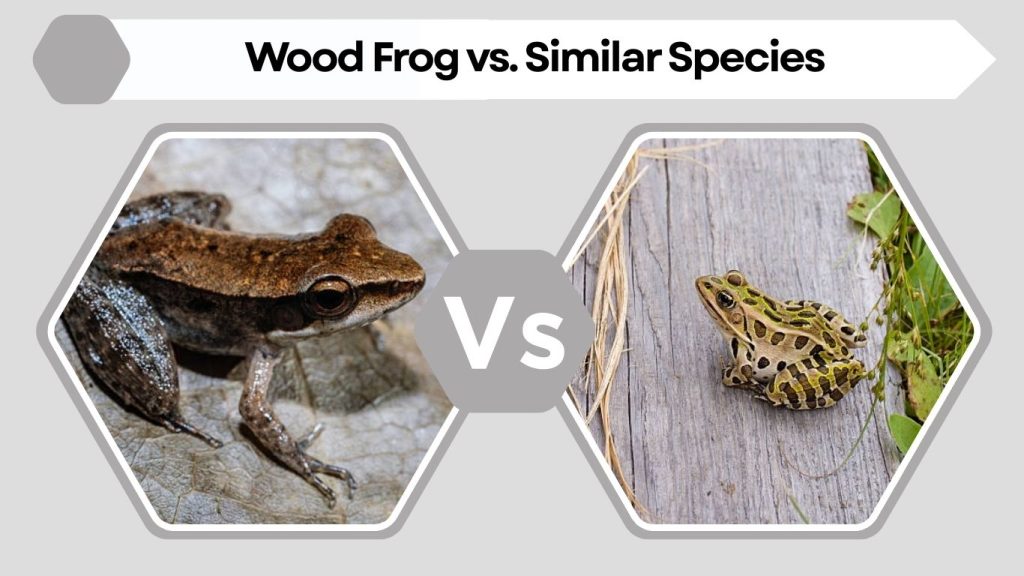
Differences from Leopard Frogs
Wood Frogs are sometimes confused with leopard frogs, but they differ in key ways:
- Wood Frogs have a dark eye mask rather than spots.
- Leopard frogs typically live closer to permanent water.
- Wood Frogs prefer forested habitats and vernal pools.
Differences from Spring Peepers
Compared to Spring Peepers, Wood Frogs:
- Are significantly larger
- Lack the X-shaped back marking
- Do not have toe pads
- Produce a quacking call instead of a sharp peep
Listening to calls during early spring is often the easiest way to identify each species.
Role in the Ecosystem
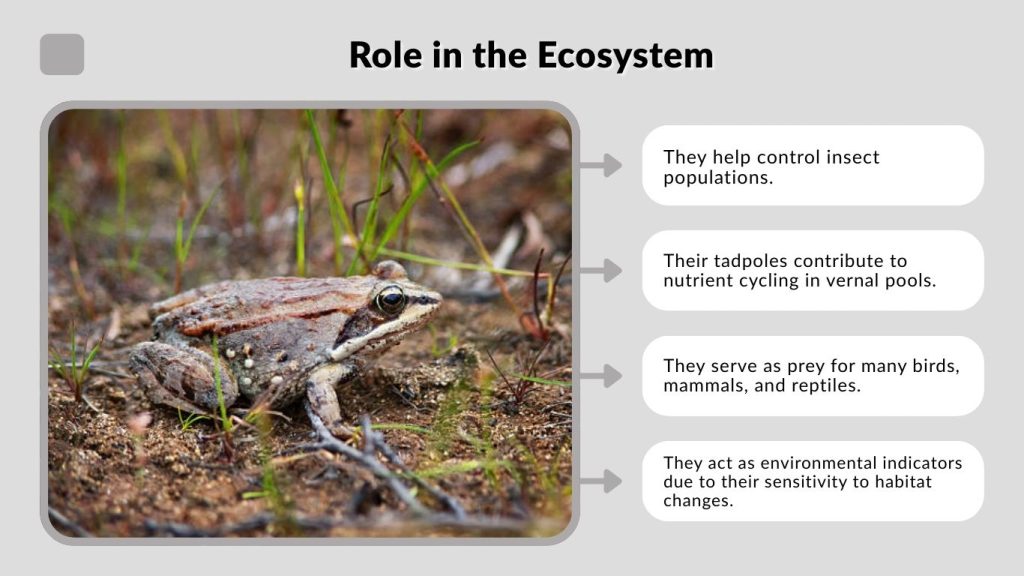
Wood Frogs play an important role in forest ecosystems.
- They help control insect populations.
- Their tadpoles contribute to nutrient cycling in vernal pools.
- They serve as prey for many birds, mammals, and reptiles.
- They act as environmental indicators due to their sensitivity to habitat changes.
Healthy Wood Frog populations often signal healthy forest and wetland systems.
Conservation Status
The Wood Frog is currently classified as Least Concern due to its wide distribution and stable overall population. However, regional declines can occur where forests are cleared or vernal pools are drained.
Protecting woodland habitats, preserving seasonal wetlands, and reducing pollution are essential for maintaining stable populations. Because Wood Frogs depend on both forests and wetlands, conserving connected habitats is especially important.
FAQs
Can Wood Frogs really freeze solid?
Yes. Wood Frogs can survive having much of their body frozen during winter. Their heart temporarily stops, and glucose acts as a natural antifreeze to protect their cells until they thaw in spring.
Are Wood Frogs poisonous?
Wood Frogs are not poisonous to humans. They may produce mild skin secretions like many amphibians, but these are harmless.
How long do Wood Frogs live?
In the wild, Wood Frogs typically live about 3–5 years, though some may survive longer in favorable conditions.
What do Wood Frogs eat?
Adult Wood Frogs eat insects, spiders, worms, and other small invertebrates. Tadpoles feed primarily on algae and organic debris in water.
Where do Wood Frogs live?
Wood Frogs live in forests across northern North America. They breed in temporary woodland pools and spend the rest of the year on the forest floor.