




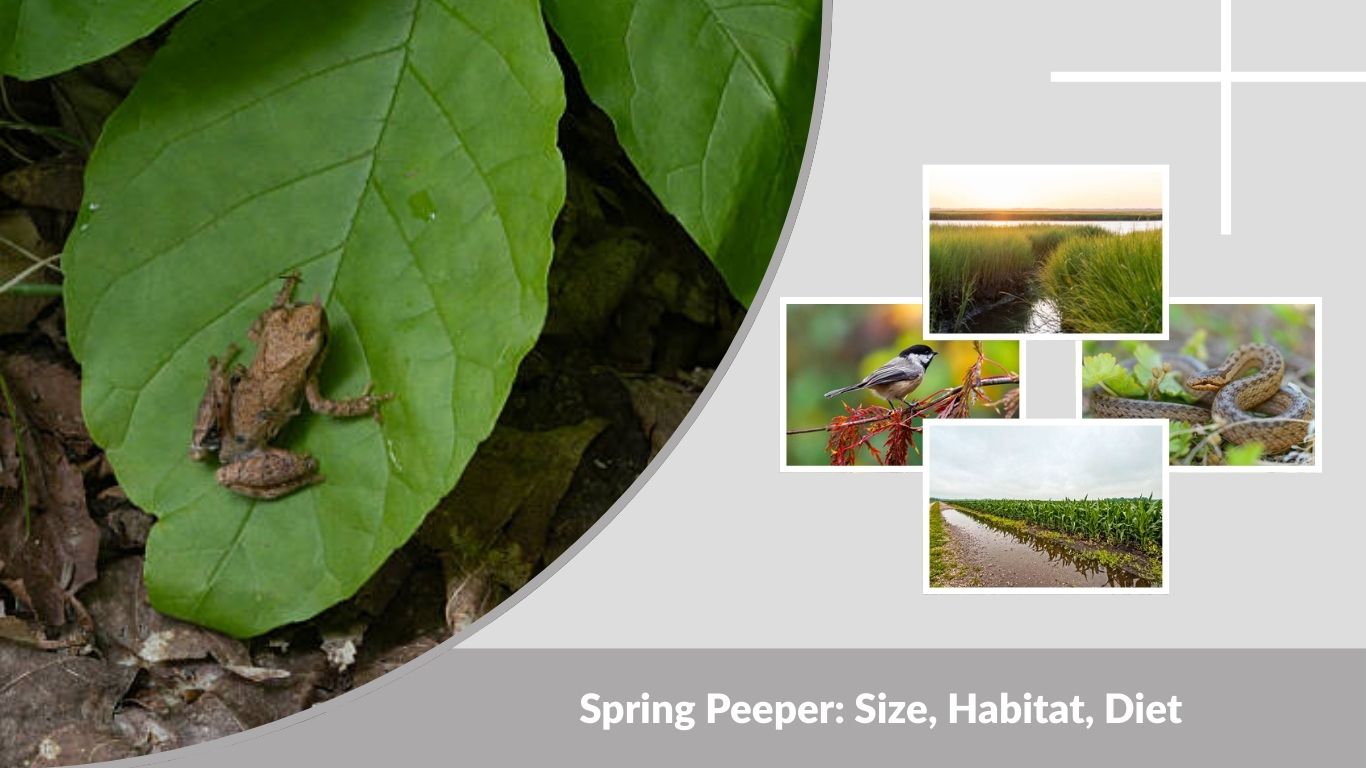
The Spring Peeper may be tiny, but its voice is one of the loudest signs that winter is ending. This small tree frog is famous for its sharp, high-pitched “peep” that fills wetlands and woodlands in early spring. Native to eastern North America, Spring Peepers are often heard long before they are seen. Despite their delicate size, they are hardy survivors capable of withstanding freezing temperatures and dramatic seasonal changes.
What Is a Spring Peeper?
The Spring Peeper (Pseudacris crucifer) is a small chorus frog belonging to the tree frog family, Hylidae. Its species name, crucifer, means “cross-bearing,” referring to the distinctive dark X-shaped marking on its back.
Spring Peepers are among the earliest amphibians to become active after winter. In many areas, their calls begin in late winter or very early spring, sometimes while patches of snow still cover the ground. Because of this, they are widely considered a natural symbol of seasonal change.
Though commonly grouped with tree frogs, Spring Peepers spend much of their time on the forest floor. However, they do have small toe pads that allow them to climb low vegetation and shrubs when needed.
Physical Characteristics
Size and Weight
Spring Peepers are very small frogs, typically measuring between 0.75 and 1.5 inches in length. Adults usually weigh only a few grams. Their compact size makes them easy prey for predators but also helps them hide effectively in leaf litter and grass.
Color and Markings
Their coloration ranges from tan and light brown to gray or olive. The most recognizable feature is the dark X-shaped marking across their back, though in some individuals the X may appear broken or faint.
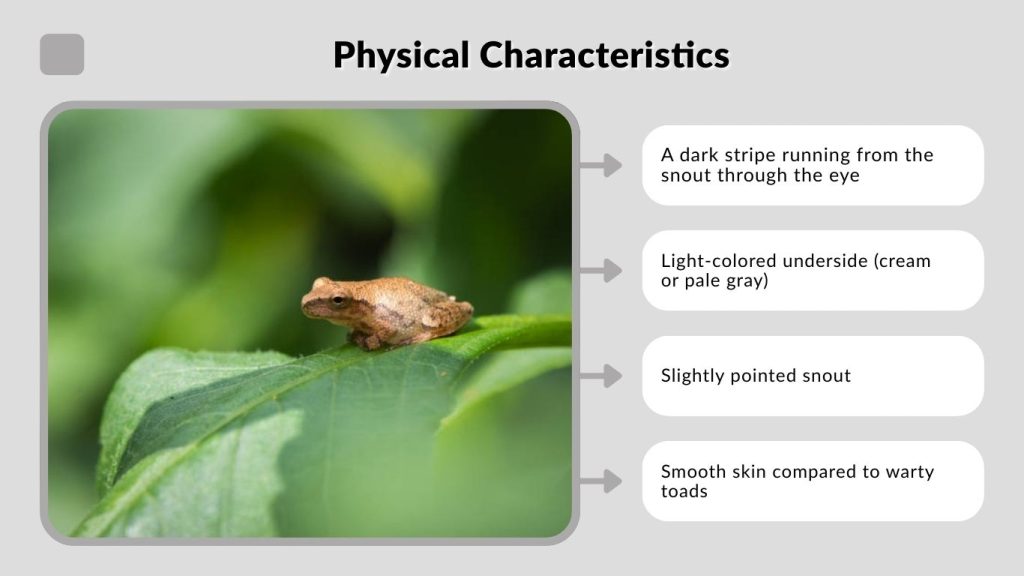
Other identifying features include:
- A dark stripe running from the snout through the eye
- Light-colored underside (cream or pale gray)
- Slightly pointed snout
- Smooth skin compared to warty toads
Their natural coloring provides excellent camouflage among fallen leaves and tree bark.
Toe Pads and Climbing Ability
Although not as specialized as larger tree frogs, Spring Peepers have slightly enlarged toe pads that help them grip surfaces. They are capable climbers and may perch on grasses, shrubs, or low branches, especially during breeding season. However, they are more often found close to the ground than high in trees.
Habitat and Distribution
Geographic Range
Spring Peepers are widely distributed across eastern North America. Their range includes:
- The eastern United States
- Parts of the Midwest
- Southern and eastern Canada
They are especially common in regions with abundant wetlands and mixed woodlands.
Preferred Habitats
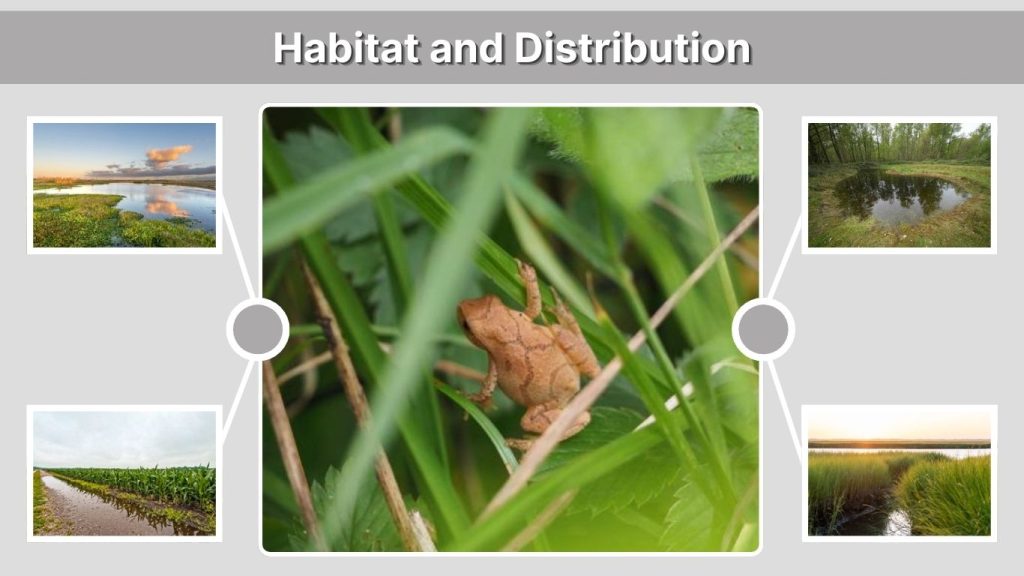
For most of the year, Spring Peepers live in moist forests, grassy fields, and woodland edges. They prefer areas with plenty of leaf litter, fallen logs, and low vegetation for cover.
During breeding season, they move to:
- Temporary woodland pools
- Marshes
- Swamps
- Ditches and flooded fields
- Backyard ponds
They favor shallow, fish-free water sources because fish readily eat their eggs and tadpoles.
Seasonal Movement
Spring Peepers spend the majority of the year hidden on land. As temperatures rise and rainfall increases in late winter or early spring, they migrate to nearby wetlands to breed. These migrations often happen at night and may coincide with warm rains.
After breeding concludes, adults return to forested habitats, where they remain active through summer and early fall.
Behavior and Activity
Nocturnal Lifestyle
Spring Peepers are primarily nocturnal. They hide during the day beneath leaves, logs, or dense vegetation to avoid dehydration and predators. At night, they become active, feeding on small insects and calling during breeding season.
Because they are small and well camouflaged, people often hear them without ever spotting one.
Calling Behavior
The call of the Spring Peeper is a short, high-pitched “peep” repeated once every second or so. While a single frog’s call may seem modest, large groups create a powerful chorus that can be almost deafening.
Males are responsible for calling. They position themselves at the edges of ponds or in shallow water and inflate their vocal sacs to produce sound. The louder and more persistent the call, the more likely a male is to attract a female.
Large choruses may include dozens or even hundreds of males calling simultaneously. The combined sound is often described as sleigh bells or jingling chimes echoing through the night air.
Social and Competitive Behavior
During breeding season, males compete for prime calling spots near water. Although they do not physically fight often, competition is intense. Calling requires energy, and males must balance attracting mates with avoiding exhaustion and predators.
Their breeding activity usually peaks in early spring but may continue into late spring depending on climate and location.
Diet and Feeding Habits
Spring Peepers are carnivorous as adults. Despite their tiny size, they are effective insect hunters.
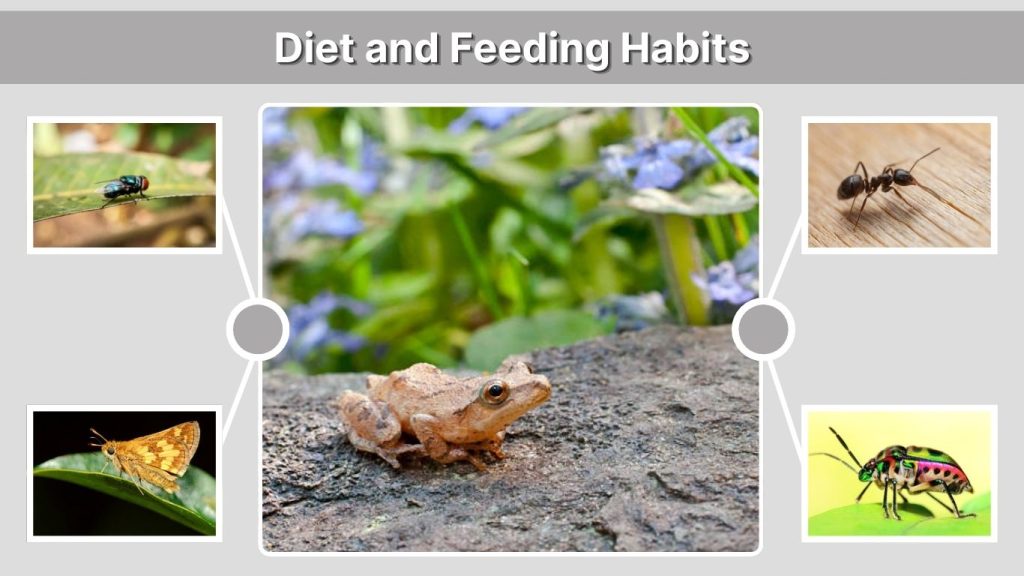
Their diet commonly includes:
- Ants
- Beetles
- Flies
- Small spiders
- Moths
- Other tiny invertebrates
They use a sit-and-wait hunting strategy, remaining still until prey moves within range. Then they quickly extend their sticky tongue to capture it.
As tadpoles, their diet is different. They primarily consume algae, decaying plant material, and organic debris found in water. This plant-based diet supports rapid growth before metamorphosis.
Lifecycle and Reproduction

Breeding Season
Spring Peepers are among the earliest breeding amphibians in North America. Their breeding season typically begins in late winter and continues through early spring, depending on local temperatures. In southern parts of their range, calling may start as early as February, while northern populations may not begin until April.
Warm rains and nighttime temperatures above freezing usually trigger breeding activity. Because they breed so early in the year, their choruses are often heard before trees fully leaf out.
Mating and Egg Laying
Males call from shallow water to attract females. Once a female selects a mate, the pair enters amplexus, a position in which the male clasps the female as she lays eggs.
Females lay small clusters of eggs attached to submerged vegetation, sticks, or other debris in shallow water. A single female can lay several hundred to over a thousand eggs in a breeding season, depositing them in multiple small groups rather than one large mass.
Tadpole Development
Eggs hatch within a few days to a week, depending on water temperature. The emerging tadpoles are aquatic and breathe through gills. They feed primarily on algae and organic matter while growing rapidly.
The tadpole stage usually lasts 6–12 weeks. As they develop, tadpoles gradually grow hind legs, then front legs, while their tails shrink. By late spring or early summer, metamorphosis is complete, and tiny froglets leave the water to begin life on land.
Lifespan
In the wild, Spring Peepers typically live around 3–5 years, though some individuals may live longer under favorable conditions. Their small size makes them vulnerable to predators, which can limit lifespan in natural settings.
Winter Survival
Freeze Tolerance
Like Gray Tree Frogs and some other amphibians, Spring Peepers possess an extraordinary ability: they can survive partial freezing.
As temperatures drop in late fall, they seek shelter beneath leaf litter, logs, or loose soil. When freezing conditions occur, their bodies produce high concentrations of glucose. This natural antifreeze protects their cells from damage as ice forms in parts of their body.
During freezing, their heart rate slows dramatically and may temporarily stop. Breathing also pauses. When temperatures rise in spring, they thaw and resume normal activity.
This adaptation allows Spring Peepers to survive harsh northern winters without burrowing deeply underground.
Overwintering Locations
Common overwintering sites include:
- Beneath leaf litter
- Under logs and bark
- In soft soil
- Among dense ground vegetation
These shallow shelters provide insulation while still exposing them to freezing temperatures they are biologically equipped to endure.
Predators and Threats
Natural Predators
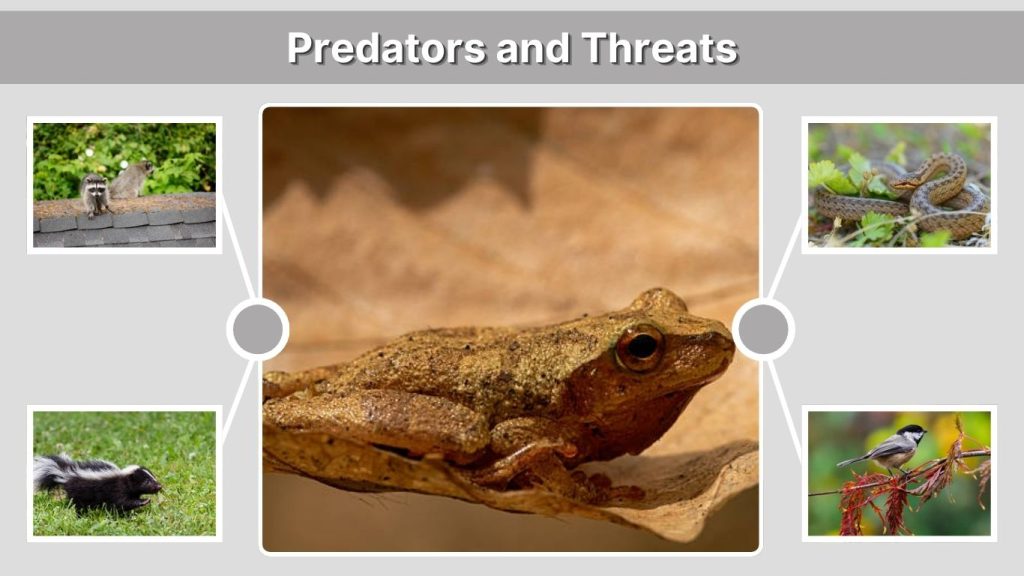
Spring Peepers face many predators due to their small size. Common predators include:
- Snakes
- Birds
- Raccoons
- Skunks
- Larger frogs
- Fish (which prey on eggs and tadpoles)
Their camouflage and nocturnal behavior help reduce predation risk. Remaining still and blending into leaf litter is often their best defense.
Environmental Threats
Although Spring Peepers are currently listed as a species of Least Concern, they still face environmental challenges:
Wetland destruction: Draining or filling temporary pools eliminates breeding sites.
Pollution: Agricultural runoff and chemical contamination can harm eggs and tadpoles.
Road mortality: Seasonal migrations to breeding ponds sometimes require crossing roads.
Climate change: Shifts in rainfall patterns and temperature may disrupt breeding cycles.
Because amphibians have permeable skin, they are particularly sensitive to environmental changes and pollution.
Spring Peeper vs. Other Small Frogs
Differences from Chorus Frogs
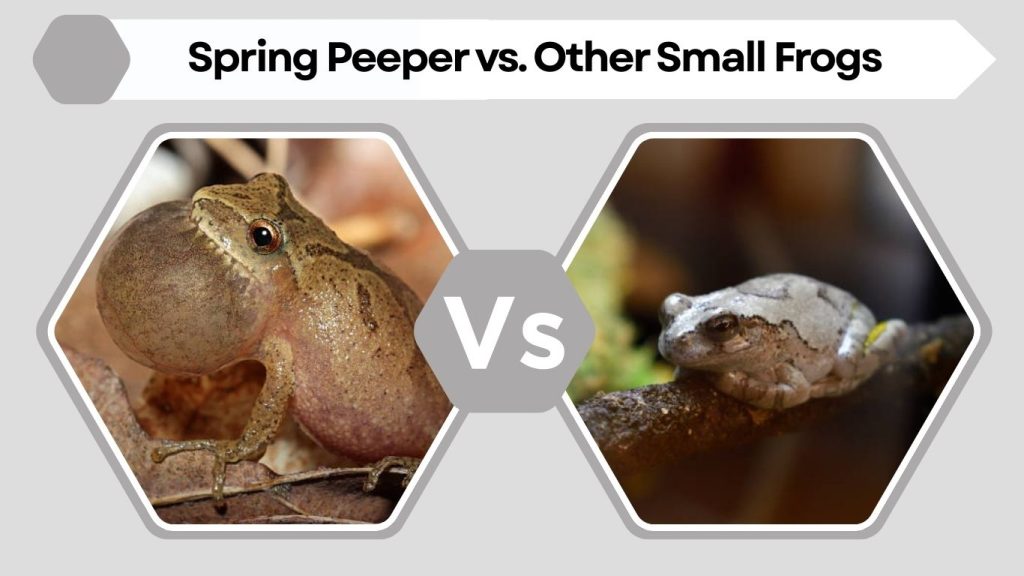
Spring Peepers are sometimes confused with other chorus frogs. However, they can be distinguished by:
- The dark X marking on their back
- A single clear “peep” call rather than a more complex trill
- Slight differences in body shape and pattern
Differences from Gray Tree Frogs
Compared to Gray Tree Frogs, Spring Peepers:
- Are smaller in size
- Have smoother skin
- Lack the bright yellow inner thigh coloration
- Produce a sharp peep instead of a long musical trill
Listening to their calls is often the easiest way to tell them apart.
Interesting Facts About Spring Peepers
- They are often the first frogs heard each spring.
- A large chorus can reach impressive sound levels despite each frog’s tiny size.
- They can survive partial freezing during winter.
- They are more commonly heard than seen.
- Their X-shaped marking inspired their scientific name.
These characteristics make them one of the most recognizable amphibians in eastern North America.
Conservation Status
Spring Peepers are currently classified as Least Concern due to their wide distribution and relatively stable populations. They remain common in many parts of their range.
However, local populations can decline when wetlands are destroyed or polluted. Protecting seasonal pools, forests, and natural drainage areas plays a crucial role in maintaining healthy frog populations.
As amphibians are sensitive environmental indicators, their presence often signals a healthy ecosystem.
FAQs
Are Spring Peepers poisonous?
Spring Peepers are not poisonous to humans. They do produce mild skin secretions that may taste unpleasant to predators, but these secretions are harmless to people. It is still recommended to wash hands after handling any amphibian.
Why are Spring Peepers so loud?
Male Spring Peepers call loudly to attract females during breeding season. When many males call together in a chorus, the combined sound becomes much louder than a single frog’s call, creating the intense springtime noise many people notice.
How long do Spring Peepers live?
In the wild, Spring Peepers typically live about 3–5 years. Survival depends heavily on habitat quality and predation levels.
Can you keep a Spring Peeper as a pet?
While they can survive in captivity with proper care, Spring Peepers are best appreciated in the wild. They are small, delicate, and not ideal for frequent handling.
What does the “X” on their back mean?
The X-shaped marking is simply a natural pigmentation pattern that helps with camouflage. It also inspired the species name crucifer, meaning “cross-bearing.”