
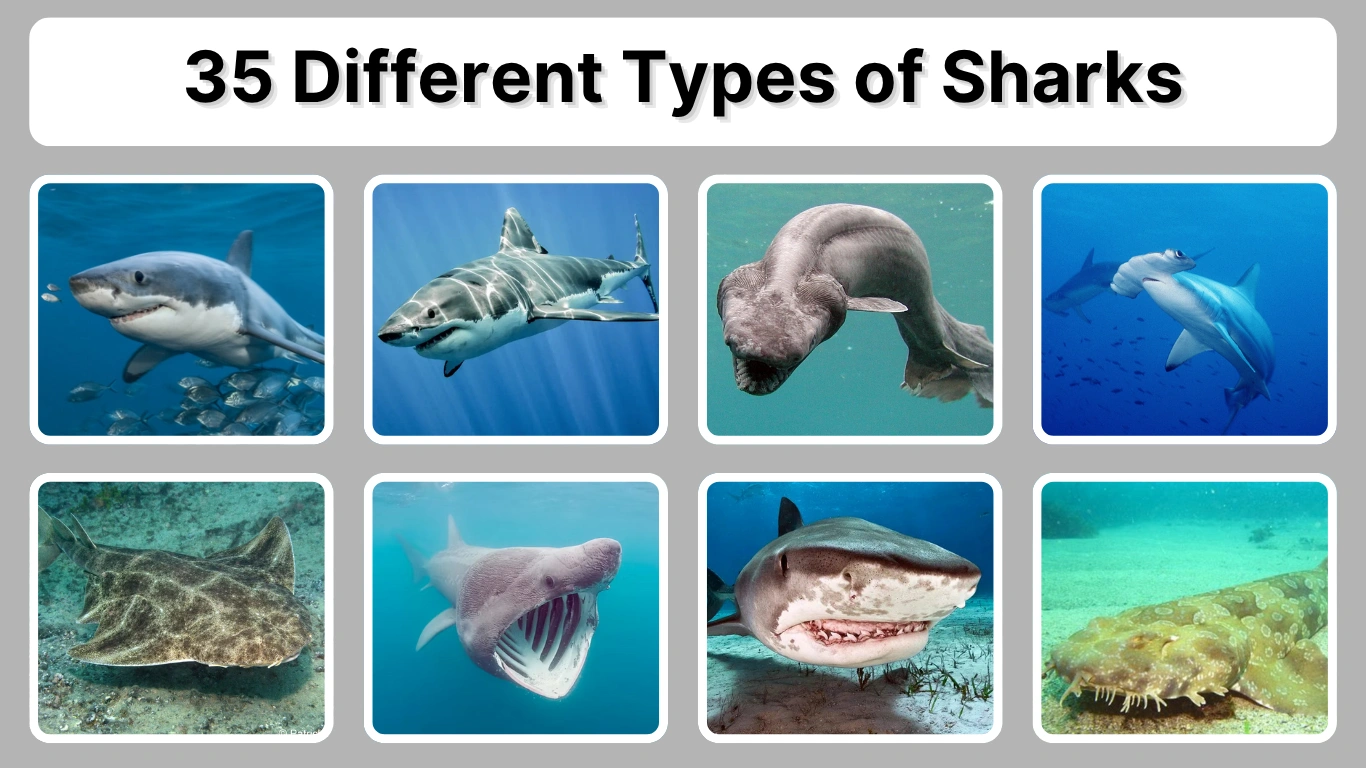
Sharks are some of the most diverse and captivating creatures in the ocean, with over 500 known species ranging from tiny deep-sea hunters to massive, gentle filter feeders. These ancient predators have adapted to nearly every marine environment on Earth—from coral reefs and coastal shallows to the darkest depths of the open sea. In this guide, you’ll discover 35 different types of sharks, each with its own unique traits, habitats, and behaviors. Whether you’re curious about the mighty great white, the elusive goblin shark, or the peculiar cookiecutter shark, this list offers a thrilling dive into the world of one of nature’s most fascinating animals.
1. Great White Shark
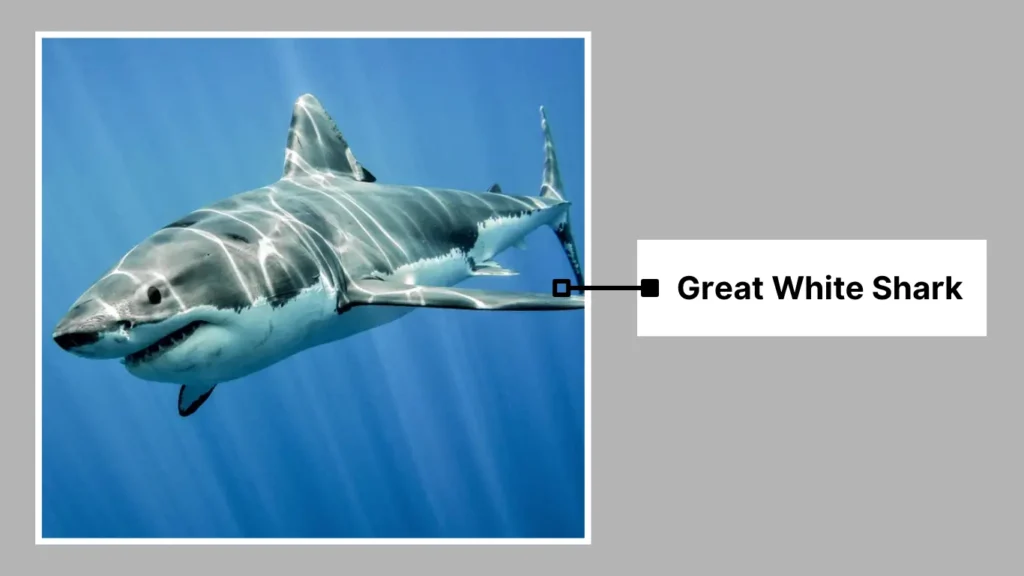
The great white shark is arguably the most iconic shark species in the world. Known for its sheer size, power, and fearsome reputation, it’s a top predator in the ocean and plays a vital role in maintaining the balance of marine ecosystems.
Identification
- Color: Gray upper body and white underside (countershading for camouflage)
- Size: Typically 11–16 feet (3.5–5 m), but can grow over 20 feet (6+ m)
- Weight: Up to 2,500 pounds (1,135 kg) or more
- Teeth: Large, triangular, serrated teeth arranged in multiple rows
- Body Shape: Robust, torpedo-shaped with a pointed snout
- Fins: Prominent dorsal and pectoral fins
Habitat and Distribution
Great white sharks are found in coastal and offshore waters around the world. They prefer temperate seas and are commonly spotted near South Africa, Australia, California, and parts of the Mediterranean.
Behavior and Diet
Great whites are apex predators, feeding on a wide range of prey including fish, sea lions, seals, dolphins, and even other sharks. They use powerful bursts of speed and surprise attacks from below to catch prey. These sharks are highly migratory and travel vast distances across oceans. Despite their fearsome image, they rarely attack humans, and most bites are exploratory.
2. Tiger Shark
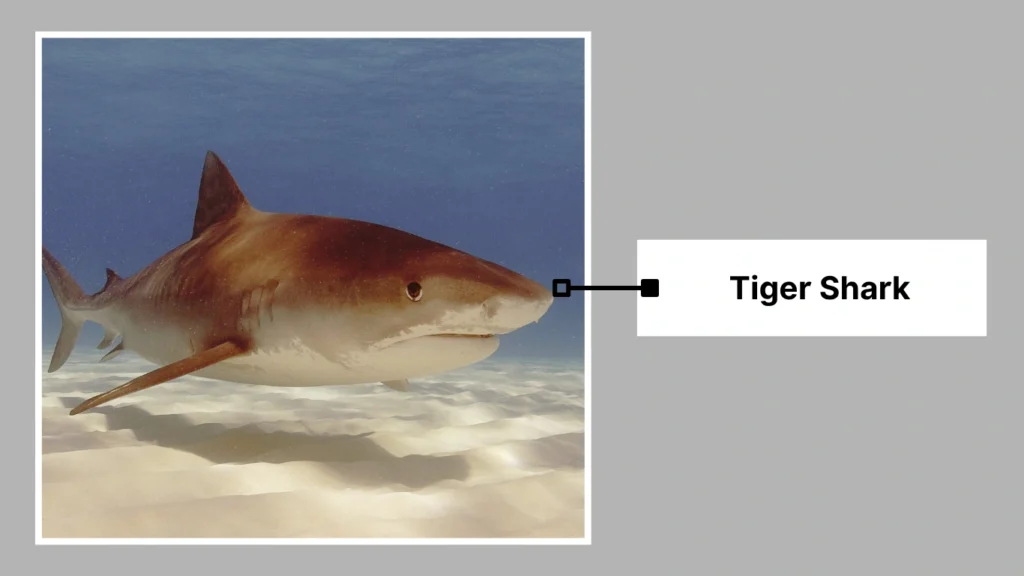
Tiger sharks are large, powerful predators known for their dark vertical stripes—resembling a tiger’s pattern—especially visible in juveniles. They have a reputation for eating almost anything, earning them the nickname “the garbage cans of the sea.”
Identification
- Color: Bluish-green to gray upper body with a pale or white underside
- Markings: Dark vertical stripes along the body (more prominent in younger sharks)
- Size: Typically 10–14 feet (3–4.2 m), but can reach over 18 feet (5.5 m)
- Weight: 850–1,400 pounds (385–635 kg)
- Teeth: Large, curved, and serrated for cutting through bones and shells
- Head: Broad and flat with blunt snout
Habitat and Distribution
Tiger sharks inhabit tropical and subtropical waters worldwide. They are commonly found in the Atlantic, Pacific, and Indian Oceans—especially near Hawaii, the Gulf of Mexico, and the Caribbean.
Behavior and Diet
They are solitary, mostly nocturnal hunters with a very diverse diet, including fish, sea turtles, birds, crustaceans, seals, and even inedible objects like license plates. Tiger sharks often patrol coastal areas and are known for their slow cruising style followed by sudden bursts of speed when attacking.
3. Bull Shark
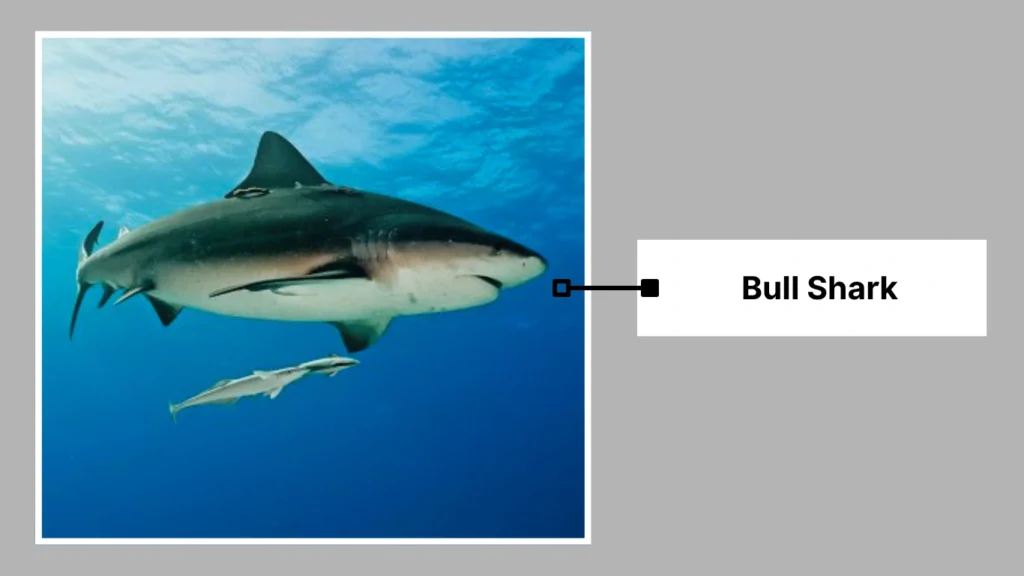
Bull sharks are aggressive, stocky, and extremely adaptable. What sets them apart is their ability to survive in both saltwater and freshwater, often swimming up rivers far inland.
Identification
- Color: Gray upper body with a white underside
- Size: Typically 7–11.5 feet (2.1–3.5 m)
- Weight: Up to 700 pounds (318 kg)
- Body Shape: Stocky and wide with a blunt snout
- Teeth: Triangular and heavily serrated
- Fins: Broad and slightly curved
Habitat and Distribution
Bull sharks are found worldwide in warm coastal waters and freshwater rivers. They’re common in the Amazon, Mississippi, Ganges, and Zambezi Rivers and are frequently seen in estuaries and lagoons.
Behavior and Diet
They are opportunistic feeders, preying on fish, dolphins, birds, turtles, and other sharks. Known for their territorial behavior and short tempers, bull sharks are considered one of the most dangerous sharks to humans due to their proximity to shorelines and aggressive nature.
4. Hammerhead Shark
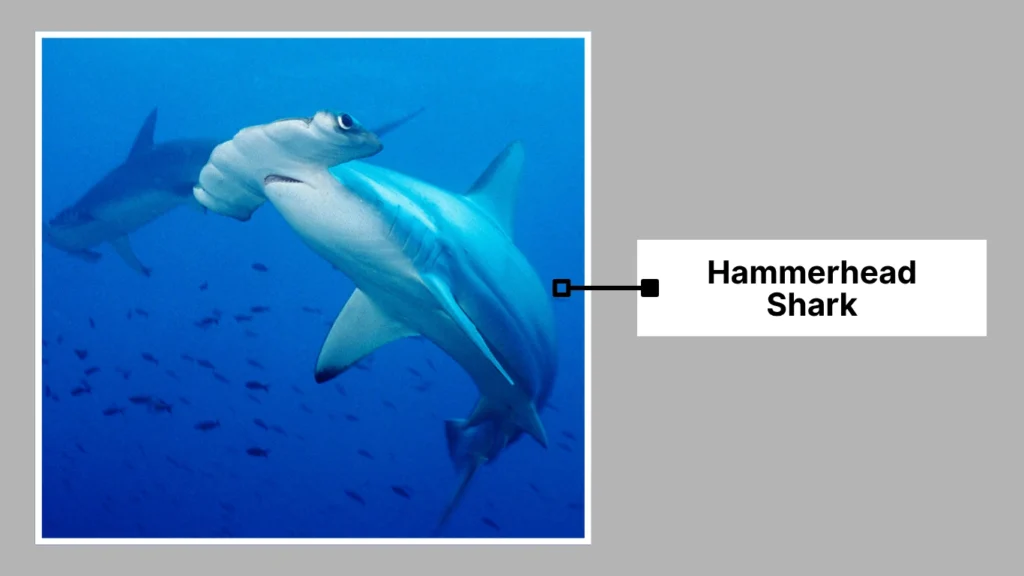
Hammerhead sharks are instantly recognizable by their unique, flattened, hammer-shaped heads called “cephalofoils.” This specialized head enhances their vision and sensory perception, making them efficient and precise hunters.
Identification
- Color: Gray to olive-green upper body with a white underside
- Head Shape: Wide, hammer-like structure with eyes on each end
- Size: Ranges from 3 to 20 feet (1 to 6 meters), depending on species
- Weight: Up to 1,000 pounds (450 kg) or more for larger species like the great hammerhead
- Teeth: Small, triangular, and serrated
Habitat and Distribution
Hammerheads are found in warm, tropical, and subtropical waters around the world, including coastal areas and continental shelves. Some species also venture into deeper open ocean.
Behavior and Diet
They primarily feed on fish, squid, octopuses, and stingrays, which they pin to the seafloor using their wide heads. Hammerheads often form schools during the day and hunt alone at night. Their enhanced binocular vision and electroreceptors in the head give them superior hunting precision.
5. Whale Shark
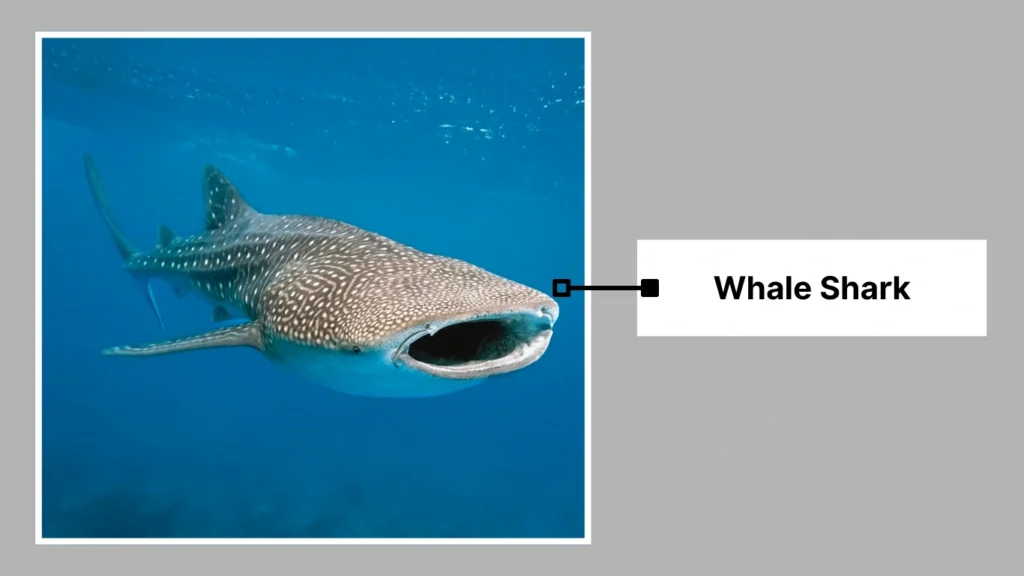
The whale shark is the largest shark species and also the largest fish in the world. Despite its size, it is completely harmless to humans and feeds only on tiny plankton and small fish by filter-feeding.
Identification
- Color: Dark gray or blue-gray with white spots and horizontal stripes
- Size: Commonly 30–40 feet (9–12 meters), but can exceed 60 feet (18 meters)
- Weight: Up to 20 tons (18,000 kg)
- Mouth: Wide and flat, located at the front of the head, not underneath like many sharks
- Gill Slits: Five large slits used for filter feeding
Habitat and Distribution
Whale sharks are found in tropical and warm temperate oceans worldwide. They often migrate long distances and are commonly seen near the surface in places like the Philippines, Mexico, and Australia.
Behavior and Diet
Whale sharks are gentle filter feeders, swimming with their mouths open to collect plankton, small fish, and crustaceans. They are solitary, slow-moving, and pose no threat to humans, often allowing swimmers or divers to accompany them calmly.
6. Mako Shark (Shortfin)
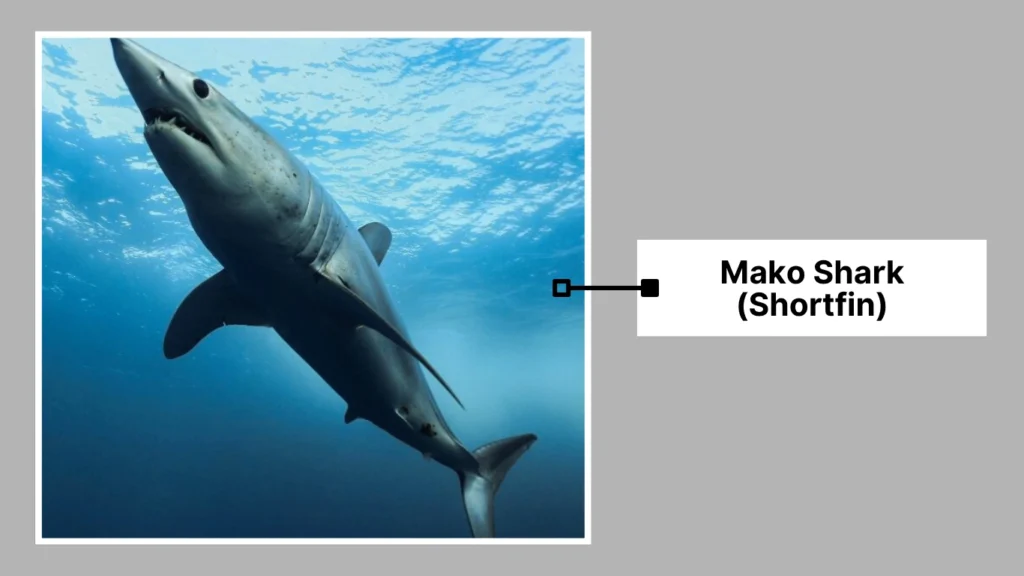
The shortfin mako shark is the fastest shark in the ocean, capable of reaching speeds up to 45 mph (72 km/h). Sleek and muscular, it is a powerful predator admired for its agility and speed.
Identification
- Color: Metallic blue back, white underside
- Size: Typically 6–10 feet (1.8–3 meters)
- Weight: Up to 1,200 pounds (545 kg)
- Body Shape: Streamlined and torpedo-shaped
- Teeth: Long, narrow, and sharply pointed—visible even when the mouth is closed
- Fins: Short pectoral fins and a tall, pointed dorsal fin
Habitat and Distribution
Shortfin makos are found in temperate and tropical oceans worldwide, often far offshore. They prefer deep, open waters but may come near coastal areas to hunt.
Behavior and Diet
They are active hunters, feeding on tuna, mackerel, squid, and other sharks. Their speed and leaping ability make them dangerous predators and prized game fish. Makos are solitary and travel long distances, sometimes following migratory prey.
7. Mako Shark (Longfin)

The longfin mako shark is closely related to the shortfin mako but is more elusive and less understood. It is distinguished by its unusually long pectoral fins and more sluggish movement compared to its faster cousin.
Identification
- Color: Dark blue or purplish back, white belly
- Size: Typically 8–14 feet (2.4–4.3 meters)
- Weight: Up to 500 pounds (227 kg)
- Fins: Very long pectoral fins, giving a more gliding appearance
- Teeth: Sharp, slender, and slightly curved
Habitat and Distribution
Longfin makos inhabit deep, warm waters of the Atlantic, Pacific, and Indian Oceans. They are much rarer than shortfin makos and are seldom seen near shore.
Behavior and Diet
They feed on fish and squid, using stealth and sudden bursts of speed. Though less aggressive than the shortfin mako, they are still formidable hunters. Due to their rarity and deep-water lifestyle, much of their behavior remains unknown.
8. Thresher Shark
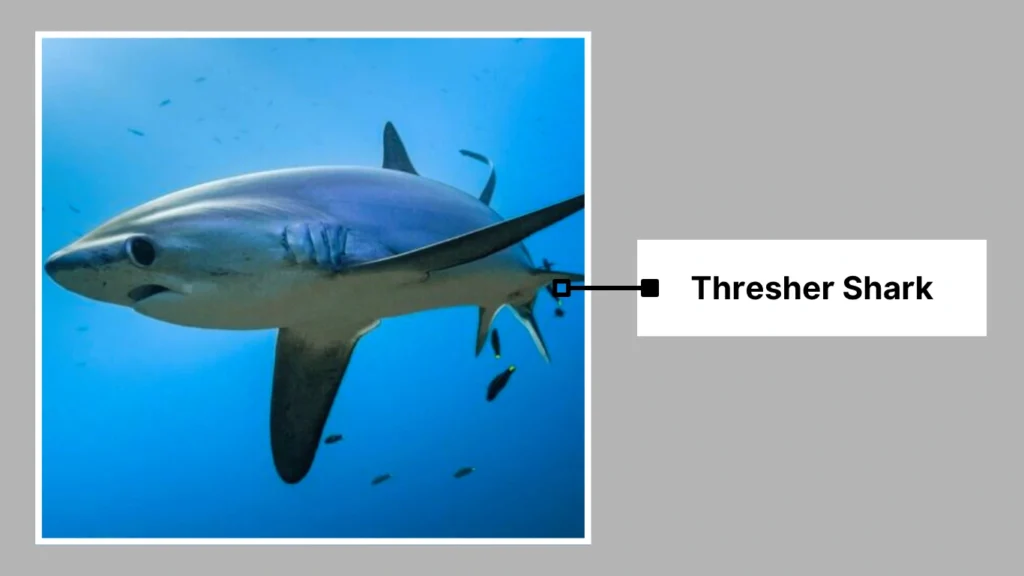
Thresher sharks are best known for their exceptionally long, whip-like tail that can be as long as their body. They use this powerful tail to stun and herd schools of fish before feeding.
Identification
- Color: Grayish-blue upper body, lighter underside
- Size: Typically 10–16 feet (3–5 meters), with the tail making up about half the length
- Weight: 500–1,100 pounds (225–500 kg)
- Tail: Extremely long upper lobe of the caudal fin
- Eyes: Large and adapted for deep-water hunting
Habitat and Distribution
Thresher sharks inhabit temperate and tropical oceans around the world. They are found both in open oceans and near coastal continental shelves.
Behavior and Diet
They feed mainly on small schooling fish like mackerel and sardines, and also on squid. Threshers use their tails to slap and stun prey before circling back to eat. They are generally shy and solitary swimmers, often diving deep during the day and hunting near the surface at night.
9. Goblin Shark
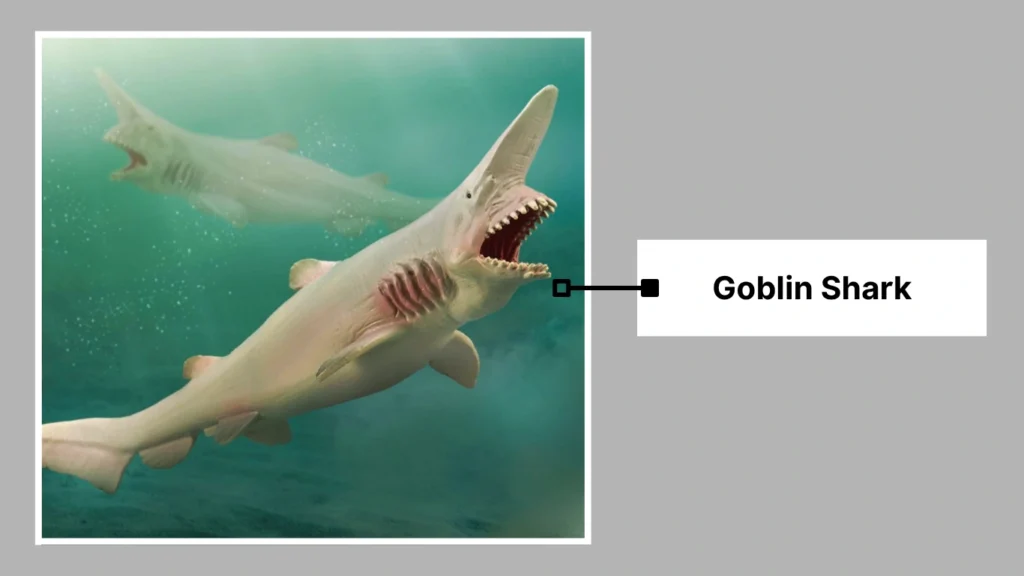
The goblin shark is a rare and bizarre-looking deep-sea shark, often referred to as a “living fossil” due to its ancient lineage. Its long, flattened snout and protrusible jaws give it a truly alien appearance.
Identification
- Color: Pale pink or grayish-white
- Size: Typically 10–13 feet (3–4 meters), though some may grow larger
- Snout: Long, flattened, and blade-like
- Jaws: Extend rapidly to catch prey
- Teeth: Narrow and needle-like, ideal for gripping slippery prey
Habitat and Distribution
Goblin sharks live in deep waters (usually 300–1,200 meters) of the Atlantic, Pacific, and Indian Oceans. They are most often found near continental slopes and submarine canyons.
Behavior and Diet
They feed on deep-sea fish, squid, and crustaceans. Their snouts contain electroreceptors to detect prey in total darkness. The goblin shark’s unusual jaw mechanism allows it to spring forward and grab prey with lightning speed, making it an efficient but rarely observed predator.
10. Basking Shark
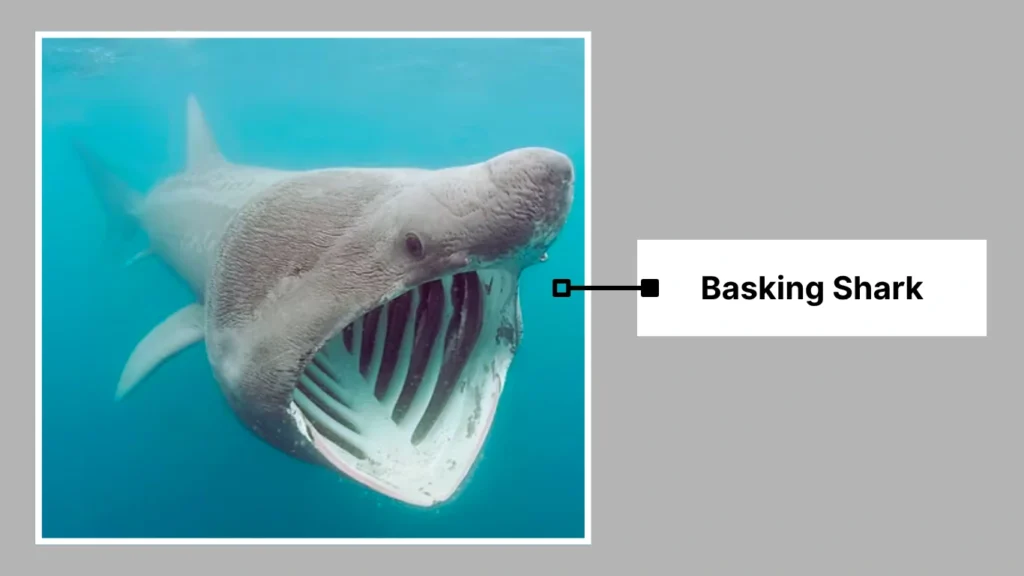
The basking shark is the second-largest fish in the world, known for its massive size and gaping mouth. Despite its intimidating appearance, it is a gentle filter feeder that poses no threat to humans.
Identification
- Color: Grayish-brown to dark gray with mottled skin
- Size: Typically 20–26 feet (6–8 meters), but can exceed 30 feet (9 meters)
- Weight: Up to 10,000 pounds (4,500 kg)
- Mouth: Huge and always open while feeding, with gill rakers visible
- Fins: Large dorsal fin and long pectoral fins
Habitat and Distribution
Basking sharks inhabit temperate oceans worldwide, especially the North Atlantic and North Pacific. They are often spotted near the surface in coastal areas during warmer months.
Behavior and Diet
They swim slowly with their mouths open, filtering plankton and small organisms through their gill rakers. Basking sharks are migratory and may travel thousands of miles. They are solitary or swim in small groups and are often seen “basking” near the surface, hence the name.
11. Blue Shark
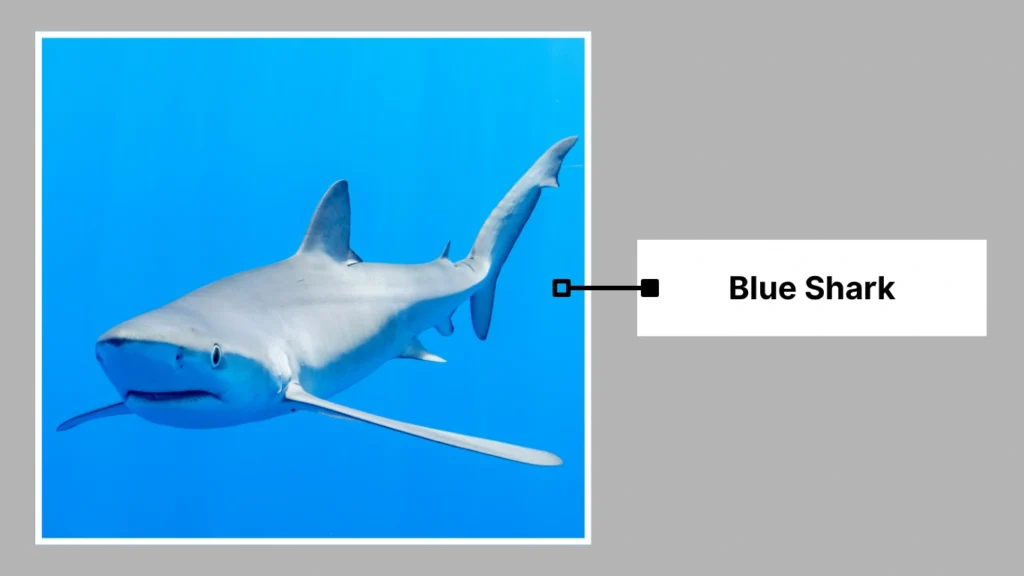
Blue sharks are slender, fast-swimming predators with striking blue coloring and long, graceful pectoral fins. They are among the most widely distributed shark species and are often found in open oceans.
Identification
- Color: Deep blue back, lighter blue sides, and white underside
- Size: Typically 6–10 feet (1.8–3 meters)
- Weight: 150–400 pounds (68–181 kg)
- Body: Sleek and tapered with long, narrow fins
- Eyes: Large and round, adapted for deep water
Habitat and Distribution
Blue sharks are found in temperate and tropical oceans worldwide. They prefer open water far from shore and can be found at depths of up to 1,000 feet.
Behavior and Diet
They primarily feed on squid, small fish, and carrion. Blue sharks are known for their curiosity and are often seen approaching boats or divers. They travel long distances and are among the most migratory sharks, sometimes forming loose schools by size and sex.
12. Lemon Shark
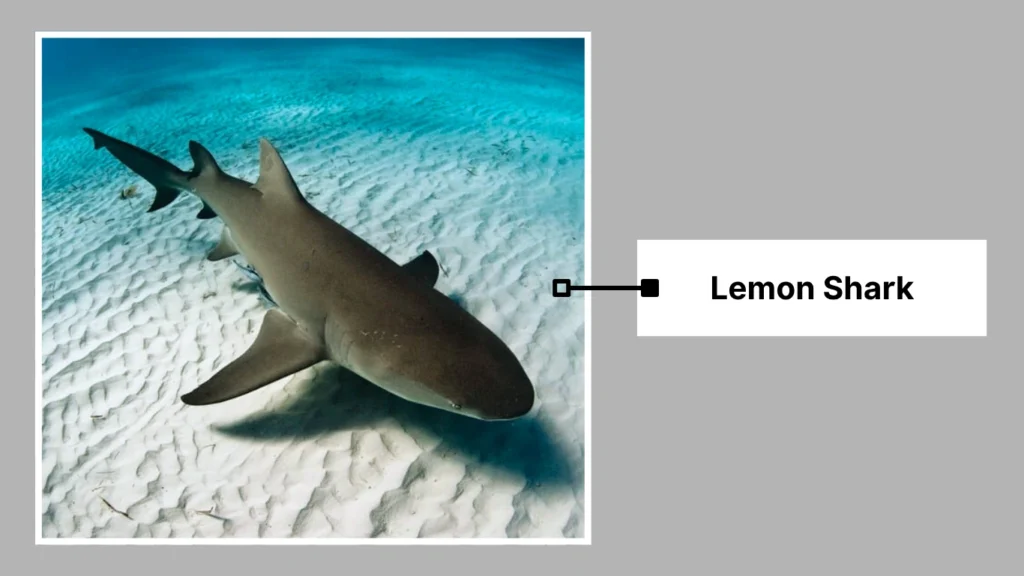
Lemon sharks are named for their yellowish-brown skin, which helps them blend into sandy seafloors. They are often studied for their social behavior and strong homing instincts.
Identification
- Color: Pale yellow to olive-gray upper body with a lighter belly
- Size: Typically 8–10 feet (2.4–3 meters)
- Weight: Up to 400 pounds (180 kg)
- Snout: Short and blunt
- Fins: Two nearly equal-sized dorsal fins, a distinguishing feature
Habitat and Distribution
Lemon sharks are found in subtropical and tropical coastal waters of the Atlantic and eastern Pacific Oceans. They prefer shallow environments like mangroves, coral reefs, and sandy bays.
Behavior and Diet
They feed on fish, rays, crustaceans, and seabirds. Lemon sharks are social, often forming small groups, and are known for returning to specific nursery areas to give birth. Their ability to learn and remember locations has made them a favorite in scientific research.
13. Sand Tiger Shark
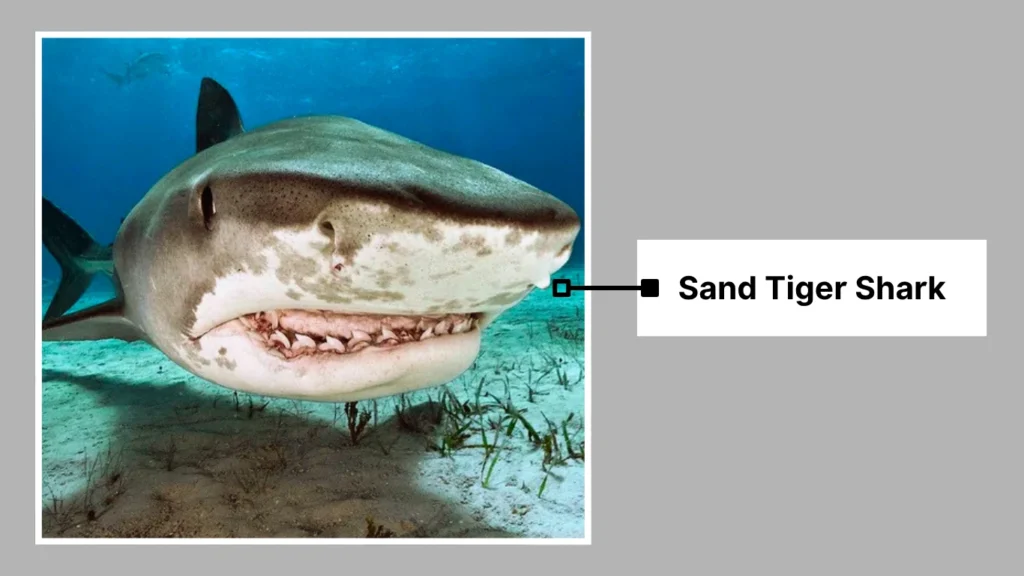
Despite its fearsome appearance—with rows of ragged, protruding teeth—the sand tiger shark is relatively docile. It is commonly found in public aquariums due to its ability to adapt to captivity.
Identification
- Color: Light brown or gray with reddish-brown spots along the body
- Size: Typically 6.5–10.5 feet (2–3.2 meters)
- Weight: Up to 350 pounds (160 kg)
- Teeth: Long, thin, and always visible even with the mouth closed
- Body: Thick and bulky with a pointed snout
Habitat and Distribution
Sand tiger sharks live in coastal waters, bays, and estuaries in the Atlantic, Indian, and western Pacific Oceans. They are often found near the ocean floor, around reefs and shipwrecks.
Behavior and Diet
They feed on fish, rays, and small sharks. Sand tigers are slow swimmers and often appear to be gliding effortlessly. Despite being solitary hunters, they may gather in groups for mating or resting in caves and sandy bottoms. They can gulp air and store it in their stomachs to help them hover silently in the water.
14. Blacktip Shark
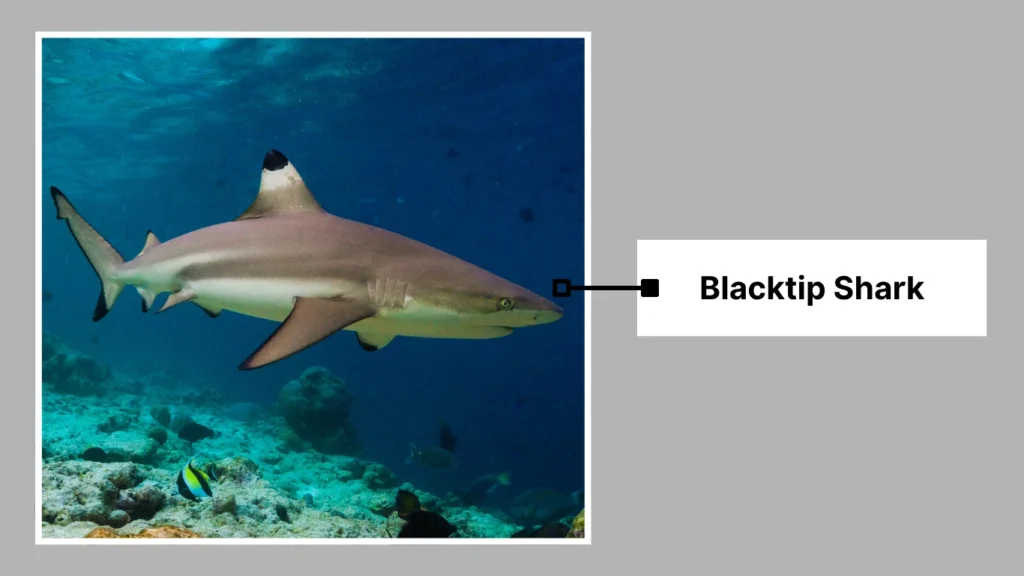
The blacktip shark is a fast, agile species easily recognized by the distinct black tips on its fins. It’s commonly found in warm, shallow waters and is one of the most frequently encountered sharks by swimmers and snorkelers.
Identification
- Color: Dark gray to bluish-gray on top, white underside
- Markings: Prominent black tips on dorsal, pelvic, and tail fins
- Size: Typically 5–6.5 feet (1.5–2 meters)
- Weight: Around 60–220 pounds (27–100 kg)
- Body: Streamlined with a long, pointed snout
Habitat and Distribution
Blacktip sharks are found in tropical and subtropical waters around the world, especially in the Atlantic Ocean, Gulf of Mexico, and Indo-Pacific region. They often inhabit coral reefs, estuaries, and sandy coastal areas.
Behavior and Diet
They feed on sardines, herring, mullet, small sharks, and rays. Blacktips are known for their spinning leaps out of the water when feeding on schools of fish. Though generally shy, they may become more aggressive in the presence of food.
15. Blacktip Reef Shark
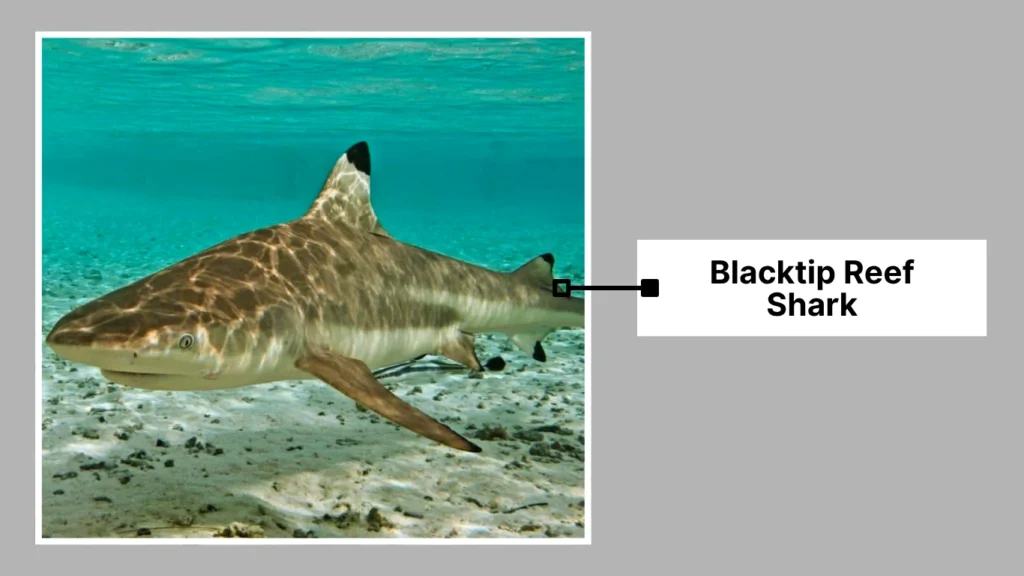
Not to be confused with the blacktip shark, the blacktip reef shark is smaller and more commonly found in shallow waters near coral reefs. It is one of the most recognizable reef sharks due to its bold fin markings and frequent visibility to divers.
Identification
- Color: Light gray or tan upper body, white underside
- Markings: Distinct black tips on all fins, especially the dorsal fin
- Size: Typically 3–5 feet (1–1.5 meters)
- Weight: Up to 40 pounds (18 kg)
- Body: Slender and agile with a rounded snout
Habitat and Distribution
Blacktip reef sharks are native to shallow, warm coastal waters and coral reefs across the Indo-Pacific, from the Red Sea to Australia and Southeast Asia.
Behavior and Diet
They hunt small fish, crustaceans, and cephalopods, often in shallow lagoons or near coral heads. These sharks are generally timid around humans but curious, often circling divers. They play a key role in reef health by controlling fish populations.
16. Whitetip Reef Shark
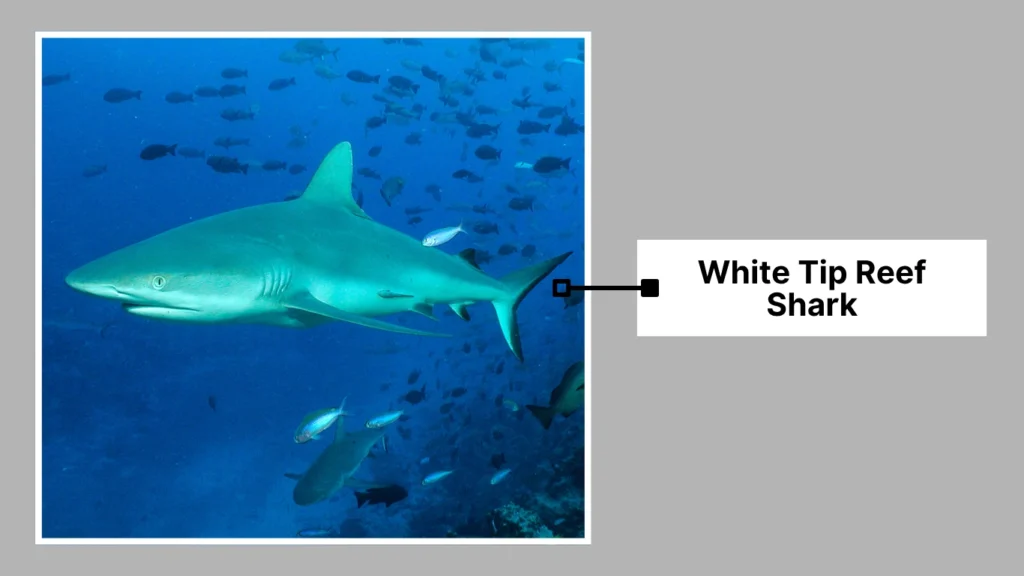
The whitetip reef shark is a slender, nocturnal hunter commonly seen resting in caves or cruising along coral reefs. It’s easily identified by the white tips on its dorsal and tail fins and its distinctive lazy swimming style.
Identification
- Color: Grayish-brown upper body with a white belly
- Markings: White tips on the first dorsal and upper caudal fin
- Size: Typically 4–5.5 feet (1.2–1.7 meters)
- Weight: Around 30–45 pounds (13–20 kg)
- Body: Slim and flexible with a blunt, flat head
Habitat and Distribution
Whitetip reef sharks are widely distributed throughout the Indo-Pacific, especially around coral reefs, lagoons, and drop-offs. They prefer clear, warm waters and often rest in crevices during the day.
Behavior and Diet
Primarily nocturnal, they hunt at night for bony fish, crustaceans, and octopuses. Their slender bodies allow them to squeeze into tight reef spaces. These sharks are not aggressive toward humans and are commonly seen by divers, often resting in groups.
17. Oceanic Whitetip Shark
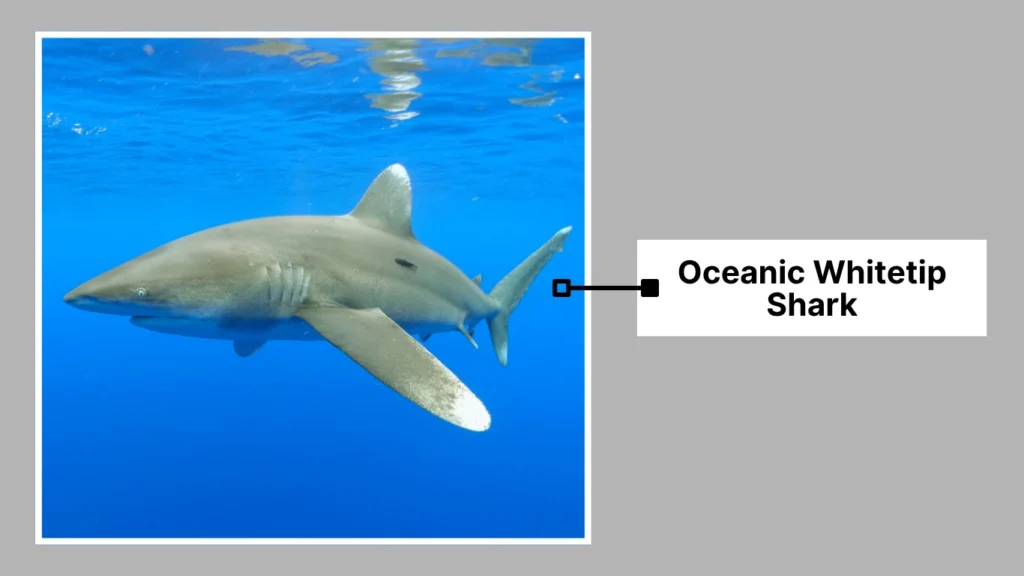
The oceanic whitetip shark is a large pelagic species known for its long, rounded fins tipped with white. Once among the most abundant open-ocean sharks, its population has declined sharply due to overfishing.
Identification
- Color: Grayish-bronze upper body, white underside
- Markings: Distinct white tips on dorsal, pectoral, and tail fins
- Size: Typically 8–11 feet (2.4–3.3 meters)
- Weight: Up to 370 pounds (168 kg)
- Fins: Very large and rounded, especially the pectoral fins
Habitat and Distribution
They inhabit tropical and subtropical deep ocean waters worldwide, often far from land. They’re rarely seen near the coast and prefer the upper layers of the open sea.
Behavior and Diet
They feed on squid, bony fish, seabirds, and even carrion. Known for their boldness, oceanic whitetips often approach boats and are considered opportunistic feeders. Their slow cruising style and wide-ranging behavior make them top predators in the pelagic zone.
18. Nurse Shark
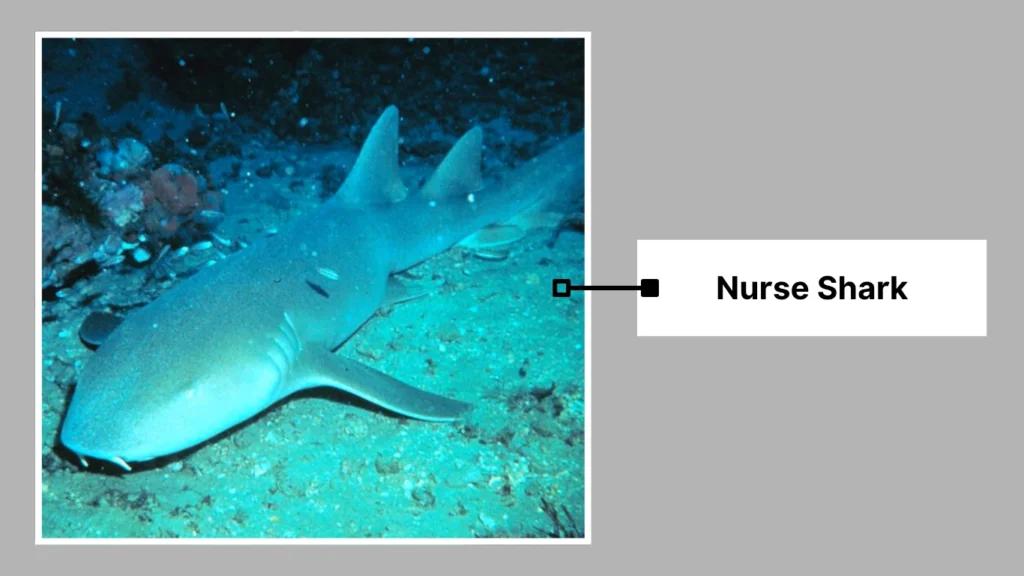
Nurse sharks are slow-moving, bottom-dwelling sharks that are generally docile and often seen resting in groups. Their small mouths and barbels give them a catfish-like appearance, and they are popular among divers for their calm nature.
Identification
- Color: Yellowish-brown to grayish-brown
- Size: Typically 7.5–9 feet (2.3–2.7 meters)
- Weight: Up to 230 pounds (105 kg)
- Body: Broad and flattened with a rounded head
- Mouth: Small, beneath the snout with two short barbels (whisker-like appendages)
- Teeth: Small, adapted for crushing shells
Habitat and Distribution
Nurse sharks inhabit warm, shallow coastal waters of the Atlantic and eastern Pacific Oceans, often near coral reefs, mangroves, and sandy flats.
Behavior and Diet
They are nocturnal and feed on crustaceans, mollusks, and small fish. Nurse sharks often rest motionless on the sea floor during the day and are known to form piles or stacks when sleeping. Although generally harmless, they may bite if provoked.
19. Zebra Shark
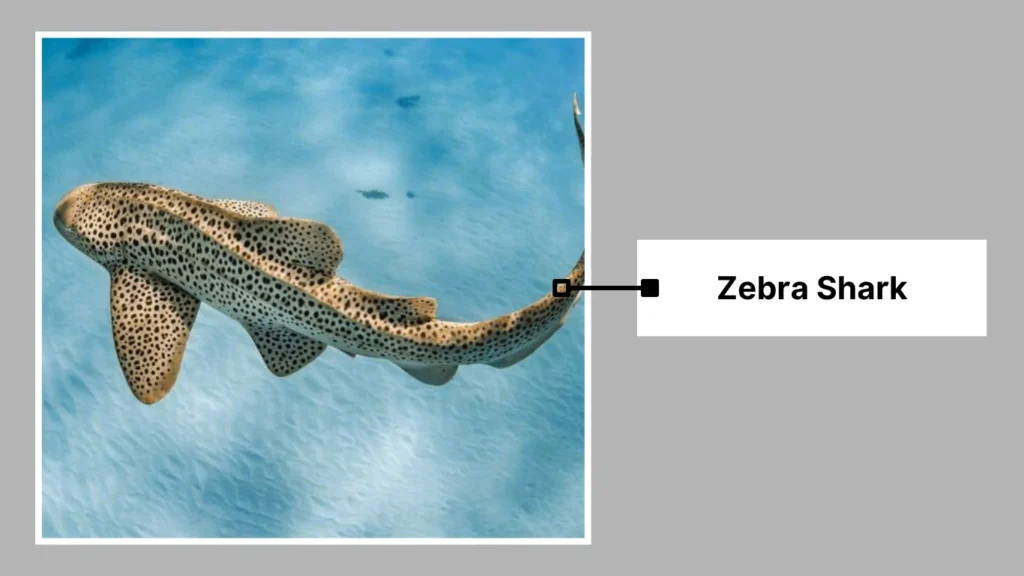
The zebra shark is a beautifully patterned bottom-dweller that gets its name from the stripes seen on juveniles. As they mature, the stripes fade into leopard-like spots, creating a visually unique transformation.
Identification
- Color: Juveniles have dark bodies with white vertical stripes; adults have tan bodies covered in dark spots
- Size: Typically 8–9 feet (2.4–2.7 meters)
- Weight: Up to 70–90 pounds (32–41 kg)
- Body: Long and cylindrical with a ridged back and long tail (almost as long as the body)
- Mouth: Positioned underneath with small, rounded teeth
Habitat and Distribution
Zebra sharks are found in the Indo-Pacific region, especially near coral reefs, lagoons, and sandy bottoms at depths up to 200 feet (60 meters).
Behavior and Diet
They are nocturnal hunters, feeding on mollusks, crustaceans, and small fish. During the day, they rest in reef crevices or on the sand. Zebra sharks are slow swimmers and can bend their flexible bodies to navigate tight reef spaces. Though large, they are gentle and often approached by divers.
20. Wobbegong Shark
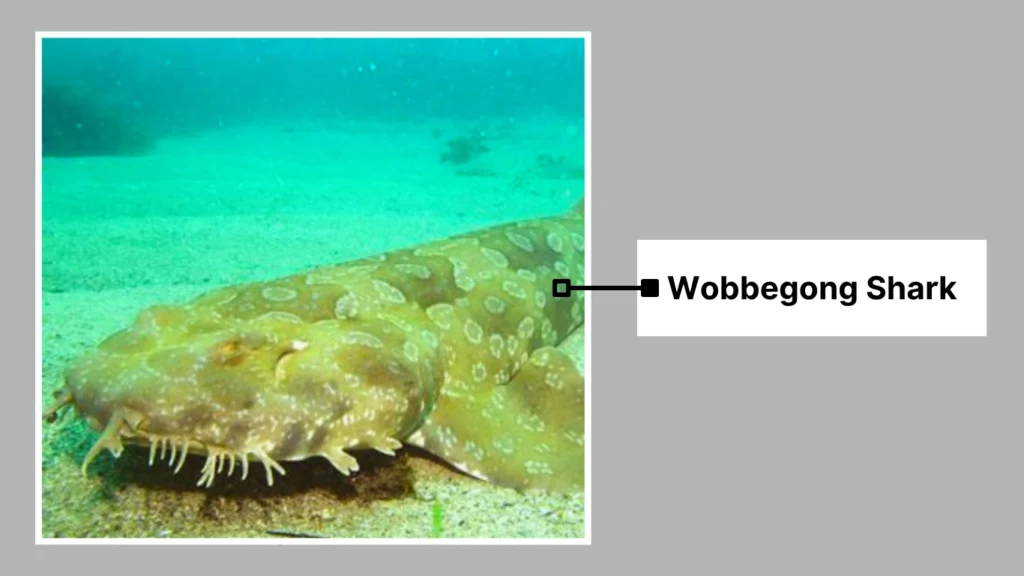
Wobbegong sharks, often called “carpet sharks,” are bottom-dwellers famous for their flat, patterned bodies that blend perfectly with the ocean floor. Their name comes from an Aboriginal word meaning “shaggy beard,” referring to the skin flaps around their mouths.
Identification
- Color: Tan, yellow, or greenish with intricate darker markings and blotches
- Size: Typically 3–5 feet (1–1.5 meters), some species grow up to 10 feet (3 meters)
- Body: Broad, flat body with frilly lobes around the head and jaw
- Tail: Short and broad
- Mouth: Large and positioned at the front of the head
Habitat and Distribution
Wobbegongs are found primarily in the western Pacific and Indian Oceans, especially around Australia and Indonesia. They inhabit rocky reefs, sandy bottoms, and coral crevices in shallow waters.
Behavior and Diet
They are ambush predators that lie motionless on the sea floor, waiting for fish or invertebrates to come close. Wobbegongs strike quickly and can consume prey nearly half their size. Though generally docile, they may bite if stepped on or provoked, making them important to spot for divers.
21. Greenland Shark
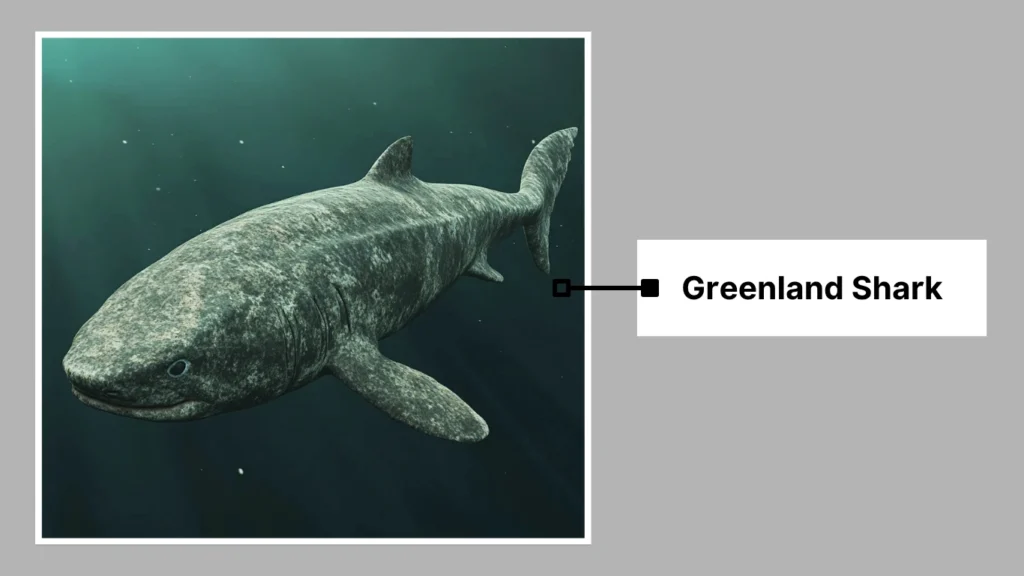
The Greenland shark is one of the longest-living vertebrates on Earth, with some estimated to live over 400 years. These slow-moving giants inhabit the cold, dark depths of the Arctic and North Atlantic Oceans.
Identification
- Color: Gray to brown with a rough, blotchy skin texture
- Size: Typically 10–15 feet (3–4.5 meters), sometimes over 20 feet (6 meters)
- Weight: Up to 2,200 pounds (1,000 kg)
- Body: Thick and torpedo-shaped with a short, blunt snout
- Eyes: Often parasitized by small crustaceans, which can render them partially blind
Habitat and Distribution
Greenland sharks are found in deep, cold waters of the North Atlantic, particularly around Greenland, Iceland, and Canada. They prefer depths of 600–2,400 feet (180–730 meters) but are occasionally seen near the surface.
Behavior and Diet
They feed slowly on fish, seals, and even carrion like dead whales. Their slow metabolism matches their frigid environment. Due to their sluggish nature, they are likely scavengers more than active hunters. Their long lifespan and mysterious deep-sea habits make them one of the most intriguing sharks alive today.
22. Megamouth Shark
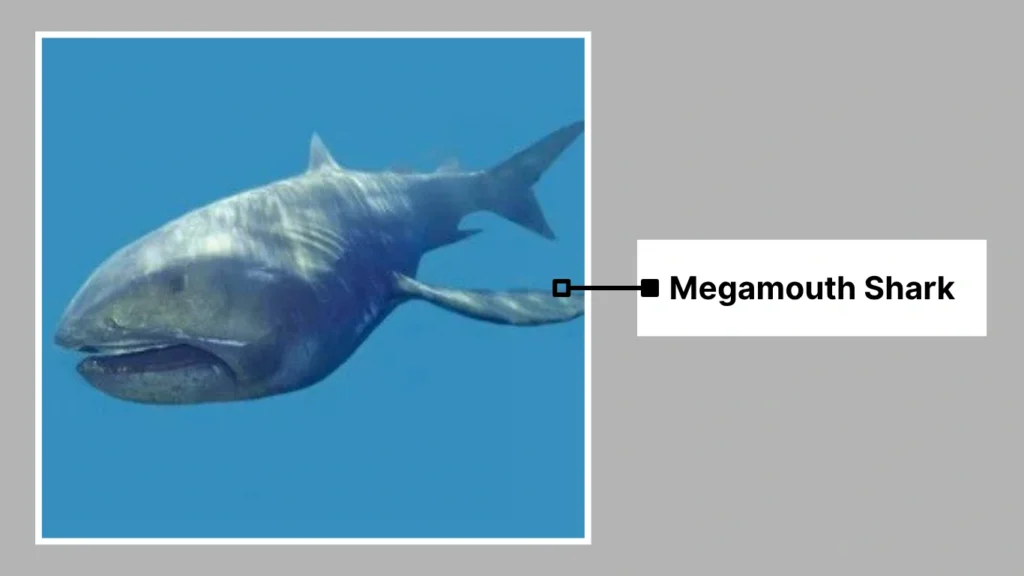
The megamouth shark is a rare, deep-sea filter feeder known for its massive, rubbery mouth and soft body. Discovered only in 1976, it remains one of the most mysterious shark species.
Identification
- Color: Brown to grayish-black on top, lighter underneath
- Size: Typically 13–18 feet (4–5.5 meters)
- Weight: Up to 2,700 pounds (1,225 kg)
- Mouth: Enormous, with glowing tissue inside the lips possibly used to attract plankton
- Teeth: Small and numerous, used for filtering instead of tearing
Habitat and Distribution
Megamouth sharks are extremely rare and have been found in the Pacific, Atlantic, and Indian Oceans. They inhabit deep waters, often below 500 feet (150 meters), and rise to the surface at night.
Behavior and Diet
They swim slowly with their mouths open to filter-feed on plankton and jellyfish. Due to their deep-sea lifestyle, very little is known about their behavior. They are rarely seen alive, and sightings are considered scientifically significant.
23. Silky Shark
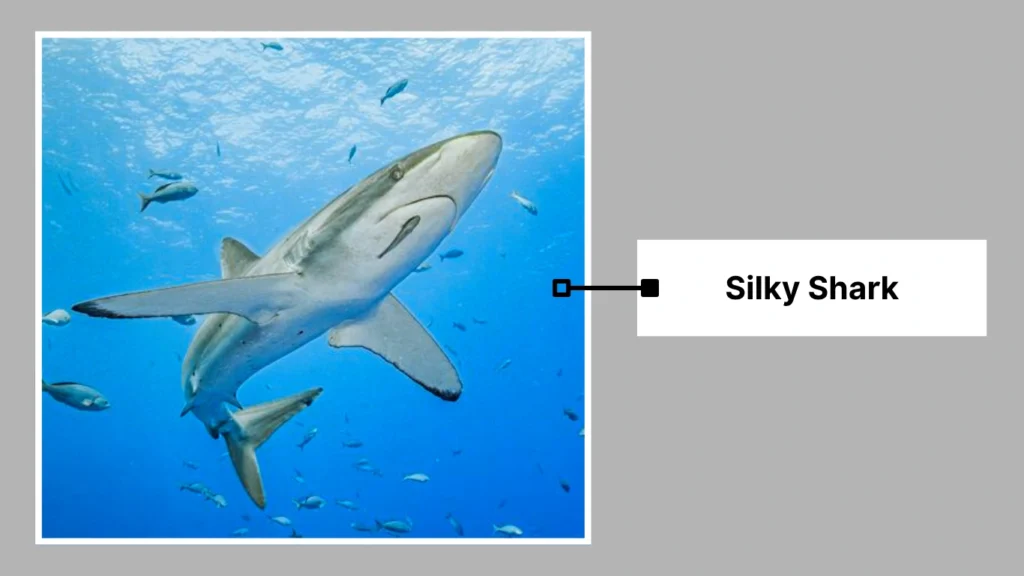
Named for its smooth, sleek skin, the silky shark is a fast and agile open-ocean predator. It is one of the most abundant sharks in tropical waters and is commonly seen by divers and fishermen alike.
Identification
- Color: Metallic gray to bronze on top with a white belly
- Size: Typically 8–11 feet (2.5–3.3 meters)
- Weight: Up to 400 pounds (180 kg)
- Body: Streamlined with long, slender fins
- Fins: Rounded dorsal and pectoral fins with no prominent markings
Habitat and Distribution
Silky sharks are found worldwide in tropical and subtropical seas. They prefer open ocean environments but also approach continental shelves, islands, and reefs.
Behavior and Diet
They feed on squid, tuna, mackerel, and other fast-moving fish. Silky sharks are curious, social, and often follow boats or divers. They’re known to form schools, particularly around floating debris or in areas with abundant prey. Though not considered highly aggressive, they can become bold in feeding situations.
24. Port Jackson Shark

The Port Jackson shark is a unique, bottom-dwelling species easily recognized by the harness-like pattern across its head and back. It belongs to the bullhead shark family and is often found resting in rocky crevices.
Identification
- Color: Light gray or brown with dark harness-shaped bands across the body
- Size: Typically 2.5–5.5 feet (0.8–1.7 meters)
- Weight: Up to 40 pounds (18 kg)
- Head: Blunt with ridges above the eyes
- Teeth: Small and flat, adapted for crushing shellfish
Habitat and Distribution
Found along the southern coast of Australia, particularly near Port Jackson (Sydney), they prefer shallow rocky reefs, kelp forests, and sandy bottoms.
Behavior and Diet
They feed on sea urchins, mollusks, crustaceans, and small fish. Port Jackson sharks are nocturnal and return to the same shelters daily. They lay spiral-shaped egg cases that anchor in rocky crevices, making their reproductive habits easy to observe.
25. Horn Shark

The horn shark is a small, sluggish bottom-dweller named for the short spines in front of its dorsal fins. It prefers to stay hidden in crevices during the day and is often spotted along the Pacific coast of North America.
Identification
- Color: Brown or gray with dark spots
- Size: Usually 2.5–3.5 feet (0.75–1 meter)
- Weight: Up to 20 pounds (9 kg)
- Head: Blunt and high with a pig-like snout
- Fins: Two dorsal fins, each with a short, sharp spine
Habitat and Distribution
Horn sharks are found in the eastern Pacific Ocean, mainly from California to the Gulf of California. They prefer rocky, kelp-covered areas and shallow reefs.
Behavior and Diet
They are slow and primarily nocturnal, feeding on hard-shelled prey like sea urchins, snails, and crustaceans. Horn sharks rest under ledges or inside caves during the day. Females lay spiral-shaped egg cases, similar to the Port Jackson shark. Though not aggressive, the spines can injure predators or careless handlers.
26. Ganges River Shark

The Ganges River shark is a rare and endangered species of freshwater shark native to the rivers of India. It is often confused with the more common bull shark but is a distinct species adapted specifically to freshwater life.
Identification
- Color: Grayish-brown upper body with a pale underside
- Size: Estimated 5–6.5 feet (1.5–2 meters)
- Snout: Broad and rounded with small eyes
- Teeth: Triangular and serrated
- Body: Stocky with a short, thick tail
Habitat and Distribution
This shark is found in the Ganges, Brahmaputra, and other freshwater river systems of eastern and northeastern India. It prefers murky, slow-moving waters.
Behavior and Diet
Very little is known about its behavior due to extreme rarity and lack of scientific observation. It is believed to feed on small fish and aquatic animals. It is critically endangered, primarily due to pollution, habitat destruction, and overfishing.
27. Dusky Shark
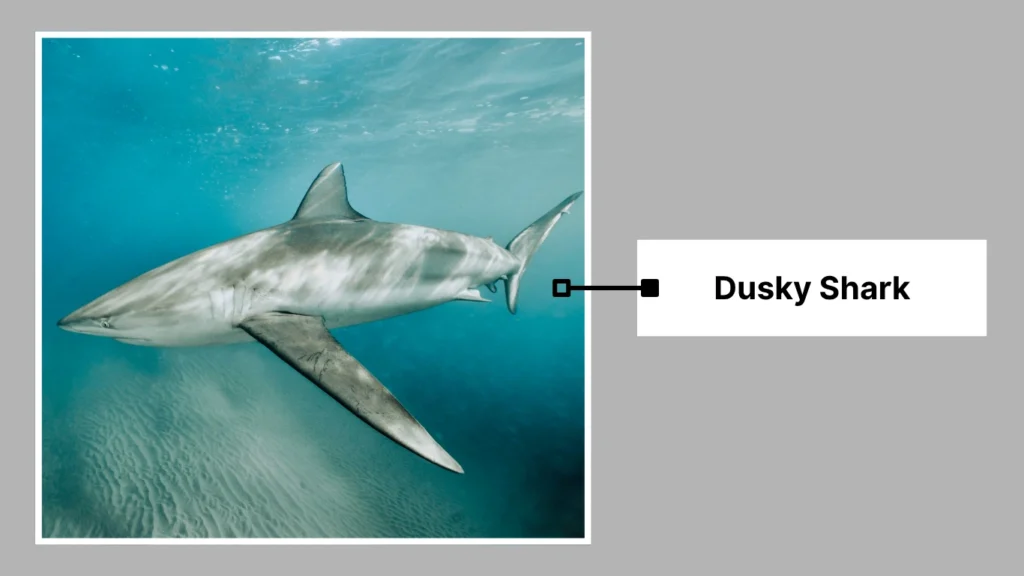
The dusky shark is a large, slow-growing coastal shark known for its wide-ranging migrations and vulnerability to overfishing. It is often mistaken for other species due to its smooth appearance and subtle coloration.
Identification
- Color: Gray to bluish-gray on top with a white belly
- Size: Typically 10–12 feet (3–3.7 meters)
- Weight: Up to 400 pounds (180 kg)
- Body: Slender, streamlined with a rounded snout
- Fins: Large, curved dorsal fin and long pectoral fins
Habitat and Distribution
Dusky sharks inhabit warm temperate and tropical coastal waters worldwide, often near continental shelves, islands, and offshore reefs.
Behavior and Diet
They feed on fish, squid, rays, and other sharks. Duskies are known for their long-distance migrations—sometimes crossing entire ocean basins. They grow slowly and reproduce infrequently, making them highly susceptible to population decline from overfishing. Despite their large size, they are generally cautious around humans.
28. Spiny Dogfish

The spiny dogfish is a small, slender shark known for the sharp, mildly venomous spines in front of each dorsal fin. It’s one of the most studied and widely distributed shark species in the world.
Identification
- Color: Gray or brownish-gray upper body, pale underside with scattered white spots
- Size: Typically 2.5–4 feet (0.75–1.2 meters)
- Weight: Around 10–20 pounds (4.5–9 kg)
- Body: Slim and cylindrical
- Spines: One sharp spine in front of each dorsal fin
Habitat and Distribution
Spiny dogfish are found in temperate and subarctic waters worldwide, both in coastal and deep offshore environments. Commonly seen in the Atlantic and Pacific Oceans.
Behavior and Diet
They feed on fish, squid, jellyfish, and crustaceans. Spiny dogfish travel in large schools and are known for long migrations. They mature late and give birth to live young, which makes their populations vulnerable to overfishing. Despite their small size, they are feisty and can defend themselves with their dorsal spines.
29. Brown Banded Bamboo Shark
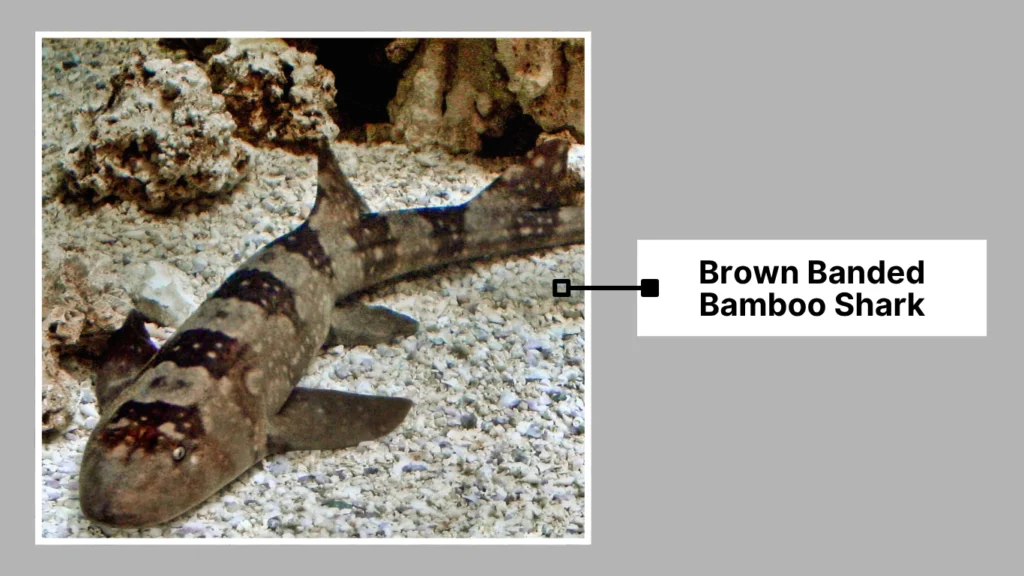
The brown banded bamboo shark is a small, bottom-dwelling species often found in home aquariums due to its manageable size and calm nature. Juveniles are especially striking with bold bands along their bodies.
Identification
- Color: Light brown with dark brown vertical bands (more vivid in juveniles)
- Size: Typically 2.5–3.5 feet (0.75–1.1 meters)
- Body: Slender, cylindrical with a long tail
- Snout: Rounded with small barbels near the mouth
- Fins: Broad and low-set
Habitat and Distribution
Found in the Indo-West Pacific region, especially around coral reefs, lagoons, and tide pools in places like Indonesia, Thailand, and northern Australia.
Behavior and Diet
They feed on small crustaceans, worms, and fish found along the bottom. Brown banded bamboo sharks are nocturnal, slow swimmers, and often rest under rocks or coral ledges. They lay leathery egg cases and are known to adapt well to captivity, making them popular in public aquariums.
30. Frilled Shark
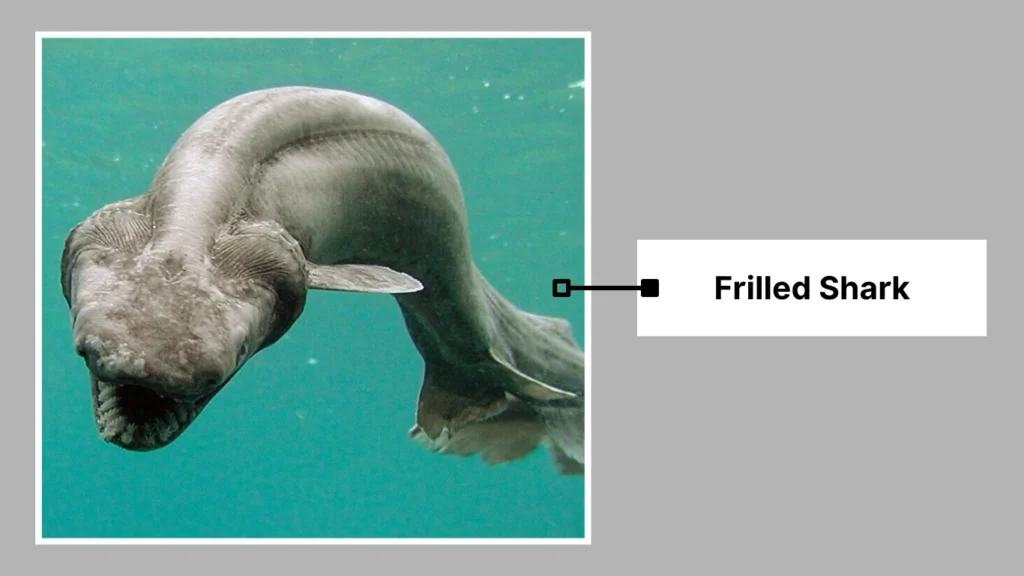
The frilled shark is a deep-sea species often called a “living fossil” due to its primitive features and ancient lineage dating back over 80 million years. With its eel-like body and frilly gill slits, it’s one of the most unusual sharks ever discovered.
Identification
- Color: Dark brown or gray
- Size: Typically 4–6.5 feet (1.2–2 meters)
- Body: Long, eel-like with six pairs of frilly gill slits
- Teeth: Over 300 small, needle-like teeth arranged in rows
- Head: Flattened with a blunt snout
Habitat and Distribution
Found in deep waters (typically 500–5,000 feet) of the Atlantic and Pacific Oceans, including areas near Japan, Australia, and the western coast of Africa.
Behavior and Diet
They feed on squid, bony fish, and other sharks, often ambushing prey with quick strikes. Frilled sharks swim in a snake-like motion and are rarely seen alive. They give birth to live young after a gestation that may last up to 3.5 years—one of the longest known in vertebrates.
31. Angel Shark
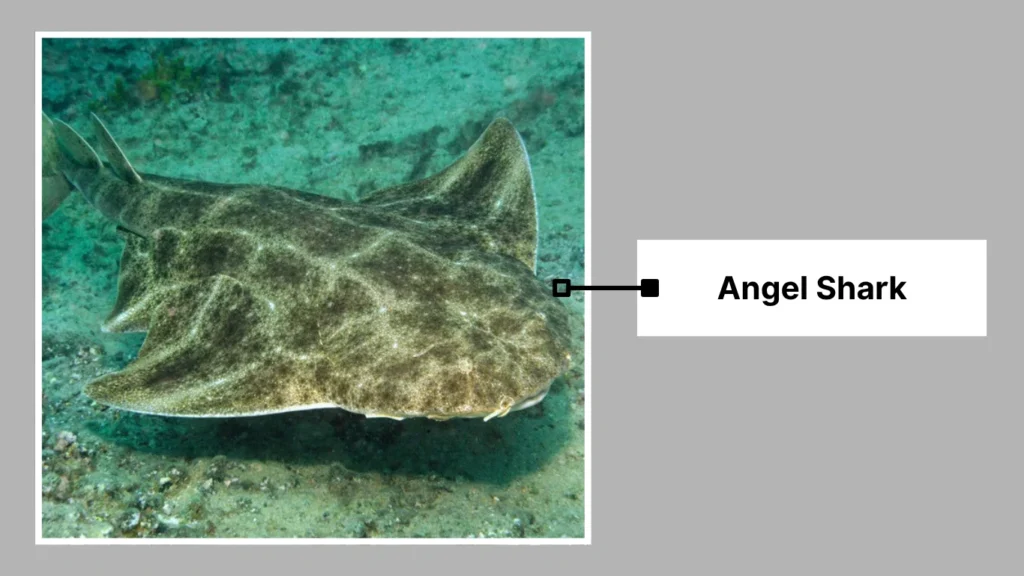
Angel sharks have a flattened body that resembles a ray and are well camouflaged against the seafloor. Despite their passive appearance, they are skilled ambush predators capable of rapid strikes.
Identification
- Color: Mottled brown or gray with dark spots and blotches
- Size: Typically 3–6.5 feet (1–2 meters)
- Body: Flattened with broad pectoral fins and eyes on top of the head
- Mouth: Positioned on the underside with barbels near the snout
- Tail: Relatively short and thick
Habitat and Distribution
They are found in temperate and tropical coastal waters of the eastern Atlantic, Mediterranean, and parts of the Pacific. Angel sharks prefer sandy or muddy bottoms where they can bury themselves.
Behavior and Diet
They lie motionless, buried in the substrate, waiting for fish, squid, or crustaceans to swim by. When prey is close, they snap upward with great speed. Though not aggressive, they may bite if disturbed or stepped on. Several species of angel sharks are now critically endangered due to bycatch and habitat loss.
32. Sawshark

The sawshark is a fascinating deep-sea predator known for its long, flattened snout lined with sharp, tooth-like projections—giving it a saw-like appearance. This snout is used to slash and disable prey in the dark ocean depths.
Identification
- Color: Light brown to grayish with a pale underside
- Size: Typically 3–5 feet (0.9–1.5 meters)
- Snout: Long, blade-like with lateral “teeth” on both sides
- Barbels: Two whisker-like barbels on the underside of the snout
- Body: Slender and torpedo-shaped
Habitat and Distribution
Sawsharks are found in deep coastal waters and continental slopes of the Atlantic, Indian, and western Pacific Oceans. They prefer sandy or muddy bottoms at depths between 100 and 1,000 feet.
Behavior and Diet
They use their saw-like snouts to slash through schools of fish or to dig out crustaceans from the seafloor. Barbels help them detect hidden prey. Unlike sawfish (which are rays), sawsharks have gill slits on the sides of the head and are true sharks.
33. Crocodile Shark

The crocodile shark is a small, rarely seen deep-sea shark known for its large eyes and aggressive, snapping jaws—hence the name. It’s one of the smallest mackerel sharks and related to the great white and mako sharks.
Identification
- Color: Dark brown to black on top, white underside
- Size: Typically 2.5–3 feet (0.7–1 meter)
- Eyes: Very large and reflective for deep-sea vision
- Teeth: Long, needle-sharp, and protruding from the jaw
- Body: Compact and muscular
Habitat and Distribution
Found in tropical and subtropical oceans worldwide, crocodile sharks live in deep offshore waters—usually between 600 and 2,000 feet. They sometimes rise to the surface at night.
Behavior and Diet
They feed on squid, small fish, and crustaceans. Despite their small size, they are aggressive and fast. Crocodile sharks are rarely seen by humans and are considered one of the least-known mackerel sharks due to their deep-sea habitat.
34. Smalltooth Sand Tiger Shark
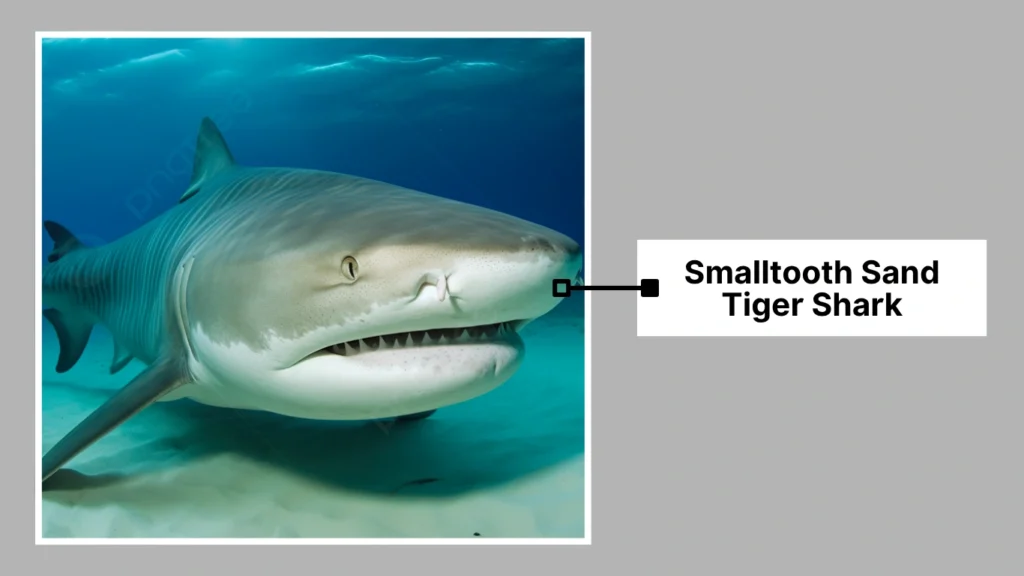
The smalltooth sand tiger shark is a deepwater species known for its menacing appearance and extremely long, protruding teeth. Despite its fierce look, it’s not considered dangerous to humans due to its reclusive, deep-sea lifestyle.
Identification
- Color: Brownish-gray upper body with a pale underside
- Size: Typically 6.5–8 feet (2–2.5 meters)
- Teeth: Very long, narrow, and outward-pointing even when the mouth is closed
- Body: Thick and heavy with a pointed snout
- Fins: Large, sickle-shaped pectoral and dorsal fins
Habitat and Distribution
This shark lives in deep tropical and subtropical waters of the western Atlantic, Gulf of Mexico, and occasionally the Mediterranean. It is found at depths between 200 and 1,300 feet (60–400 meters).
Behavior and Diet
It feeds on deep-sea bony fish, small sharks, and squid. Little is known about its reproductive behavior due to its elusive nature, and it is considered vulnerable due to low population numbers and bycatch in deep-sea fisheries.
35. Cookiecutter Shark

The cookiecutter shark is a small, deep-sea shark with a bizarre feeding strategy—it takes circular bites out of large animals, including whales, tuna, and even submarines, using its strong jaws and specialized teeth.
Identification
- Color: Dark brown with a lighter collar-like band around the throat
- Size: Typically 16–22 inches (40–56 cm)
- Teeth: Lower teeth are large, triangular, and tightly packed; upper teeth are small
- Body: Cigar-shaped with a short, blunt snout
- Glow: Bioluminescent belly to attract prey or camouflage from below
Habitat and Distribution
Cookiecutter sharks inhabit warm oceanic waters worldwide, usually between 1,000 and 3,000 feet (300–900 meters), rising closer to the surface at night.
Behavior and Diet
They latch onto large animals and twist to remove a round plug of flesh—leaving behind crater-like wounds. They also feed on squid and small fish. Despite their tiny size, cookiecutters are one of the ocean’s most unique and oddly effective predators.