


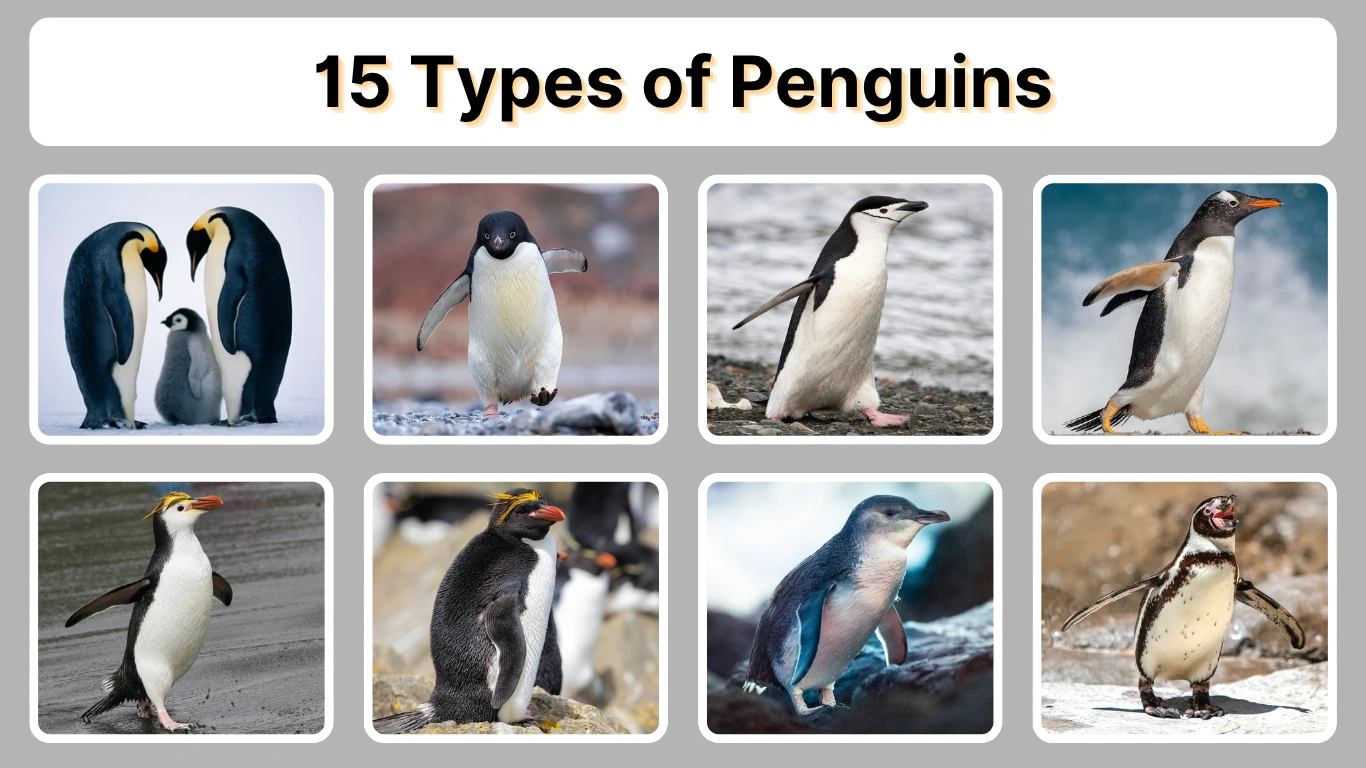
Penguins are some of the most beloved and recognizable birds on the planet. From the towering emperor penguin of Antarctica to the tiny and charming little blue penguin of Australia and New Zealand, these flightless birds are full of character and adapted to a wide range of habitats. While most people associate penguins with icy landscapes, many species actually live in warmer coastal regions and islands. In this guide, you’ll discover 15 unique types of penguins, each with its own distinct appearance, behaviors, and habitat. Whether you’re drawn to their waddling walk, bold markings, or underwater agility, there’s a penguin here for everyone to admire.
1. Emperor Penguin

The emperor penguin is the tallest and heaviest of all penguin species. Native to Antarctica, it is famous for its striking black and white plumage, yellow accents on the neck, and remarkable endurance during harsh polar winters.
Identification
- Height: Up to 48 inches (122 cm)
- Weight: 50–100 pounds (22–45 kg)
- Color: Black head and back, white belly, pale yellow on chest and neck
- Beak: Long, thin, and slightly curved
- Feet: Webbed, with strong claws for walking on ice
Habitat and Distribution
Emperor penguins are found exclusively in Antarctica. They breed on sea ice and rarely set foot on land.
Behavior and Diet
They feed primarily on fish, squid, and krill. Emperor penguins are strong swimmers and can dive over 1,800 feet deep. They huddle together to stay warm during freezing storms.
2. King Penguin

The king penguin is the second-largest penguin species, known for its elegant posture and vivid orange markings. It is commonly found on sub-Antarctic islands and is admired for its graceful appearance and social nature.
Identification
- Height: Around 36 inches (91 cm)
- Weight: 25–40 pounds (11–18 kg)
- Color: Sleek black back, white belly, bright orange patches on the side of the head and chest
- Beak: Long and slender with an orange stripe along the sides
- Feet: Strong and black, adapted for walking on rocky shores
Habitat and Distribution
King penguins inhabit sub-Antarctic islands such as South Georgia, the Falklands, and the Crozet Islands. They prefer cold but ice-free coasts with beaches and grassy uplands.
Behavior and Diet
King penguins are exceptional swimmers and divers, capable of reaching depths of 1,000 feet to hunt for lanternfish and squid. They form large, noisy colonies that can number in the tens of thousands. Unlike emperor penguins, they are more vocal and active during warmer months.
3. Adélie Penguin

Adélie penguins are small, sturdy birds known for their classic tuxedo-like look and curious personalities. They are true Antarctic natives, often seen waddling or tobogganing across the ice.
Identification
- Height: About 27 inches (68 cm)
- Weight: 8–13 pounds (3.5–6 kg)
- Color: Black head and back, pure white belly, and a distinctive white ring around each eye
- Beak: Short and black with a reddish base
- Feet: Pale pink and webbed with strong claws for gripping ice
Habitat and Distribution
Adélie penguins are found along the Antarctic coast and on nearby islands. They prefer rocky, ice-free areas for nesting, close to the sea for easy access to food.
Behavior and Diet
They feed mainly on krill, but also eat fish and squid. Adélies are agile swimmers and can dive up to 500 feet. They are extremely social and often engage in playful behavior, forming colonies that sometimes number in the hundreds of thousands. They are also highly territorial, especially during nesting season.
4. Chinstrap Penguin

Chinstrap penguins are easily recognized by the narrow black band that runs under their chins, giving them the appearance of wearing a helmet strap. They’re energetic, vocal, and known for their bold, fearless behavior.
Identification
- Height: Around 28–30 inches (71–76 cm)
- Weight: 9–14 pounds (4–6.5 kg)
- Color: Black upper body and head, white face and underparts, with a thin black line under the chin
- Beak: Short and black
- Feet: Pinkish with black claws
Habitat and Distribution
Chinstrap penguins are widespread across the sub-Antarctic and Antarctic Peninsula, especially on rocky islands like South Shetland and South Orkney.
Behavior and Diet
These penguins are extremely agile on land and at sea. They feed mostly on krill, diving between 150–300 feet to hunt. Chinstraps are highly vocal and nest in densely packed colonies that echo with constant chatter. They can be aggressive when defending territory, often seen flapping wings and squawking at intruders.
5. Gentoo Penguin

Gentoo penguins are known for the wide white stripe across the top of their heads and their bright orange bills. They’re the fastest swimmers among penguins and are quite playful and curious.
Identification
- Height: 30–35 inches (76–89 cm)
- Weight: 11–19 pounds (5–8.5 kg)
- Color: Black head and back, white front, and a prominent white cap above the eyes
- Beak: Bright orange with a black tip
- Feet: Orange-pink with strong claws
Habitat and Distribution
Gentoo penguins live on many sub-Antarctic islands, including the Falklands, South Georgia, and the Antarctic Peninsula. They prefer ice-free areas with easy sea access and gentle slopes for nesting.
Behavior and Diet
Gentoo penguins feed on a variety of seafood, including krill, squid, and small fish. They are fast swimmers, reaching speeds over 20 mph. Gentoos are known for building nests out of stones and are highly territorial. Their colonies are less crowded than other species, and they’re often seen waddling confidently around their turf.
6. Macaroni Penguin
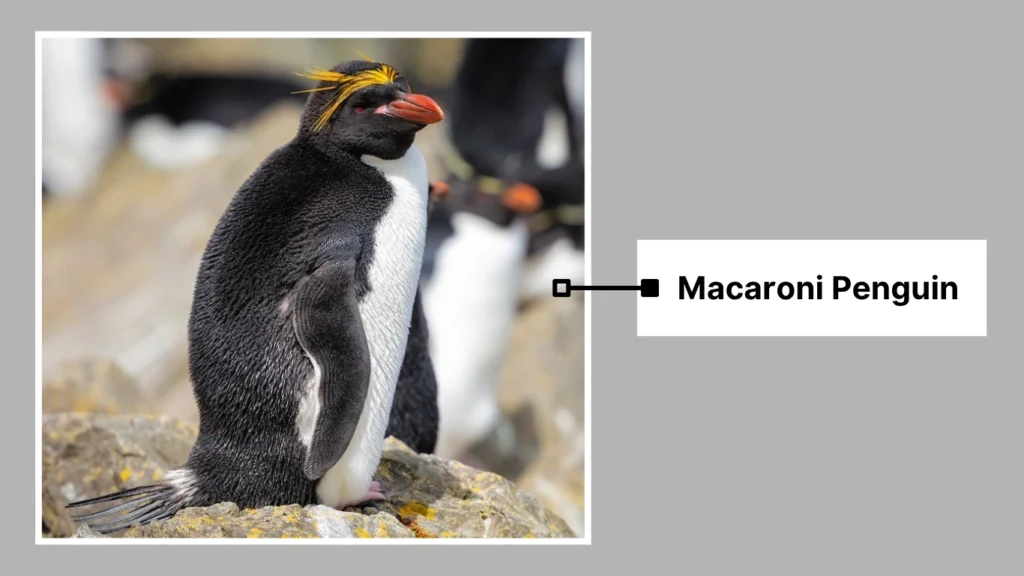
Macaroni penguins are strikingly colorful seabirds known for their wild yellow-orange crests and noisy colonies. Despite their clownish look, they are strong swimmers and skilled hunters in the Southern Ocean.
Identification
- Height: Around 28 inches (70 cm)
- Weight: 9–14 pounds (4–6.5 kg)
- Color: Black back and head, white belly, and bold golden-yellow crests above the eyes
- Beak: Large and reddish-orange
- Feet: Pink with black claws
Habitat and Distribution
Macaroni penguins breed on sub-Antarctic islands such as South Georgia, the South Sandwich Islands, and the Kerguelen Islands. They nest on rocky cliffs and steep slopes.
Behavior and Diet
They are excellent divers, feeding mainly on krill, squid, and small fish. Macaroni penguins are extremely vocal and live in massive colonies that may include millions of birds. They use loud calls and head movements to communicate. On land, they are clumsy but determined climbers.
7. Royal Penguin
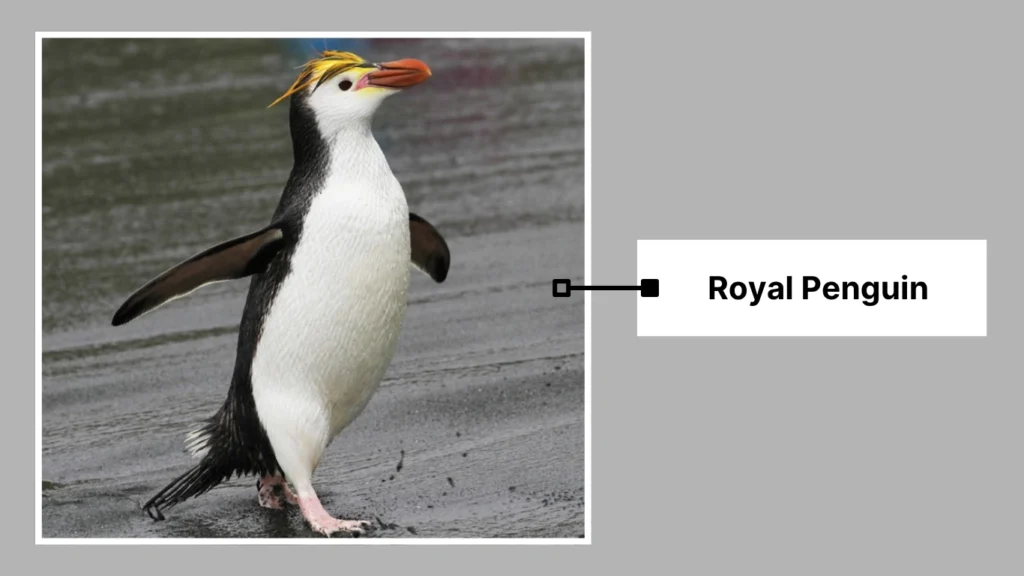
Royal penguins closely resemble macaroni penguins but are distinguished by their white faces. They also sport the signature yellow-orange crests, giving them a regal look true to their name.
Identification
- Height: Around 27–30 inches (70–76 cm)
- Weight: 9–12 pounds (4–5.5 kg)
- Color: White face and underparts, black back, yellow-orange crest feathers extending from forehead to behind the eyes
- Beak: Orange, large, and slightly hooked
- Feet: Pale pink and webbed
Habitat and Distribution
Royal penguins are found only on Macquarie Island and nearby smaller islands in the Southern Ocean. They breed in large colonies on rocky beaches and grassy slopes.
Behavior and Diet
They dive to catch krill, small fish, and squid. Royals are social, noisy, and often aggressive when defending nesting space. They’re known for their dense breeding colonies and synchronized group movements across beaches and slopes.
8. Fiordland Penguin

Fiordland penguins, also known as Fiordland crested penguins, are shy and elusive birds native to the rugged southwestern coast of New Zealand. They are recognized by their thick yellow eyebrow-stripe and black, brushy face feathers.
Identification
- Height: Around 24 inches (60 cm)
- Weight: 6.5–7.5 pounds (3–3.4 kg)
- Color: Dark blue-black upperparts, white underparts, and a yellow crest extending from each eye
- Beak: Orange-brown with a strong curve
- Feet: Pale pink with black soles
Habitat and Distribution
Fiordland penguins live in dense temperate rainforests near the sea along New Zealand’s Fiordland coast and Stewart Island. They nest in hidden crevices, under logs, or in dense vegetation.
Behavior and Diet
They are nocturnal on land, returning to nests under cover of darkness. Their diet includes fish, squid, and krill, hunted during long offshore trips. These penguins are cautious and tend to avoid human interaction, making them one of the least-studied penguin species.
9. Erect-crested Penguin
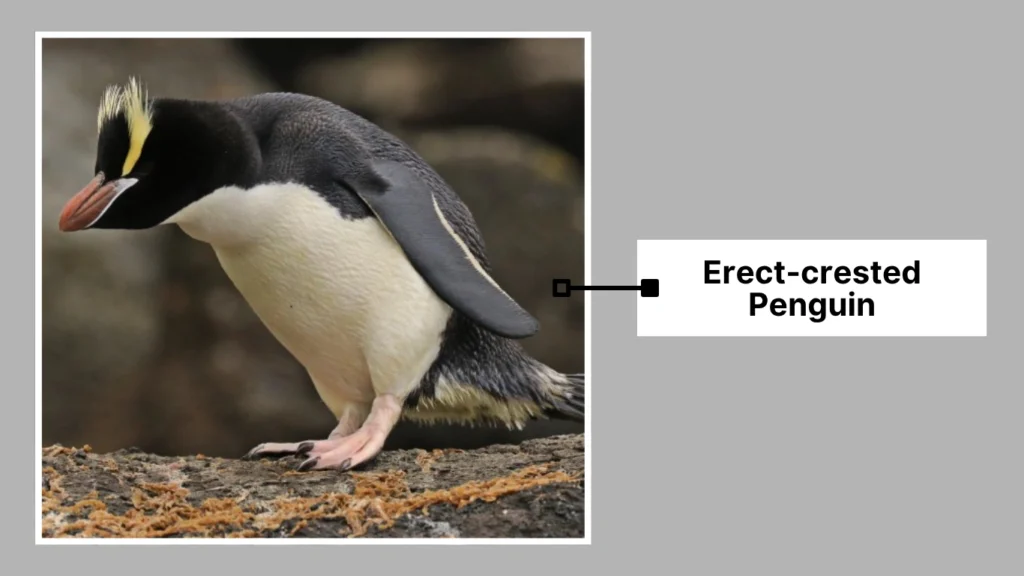
Erect-crested penguins are rare and little-known, identified by their stiff, upright yellow crests. They live in remote parts of New Zealand and are among the most endangered penguin species.
Identification
- Height: Around 26 inches (66 cm)
- Weight: 6.5–8.5 pounds (3–3.8 kg)
- Color: Black upper body, white front, yellow crest standing upright from the forehead
- Beak: Thick and reddish-orange
- Feet: Pink with black claws
Habitat and Distribution
Erect-crested penguins breed on the isolated Bounty and Antipodes Islands south of New Zealand. These remote, rocky islands are hard to access, contributing to their mysterious status.
Behavior and Diet
They are powerful swimmers, feeding primarily on krill and small fish. On land, they are aggressive and territorial during nesting season. Very little is known about their population or behavior due to their extremely remote habitat.
10. Snares Penguin

Snares penguins are medium-sized crested penguins known for their thick yellow eyebrow-like stripes and red eyes. They are named after the Snares Islands, where they exclusively breed.
Identification
- Height: Around 22–27 inches (55–70 cm)
- Weight: 6.5–8.8 pounds (3–4 kg)
- Color: Black upperparts, white underparts, and bold yellow facial stripes that curve above the eyes
- Beak: Orange-brown and slightly curved
- Feet: Pink with black claws
Habitat and Distribution
These penguins are endemic to the Snares Islands, located south of New Zealand. They nest under forest canopies and in coastal scrub areas, preferring shaded, cool environments.
Behavior and Diet
Snares penguins feed on krill, small fish, and cephalopods. They are excellent swimmers and perform long foraging trips at sea. On land, they are social, noisy, and form dense colonies with well-worn pathways through vegetation.
11. Yellow-eyed Penguin

The yellow-eyed penguin is one of the rarest and most endangered penguins in the world. Known for its pale yellow eyes and golden head stripe, it is shy, solitary, and found only in New Zealand.
Identification
- Height: Around 24 inches (60 cm)
- Weight: 11–13 pounds (5–6 kg)
- Color: Slate-grey back, white underside, and a pale yellow band running from the eyes around the back of the head
- Eyes: Pale yellow and striking
- Beak: Long, slender, and pinkish with a dark tip
Habitat and Distribution
Yellow-eyed penguins breed along the southeast coast of New Zealand’s South Island and on offshore islands like Stewart and the Auckland Islands. They nest in forests and grasslands, far apart from each other.
Behavior and Diet
Unlike most penguins, they are very solitary and nest far from neighbors. They feed on fish, squid, and juvenile blue cod, diving alone rather than in groups. Their shy nature makes them difficult to study and observe in the wild.
12. Little Blue Penguin
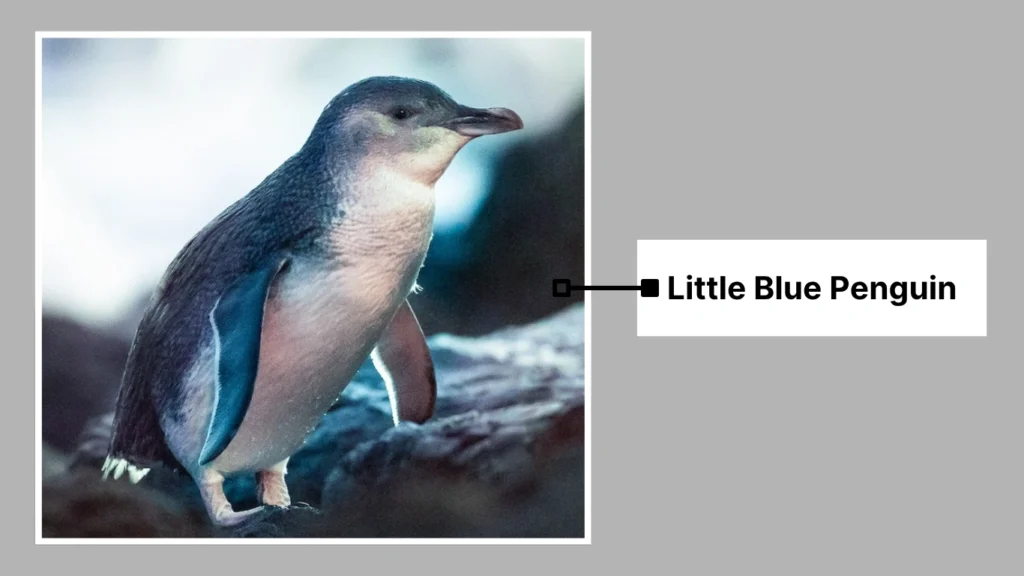
The little blue penguin, also known as the fairy penguin, is the smallest of all penguin species. Its charming size and soft blue plumage make it one of the most beloved penguins in the world.
Identification
- Height: About 12–13 inches (30–33 cm)
- Weight: 2.2–3.3 pounds (1–1.5 kg)
- Color: Slate-blue upperparts and white underparts
- Beak: Short and dark gray
- Eyes: Pale gray or bluish
- Feet: Pinkish with black soles
Habitat and Distribution
Little blue penguins are found along the southern coastlines of Australia and New Zealand. They often nest in burrows, under vegetation, or even beneath buildings in coastal towns.
Behavior and Diet
They feed mostly on small fish, squid, and krill, diving up to 200 feet deep. These penguins are nocturnal on land and return from sea after dark. They’re known for their comical waddles and frequent presence near human settlements.
13. Magellanic Penguin

Magellanic penguins are medium-sized, banded penguins native to South America. They are named after explorer Ferdinand Magellan, who first spotted them in 1520.
Identification
- Height: Around 24–30 inches (61–76 cm)
- Weight: 6–14 pounds (2.7–6.5 kg)
- Color: Black back and white belly with two black bands across the chest
- Beak: Thick and black with a pale base
- Eyes: Reddish with a bare pink skin patch above
Habitat and Distribution
They nest along the coasts of Argentina, Chile, and the Falkland Islands. During non-breeding seasons, they migrate as far north as Brazil and Peru.
Behavior and Diet
Magellanic penguins feed on anchovies, sardines, and squid, often diving deep to chase prey. They are social and nest in burrows or under bushes, forming massive breeding colonies that stretch along coastal shores.
14. Humboldt Penguin

The Humboldt penguin is a warm-weather penguin species named after the cold Humboldt Current that flows along the west coast of South America. It’s known for its expressive face and adaptability to dry, rocky environments.
Identification
- Height: Around 24–28 inches (61–70 cm)
- Weight: 8–11 pounds (3.6–5 kg)
- Color: Black back, white belly, with a single black band across the chest and a pink patch of bare skin around the eyes and beak
- Beak: Thick, black, with a pale stripe
- Feet: Dark with spots
Habitat and Distribution
Humboldt penguins are found along the coasts of Peru and Chile. They inhabit rocky shorelines, cliffs, and caves near the cold Humboldt Current.
Behavior and Diet
They feed on anchovies, sardines, and other small fish, using short, rapid dives to catch prey. They are strong swimmers and nest in burrows or crevices in rocks. Humboldt penguins are highly sensitive to temperature and rely on shaded spots to avoid overheating.
15. African Penguin

The African penguin, also known as the jackass penguin due to its donkey-like bray, is the only penguin species native to Africa. It is beloved for its pink eye patches and expressive nature.
Identification
- Height: About 24–27 inches (60–69 cm)
- Weight: 5.5–8.8 pounds (2.5–4 kg)
- Color: Black back and white belly with a horseshoe-shaped black chest band and scattered black spots
- Beak: Short and black
- Eyes: Surrounded by pink glands that help regulate temperature
Habitat and Distribution
They live along the southwestern coast of Africa, especially in Namibia and South Africa. Major colonies are found on islands and rocky beaches.
Behavior and Diet
African penguins hunt sardines, anchovies, and squid, making short dives from 100 to 300 feet. They are highly social, nesting in colonies and often seen waddling in groups. Due to habitat loss and overfishing, their populations are declining, making conservation efforts critical.