


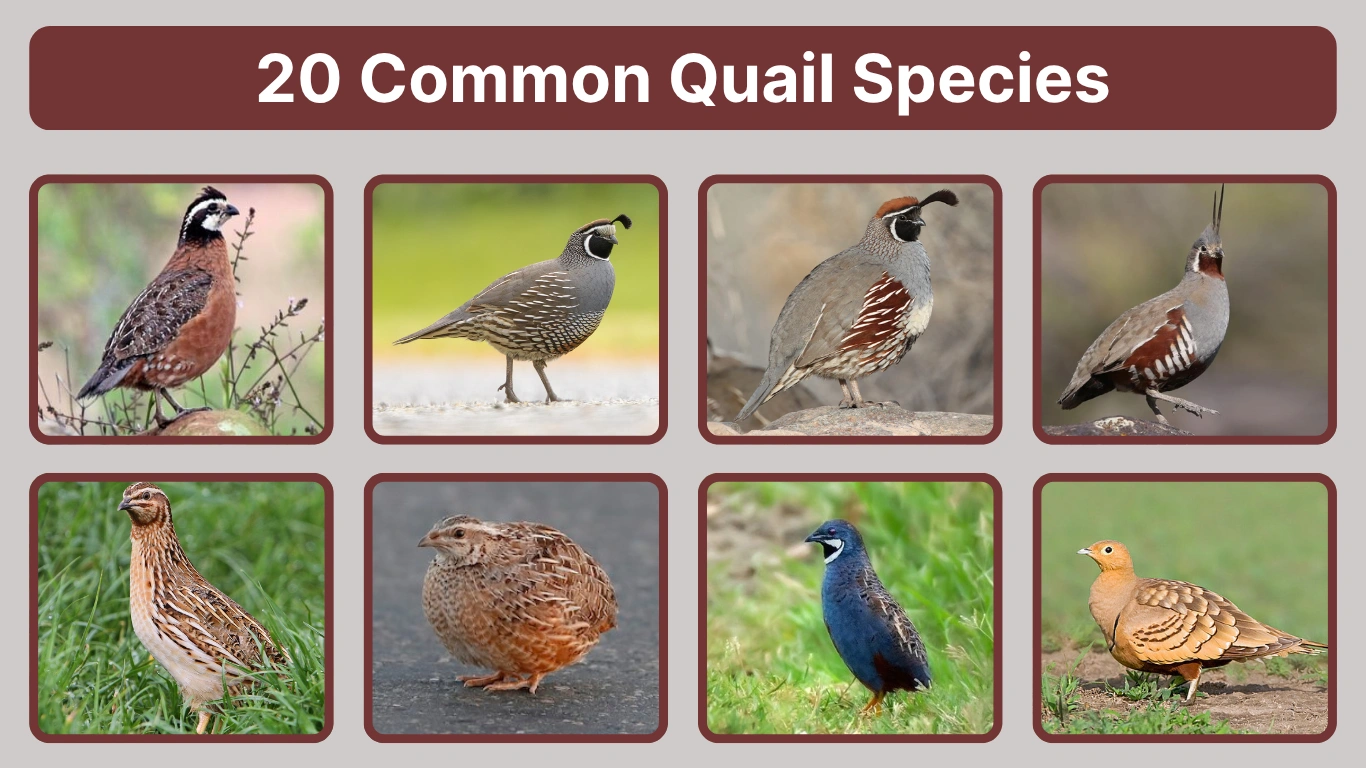
Quails are small, ground-dwelling birds found across various continents, ranging from grassy fields and deserts to forested highlands and farmlands. Known for their cryptic plumage, short rounded wings, and swift running abilities, these birds belong to several genera and are admired both in the wild and in domesticated settings. While some quail species are raised for their eggs and meat, others are cherished for their unique calls and elusive behavior in nature.
This article explores 20 common quail species from around the world. For each, we’ve included identification features, behavior, nesting habits, and native ranges—starting with the widely known Northern Bobwhite and leading to more exotic quail like the Montezuma and Snow Mountain species. Whether you’re a birdwatcher, farmer, or enthusiast, these profiles will help you appreciate the diversity within the quail family.
1. Northern Bobwhite Quail

The Northern Bobwhite Quail is one of the most well-known and widely distributed quail species in North America. Recognized by its distinctive “bob-WHITE” call, this small, ground-dwelling bird is a favorite among birdwatchers and hunters. It thrives in grasslands, agricultural fields, and forest edges, where it relies on camouflage to stay hidden from predators.
Identification
- Size: 9–11 inches (23–28 cm) in length
- Weight: 5–6 ounces (140–170 grams)
- Plumage: Mottled brown, black, and white
- Male Markings: White throat and brow stripe with dark cap
- Female Markings: Buff-colored throat and brow stripe
- Wings: Rounded, with rapid fluttering flight
- Tail: Short and squared
- Habitat: Grasslands, open woodlands, and farmlands
- Call: Loud, whistled “bob-WHITE”
Behavior and Diet
Northern Bobwhites are social birds, often found in coveys (groups) of 5 to 30 individuals. They feed mostly on seeds, grasses, and insects, foraging on the ground. Their behavior is secretive, and they rely heavily on camouflage and stillness to avoid detection.
Nesting and Reproduction
The female constructs a shallow nest on the ground, hidden in dense grass or underbrush. She lays around 12 to 16 eggs per clutch. Both parents may help care for the chicks, which are precocial and can move around shortly after hatching.
Range and Distribution
This species is native to the eastern and central United States, parts of Mexico, and the Caribbean. Its population has declined in many areas due to habitat loss, prompting conservation efforts to restore grassland habitats.
2. California Quail

The California Quail is a striking and sociable bird native to the western United States. Known for its forward-drooping topknot and scaly plumage, it’s commonly seen in chaparral, foothills, and suburban gardens. This species is the state bird of California and is recognized for its unique appearance and covey-based social structure.
Identification
- Size: 9–10 inches (23–25 cm)
- Weight: 5–7 ounces (140–200 grams)
- Plumage: Grayish-blue body with brown flanks and black-and-white scaling on the belly
- Crest: Curved black topknot (more pronounced in males)
- Male Markings: Bold black face with white border and brown crown
- Female Markings: More muted coloring with brown head and no face markings
- Tail: Short and square
- Habitat: Chaparral, coastal scrub, oak woodlands, and suburban landscapes
- Call: Repeated “Chi-ca-go” or “pit-pit-pit”
Behavior and Diet
California Quail are ground feeders, eating seeds, leaves, berries, and insects. They move in coveys during the non-breeding season and are known for their fast, low flight when startled.
Nesting and Reproduction
The nest is a shallow ground scrape hidden by vegetation. Females lay 10–16 eggs, which they incubate for about 22–23 days. Chicks are precocial and follow their parents shortly after hatching.
Range and Distribution
Native to the western U.S., especially California, Oregon, and Washington. Also introduced successfully in Hawaii, New Zealand, and parts of South America.
3. Gambel’s Quail

Gambel’s Quail is a desert-dwelling species native to the southwestern United States. It is closely related to the California Quail but distinguished by its rusty crown and black face. These birds are commonly seen in desert scrub, washes, and mesquite thickets, often moving in tight-knit family groups.
Identification
- Size: 10–11 inches (25–28 cm)
- Weight: 5.5–7 ounces (155–200 grams)
- Plumage: Grayish body with chestnut flanks and white streaking
- Crest: Black, comma-shaped topknot
- Male Markings: Rich chestnut crown, black face, and white border
- Female Markings: Grayish with plain face and smaller crest
- Tail: Short and square
- Habitat: Desert scrub, mesquite thickets, and arid foothills
- Call: Distinct “ka-KAA-ka” clucking or “chip-chip-chip”
Behavior and Diet
They forage on the ground for seeds, cactus fruit, berries, and insects. Gambel’s Quail often travel in groups called coveys and are quick runners, preferring to sprint rather than fly when disturbed.
Nesting and Reproduction
Nests are built in shallow ground depressions under brush. The female lays 10–15 eggs, which she incubates for about 21–23 days. Chicks leave the nest shortly after hatching and follow their parents closely.
Range and Distribution
Primarily found in Arizona, New Mexico, southern Nevada, and parts of Texas and California, especially in dry and rocky environments.
4. Scaled Quail

The Scaled Quail, also known as Blue Quail, is a hardy ground-dwelling bird native to arid regions of the southwestern United States and Mexico. Its name comes from the scaly appearance of its breast and neck feathers, which are edged in dark and light patterns resembling fish scales.
Identification
- Size: 10–11 inches (25–28 cm)
- Weight: 6–7 ounces (170–200 grams)
- Plumage: Pale bluish-gray with dark-edged feathers creating a scaled effect
- Crest: Short white-tipped crest
- Male & Female: Similar appearance with subtle sexual dimorphism
- Tail: Medium-length and rounded
- Habitat: Desert grasslands, open scrub, and cactus-studded plains
- Call: Raspy “whock” or “chip-chip-chip”
Behavior and Diet
Scaled Quail are often seen running across open ground in groups. They feed mainly on seeds, grasses, and insects. When alarmed, they prefer to run rather than fly, conserving energy in their hot, dry habitats.
Nesting and Reproduction
Females build ground nests hidden under shrubs or grass clumps. A typical clutch contains 9–16 eggs. Both parents may assist in leading and protecting the chicks once hatched.
Range and Distribution
Found in parts of Texas, New Mexico, Arizona, and northern Mexico, particularly in dry, open grasslands and desert flats.
5. Mountain Quail
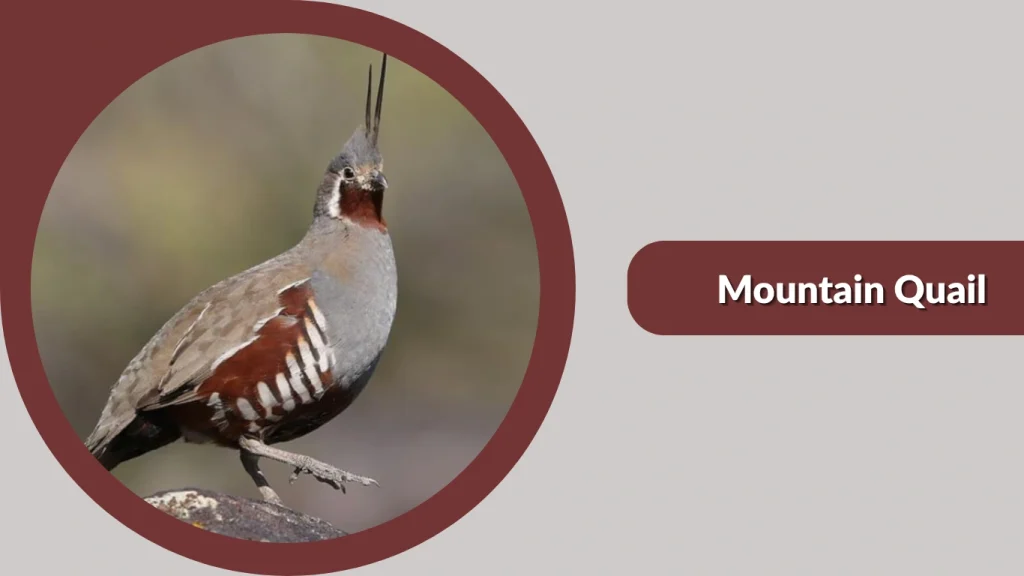
The Mountain Quail is the largest quail species in North America and is known for its striking plumage and bold topknot. Preferring dense cover in mountainous terrain, this elusive bird is more often heard than seen.
Identification
- Size: 10–12 inches (25–30 cm)
- Weight: 7–9 ounces (200–255 grams)
- Plumage: Olive-brown with chestnut flanks and bold white bars
- Crest: Long, straight, and black topknot (2 feathers)
- Male & Female: Similar in appearance
- Tail: Short and rounded
- Habitat: Montane chaparral, pine forests, and thick understory
- Call: High-pitched “whit-whit” or sharp whistles
Behavior and Diet
Mountain Quail forage in dense vegetation for seeds, acorns, berries, and insects. They are strong runners and will burst into flight only as a last resort. During winter, they move to lower elevations in coveys.
Nesting and Reproduction
They nest on the ground in dense vegetation. Females lay 6–15 eggs in a shallow scrape, and both parents may help lead the chicks after hatching.
Range and Distribution
Found in mountainous areas of the western U.S., including California, Oregon, and the Sierra Nevada, favoring remote, densely vegetated slopes.
6. Japanese Quail

The Japanese Quail is a small, fast-maturing bird native to East Asia and domesticated around the world. It is a favorite among poultry keepers for its compact size, rapid growth, and prolific egg-laying abilities. While commonly raised in captivity, wild populations still exist in parts of Asia.
Identification
- Size: 7–8 inches (18–20 cm)
- Weight: 3–5 ounces (85–140 grams)
- Plumage: Mottled brown with black and buff markings
- Male Markings: Rusty-colored throat and breast
- Female Markings: Lighter with speckled chest
- Tail: Short and square
- Habitat: Grasslands, rice fields, and agricultural margins
- Call: Trilling, high-pitched “cu-curr-rroo”
Behavior and Diet
Japanese Quail are ground foragers, consuming seeds, grains, and small invertebrates. They are generally shy and secretive in the wild but very tame in captivity. Their quick maturity makes them a top choice for egg and meat production.
Nesting and Reproduction
In the wild, nests are built in shallow grass depressions. Females lay 6–12 speckled eggs, incubated for about 16–18 days. In captivity, artificial incubation is often used due to their high productivity.
Range and Distribution
Native to Japan, Korea, China, and parts of Russia, but now widely bred in captivity across the globe. Escaped birds may form feral populations in some regions.
7. Common Quail

The Common Quail is a migratory bird found across Europe, Asia, and parts of Africa. Unlike many other quail species, it is capable of long-distance flight and undertakes seasonal migrations. It is elusive and more often heard than seen in open grasslands and agricultural fields.
Identification
- Size: 6–7 inches (16–18 cm)
- Weight: 2.5–4.5 ounces (70–130 grams)
- Plumage: Brown with buff streaking and dark speckling
- Male Markings: White throat with black edges
- Female Markings: Plainer with buff throat
- Tail: Short and rounded
- Habitat: Grasslands, grain fields, and meadows
- Call: Repetitive, whistled “wet-my-lips”
Behavior and Diet
Common Quails forage for seeds, grasses, and insects, especially during breeding season. They are secretive and well-camouflaged, often remaining motionless when threatened.
Nesting and Reproduction
Ground-nesting species with nests hidden in tall grass. Females lay 7–13 eggs per clutch. Chicks are precocial and follow the mother shortly after hatching.
Range and Distribution
Breeds across Europe and Asia, winters in sub-Saharan Africa and South Asia. Unlike most quails, it is strongly migratory, sometimes flying over large bodies of water during seasonal movements.
8. Harlequin Quail
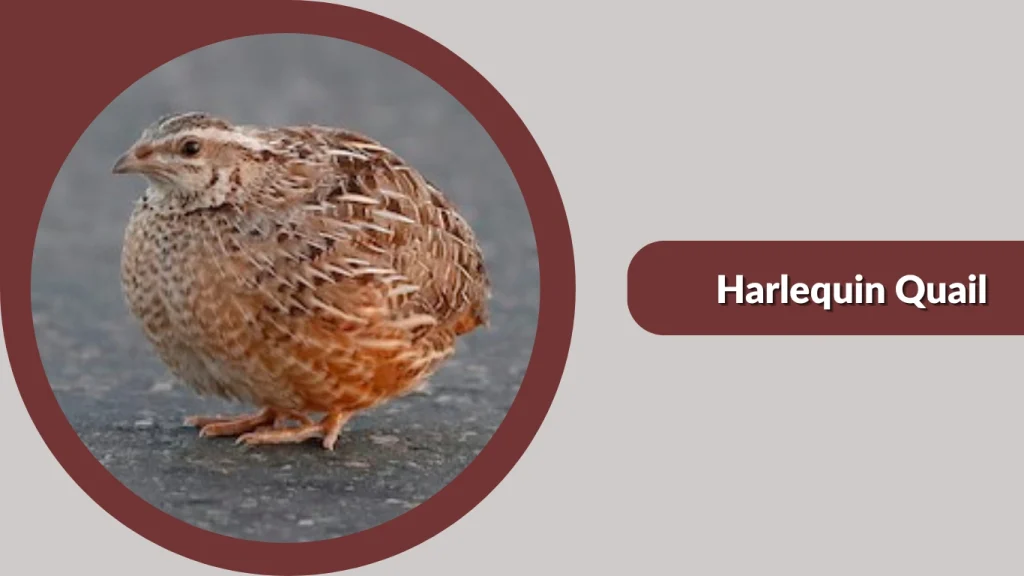
The Harlequin Quail is a vibrantly patterned species native to sub-Saharan Africa. It thrives in savannas, open woodlands, and cultivated fields. Though less known outside its native range, it is admired for its unique plumage and shy behavior.
Identification
- Size: 6–7 inches (15–18 cm)
- Weight: 3.5–4.5 ounces (100–130 grams)
- Plumage: Richly patterned with chestnut, black, white, and buff tones
- Male Markings: Bold black-and-white face, chestnut breast, and scalloped back
- Female Markings: Browner overall, duller facial markings
- Tail: Very short
- Habitat: Savannahs, scrubland, agricultural fields
- Call: Short, repeated whistles or piping notes
Behavior and Diet
Harlequin Quails are ground dwellers that forage for seeds, insects, and small greens. They remain well hidden in vegetation and flush suddenly when disturbed. These quail form small coveys or pairs during the breeding season.
Nesting and Reproduction
Ground nests are made in tall grass or thickets. The female typically lays 5–9 eggs. The incubation period is about 18–20 days. Chicks are mobile shortly after hatching and rely on camouflage for protection.
Range and Distribution
Found throughout sub-Saharan Africa, from Senegal and Ethiopia to Angola and Tanzania. They are non-migratory and localized based on habitat availability and food sources.
9. Blue Quail (African Blue Quail)
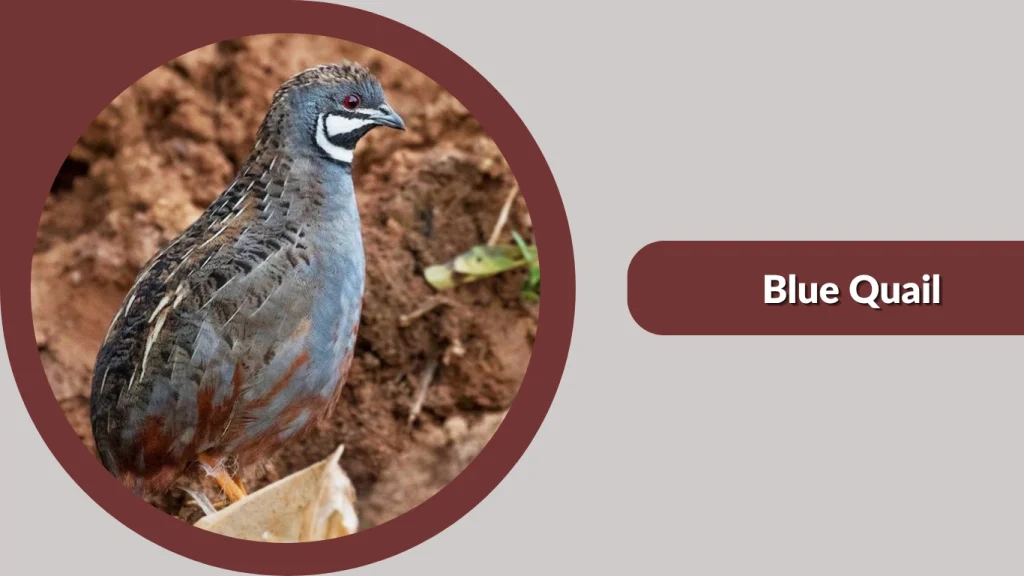
The Blue Quail, also known as the African Blue Quail, is a small, fast-moving quail native to parts of central and eastern Africa. Named for the slate-blue coloration in males, it prefers moist grasslands and floodplains, often near water sources.
Identification
- Size: 5.5–6.5 inches (14–17 cm)
- Weight: 2–3.5 ounces (60–100 grams)
- Plumage: Males are slate-blue with brown wings; females are mottled brown
- Male Markings: Deep bluish-gray body, chestnut wing panel, and white throat
- Female Markings: Mottled buff and brown, camouflaged appearance
- Tail: Short, often hidden under body feathers
- Habitat: Wet grasslands, swamps, floodplains, and rice fields
- Call: Soft, piping notes or brief whistles
Behavior and Diet
They are shy and quick runners, often hiding in thick vegetation. Diet includes grass seeds, grains, and small invertebrates. Known for being secretive and hard to spot in the wild.
Nesting and Reproduction
Females construct shallow nests hidden in dense grass. The clutch size ranges from 4 to 8 eggs, incubated for about 16–18 days. Young are active within hours of hatching.
Range and Distribution
Widespread in sub-Saharan Africa, particularly in regions with seasonal wetlands such as Zambia, Kenya, and the Democratic Republic of Congo. They are typically nomadic, moving with changing water levels and vegetation cover.
10. Jungle Bush Quail

The Jungle Bush Quail is a small, stout-bodied quail native to the Indian subcontinent. It is known for its beautiful, cryptic plumage that blends perfectly with dry scrub and forest floor vegetation. These quails are commonly encountered in coveys that scatter noisily when flushed.
Identification
- Size: 6–7 inches (15–18 cm)
- Weight: 2.5–3.5 ounces (70–100 grams)
- Plumage: Brown and chestnut with heavy barring and mottling
- Male Markings: Rich chestnut face and underparts with dark barring
- Female Markings: Paler overall with buff-colored face and chest
- Tail: Very short and rounded
- Habitat: Dry deciduous forests, grasslands, and scrubby terrain
- Call: Low, whistled trills or rapid “chik-chik-chik” calls
Behavior and Diet
They feed in small coveys at dawn and dusk, foraging on the ground for seeds, insects, and green shoots. When alarmed, they flush with a burst of noisy wingbeats and quickly dive back into cover.
Nesting and Reproduction
Nests are shallow ground scrapes under bushes or grass tufts. The female lays 4–8 eggs, and chicks hatch after about 16–18 days of incubation. Chicks are precocial and follow their parents immediately.
Range and Distribution
Found throughout peninsular India, especially in the central and southern regions. They are non-migratory and typically stay close to thick ground cover year-round.
11. Painted Bush Quail

The Painted Bush Quail is a vibrantly colored, elusive quail species endemic to the Western Ghats of India. With its colorful plumage and shy nature, it is one of the most attractive bush quails in South Asia.
Identification
- Size: 6–7 inches (15–18 cm)
- Weight: 3–4 ounces (85–115 grams)
- Plumage: Rich chestnut, gray, and black with intricate barring
- Male Markings: Chestnut head, gray underparts with white bars, and black flanks
- Female Markings: More buffy and subdued, with lighter head and throat
- Tail: Short and tucked under body
- Habitat: Montane grasslands, forest edges, and bamboo patches
- Call: Repetitive high-pitched whistles or piping calls
Behavior and Diet
Painted Bush Quails move in small coveys and are extremely wary. They feed on seeds, small insects, and fallen berries. Their secretive habits and preference for dense cover make them difficult to observe in the wild.
Nesting and Reproduction
Ground-nesting species, typically laying 4–7 eggs in a grass-lined depression. Incubation lasts about 18 days. Chicks are highly mobile from birth and rely on cover to avoid predators.
Range and Distribution
Endemic to the southern parts of the Western Ghats, particularly in Kerala, Karnataka, and Tamil Nadu. They are altitudinally restricted and most common above 1000 meters.
12. King Quail
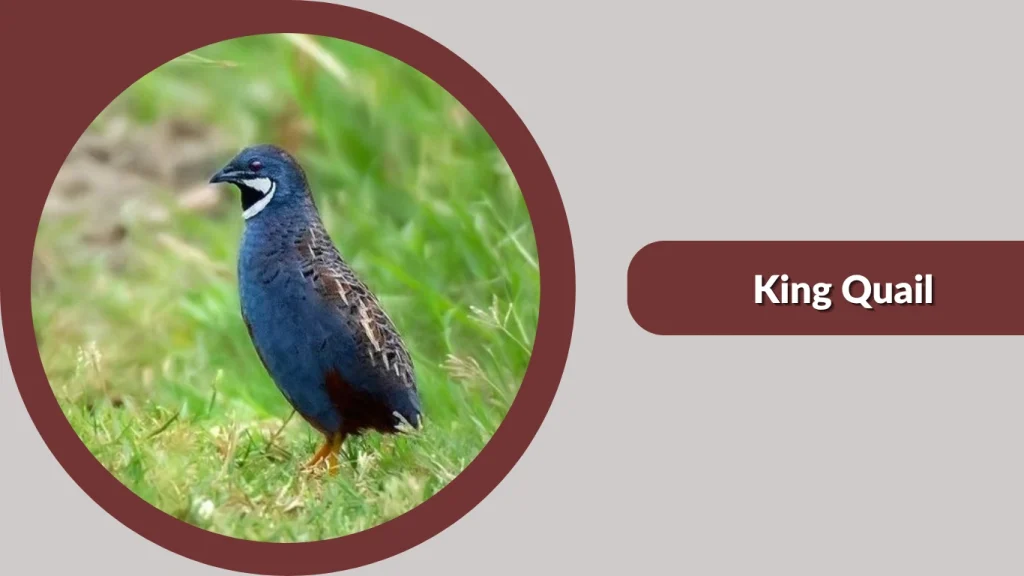
Also known as the Asian Blue Quail or Button Quail in aviculture, the King Quail is a compact, colorful species popular both in the wild and in captivity. Native to Southeast Asia and parts of Australia, it is admired for its bold coloring and charming behavior.
Identification
- Size: 5–6 inches (13–15 cm)
- Weight: 1.5–2 ounces (40–60 grams)
- Plumage: Wide color variations in captivity; wild types are slate-blue in males and brown in females
- Male Markings: Blue-gray body, chestnut flanks, and black-and-white face patterns
- Female Markings: Buff-brown with dark mottling, more camouflaged
- Tail: Short and typically held downward
- Habitat: Grasslands, marsh edges, and lowland meadows
- Call: Soft whistles and repetitive chirps
Behavior and Diet
These birds are ground dwellers, feeding on small seeds, green shoots, and insects. They are shy and secretive in nature, preferring thick vegetation. Despite their small size, they are territorial and sometimes aggressive during breeding.
Nesting and Reproduction
Ground nests are made under thick vegetation. Females lay 5–12 eggs, incubated for 16–18 days. In captivity, breeding is prolific, and chicks grow rapidly.
Range and Distribution
Native to Southeast Asia, including India, China, the Philippines, and northern Australia. They are now found globally in aviaries due to their popularity as ornamental birds.
13. Rain Quail

The Rain Quail is a beautifully marked bird native to South and Southeast Asia. It is named for its tendency to call and become more visible during the monsoon season, which is also its breeding period.
Identification
- Size: 6–7 inches (15–18 cm)
- Weight: 2.5–3.5 ounces (70–100 grams)
- Plumage: Gray-brown upperparts with black-and-white streaked flanks
- Male Markings: Black breast band and black throat patch with white borders
- Female Markings: Duller and lacks bold throat patterns
- Tail: Short and square
- Habitat: Grasslands, cultivated fields, and scrub plains
- Call: Loud, clear whistle, often heard before or during rainfall
Behavior and Diet
Rain Quails forage for seeds, insects, and green matter. They are often silent and hidden until the monsoon rains begin, at which point their calls become more frequent. They prefer walking to flying and blend easily with dry grass.
Nesting and Reproduction
They nest on the ground in shallow scrapes concealed in vegetation. The female lays 5–7 eggs, which hatch after 16–18 days. Chicks are precocial and follow the parent almost immediately.
Range and Distribution
Found throughout India, Nepal, Bangladesh, and parts of Southeast Asia, especially in open and semi-arid habitats with scattered grass and shrubs. They are strongly seasonal in their activity, linked to rainfall patterns.
14. Stubble Quail

The Stubble Quail is an elusive and well-camouflaged quail native to Australia. It is commonly found in open agricultural lands, especially where cereal crops are harvested, hence the name “stubble.”
Identification
- Size: 7–8 inches (18–20 cm)
- Weight: 3.5–4.5 ounces (100–130 grams)
- Plumage: Mottled brown, black, and buff with pale underparts
- Male & Female: Very similar; females are slightly larger
- Tail: Very short and almost hidden
- Habitat: Grasslands, stubble fields, and lightly wooded farmlands
- Call: Three-note “twee-twee-twit” repeated rapidly
Behavior and Diet
Primarily ground-dwelling, feeding on seeds, grains, and occasional insects. They are quick to flee into dense cover rather than fly when disturbed and are active mostly at dawn and dusk.
Nesting and Reproduction
Females construct a hidden nest in thick grass or stubble. They lay 5–10 eggs, which hatch after 18–20 days. Chicks are independent and capable of foraging within hours.
Range and Distribution
Widespread across mainland Australia, particularly in southeastern and southwestern regions. They favor areas impacted by agriculture and respond well to seasonal rainfall.
15. Chestnut-bellied Sandgrouse
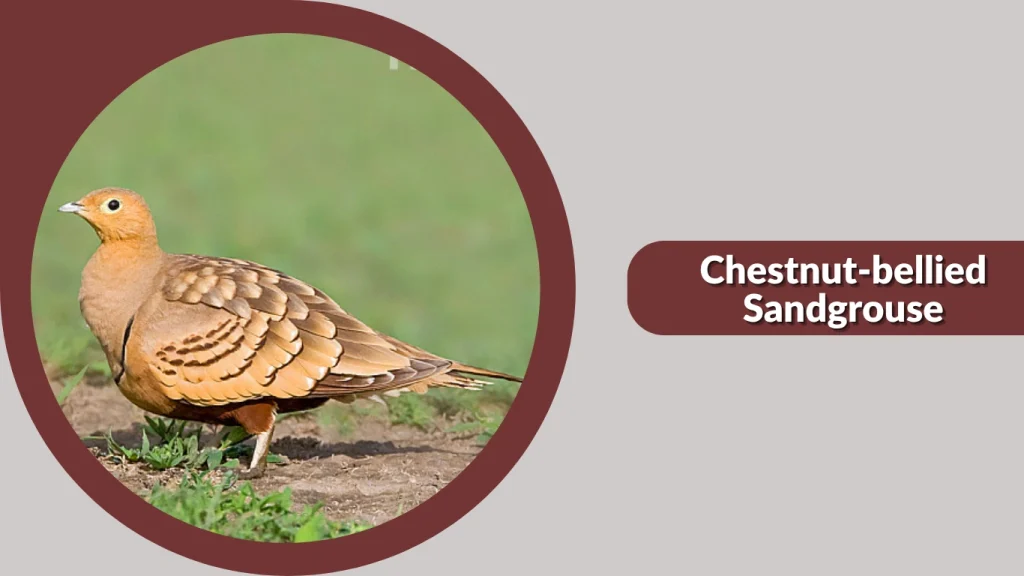
Though often mistaken for quail due to size and behavior, the Chestnut-bellied Sandgrouse is actually a member of the sandgrouse family. Still, it shares similar terrestrial habits and environments with quails, especially in arid regions.
Identification
- Size: 10–11 inches (25–28 cm)
- Weight: 6–7 ounces (170–200 grams)
- Plumage: Sandy brown with chestnut belly and finely barred upperparts
- Male Markings: Black line on the chest and more vivid coloration
- Female Markings: Duller with subtle barring
- Tail: Pointed with a small central extension
- Habitat: Arid plains, scrub deserts, and dry grasslands
- Call: Low, guttural “katt-katt-katt” in flight
Behavior and Diet
Feeds on dry seeds and occasionally green shoots. Known for flying long distances to reach water sources, often in flocks. They drink by immersing their bills and using special feathers to carry water to chicks.
Nesting and Reproduction
Simple ground nests in open areas. Clutch usually consists of 2–3 eggs. Parents take turns incubating, and chicks are downy and mobile at hatching.
Range and Distribution
Found across parts of India, Pakistan, the Middle East, and into Africa. Prefers dry, open areas far from dense vegetation.
16. Coturnix Quail

The Coturnix Quail, often referred to as the Old World or European Quail, includes several subspecies and domesticated lines. It is one of the most common quail raised globally for eggs and meat due to its rapid growth and excellent productivity.
Identification
- Size: 6–8 inches (15–20 cm)
- Weight: 3.5–5 ounces (100–140 grams)
- Plumage: Light brown with black streaks and buff edges
- Male Markings: Reddish-brown throat and solid breast
- Female Markings: Mottled breast with dark specks, lighter face
- Tail: Short and square
- Habitat: Grasslands, agricultural fields, and meadows
- Call: Males produce a rhythmic “chip-chip-chip” trill
Behavior and Diet
They are ground-feeding birds that consume seeds, grains, and insects. Domesticated Coturnix are calm and easy to handle, making them suitable for backyard farming. Wild forms are more skittish and migratory.
Nesting and Reproduction
Females nest on the ground and lay 6–12 speckled eggs per clutch. Eggs hatch in 16–18 days. Domesticated lines can start laying by 6–7 weeks of age, producing up to 300 eggs per year.
Range and Distribution
Native to Europe, Asia, and parts of Africa. Domesticated varieties are raised worldwide and can now be found in North America, South America, and Oceania.
17. Brown Quail
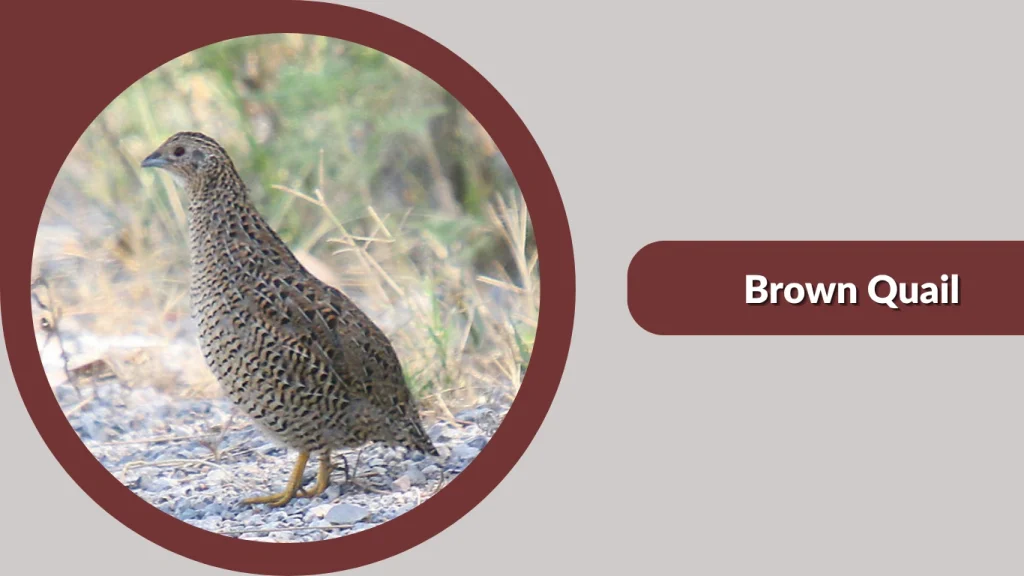
The Brown Quail is a stocky, ground-dwelling bird native to Australia, Papua New Guinea, and parts of Indonesia. Its cryptic plumage allows it to blend seamlessly into grassy or marshy environments.
Identification
- Size: 6.5–8 inches (16–20 cm)
- Weight: 4–6 ounces (115–170 grams)
- Plumage: Brown with dark mottling and pale streaks
- Male & Female: Similar, with females usually slightly larger
- Tail: Short and hidden under the body
- Habitat: Wet grasslands, swamps, and low coastal scrub
- Call: Soft trills and sharp whistling “whit-whit” calls
Behavior and Diet
Brown Quails forage by walking through thick cover, feeding on seeds, soft plant shoots, and insects. They are shy and rely on camouflage, often remaining motionless when threatened before darting away.
Nesting and Reproduction
They nest in simple ground scrapes lined with grass. Females lay 6–10 eggs, and chicks hatch in about 17–18 days. The young are well-camouflaged and able to follow the adults soon after hatching.
Range and Distribution
Found in northern and eastern Australia, New Guinea, and nearby islands. They are non-migratory but may move locally based on water availability and vegetation growth.
18. Snow Mountain Quail

The Snow Mountain Quail is a rare and high-altitude species endemic to the Snow Mountains of western New Guinea. It inhabits alpine grasslands and rocky slopes, making it one of the few quail adapted to such extreme environments.
Identification
- Size: 10–11 inches (25–28 cm)
- Weight: 7–9 ounces (200–260 grams)
- Plumage: Grayish-brown with bold white spotting and barring
- Male & Female: Similar in appearance, females may be slightly duller
- Tail: Short and rounded
- Habitat: Alpine meadows and rocky outcrops at elevations above 3,000 meters
- Call: Low-pitched whistles and gravelly croaks
Behavior and Diet
Snow Mountain Quails are ground-foraging birds, feeding on alpine grass seeds, berries, and insects. Due to their high-altitude habitat, they are secretive and adapted to cold, sparse environments.
Nesting and Reproduction
Little is known, but they are presumed to nest in ground scrapes hidden among alpine vegetation. Likely lay small clutches of 3–5 eggs, with chicks well adapted to cold, high-elevation conditions.
Range and Distribution
Endemic to western New Guinea’s Snow Mountains, especially in montane grasslands above the treeline. Their population is localized and difficult to study due to remoteness and harsh habitat.
19. Black-breasted Buttonquail

Despite the name, the Black-breasted Buttonquail is not a true quail but resembles one in appearance and behavior. It is a secretive, ground-dwelling bird found in eastern Australia, favoring dense leaf litter in subtropical forests.
Identification
- Size: 6.5–7 inches (17–18 cm)
- Weight: 2.5–3.5 ounces (75–100 grams)
- Plumage: Mottled brown with a distinctive black breast and white speckling
- Female Markings: More brightly colored with solid black breast and rufous crown
- Male Markings: Duller, lacks strong breast contrast
- Tail: Short and rounded
- Habitat: Rainforest floor, dry vine scrub, and thick leaf litter areas
- Call: Deep booming calls mainly from females
Behavior and Diet
Feeds by creating circular depressions in leaf litter called “platelets,” searching for invertebrates. Uniquely, females are dominant and initiate courtship, while males incubate the eggs and raise the chicks.
Nesting and Reproduction
The female lays 3–4 eggs in a shallow nest hidden in dense foliage. The male incubates the eggs and raises the young alone. This species has a polyandrous breeding system.
Range and Distribution
Found in southeast Queensland and northeastern New South Wales. Population is scattered and threatened by habitat fragmentation and deforestation. Conservation efforts are in place in protected forest areas.
20. Montezuma Quail
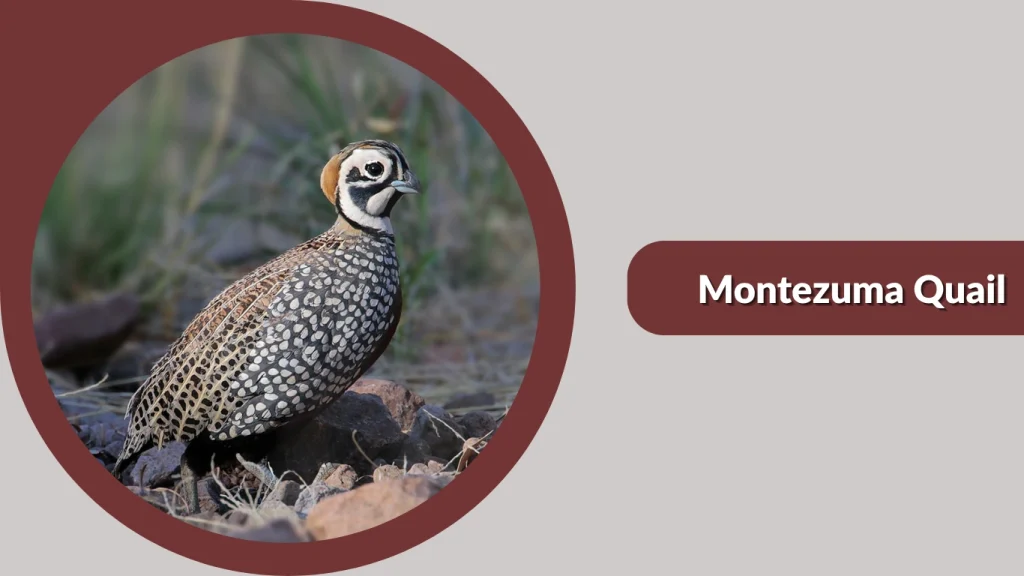
The Montezuma Quail, also known as the Mearns Quail, is a beautifully marked and elusive quail species native to the southwestern United States and parts of Mexico. Its bold facial patterns and unique feeding behavior make it one of the most distinctive North American quail.
Identification
- Size: 8–9 inches (20–23 cm)
- Weight: 6–8 ounces (170–230 grams)
- Plumage: Richly colored with chocolate-brown, black, and white markings
- Male Markings: Striking black-and-white face pattern, chestnut flanks, and scaly lower breast
- Female Markings: Paler overall with buff and gray tones, less defined facial markings
- Tail: Very short and rounded
- Habitat: Oak woodlands, grassy slopes, and pine-oak forests at mid-elevation
- Call: Low-pitched, rising whistles and soft “whoo-eet” notes
Behavior and Diet
Montezuma Quails are ground foragers that primarily dig for underground bulbs, tubers, and insects—using their strong claws to scratch soil. They are extremely secretive and prefer walking to flying, often freezing motionless to avoid detection.
Nesting and Reproduction
Nests are hidden in dense grasses or under shrubs, lined with dry leaves. The female lays 8–12 eggs, and both parents may help raise the chicks. Incubation lasts about 24 days. The chicks are fluffy, camouflaged, and active soon after hatching.
Range and Distribution
Found from southeastern Arizona and New Mexico through western Mexico into the Sierra Madre Occidental. Their populations are highly localized and can decline quickly due to overgrazing or habitat disruption. They are considered a sensitive species in some areas due to habitat loss.