




Owls are mysterious and highly skilled birds of prey, admired for their silent flight, keen senses, and nocturnal lifestyles. Found on every continent except Antarctica, these birds range from tiny insect hunters to massive forest predators. This guide explores 25 common types of owls, highlighting their identification, habitats, behaviors, diets, and life cycles to help readers better understand and appreciate these fascinating nocturnal hunters.
1. Barn Owl
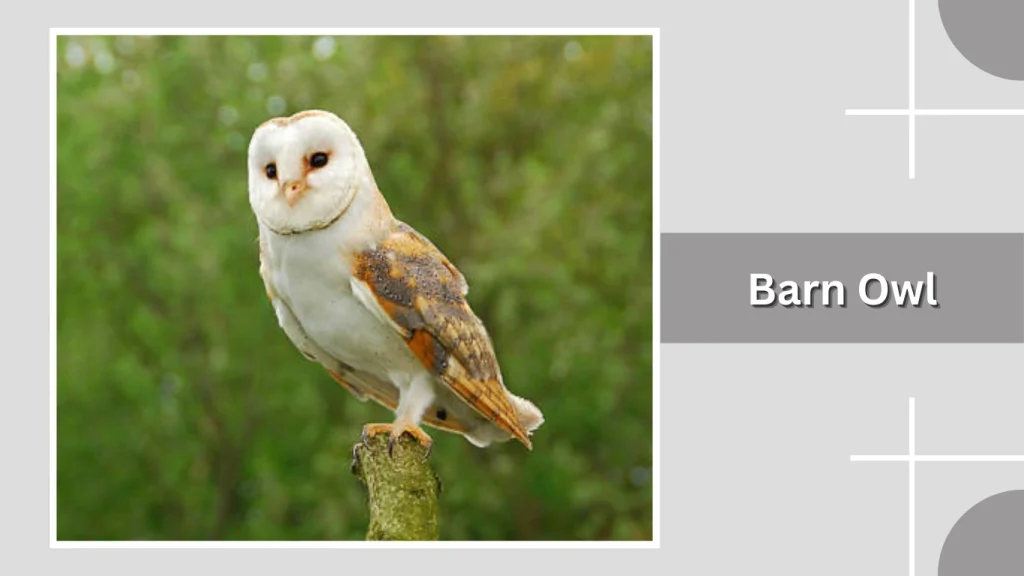
The Barn Owl is one of the most widespread and recognizable owl species in the world. Known for its heart-shaped face and silent flight, it is commonly associated with open landscapes and human structures such as barns and silos, where it helps control rodent populations.
Identification
- Medium-sized owl, about 13–16 inches (33–40 cm) long
- Distinctive heart-shaped white facial disc
- Pale white to cream underside
- Golden-buff to gray upper body with fine speckling
- Long wings and legs adapted for low, gliding flight
Habitat and Behaviors
Barn Owls inhabit open habitats including grasslands, farmlands, marshes, and deserts. They frequently nest in barns, abandoned buildings, tree cavities, and cliffs. Unlike many owls, they rely more on hearing than sight when hunting, using exceptional auditory accuracy to locate prey in complete darkness. Barn Owls are primarily nocturnal and are known for their silent flight and eerie screeching calls rather than hooting.
Diet and Lifecycle
Their diet consists mainly of small mammals, especially mice, rats, and voles, though they may also eat small birds, reptiles, or insects. Barn Owls swallow prey whole and later regurgitate pellets of indigestible material. Breeding can occur year-round in warm climates, with females laying 3–7 eggs per clutch. Chicks fledge in about two months, and adults typically live 4–8 years in the wild.
2. Snowy Owl
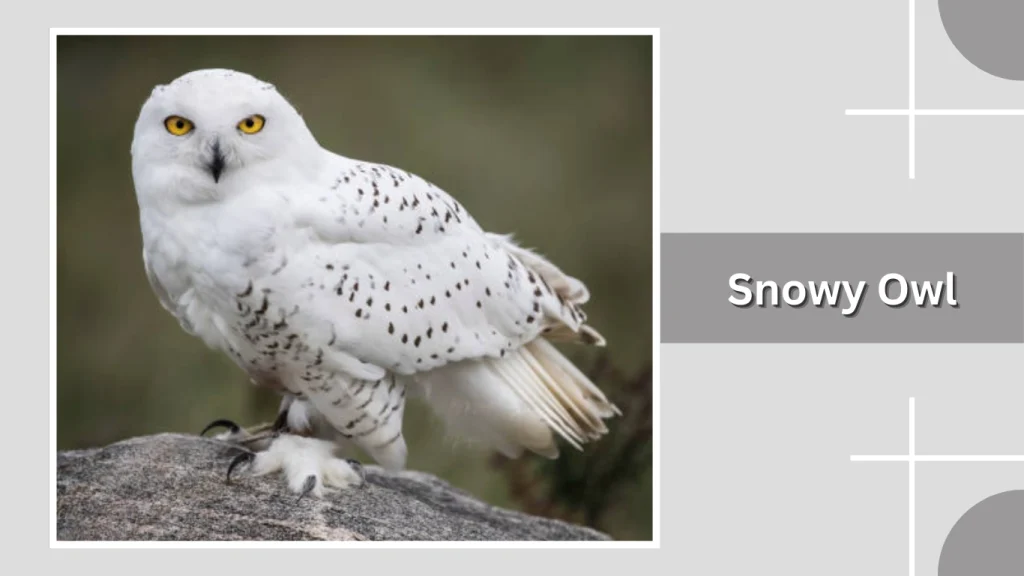
The Snowy Owl is a striking Arctic species famous for its white plumage and daytime activity. Unlike most owls, it often hunts during daylight, especially in summer, and is strongly associated with tundra landscapes and cold climates.
Identification
- Large owl, about 20–28 inches (52–71 cm) long
- Mostly white plumage; males are whiter than females
- Females and juveniles have dark brown barring
- Bright yellow eyes
- Thick feathering covering legs and feet for insulation
Habitat and Behaviors
Snowy Owls primarily inhabit Arctic tundra, open plains, and coastal areas. In winter, some migrate south into grasslands, agricultural fields, and shorelines. They prefer open areas with good visibility and often perch on the ground or low mounds rather than trees. Snowy Owls are less nocturnal than other owls and may hunt both day and night. They are generally solitary outside the breeding season and are known for long-distance seasonal movements depending on prey availability.
Diet and Lifecycle
Their diet consists mainly of small mammals, especially lemmings, which strongly influence breeding success. They also eat voles, rabbits, birds, and occasionally fish. Snowy Owls breed during summer, nesting directly on the ground. Females typically lay 3–11 eggs, with clutch size increasing in years of abundant food. Chicks grow rapidly and fledge within 6–7 weeks. In the wild, Snowy Owls may live 10 years or more.
3. Great Horned Owl
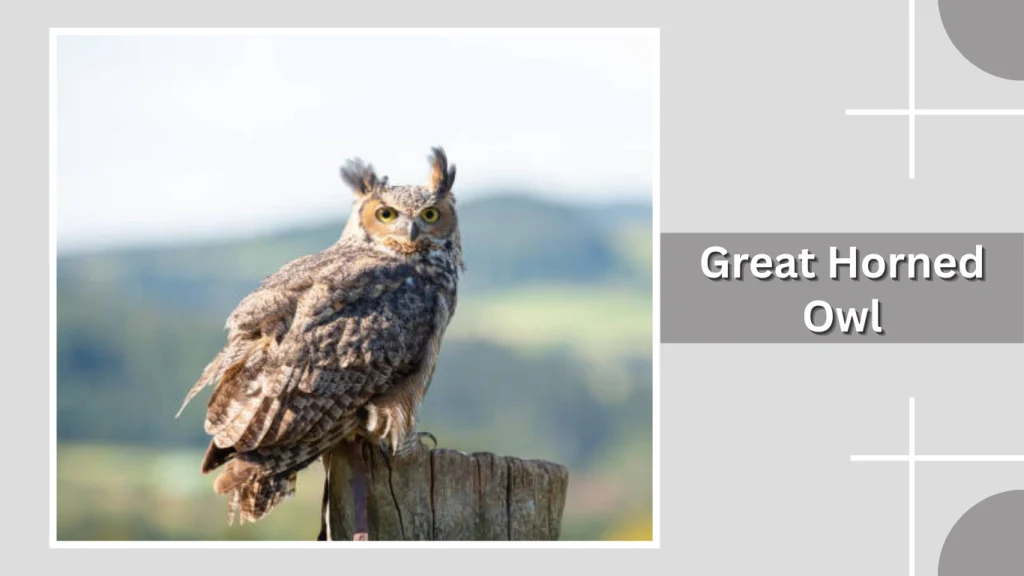
The Great Horned Owl is one of the most powerful and adaptable owls in the Americas. Easily recognized by its prominent ear tufts and deep hooting call, it is a top predator capable of thriving in a wide range of environments.
Identification
- Large owl, about 18–25 inches (46–63 cm) long
- Prominent ear tufts (“horns”) on the head
- Mottled brown, gray, and white plumage
- White throat patch often visible when calling
- Large yellow eyes and strong talons
Habitat and Behaviors
Great Horned Owls inhabit forests, deserts, grasslands, wetlands, farmlands, and even urban areas. They are highly adaptable and often use abandoned nests of other large birds rather than building their own. Primarily nocturnal, they hunt from elevated perches and rely on excellent vision and hearing. These owls are territorial and known for their deep, resonant hoots that carry long distances, especially during the breeding season.
Diet and Lifecycle
Their diet is extremely varied and includes rabbits, hares, rodents, skunks, birds, reptiles, and even other owls. Great Horned Owls are among the earliest nesting birds in North America, often laying eggs in late winter. Females typically lay 2–3 eggs. Chicks fledge after about 6–7 weeks but remain dependent on their parents for several months. In the wild, they commonly live 10–15 years, with some individuals living longer.
4. Eurasian Eagle-Owl
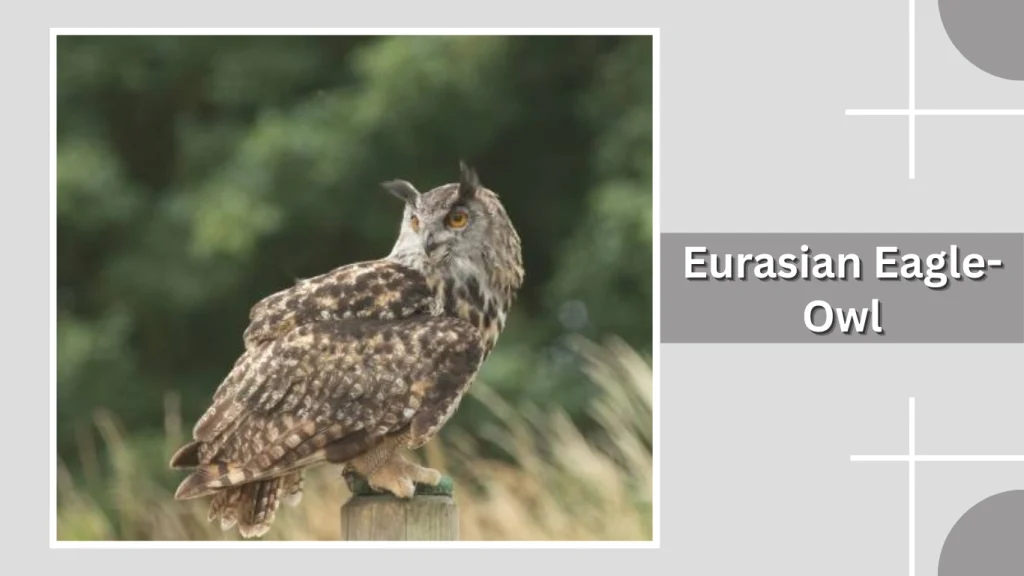
The Eurasian Eagle-Owl is one of the largest owl species in the world and is known for its massive size, bright orange eyes, and powerful presence. Native to Europe and Asia, it is an apex nocturnal predator with few natural enemies.
Identification
- Very large owl, about 23–30 inches (58–75 cm) long
- Broad wings with a wingspan up to 6 feet (1.8 m)
- Prominent ear tufts
- Mottled brown, black, and buff plumage
- Bright orange eyes and a strong hooked beak
Habitat and Behaviors
Eurasian Eagle-Owls inhabit mountains, cliffs, forests, rocky landscapes, and open countryside. They often nest on ledges, cliffs, or rocky outcrops rather than in trees. These owls are primarily nocturnal and are solitary and highly territorial. They are powerful fliers and often perch quietly while scanning for prey. Their deep, booming hoots can be heard over long distances, especially during the breeding season.
Diet and Lifecycle
Their diet includes mammals such as rabbits, hares, rodents, foxes, and even small deer, as well as birds including ducks and other raptors. Breeding typically begins in late winter, with females laying 1–4 eggs. Chicks hatch after about 35 days and fledge at around 10–12 weeks. Eurasian Eagle-Owls are long-lived and can survive 20 years or more in the wild under favorable conditions.
5. Tawny Owl

The Tawny Owl is a common and well-known owl across Europe, recognized for its rounded shape and expressive dark eyes. It is highly adaptable and often lives close to human settlements, making it one of the most frequently heard owls at night.
Identification
- Medium-sized owl, about 14–17 inches (35–43 cm) long
- Rounded head with no ear tufts
- Plumage ranges from reddish-brown to gray-brown
- Dark brown to black eyes
- Stocky body with broad wings
Habitat and Behaviors
Tawny Owls inhabit deciduous and mixed forests, woodlands, parks, gardens, and old orchards. They are strongly territorial and often remain in the same area for life. These owls are mainly nocturnal and are famous for their classic “hoot” and “kewick” calls. Tawny Owls rely heavily on hearing and vision to hunt and often perch silently before swooping down on prey. They are aggressive in defending their nesting territory, especially during breeding season.
Diet and Lifecycle
Their diet includes small mammals such as mice, voles, and shrews, as well as birds, frogs, insects, and earthworms. Breeding usually begins early in the year, with females laying 2–4 eggs in tree cavities or old nests. Chicks fledge after about 4–5 weeks but remain dependent on adults for several more weeks. Tawny Owls typically live 4–8 years in the wild, though some individuals live much longer.
6. Little Owl
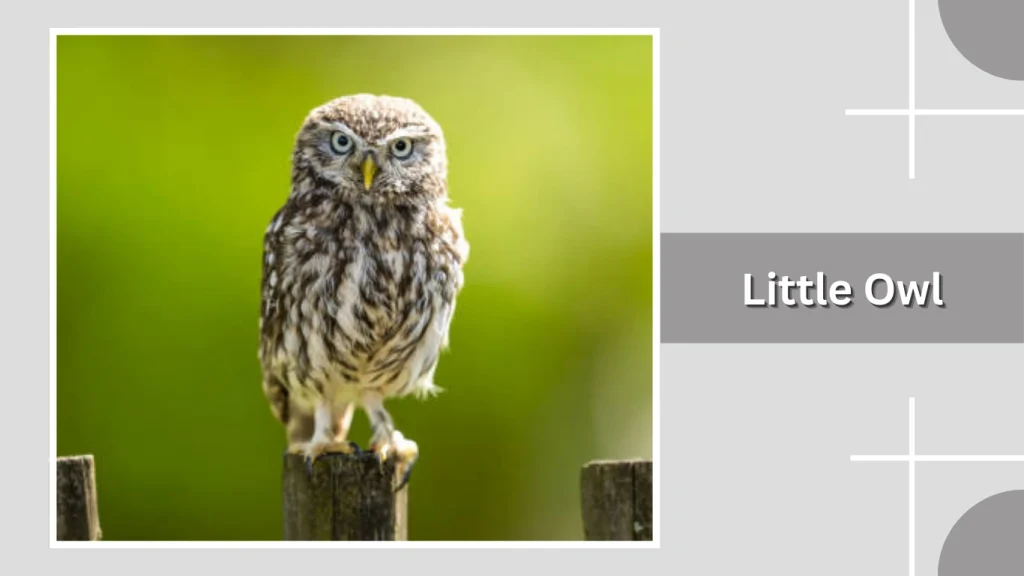
The Little Owl is a small, compact owl widely distributed across Europe, Asia, and North Africa. Despite its small size, it has a bold personality and is often active during daylight hours, making it easier to observe than many other owls.
Identification
- Small owl, about 8–9 inches (20–23 cm) long
- Short tail and rounded wings
- Brown and white spotted plumage
- Yellow eyes with prominent white eyebrows
- Flat-topped head with no ear tufts
Habitat and Behaviors
Little Owls inhabit open countryside, farmland, orchards, grasslands, and rocky areas, often near human settlements. They frequently perch in visible spots such as fence posts, rooftops, or tree branches. Unlike most owls, they are partly diurnal and may hunt during the day, especially at dawn and dusk. Little Owls are territorial and use a variety of calls to communicate and defend their area.
Diet and Lifecycle
Their diet includes insects, earthworms, small mammals, reptiles, and birds. Breeding occurs in spring, with nests located in tree holes, buildings, or rock crevices. Females typically lay 3–5 eggs. Chicks fledge after about 5 weeks but stay close to the nest while learning to hunt. Little Owls usually live 3–6 years in the wild, though some survive longer in suitable habitats.
7. Burrowing Owl
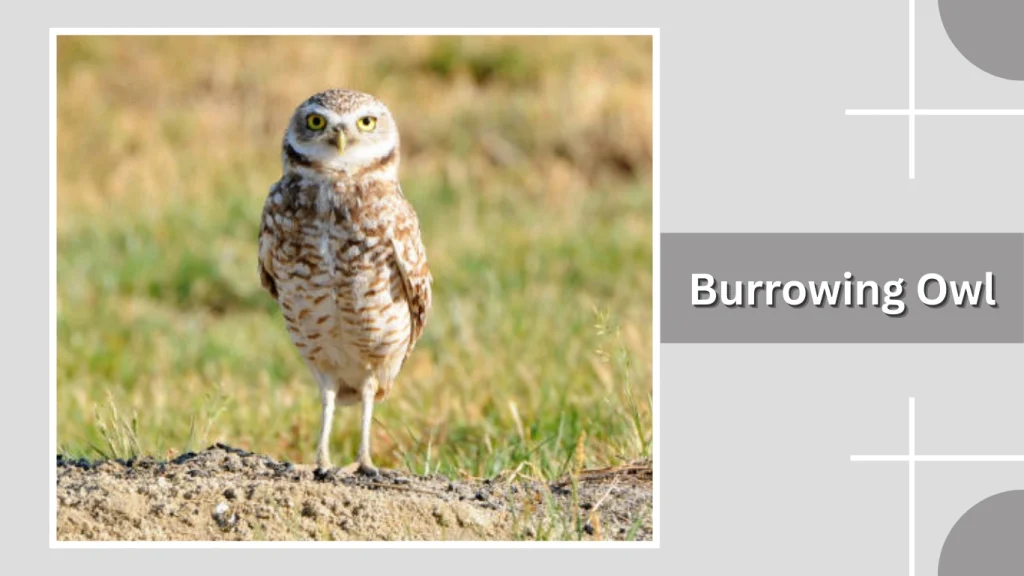
The Burrowing Owl is a small, long-legged owl known for its unusual habit of living underground. Unlike most owls, it is often active during daylight hours and is commonly seen standing near burrow entrances in open landscapes.
Identification
- Small owl, about 7–10 inches (18–25 cm) long
- Long legs and upright posture
- Brown body with white spotting
- Bright yellow eyes
- Short tail and rounded head without ear tufts
Habitat and Behaviors
Burrowing Owls inhabit open grasslands, prairies, deserts, and agricultural fields. They live in underground burrows, often using abandoned burrows made by prairie dogs or other mammals. These owls are frequently active during the day, especially in the early morning and late afternoon. They are social compared to many owls and may nest in loose colonies. Burrowing Owls often bob their heads and give distinctive calls when alarmed.
Diet and Lifecycle
Their diet consists mainly of insects such as beetles and grasshoppers, as well as small mammals, reptiles, and birds. Breeding occurs in spring, with females laying 6–12 eggs inside burrows. Both parents help raise the young. Chicks emerge from the burrow after about two weeks and begin flying around one month of age. Burrowing Owls typically live 6–8 years in the wild.
8. Long-eared Owl
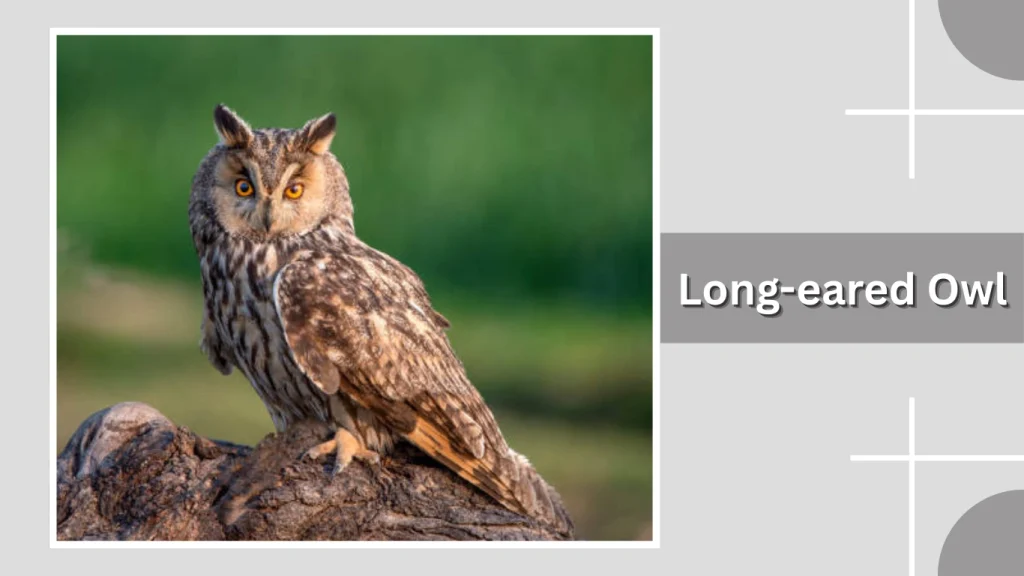
The Long-eared Owl is a slender, secretive owl best known for its tall ear tufts and preference for dense cover. It is widely distributed across North America, Europe, and Asia but is often overlooked due to its excellent camouflage and quiet behavior.
Identification
- Medium-sized owl, about 13–16 inches (33–40 cm) long
- Very long, narrow ear tufts held upright
- Mottled brown, gray, and buff plumage
- Orange to yellow-orange eyes
- Slim body with long wings
Habitat and Behaviors
Long-eared Owls inhabit woodlands, forest edges, groves, and dense thickets near open hunting areas such as grasslands or fields. They roost communally in dense vegetation, especially during winter. These owls are strictly nocturnal and rely on stealth and cover rather than open perches. Their flight is buoyant and moth-like, and they are rarely seen during the day unless disturbed.
Diet and Lifecycle
Their diet mainly consists of small mammals, particularly voles and mice, though they may also eat small birds. Breeding occurs in spring, and they typically use abandoned nests of crows or hawks rather than building their own. Females lay 4–7 eggs. Chicks fledge at about 5 weeks but remain dependent for some time. Long-eared Owls generally live 8–12 years in the wild.
9. Short-eared Owl
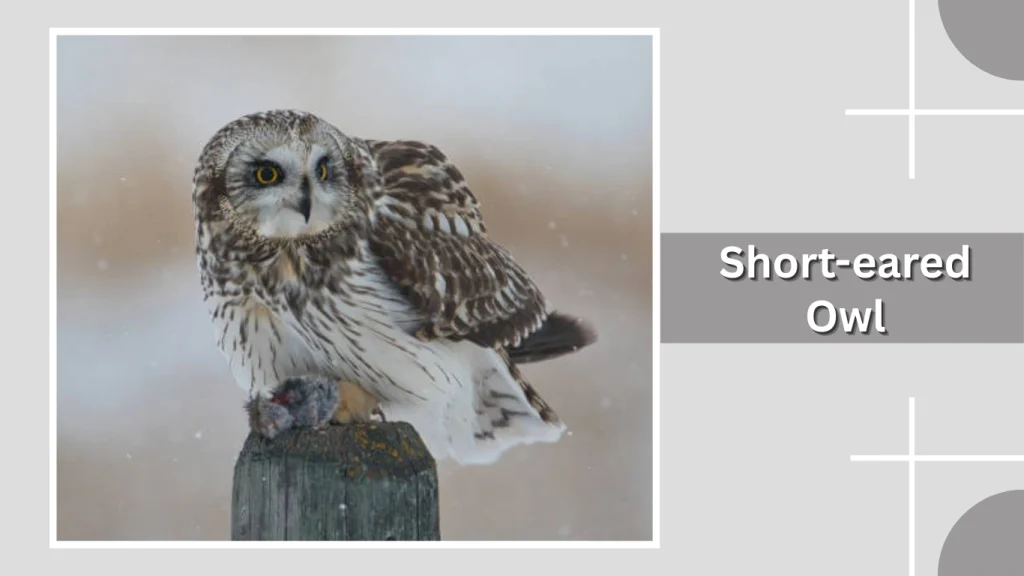
The Short-eared Owl is a medium-sized owl known for its daytime hunting habits and preference for wide, open landscapes. Unlike many owls, it is often seen flying low over fields and grasslands in search of prey, especially during daylight hours.
Identification
- Medium-sized owl, about 13–17 inches (34–43 cm) long
- Short, barely visible ear tufts
- Mottled brown and buff plumage
- Pale facial disc with yellow eyes outlined in black
- Long wings adapted for low, buoyant flight
Habitat and Behaviors
Short-eared Owls inhabit open habitats such as grasslands, marshes, tundra, coastal dunes, and agricultural fields. They are crepuscular and diurnal, most active at dawn, dusk, and sometimes during the day. These owls often fly low over open ground with slow, moth-like wingbeats while hunting. They are nomadic and may move frequently in response to prey abundance. During winter, they may roost communally on the ground or in low vegetation.
Diet and Lifecycle
Their diet consists mainly of small mammals, especially voles and mice, though they may also eat birds. Breeding usually occurs in spring, with nests built directly on the ground. Females lay 4–7 eggs, depending on food availability. Chicks leave the nest before they can fly and hide in vegetation while being fed by parents. Short-eared Owls typically live around 10 years in the wild.
10. Northern Saw-whet Owl
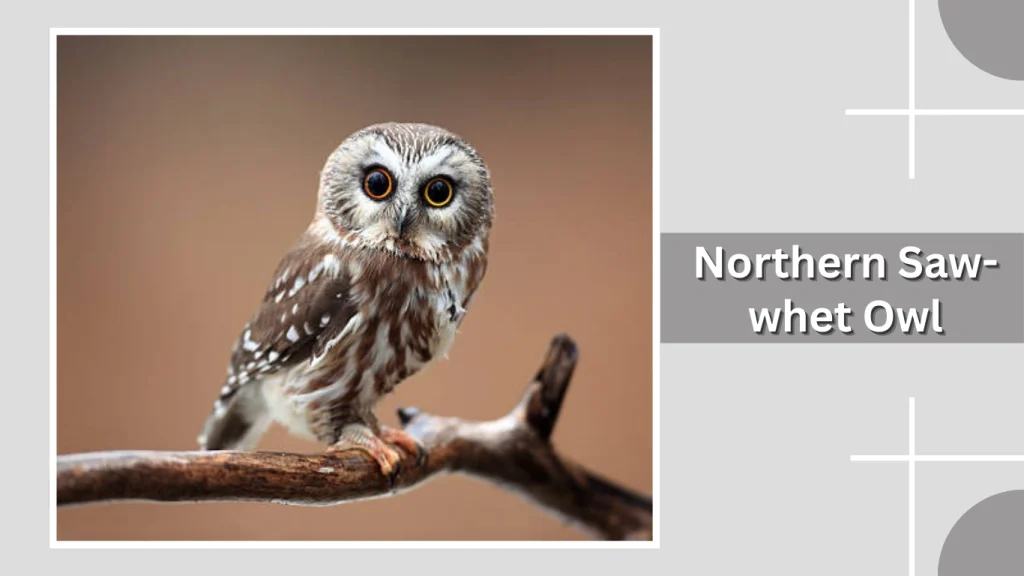
The Northern Saw-whet Owl is a small, elusive owl best known for its high-pitched calls and secretive nature. Despite being widespread across North America, it is rarely seen due to its excellent camouflage and strictly nocturnal habits.
Identification
- Small owl, about 7–8 inches (18–20 cm) long
- Large, rounded head with no ear tufts
- Brown plumage with white spotting on the back
- Pale facial disc with bold dark outlines
- Bright yellow eyes
Habitat and Behaviors
Northern Saw-whet Owls inhabit dense forests, woodlands, and coniferous or mixed tree stands. They prefer areas with thick cover and are often found near forest edges or clearings used for hunting. These owls are strictly nocturnal and spend daylight hours roosting quietly in dense foliage. They are solitary and generally silent outside the breeding season. During migration periods, they may travel long distances, though they remain largely unnoticed.
Diet and Lifecycle
Their diet consists mainly of small mammals such as mice and voles, along with insects and small birds. Breeding occurs in spring, with nests typically located in tree cavities, often those made by woodpeckers. Females lay 4–7 eggs and incubate them while males provide food. Chicks fledge after about 4–5 weeks. Northern Saw-whet Owls usually live 5–10 years in the wild.
11. Eastern Screech Owl
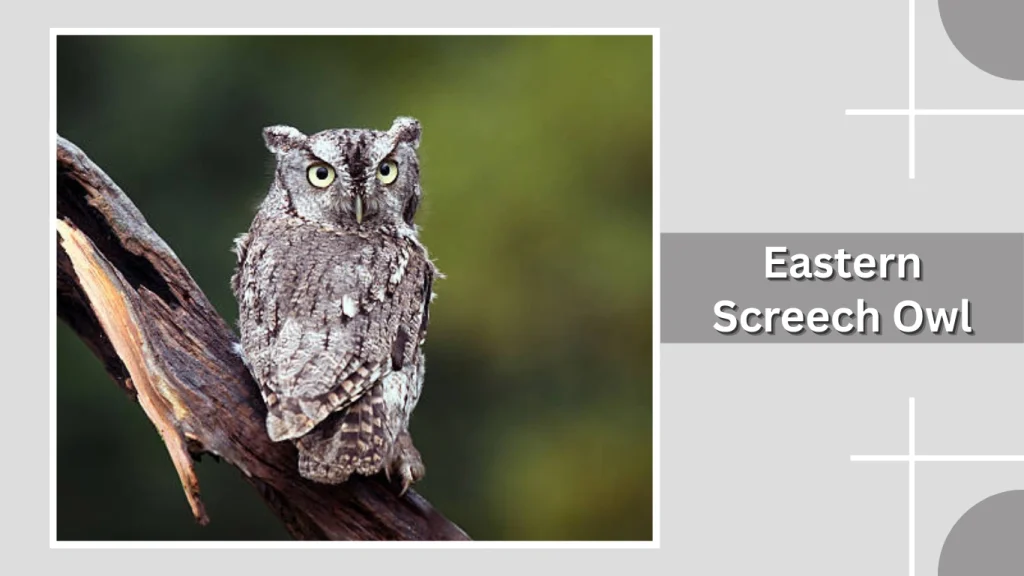
The Eastern Screech Owl is a small, adaptable owl native to eastern North America. Despite its name, it does not screech often but instead produces soft trills and whinnies. It is commonly found near human settlements as well as in natural forests.
Identification
- Small owl, about 6–10 inches (16–25 cm) long
- Compact body with prominent ear tufts
- Two main color forms: gray and reddish-brown
- Yellow eyes
- Heavily patterned plumage for camouflage
Habitat and Behaviors
Eastern Screech Owls inhabit deciduous forests, woodlands, parks, orchards, and suburban areas. They readily use tree cavities or nest boxes. These owls are strictly nocturnal and spend the day roosting against tree trunks, where their camouflage makes them hard to spot. They are solitary and territorial but tolerate nearby neighbors. Their calls are soft and eerie rather than loud hoots.
Diet and Lifecycle
Their diet includes insects, mice, small birds, frogs, reptiles, and occasionally fish. Breeding occurs in spring, with females laying 3–5 eggs in tree cavities. The female incubates while the male brings food. Chicks fledge after about 4 weeks but remain nearby for several weeks. Eastern Screech Owls typically live 8–10 years in the wild.
12. Western Screech Owl

The Western Screech Owl is a small, nocturnal owl native to western North America. Closely related to the Eastern Screech Owl, it is well adapted to a wide range of environments and is more often heard than seen due to its excellent camouflage.
Identification
- Small owl, about 7–10 inches (18–25 cm) long
- Compact body with short ear tufts
- Gray or brown mottled plumage
- Yellow eyes
- Short tail and rounded wings
Habitat and Behaviors
Western Screech Owls inhabit forests, woodlands, deserts with trees, river corridors, and suburban areas. They commonly roost in tree cavities, dense foliage, or nest boxes. These owls are strictly nocturnal and rely on stealth and camouflage to avoid detection. They are territorial but can live near humans if suitable nesting sites are available. Their calls consist of soft hoots and bouncing trills rather than loud screeches.
Diet and Lifecycle
Their diet includes insects, rodents, small birds, reptiles, amphibians, and occasionally fish. Breeding takes place in spring, with females laying 3–5 eggs in tree cavities. The female incubates the eggs while the male provides food. Chicks fledge after about 4–5 weeks and remain dependent for a short time. Western Screech Owls generally live 8–10 years in the wild.
13. Spotted Owl
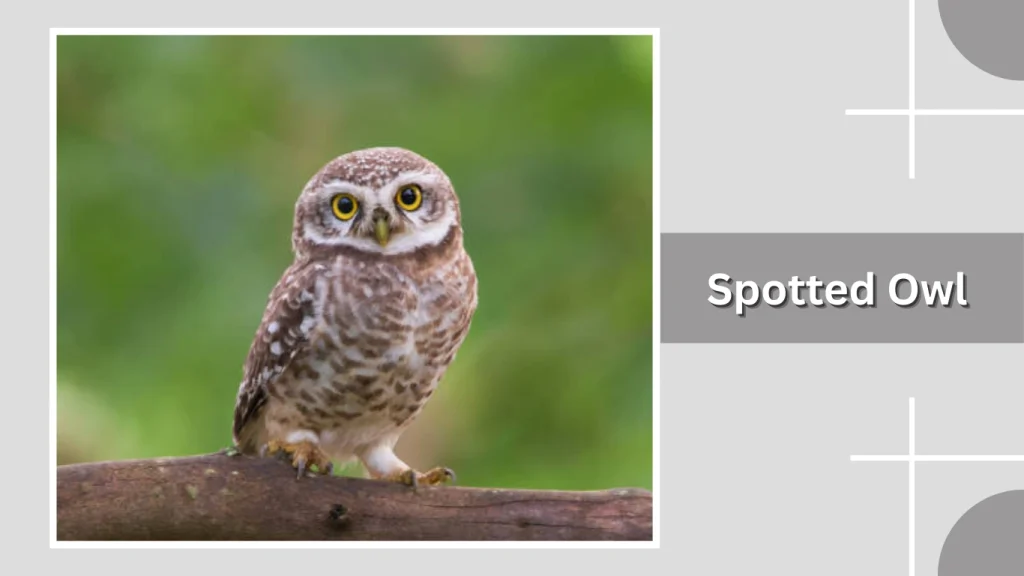
The Spotted Owl is a medium-sized forest owl best known for its association with old-growth forests and its role in conservation efforts. Native to western North America, it is a secretive species that depends heavily on mature forest ecosystems.
Identification
- Medium-sized owl, about 16–19 inches (41–48 cm) long
- Rounded head with no ear tufts
- Dark brown plumage with white spots on the head and body
- Dark eyes set in a pale facial disc
- Broad wings and short tail
Habitat and Behaviors
Spotted Owls inhabit dense, old-growth coniferous and mixed forests with large trees and complex canopy structure. They are highly territorial and typically remain within the same home range year-round. These owls are strictly nocturnal and spend daylight hours roosting in shaded forest interiors. They are quiet and elusive, relying on cover rather than flight to avoid disturbance.
Diet and Lifecycle
Their diet consists mainly of small mammals, especially flying squirrels and woodrats, along with other rodents and occasional birds. Breeding usually occurs in spring, with nests located in tree cavities or on broken treetops. Females typically lay 1–3 eggs. Chicks fledge after about 5–6 weeks but remain dependent on parents for several months. Spotted Owls can live over 15 years in the wild under favorable conditions.
14. Barred Owl
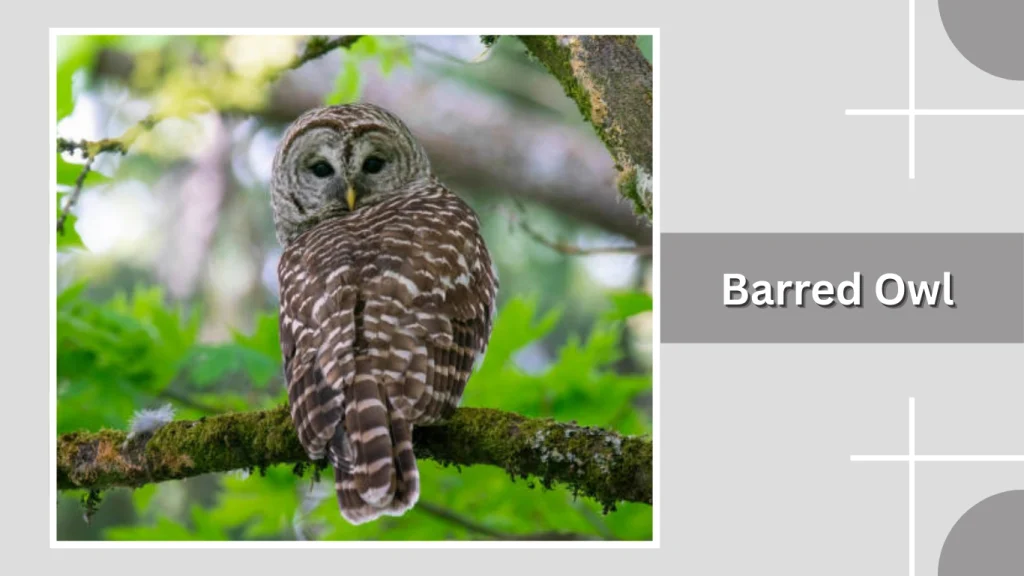
The Barred Owl is a large, vocal owl native to North America, best known for its distinctive “who cooks for you” call. It is a highly adaptable species and has expanded its range in recent decades, often overlapping with other forest owls.
Identification
- Large owl, about 16–25 inches (41–63 cm) long
- Rounded head with no ear tufts
- Brown and white barred pattern on chest and belly
- Dark brown eyes
- Broad wings and sturdy build
Habitat and Behaviors
Barred Owls inhabit mature forests, swamps, wetlands, and wooded river corridors. They are highly vocal and often active at night, though they may occasionally be seen during daylight. These owls are territorial and form strong pair bonds. They are confident hunters and often perch quietly before swooping down on prey. Barred Owls are less secretive than many forest owls and tolerate human presence better than some related species.
Diet and Lifecycle
Their diet is diverse and includes small mammals, birds, amphibians, reptiles, fish, and large insects. Breeding occurs in late winter or early spring, with nests placed in tree cavities or abandoned nests. Females usually lay 2–3 eggs. Chicks fledge after about 4–5 weeks but remain dependent for several months. Barred Owls commonly live 10–15 years in the wild.
15. Great Grey Owl
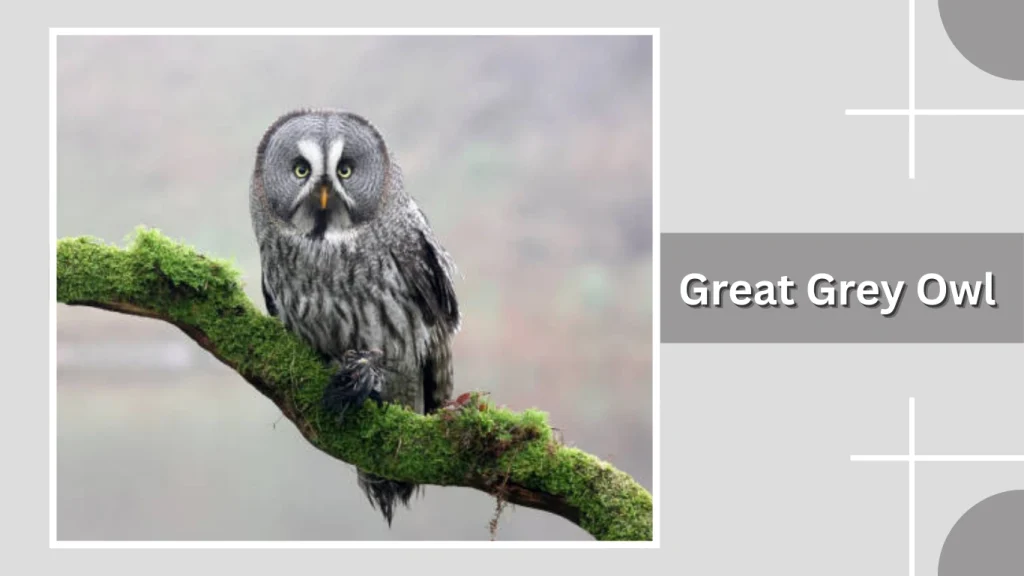
The Great Grey Owl is one of the tallest owl species in the world, known for its large facial disc and calm, ghostly appearance. Despite its imposing size, it is relatively lightweight and specializes in hunting small mammals.
Identification
- Very large owl, about 24–33 inches (61–84 cm) long
- Large, rounded head with no ear tufts
- Gray plumage with fine barring and concentric facial rings
- Yellow eyes set within a large facial disc
- Long wings and tail
Habitat and Behaviors
Great Grey Owls inhabit boreal forests, coniferous woodlands, and forest edges near open meadows. They prefer remote, quiet areas and are often active at dawn and dusk. These owls are known for their exceptional hearing, allowing them to locate prey beneath deep snow. They often perch silently for long periods before swooping down. Great Grey Owls are generally solitary and non-aggressive.
Diet and Lifecycle
Their diet consists mainly of small mammals such as voles and mice, which make up the vast majority of their prey. Breeding occurs in spring, with nests often located in abandoned raptor or crow nests. Females lay 2–5 eggs. Chicks fledge after about 3–4 weeks but remain dependent for several more weeks. Great Grey Owls can live 10–15 years or longer in suitable habitats.
16. Northern Hawk Owl
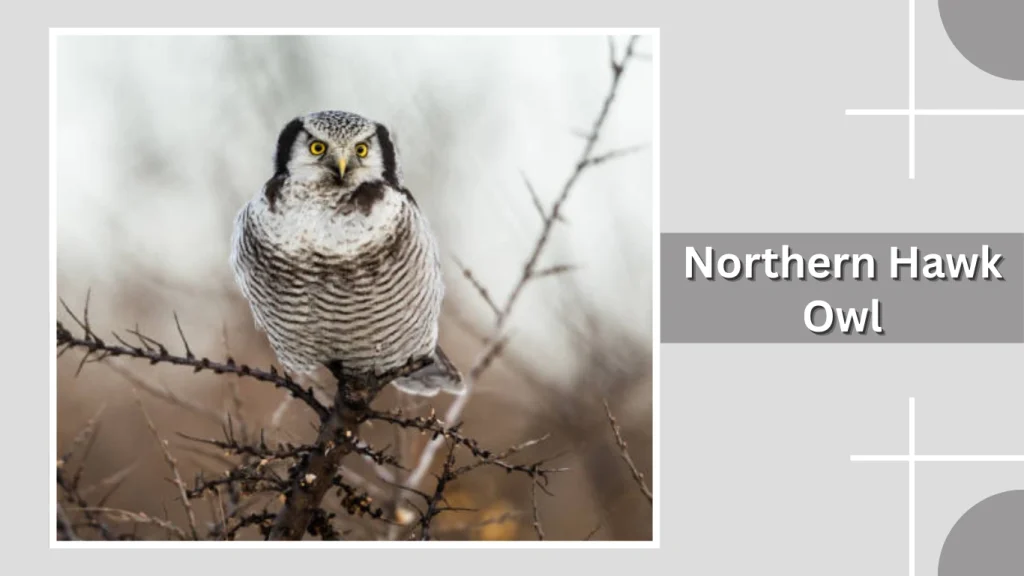
The Northern Hawk Owl is an unusual owl that behaves more like a hawk than a typical owl. Native to the boreal forests of the Northern Hemisphere, it is known for its daytime hunting and long tail, which give it a distinctive silhouette.
Identification
- Medium-sized owl, about 14–18 inches (36–46 cm) long
- Long tail compared to most owls
- Dark brown upper body with white spotting
- White underside with bold dark barring
- Bright yellow eyes and rounded head without ear tufts
Habitat and Behaviors
Northern Hawk Owls inhabit boreal forests, taiga, forest edges, and open woodland near clearings. Unlike most owls, they are largely diurnal and hunt during daylight hours. They often perch on treetops or poles, scanning the ground for prey. Their flight is fast and direct, resembling that of a hawk. These owls are generally solitary and defend large hunting territories.
Diet and Lifecycle
Their diet consists mainly of small mammals such as voles, mice, and lemmings, as well as small birds. Breeding occurs in spring, with nests placed in tree cavities or abandoned nests. Females typically lay 3–7 eggs. Chicks fledge after about 4–5 weeks but remain dependent for some time. Northern Hawk Owls can live 10 years or more in the wild.
17. Elf Owl
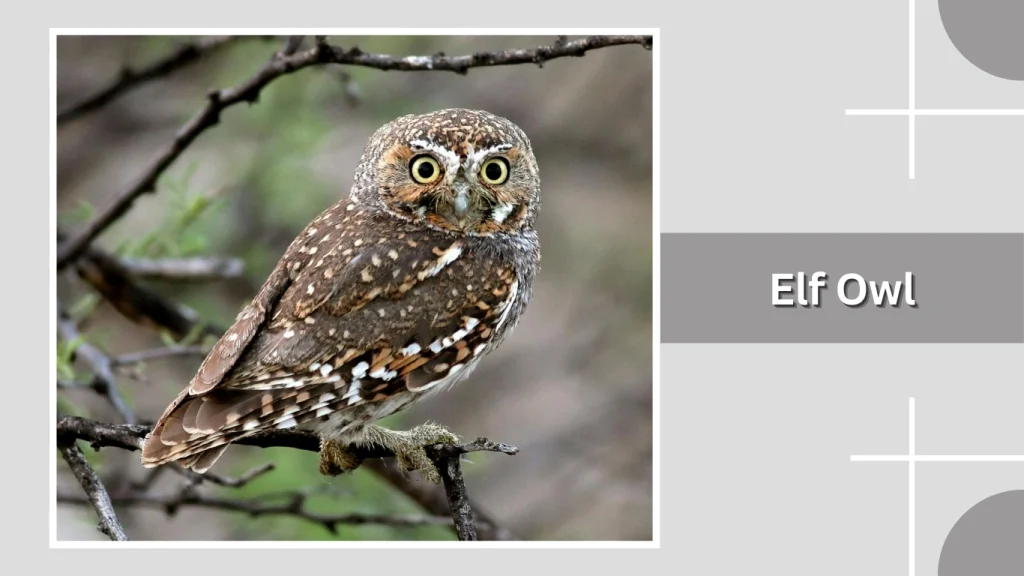
The Elf Owl is the smallest owl species in the world, known for its tiny size and big personality. Native to the southwestern United States and Mexico, it is a migratory owl that relies heavily on desert and semi-arid environments.
Identification
- Very small owl, about 5–6 inches (13–15 cm) long
- Rounded head with no ear tufts
- Gray-brown plumage with light mottling
- Pale yellow eyes
- Short tail and delicate build
Habitat and Behaviors
Elf Owls inhabit deserts, open woodlands, riparian areas, and cactus forests, especially regions with saguaro cacti or mature trees. They nest in abandoned woodpecker holes. These owls are strictly nocturnal and are highly vocal at night, producing a series of high-pitched calls. Elf Owls are migratory, moving south in winter. They are agile fliers and often hover briefly while hunting insects.
Diet and Lifecycle
Their diet consists mainly of insects such as moths, beetles, crickets, and scorpions. Breeding occurs in spring, with females laying 2–4 eggs in tree cavities or cactus holes. The female incubates while the male provides food. Chicks fledge after about 4 weeks. Despite their small size, Elf Owls can live 6–10 years in the wild under favorable conditions.
18. Boreal Owl
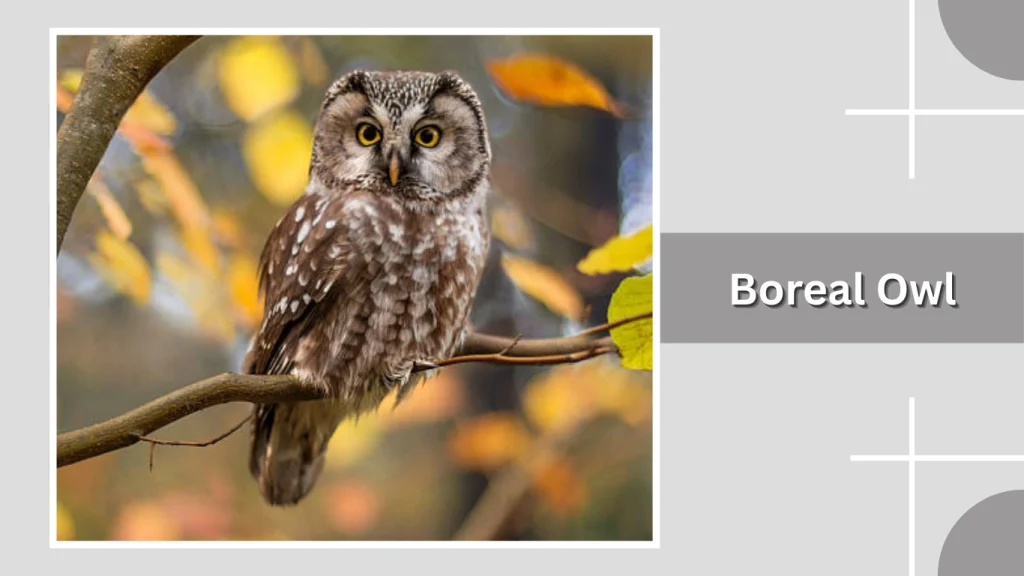
The Boreal Owl is a small, secretive owl of northern forests, often associated with cold climates and remote wilderness. Despite its wide distribution across North America and Eurasia, it is rarely seen due to its nocturnal and elusive nature.
Identification
- Small owl, about 8–11 inches (20–28 cm) long
- Rounded head with no ear tufts
- Brown plumage with white spotting on the head and back
- Pale facial disc outlined in dark brown
- Bright yellow eyes
Habitat and Behaviors
Boreal Owls inhabit dense boreal forests, coniferous woodlands, and mountainous regions. They prefer areas with mature trees and open spaces for hunting. These owls are strictly nocturnal and spend daylight hours roosting in tree cavities or dense foliage. They are solitary and quiet outside the breeding season, making them difficult to detect in the wild.
Diet and Lifecycle
Their diet consists mainly of small mammals such as voles and mice, along with small birds and insects. Breeding occurs in spring, with nests usually located in abandoned woodpecker holes. Females typically lay 3–7 eggs and incubate them while males provide food. Chicks fledge after about 4–5 weeks. Boreal Owls generally live 7–10 years in the wild.
19. Ural Owl
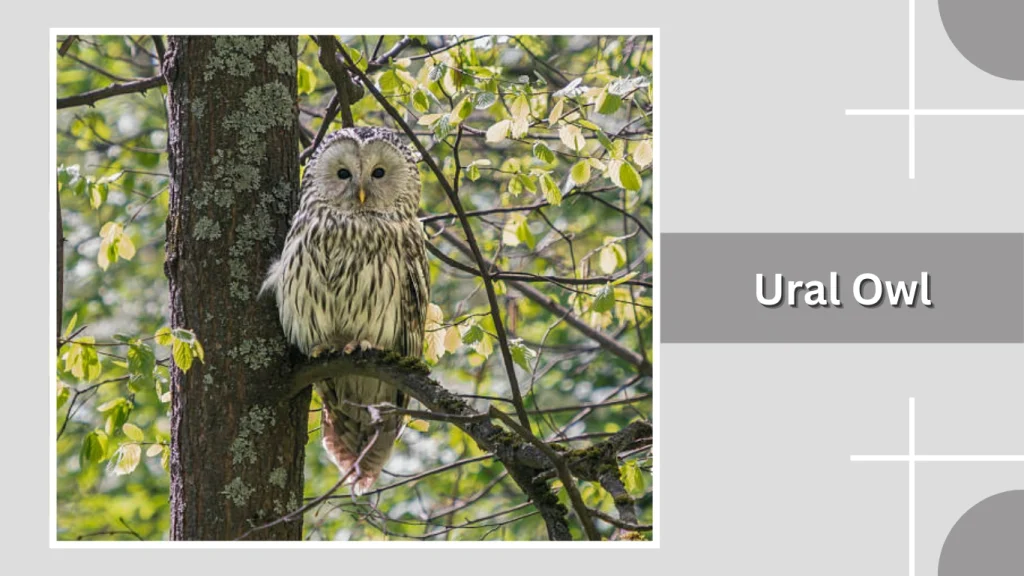
The Ural Owl is a large forest-dwelling owl native to Europe and northern Asia. It is known for its long tail, bold appearance, and strong territorial behavior, especially during the breeding season.
Identification
- Large owl, about 20–24 inches (50–60 cm) long
- Long tail compared to most owls
- Grayish-brown plumage with dark streaking
- Rounded head with no ear tufts
- Dark brown eyes set in a pale facial disc
Habitat and Behaviors
Ural Owls inhabit mature mixed and coniferous forests, often near clearings, rivers, or forest edges. They are mainly nocturnal but may be active at dawn and dusk. These owls are highly territorial and are known to aggressively defend their nests, sometimes even attacking humans who approach too closely. They often perch quietly while scanning for prey and rely on stealth rather than long pursuits.
Diet and Lifecycle
Their diet includes small mammals such as voles, mice, and squirrels, as well as birds and amphibians. Breeding occurs in spring, with nests placed in tree cavities, broken stumps, or nest boxes. Females typically lay 2–4 eggs. Chicks fledge after about 5–6 weeks but remain dependent on parents for several more weeks. Ural Owls can live 15–20 years in suitable habitats.
20. Blakiston’s Fish Owl
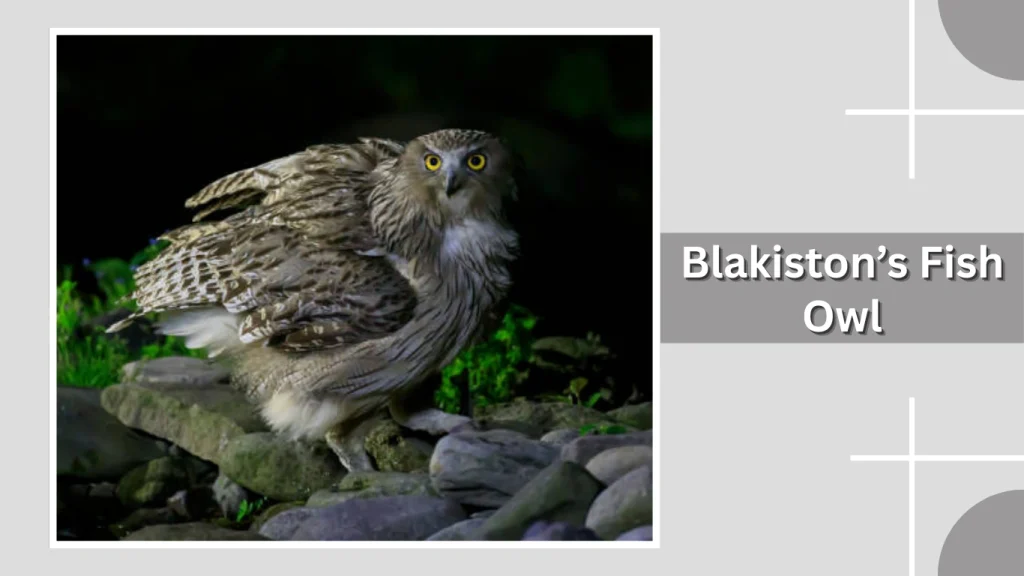
Blakiston’s Fish Owl is one of the largest and rarest owl species in the world. Native to parts of eastern Russia, China, and Japan, it is closely associated with old-growth forests and large, clean river systems.
Identification
- Very large owl, about 24–28 inches (60–71 cm) long
- Massive wingspan reaching up to 6.5 feet (2 m)
- Brown plumage with darker streaking
- Prominent ear tufts
- Bright yellow eyes and powerful talons
Habitat and Behaviors
Blakiston’s Fish Owls inhabit dense forests near rivers, streams, and lakes that remain unfrozen in winter. Unlike most owls, they are strong swimmers and often hunt by standing at the water’s edge or wading into shallow streams. They are mostly nocturnal and highly territorial, requiring large, undisturbed habitats. Due to habitat loss, they are extremely rare and difficult to observe in the wild.
Diet and Lifecycle
Their diet consists primarily of fish, along with frogs, crayfish, and small mammals. Breeding occurs in late winter, with nests located in large tree cavities or hollow trunks. Females usually lay 1–2 eggs. Chicks develop slowly and remain dependent on parents for several months. Blakiston’s Fish Owls can live over 20 years in the wild.
21. Philippine Eagle-Owl
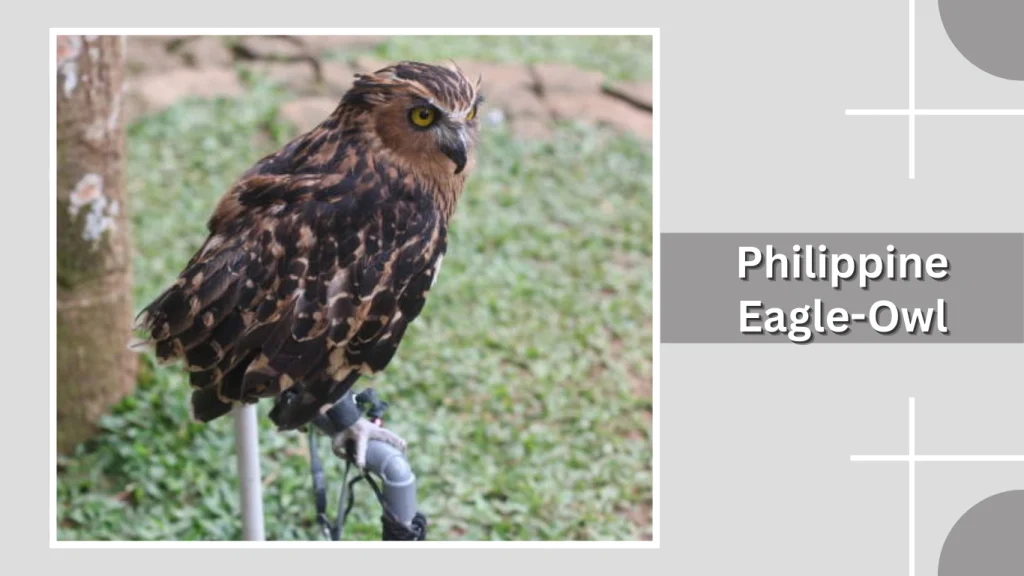
The Philippine Eagle-Owl is a large, powerful owl endemic to the Philippines. It is a rare and secretive species, closely tied to intact forest habitats, and is considered threatened due to deforestation and habitat loss.
Identification
- Large owl, about 16–18 inches (40–46 cm) long
- Prominent ear tufts
- Dark brown plumage with buff and white streaking
- Pale facial disc with darker borders
- Bright yellow eyes and strong talons
Habitat and Behaviors
Philippine Eagle-Owls inhabit lowland and montane forests, forest edges, and wooded ravines. They are primarily nocturnal and spend daylight hours roosting high in dense trees. These owls are solitary and territorial, relying on stealth and surprise when hunting. Due to their elusive nature and declining numbers, they are rarely seen in the wild and are considered indicators of healthy forest ecosystems.
Diet and Lifecycle
Their diet includes small mammals, birds, reptiles, amphibians, and large insects. Breeding is believed to occur during the dry season, with nests placed in large tree cavities. Females usually lay 1–2 eggs, and both parents help care for the young. Chicks develop slowly and remain dependent for an extended period. Philippine Eagle-Owls are long-lived, though exact lifespan data in the wild is limited.
22. Spectacled Owl

The Spectacled Owl is a distinctive tropical owl named for the bold facial markings that resemble a pair of spectacles. Native to Central and South America, it is a powerful nocturnal hunter of dense rainforest habitats.
Identification
- Medium to large owl, about 18–20 inches (46–51 cm) long
- Dark brown upper body
- Pale yellowish facial markings forming a “spectacle” pattern
- White throat patch contrasting with darker chest
- Large dark brown eyes
Habitat and Behaviors
Spectacled Owls inhabit tropical rainforests, lowland forests, swamps, and wooded river edges. They prefer dense, mature forests and are mostly nocturnal, becoming active shortly after sunset. These owls are solitary and territorial, often remaining hidden high in the canopy during the day. Their calls are deep and resonant, carrying long distances through the forest at night.
Diet and Lifecycle
Their diet includes small mammals such as rodents and bats, as well as birds, reptiles, amphibians, and large insects. Breeding usually occurs in the dry season, with nests located in large tree cavities. Females typically lay 1–2 eggs. Chicks develop slowly and may remain dependent on parents for several months. Spectacled Owls can live over 20 years in suitable environments.
23. Powerful Owl
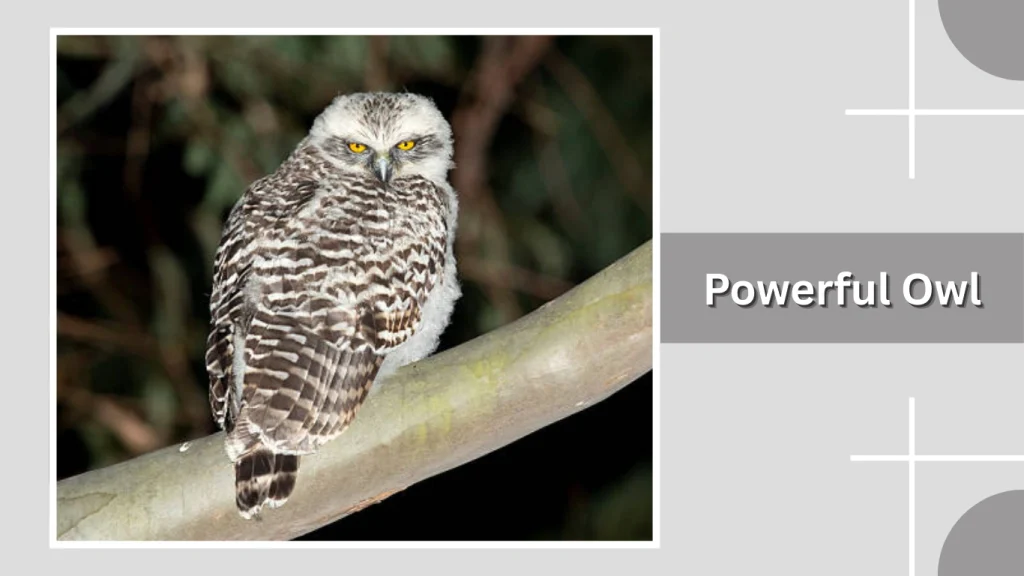
The Powerful Owl is Australia’s largest owl and a dominant nocturnal predator. Known for its deep, booming call and imposing size, it plays a crucial role in controlling populations of arboreal mammals within forest ecosystems.
Identification
- Large owl, about 18–26 inches (45–66 cm) long
- Dark brown to charcoal plumage with pale barring
- Rounded head with no ear tufts
- Large yellow eyes
- Thick legs and powerful talons
Habitat and Behaviors
Powerful Owls inhabit tall eucalyptus forests, woodlands, and forested river valleys. They require large territories with mature trees for nesting and roosting. These owls are strictly nocturnal and are most active after dusk. During the day, they roost high in dense foliage. Powerful Owls are solitary or live in breeding pairs and are known for their deep, resonant hoots that can travel long distances.
Diet and Lifecycle
Their diet mainly consists of medium-sized mammals such as possums, gliders, and flying foxes, as well as birds. Breeding occurs in late autumn to winter, with nests located in large tree hollows. Females usually lay 1–2 eggs. Chicks develop slowly and may remain dependent on parents for up to a year. Powerful Owls can live 20 years or more in the wild.
24. Strix Owl

Strix Owls are a group of medium to large forest owls found across Europe, Asia, and the Americas. This genus includes many well-known species such as the Tawny Owl and Barred Owl, and is characterized by rounded heads and a strong association with wooded habitats.
Identification
- Medium to large owls, size varies by species
- Rounded head with no ear tufts
- Broad wings and sturdy build
- Plumage typically brown, gray, or barred for camouflage
- Dark eyes adapted for low-light hunting
Habitat and Behaviors
Strix Owls primarily inhabit dense forests, woodlands, and mixed woodland edges. They are mostly nocturnal and rely on stealth, perching quietly before ambushing prey. These owls are highly territorial and often remain within the same forest area year-round. They are known for deep, resonant hoots and calls used to defend territory and communicate with mates. During the day, they roost in dense foliage or tree cavities.
Diet and Lifecycle
Their diet includes small to medium-sized mammals, birds, amphibians, reptiles, and insects. Breeding typically occurs in spring, with nests placed in tree cavities, broken trunks, or abandoned nests. Females usually lay 2–4 eggs. Chicks fledge after about 4–6 weeks but remain dependent on adults for some time. Many Strix Owls can live 10–20 years in the wild.
25. Brown Wood Owl
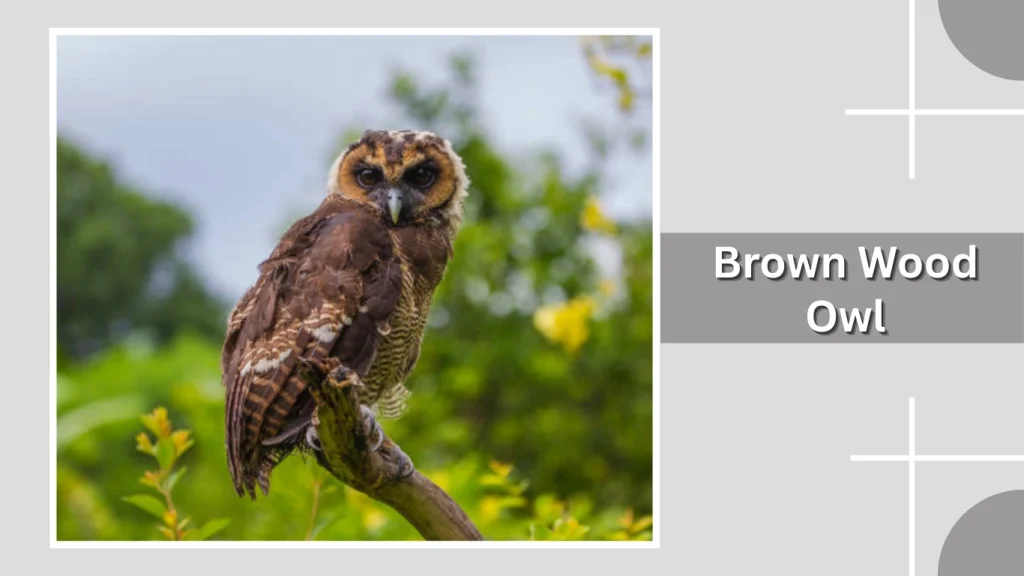
The Brown Wood Owl is a large, forest-dwelling owl native to South and Southeast Asia. It is known for its deep hooting calls and preference for dense woodland habitats, where it remains well hidden during daylight hours.
Identification
- Large owl, about 18–20 inches (45–50 cm) long
- Rounded head with no ear tufts
- Brown to dark brown plumage with pale streaking
- Dark eyes set in a pale facial disc
- Broad wings and short tail
Habitat and Behaviors
Brown Wood Owls inhabit tropical and subtropical forests, wooded hills, plantations, and forest edges. They are strictly nocturnal and spend the day roosting quietly in dense foliage. These owls are solitary and territorial, often remaining within the same forest area year-round. Their deep, resonant hoots are commonly heard at night and are used to communicate territory boundaries.
Diet and Lifecycle
Their diet includes small mammals, birds, reptiles, amphibians, and large insects. Breeding typically occurs in late winter or spring, with nests placed in tree cavities or broken trunks. Females usually lay 1–3 eggs. Chicks fledge after about 5–6 weeks but remain dependent on parents for several months. Brown Wood Owls can live 15 years or more in suitable habitats.
FAQs
1. Are owls active only at night?
Most owls are nocturnal, but some species, such as the Snowy Owl and Burrowing Owl, are active during the day, especially at dawn and dusk.
2. How do owls hunt so quietly?
Owls have specialized feathers with soft, fringed edges that reduce sound during flight. This allows them to approach prey silently without being detected.
3. What do owls eat?
Owls primarily eat small mammals like mice and voles, but their diet can also include birds, insects, reptiles, amphibians, and fish, depending on the species.
4. How good is an owl’s vision and hearing?
Owls have excellent night vision and highly sensitive hearing. Their ears are often asymmetrical, helping them pinpoint the exact location of prey even in complete darkness.
5. How long do owls live?
Lifespan varies by species, but many owls live between 10 and 20 years in the wild. Larger species often live longer, especially in protected habitats.