



Parrots are among the most colorful and intelligent birds on Earth, known for their strong personalities, social nature, and remarkable communication skills. Found in tropical and subtropical regions worldwide, these birds range from tiny parakeets to large macaws. This guide explores 25 common types of parrots, highlighting their identification, habitats, behaviors, diets, and life cycles to help readers better understand and appreciate these fascinating birds.
1. African Grey Parrot

The African Grey Parrot is one of the most intelligent and recognizable parrot species in the world. Native to Africa, it is famous for its exceptional ability to mimic human speech and sounds, as well as its strong emotional intelligence and social nature.
Identification
- Medium-sized parrot, about 12–14 inches (30–36 cm) long
- Predominantly gray feathers with a scalloped pattern
- Bright red tail feathers
- Black, curved beak
- Pale yellow to white eyes in adults
Habitat and Behaviors
African Grey Parrots naturally inhabit tropical rainforests, forest edges, and savannas. They are highly social birds that live in flocks and rely heavily on interaction and communication. In the wild, they spend much of their day foraging, flying between feeding sites, and vocalizing. These parrots are known for forming strong bonds with mates or caregivers and can exhibit stress-related behaviors if socially isolated or mentally understimulated.
Diet and Lifecycle
Their natural diet consists of fruits, nuts, seeds, berries, and leafy vegetation. In captivity, they require a balanced diet that includes pellets, fresh fruits, vegetables, and occasional nuts. African Grey Parrots have a long lifespan, often living 40–60 years or more with proper care. They reach sexual maturity around 4–6 years of age and typically lay 2–4 eggs per breeding cycle.
2. Macaw

Macaws are large, vibrant parrots known for their brilliant plumage, strong beaks, and long tails. Native to Central and South America, they are among the most recognizable parrots in the world and are admired for their intelligence, social behavior, and striking appearance.
Identification
- Large parrots ranging from 20–40 inches (50–100 cm) in length, depending on species
- Brightly colored feathers, often blue, red, yellow, or green
- Long, tapered tail feathers
- Large, powerful curved beak
- Bare facial skin with fine feather lines
Habitat and Behaviors
Macaws inhabit tropical rainforests, river basins, woodlands, and savannas. They are highly social birds that live in pairs or large flocks and are often seen flying long distances in search of food. Macaws are intelligent and curious, using their strong beaks to climb, crack nuts, and manipulate objects. They communicate through loud calls, which help maintain contact with flock members across dense forests. Strong pair bonds are common, and mates often remain together for life.
Diet and Lifecycle
In the wild, macaws feed on fruits, nuts, seeds, berries, and vegetation, often visiting clay licks to help neutralize toxins from unripe fruits. They reach sexual maturity between 3–6 years of age. Breeding pairs nest in tree cavities, where females typically lay 2–3 eggs. Macaws are long-lived birds and can survive 50 years or more with proper care and favorable conditions.
3. Cockatoo

Cockatoos are expressive, intelligent parrots best known for their movable crests and strong social bonds. Native mainly to Australia, Indonesia, and nearby islands, they are highly interactive birds with bold personalities and a strong need for companionship.
Identification
- Medium to large parrots, about 12–26 inches (30–66 cm) long
- Mostly white, black, gray, or pink plumage
- Distinctive erectile crest that rises with excitement or alarm
- Strong, curved beak designed for cracking seeds and nuts
- Dark eyes, often expressive and alert
Habitat and Behaviors
Cockatoos inhabit forests, woodlands, mangroves, grasslands, and even urban areas. They are extremely social and often seen in noisy flocks. These parrots are known for their playful, affectionate behavior but can become loud or destructive if bored or isolated. Cockatoos are strong flyers and capable climbers, using their beaks and feet to explore their surroundings. Many species form long-term pair bonds and rely heavily on social interaction.
Diet and Lifecycle
Their natural diet includes seeds, nuts, fruits, berries, roots, and occasionally insects. Some species forage on the ground, while others feed in trees. Cockatoos reach sexual maturity between 4–7 years of age. They nest in tree cavities, where females usually lay 1–3 eggs. With proper care, cockatoos are long-lived and may survive 40–70 years, making them one of the longest-living parrot groups.
4. Budgerigar

The Budgerigar, often called the budgie, is one of the smallest and most popular parrot species in the world. Native to Australia, it is widely kept as a companion bird due to its friendly nature, intelligence, and ability to mimic sounds and words.
Identification
- Small parrot measuring about 7–8 inches (18–20 cm) long
- Slim body with a long, tapered tail
- Natural coloration is green and yellow with black markings
- Curved beak and dark eyes
- Domestic varieties appear in many colors, including blue, white, and yellow
Habitat and Behaviors
Budgerigars naturally inhabit open grasslands, scrublands, and lightly wooded areas. They are highly social birds that live in large flocks and are constantly on the move in search of food and water. Budgies are active, playful, and curious, often engaging in vocalizations, climbing, and social interactions. In captivity, they thrive on companionship and mental stimulation and may become stressed if kept alone for long periods.
Diet and Lifecycle
In the wild, budgerigars feed mainly on grass seeds, grains, and vegetation. In captivity, a balanced diet includes seeds, pellets, fresh vegetables, and occasional fruit. Budgerigars mature quickly, often reaching breeding age within a year. Females usually lay 4–6 eggs in nest cavities. With proper care, budgerigars typically live 7–15 years.
5. Amazon Parrot

Amazon Parrots are medium to large parrots known for their bold personalities, strong voices, and vivid green plumage accented with bright colors. Native to Central and South America and the Caribbean, they are popular both in the wild and as companion birds.
Identification
- Medium to large parrots, about 10–18 inches (25–45 cm) long
- Predominantly green feathers with colorful markings on the head, wings, or tail
- Short, square-shaped tail
- Strong, curved beak
- Bright, expressive eyes
Habitat and Behaviors
Amazon Parrots inhabit tropical rainforests, woodlands, mangroves, and savannas. They are highly social birds that live in pairs or flocks and are known for their loud vocalizations, especially at dawn and dusk. Amazons are confident, intelligent, and playful, often displaying energetic behaviors such as dancing, climbing, and vocal mimicry. In captivity, they require regular interaction and mental stimulation to prevent boredom and behavioral issues.
Diet and Lifecycle
Their natural diet includes fruits, nuts, seeds, berries, blossoms, and leafy vegetation. In captivity, they thrive on a balanced diet of pellets, fresh vegetables, fruits, and limited seeds. Amazon Parrots reach sexual maturity between 3–5 years of age. Females typically lay 2–4 eggs in tree cavities. With proper care, many Amazon Parrots live 40–60 years or longer.
6. Eclectus Parrot
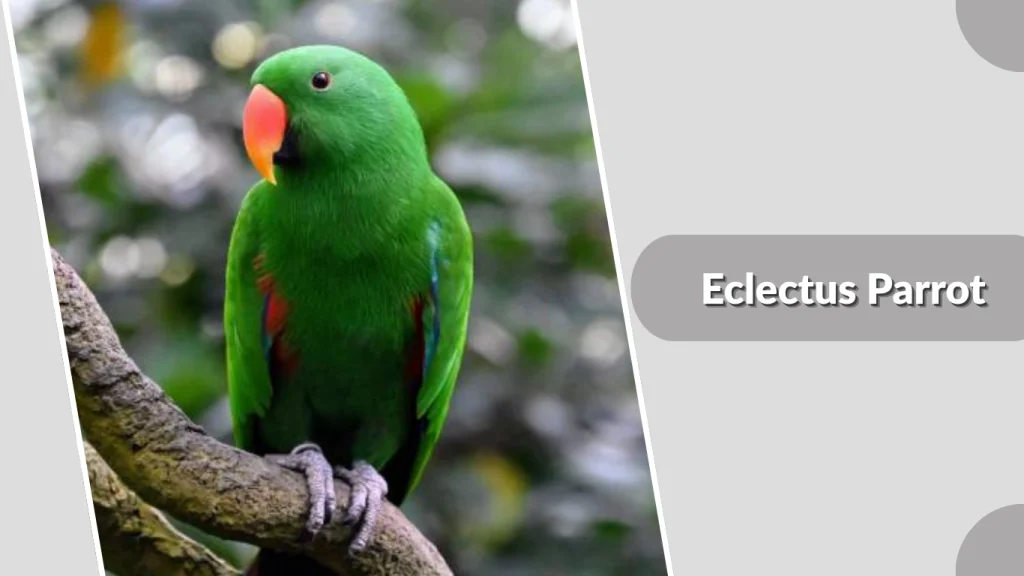
The Eclectus Parrot is a striking and unique parrot species known for its dramatic sexual dimorphism, where males and females have completely different colors. Native to the rainforests of New Guinea, northeastern Australia, and nearby islands, it is admired for its calm temperament and intelligence.
Identification
- Medium-sized parrot, about 17–20 inches (43–51 cm) long
- Males are bright green with blue and red accents
- Females are deep red or maroon with blue and purple markings
- Short, square tail
- Large, curved beak adapted for fruit-based diets
Habitat and Behaviors
Eclectus Parrots inhabit dense tropical rainforests, forest edges, and wooded islands. They are less noisy than many other parrots and are known for their calm, observant nature. In the wild, they spend much of their time foraging in the forest canopy and may travel long distances between feeding areas. Eclectus Parrots are intelligent and social but tend to be more independent compared to other parrot species, forming strong but less demanding bonds.
Diet and Lifecycle
Their natural diet consists mainly of fruits, berries, seeds, nuts, blossoms, and leafy vegetation. They require a diet high in fresh fruits and vegetables. Eclectus Parrots reach sexual maturity around 3–5 years of age. Females usually lay 2 eggs in tree hollows. With proper care, Eclectus Parrots can live 30–50 years or more.
7. Lovebird

Lovebirds are small, colorful parrots best known for their strong pair bonds and affectionate behavior. Native to Africa and nearby islands, they get their name from the close, devoted relationships they form with their mates.
Identification
- Small parrots measuring about 5–7 inches (13–18 cm) long
- Stocky body with a short tail
- Bright plumage in green, yellow, orange, blue, or peach tones
- Strong, curved beak relative to body size
- White eye-ring present in some species
Habitat and Behaviors
Lovebirds inhabit forests, savannas, scrublands, and agricultural areas. They are highly social birds that live in pairs or small flocks and are rarely seen alone. Lovebirds are active, playful, and curious, often engaging in climbing, chewing, and vocalizing. They form strong emotional bonds and may become stressed or depressed if kept without companionship. In the wild, they are agile fliers and spend much of their time foraging or interacting with flock members.
Diet and Lifecycle
Their natural diet includes seeds, fruits, berries, blossoms, and vegetation. In captivity, a healthy diet consists of pellets, fresh vegetables, fruits, and limited seeds. Lovebirds reach sexual maturity around 9–12 months of age. Females typically lay 3–6 eggs in nest cavities. With proper care, lovebirds usually live 10–15 years, though some may live longer.
8. Conure

Conures are a diverse group of small to medium-sized parrots known for their playful personalities, bright colors, and social nature. Native to Central and South America, they are popular companion birds due to their intelligence and affectionate behavior.
Identification
- Small to medium parrots, about 10–20 inches (25–50 cm) long
- Slender body with a long, tapered tail
- Bright plumage in green, yellow, red, blue, or orange
- Curved beak of moderate size
- Alert eyes with expressive facial features
Habitat and Behaviors
Conures inhabit tropical forests, woodlands, savannas, and forest edges. They are highly social birds that live in pairs or flocks and are often heard before they are seen due to their loud calls. Conures are energetic, curious, and enjoy climbing, chewing, and interacting with their environment. In captivity, they thrive on social interaction and mental stimulation but can become noisy or destructive if bored or neglected.
Diet and Lifecycle
In the wild, conures feed on fruits, seeds, nuts, berries, blossoms, and occasional insects. A balanced captive diet includes pellets, fresh vegetables, fruits, and limited seeds. Conures typically reach sexual maturity between 1–3 years of age. They nest in tree cavities, where females lay 3–5 eggs. With proper care, conures can live 20–30 years, depending on the species.
9. Ring-necked Parakeet

The Ring-necked Parakeet, also known as the Rose-ringed Parakeet, is a slender, elegant parrot widely distributed across Africa and South Asia. It is well known for its adaptability, intelligence, and ability to thrive in both wild and urban environments.
Identification
- Medium-sized parrot, about 14–16 inches (35–40 cm) long
- Slim body with a long, pointed tail
- Green plumage with a lighter underside
- Adult males have a black and rose-colored neck ring
- Red beak with a darker lower mandible
Habitat and Behaviors
Ring-necked Parakeets inhabit forests, woodlands, savannas, farmlands, and urban parks. They are highly social birds, often seen in noisy flocks. These parakeets are agile fliers and skilled climbers, frequently foraging in trees and crops. They are intelligent and curious, capable of learning words and sounds. Their adaptability has allowed them to establish feral populations in many cities around the world.
Diet and Lifecycle
Their natural diet includes seeds, fruits, berries, nuts, blossoms, and agricultural grains. In captivity, they do well on a diet of pellets, fresh vegetables, fruits, and limited seeds. Ring-necked Parakeets reach sexual maturity around 2–3 years of age. Females usually lay 2–4 eggs in tree cavities. With proper care, they can live 25–30 years or more.
10. Quaker Parrot

The Quaker Parrot, also known as the Monk Parakeet, is a small, intelligent parrot native to South America. It is well known for its strong personality, social nature, and unique habit of building large communal stick nests.
Identification
- Small to medium parrot, about 11–12 inches (28–30 cm) long
- Bright green upper body with a pale gray chest and face
- Long, pointed tail
- Sturdy, curved beak
- Compact, stocky build
Habitat and Behaviors
Quaker Parrots inhabit woodlands, savannas, grasslands, and urban areas. Unlike most parrots, they build large, multi-chambered nests made of sticks rather than nesting in tree cavities. They are highly social and live in colonies, often communicating with constant chatter. Quakers are energetic, curious, and confident birds. In captivity, they are known for being affectionate and talkative but may become territorial if not properly socialized.
Diet and Lifecycle
In the wild, Quaker Parrots feed on seeds, fruits, berries, grains, and vegetation. In captivity, a healthy diet includes pellets, fresh vegetables, fruits, and limited seeds. They reach sexual maturity around 1–3 years of age. Females typically lay 4–8 eggs per clutch. With good care, Quaker Parrots can live 20–30 years.
11. Caique

Caiques are small, energetic parrots known for their playful, clown-like behavior and bold personalities. Native to the Amazon Basin in South America, they are often described as one of the most entertaining parrot species due to their constant activity and curiosity.
Identification
- Small to medium parrots, about 9–10 inches (23–25 cm) long
- Stocky body with a short, square tail
- Bright green wings with white or yellow belly
- Black head with yellow or orange neck and thighs (depending on species)
- Strong, curved beak
Habitat and Behaviors
Caiques inhabit tropical rainforests, forest edges, and lowland jungles. They are highly active birds that prefer hopping, climbing, and rolling over flying long distances. Caiques are extremely social and thrive on interaction, often engaging in playful wrestling and acrobatic movements. They are intelligent and curious but can be stubborn or assertive, requiring consistent training and enrichment in captivity.
Diet and Lifecycle
Their natural diet includes fruits, seeds, berries, nuts, and vegetation. In captivity, they require a balanced diet of pellets, fresh fruits, vegetables, and occasional nuts. Caiques typically reach sexual maturity between 2–4 years of age. Females usually lay 2–4 eggs in tree cavities. With proper care, caiques can live 25–35 years.
12. Pionus Parrot

Pionus Parrots are calm, gentle parrots known for their quiet nature and affectionate temperament. Native to Central and South America, they are often recommended for people who want a less noisy but still intelligent and social parrot.
Identification
- Medium-sized parrots, about 10–12 inches (25–30 cm) long
- Stocky body with a short tail
- Mostly blue, green, or bronze plumage depending on species
- Bright red or pink undertail feathers
- Bare eye-ring and stout curved beak
Habitat and Behaviors
Pionus Parrots inhabit tropical forests, woodlands, and mountainous regions. They are generally shy in the wild and tend to move quietly through forest canopies. Compared to many parrots, Pionus species are less demanding and more reserved, though they still form strong bonds with their flock or caregivers. They are intelligent and curious but usually calmer and less prone to screaming.
Diet and Lifecycle
In the wild, Pionus Parrots feed on fruits, seeds, nuts, berries, and vegetation. In captivity, they thrive on a diet of pellets, fresh vegetables, fruits, and limited seeds. They reach sexual maturity around 3–5 years of age. Females typically lay 3–5 eggs in tree cavities. With proper care, Pionus Parrots can live 25–40 years.
13. Senegal Parrot

The Senegal Parrot is a small, charming parrot native to West Africa. It is well known for its quiet nature, intelligence, and strong bond with its owner, making it a popular choice for companion bird enthusiasts.
Identification
- Small parrot measuring about 9–10 inches (23–25 cm) long
- Gray head with a short, stocky body
- Green wings and back
- Yellow, orange, or red V-shaped patch on the chest
- Dark beak and expressive eyes
Habitat and Behaviors
Senegal Parrots inhabit open woodlands, savannas, and forest edges. In the wild, they are often seen in pairs or small flocks and are generally less noisy than many other parrot species. They are intelligent, curious, and playful, enjoying problem-solving activities and interaction. In captivity, they tend to bond closely with one person and appreciate consistent handling and mental stimulation, though they can be shy around strangers.
Diet and Lifecycle
Their natural diet includes fruits, seeds, nuts, blossoms, and vegetation. In captivity, they require a balanced diet of pellets, fresh vegetables, fruits, and occasional seeds. Senegal Parrots reach sexual maturity around 2–3 years of age. Females usually lay 2–4 eggs in tree cavities. With proper care, Senegal Parrots typically live 25–30 years.
14. Monk Parakeet

The Monk Parakeet, also known as the Quaker Parrot, is a small, highly adaptable parrot native to South America. It is famous for its intelligence, social behavior, and unusual nest-building habits, which set it apart from most other parrots.
Identification
- Small to medium parrot, about 11–12 inches (28–30 cm) long
- Bright green upper body with a pale gray face and chest
- Long, pointed tail
- Strong, curved beak
- Compact and sturdy build
Habitat and Behaviors
Monk Parakeets inhabit woodlands, grasslands, agricultural areas, and urban environments. Unlike most parrots that nest in tree cavities, they build large communal stick nests that can house multiple pairs. They are extremely social and vocal, often seen in flocks. Monk Parakeets are intelligent, energetic, and confident, thriving on interaction and mental stimulation. Their adaptability has allowed them to establish feral populations in many parts of the world.
Diet and Lifecycle
In the wild, their diet consists of seeds, fruits, berries, grains, and vegetation. In captivity, they do best on a diet of pellets supplemented with fresh vegetables, fruits, and limited seeds. Monk Parakeets reach sexual maturity around 1–3 years of age. Females typically lay 4–8 eggs per clutch. With proper care, they can live 20–30 years.
15. Alexandrine Parakeet

The Alexandrine Parakeet is a large, elegant parrot native to South and Southeast Asia. It is admired for its impressive size, intelligence, and calm demeanor, and is often considered a more relaxed relative of the Ring-necked Parakeet.
Identification
- Large parakeet measuring about 22–24 inches (55–60 cm) long
- Mostly green plumage with a bluish sheen
- Prominent red shoulder patches
- Long, tapered tail
- Adult males have a black and pink neck ring
Habitat and Behaviors
Alexandrine Parakeets inhabit forests, woodlands, agricultural areas, and open countryside. They are social birds, often seen in pairs or small flocks. Compared to Ring-necked Parakeets, they tend to be calmer and less vocal, though still playful and intelligent. They are strong fliers and capable climbers, using their beaks to assist with movement. In captivity, they benefit from spacious enclosures and regular interaction.
Diet and Lifecycle
Their natural diet includes fruits, seeds, nuts, grains, berries, and vegetation. In captivity, they require a balanced diet of pellets, fresh vegetables, fruits, and limited seeds. Alexandrine Parakeets reach sexual maturity around 3–4 years of age. Females typically lay 2–4 eggs in tree cavities. With proper care, they can live 30–40 years or longer.
16. Hyacinth Macaw

The Hyacinth Macaw is the largest flying parrot in the world and is famous for its deep cobalt-blue plumage and gentle personality. Native to central South America, it is both iconic and endangered due to habitat loss and illegal trade.
Identification
- Very large parrot measuring about 39–40 inches (100 cm) long
- Brilliant cobalt-blue feathers
- Bright yellow skin around the eyes and base of the beak
- Extremely strong, curved black beak
- Long tail and broad wings
Habitat and Behaviors
Hyacinth Macaws inhabit open woodlands, palm savannas, river edges, and wetlands. They are highly social birds, usually seen in pairs or small family groups. These macaws are intelligent, calm, and affectionate, forming strong lifelong pair bonds. They rely heavily on specific palm species for nesting and food, making them vulnerable to environmental changes. In the wild, they spend much of the day flying long distances between feeding and nesting sites.
Diet and Lifecycle
Their diet mainly consists of hard palm nuts, seeds, fruits, and vegetation, which they crack open using their powerful beaks. Hyacinth Macaws reach sexual maturity around 6–7 years of age. Females usually lay 1–2 eggs in tree cavities. They are slow breeders and can live 50–60 years or more under proper care, contributing to their conservation challenges.
17. Scarlet Macaw

The Scarlet Macaw is one of the most vibrant and recognizable parrots in the world, known for its bold red, yellow, and blue plumage. Native to Central and South America, it is a symbol of tropical rainforests and is admired for its intelligence and social nature.
Identification
- Large parrot measuring about 32–36 inches (81–91 cm) long
- Bright red body with yellow and blue wing feathers
- Long, pointed tail feathers
- Large, pale-colored curved beak
- Bare white facial skin with small feather lines
Habitat and Behaviors
Scarlet Macaws inhabit tropical rainforests, river edges, and wooded savannas. They are highly social birds that live in pairs or flocks and are often seen flying above the forest canopy. These macaws are loud, confident, and intelligent, using strong vocalizations to communicate over long distances. They form strong lifelong pair bonds and spend much of their time foraging, flying, and interacting with their mates or flock members.
Diet and Lifecycle
Their natural diet includes fruits, nuts, seeds, berries, and leaves. Scarlet Macaws often visit clay licks to neutralize toxins found in unripe fruits. They reach sexual maturity around 4–6 years of age and nest in tree cavities. Females typically lay 2–3 eggs. With proper care and protection, Scarlet Macaws can live 40–50 years or more.
18. Blue-and-yellow Macaw

The Blue-and-yellow Macaw is a large, eye-catching parrot known for its vivid blue wings, golden-yellow chest, and friendly nature. Native to South America, it is one of the most commonly recognized macaws and is popular both in the wild and in aviculture.
Identification
- Large parrot measuring about 30–34 inches (76–86 cm) long
- Bright blue upper wings and back
- Golden-yellow chest and underside
- Green forehead blending into blue crown
- Large black curved beak and white facial skin with black feather lines
Habitat and Behaviors
Blue-and-yellow Macaws inhabit tropical rainforests, river edges, palm swamps, and open woodlands. They are highly social birds, typically seen in pairs or small flocks. These macaws are strong fliers and travel long distances daily in search of food. They are intelligent, curious, and vocal, using loud calls to communicate. In captivity, they are known for being affectionate and playful but require significant space, enrichment, and social interaction to stay healthy.
Diet and Lifecycle
Their natural diet includes fruits, nuts, seeds, berries, and vegetation. They also visit clay licks to help neutralize toxins from their diet. Blue-and-yellow Macaws reach sexual maturity around 4–6 years of age. Females usually lay 2–3 eggs in tree cavities. With proper care and protection, they can live 40–60 years or longer.
19. Sun Conure

The Sun Conure is a small, brilliantly colored parrot known for its fiery plumage and energetic personality. Native to northeastern South America, it is especially popular as a companion bird due to its playful nature and strong bond with humans.
Identification
- Small parrot measuring about 11–12 inches (28–30 cm) long
- Bright yellow body with orange and red on the face and chest
- Green and blue wing feathers
- Black curved beak
- White eye-ring with dark, expressive eyes
Habitat and Behaviors
Sun Conures inhabit tropical forests, savannas, and woodland edges. They are highly social birds that live in flocks and are almost constantly vocal, using loud calls to communicate. Sun Conures are energetic, curious, and affectionate, often seeking attention and interaction. In captivity, they require frequent social engagement and mental stimulation, as boredom can lead to excessive screaming or destructive behavior.
Diet and Lifecycle
Their natural diet consists of fruits, seeds, nuts, berries, blossoms, and vegetation. In captivity, they thrive on a balanced diet of pellets, fresh fruits, vegetables, and limited seeds. Sun Conures reach sexual maturity around 2–3 years of age. Females typically lay 3–5 eggs in tree cavities. With proper care, Sun Conures generally live 20–30 years.
20. Green-cheeked Conure

The Green-cheeked Conure is a small, affectionate parrot known for its playful personality and quieter nature compared to many other conures. Native to South America, it is a popular companion bird due to its manageable size and strong social bonds.
Identification
- Small parrot measuring about 10 inches (25 cm) long
- Mostly green body with gray chest and scalloped markings
- Blue flight feathers and maroon tail
- Dark head with white eye-ring
- Curved black beak
Habitat and Behaviors
Green-cheeked Conures inhabit forests, woodlands, and forest edges, often in small flocks. They are active, curious, and enjoy climbing, playing, and exploring their surroundings. Compared to other conures, they are relatively quiet, though still capable of loud calls. In captivity, they are affectionate and enjoy close interaction, often bonding strongly with their owners. They require regular mental stimulation and social time to remain happy and well-adjusted.
Diet and Lifecycle
In the wild, their diet includes fruits, seeds, berries, blossoms, and occasional insects. In captivity, they do best on a balanced diet of pellets, fresh vegetables, fruits, and limited seeds. Green-cheeked Conures reach sexual maturity around 1–3 years of age. Females usually lay 4–6 eggs in nest cavities. With proper care, they can live 20–30 years.
21. Blue-crowned Conure

The Blue-crowned Conure is a medium-sized parrot known for its intelligence, strong talking ability, and social personality. Native to South America, it is one of the most adaptable conure species and thrives in both wild and urban environments.
Identification
- Medium-sized parrot measuring about 14–16 inches (36–41 cm) long
- Green body with a distinctive blue crown on the head
- Long, pointed tail
- White eye-ring
- Curved black beak
Habitat and Behaviors
Blue-crowned Conures inhabit forests, woodlands, savannas, and city parks. They are highly social birds that live in flocks and communicate with loud, frequent calls. Known for their intelligence, they are excellent mimics and can learn a large vocabulary. In captivity, they are affectionate and playful but require consistent interaction and mental stimulation to prevent boredom-related behaviors.
Diet and Lifecycle
Their natural diet includes fruits, seeds, nuts, berries, and vegetation. In captivity, a healthy diet consists of pellets, fresh vegetables, fruits, and limited seeds. Blue-crowned Conures reach sexual maturity around 2–3 years of age. Females typically lay 3–5 eggs in tree cavities. With proper care, they can live 30 years or more.
22. Rainbow Lorikeet

The Rainbow Lorikeet is a brilliantly colored parrot famous for its vivid plumage and energetic personality. Native to Australia and nearby islands, it is easily recognized and often seen in large, noisy flocks.
Identification
- Medium-sized parrot measuring about 10–12 inches (25–30 cm) long
- Bright blue head with red beak
- Green wings and back
- Yellow chest with orange and red bands
- Slim body with a short tail
Habitat and Behaviors
Rainbow Lorikeets inhabit coastal forests, woodlands, mangroves, gardens, and urban parks. They are highly social and often gather in large flocks, especially around flowering trees. These parrots are extremely active, playful, and vocal. They are strong fliers and spend much of their time feeding, chasing one another, and vocalizing. In urban areas, they have adapted well to human presence and are commonly seen in backyards and city parks.
Diet and Lifecycle
Unlike most parrots, Rainbow Lorikeets primarily feed on nectar and pollen, using their specialized brush-tipped tongues. They also eat fruits, blossoms, and occasional seeds. In captivity, they require a specialized nectar-based diet. They reach sexual maturity around 2–3 years of age. Females typically lay 2 eggs in tree hollows. With proper care, Rainbow Lorikeets can live 20–30 years.
23. Indian Ringneck Parrot
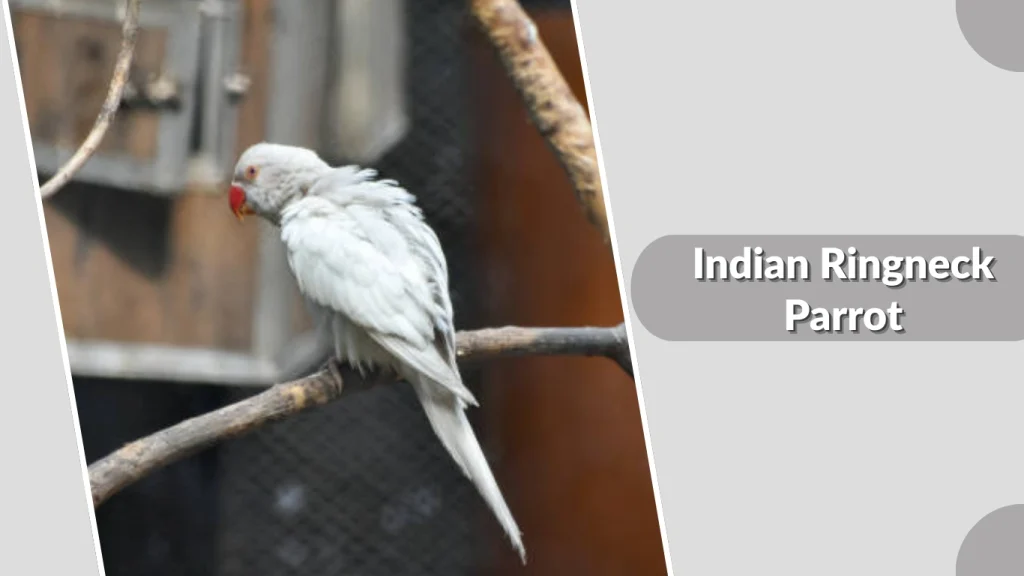
The Indian Ringneck Parrot is a graceful, intelligent parrot native to the Indian subcontinent. It is widely admired for its talking ability, alert nature, and adaptability, making it one of the most popular parakeets worldwide.
Identification
- Medium-sized parrot measuring about 14–17 inches (35–43 cm) long
- Slender body with a long, pointed tail
- Green plumage, with many color mutations in captivity
- Adult males have a black and rose-colored neck ring
- Red curved beak
Habitat and Behaviors
Indian Ringneck Parrots inhabit forests, woodlands, farmlands, and urban areas. They are social birds often found in flocks and are strong, agile fliers. Known for their intelligence, they can learn words, phrases, and sounds with clarity. While they can be affectionate, they are also independent and may prefer interaction on their own terms. Regular mental stimulation and training are important to maintain good behavior.
Diet and Lifecycle
Their natural diet includes seeds, fruits, berries, grains, nuts, and blossoms. In captivity, they thrive on a balanced diet of pellets, fresh vegetables, fruits, and limited seeds. Indian Ringnecks reach sexual maturity around 2–3 years of age. Females usually lay 2–4 eggs in tree cavities. With proper care, they can live 25–35 years.
24. Yellow-naped Amazon

The Yellow-naped Amazon is a highly intelligent and vocal parrot known for its strong talking ability and confident personality. Native to Central America, it is one of the most recognizable Amazon parrots and is prized for its expressive nature.
Identification
- Medium to large parrot measuring about 13–15 inches (33–38 cm) long
- Predominantly green plumage
- Distinct yellow patch on the back of the neck (nape)
- Short, square tail
- Strong curved beak and alert orange eyes
Habitat and Behaviors
Yellow-naped Amazons inhabit tropical forests, woodlands, and savannas, often near water sources. They are highly social birds that live in pairs or flocks and are known for loud, clear vocalizations. These parrots are confident, playful, and intelligent, often displaying strong personalities. In captivity, they form close bonds with caregivers but require consistent training and stimulation to prevent dominance or behavioral issues.
Diet and Lifecycle
Their natural diet includes fruits, seeds, nuts, berries, blossoms, and leafy vegetation. In captivity, they do best on a balanced diet of pellets supplemented with fresh vegetables and fruits, with seeds offered in moderation. Yellow-naped Amazons reach sexual maturity around 4–6 years of age. Females typically lay 2–4 eggs in tree cavities. With proper care, they can live 50–60 years or more.
25. Cockatiel

The Cockatiel is a small, friendly parrot known for its expressive crest, gentle nature, and whistling ability. Native to Australia, it is one of the most popular companion birds in the world due to its affectionate personality and ease of care.
Identification
- Small parrot measuring about 12–13 inches (30–33 cm) long
- Slender body with a long tail
- Gray body with white wing patches
- Yellow face with bright orange cheek patches (in males)
- Prominent movable crest on the head
Habitat and Behaviors
Cockatiels inhabit open woodlands, grasslands, scrublands, and semi-arid regions. They are highly social birds that live in flocks and rely on vocalizations to communicate. Cockatiels are gentle, curious, and affectionate, often enjoying close interaction with their owners. They are known for whistling tunes rather than mimicking speech and use crest movements to express mood, such as excitement, fear, or curiosity.
Diet and Lifecycle
In the wild, cockatiels feed on seeds, grains, fruits, and vegetation found on the ground and in low plants. In captivity, a healthy diet includes pellets, fresh vegetables, some fruits, and limited seeds. Cockatiels reach sexual maturity around 6–9 months of age. Females typically lay 4–7 eggs. With proper care, cockatiels commonly live 15–25 years, and sometimes longer.
FAQs
1. How intelligent are parrots compared to other birds?
Parrots are among the most intelligent birds in the world. Many species can solve problems, recognize patterns, use tools, and mimic human speech. Some parrots have cognitive abilities comparable to young children.
2. Do all parrots talk?
Not all parrots can talk, and even among talking species, ability varies by individual. Species like African Grey Parrots, Amazon Parrots, and Ringneck Parakeets are especially known for speech, while others may prefer whistles or sounds.
3. What do parrots eat in the wild?
Parrots mainly eat fruits, seeds, nuts, berries, blossoms, and vegetation. Some species, like lorikeets, specialize in nectar and pollen, while others may occasionally eat insects.
4. How long do parrots usually live?
Parrot lifespans vary widely by species. Smaller parrots may live 10–20 years, while medium and large parrots often live 30–60 years or more with proper care.
5. Are parrots good pets for beginners?
Some parrots, such as cockatiels and budgerigars, are suitable for beginners. Larger parrots require significant time, space, mental stimulation, and long-term commitment, making them better suited for experienced owners.