

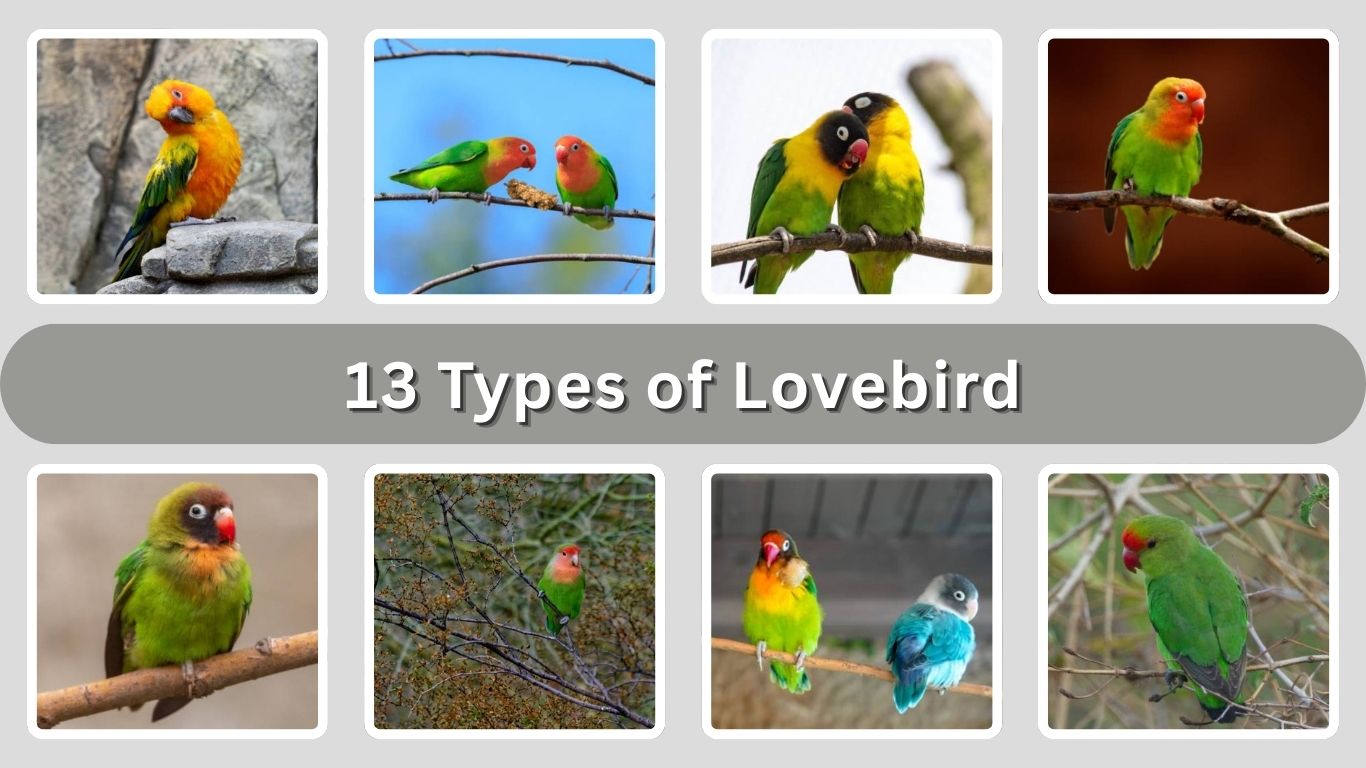
Lovebirds are small, colorful parrots famous for their strong pair bonds, playful personalities, and affectionate behavior. Native mainly to Africa and nearby islands such as Madagascar, these birds live in a wide range of habitats, from dry savannas and woodlands to dense rainforests. There are several distinct lovebird species, each with unique colors, behaviors, and habitat preferences. In this guide, you’ll explore different types of lovebirds along with their key identification features and lifestyles.
1. Peach-faced Lovebird

The Peach-faced Lovebird (Agapornis roseicollis) is one of the most popular and easily recognized lovebird species. It is known for its bright green body, peach-pink face, and playful personality. Native to southwestern Africa, this small parrot is highly social, active, and often seen in pairs or small flocks.
Identification
- Bright green body feathers
- Peach to pink face and throat
- Blue rump and tail base
- Pale horn-colored beak
- Small size, about 15–18 cm long
Habitat
Peach-faced lovebirds naturally live in dry woodlands, savannas, scrublands, and areas near water sources. They often nest in tree cavities, rocky crevices, or even structures close to human settlements.
Behaviors
They are very social, energetic, and affectionate birds. Peach-faced lovebirds form strong pair bonds, communicate with high-pitched chirps, and are known for playful climbing and chewing behavior.
Diet
Their natural diet includes seeds, grasses, berries, fruits, and leafy vegetation. They may also eat cultivated crops and occasionally insects.
Lifespan
In the wild, peach-faced lovebirds usually live 10–15 years. In captivity, with proper care, they commonly live 15–20 years or longer.
2. Fischer’s Lovebird
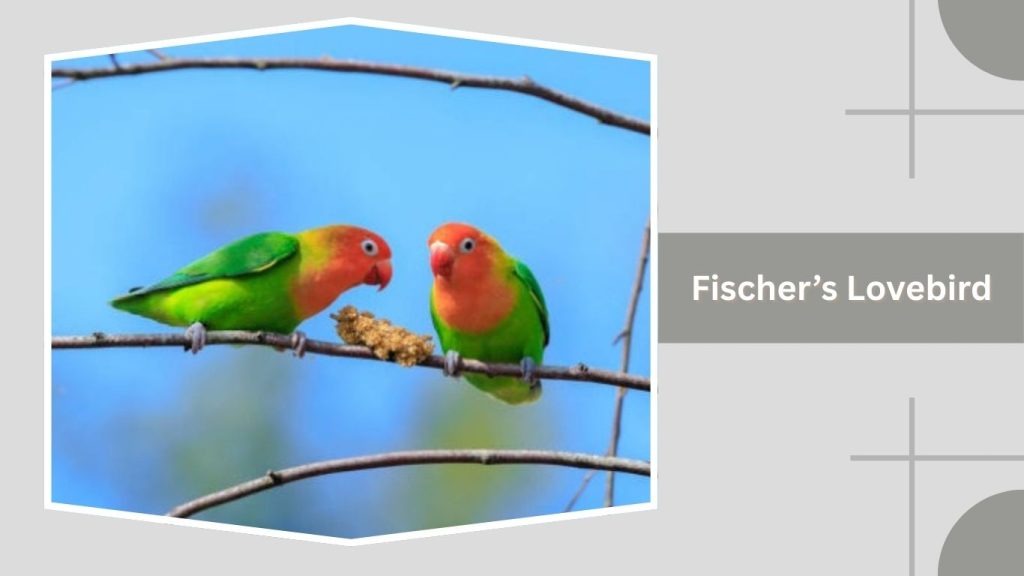
The Fischer’s Lovebird (Agapornis fischeri) is a colorful and lively lovebird species recognized for its bright orange face and contrasting green and blue feathers. Native to north-central Tanzania, this small parrot is highly social, active, and often kept as a companion bird.
Identification
- Bright green body
- Orange to red face and throat
- White eye ring
- Blue lower back and tail
- Red beak
- Small size, about 14–15 cm long
Habitat
Fischer’s lovebirds inhabit savannas, open woodlands, grasslands, and agricultural areas near water sources. They commonly nest in tree cavities and sometimes in buildings.
Behaviors
They are very social and usually live in small flocks. Fischer’s lovebirds are playful, vocal, and active, often seen climbing, chewing, and interacting closely with their partners.
Diet
Their diet consists mainly of seeds, grasses, fruits, berries, and cultivated crops such as millet and corn. They may occasionally eat insects.
Lifespan
In the wild, Fischer’s lovebirds typically live 10–15 years. In captivity, they often live 15–20 years or more with proper care.
3. Masked Lovebird
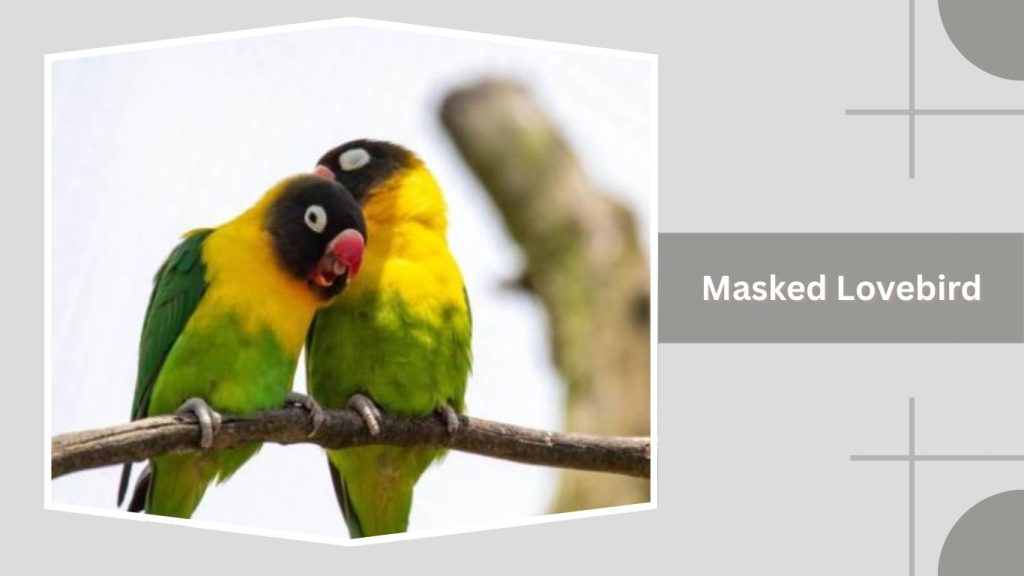
The Masked Lovebird (Agapornis personatus), also known as the Yellow-collared Lovebird, is a striking species with a dark head and bright yellow chest. Native to northern Tanzania, this lovebird is popular for its bold coloration, energetic behavior, and strong pair bonds.
Identification
- Black to dark brown head (mask)
- Bright yellow collar and upper chest
- Green body
- Blue rump and tail base
- Red beak with white eye ring
- Small size, about 14–15 cm long
Habitat
Masked lovebirds live in savannas, open woodlands, and grasslands near water. They often nest in tree holes and sometimes in buildings or termite mounds.
Behaviors
They are social, active, and noisy birds, commonly seen in pairs or small flocks. Masked lovebirds are playful climbers and strong chewers, using constant chatter to communicate.
Diet
Their diet includes seeds, grasses, fruits, berries, buds, and cultivated grains.
Lifespan
In the wild, masked lovebirds usually live 10–15 years. In captivity, they commonly live 15–20 years with good care.
4. Nyasa Lovebird

The Nyasa Lovebird (Agapornis lilianae), also called Lilian’s Lovebird, is a small, colorful lovebird native to southeastern Africa. It is admired for its soft peach face, green body, and gentle, social nature. This species is closely related to Fischer’s lovebird but is rarer in the wild.
Identification
- Bright green body
- Peach to salmon-colored face and throat
- White eye ring
- Blue rump
- Red beak
- Small size, about 13–14 cm long
Habitat
Nyasa lovebirds inhabit mopane woodlands, savannas, and riverine forests, usually close to water sources. They often nest in tree cavities.
Behaviors
They are social birds that live in pairs or small flocks. Nyasa lovebirds are active, vocal, and affectionate, frequently seen feeding, preening, and resting close to their partners.
Diet
Their diet consists mainly of grass seeds, grains, fruits, berries, and leafy vegetation.
Lifespan
In the wild, Nyasa lovebirds usually live around 10–15 years. In captivity, they may live 15–20 years with proper care.
5. Black-cheeked Lovebird
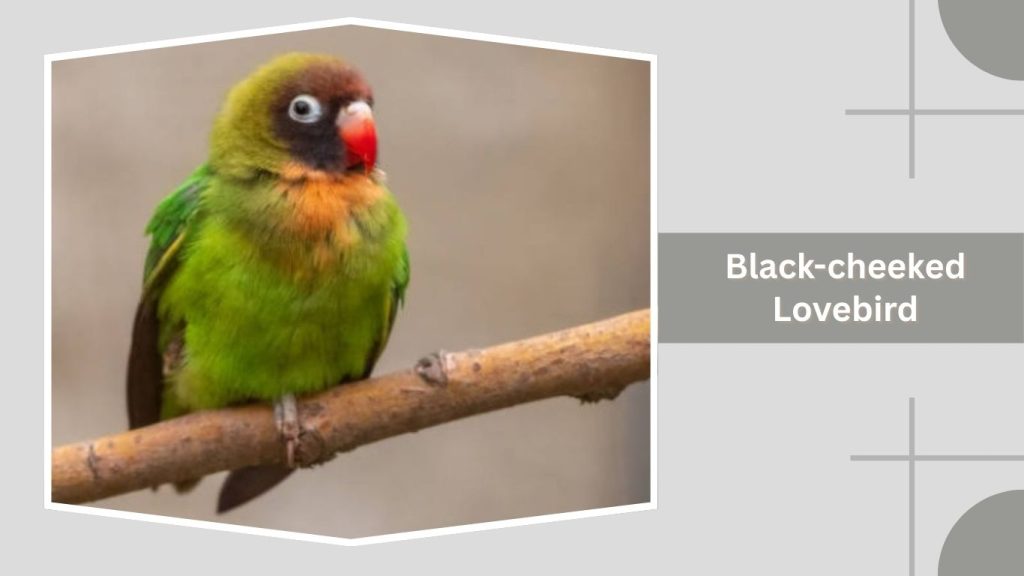
The Black-cheeked Lovebird (Agapornis nigrigenis) is a small and colorful lovebird known for its dark cheek patches and bright green body. Native to a limited region of southwestern Zambia, it is one of the rarest lovebird species in the wild.
Identification
- Bright green body
- Blackish-brown cheeks and face mask
- Reddish-orange throat
- White eye ring
- Red beak
- Small size, about 13–14 cm long
Habitat
Black-cheeked lovebirds inhabit dry woodlands, scrublands, and areas near seasonal rivers. They depend heavily on nearby water sources and nest in tree cavities.
Behaviors
They are social and usually seen in small flocks or pairs. Black-cheeked lovebirds are active, noisy, and affectionate, often engaging in mutual preening and constant vocal communication.
Diet
Their diet mainly includes grass seeds, grains, berries, fruits, and cultivated crops.
Lifespan
In the wild, black-cheeked lovebirds generally live 10–15 years. In captivity, they often live 15–20 years with proper care.
6. Lillian’s Lovebird
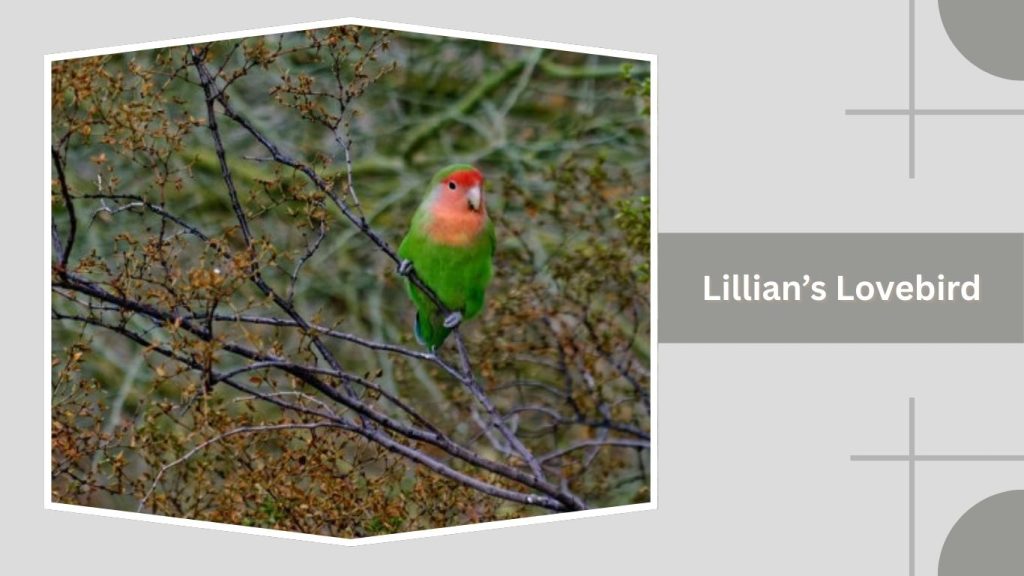
The Lillian’s Lovebird (Agapornis lilianae), also known as the Nyasa Lovebird, is a small, colorful parrot native to parts of southeastern Africa. It is known for its peach-colored face, bright green body, and gentle, social behavior. This species is rarer than some other lovebirds and is often found near river systems.
Identification
- Bright green plumage
- Peach to salmon-colored face and throat
- Distinct white eye ring
- Blue rump
- Red beak
- Small size, about 13–14 cm long
Habitat
Lillian’s lovebirds inhabit mopane woodlands, savannas, and riverine forests, usually near permanent water sources. They nest in tree cavities.
Behaviors
They are highly social birds, living in pairs or small flocks. Lillian’s lovebirds are active, vocal, and affectionate, often seen preening each other and feeding together.
Diet
Their natural diet includes grass seeds, grains, fruits, berries, and leafy vegetation.
Lifespan
In the wild, they typically live around 10–15 years. In captivity, they may live 15–20 years with proper care.
7. Madagascar Lovebird
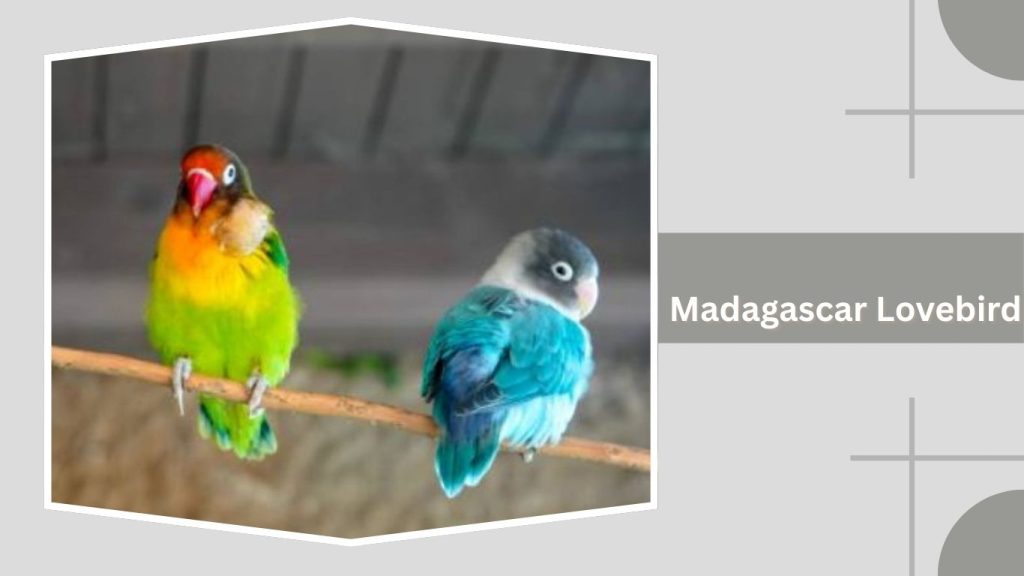
The Madagascar Lovebird (Agapornis canus), also known as the Grey-headed Lovebird, is the only lovebird species native to Madagascar. It is smaller and more softly colored than most other lovebirds, making it unique within the group.
Identification
- Males have a gray head and neck with a green body
- Females are mostly green with no gray head
- Pale horn-colored beak
- Dark eyes
- Small size, about 13–14 cm long
Habitat
Madagascar lovebirds live in open forests, savannas, scrublands, and agricultural areas. They are often found near rice fields, wooded valleys, and forest edges.
Behaviors
They are social birds, usually seen in pairs or small flocks. Madagascar lovebirds are gentle, active, and constantly moving through vegetation while feeding and calling softly.
Diet
Their diet mainly consists of grass seeds, rice, fruits, berries, and leafy plants. They often feed on the ground and in low vegetation.
Lifespan
In the wild, Madagascar lovebirds generally live 10–15 years. In captivity, they may live 15–20 years with good care.
8. Red-headed Lovebird
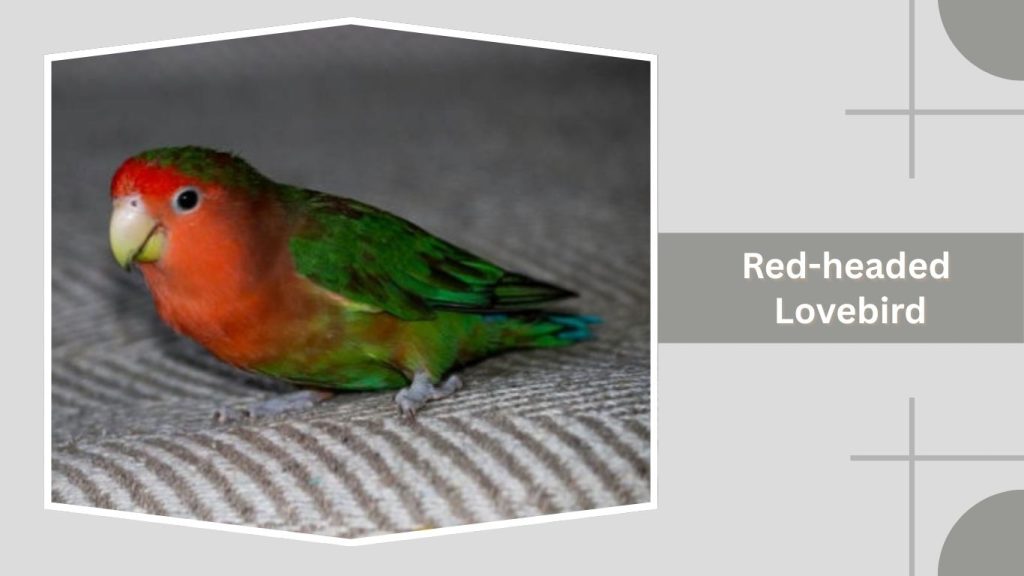
The Red-headed Lovebird (Agapornis pullarius), also known as the Red-faced Lovebird, is a vibrant African lovebird species recognized for its bright red face. It is one of the few lovebirds that nest in termite mounds rather than tree cavities.
Identification
- Bright green body
- Brilliant red face and forehead
- Pale blue lower back
- Horn-colored beak
- Small size, about 15 cm long
Habitat
Red-headed lovebirds inhabit lowland forests, savannas, forest edges, and wooded river valleys across central and western Africa.
Behaviors
They are social and active birds, usually seen in pairs or small flocks. This species is a strong flier and is known for nesting in arboreal termite mounds.
Diet
Their diet includes seeds, grasses, fruits, berries, and cultivated crops.
Lifespan
In the wild, red-headed lovebirds typically live 10–15 years. In captivity, they may live 15–20 years with proper care.
9. Abyssinian Lovebird
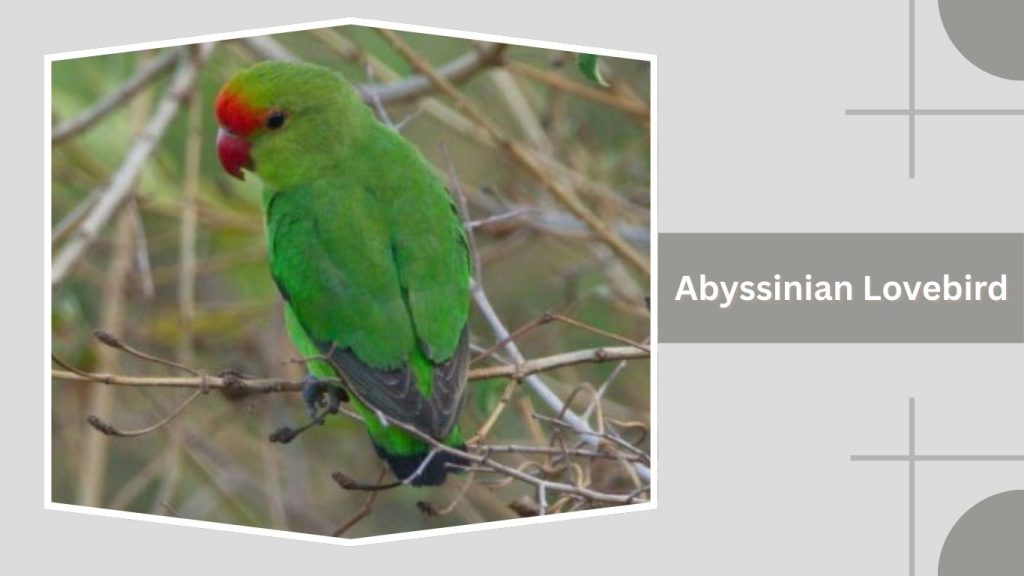
The Abyssinian Lovebird (Agapornis taranta), also called the Black-winged Lovebird, is the largest lovebird species. Native to the highlands of Ethiopia and Eritrea, it is known for its strong flight, quiet nature, and subtle beauty.
Identification
- Mostly green body
- Males have a red forehead and eye ring
- Females are entirely green
- Black wings visible in flight
- Horn-colored beak
- Larger than most lovebirds, about 16–17 cm long
Habitat
Abyssinian lovebirds inhabit highland forests, wooded valleys, and mountain regions. They are often found at higher elevations than other lovebird species.
Behaviors
They are calmer and less noisy than many lovebirds. Usually seen in pairs or small groups, they are strong fliers and spend much time feeding in treetops.
Diet
Their diet includes seeds, berries, fruits, figs, grains, and cultivated crops.
Lifespan
In the wild, Abyssinian lovebirds generally live 10–15 years. In captivity, they may live 15–20 years with good care.
10. Yellow-collared Lovebird
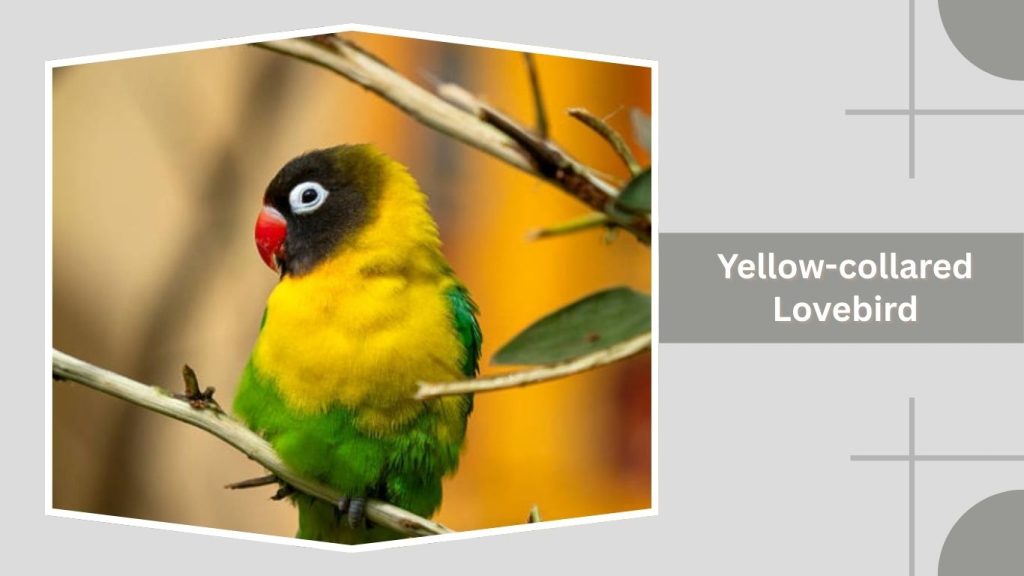
The Yellow-collared Lovebird (Agapornis personatus) is a colorful and energetic lovebird best known for its dark “masked” head and bright yellow chest band. It is native to northern Tanzania and is one of the most popular lovebirds kept worldwide.
Identification
- Black to dark brown head and face
- Bright yellow collar and upper chest
- Green body
- Blue rump and tail base
- Red beak with a clear white eye ring
- Small size, about 14–15 cm long
Habitat
Yellow-collared lovebirds live in savannas, open woodlands, grasslands, and cultivated areas near water. They usually nest in tree cavities and sometimes in buildings.
Behaviors
They are very social, active, and vocal birds, commonly seen in pairs or small flocks. They enjoy climbing, chewing, and close physical contact with their partners.
Diet
Their diet consists mainly of grass seeds, grains, fruits, berries, buds, and cultivated crops.
Lifespan
In the wild, they generally live 10–15 years. In captivity, they often live 15–20 years or more with proper care.
11. Black-winged Lovebird
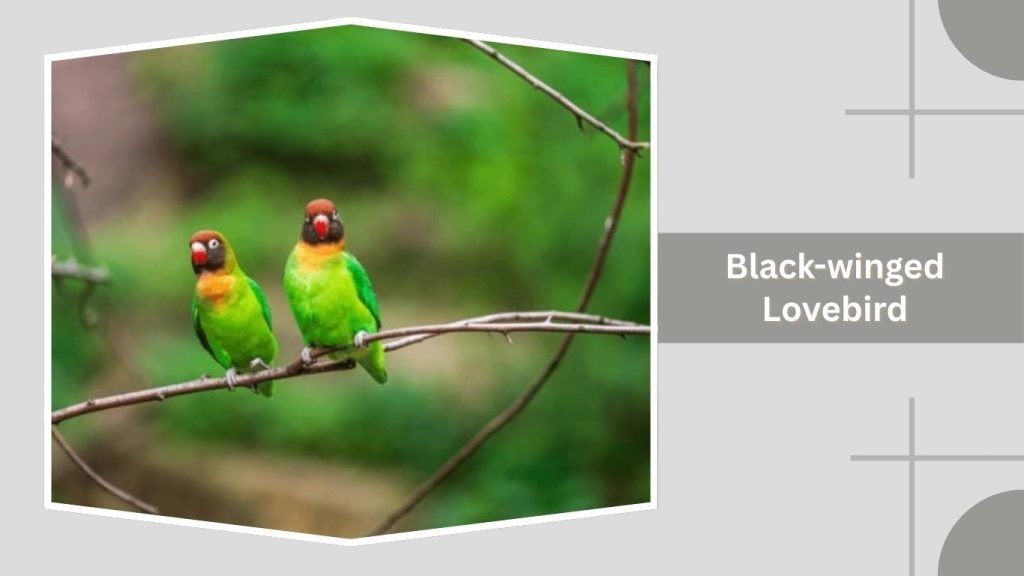
The Black-winged Lovebird (Agapornis taranta), also known as the Abyssinian Lovebird, is the largest species of lovebird. Native to the highlands of Ethiopia and Eritrea, it is admired for its strong flight, quiet voice, and subtle green beauty.
Identification
- Mostly green body
- Males have a red forehead and red eye ring
- Females are entirely green
- Dark to black wings, more visible in flight
- Pale horn-colored beak
- Size about 16–17 cm long
Habitat
Black-winged lovebirds inhabit highland forests, wooded valleys, and mountainous regions. They are often found at elevations higher than other lovebirds.
Behaviors
They are calmer and less noisy than many other lovebirds. Usually seen in pairs or small flocks, they are strong fliers and spend much of their time feeding in trees.
Diet
Their diet includes seeds, fruits, berries, figs, grains, and cultivated crops.
Lifespan
In the wild, black-winged lovebirds usually live 10–15 years. In captivity, they may live 15–20 years with proper care.
12. Grey-headed Lovebird
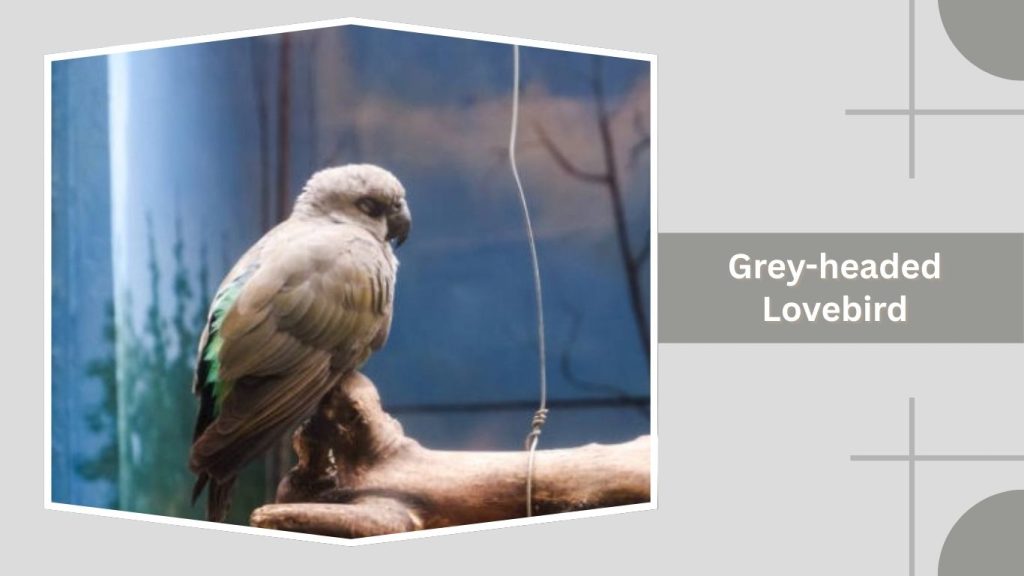
The Grey-headed Lovebird (Agapornis canus), also called the Madagascar Lovebird, is the only lovebird species native to Madagascar. It is smaller and more softly colored than most other lovebirds, making it unique among the group.
Identification
- Males have a pale gray head and throat
- Females are entirely green
- Green body with lighter underparts
- Pale horn-colored beak
- Small size, about 13–14 cm long
Habitat
Grey-headed lovebirds inhabit open forests, savannas, scrublands, and agricultural areas, often near rice fields and forest edges.
Behaviors
They are social, gentle birds, usually seen in pairs or small flocks. Compared to other lovebirds, they are quieter and often feed low in vegetation or on the ground.
Diet
Their diet includes grass seeds, rice, fruits, berries, and leafy vegetation.
Lifespan
In the wild, grey-headed lovebirds usually live 10–15 years. In captivity, they often live 15–20 years with proper care.
13. Swindern’s Lovebird
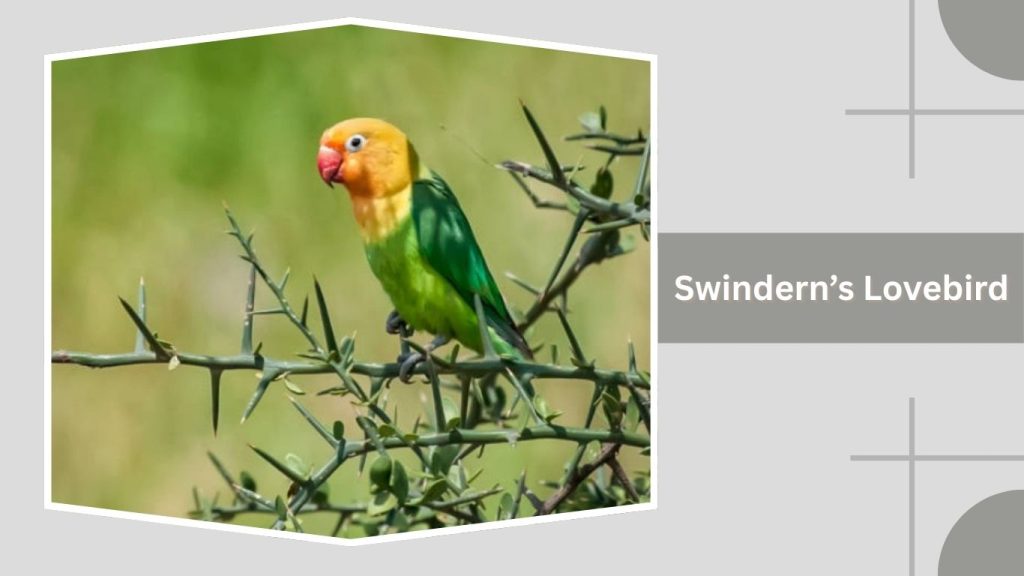
The Swindern’s Lovebird (Agapornis swindernianus), also known as the Black-collared Lovebird, is one of the least known and rarely kept lovebird species. Native to the dense rainforests of central Africa, it is shy, secretive, and very difficult to observe in the wild.
Identification
- Bright green body
- Distinct narrow black collar at the back of the neck
- Grayish-brown head
- Red beak
- Short tail
- Small size, about 13–14 cm long
Habitat
Swindern’s lovebirds inhabit lowland tropical rainforests, forest canopies, and dense woodland areas. They are rarely seen outside deep forest environments.
Behaviors
They are quiet, shy, and usually found in pairs or small groups high in the forest canopy. Swindern’s lovebirds are strong fliers but are much less vocal than other lovebird species.
Diet
Their diet mainly consists of figs, seeds, fruits, berries, and soft plant material found in rainforest trees.
Lifespan
In the wild, Swindern’s lovebirds are believed to live around 10–15 years. They are extremely rare in captivity, so little is known about their captive lifespan.
FAQs
Are lovebirds good pets?
Lovebirds can make good pets for people who can provide daily interaction, social time, and mental stimulation. They are very social and may become lonely or aggressive if kept alone without attention. Pairs are often happier, but single birds can bond closely with their owners.
How long do lovebirds live?
Most lovebird species live about 10–15 years in the wild. In captivity, with proper diet, space, and veterinary care, many lovebirds live 15–20 years, and some may live even longer.
What do lovebirds eat in nature?
In the wild, lovebirds mainly eat seeds, grasses, fruits, berries, buds, and leafy vegetation. Some species also feed on cultivated grains and may occasionally consume insects.
Where are lovebirds naturally found?
Lovebirds are native to Africa and nearby islands such as Madagascar. They live in habitats ranging from dry savannas and woodlands to dense rainforests and highland forests, depending on the species.
Why are they called “lovebirds”?
Lovebirds get their name from their strong pair bonds. Mated pairs spend much of their time sitting close together, preening each other, feeding side by side, and calling to one another when separated.