




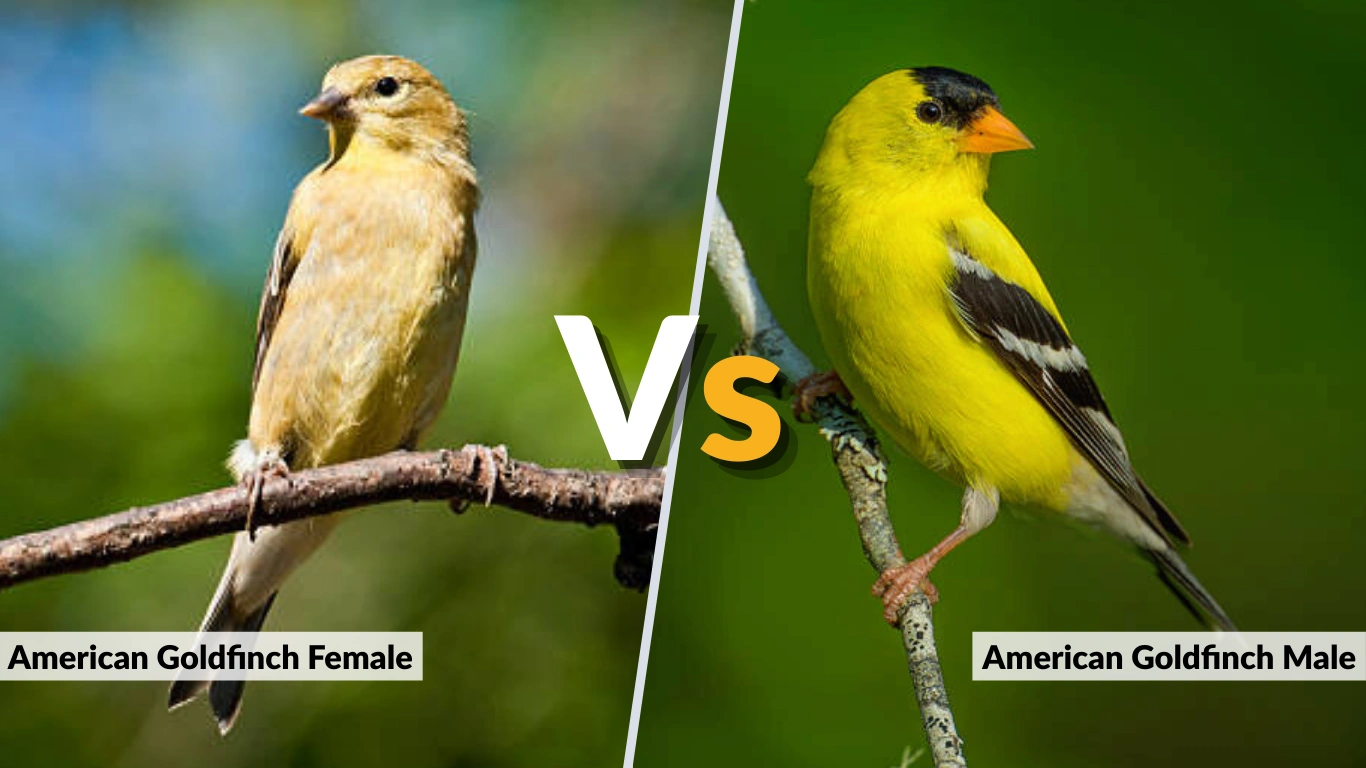
The American goldfinch is one of the most familiar backyard birds in North America, admired for its lively behavior and striking seasonal colors. Yet many birdwatchers struggle to tell the female and male apart, especially outside the breeding season. While males are famous for their bright yellow plumage, females display more subtle tones that blend easily into natural surroundings. Understanding the differences between female and male American goldfinches helps with accurate identification and reveals fascinating insights into their biology, behavior, and seasonal transformations.
American Goldfinch Overview
The American goldfinch (Spinus tristis) is a small finch native to much of North America, commonly found in open fields, meadows, forest edges, and suburban gardens. It is especially well known for its love of thistle and sunflower seeds and for its undulating flight pattern. One unique feature of this species is its strong seasonal molt. Unlike many birds, American goldfinches change their plumage dramatically between winter and summer.
This seasonal transformation plays a major role in how males and females appear. During the breeding season, sexual differences become very obvious, while in winter, the two sexes look far more alike. Because of this, many people misidentify female goldfinches as young birds or even confuse winter males with females. Learning the key differences allows birdwatchers to identify them more confidently throughout the year.
Identification Differences Between Male and Female
At first glance, male and female American goldfinches appear similar in size and shape. However, several visible features help separate them, particularly in spring and summer.
- Overall body color – Males are bright lemon-yellow in breeding season, while females are dull yellow to olive.
- Black cap – Adult breeding males have a clear black patch on the forehead; females do not.
- Wing bar contrast – Males show bolder black-and-white wings; females have softer, grayer markings.
- Underpart shading – Females are paler and more muted underneath.
- Seasonal change – Males undergo dramatic color change; females change only slightly.
- Field identification – Males are easier to spot; females rely more on subtle color and behavior clues.
Male American Goldfinch Characteristics
Breeding Season Appearance
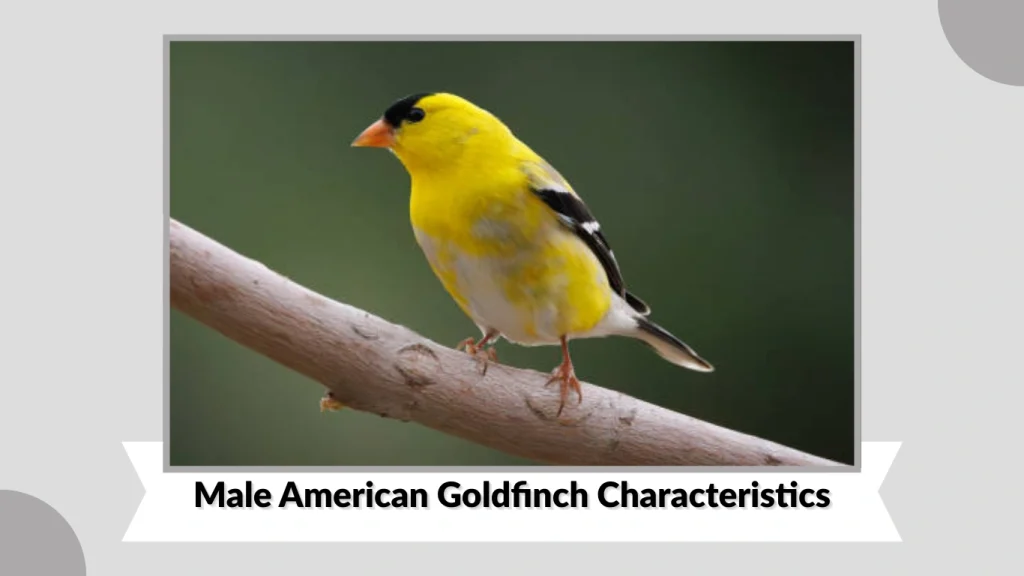
During late spring and summer, the male American goldfinch becomes one of the brightest songbirds in North America. His body turns a vivid, glowing yellow that stands out clearly against green vegetation. The wings are deep black with crisp white wing bars, and the tail is black with small white markings. The most distinctive feature is the black forehead cap, which contrasts sharply with the yellow face and is absent in females.
This bold coloration plays a major role in courtship. Bright plumage helps males attract mates and signals health and genetic fitness. At this time, males are highly visible at feeders, in open fields, and while singing from exposed perches.
Winter Appearance
After the breeding season, male American goldfinches molt into a much duller winter plumage. The bright yellow fades into a soft olive-brown tone, and the black cap disappears. The wings remain dark, but the contrast is reduced. In this phase, males look much more like females, which is why winter identification is more challenging.
Despite the duller colors, males still tend to show slightly brighter yellow hints than females, particularly on the throat and chest. Careful observation is often needed to separate the sexes during colder months.
Physical Features
Aside from color, male goldfinches have the same compact body shape as females, with a short conical bill designed for seed eating. In breeding season, the bill often appears brighter orange, while in winter it becomes darker and less noticeable. Structurally, males may appear slightly more streamlined, but these differences are subtle and unreliable on their own.
Female American Goldfinch Characteristics
Overall Coloration
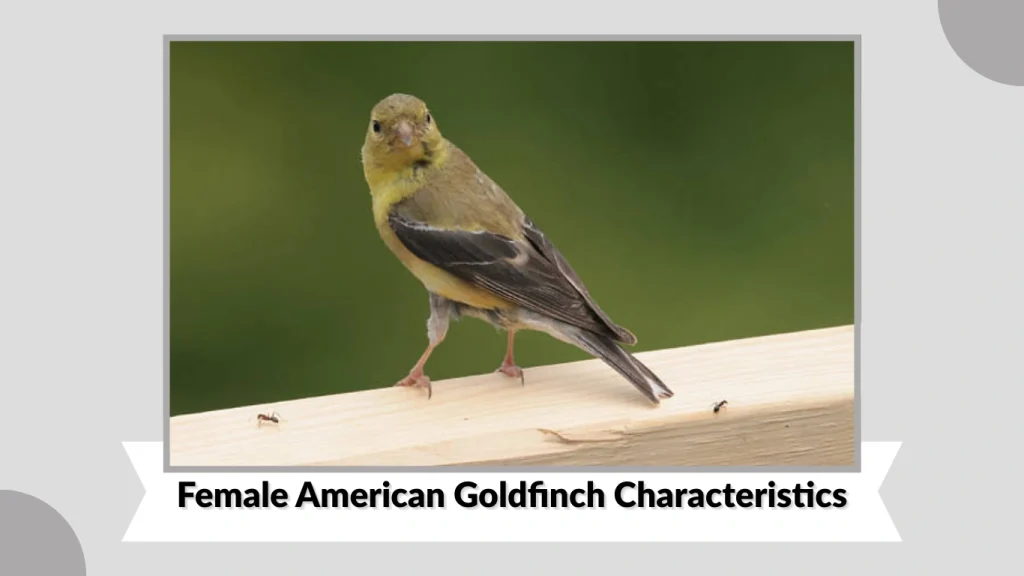
Female American goldfinches are naturally more subdued in appearance. Instead of bright yellow, their bodies are typically olive-yellow to grayish-brown, with a lighter, softer tone on the underside. This muted coloration helps them blend into vegetation, which is especially important during nesting when camouflage reduces the risk of predators.
Even in breeding season, females never reach the intense brightness of males. Their yellow tones remain gentle and earthy, making them less visually striking but well suited for concealment.
Wing and Tail Markings
Females share the same basic wing pattern as males—dark wings with light bars—but the contrast is noticeably weaker. The white wing bars often appear narrower and less defined, and the black areas are more washed with brown or gray. The tail also looks softer in tone, lacking the sharp black appearance of breeding males.
Seasonal Changes
Female goldfinches do molt seasonally, but their change is far less dramatic. In winter, they become slightly grayer and duller, but they do not experience the strong shift seen in males. As a result, females maintain a relatively consistent appearance throughout the year, which can sometimes make them easier to recognize once their general look is familiar.
Female vs Male American Goldfinch: Core Differences
Although male and female American goldfinches share the same body shape, size range, and habitats, their visual roles in nature are very different. These core differences become especially clear during the breeding season, when sexual dimorphism is at its strongest.
- Brightness and saturation – Males display intense lemon-yellow plumage, while females remain soft yellow-olive.
- Head markings – Males develop a black forehead cap; females never do.
- Wing contrast – Males have bolder black-and-white wings; females appear grayer and less defined.
- Seasonal change – Males change dramatically from summer to winter; females change mildly.
- Ecological role of color – Male brightness supports courtship; female dullness supports camouflage.
- Ease of identification – Males are easier to recognize in summer; females require closer inspection.
American Goldfinch Female vs Male Comparison Table
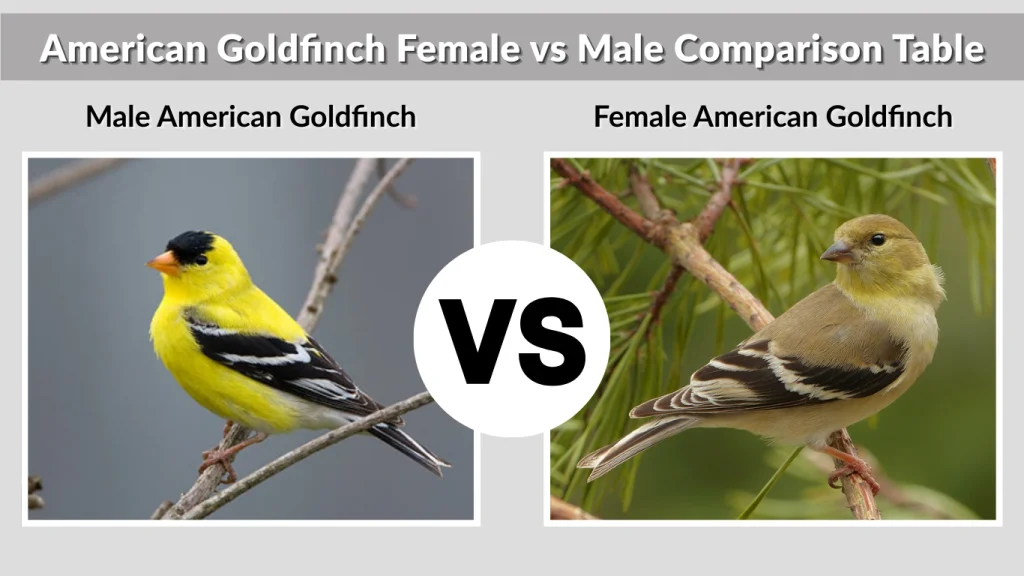
| Feature | Male American Goldfinch | Female American Goldfinch |
| Body color | Bright lemon yellow (breeding) | Dull yellow-olive |
| Forehead | Distinct black cap | No black cap |
| Wing contrast | Sharp black and white | Soft, muted gray-brown |
| Seasonal change | Very strong | Mild |
| Visibility | Highly noticeable | Naturally camouflaged |
| Primary role emphasis | Display and attraction | Nesting and concealment |
Behavioral Differences Between the Sexes
Singing and Courtship Displays
Male American goldfinches are far more vocal than females, especially during the breeding season. Males sing frequently from open perches, producing long, musical phrases that advertise territory and attract mates. They also perform fluttering flight displays, circling and calling near females. Females vocalize as well, but their sounds are usually softer call notes rather than extended songs.
Territorial and Social Behavior
American goldfinches are not strongly territorial compared to many songbirds, but males do show increased assertiveness in breeding season. They may chase rivals away from favored feeding areas or nesting zones. Outside of breeding season, both sexes form loose flocks and feed together peacefully, often mixing with other finch species.
Nesting Responsibilities
Females take the lead in nest building, carefully weaving plant fibers, grasses, and spider silk into compact cup-shaped nests. They also handle almost all incubation duties. Males rarely sit on the nest but play a critical role by feeding the female during incubation and helping provide food once the chicks hatch.
Size and Physical Structure Comparison
Male and female American goldfinches are extremely similar in size. Both typically measure about 4.5 to 5.5 inches in length, with a wingspan of roughly 7.5 to 9 inches. Weight differences are minimal and often impossible to judge in the field.
Structurally, both sexes share the same short, conical bill, compact body, and pointed wings. Any perceived size differences usually result from posture, feather fluffing, or lighting rather than true sexual dimorphism. For this reason, body size should never be the primary method of identifying sex in goldfinches.
Habitat Use and Feeding Habits

Both male and female American goldfinches occupy the same habitats, including meadows, open woodlands, roadsides, wetlands, and suburban gardens. They are especially drawn to areas rich in seed-producing plants such as thistles, sunflowers, and asters.
Their diet is heavily seed-based, even during breeding season, which is unusual among songbirds. Both sexes visit feeders readily, often hanging acrobatically from mesh socks or seed heads. Seasonal differences in feeding behavior are minor, though males may spend more time foraging while females incubate eggs.
Lifecycle Differences Between Male and Female
Although both sexes share the same overall life cycle, their biological roles differ throughout the year.
- Mate selection – Males display and sing; females choose partners.
- Nest construction – Females build the nest almost entirely alone.
- Egg laying and incubation – Handled exclusively by the female.
- Chick feeding – Both sexes feed the young, with males delivering much of the early food.
- Molting patterns – Males undergo a dramatic seasonal molt; females molt more subtly.
- Post-breeding behavior – Both rejoin flocks, but males lose their bright breeding colors.
Why Male American Goldfinches Are Brighter
The bright yellow coloration of male American goldfinches is a classic example of sexual selection. Females are naturally attracted to brighter males because vivid color often indicates good health, strong immunity, and effective foraging ability. Hormonal changes during breeding season intensify yellow pigments, making males highly visible.
Females, on the other hand, benefit from muted coloration. Their olive tones provide camouflage while sitting on nests, helping protect eggs and chicks from predators. Over thousands of generations, these opposing survival strategies shaped the strong visual contrast between the sexes.
Common Identification Mistakes
One of the most common mistakes is assuming that all dull goldfinches are females. In winter, males lose their black cap and bright yellow, causing them to closely resemble females. Juveniles also appear very similar to adult females, adding to the confusion.
Another frequent error is confusing goldfinches with other small finches, such as pine siskins or warblers. Careful attention to wing bars, feeding behavior, and seasonal context greatly improves identification accuracy.
FAQs
How can you tell a male and female American goldfinch apart?
Male American goldfinches are bright yellow in breeding season and have a black forehead cap, while females are dull yellow-olive and lack the black marking. In winter, both sexes become muted, so wing contrast, subtle coloration, and behavior become more important clues.
Do female American goldfinches ever become bright yellow?
Females do become slightly more yellow during breeding season, but they never reach the vivid lemon-yellow shade seen in males. Their softer coloring helps them blend into vegetation, especially while nesting and caring for eggs.
Are male and female American goldfinches the same size?
Yes. Both sexes are nearly identical in size, with only tiny differences in average weight. These differences are too subtle to be useful for field identification, making color, markings, and seasonal appearance far more reliable indicators.
Why are male American goldfinches more colorful?
Brighter plumage helps males attract mates and signal strong genetics. Females remain duller because camouflage increases survival during nesting. These differences are driven by hormones and long-term evolutionary selection.
Is it harder to identify American goldfinches in winter?
Yes. In winter, males lose their bright yellow feathers and black cap, making them resemble females. At this time, careful observation of wing markings, behavior, and slight color differences is necessary for accurate identification.