

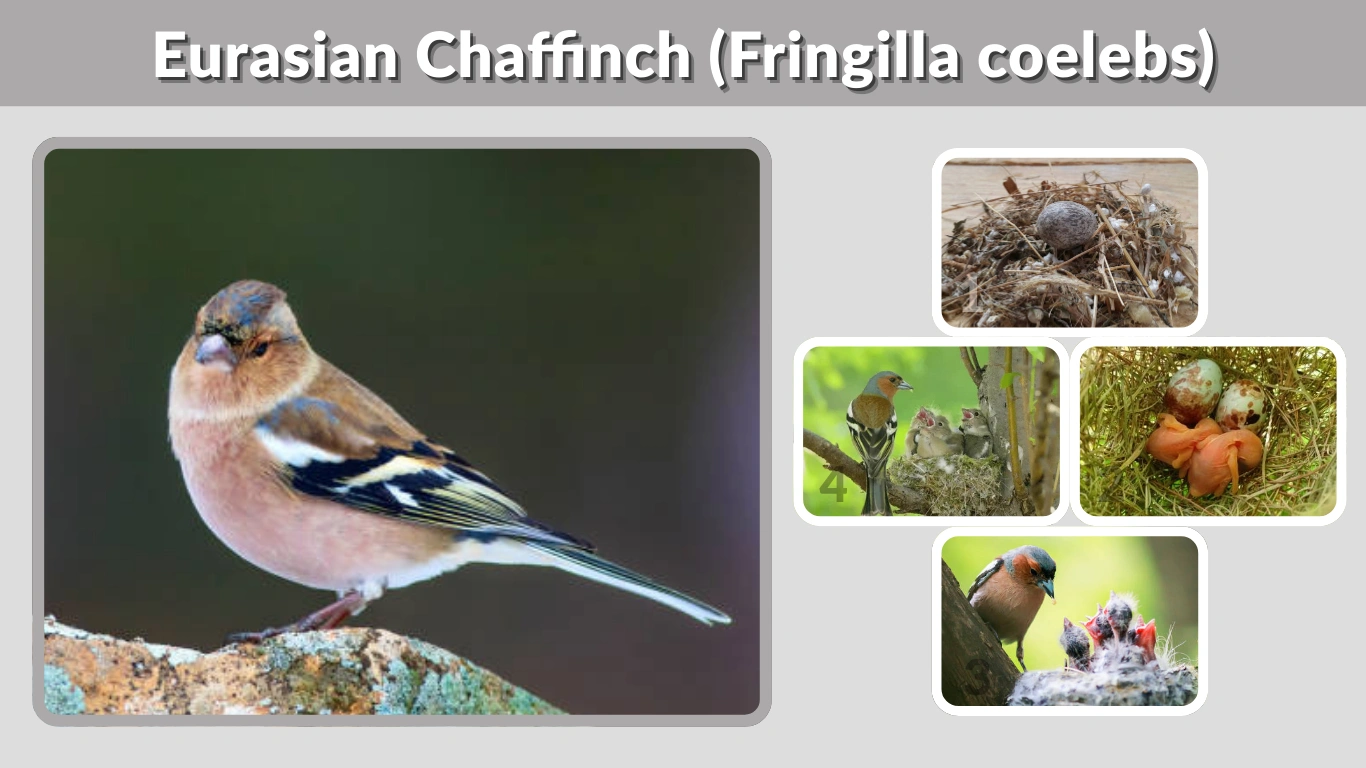
The Eurasian chaffinch is one of the most widespread and recognizable songbirds across Europe, western Asia, and parts of North Africa. Known for its colorful plumage, energetic behavior, and cheerful song, this small finch thrives in forests, farmlands, and even city gardens. Its adaptability has allowed it to flourish in many climates and landscapes. Because of its visibility and ecological importance, the Eurasian chaffinch is a popular subject for birdwatchers, researchers, and nature enthusiasts.
Scientific Classification and Overview
The Eurasian chaffinch belongs to the finch family, Fringillidae, a group known for strong conical beaks adapted for seed eating. Its scientific name, Fringilla coelebs, has an interesting origin linked to early observations of winter behavior, when females were thought to be absent from certain regions.
Within the genus Fringilla, the Eurasian chaffinch is one of the most successful and adaptable species. It shows a remarkable ability to survive in both wild woodlands and human-altered environments, which has helped it maintain strong population numbers over a vast geographic area.
Biologically, the Eurasian chaffinch is considered a model small passerine bird. Its well-studied song patterns, breeding behavior, and migration habits make it one of the most researched finches in the world.
Identification and Physical Characteristics
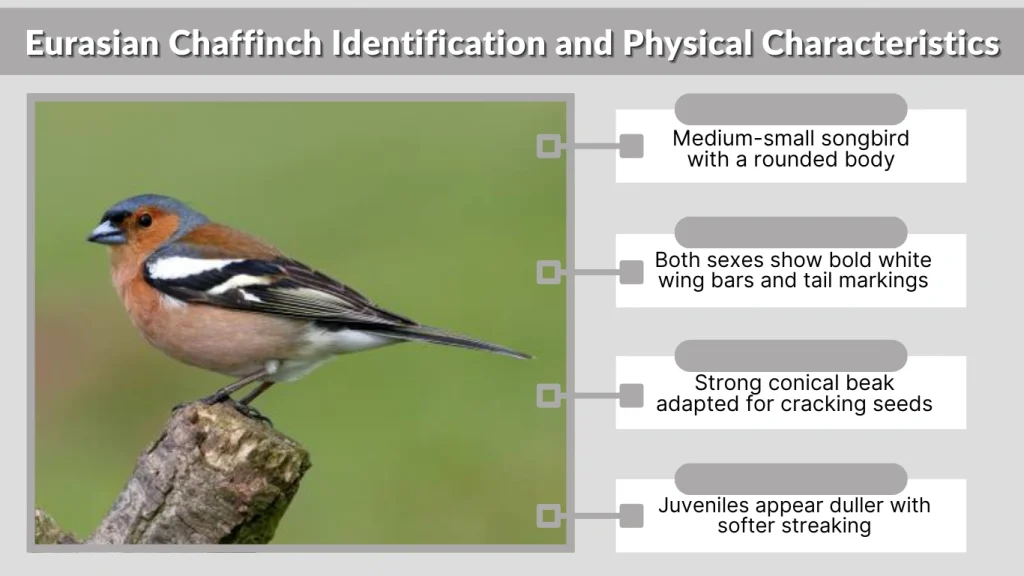
The Eurasian chaffinch is a small, compact bird with strong wings, a short neck, and a thick, pointed beak. It shows clear visual differences between males and females, making identification relatively easy.
- Medium-small songbird with a rounded body
- Adult males have a blue-gray head, rust-colored chest, and greenish back
- Females are mostly brown and gray, offering better natural camouflage
- Both sexes show bold white wing bars and tail markings
- Strong conical beak adapted for cracking seeds
- Juveniles appear duller with softer streaking
- Plumage may appear brighter during the breeding season
Geographic Range and Distribution
The Eurasian chaffinch has one of the widest distributions of any finch species. It is found throughout most of Europe, from the Mediterranean to Scandinavia, and extends across western Asia into Siberia. Populations are also established in parts of North Africa and several Atlantic islands.
In many regions, the Eurasian chaffinch is a year-round resident, while northern populations often migrate southward during winter. These seasonal movements allow the species to exploit food resources and avoid harsh climatic conditions.
The bird has also adapted extremely well to human environments. Today, Eurasian chaffinches are commonly seen in city parks, orchards, farmland edges, and suburban gardens, making them one of the most familiar wild birds to people.
Habitat and Environmental Preferences
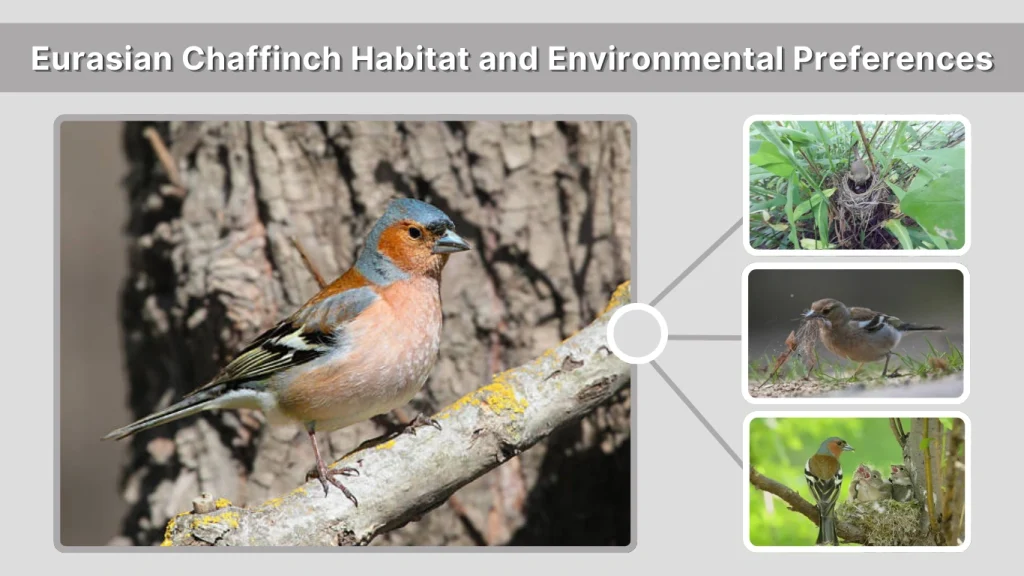
Eurasian chaffinches prefer open woodlands, mixed forests, and forest edges where trees are combined with shrubs and grassy areas. These environments provide both nesting sites and diverse feeding opportunities.
They are especially common in oak forests, pine woodlands, and deciduous groves, but they also thrive in agricultural landscapes, hedgerows, and orchards. Access to seeds, insects, and safe nesting locations is more important than the specific tree species present.
During the breeding season, chaffinches favor areas with dense foliage for nesting. In winter, they often move into more open habitats, including fields and urban spaces, where food is more easily available.
Diet and Feeding Behavior
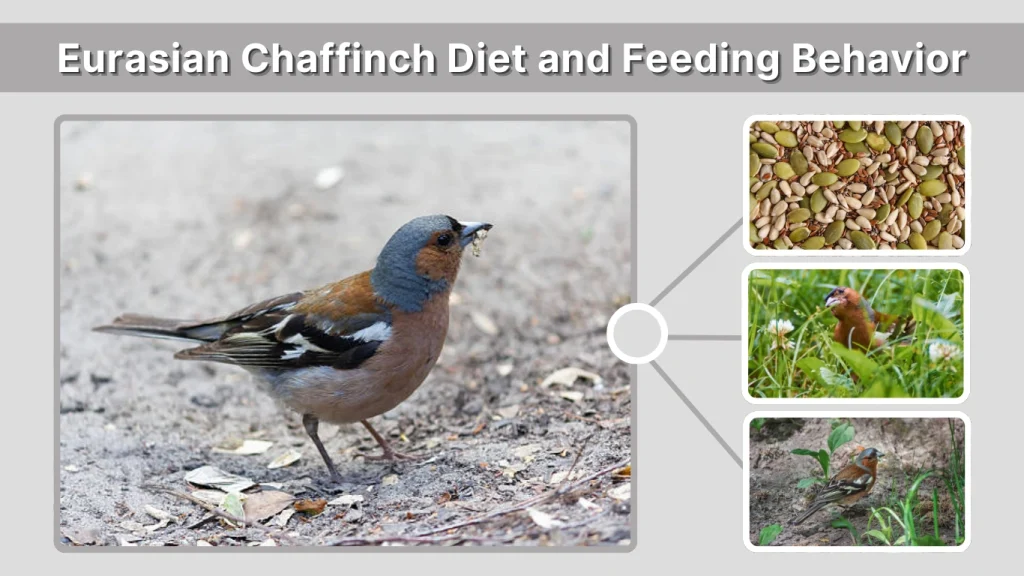
Primary Food Sources
The Eurasian chaffinch is mainly a seed-eating bird, but its diet changes significantly throughout the year. Seeds from grasses, weeds, and trees form the foundation of its nutrition. During spring and summer, insects, caterpillars, and larvae become essential, especially for feeding chicks. Fruits and berries are also eaten when available.
Foraging Behavior
Chaffinches commonly feed on the ground, hopping actively while searching for fallen seeds and insects. They also forage among tree branches and shrubs, picking buds, insects, and small fruits. Seasonal flexibility in feeding behavior is a key factor behind their wide distribution and survival success.
Behavior and Social Structure
The Eurasian chaffinch is an energetic, alert bird known for its distinctive movements and vocalizations. Its behavior changes noticeably between the breeding and non-breeding seasons.
- Active during daylight hours, especially in early morning
- Males become strongly territorial in spring
- Elaborate courtship displays and vocal performances
- Outside breeding season, forms loose feeding flocks
- Wide variety of calls and complex song patterns
- Songs may vary slightly between geographic regions
- Often feeds alongside other finch and sparrow species
Breeding Season and Reproductive Cycle
The breeding season of the Eurasian chaffinch usually begins in early spring, when daylight increases and food becomes more abundant. Males establish territories and use persistent singing to attract females and warn rival males. Courtship includes wing displays, hopping movements, and close following of the female.
Once a pair forms, the female selects a suitable nesting site, often on a tree branch well hidden by leaves. She lays between four and six eggs, typically pale blue with fine reddish markings. Incubation lasts around two weeks and is carried out mainly by the female, while the male provides food.
After hatching, both parents feed the chicks a diet rich in insects and larvae. The young grow rapidly and usually leave the nest after about two weeks, although parents may continue feeding them for several more days as they learn to forage independently.
Nest Construction and Parental Care
Nest Design and Placement
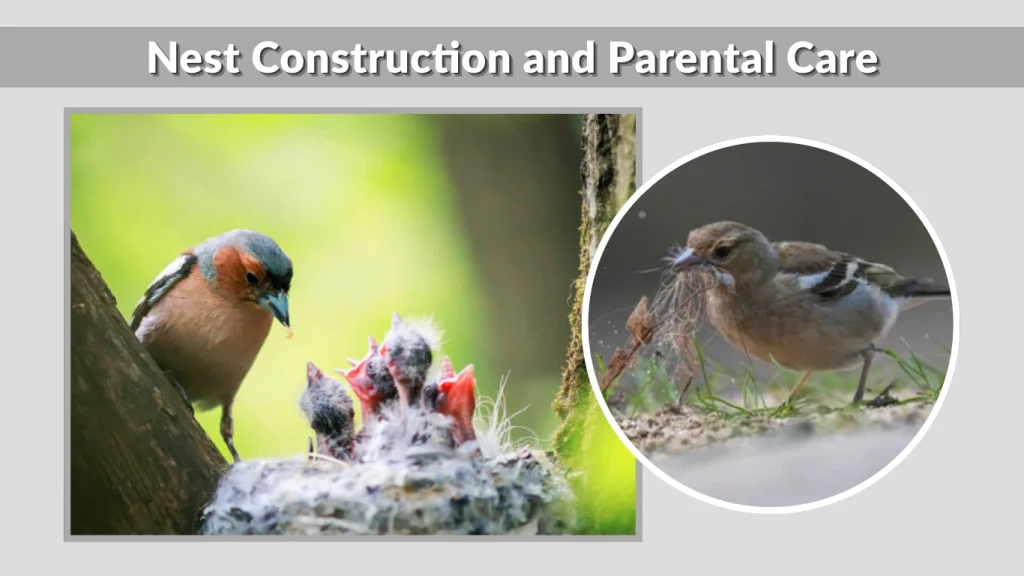
The Eurasian chaffinch builds one of the most finely crafted nests among small songbirds. The nest is cup-shaped and constructed from moss, grass, fine roots, feathers, and animal hair. The outer surface is often decorated with lichen and spider silk, helping it blend perfectly with surrounding bark and leaves. Nests are commonly placed on horizontal tree branches or dense shrubs.
Raising the Chicks
Both parents are involved in chick care, although the female performs most of the brooding. Adults make frequent feeding trips, delivering soft-bodied insects that are easy for nestlings to digest. As the chicks grow, they receive larger prey items and gradually develop the strength needed for flight and independent survival.
Lifecycle and Development Stages
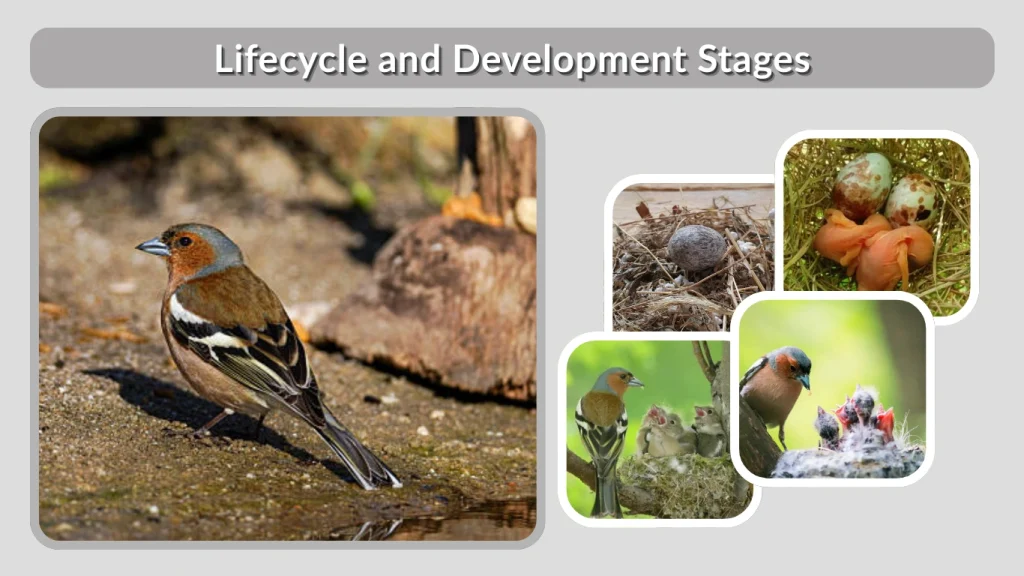
The Eurasian chaffinch passes through several distinct stages from egg to adult, each critical to its survival and reproduction.
- Egg stage lasting about 12–14 days
- Hatchlings are blind and featherless
- Nestling phase with rapid feather and muscle growth
- Fledgling stage when young leave the nest
- Juvenile period with duller plumage
- Adult maturity reached within the first year
- Average wild lifespan of 3 to 5 years
Migration and Seasonal Movements
The Eurasian chaffinch is considered a partially migratory species. In warmer regions, many individuals remain in the same area year-round. However, birds from northern and eastern parts of its range often migrate south during autumn to escape harsh winter conditions.
Migration patterns are influenced by temperature, food supply, and daylight length. During winter, large flocks may gather in open fields, farmland, and urban parks where seeds are readily available. In early spring, these flocks gradually disperse as birds return to breeding territories.
Unlike long-distance migrants, chaffinches usually travel relatively short to moderate distances. This flexible movement strategy allows them to adjust quickly to changing environmental conditions.
Predators, Threats, and Survival Adaptations
Eurasian chaffinches face a variety of natural predators, including birds of prey, domestic cats, snakes, and small mammals. Eggs and chicks are especially vulnerable to nest-raiding animals such as squirrels and corvids.
To survive, chaffinches rely on alertness, rapid flight, and effective camouflage. Their nests are extremely well hidden, reducing the chance of detection. Adults also use sharp alarm calls to warn nearby birds of approaching danger.
Modern threats include habitat loss, pesticide use, and climate-related changes in food availability. Despite these pressures, the Eurasian chaffinch remains highly resilient due to its adaptability and wide ecological tolerance.
Ecological Importance and Role in Nature
The Eurasian chaffinch plays a valuable role in maintaining ecosystem balance. By feeding on insects, it helps regulate populations of caterpillars and other invertebrates that could otherwise damage vegetation.
Seed consumption and movement contribute to plant dispersal, particularly for grasses and small flowering plants. Chaffinches are also an important food source for higher predators, making them a key link in woodland and farmland food chains.
Because they respond quickly to environmental changes, Eurasian chaffinches are often used as indicator species in ecological studies, reflecting the health of forest and agricultural habitats.
Relationship With Humans and Cultural Significance
For centuries, the Eurasian chaffinch has lived alongside humans. It commonly visits gardens, bird feeders, and orchards, making it one of the most familiar birds in many countries.
The chaffinch appears in European folklore, poetry, and traditional music, often symbolizing cheerfulness and the arrival of spring. Its song has been admired and studied extensively, even influencing early research into bird communication and learning.
Today, it remains one of the most frequently observed birds by amateur birdwatchers, contributing to public interest in conservation and wildlife awareness.
Conservation Status and Population Trends
The Eurasian chaffinch is currently classified as Least Concern due to its vast range and large, stable global population. It is one of the most numerous songbirds in Europe.
Although overall numbers remain strong, some regional declines have been recorded, mainly linked to agricultural intensification, pesticide exposure, and habitat fragmentation. Conservation efforts that preserve hedgerows, woodlands, and mixed farming landscapes are beneficial to sustaining healthy populations.
Long-term monitoring programs continue to track trends, helping scientists understand how environmental changes may affect the species.
Interesting Facts About the Eurasian Chaffinch
The scientific name coelebs means “unmarried,” a reference to early naturalists believing females migrated while males stayed behind. Eurasian chaffinches are known to develop local song dialects, meaning birds from different regions may sing slightly different tunes.
They can recognize neighbors by song and adjust their singing in territorial disputes. Their nests are so well camouflaged that they are often almost invisible, even when located only a few meters above ground.
FAQs
What does a Eurasian chaffinch look like?
The Eurasian chaffinch is a small finch with a strong beak and distinctive white wing bars. Males display a blue-gray head and reddish chest, while females are mostly brown and gray, providing better camouflage among branches and leaves.
Where do Eurasian chaffinches live?
They are widespread across Europe, western Asia, and parts of North Africa. Eurasian chaffinches inhabit forests, woodlands, farmlands, parks, and gardens, adapting well to both natural and human-altered environments.
What do Eurasian chaffinches eat?
Their diet mainly consists of seeds, grains, buds, and fruits, but during the breeding season they rely heavily on insects and larvae. This mixed diet supports both adult energy needs and rapid chick growth.
Are Eurasian chaffinches migratory birds?
Some populations are resident year-round, while others migrate seasonally. Birds from colder northern regions usually move south in winter, whereas many southern populations remain in the same areas.
Is the Eurasian chaffinch endangered?
No, the Eurasian chaffinch is currently listed as Least Concern. It has a large and stable population, although local declines can occur due to habitat loss and pesticide use.