



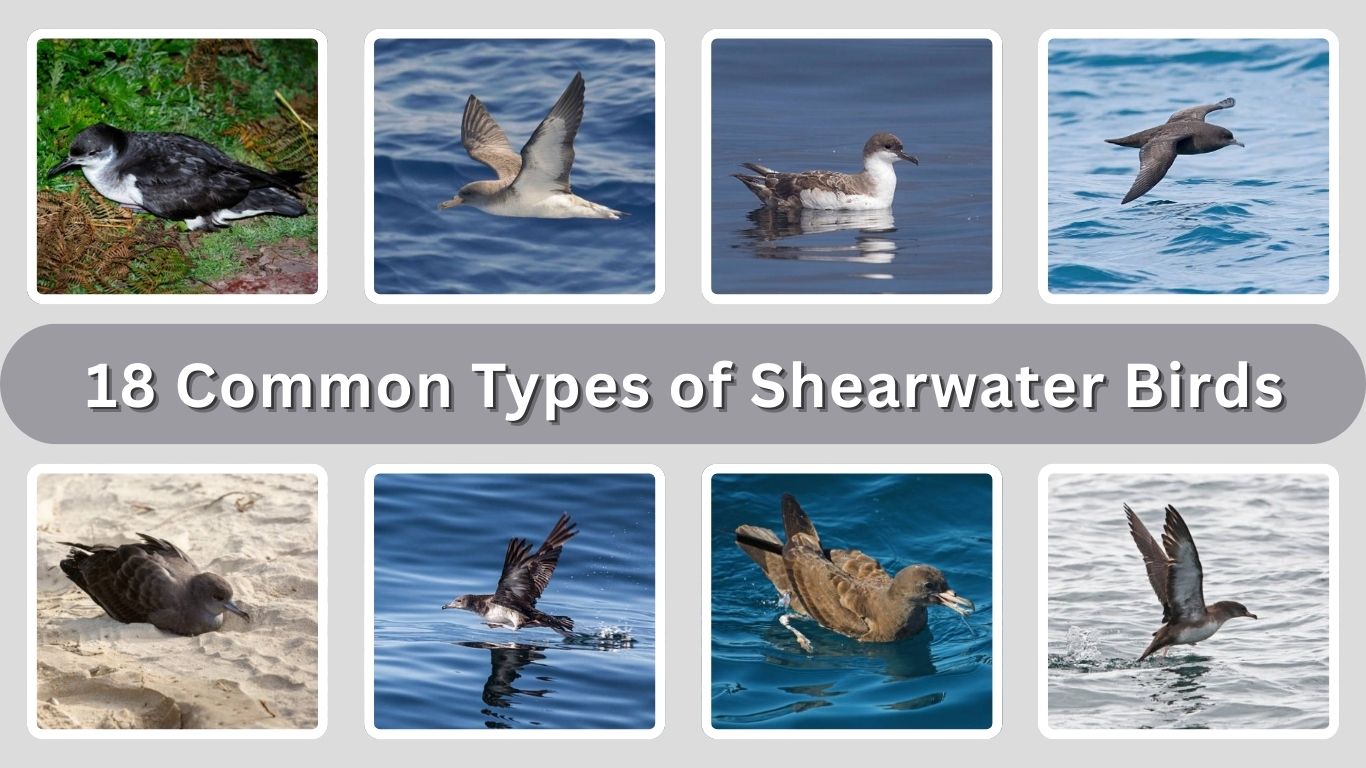
Shearwater birds are graceful ocean travelers, famous for their low, gliding flight just above the waves and their incredible long-distance migrations. Found across tropical, temperate, and cold oceans, these seabirds spend most of their lives at sea, returning to remote islands and coastal cliffs only to breed. With streamlined bodies, strong wings, and excellent diving ability, shearwaters are perfectly adapted to open-ocean life and play an important role in marine ecosystems worldwide.
1. Manx Shearwater (Puffinus puffinus)
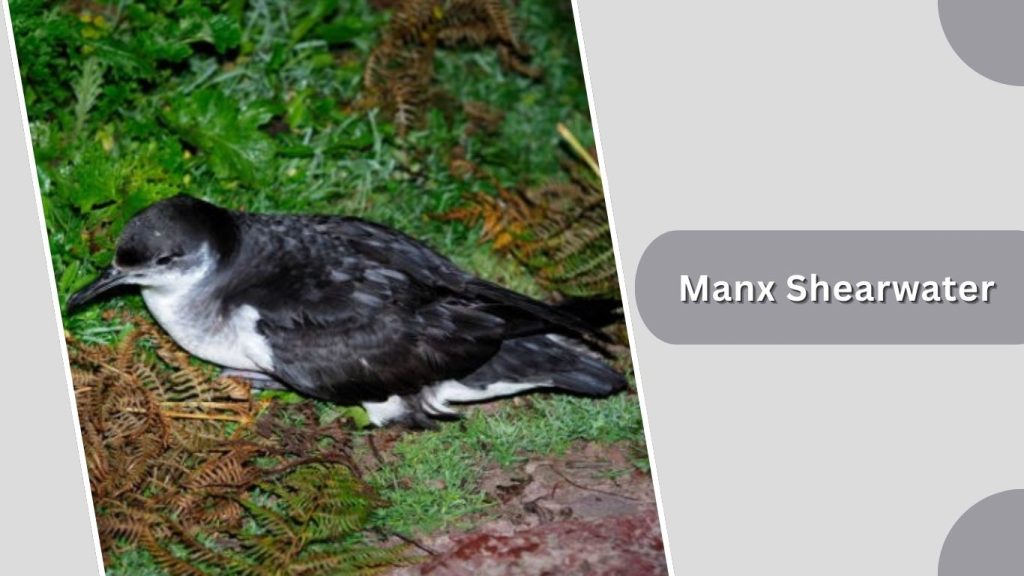
The Manx shearwater is a medium-sized seabird best known for its graceful gliding flight just above the waves. It breeds mainly on islands of the North Atlantic and is famous for its long migrations, traveling thousands of kilometers between breeding and wintering grounds. These birds spend most of their lives at sea, coming to land only to nest.
Identification
- Size: Medium-sized seabird with a slim body
- Wings: Long, narrow wings adapted for gliding
- Color pattern: Black upperparts with white underparts
- Bill: Slender, dark bill
- Flight style: Low, stiff-winged gliding close to the water
Habitat
Manx shearwaters live across the North Atlantic Ocean. During the breeding season, they nest in burrows on grassy islands and coastal cliffs. Outside breeding, they migrate to the South Atlantic, spending months over open ocean waters.
Diet
Their diet mainly consists of small fish, squid, and crustaceans. They feed by surface-seizing and shallow diving, often foraging in flocks over productive feeding areas.
Nesting & Eggs
They nest in underground burrows or rock crevices, usually on predator-free islands. The female lays a single white egg, and both parents share incubation and chick-feeding duties.
Behavior
Manx shearwaters are highly social at sea and often feed in large groups. At breeding colonies, they are mostly active at night, using eerie calls and vocalizations as they return to burrows to avoid predators.
2. Cory’s Shearwater (Calonectris borealis)
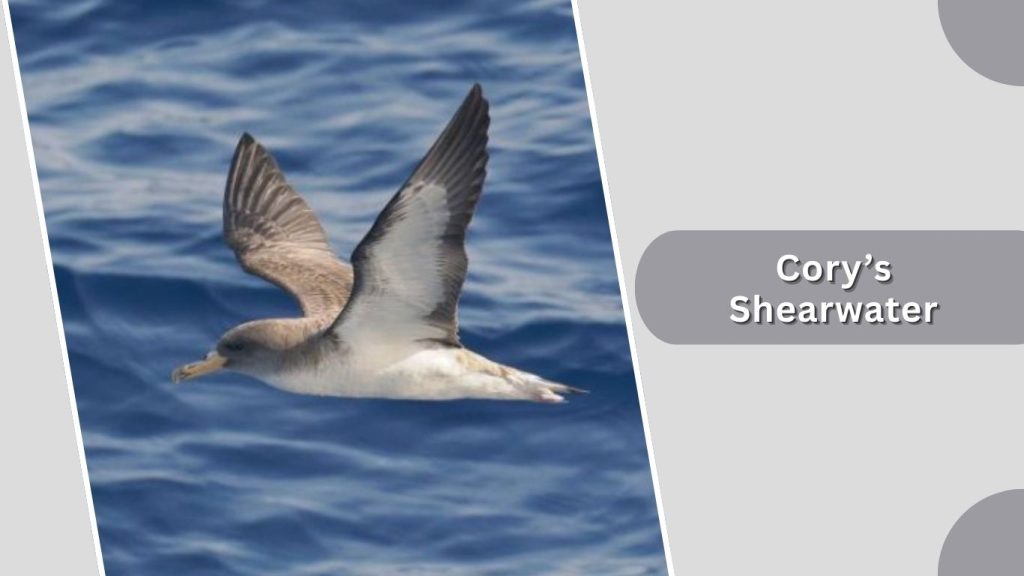
Cory’s shearwater is a large, powerful seabird well known for its long, arcing glides over open ocean waters. It is one of the most widespread shearwaters of the Atlantic and Mediterranean regions and spends most of its life far from land, returning only to breed on remote islands and coastal cliffs.
Identification
- Size: Large shearwater with a strong, streamlined body
- Wings: Very long, narrow wings
- Color pattern: Brownish-grey upperparts with white underparts
- Bill: Thick, pale yellow bill
- Flight style: Strong, sweeping glides close to the sea surface
Habitat
Cory’s shearwaters range widely across the Atlantic Ocean and Mediterranean Sea. They breed on rocky islands and coastal cliffs, nesting in burrows, caves, and crevices, and migrate long distances outside the breeding season.
Diet
They mainly feed on fish, squid, and crustaceans taken from the surface or during shallow dives. They often follow fishing vessels to scavenge discarded fish.
Nesting & Eggs
They nest in burrows, caves, or rock holes on islands. The female lays a single egg, and both parents share long incubation and chick-rearing duties.
Behavior
Cory’s shearwaters are famous for their loud, eerie calls at night around breeding colonies. At sea, they are elegant soarers, often traveling great distances in search of food.
3. Great Shearwater (Ardenna gravis)
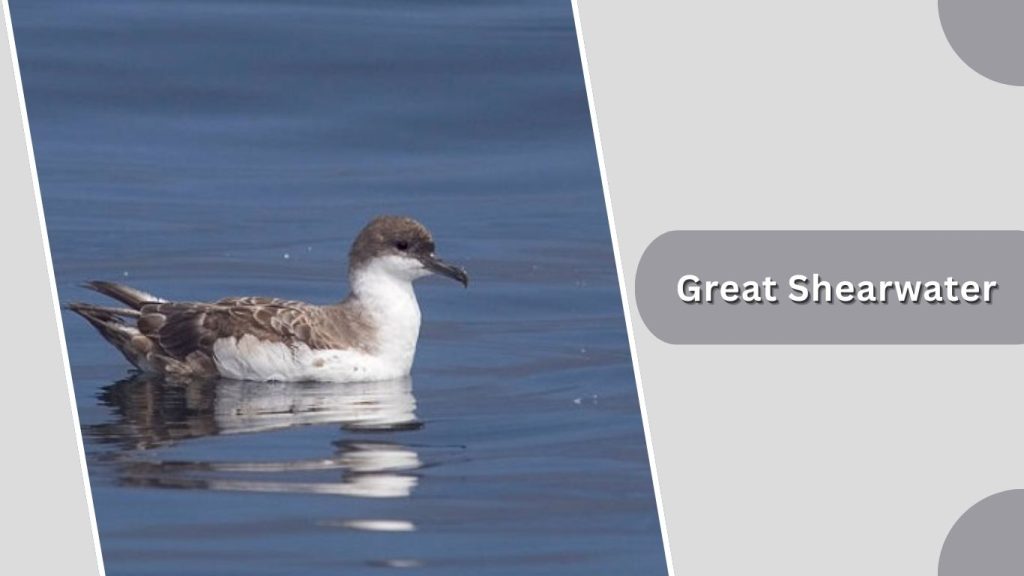
The great shearwater is a large, robust seabird known for its strong flight and long-distance migrations across the Atlantic Ocean. It breeds on remote islands in the South Atlantic and spends much of the year traveling between hemispheres, often seen gliding powerfully over open waters.
Identification
- Size: Large shearwater with a bulky body
- Wings: Long, stiff wings adapted for dynamic soaring
- Color pattern: Dark brown upperparts, white underparts with darker belly patch
- Bill: Strong, dark bill
- Distinct feature: Dark cap and contrasting white neck and belly
Habitat
Great shearwaters live mainly over open ocean waters of the Atlantic. They breed on isolated South Atlantic islands and migrate northward after breeding, appearing in large numbers in the North Atlantic.
Diet
Their diet consists mostly of fish, squid, and crustaceans. They feed by surface-seizing and shallow plunges, often gathering in large feeding flocks.
Nesting & Eggs
They nest in burrows on grassy slopes of remote islands. The female lays a single egg, and both parents take long turns incubating and feeding the chick.
Behavior
Great shearwaters are powerful flyers, often seen banking over waves and following ships. They are social at sea and frequently form large, mixed-species feeding groups.
4. Sooty Shearwater (Ardenna grisea)
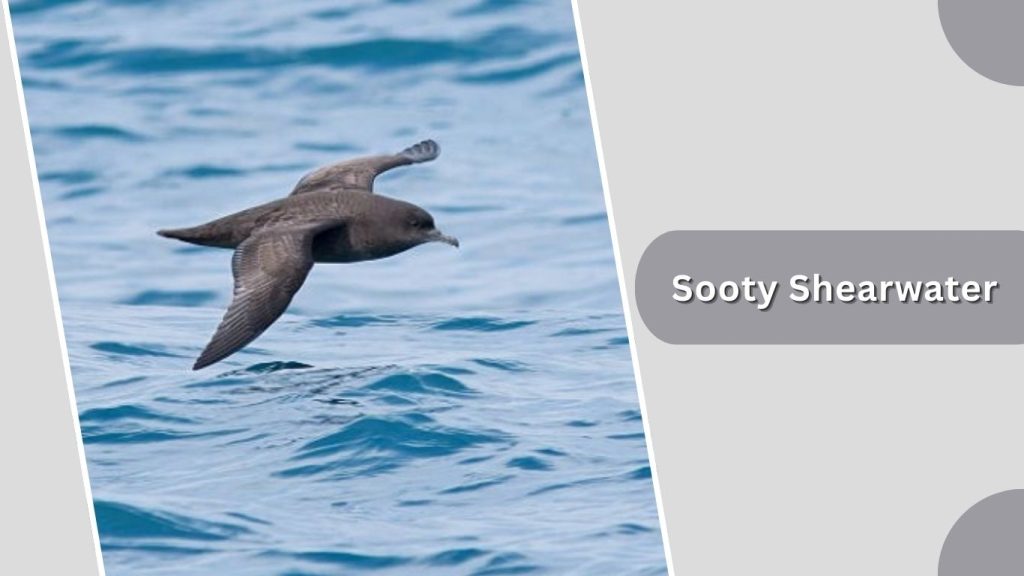
The sooty shearwater is a highly migratory seabird often called the “muttonbird” in parts of the world. It is famous for its massive circular migrations that span entire ocean basins. This species breeds mainly in the Southern Hemisphere and travels northward into the Northern Hemisphere after the breeding season.
Identification
- Size: Medium to large shearwater with a slim but powerful body
- Wings: Long, narrow wings
- Color pattern: Dark brown to sooty-black overall with paler underwings
- Bill: Slender, dark bill
- Flight style: Fast, low gliding over waves
Habitat
Sooty shearwaters live almost entirely over open oceans. They breed on islands in the southern Pacific and southern Atlantic, nesting in burrows, and migrate thousands of kilometers across both hemispheres.
Diet
They mainly feed on fish, squid, and krill. They are excellent divers, plunging and swimming underwater to catch prey.
Nesting & Eggs
They nest in underground burrows on predator-free islands. The female lays a single egg, and both parents share incubation and chick care.
Behavior
Sooty shearwaters are strong, fast flyers and skilled divers. At breeding colonies, they are mostly nocturnal, returning to burrows at night with loud, wailing calls.
5. Short-tailed Shearwater (Ardenna tenuirostris)
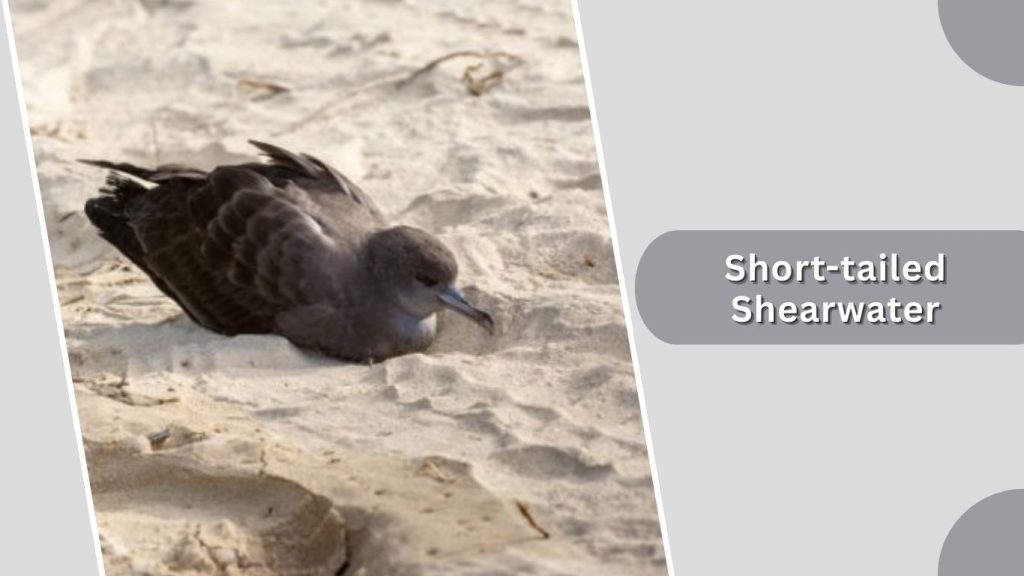
The short-tailed shearwater is one of the most abundant seabirds in the world and is best known for its enormous breeding colonies in Australia. Often called the “muttonbird,” it undertakes remarkable long-distance migrations between the Southern and Northern Hemispheres.
Identification
- Size: Medium-sized shearwater with a compact, sturdy body
- Wings: Long, narrow wings suited for fast gliding
- Color pattern: Dark brown upperparts with paler underparts
- Bill: Short, dark bill
- Distinct feature: Stocky look with relatively short tail
Habitat
Short-tailed shearwaters live mainly over open oceans. They breed in huge numbers on islands and coastal areas of southern Australia, nesting in burrows, and migrate north to the North Pacific after breeding.
Diet
Their diet consists mainly of small fish, squid, and crustaceans. They feed by surface-seizing and diving, often gathering in large feeding flocks.
Nesting & Eggs
They nest in burrows dug into soil or sand. The female lays a single egg, and both parents share incubation and chick-feeding.
Behavior
Short-tailed shearwaters are fast, energetic flyers and strong divers. At breeding colonies, they are noisy and mostly active at night, with millions of birds returning to burrows after sunset.
6. Pink-footed Shearwater (Ardenna creatopus)
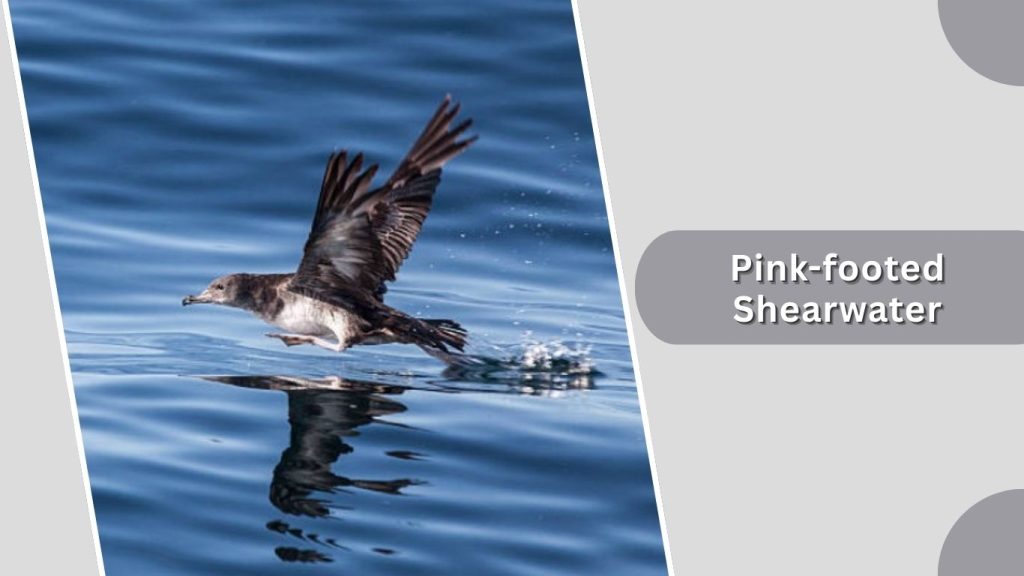
The pink-footed shearwater is a large seabird of the Pacific Ocean, best known for its long migrations and its breeding colonies off the coast of Chile. It spends most of its life far from land, gliding low over waves and following productive ocean currents.
Identification
- Size: Large shearwater with a strong, bulky body
- Wings: Long, narrow wings
- Color pattern: Dark brown upperparts, white underparts with dusky shading
- Bill: Thick, pale bill with a darker tip
- Distinct feature: Pinkish feet and legs
Habitat
Pink-footed shearwaters range widely across the Pacific Ocean. They breed on islands off central Chile, nesting in burrows on forested slopes, and migrate northward along the coasts of South and North America.
Diet
They mainly feed on fish, squid, and crustaceans. They capture prey by surface-seizing and diving and often associate with feeding flocks and fishing vessels.
Nesting & Eggs
They nest in burrows dug into soil among vegetation. The female lays a single egg, and both parents share incubation and chick-feeding duties.
Behavior
Pink-footed shearwaters are powerful flyers that often travel long distances between feeding areas. At breeding colonies, they are mostly nocturnal and use loud calls to locate their burrows and mates.
7. Flesh-footed Shearwater (Ardenna carneipes)
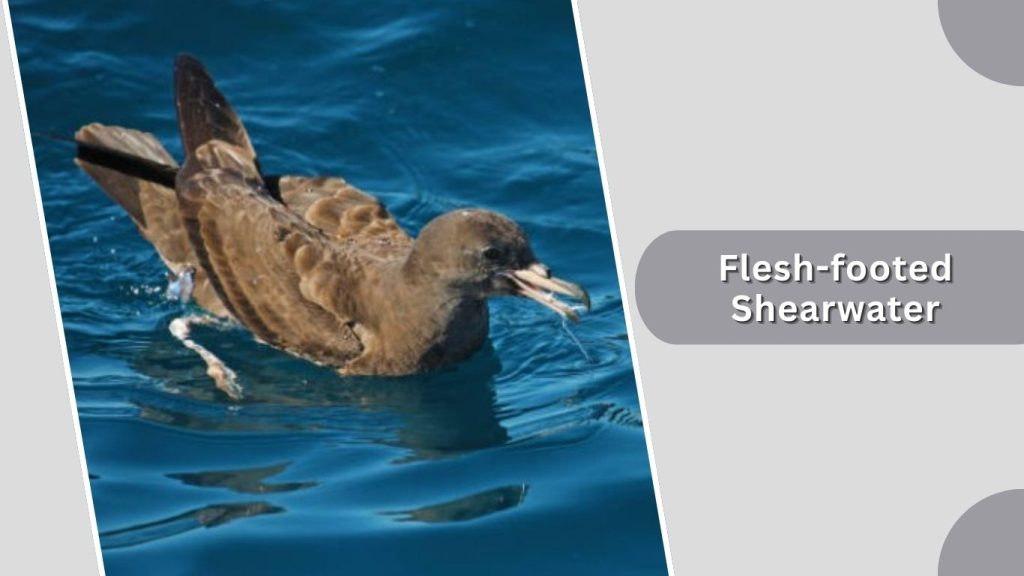
The flesh-footed shearwater is a large, dark shearwater known for its heavy bill and pale pink feet. It ranges widely across the Indian and Pacific Oceans and breeds on islands around Australia, New Zealand, and parts of the southern Indian Ocean.
Identification
- Size: Large shearwater with a bulky, powerful body
- Wings: Long, narrow wings
- Color pattern: Dark brown overall, slightly paler below
- Bill: Thick, pale pink bill with a darker tip
- Distinct feature: Flesh-colored feet and heavy bill
Habitat
Flesh-footed shearwaters spend most of their lives over open ocean waters. They breed on offshore islands, nesting in burrows on sandy or vegetated slopes, and migrate widely outside the breeding season.
Diet
They feed mainly on fish, squid, and crustaceans, often captured by surface-seizing and shallow diving. They frequently follow fishing vessels to scavenge discarded fish.
Nesting & Eggs
They nest in underground burrows. The female lays a single egg, and both parents share incubation and chick-rearing duties.
Behavior
Flesh-footed shearwaters are strong, direct flyers and capable divers. At breeding colonies, they are mostly nocturnal and communicate with loud, harsh calls as they return to their burrows.
8. Wedge-tailed Shearwater (Ardenna pacifica)
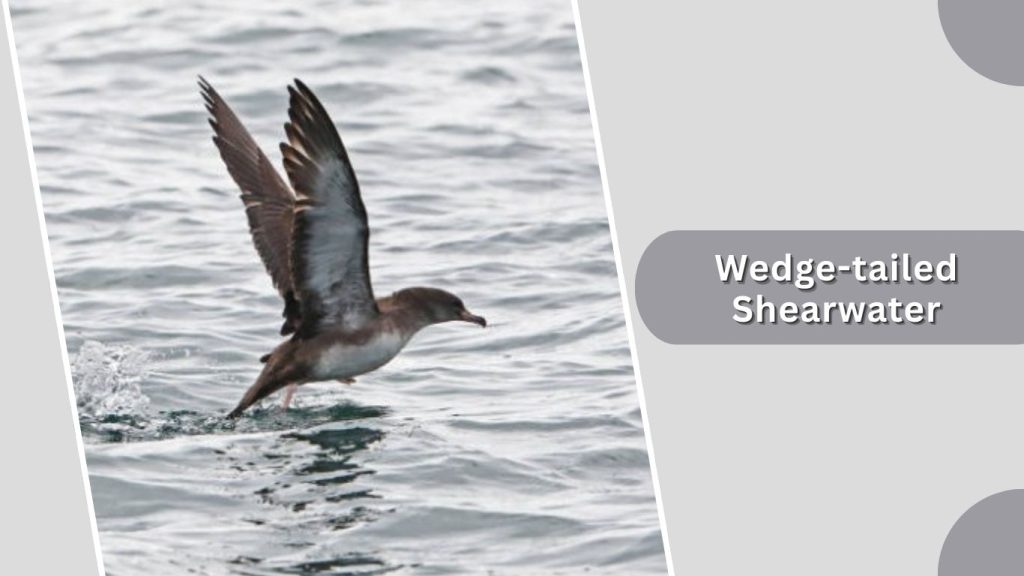
The wedge-tailed shearwater is a tropical and subtropical seabird named for its long, pointed tail. It is commonly seen gliding effortlessly over warm ocean waters and breeds in large colonies on islands across the Indian and Pacific Oceans.
Identification
- Size: Medium-sized shearwater with a slim body
- Wings: Long, narrow wings
- Color pattern: Two main forms: dark brown overall or pale underparts with dark upperparts
- Bill: Slender, grey bill
- Distinct feature: Long, wedge-shaped tail
Habitat
Wedge-tailed shearwaters live mainly over warm ocean waters. They breed on sandy islands and coastal areas, nesting in burrows or under vegetation across the tropical Indian and Pacific Oceans.
Diet
They feed mainly on fish, squid, and crustaceans. They capture prey at the surface and by shallow dives, often following schools of fish or feeding flocks.
Nesting & Eggs
They nest in burrows dug into sand or soil. The female lays a single egg, and both parents share incubation and chick care.
Behavior
Wedge-tailed shearwaters are graceful gliders and strong divers. At breeding colonies, they are active both day and night, producing loud calls from their burrows.
9. Buller’s Shearwater (Ardenna bulleri)
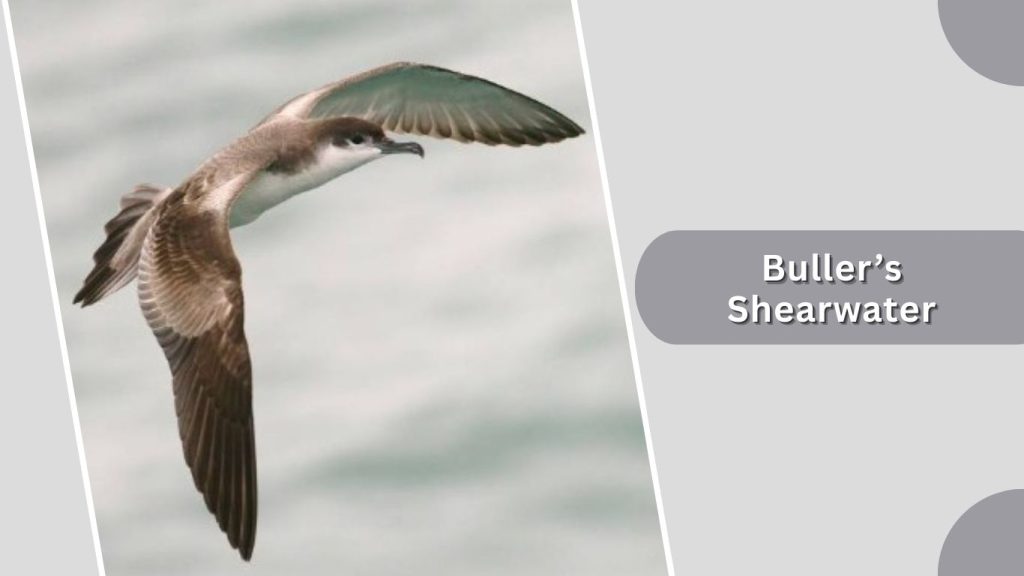
Buller’s shearwater is a large, elegant seabird known for its swift flight and long migrations. It breeds mainly on small islands near New Zealand and spends the rest of the year roaming widely across the Pacific Ocean.
Identification
- Size: Medium to large shearwater with a slim, streamlined body
- Wings: Long, narrow wings
- Color pattern: Dark grey upperparts, white underparts, dark cap
- Bill: Slender, dark bill
- Distinct feature: Clean white belly contrasting with dark upperparts
Habitat
Buller’s shearwaters live mainly over open ocean waters of the Pacific. They breed on islands near New Zealand, nesting in burrows on forested slopes and coastal areas.
Diet
They mainly eat fish, squid, and crustaceans taken from the surface or by diving. They often feed in large flocks over productive waters.
Nesting & Eggs
They nest in burrows or natural cavities. The female lays one egg, and both parents share incubation and chick-feeding.
Behavior
Buller’s shearwaters are fast, agile flyers and excellent divers. At breeding colonies, they are mostly nocturnal and use loud calls to locate their burrows.
10. Audubon’s Shearwater (Puffinus lherminieri)
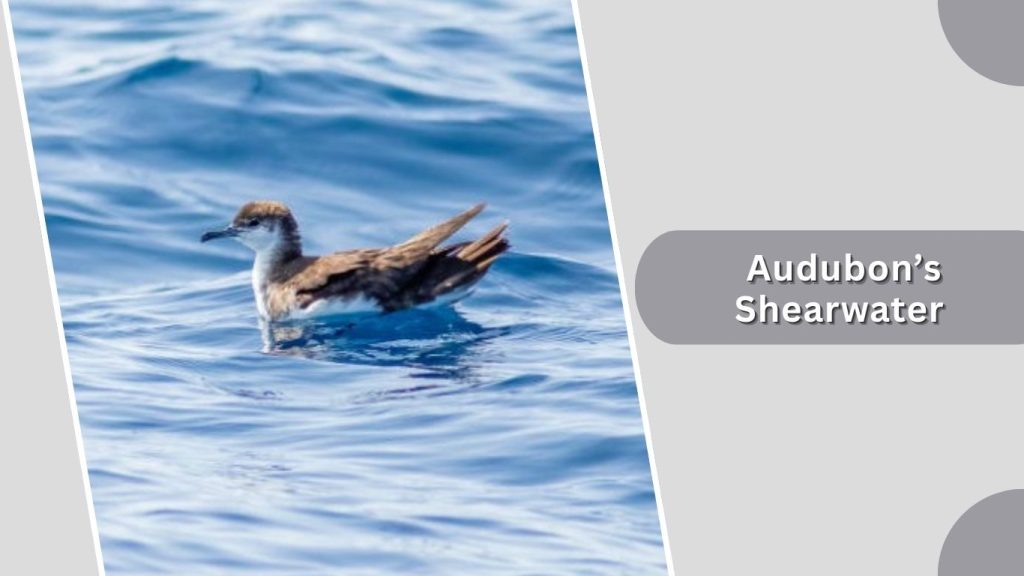
Audubon’s shearwater is a small, agile seabird best known for its quick wingbeats and low, fast flight over tropical and subtropical seas. It is widely distributed across warm oceans and breeds on remote islands, where it nests in burrows and rocky crevices.
Identification
- Size: Small to medium shearwater with a slim body
- Wings: Long, narrow wings
- Color pattern: Black upperparts with clean white underparts
- Bill: Short, slender, dark bill
- Flight style: Rapid wingbeats mixed with short glides
Habitat
Audubon’s shearwaters live mainly over warm ocean waters of the Atlantic, Indian, and Pacific Oceans. They breed on offshore islands, nesting in rocky crevices, cliffs, and burrows, often in hidden or sheltered locations.
Diet
Their diet consists mainly of small fish, squid, and crustaceans. They feed by surface-seizing and shallow diving, often foraging alone or in small groups.
Nesting & Eggs
They nest in burrows, caves, or rock crevices. The female lays a single egg, and both parents share incubation and chick-feeding duties.
Behavior
Audubon’s shearwaters are swift, agile flyers that skim close to the water’s surface. At breeding colonies, they are mostly nocturnal, using soft calls and chirps to communicate and locate their nesting sites.
11. Little Shearwater (Puffinus assimilis)
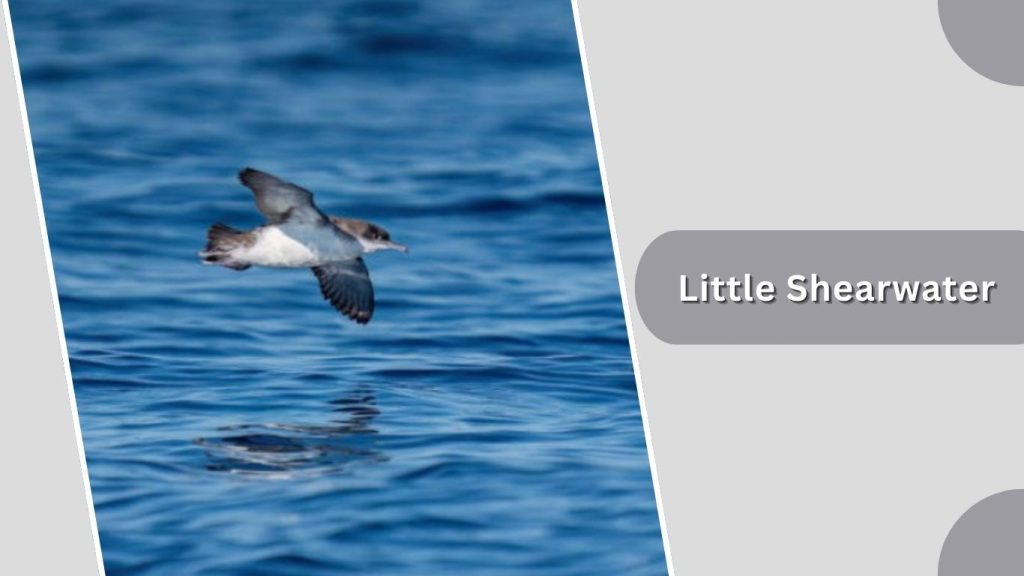
The little shearwater is a small, compact seabird that closely resembles a miniature Manx shearwater. It is widely distributed across the southern oceans and is known for its fast, low flight over the waves. This species spends most of its life at sea, coming to land only to breed.
Identification
- Size: Small shearwater with a compact body
- Wings: Long, narrow wings relative to body size
- Color pattern: Black upperparts with white underparts
- Bill: Short, slender, dark bill
- Distinct feature: Small size with sharp black-and-white contrast
Habitat
Little shearwaters live mainly over open ocean waters, especially in temperate and subtropical regions of the Southern Hemisphere. They breed on offshore islands, nesting in burrows or rock crevices.
Diet
They feed mostly on small fish, squid, and crustaceans. They capture prey by surface-seizing and shallow diving, often foraging alone or in small groups.
Nesting & Eggs
They nest in burrows or among rocks on predator-free islands. The female lays a single egg, and both parents share incubation and chick care.
Behavior
Little shearwaters are fast, agile flyers and capable divers. At breeding colonies, they are mostly nocturnal and use high-pitched calls to communicate and locate burrows.
12. Tropical Shearwater (Puffinus bailloni)
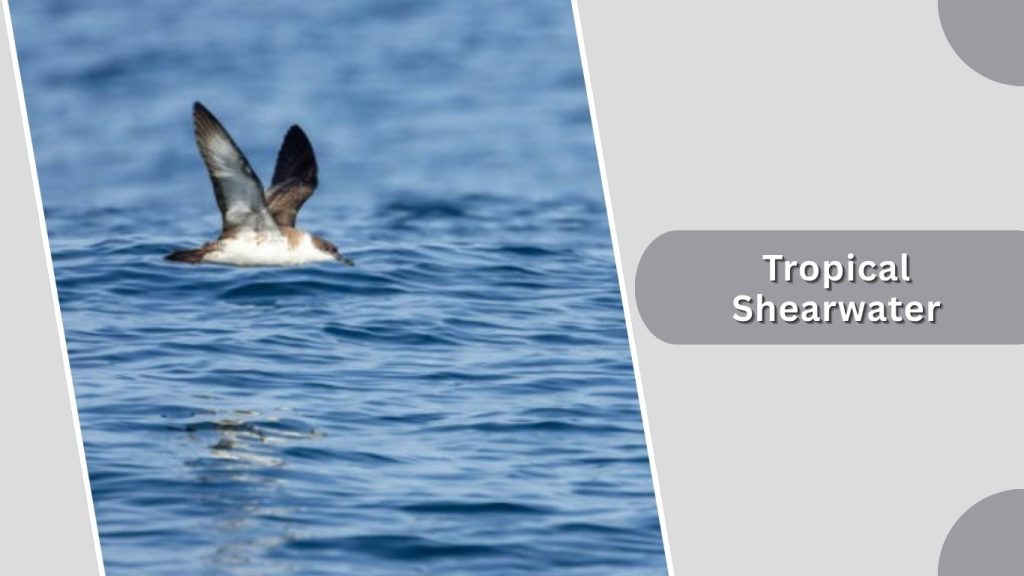
The tropical shearwater is a small, fast-flying seabird found mainly in warm waters of the Indian Ocean and parts of the Pacific. It closely resembles the little shearwater but is more strictly associated with tropical seas. Like most shearwaters, it spends nearly all of its life at sea and only returns to land to breed.
Identification
- Size: Small shearwater with a slim, compact body
- Wings: Long, narrow wings
- Color pattern: Dark upperparts with clean white underparts
- Bill: Short, slender, dark bill
- Flight style: Rapid wingbeats mixed with short glides
Habitat
Tropical shearwaters live mainly over warm, tropical ocean waters. They breed on remote islands, nesting in burrows, rocky crevices, and sometimes under vegetation.
Diet
They feed on small fish, squid, and marine invertebrates. Prey is usually taken from the surface or during short, shallow dives.
Nesting & Eggs
They nest in burrows or rock crevices on predator-free islands. The female lays a single egg, and both parents share incubation and chick-feeding duties.
Behavior
Tropical shearwaters are swift, low flyers and skilled divers. At breeding colonies, they are mostly nocturnal and use soft calls to locate mates and nesting sites.
13. Hutton’s Shearwater (Puffinus huttoni)
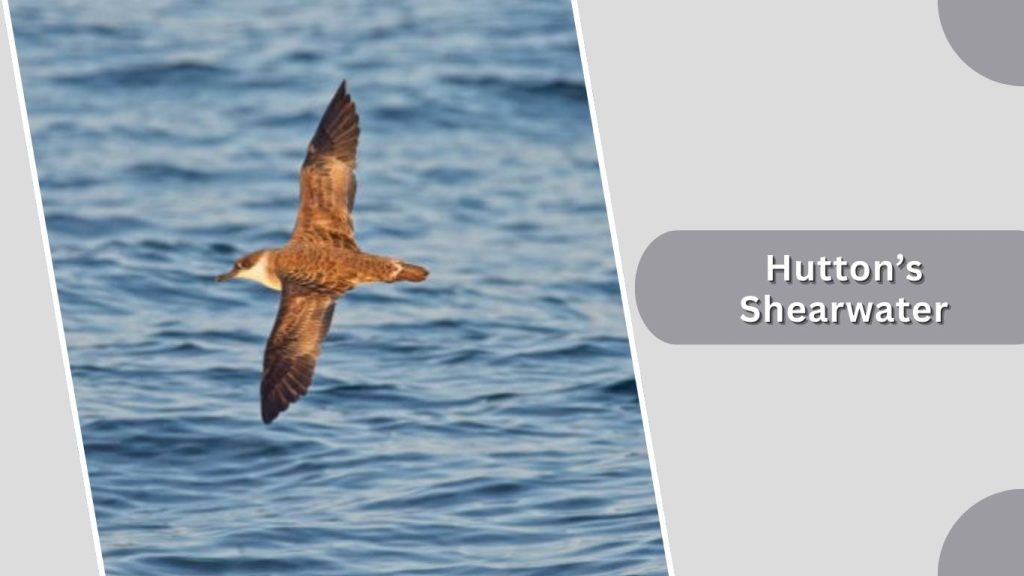
Hutton’s shearwater is a rare and distinctive shearwater that breeds only in the mountains of New Zealand, far inland from the sea. This unusual breeding habit makes it one of the most unique seabirds in the world. Outside the breeding season, it ranges widely across the Pacific Ocean.
Identification
- Size: Small to medium shearwater with a compact body
- Wings: Long, narrow wings
- Color pattern: Dark brown to black upperparts, white underparts
- Bill: Short, slender, dark bill
- Distinct feature: Small size and strong black-and-white contrast
Habitat
At sea, Hutton’s shearwaters live over open Pacific waters. During breeding, they nest in burrows high in alpine valleys of New Zealand’s South Island, an extremely rare trait among seabirds.
Diet
They feed mainly on small fish, squid, and crustaceans, captured by surface-seizing and shallow diving.
Nesting & Eggs
They nest in burrows dug into alpine soil, often among tussock grass. The female lays a single egg, and both parents share incubation and chick-feeding duties.
Behavior
Hutton’s shearwaters migrate long distances and are strong flyers and divers. At breeding sites, they are nocturnal, returning to burrows at night with loud, distinctive calls.
14. Balearic Shearwater (Puffinus mauretanicus)
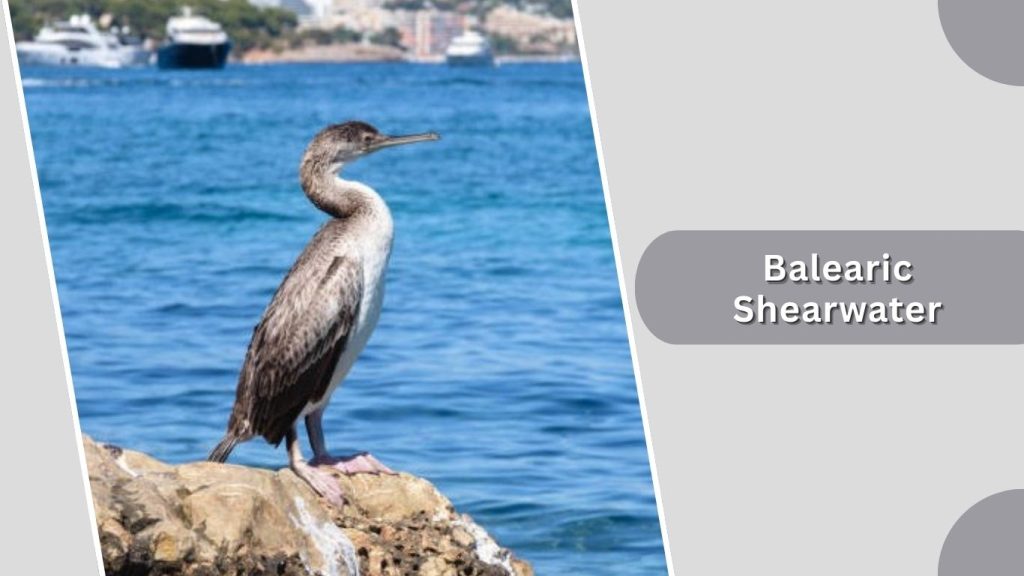
The Balearic shearwater is one of the most endangered seabirds in the world and is endemic to the Mediterranean Sea. It spends most of its life over open water and returns to a few rocky islands to breed. This species is known for its low, fast flight close to the waves.
Identification
- Size: Small to medium shearwater with a slim body
- Wings: Long, narrow wings
- Color pattern: Brownish upperparts with paler, often mottled underparts
- Bill: Short, slender, dark bill
- Distinct feature: Overall dusky appearance compared to most shearwaters
Habitat
Balearic shearwaters live mainly over the Mediterranean Sea and adjacent Atlantic waters. They breed in caves and crevices on rocky islands, often in hard-to-reach coastal cliffs.
Diet
They feed mostly on small fish and squid, often near the surface. They frequently associate with fishing vessels and feeding flocks.
Nesting & Eggs
They nest in caves, rock crevices, and burrows. The female lays a single egg, and both parents share incubation and chick-feeding duties.
Behavior
Balearic shearwaters are fast, low flyers and strong divers. At breeding colonies, they are mostly nocturnal and use harsh calls to communicate and locate nest sites.
15. Yelkouan Shearwater (Puffinus yelkouan)
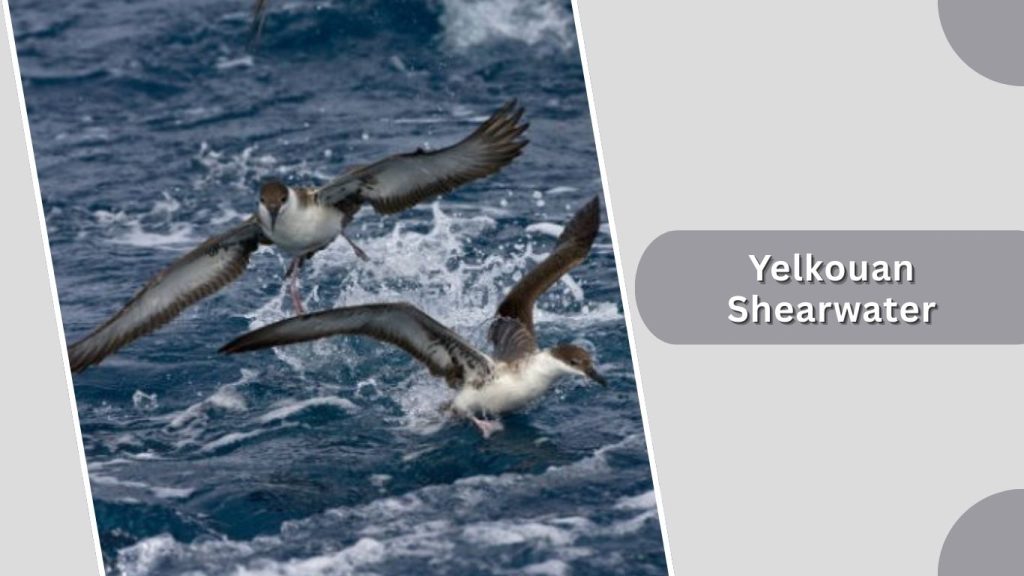
The Yelkouan shearwater is a small to medium-sized seabird of the Mediterranean and Black seas. It was once considered part of the Manx shearwater group but is now recognized as a separate species. It is agile in flight and often seen skimming rapidly over coastal waters.
Identification
- Size: Small to medium shearwater with a compact body
- Wings: Long, narrow wings
- Color pattern: Black upperparts with bright white underparts
- Bill: Short, slender, dark bill
- Distinct feature: Clean black-and-white contrast and fast wingbeats
Habitat
Yelkouan shearwaters live mainly over the Mediterranean and Black seas, often closer to shore than many other shearwaters. They breed on rocky islands, nesting in caves and crevices along coastal cliffs.
Diet
They mainly eat small fish, squid, and marine invertebrates. Prey is taken from the surface or by shallow dives.
Nesting & Eggs
They nest in caves, burrows, and rock crevices. The female lays a single egg, and both parents share incubation and chick-feeding.
Behavior
Yelkouan shearwaters are quick, agile flyers and capable divers. At breeding colonies, they are mostly nocturnal and communicate with sharp, high-pitched calls.
16. Persian Shearwater (Puffinus persicus)
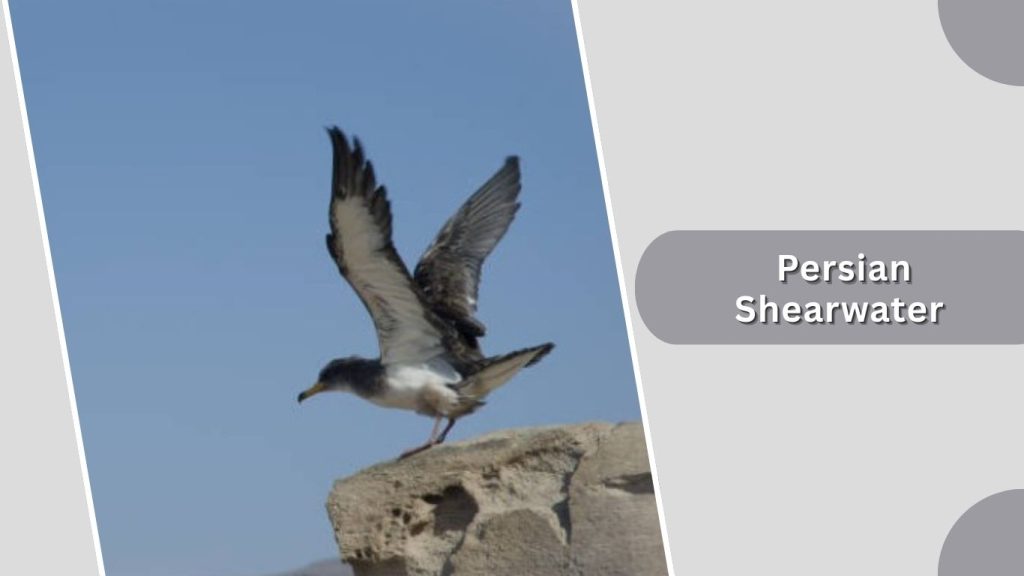
The Persian shearwater is a small seabird found mainly in the northwestern Indian Ocean, including the Arabian Sea and nearby waters. It is closely related to Audubon’s and tropical shearwaters and is known for its fast, low flight over warm seas.
Identification
- Size: Small shearwater with a slim, compact body
- Wings: Long, narrow wings
- Color pattern: Dark upperparts with white underparts
- Bill: Short, slender, dark bill
- Distinct feature: Small size and sharp black-and-white contrast
Habitat
Persian shearwaters live mainly over warm tropical and subtropical waters of the Indian Ocean. They breed on offshore islands, nesting in burrows and rocky crevices.
Diet
They feed mostly on small fish, squid, and marine invertebrates. Prey is captured at the surface and during short dives.
Nesting & Eggs
They nest in burrows or among rocks on predator-free islands. The female lays a single egg, and both parents share incubation and chick-feeding duties.
Behavior
Persian shearwaters are fast, agile flyers and capable divers. At breeding sites, they are mostly nocturnal and use soft calls to locate mates and nesting burrows.
17. Fluttering Shearwater (Puffinus gavia)
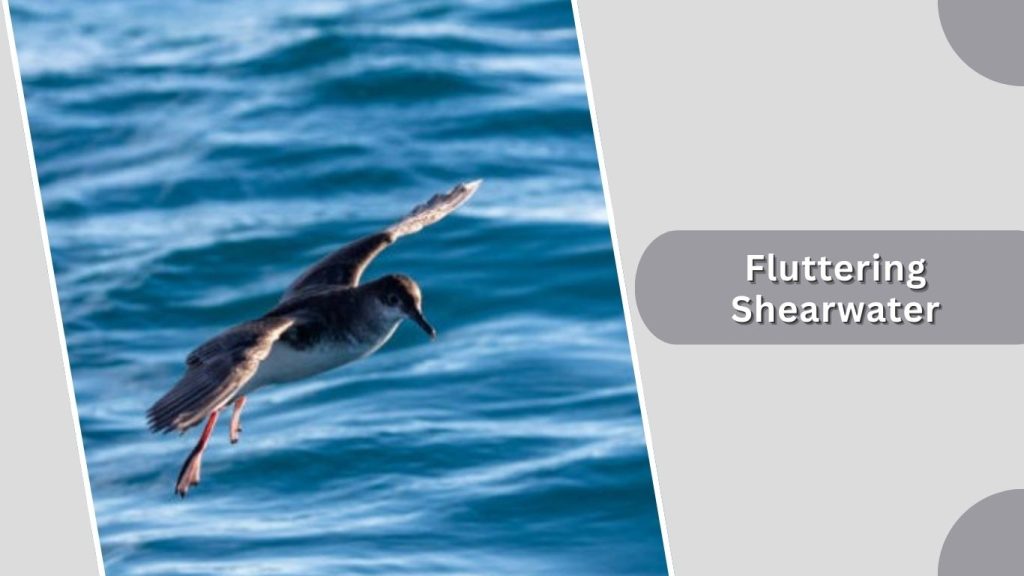
The fluttering shearwater is a small, coastal shearwater best known for its rapid wingbeats and preference for nearshore waters. It is most commonly found around New Zealand, where it often feeds close to land compared to many other shearwater species.
Identification
- Size: Small shearwater with a compact body
- Wings: Relatively short, narrow wings with rapid wingbeats
- Color pattern: Black upperparts with white underparts
- Bill: Short, slender, dark bill
- Distinct feature: Quick, fluttering flight style
Habitat
Fluttering shearwaters mainly inhabit coastal waters rather than the open ocean. They are common around New Zealand’s shores and nearby islands, where they forage close to land.
Diet
They feed on small fish, squid, and crustaceans, often diving in shallow coastal waters and around underwater reefs.
Nesting & Eggs
They nest in burrows, rock crevices, or under dense vegetation on islands and coastal headlands. The female lays a single egg, and both parents share incubation and chick-feeding.
Behavior
Fluttering shearwaters are energetic flyers and frequent divers. They are often seen in small groups near shore. At breeding sites, they are mostly nocturnal and use sharp calls to communicate.
18. Christmas Shearwater (Puffinus nativitatis)
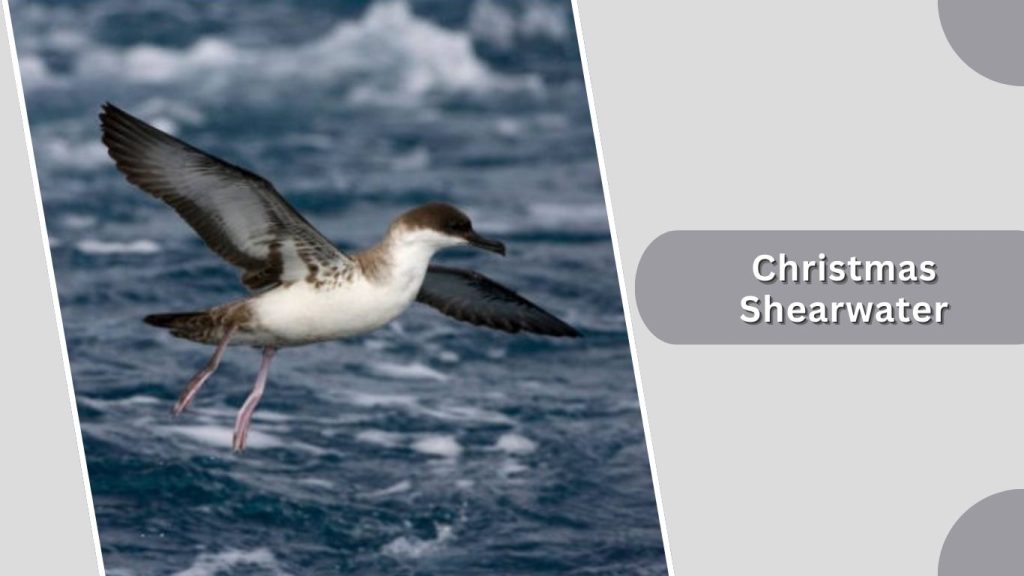
The Christmas shearwater is a small, dark shearwater of the tropical Pacific Ocean. It is most often seen gliding low over warm waters and breeds mainly on remote tropical islands. This species is well adapted to life in open tropical seas and is less tied to cold-water currents than many other shearwaters.
Identification
- Size: Small shearwater with a compact body
- Wings: Long, narrow wings
- Color pattern: Dark brown overall with slightly paler underparts
- Bill: Short, slender, dark bill
- Distinct feature: Mostly dark plumage with subtle contrast
Habitat
Christmas shearwaters live mainly over warm tropical waters of the Pacific. They breed on remote low islands and coral atolls, nesting in burrows, crevices, and sometimes under vegetation.
Diet
They feed mostly on small fish, squid, and marine invertebrates captured at or near the surface. Short, shallow dives are common while foraging.
Nesting & Eggs
They nest in burrows or rock crevices. The female lays a single egg, and both parents share incubation and chick-feeding duties.
Behavior
Christmas shearwaters are swift, graceful flyers, often seen alone or in small groups. At breeding colonies, they are mostly nocturnal and use soft calls to locate mates and nesting sites.
FAQs
What is a shearwater bird?
Shearwaters are ocean-going seabirds in the petrel family, known for their low, gliding flight just above the waves. They spend most of their lives at sea and only come to land to breed, usually nesting in burrows or rocky crevices on remote islands.
How far can shearwaters migrate?
Many shearwater species are extreme long-distance migrants. Some, like the sooty and short-tailed shearwaters, travel tens of thousands of kilometers each year, moving between the Southern and Northern Hemispheres and crossing entire ocean basins.
What do shearwaters eat?
Shearwaters mainly feed on small fish, squid, krill, and other marine organisms. They capture prey by surface-seizing and by diving underwater, using their wings to “fly” beneath the surface while hunting.
Where do shearwaters usually nest?
Most shearwaters nest on remote islands, coastal cliffs, or offshore stacks. They typically dig burrows in soil or use natural rock crevices and caves, which protect their single egg and chick from predators and harsh weather.
Why are some shearwater species threatened?
Several shearwater species are threatened due to bycatch in fishing operations, plastic pollution, and introduced predators at nesting sites. Because they breed slowly and usually raise only one chick per year, their populations recover very slowly from declines.