


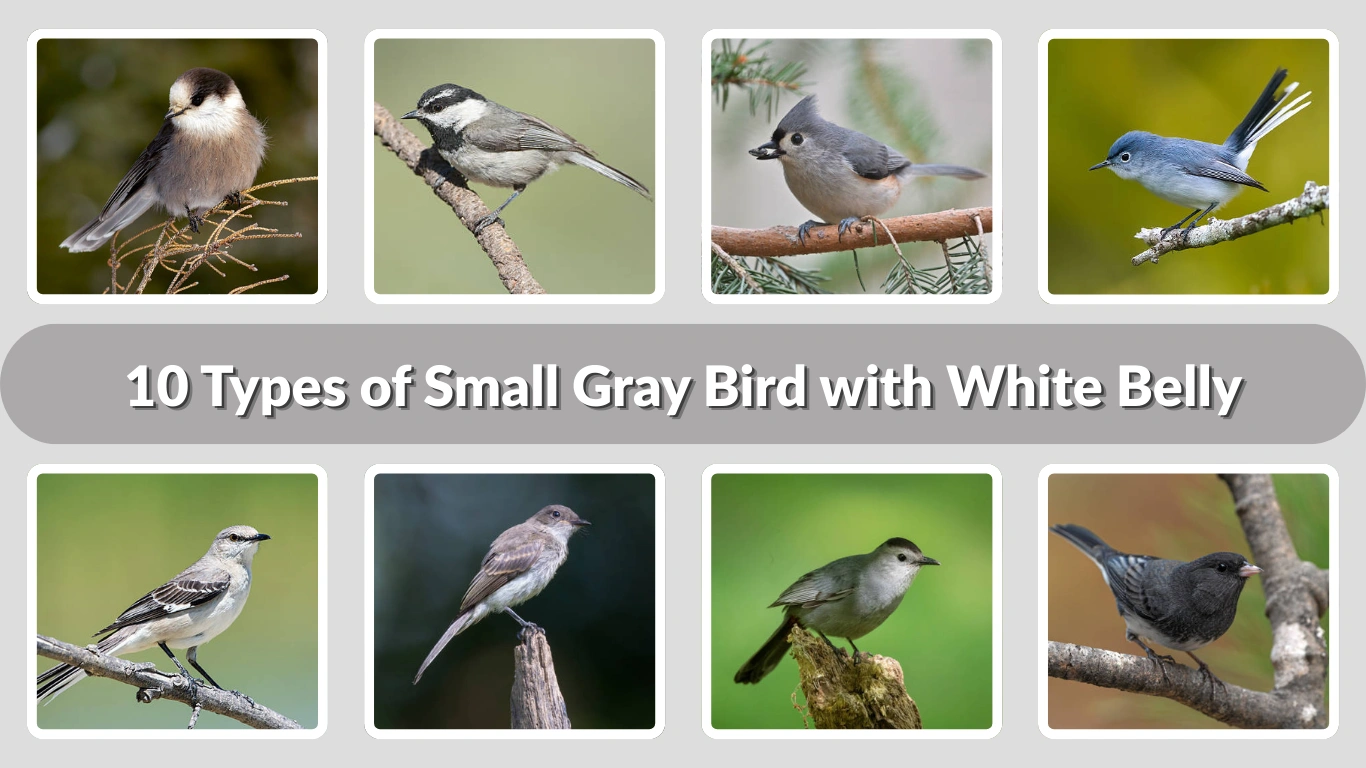
Small gray birds with white bellies are some of the most familiar and charming visitors to gardens, forests, and parks. Their soft coloring helps them blend easily into tree branches and open landscapes, yet their quick movements and sweet calls make them easy to notice. From energetic chickadees to ground-hopping juncos, these birds play an important role in natural ecosystems by controlling insects and spreading seeds. This guide explores ten beautiful small gray birds with white bellies you may recognize.
1. Dark-eyed Junco
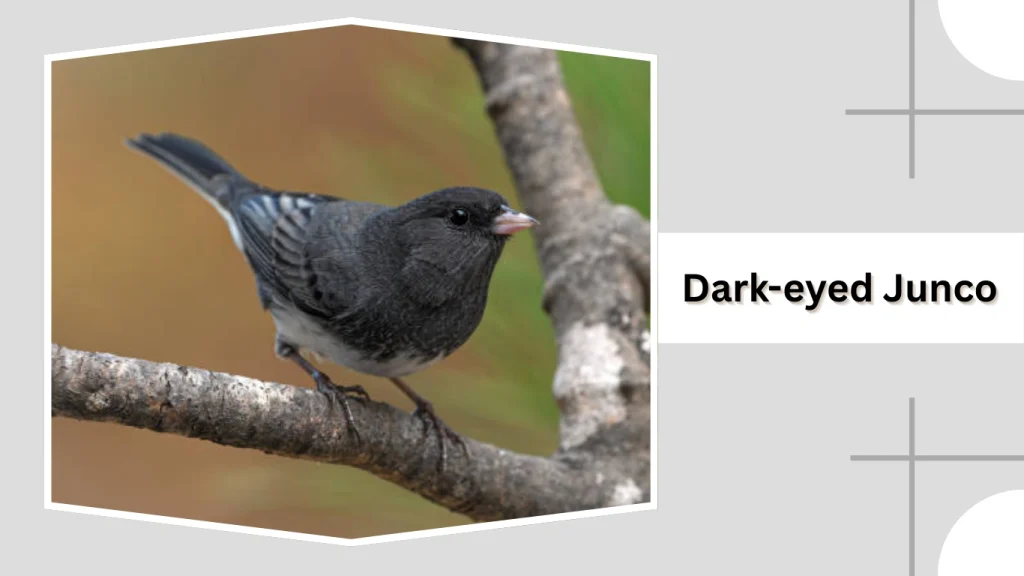
The dark-eyed junco is a small, active songbird commonly seen hopping on the ground or visiting backyard feeders. It is best known for its soft gray body, bright white belly, and quick, fluttering movements. This bird is widespread across North America and is often one of the first winter birds people notice near homes and gardens.
Identification
- Small, round-bodied bird with a smooth gray or slate-colored head and back
- Clean white belly that contrasts clearly with the darker upperparts
- Short, thick, pale pink bill adapted for cracking seeds
- Long tail with white outer feathers visible in flight
- Average length about 12–16 cm (5–6 inches)
Habitat
Dark-eyed juncos are highly adaptable and can be found in forests, woodland edges, parks, gardens, and even urban backyards. They prefer areas with shrubs or ground cover, where they can forage safely. During winter, they often move into lower elevations and residential areas in large numbers.
Behavior
These birds are mostly ground feeders, frequently seen hopping and scratching among leaves to find seeds and insects. They often travel in loose flocks in winter and fly up suddenly when disturbed. Dark-eyed juncos are generally quiet but produce soft trills and sharp “tick” calls.
Diet
Their diet mainly consists of seeds, grains, and small insects. In colder months, they rely heavily on seeds from grasses, weeds, and bird feeders. During the breeding season, they eat more insects and larvae, which provide extra protein for raising young.
Lifespan
In the wild, dark-eyed juncos typically live around 3 to 5 years, though some individuals have been recorded living longer under favorable conditions. Survival depends on factors such as food availability, climate, predators, and habitat quality.
2. Tufted Titmouse
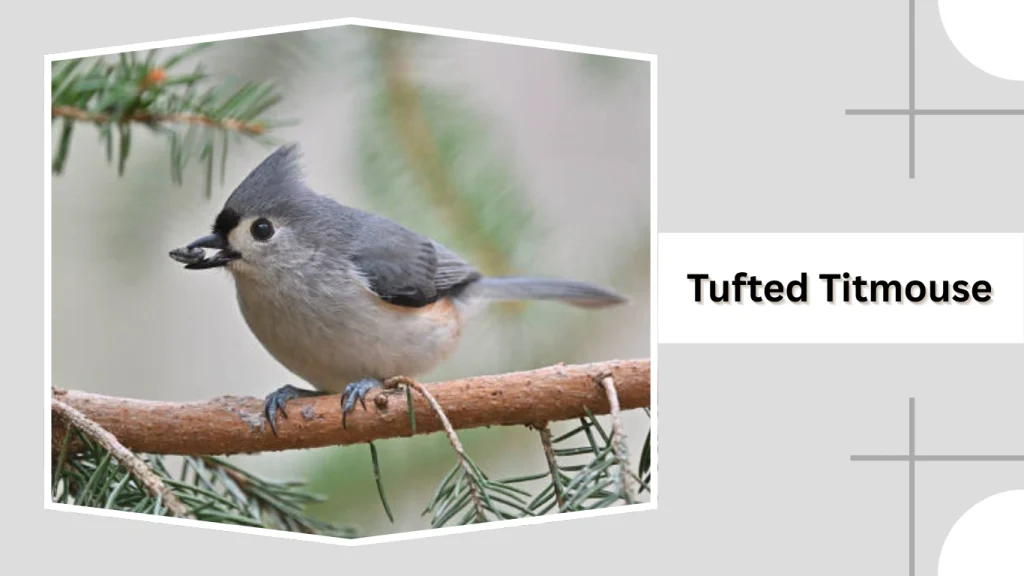
The tufted titmouse is a tiny, energetic songbird known for its soft gray upperparts, clean white belly, and distinctive pointed crest. It is a familiar visitor to gardens and feeders, often moving quickly through branches with acrobatic hops. Its curious nature and clear whistling calls make it easy to notice despite its small size.
Identification
- Small gray bird with a pale to white belly
- Distinct pointed crest on the head
- Large dark eyes and a short, stout bill
- Soft rusty or peach wash along the sides
- Body length about 14–16 cm (5.5–6.3 inches)
Habitat
Tufted titmice are commonly found in deciduous and mixed woodlands, forest edges, parks, and suburban gardens. They prefer areas with mature trees, which provide natural cavities for nesting. They adapt well to human environments, especially where feeders and nest boxes are available.
Behavior
These birds are active, social, and often join mixed-species flocks with chickadees and nuthatches. They move quickly through trees, hanging upside down while searching for food. Tufted titmice are also known to store seeds in bark crevices for later use.
Diet
Their diet includes seeds, nuts, berries, and a wide variety of insects. At feeders, they favor sunflower seeds and peanuts. During warmer months, they consume many caterpillars and beetles, helping control insect populations.
Lifespan
Tufted titmice usually live around 2 to 6 years in the wild. Some individuals may survive longer if they avoid predators and find stable food sources. Their lifespan is influenced by winter severity, habitat quality, and nesting success.
3. White-breasted Nuthatch
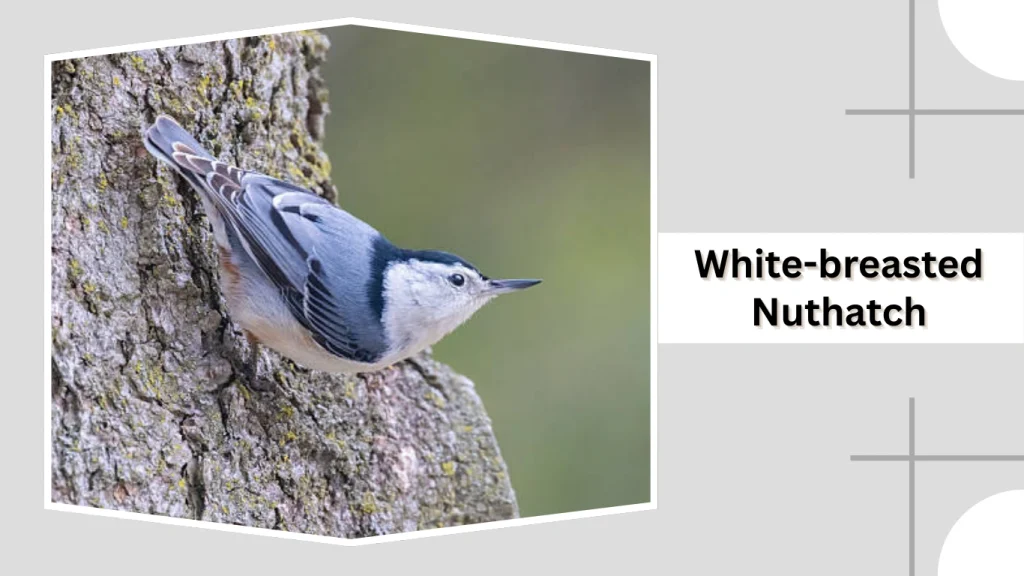
The white-breasted nuthatch is a small, compact bird famous for its gray-blue back and bright white belly. It is often seen climbing tree trunks headfirst, a unique behavior that quickly sets it apart from other small birds. Its nasal calls and bold movements make it a familiar sight in woodlands and backyard feeders.
Identification
- Small bird with a gray to bluish-gray back and wings
- Clean white face, throat, and belly
- Black or dark gray cap on the head
- Short tail and strong, straight bill
- Body length about 13–15 cm (5–6 inches)
Habitat
White-breasted nuthatches live mainly in mature deciduous and mixed forests, especially areas with oak, maple, and hickory trees. They are also common in parks, orchards, and residential areas with large trees. Tree trunks and thick branches are essential for both feeding and nesting.
Behavior
These birds are best known for walking down tree trunks headfirst while searching for insects hidden in bark. They are territorial year-round and often stay in pairs. In winter, they sometimes join mixed flocks but still defend their core feeding areas.
Diet
Their diet includes insects, spiders, and other small invertebrates, along with seeds and nuts. They frequently wedge large seeds into bark and hammer them open with their bills. At feeders, they favor sunflower seeds, peanuts, and suet.
Lifespan
White-breasted nuthatches typically live about 3 to 9 years in the wild. Survival depends on access to mature trees, suitable nesting cavities, and consistent food supplies, especially during harsh winters.
4. Gray Catbird
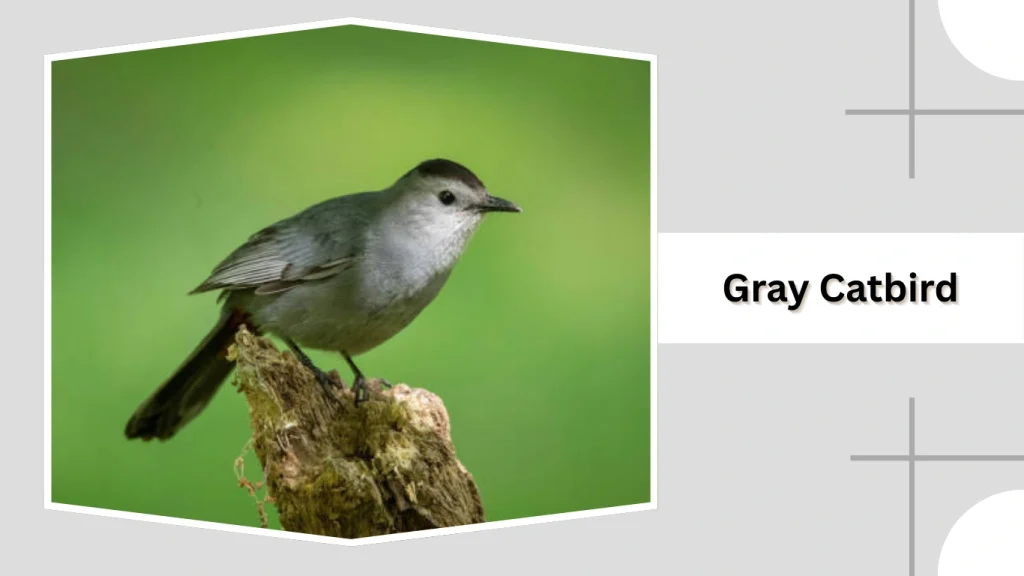
The gray catbird is a slim, medium-small songbird with smooth slate-gray plumage and a lighter, whitish belly. Although slightly larger than some backyard birds, it is still considered small and fits well in this list due to its gray body and pale underparts. It is best known for its cat-like “mew” call and rich, varied songs.
Identification
- Slender gray bird with a paler to whitish belly
- Dark cap on the head and blackish tail
- Subtle rusty patch under the tail (often hidden)
- Medium-length tail and thin, straight bill
- Body length about 20–23 cm (8–9 inches)
Habitat
Gray catbirds prefer dense shrubs, thickets, woodland edges, and overgrown gardens. They are especially common in areas with berry-producing plants and tangled vegetation. During migration, they also use hedgerows, wetlands, and coastal scrub.
Behavior
These birds are secretive but vocal, often staying low in thick cover while singing loudly. They are curious and intelligent, capable of mimicking the songs of other birds. Gray catbirds are usually seen alone or in pairs rather than large flocks.
Diet
Their diet is a mix of insects, spiders, and fruits. In spring and summer, they eat many beetles, ants, caterpillars, and flies. In late summer and fall, berries become a major food source, including dogwood, blackberry, and elderberry.
Lifespan
Gray catbirds typically live around 2 to 10 years in the wild. Longevity depends on migration risks, predation, and the availability of dense vegetation for shelter and nesting.
5. Eastern Phoebe
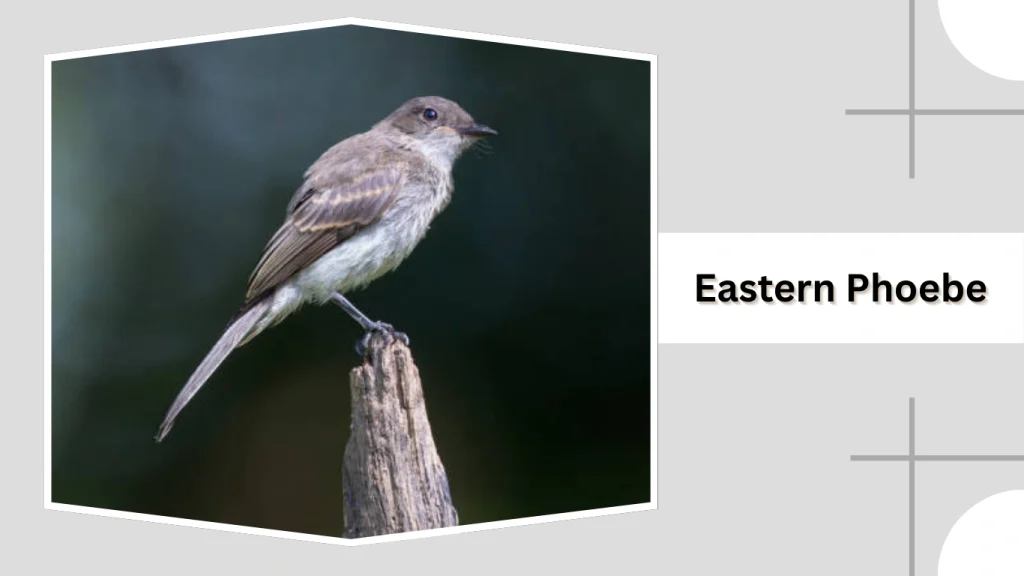
The eastern phoebe is a small, quiet flycatcher with soft gray upperparts and a clean white belly. It is often seen sitting on low branches, fences, or buildings, repeatedly wagging its tail before darting out to catch flying insects. Its simple appearance and gentle “fee-bee” call make it a familiar bird in both rural and suburban areas.
Identification
- Small flycatcher with gray-brown upperparts and white belly
- Slightly darker head compared to the back
- Thin, straight black bill suited for catching insects
- Frequent tail-wagging motion when perched
- Body length about 14–17 cm (5.5–6.7 inches)
Habitat
Eastern phoebes live near open woodlands, forest edges, farms, bridges, and buildings. They prefer areas close to water, cliffs, or human structures where suitable ledges for nesting are available. They are often among the earliest songbirds to return in spring.
Behavior
These birds are usually seen alone or in pairs, quietly watching for insects from low perches. They fly out quickly to snatch prey in midair and return to the same spot. Tail pumping is a constant behavior and a key way to recognize them.
Diet
Their diet is mainly insects such as flies, mosquitoes, beetles, and moths. They occasionally eat small fruits, especially in colder months when insects are scarce. Eastern phoebes rarely visit seed feeders.
Lifespan
Eastern phoebes typically live around 3 to 7 years in the wild. Some individuals have been recorded living longer, especially in areas with safe nesting sites and reliable food supplies.
6. Northern Mockingbird
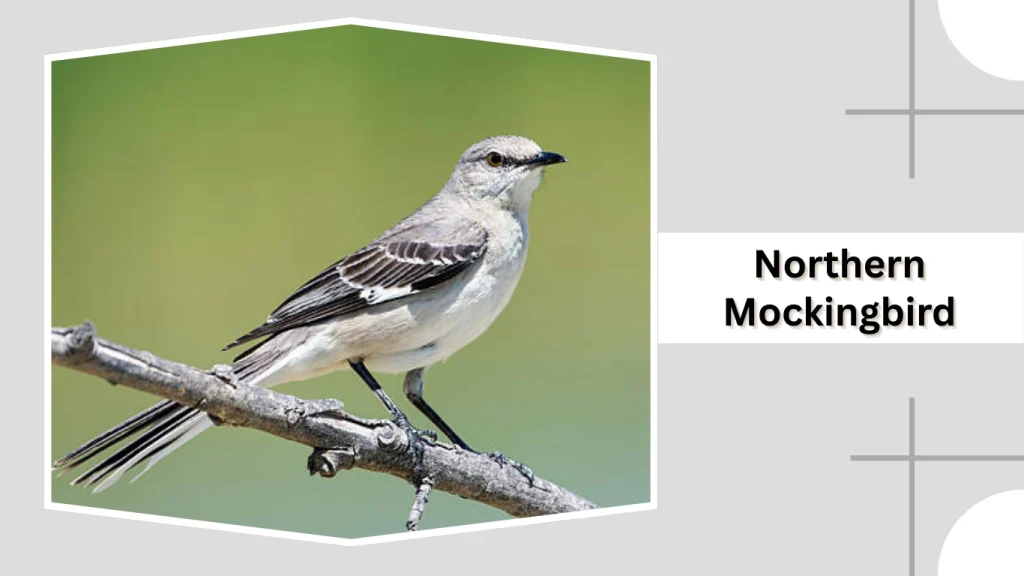
The northern mockingbird is a slender, medium-small bird with soft gray upperparts and a pale to white belly. Although slightly larger than many “small birds,” it fits this group because of its gray-and-white coloration and frequent presence in gardens and open spaces. It is famous for its ability to mimic the songs of many other birds.
Identification
- Gray body with a lighter, whitish belly
- Long tail often flicked or spread while perched
- White wing patches visible in flight
- Thin, slightly curved black bill
- Body length about 20–25 cm (8–10 inches)
Habitat
Northern mockingbirds are common in open woodlands, gardens, parks, farms, and urban areas. They prefer places with scattered trees, shrubs, and open ground. Dense bushes are important for nesting and shelter.
Behavior
These birds are bold, active, and strongly territorial, especially during the breeding season. Males sing long, complex songs, often at night, copying the calls of other birds. They frequently chase away intruders from their feeding and nesting areas.
Diet
Their diet includes insects, worms, spiders, and a wide range of fruits and berries. In summer, they rely more on insects, while in fall and winter, fruits become a major food source.
Lifespan
Northern mockingbirds usually live about 3 to 8 years in the wild. Some have been recorded living over 10 years, especially in areas with good food availability and low predation.
7. Blue-gray Gnatcatcher
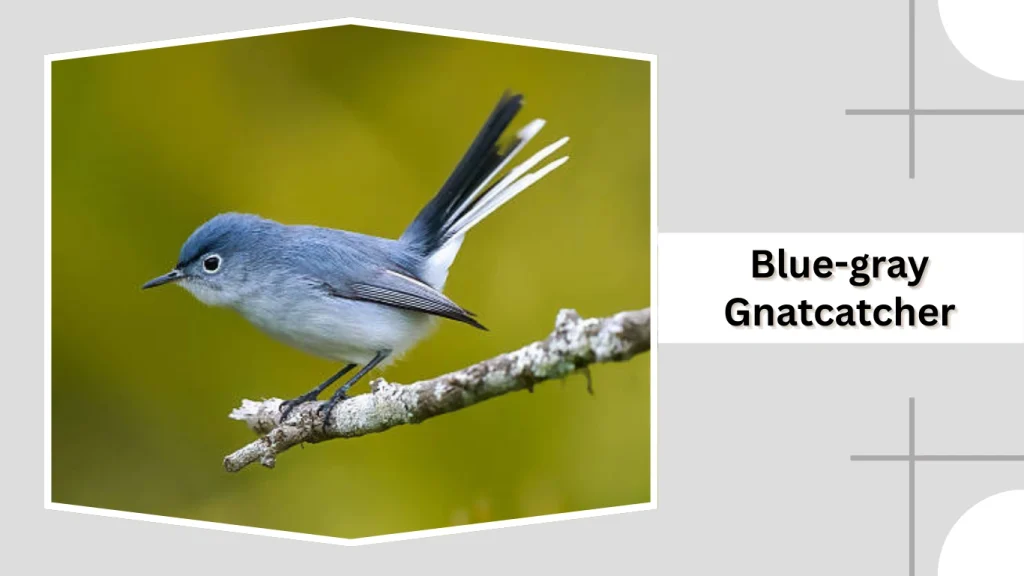
The blue-gray gnatcatcher is a very small, slim bird with soft blue-gray upperparts and a bright white belly. It is constantly in motion, flitting through branches and flicking its long tail as it searches for tiny insects. Because of its size, colors, and restless behavior, it can look like a moving blur in trees.
Identification
- Tiny, slender bird with blue-gray back and head
- Clean white belly and undertail area
- Long, thin tail often edged with white
- Thin, pointed bill for catching small insects
- Body length about 10–13 cm (4–5 inches)
Habitat
Blue-gray gnatcatchers live in open woodlands, forest edges, scrublands, and gardens with scattered trees. They are especially common in oak forests and along river corridors. During migration, they can appear in a wide variety of wooded habitats.
Behavior
These birds are extremely active and rarely stay still. They move quickly through foliage, snapping up tiny insects and spiders. Tail flicking and soft, nasal calls are typical behaviors. They are often seen alone or in pairs.
Diet
Their diet is made up almost entirely of small insects and spiders, including gnats, flies, caterpillars, and beetles. They rarely eat seeds and are not common feeder birds.
Lifespan
Blue-gray gnatcatchers usually live around 2 to 4 years in the wild. Their small size makes them vulnerable to predators and harsh weather, but good habitat and insect availability can improve survival.
8. Black-capped Chickadee
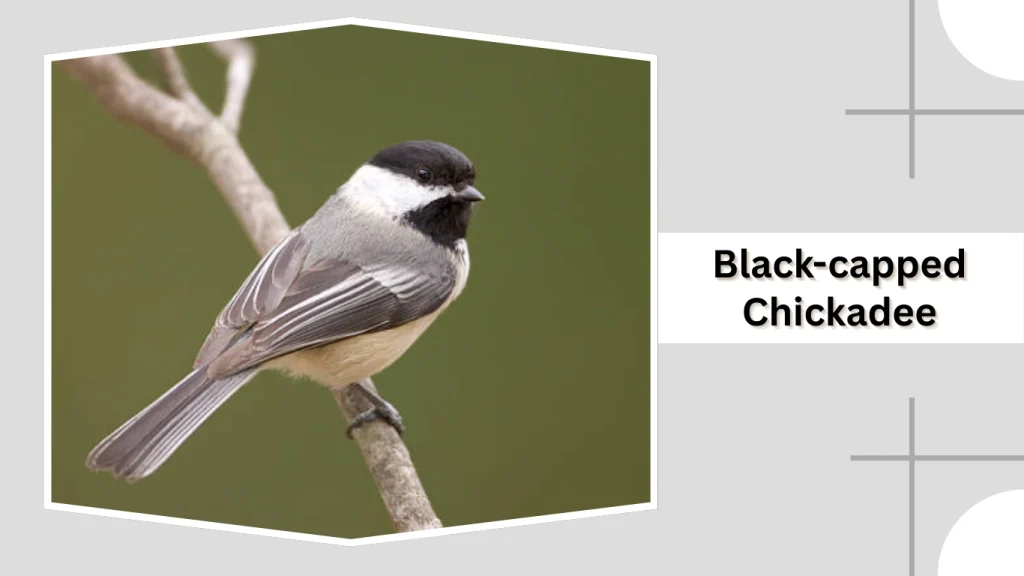
The black-capped chickadee is a tiny, round-bodied bird with soft gray wings, a bright white belly, and a bold black cap and throat. It is one of the most familiar backyard birds, known for its friendly behavior, quick movements, and clear “chick-a-dee-dee-dee” call.
Identification
- Very small bird with gray back and wings
- Clean white cheeks and white belly
- Distinct black cap and black throat “bib”
- Short neck, short bill, and rounded body shape
- Body length about 12–15 cm (5–6 inches)
Habitat
Black-capped chickadees are common in deciduous and mixed forests, woodland edges, parks, and suburban gardens. They prefer areas with trees and shrubs and easily adapt to human environments, especially where bird feeders are present.
Behavior
These birds are active, social, and often travel in small flocks, especially in winter. They are curious and bold, sometimes approaching people closely. Chickadees store food in hidden spots and have excellent memory for finding it later.
Diet
Their diet includes insects, spiders, seeds, and berries. In summer, they eat many caterpillars and other insects. In winter, they rely more on seeds and visit feeders for sunflower seeds, peanuts, and suet.
Lifespan
Black-capped chickadees typically live about 2 to 5 years in the wild, though some individuals have survived longer. Their survival depends on winter conditions, predators, and access to food and nesting sites.
9. Mountain Chickadee
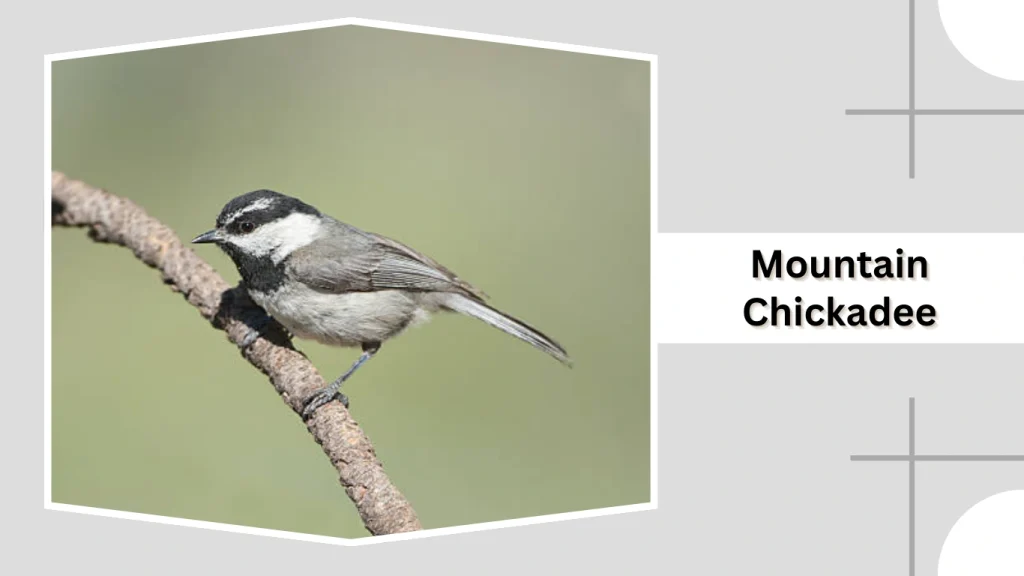
The mountain chickadee is a small, lively bird with soft gray upperparts and a bright white belly. It closely resembles other chickadees but is easily recognized by the bold white stripe over each eye. This species is common in higher elevations, where it brings constant movement and sound to pine forests.
Identification
- Small gray bird with a clean white belly
- Black cap and black throat patch
- Distinct white eyebrow stripe above each eye
- Short, pointed bill and rounded body
- Body length about 13–15 cm (5–6 inches)
Habitat
Mountain chickadees mainly inhabit coniferous forests, especially pine, spruce, and fir woodlands. They are most common in mountainous regions but can also be found in lower-elevation forests during colder months. They often visit feeders near forested areas.
Behavior
These birds are active and social, often forming small flocks in winter. They move quickly through branches, hanging upside down to search for insects. Mountain chickadees are curious and vocal, using a variety of calls to stay in contact with flock members.
Diet
Their diet consists of insects, spiders, seeds, and small nuts. During summer, insects make up a large part of their food. In winter, they depend more on seeds and stored food, often visiting feeders.
Lifespan
Mountain chickadees usually live around 2 to 6 years in the wild. Survival is influenced by winter severity, food supply, and the availability of safe nesting cavities.
10. Canada Jay
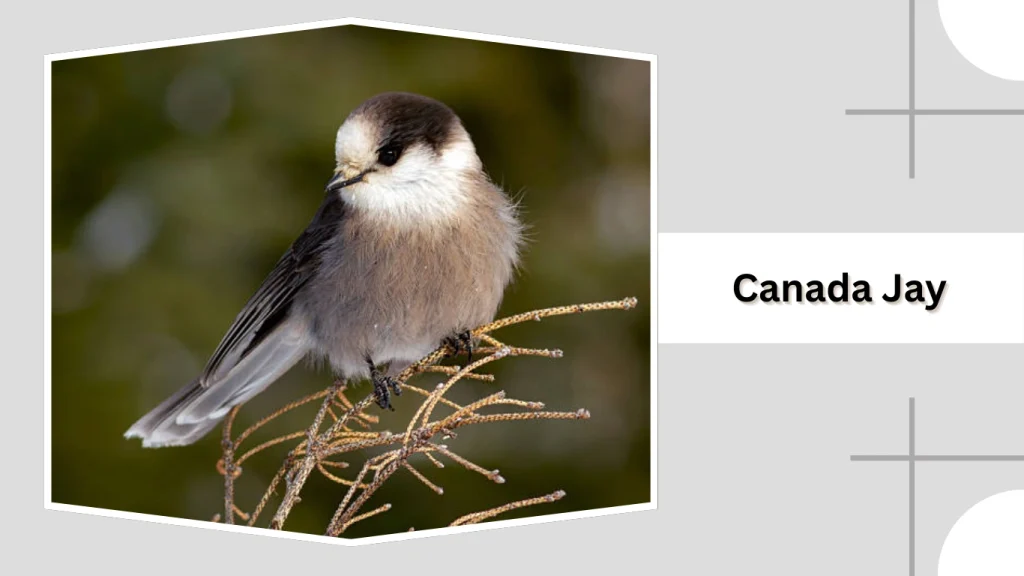
The Canada jay is a medium-small, fluffy bird with soft gray plumage and a pale to whitish belly. Although larger than most “small birds,” it fits this list because of its gray body, light underparts, and compact appearance. It is also known as the gray jay or whiskey jack and is famous for its bold, curious nature.
Identification
- Fluffy gray bird with a paler to whitish belly
- Lighter face and throat compared to the back
- Short, strong black bill
- Rounded wings and relatively long tail
- Body length about 22–33 cm (9–13 inches)
Habitat
Canada jays live mainly in boreal forests of North America, especially spruce and fir woodlands. They prefer cold, remote areas and are often found in northern forests and mountainous regions. They remain in their territories year-round and do not migrate.
Behavior
These birds are intelligent, bold, and highly curious, often approaching people closely. They cache food in tree bark, crevices, and lichens to survive long winters. Canada jays usually live in family groups and defend large forest territories.
Diet
Their diet is very flexible and includes insects, berries, seeds, small animals, carrion, and even food scraps. This adaptability allows them to survive in harsh northern environments.
Lifespan
Canada jays typically live around 8 to 12 years in the wild, with some individuals surviving even longer. Their relatively long lifespan is linked to their intelligence, food-storing behavior, and stable forest territories.
FAQs
What makes a bird “small” in size?
Small birds are generally species that measure under about 20 centimeters (8 inches) in length and have lightweight bodies. They are often quick, agile fliers and are commonly seen hopping through branches or feeding on the ground. Size categories can vary, but “small” usually refers to compact backyard or woodland birds.
Why do many gray birds have white bellies?
A white belly helps with camouflage through a natural effect called countershading. The lighter underside blends with the bright sky when seen from below, while the darker gray back blends with the ground when seen from above. This coloring can help protect small birds from predators.
Are gray birds with white bellies found all over the world?
Yes, gray-and-white color patterns are common among birds worldwide. However, the specific species listed here are mostly found in North America. Other regions also have small gray birds with white bellies, such as various flycatchers, warblers, and chats.
Do small gray birds migrate or stay year-round?
Some small gray birds, like dark-eyed juncos and eastern phoebes, migrate seasonally, while others, such as chickadees and nuthatches, often stay in the same area year-round. Migration depends on food availability, climate, and the species’ ability to survive cold conditions.
How can I attract small gray birds to my garden?
You can attract them by providing sunflower seeds, suet, clean water, and natural shelter like shrubs and trees. Avoid heavy pesticide use so insects remain available. Nest boxes and quiet, safe spaces also encourage these birds to visit and stay longer.