

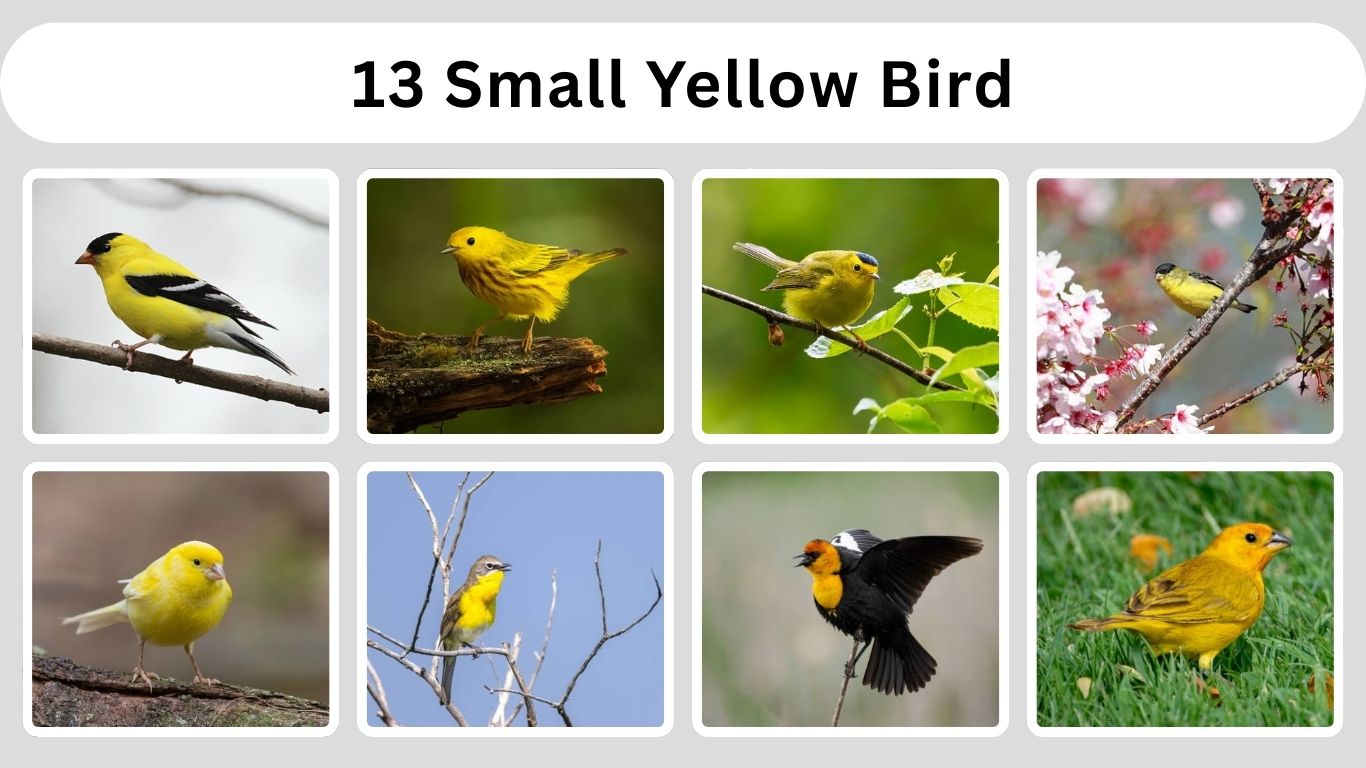
Small yellow birds are some of the most eye-catching and cheerful sights in nature. Their bright feathers bring life to gardens, wetlands, forests, and open fields across the world. From tiny warblers and finches to elegant wagtails and canaries, these birds are admired not only for their color but also for their sweet songs and active behavior. Learning about different small yellow birds makes it easier to identify them and appreciate the important roles they play in natural ecosystems.
1. American Goldfinch
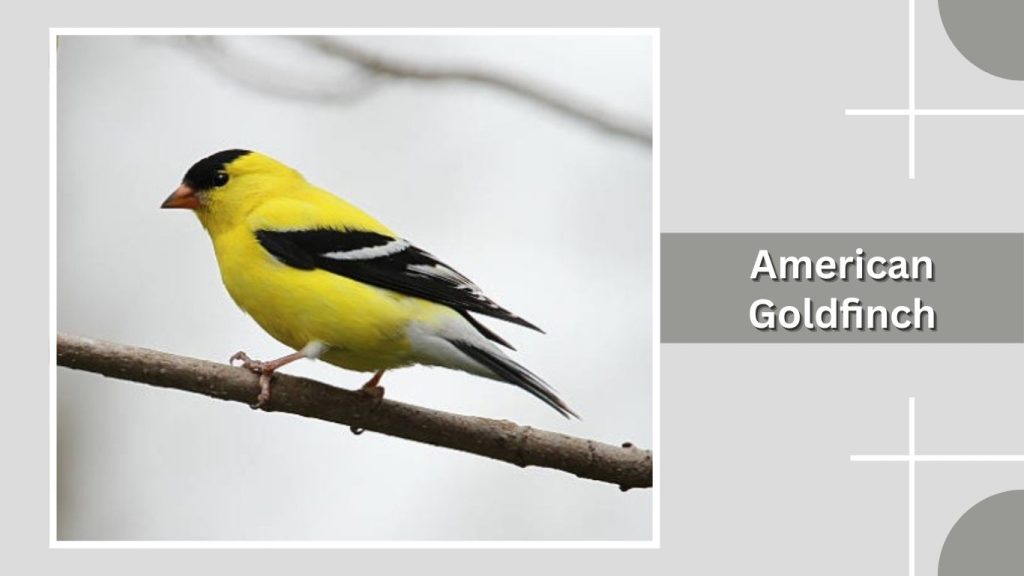
The American Goldfinch is one of the most recognizable small yellow birds in North America. Famous for its bright lemon-yellow body and contrasting black wings, this tiny finch is commonly seen fluttering through gardens, open fields, and roadsides, especially during summer when its colors are at their brightest.
Identification
- Small songbird, about 4.5–5.5 inches long
- Bright yellow body in breeding males
- Black wings with bold white markings
- Black forehead patch (males in summer)
- Short, conical pinkish bill
- Slightly notched tail
Habitat
American Goldfinches prefer open and semi-open areas such as meadows, farmland edges, parks, gardens, and roadsides. They are often found where thistles, sunflowers, and seed-producing plants grow abundantly, as these provide both food and nesting material.
Diet
Their diet consists mainly of seeds, making them one of the strictest seed-eating birds among finches. Thistle, sunflower, dandelion, and grass seeds are favorites. They occasionally eat small insects, especially during the breeding season, to supplement protein needs.
Behavior
These birds are active, social, and often seen in small flocks. Their flight is distinctive, with a rolling up-and-down pattern. American Goldfinches are known for their cheerful, musical calls and their habit of clinging acrobatically to seed heads.
Range
The American Goldfinch is widespread across the United States and southern Canada. Some populations migrate short distances, while others remain year-round, depending on winter temperatures and food availability.
2. Yellow Warbler
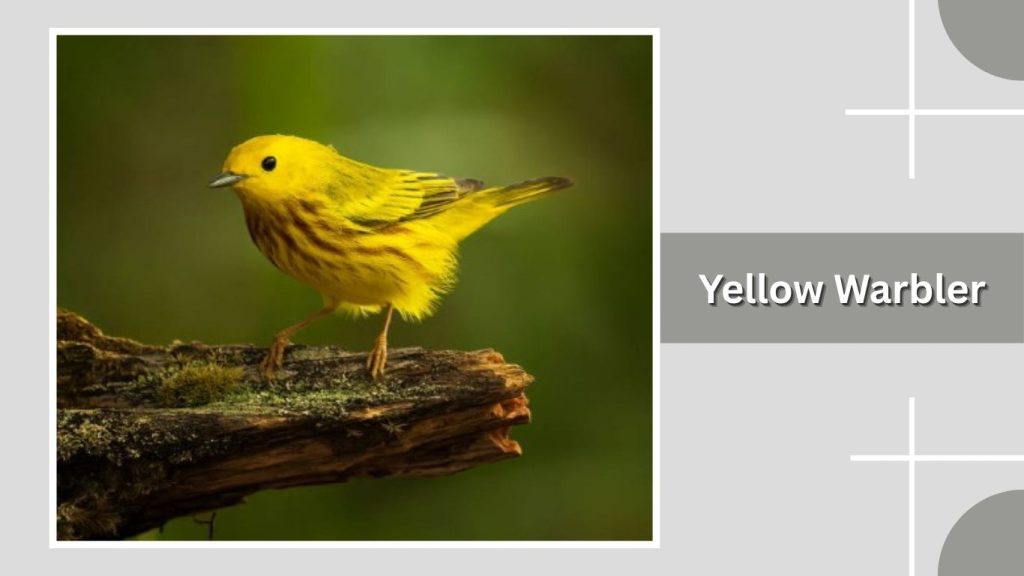
The Yellow Warbler is a tiny, bright yellow songbird widely known for its sweet voice and energetic movements. It is one of the most widespread yellow birds in the Americas and is often spotted flitting through shrubs, wetlands, and garden edges, where its glowing color stands out clearly.
Identification
- Small, slim-bodied songbird about 4.5–5 inches long
- Bright yellow overall body
- Males have faint reddish streaks on the chest
- Thin, pointed bill
- Black eyes with a gentle, rounded head shape
- Long, narrow tail
Habitat
Yellow Warblers are commonly found in wetlands, riverbanks, open woodlands, forest edges, and gardens. They especially favor areas with willows, shrubs, and dense vegetation where they can forage and build hidden nests.
Diet
Their diet is mainly insect-based. They feed on caterpillars, beetles, flies, mosquitoes, and spiders. During migration and late summer, they may also consume small berries and plant material.
Behavior
These birds are very active and rarely stay still for long. They hop through branches searching for insects and are well known for their repeated “sweet-sweet-sweet, I’m-so-sweet” song, often heard during the breeding season.
Range
Yellow Warblers breed across North and Central America and migrate to Central and northern South America during winter, making them one of the most widely distributed warblers in the Western Hemisphere.
3. Wilson’s Warbler
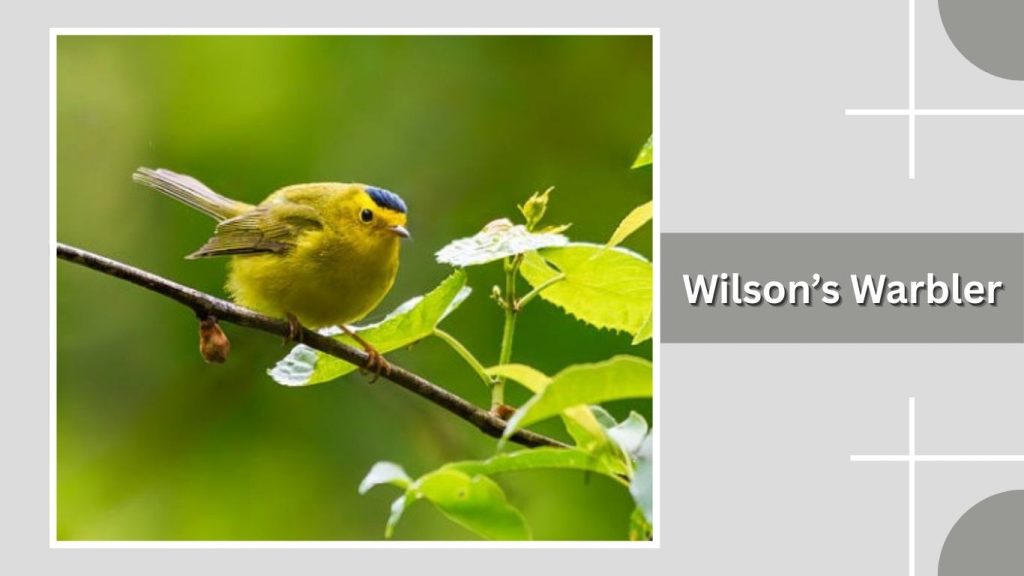
The Wilson’s Warbler is a tiny, energetic yellow bird best known for its bright face and lively personality. Despite its small size, it is a bold and curious species, often seen flicking its tail and darting quickly through low branches in search of insects.
Identification
- Very small songbird, about 4–4.75 inches long
- Bright yellow face and underparts
- Olive-green back
- Males have a small black cap on the crown
- Thin, pointed bill
- Rounded wings and short tail
Habitat
Wilson’s Warblers prefer dense, brushy habitats such as forest edges, streamside thickets, wetlands, and shrubby clearings. During migration, they can also be found in parks and backyard gardens.
Diet
They mainly feed on insects and spiders. Their diet includes gnats, flies, beetles, caterpillars, and aphids. They forage actively among leaves and branches, sometimes hovering briefly to catch prey.
Behavior
This species is constantly in motion, hopping and fluttering through vegetation. Males are highly vocal during breeding season, delivering rapid, chattering songs from low perches.
Range
Wilson’s Warblers breed across Canada, Alaska, and the western United States. In winter, they migrate to Mexico, Central America, and parts of the Caribbean.
4. Lesser Goldfinch
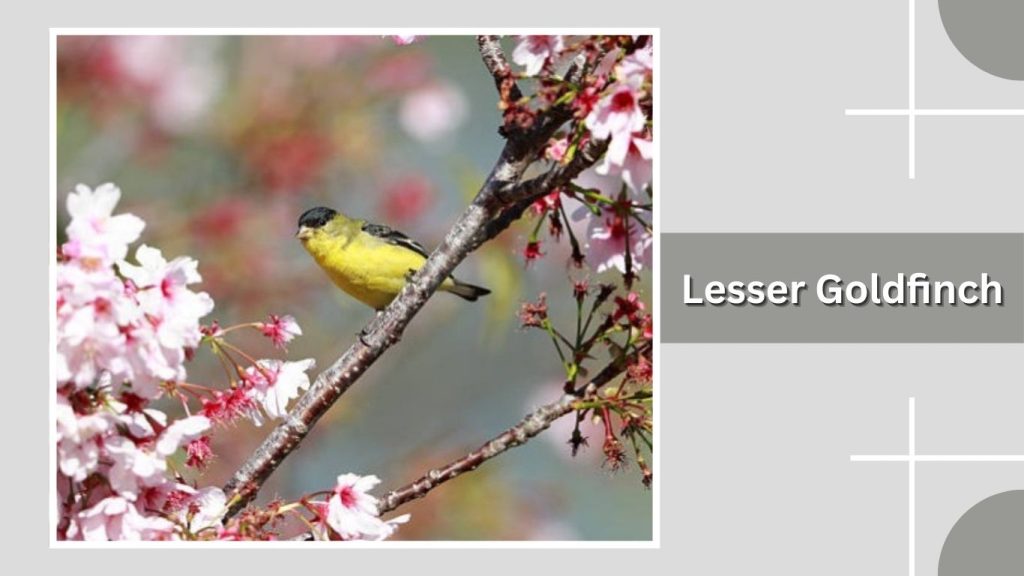
The Lesser Goldfinch is a small, lively finch with a bright yellow underside and contrasting dark upperparts. It is smaller than the American Goldfinch but equally energetic, often seen feeding acrobatically on seed heads or visiting backyard feeders.
Identification
- Very small finch, about 4–4.5 inches long
- Bright yellow underparts
- Black or dark greenish back (varies by region)
- Black wings with a bold white patch
- Short, conical bill
- Slightly notched tail
Habitat
Lesser Goldfinches are commonly found in open woodlands, deserts, grasslands, farmlands, and suburban gardens. They adapt well to human environments, especially where seed feeders and flowering plants are available.
Diet
Their diet consists mainly of seeds, including sunflower, thistle, and weed seeds. They also eat buds and occasional small insects, especially when feeding young.
Behavior
These birds are highly social and often gather in flocks. They are agile climbers, frequently hanging upside down while feeding. Their calls are high-pitched and twittering, and they are active throughout the day.
Range
Lesser Goldfinches are mainly found in the southwestern United States, Mexico, and parts of Central America, with some populations extending north along the Pacific coast.
5. Yellow Canary (Domestic Canary)
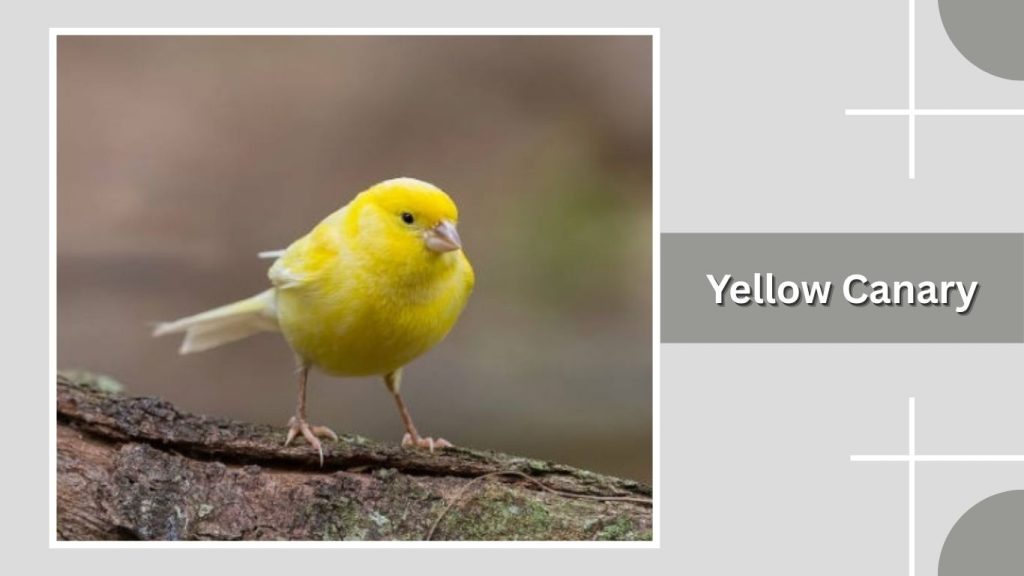
The Yellow Canary, commonly known as the Domestic Canary, is a small, bright yellow bird famous worldwide for its pleasant song and cheerful appearance. Originally bred from wild canaries, this bird is now one of the most popular cage birds and is rarely found living naturally in the wild.
Identification
- Small songbird, about 4–5 inches long
- Bright yellow plumage (many shades possible)
- Slim body with a rounded head
- Short, pale conical bill
- Dark, alert eyes
- Medium-length tail
Habitat
In the wild, canaries originally lived in open woodlands, scrublands, and coastal regions. Domestic yellow canaries are now kept in homes, aviaries, and breeding facilities around the world.
Diet
Their diet mainly consists of seeds such as millet and canary seed. They also benefit from fresh greens, soft fruits, and occasional protein sources like egg food to maintain strong health and vibrant color.
Behavior
Yellow canaries are active, alert, and well known for their singing ability. Males are especially vocal and sing complex melodies, often to attract mates or establish territory.
Range
Wild ancestors of canaries come from the Canary Islands, Madeira, and the Azores. Today, domestic yellow canaries are found globally as pets rather than natural wild populations.
6. Yellow-breasted Chat
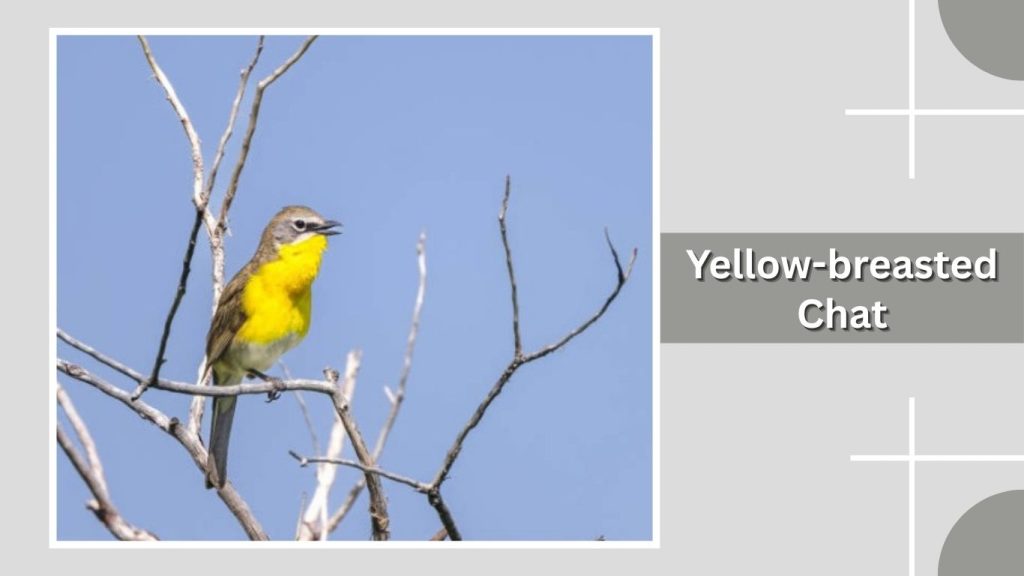
The Yellow-breasted Chat is a larger, bold yellow songbird with a thick bill and a loud, unusual voice. Although it was once grouped with warblers, it stands out for its size, strong facial markings, and a mix of whistles, croaks, and chuckles in its song.
Identification
- Large, warbler-like bird, about 7–7.5 inches long
- Bright yellow throat and breast
- Olive-green back
- White “spectacles” around the eyes
- Thick, slightly curved bill
- Long tail
Habitat
Yellow-breasted Chats favor dense shrubs, thickets, forest edges, overgrown fields, and riparian areas. They prefer tangled vegetation where they can stay hidden while calling loudly.
Diet
They eat a wide variety of insects such as beetles, caterpillars, grasshoppers, and spiders. They also consume berries and small fruits, especially later in the season.
Behavior
These birds are secretive but extremely vocal. Males often sing from exposed perches and perform exaggerated flights, wing-fluttering, and tail-spreading displays during breeding season.
Range
Yellow-breasted Chats breed across much of the United States and southern Canada and migrate to Mexico, Central America, and parts of the Caribbean in winter.
7. Yellow-headed Blackbird
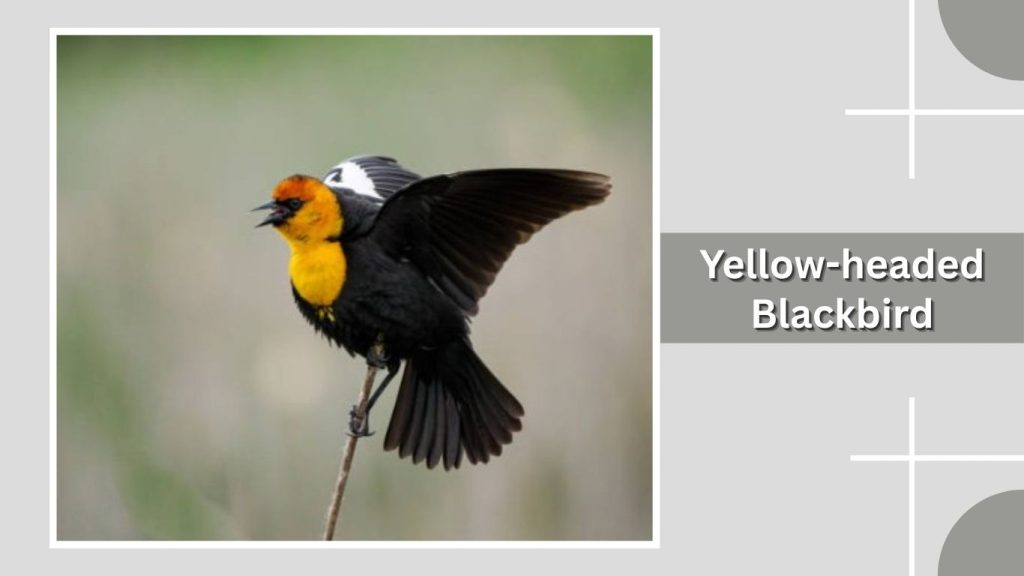
The Yellow-headed Blackbird is a striking small-to-medium-sized bird known for its vivid golden-yellow head and chest contrasted with a black body. Although slightly larger than typical “small yellow birds,” it is often included due to its bright yellow coloration and eye-catching appearance.
Identification
- Medium-sized blackbird, about 8.5–10 inches long
- Bright yellow head and upper breast
- Jet-black body and wings
- White wing patches visible in flight
- Strong, pointed black bill
- Yellow eye in adults
Habitat
This species is closely tied to wetlands. It is most often found in marshes, reed beds, and lakeshores during the breeding season. Outside breeding periods, it may also appear in open fields and agricultural areas.
Diet
Yellow-headed Blackbirds feed mainly on insects such as beetles, flies, caterpillars, and aquatic invertebrates. They also eat seeds and grains, especially in fall and winter.
Behavior
They are colonial nesters, often forming noisy breeding colonies. Males are very territorial and produce harsh, scraping calls that are quite different from the songs of most yellow birds.
Range
They breed in western and central North America, especially in prairie wetlands, and migrate south to the southwestern United States and Mexico during winter.
8. Saffron Finch
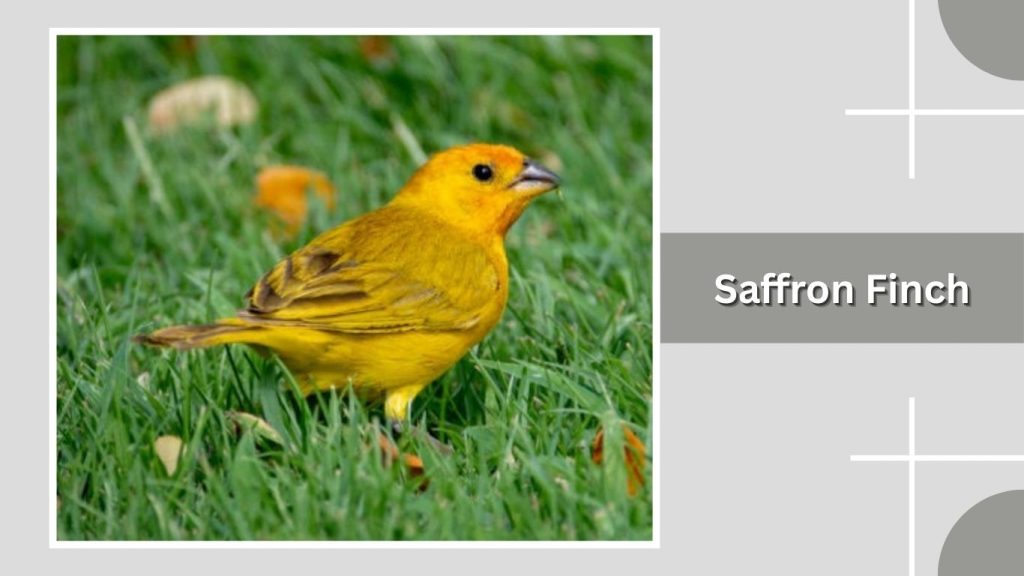
The Saffron Finch is a cheerful, small yellow songbird widely kept as a cage bird and also common in open habitats across parts of South America. Males are especially bright, showing rich yellow plumage that makes them easy to recognize.
Identification
- Small finch, about 5–5.5 inches long
- Bright yellow body in males
- Orange to yellow face and crown
- Thick, pale conical bill
- Dark wings and tail
- Females are duller, more olive-toned
Habitat
Saffron Finches thrive in open woodlands, grasslands, agricultural areas, city parks, and gardens. They adapt very well to human environments and are often seen around buildings and open courtyards.
Diet
They mainly feed on seeds, grains, and grasses. They also eat small insects and plant matter, especially during the breeding season.
Behavior
These birds are social and often seen in pairs or small flocks. They are active foragers, hopping on the ground and low branches while searching for food. Their song is a series of pleasant, simple whistles.
Range
The Saffron Finch is native to South America, especially Brazil, Venezuela, Colombia, and surrounding regions. Introduced populations also exist in parts of the Caribbean and Central America.
9. Eastern Yellow Wagtail

The Eastern Yellow Wagtail is a slim, lively little bird recognized for its bright yellow underparts and constant tail-wagging motion. It is a close relative of other wagtails and is often seen walking or running on the ground near open areas.
Identification
- Small, slender bird about 6–7 inches long
- Bright yellow belly and undertail
- Olive to grayish upperparts
- Long, narrow tail constantly wagged
- Thin, pointed bill
- Dark eyes with fine facial markings
Habitat
Eastern Yellow Wagtails prefer open country such as grasslands, wetlands, riverbanks, agricultural fields, and lakeshores. They are frequently found near water or grazing animals where insects are abundant.
Diet
They feed mainly on insects and other small invertebrates, including flies, beetles, ants, and larvae. They often chase prey on foot or catch insects in short aerial flights.
Behavior
This species is very active and alert. Its constant tail pumping is one of its most noticeable traits. It usually forages on the ground and gives sharp, high-pitched calls while moving.
Range
Eastern Yellow Wagtails breed across parts of eastern Asia and Siberia and migrate south to Southeast Asia, Indonesia, and northern Australia during winter.
10. Citrine Wagtail
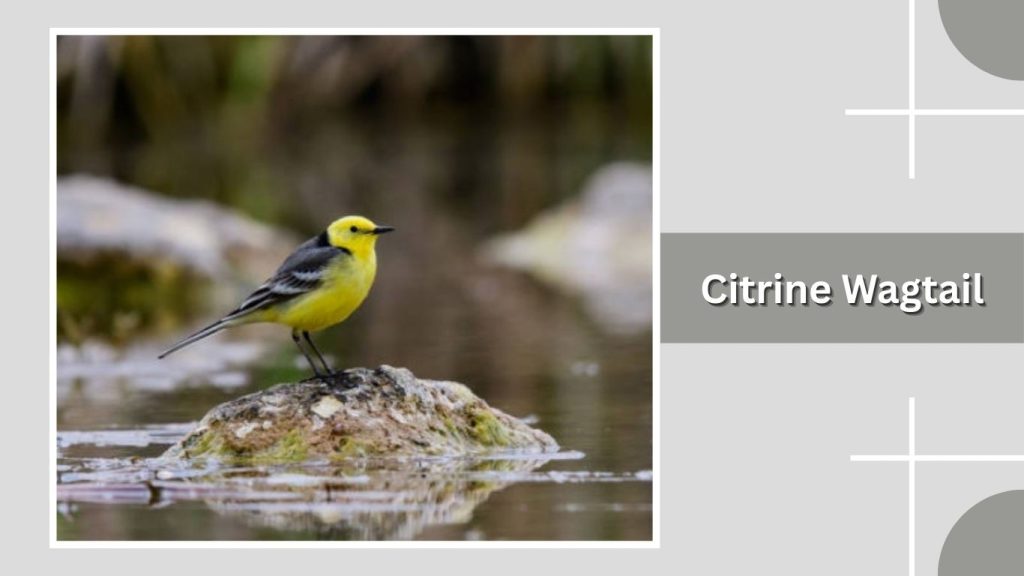
The Citrine Wagtail is a small, elegant yellow bird best known for its bright lemon-yellow head and underparts. It is closely associated with wetlands and is admired for its graceful movements and constant tail-wagging behavior.
Identification
- Small, slender bird about 6.5–7 inches long
- Bright yellow head and underparts (especially in breeding males)
- Gray to olive upperparts
- Long, narrow tail often wagged
- Thin, pointed bill
- Dark wings with pale edges
Habitat
Citrine Wagtails favor marshes, wet meadows, riverbanks, and lakeshores. They breed near freshwater wetlands and are often seen walking along muddy edges searching for insects.
Diet
Their diet mainly consists of insects and small invertebrates such as flies, beetles, mosquitoes, and larvae. They occasionally take small aquatic organisms from shallow water.
Behavior
These birds are active ground foragers and are rarely still. They frequently bob their tails and move quickly along open ground. Their calls are sharp and metallic, often given in flight.
Range
Citrine Wagtails breed in parts of central Asia and eastern Europe and migrate south to South Asia and Southeast Asia during the winter season.
11. Yellow-rumped Warbler
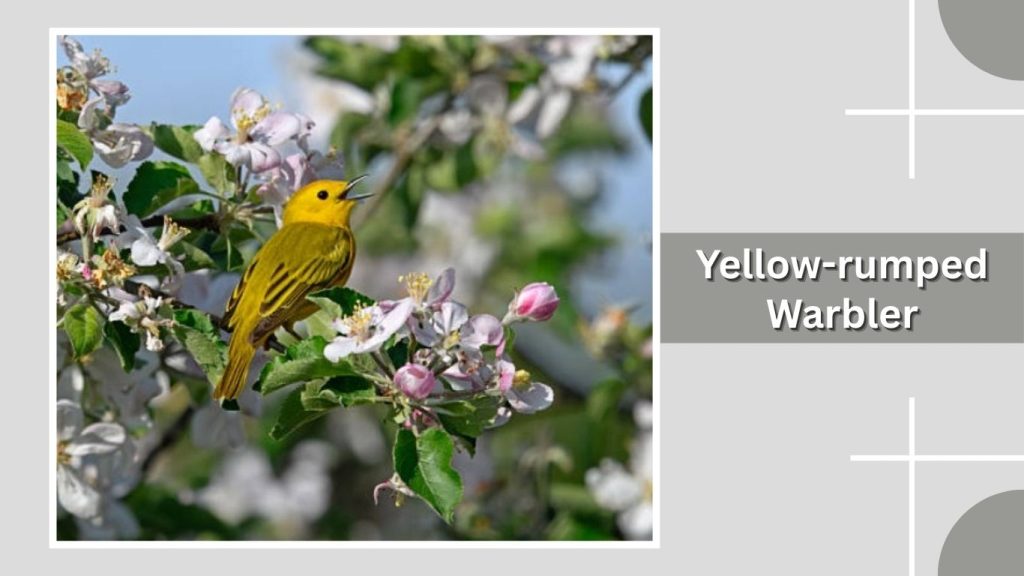
The Yellow-rumped Warbler is a small, energetic songbird easily recognized by the bright yellow patches on its body, especially the distinctive yellow rump that gives the species its name. It is one of the most widespread and adaptable warblers.
Identification
- Small warbler, about 4.7–5.5 inches long
- Yellow rump, throat, and side patches
- Gray, white, and black streaked body
- Thin, pointed bill
- Long tail with white outer feathers
- Males brighter than females
Habitat
Yellow-rumped Warblers live in a wide range of habitats including coniferous forests, mixed woodlands, forest edges, parks, and gardens. In winter, they are often seen in open areas with shrubs and berry-producing plants.
Diet
They eat insects such as beetles, flies, and caterpillars during warmer months. In winter, they switch heavily to berries and fruits, including bayberries and juniper, which allows them to survive colder climates than most warblers.
Behavior
These birds are active and restless, constantly flitting through trees and shrubs. They may hover briefly to catch insects and often join mixed feeding flocks outside the breeding season.
Range
Yellow-rumped Warblers breed across much of Canada and the northern United States and migrate south throughout the U.S., Mexico, Central America, and the Caribbean.
12. Common Yellowthroat
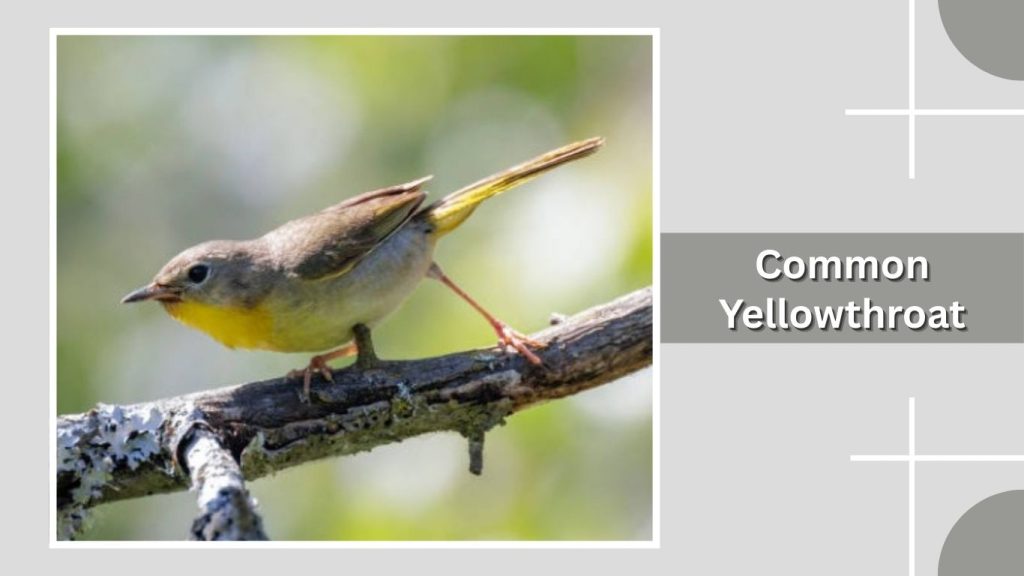
The Common Yellowthroat is a small, secretive warbler famous for the black “mask” worn by adult males and its bright yellow throat and chest. It is often heard before it is seen, singing from deep within thick vegetation.
Identification
- Small warbler, about 4.3–5 inches long
- Bright yellow throat and upper breast
- Olive-green back
- Adult males have a black facial mask with white edging
- Thin, pointed bill
- Rounded tail often flicked
Habitat
Common Yellowthroats prefer dense, low vegetation such as marshes, wet meadows, forest edges, and overgrown fields. They are strongly associated with wetlands and thick undergrowth.
Diet
They mainly feed on insects and spiders, including beetles, flies, caterpillars, and ants. They forage low in vegetation, picking prey from leaves and stems.
Behavior
These birds are active but secretive, often staying hidden in reeds and shrubs. Their loud, rolling “wichity-wichity-wichity” song is a common sound in summer.
Range
The Common Yellowthroat is widespread across North America, breeding throughout the United States and southern Canada and migrating to the southern U.S., Mexico, Central America, and the Caribbean in winter.
13. Yellow-fronted Canary
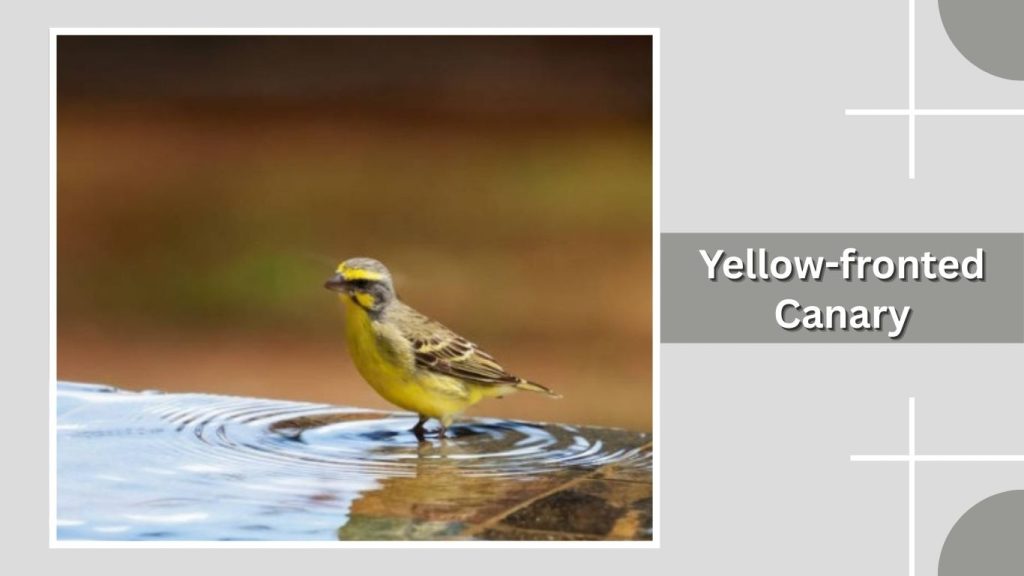
The Yellow-fronted Canary is a small, bright yellow songbird known for its cheerful appearance and musical voice. It is closely related to the domestic canary and is often seen in open habitats, sometimes visiting gardens and human settlements.
Identification
- Small finch, about 4.5–5 inches long
- Bright yellow face and underparts
- Olive to greenish back
- Short, conical pale bill
- Dark eyes
- Slim body with a slightly notched tail
Habitat
Yellow-fronted Canaries are found in open woodlands, savannas, shrublands, farmlands, and suburban gardens. They prefer areas with scattered trees, bushes, and grasses.
Diet
Their diet consists mainly of seeds and grasses. They also eat small insects and plant material, especially during breeding season.
Behavior
These birds are social and often seen in pairs or small flocks. They forage on the ground and in low vegetation and are known for their pleasant, melodious songs.
Range
The Yellow-fronted Canary is native to sub-Saharan Africa, where it is widely distributed across grasslands and open countryside.
FAQs
What makes small yellow birds so brightly colored?
Small yellow birds get their bright coloration mainly from pigments called carotenoids found in their diet, especially from seeds, fruits, and insects. These pigments are deposited in feathers during molting, producing shades of yellow that can signal health, maturity, and breeding condition.
Are all small yellow birds finches or warblers?
No, not all small yellow birds belong to finches or warblers. While many well-known yellow birds fall into these groups, others belong to different families such as wagtails, blackbirds, and canaries. Color alone does not determine a bird’s family or classification.
Do small yellow birds migrate?
Many small yellow birds are migratory, traveling long distances between breeding and wintering grounds to follow food availability and warmer climates. However, some species, like domestic canaries or certain finches, are mostly resident and stay in the same regions year-round.
What do small yellow birds usually eat?
Most small yellow birds feed on insects, seeds, or a combination of both. Warblers mainly eat insects, while finches prefer seeds. Some adaptable species also eat fruits and berries, especially when insects are scarce.
Where are small yellow birds most commonly found?
Small yellow birds can be found in a wide range of habitats including forests, wetlands, grasslands, gardens, and farmland. They are especially common in areas with abundant flowering plants, shrubs, and insects, which provide both food and shelter.