




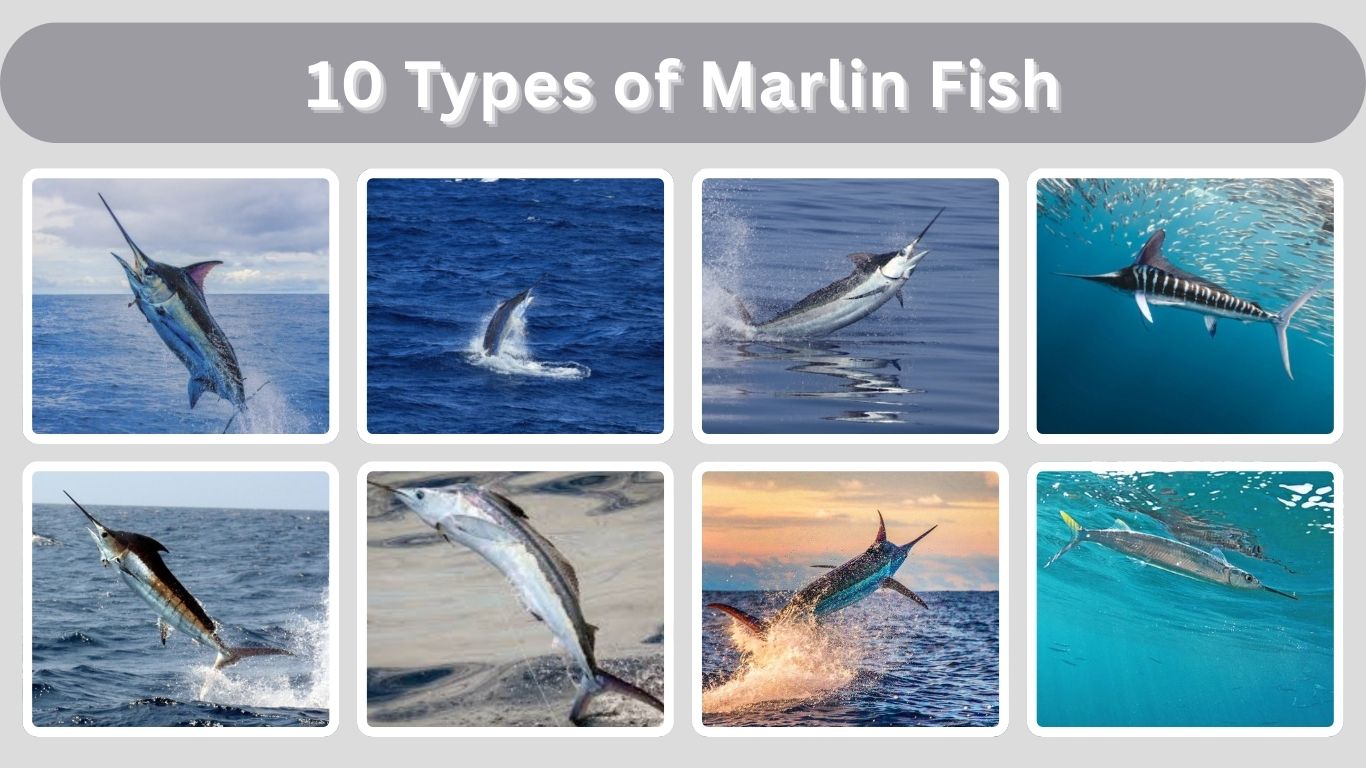
Marlin fish are among the most powerful and fastest predators in the ocean, instantly recognized by their long spear-like bills, sleek bodies, and incredible swimming speed. Belonging to the billfish family, marlins are found mainly in warm tropical and subtropical seas, where they hunt tuna, squid, and other fast-moving prey. Several different types of marlin exist, along with closely related spearfish, each varying in size, habitat, and appearance, but all sharing remarkable strength and agility.
1. Blue Marlin
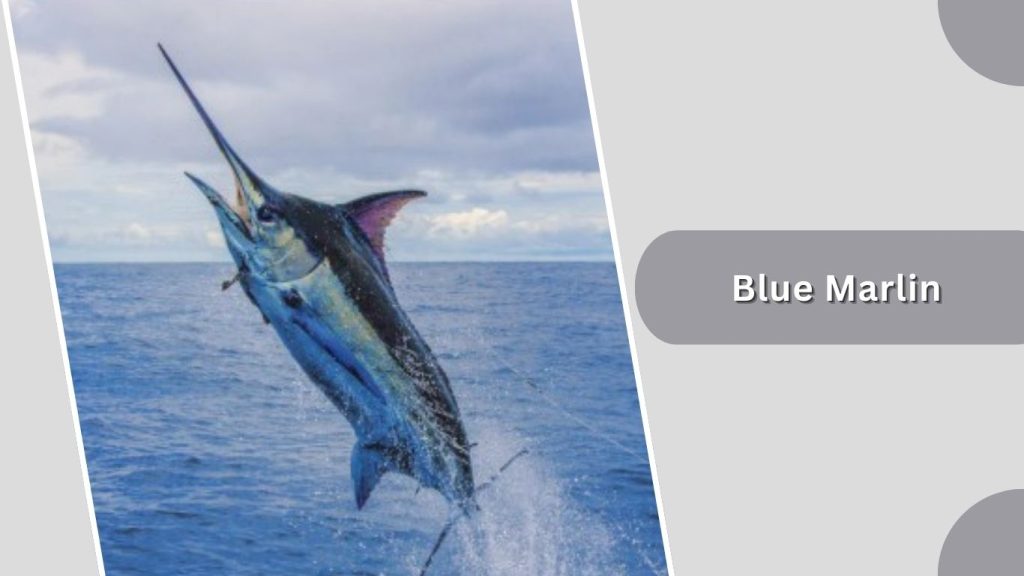
The Blue Marlin is one of the largest and fastest billfish in the ocean, famous for its powerful body, long spear-like bill, and deep blue upper coloring. It is highly prized in sport fishing and is widely found in warm, tropical, and subtropical seas around the world.
Identification
- Long, pointed bill (spear-shaped upper jaw)
- Deep cobalt-blue back with silvery-white underside
- Tall, rigid dorsal fin that cannot fold flat
- Strong, streamlined body built for speed
- Sharp, backward-pointing scales embedded in the skin
Size and Weight
Blue marlin are among the biggest bony fish in the ocean. Large females can exceed 14 feet in length and may weigh over 1,800 pounds, while males are much smaller. Their size difference between sexes is one of the most extreme among marine fish.
Habitat and Distribution
They live mainly in open oceans, preferring warm offshore waters. Blue marlin are commonly found in the Atlantic, Pacific, and Indian Oceans, often near currents, continental shelves, and areas rich in tuna and other prey fish.
Diet and Hunting Behavior
Blue marlin are aggressive predators that feed on tuna, mackerel, flying fish, squid, and other large fish. They use their bill to slash or stun prey before turning back to swallow it, often hunting near the surface or mid-water zones.
Lifespan and Growth
Blue marlin grow quickly and can live for more than 25 years. Females grow much larger and faster than males. Juveniles mature rapidly, which helps maintain populations despite heavy natural and fishing pressures.
2. Black Marlin
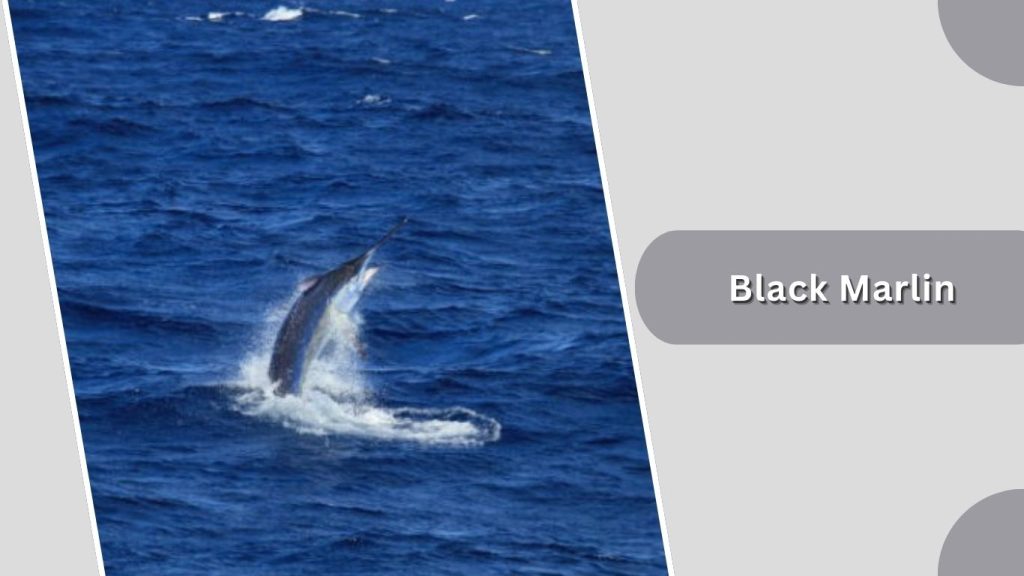
The Black Marlin is one of the strongest and fastest fish in the ocean, well known for its thick body, rigid pectoral fins, and incredible fighting power. It is a legendary game fish, often considered even more powerful than the blue marlin, and is found mainly in warm Indo-Pacific waters.
Identification
- Heavy, thick-bodied appearance compared to other marlins
- Shorter but very strong spear-like bill
- Dark blue to black back with silvery-white belly
- Rigid pectoral fins that cannot fold flat against the body
- Large, sickle-shaped dorsal fin
Size and Weight
Black marlin are among the heaviest bony fish in the world. Large females can exceed 15 feet in length and may weigh over 1,600 pounds. Males are much smaller. Their massive shoulders and muscular build give them unmatched pulling strength.
Habitat and Distribution
They mainly inhabit the Indian and Pacific Oceans, especially around coral reefs, continental shelves, and tropical coastlines. Black marlin often migrate seasonally and are frequently seen near Australia, Southeast Asia, and Pacific islands.
Diet and Hunting Behavior
Black marlin feed on tuna, mackerel, trevally, squid, and other fast-swimming fish. They rely on speed and power, slashing prey with their bill before swallowing it whole. They are active hunters, often near the surface.
Lifespan and Growth
Black marlin grow rapidly and can live over 20 years. Females grow significantly larger than males. Their fast growth and high reproductive output help sustain populations, although overfishing remains a concern in many regions.
3. White Marlin
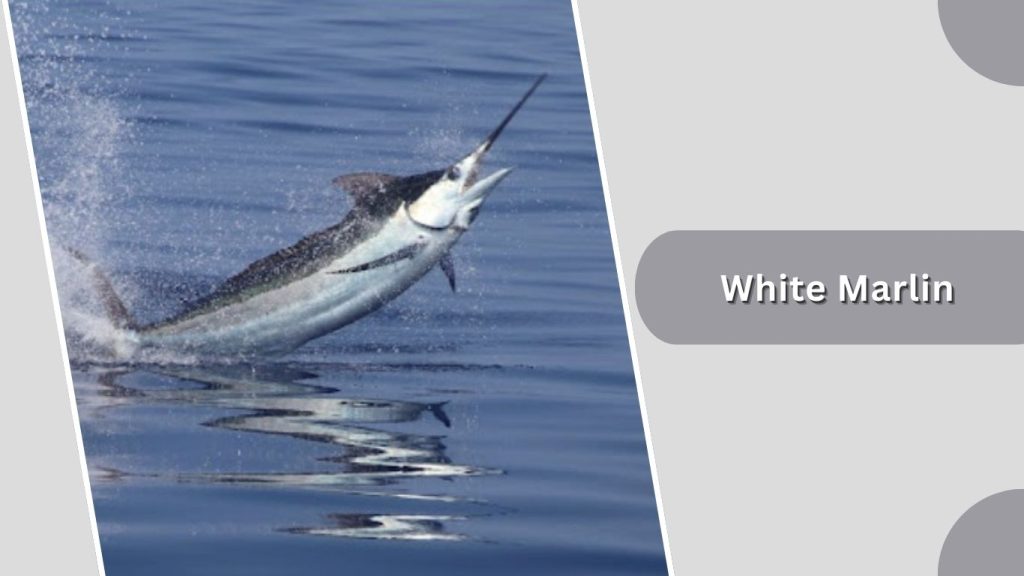
The White Marlin is a slimmer and more agile relative of the blue and black marlin, known for its long bill, light body, and graceful movements. It is a popular sport fish and is mainly found in the Atlantic Ocean, especially in warm offshore waters.
Identification
- Slender body with a long, thin spear-like bill
- Bluish-white to light gray upper body and silvery sides
- Rounded dorsal fin compared to blue marlin
- Distinct vertical pale stripes on the sides
- Smooth, streamlined shape built for speed
Size and Weight
White marlin are much smaller than blue or black marlin. Most adults grow between 6 and 9 feet long and usually weigh 100 to 180 pounds. Females are slightly larger than males.
Habitat and Distribution
They are native to the Atlantic Ocean and are commonly found from the western Atlantic near the Americas to the eastern Atlantic near Africa and Europe. They prefer warm, deep offshore waters and migrate seasonally.
Diet and Hunting Behavior
White marlin feed mainly on small schooling fish such as sardines, herring, and flying fish, along with squid. They hunt near the surface, using quick bursts of speed and their bill to strike and confuse prey.
Lifespan and Growth
White marlin grow quickly and usually live around 15 years. They mature early compared to larger marlin species, which helps them reproduce efficiently despite heavy pressure from commercial and sport fishing.
4. Striped Marlin
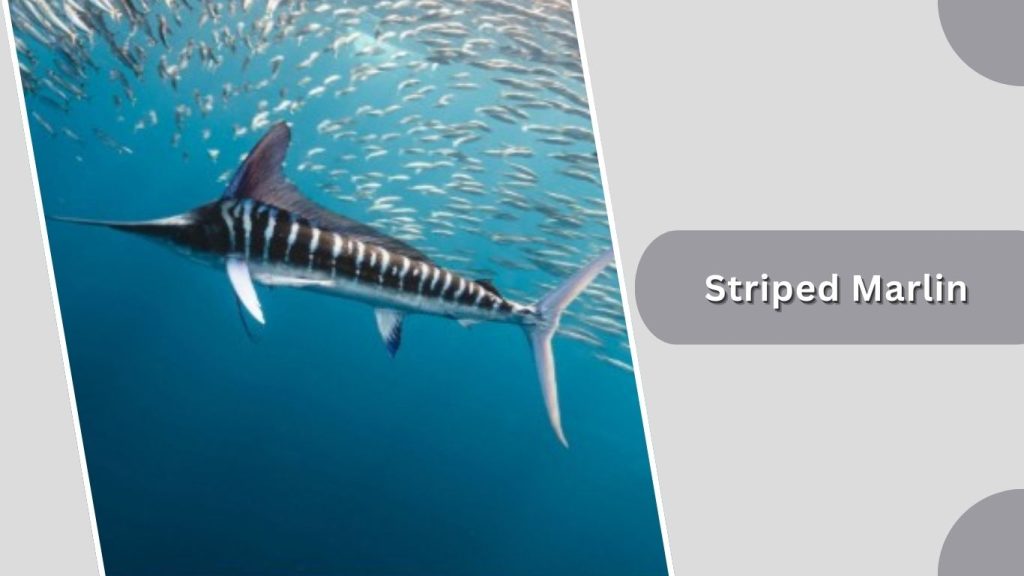
The Striped Marlin is a fast, acrobatic billfish recognized by the bold vertical stripes along its body and its long, slender bill. It is one of the most commonly seen marlin species and is highly valued in sport fishing for its spectacular jumps and endurance.
Identification
- Slender, streamlined body with a long spear-like bill
- Bright cobalt-blue back and silvery sides
- Distinct vertical light-blue stripes along the body
- Tall, pointed dorsal fin
- Narrow, crescent-shaped tail fin
Size and Weight
Striped marlin are medium-sized marlins. Adults typically reach 10 to 13 feet in length and weigh between 200 and 450 pounds. Females are generally larger than males.
Habitat and Distribution
They are mainly found in the Pacific and Indian Oceans, especially in tropical and temperate waters. Striped marlin often gather near continental shelves, oceanic fronts, and upwelling zones rich in prey.
Diet and Hunting Behavior
Striped marlin feed on sardines, anchovies, squid, and small tuna. They are often seen hunting in groups, herding schools of fish toward the surface before slashing through them with their bills.
Lifespan and Growth
Striped marlin grow rapidly and can live up to 15 years or more. They mature earlier than giant marlin species, which allows them to reproduce successfully even in heavily fished regions.
5. Atlantic Blue Marlin
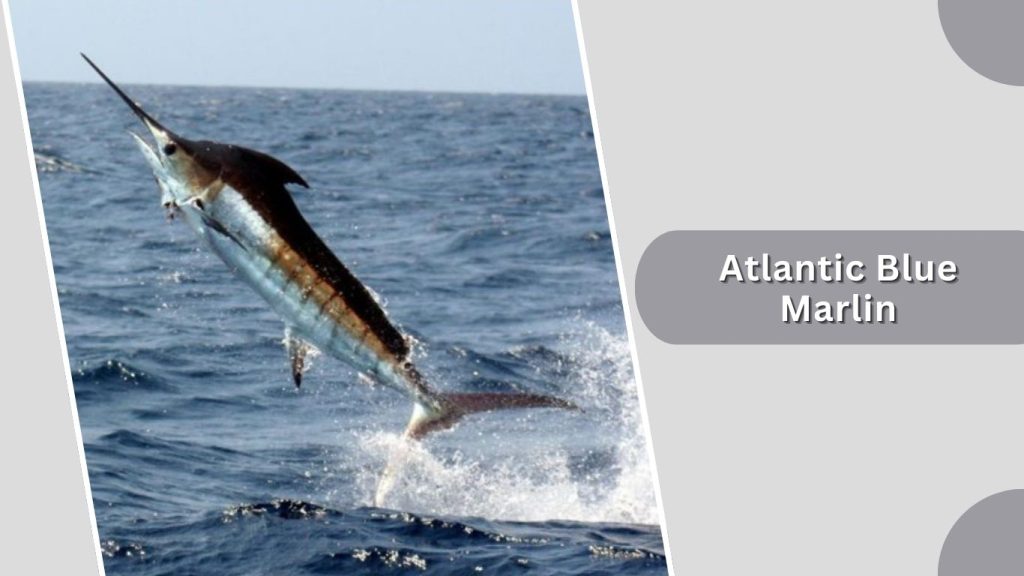
The Atlantic Blue Marlin is a powerful open-ocean predator and a subspecies of the blue marlin, famous for its massive size, long spear-like bill, and deep metallic-blue coloration. It is one of the most iconic big-game fish in the Atlantic and is highly prized by sport anglers.
Identification
- Very long, pointed bill
- Deep navy-blue upper body with silvery sides
- Tall, rigid dorsal fin
- Thick, muscular body tapering to a narrow tail
- Faint vertical stripes that appear when the fish is excited
Size and Weight
Atlantic blue marlin are among the largest marlins in the world. Females can exceed 14 feet in length and may weigh over 1,800 pounds. Males are much smaller, rarely reaching a quarter of the female’s weight.
Habitat and Distribution
They are found throughout the Atlantic Ocean, including the Gulf of Mexico, Caribbean Sea, western Africa, and the eastern coast of the Americas. They prefer warm, offshore waters and often migrate long distances following ocean currents.
Diet and Hunting Behavior
Their diet includes tuna, mackerel, mahi-mahi, flying fish, and squid. Atlantic blue marlin hunt aggressively, using speed and their bill to slash through schools of fish before swallowing prey whole.
Lifespan and Growth
Atlantic blue marlin grow rapidly and may live more than 25 years. Females grow much larger than males and are capable of producing millions of eggs during spawning seasons.
6. Indo-Pacific Blue Marlin
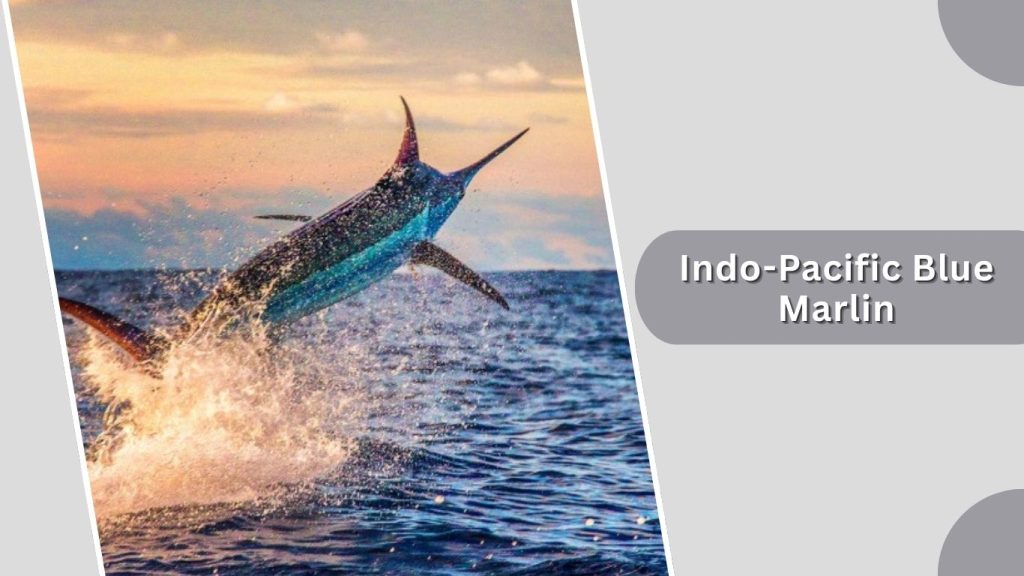
The Indo-Pacific Blue Marlin is the most widespread marlin species, known for its enormous size, powerful body, and brilliant blue coloration. It dominates warm ocean waters from Africa to the Americas and is one of the fastest predators in the sea.
Identification
- Long, sharp, spear-like bill
- Deep electric-blue back with silvery-white sides
- Tall, pointed dorsal fin
- Strong, torpedo-shaped body
- Faint vertical stripes visible when excited
Size and Weight
Indo-Pacific blue marlin are among the largest bony fish on Earth. Large females can exceed 15 feet in length and may weigh over 1,800 pounds, while males remain much smaller.
Habitat and Distribution
They inhabit the Indian and Pacific Oceans, ranging from the eastern coast of Africa to the Americas. They prefer warm, open-ocean waters and are often found near seamounts, continental slopes, and major ocean currents.
Diet and Hunting Behavior
Their diet consists of tuna, flying fish, squid, and other large pelagic fish. They hunt by accelerating rapidly and striking prey with their bill before turning to consume stunned fish.
Lifespan and Growth
Indo-Pacific blue marlin grow quickly and can live for 25 years or more. Females mature later but reach extraordinary sizes, producing large numbers of eggs during spawning periods.
7. Roundscale Spearfish
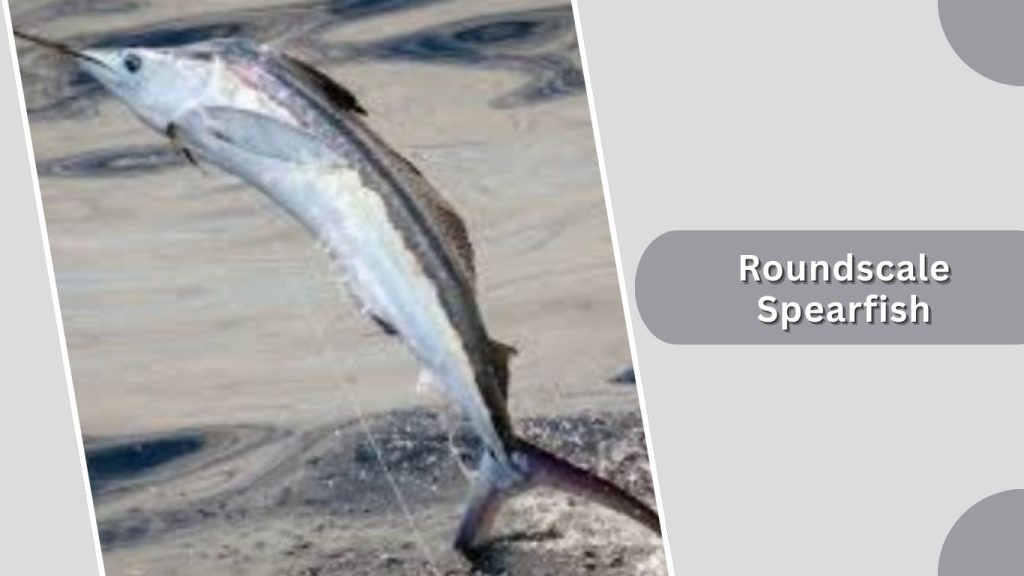
The Roundscale Spearfish is a lesser-known billfish that closely resembles a small blue marlin but is distinguished by its rounded scales and slimmer build. It was only recognized as a separate species in the early 2000s, making it one of the newest marlin-like species identified by science.
Identification
- Slender body with a long, pointed bill
- Dark blue back with silvery sides
- Rounded scales (unlike the pointed scales of blue marlin)
- Moderately tall dorsal fin
- More delicate overall appearance than true marlins
Size and Weight
Roundscale spearfish are smaller than blue marlin. Most adults measure 7 to 9 feet long and typically weigh between 150 and 300 pounds, with females being larger than males.
Habitat and Distribution
They are found mainly in the western Atlantic Ocean, particularly in tropical and subtropical offshore waters. Because they were long confused with blue marlin, their full range is still being studied.
Diet and Hunting Behavior
Their diet includes small tuna, mackerel, flying fish, and squid. They hunt in open water, using quick bursts of speed and their bill to strike and disable prey.
Lifespan and Growth
Not much is known about their exact lifespan, but scientists believe they grow quickly and live over 10–15 years, similar to other medium-sized billfish.
8. Shortbill Spearfish

The Shortbill Spearfish is a compact and fast-moving billfish recognized by its noticeably shorter bill and slim body. It is one of the smallest marlin-like species and is rarely encountered compared to true marlins.
Identification
- Short, slender bill compared to marlins
- Slim, streamlined body
- Dark blue upper body with silvery sides
- Relatively small dorsal fin
- Smooth appearance with fine scales
Size and Weight
Shortbill spearfish are much smaller than marlins. Most adults grow between 5 and 7 feet long and usually weigh 40 to 110 pounds. Females are generally larger than males.
Habitat and Distribution
They are found in tropical and subtropical waters of the Pacific and Indian Oceans. Shortbill spearfish prefer open ocean environments and are often associated with deep offshore waters.
Diet and Hunting Behavior
Their diet consists mainly of small schooling fish such as sardines and anchovies, along with squid. They rely on speed and agility rather than brute strength, striking prey quickly with their short bill.
Lifespan and Growth
Shortbill spearfish grow rapidly and are believed to live around 10 years or more. They mature early, which allows them to reproduce efficiently despite being less numerous than other billfish.
9. Mediterranean Spearfish
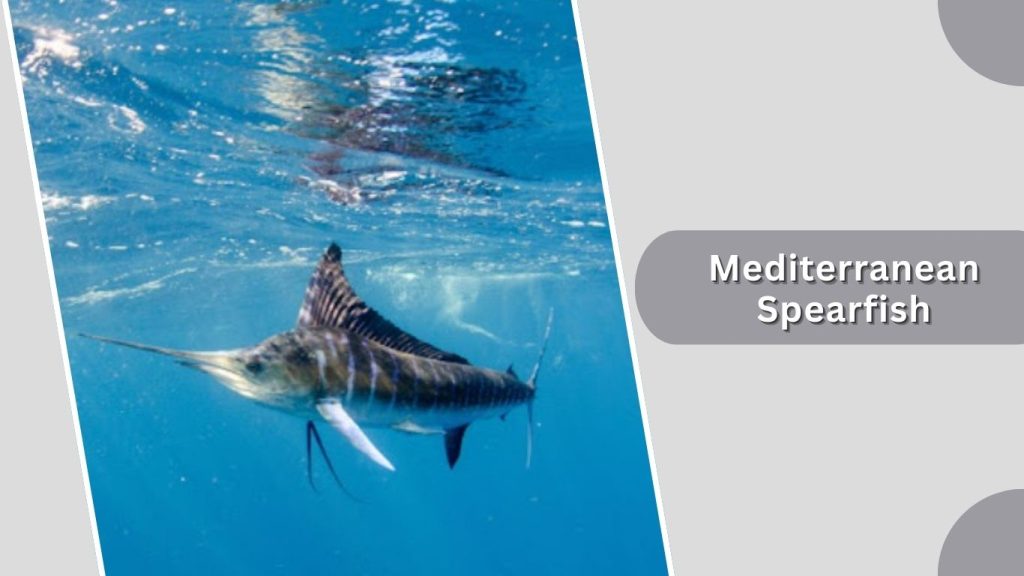
The Mediterranean Spearfish is a slender, marlin-like billfish native mainly to the Mediterranean Sea. It is smaller and more lightly built than true marlins, but still shares the long bill and high-speed hunting style typical of billfish.
Identification
- Long, thin bill
- Slim, elongated body
- Dark bluish back with silvery-white sides
- Low, narrow dorsal fin
- Smooth body with fine, embedded scales
Size and Weight
Mediterranean spearfish are relatively small compared to marlins. Most adults reach 5 to 7 feet in length and usually weigh between 40 and 100 pounds. Females tend to be larger than males.
Habitat and Distribution
They are found primarily in the Mediterranean Sea, though they may occasionally appear in nearby Atlantic waters. They prefer warm, open ocean zones and are often seen offshore rather than near coasts.
Diet and Hunting Behavior
Their diet includes sardines, anchovies, small mackerel, and squid. They hunt near the surface, using quick bursts of speed and their bill to slash and stun prey before eating.
Lifespan and Growth
Mediterranean spearfish grow quickly and are believed to live around 8 to 12 years. They reach sexual maturity early, which helps maintain populations despite limited geographic range.
10. Longbill Spearfish
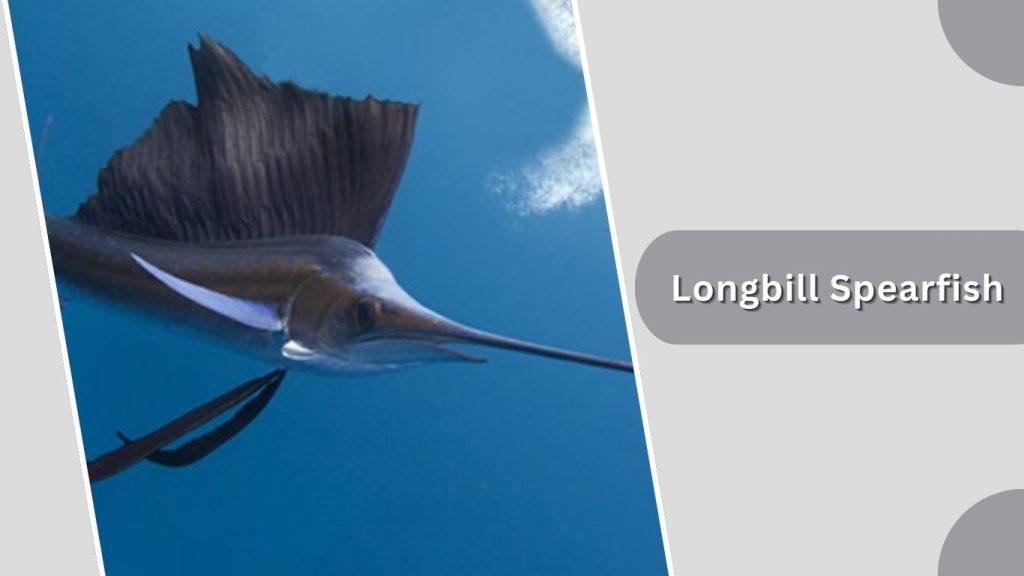
The Longbill Spearfish is a rare and slender billfish best known for its exceptionally long, thin bill relative to its body. It resembles a small marlin but is more lightly built and far less commonly encountered.
Identification
- Extremely long, narrow bill
- Slim, torpedo-shaped body
- Deep blue upper body with silvery sides
- Low, narrow dorsal fin
- Delicate appearance compared to true marlins
Size and Weight
Longbill spearfish are small compared to marlins. Adults typically grow 6 to 7 feet long and usually weigh between 50 and 100 pounds. Females are slightly larger than males.
Habitat and Distribution
They are mainly found in tropical and subtropical waters of the Atlantic and Indo-Pacific regions. They inhabit open ocean environments and are most often recorded far offshore.
Diet and Hunting Behavior
Their diet consists of small pelagic fish and squid. They use speed and their long bill to strike prey, often hunting near the surface or in mid-water zones.
Lifespan and Growth
Very little is known about their exact lifespan, but scientists estimate they live around 8 to 12 years. Like other spearfish, they grow quickly and mature relatively early.
FAQs
What is the largest type of marlin fish?
The blue marlin is the largest type of marlin and one of the biggest bony fish in the ocean. Large females can exceed 14–15 feet in length and may weigh over 1,800 pounds. They are famous for their power, speed, and importance in big-game sport fishing.
Are marlin fish dangerous to humans?
Marlin are not aggressive toward humans and rarely pose danger. However, because they are extremely powerful and have sharp bills, they can be dangerous if handled improperly, especially when caught on fishing lines. Most injuries happen accidentally during sport fishing activities.
What do marlin fish eat in the ocean?
Marlin are apex predators that mainly eat tuna, mackerel, flying fish, squid, and other fast-swimming pelagic fish. They often use their long bills to slash or stun schools of prey before turning back to swallow the injured fish.
Where are marlin fish commonly found?
Marlin are found in warm tropical and subtropical oceans worldwide. Different species live in the Atlantic, Pacific, and Indian Oceans, often in deep offshore waters near currents, seamounts, and continental shelves where food is abundant.
How long do marlin fish usually live?
Most marlin species live between 10 and 25 years, depending on the species. Larger marlins, such as blue and black marlin, often live longer than smaller spearfish. They grow quickly, with females usually living longer and growing much larger than males.