




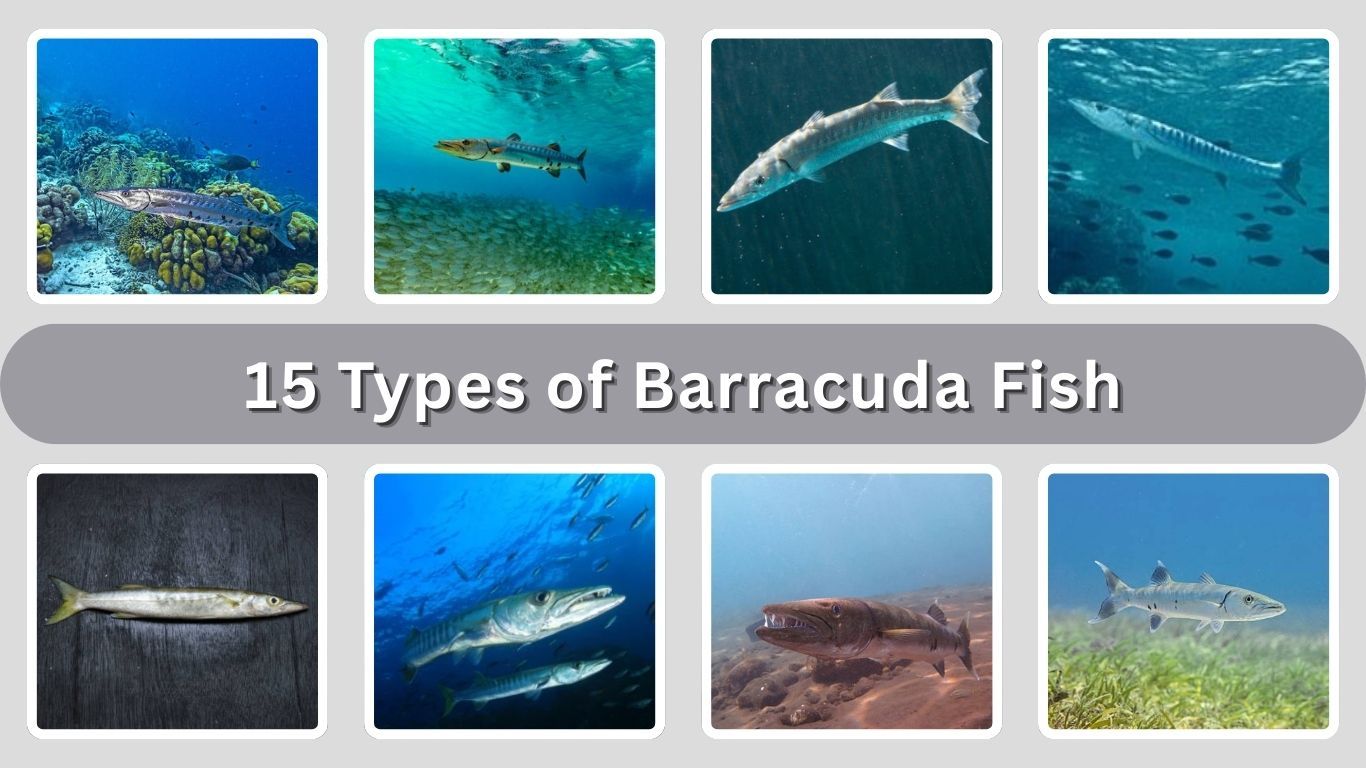
Barracuda fish are powerful, fast-swimming predators known for their long, streamlined bodies, sharp teeth, and striking silver appearance. Found mainly in warm tropical and subtropical oceans, barracudas inhabit coral reefs, coastal waters, lagoons, and open seas. There are many different types of barracuda, ranging from small schooling species to massive solitary hunters like the great barracuda. Each species has unique features, habitats, and behaviors that make barracudas one of the most fascinating fish groups in the marine world.
1. Great Barracuda (Sphyraena barracuda)
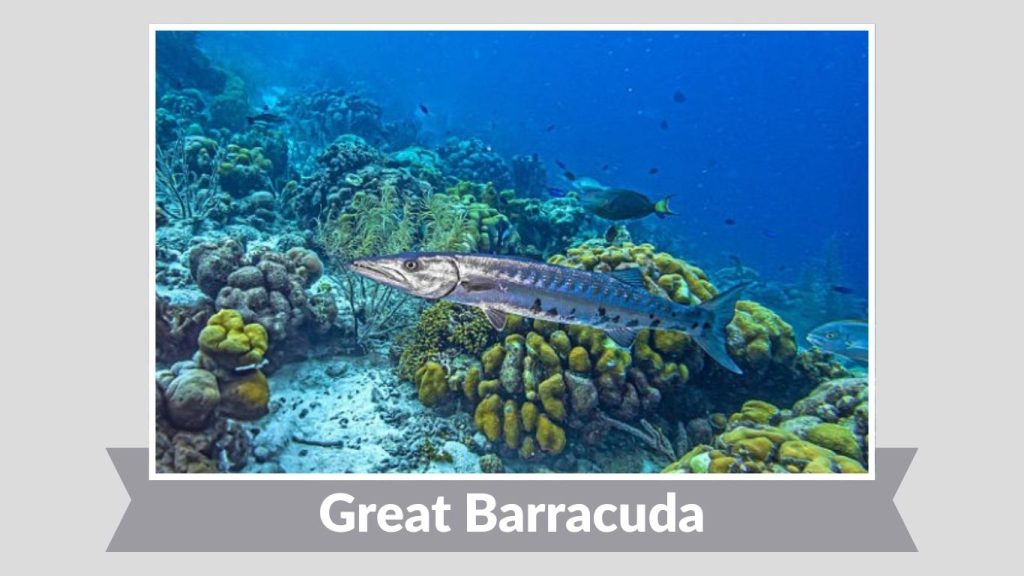
The great barracuda is the largest and most well-known barracuda species, famous for its long torpedo-shaped body, powerful jaws, and razor-sharp teeth. It lives mainly in tropical and subtropical oceans, often seen near coral reefs, mangroves, and open coastal waters. This fast-swimming predator is admired by divers and anglers for its speed, size, and striking silver appearance.
Identification
- Long, slender, torpedo-shaped body
- Shiny silver sides with darker bars or spots
- Large pointed head with protruding lower jaw
- Very sharp, fang-like teeth
- Dark back fading to lighter belly
- Can grow over 6 feet (1.8 m) in length
Habitat and Distribution
Great barracudas are found in warm oceans worldwide, especially in the Atlantic, Pacific, and Indian Oceans. They prefer coral reefs, seagrass beds, mangrove areas, and open coastal waters, but large adults are also common in deeper offshore zones.
Diet and Hunting Behavior
This species is a fierce carnivore that mainly feeds on smaller fish such as mullet, sardines, and groupers. It hunts by stalking slowly and then bursting forward with sudden speed, using its sharp teeth to slash and swallow prey.
Size and Lifespan
Great barracudas are the largest members of the barracuda family, commonly reaching 3 to 5 feet in length, with some individuals growing even larger. They can live for more than 10 to 15 years in the wild under favorable conditions.
2. European Barracuda (Sphyraena sphyraena)

The European barracuda is a sleek, fast-moving predator commonly found in the eastern Atlantic Ocean and the Mediterranean Sea. It is known for its slim body, sharp teeth, and silvery-blue coloration. Smaller than the great barracuda, this species often forms schools and is frequently seen by divers near rocky reefs and coastal waters.
Identification
- Long, narrow, cylindrical body
- Silvery sides with a bluish or greenish back
- Pointed snout with prominent, sharp teeth
- Large eyes adapted for hunting in clear water
- Forked tail built for sudden bursts of speed
- Usually grows up to about 2–3 feet (60–90 cm)
Habitat and Distribution
European barracudas inhabit coastal waters of the eastern Atlantic, from the Bay of Biscay to Senegal, and throughout the Mediterranean and Black Seas. They prefer rocky reefs, seagrass meadows, and open coastal zones, often swimming near the surface or mid-water.
Diet and Hunting Behavior
This species feeds mainly on small schooling fish such as anchovies, sardines, and mackerel. European barracudas are fast ambush predators, either hunting alone or in groups, using quick lunges to capture prey.
Size and Lifespan
European barracudas are medium-sized compared to other barracuda species, typically reaching around 2 to 3 feet in length. Their lifespan in the wild is estimated to be around 10 years, depending on environmental conditions and food availability.
3. Pickhandle Barracuda (Sphyraena jello)
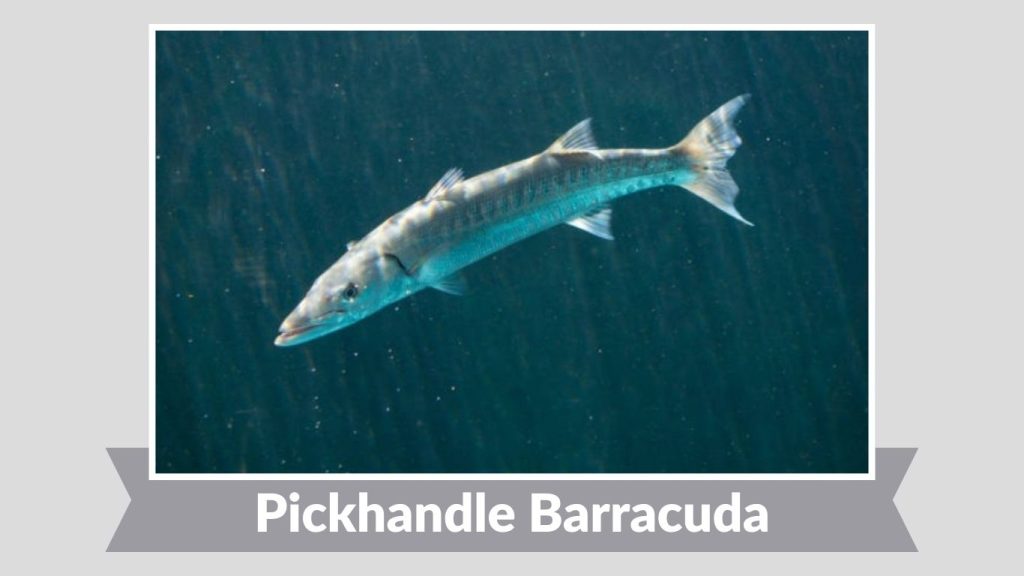
The pickhandle barracuda is a large Indo-Pacific species recognized by the dark, wavy “pick-handle” markings along its silvery sides. It is a powerful, fast swimmer often seen around reefs, lagoons, and coastal drop-offs. This species is important both ecologically as a predator and economically in many coastal fisheries.
Identification
- Long, streamlined, torpedo-shaped body
- Silvery sides with dark, curved bars or chevron marks
- Bluish-gray to greenish back, pale belly
- Large mouth with strong, sharp teeth
- Pointed head and forked tail
- Can exceed 5 feet (1.5 m) in length
Habitat and Distribution
Pickhandle barracudas are widely distributed across the Indo-Pacific region, from the Red Sea and East Africa to Southeast Asia, Australia, and the Pacific islands. They are commonly found around coral reefs, lagoons, mangroves, and outer reef slopes, as well as in open coastal waters.
Diet and Hunting Behavior
This species feeds mainly on fish such as anchovies, herrings, and reef fish, along with occasional squid. It often hunts alone, using slow cruising followed by sudden, explosive bursts of speed to capture prey.
Size and Lifespan
Pickhandle barracudas are among the larger barracuda species, commonly reaching 3 to 5 feet in length. With favorable conditions, they can live for more than a decade, growing steadily as apex or near-apex predators in their habitats.
4. Blackfin Barracuda (Sphyraena qenie)
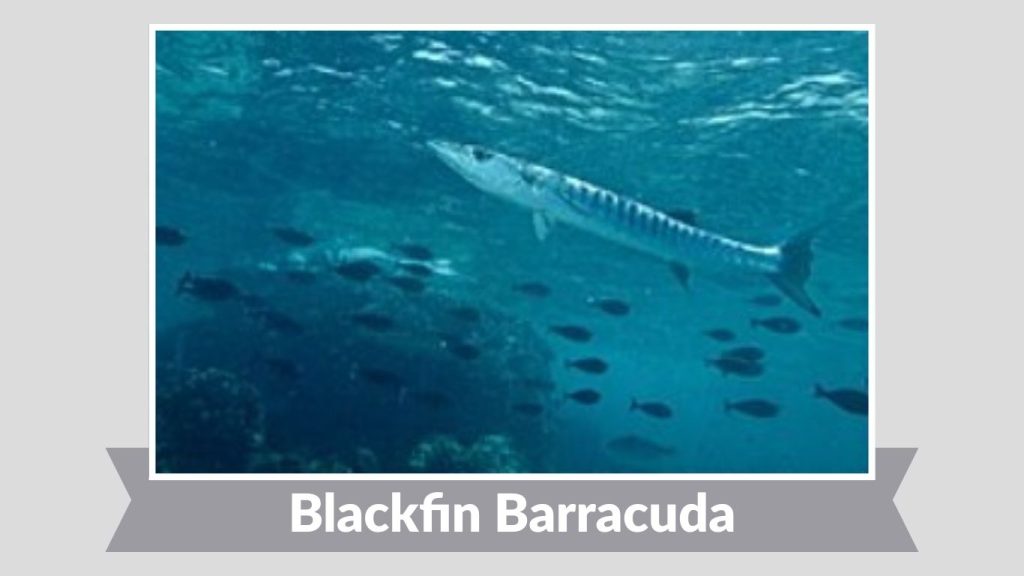
The blackfin barracuda is a striking Indo-Pacific species named for its dark, blackish fins that contrast with its bright silver body. It is a swift, aggressive predator often seen cruising reef edges, lagoons, and open coastal waters. This species is well known among anglers and divers for its speed and powerful build.
Identification
- Slender, elongated body with a metallic silver shine
- Distinct dark to black fins, especially the caudal and dorsal fins
- Bluish-gray back fading to a lighter belly
- Long pointed snout with prominent, sharp teeth
- Large eyes and deeply forked tail
- Can grow up to about 4–5 feet (1.2–1.5 m)
Habitat and Distribution
Blackfin barracudas are found widely across the Indo-Pacific, including the Red Sea, Indian Ocean, Southeast Asia, northern Australia, and many Pacific islands. They inhabit coral reefs, reef drop-offs, lagoons, and open coastal waters, often seen alone or in small groups.
Diet and Hunting Behavior
They feed mainly on smaller fish such as sardines, mullet, and reef fish, and occasionally on squid. Blackfin barracudas are ambush predators, relying on stealth and sudden bursts of speed to strike and capture prey.
Size and Lifespan
This species commonly reaches 3 to 4 feet in length, though larger individuals are known. Blackfin barracudas can live around 10 to 15 years, depending on environmental conditions and food supply.
5. Yellowtail Barracuda (Sphyraena flavicauda)
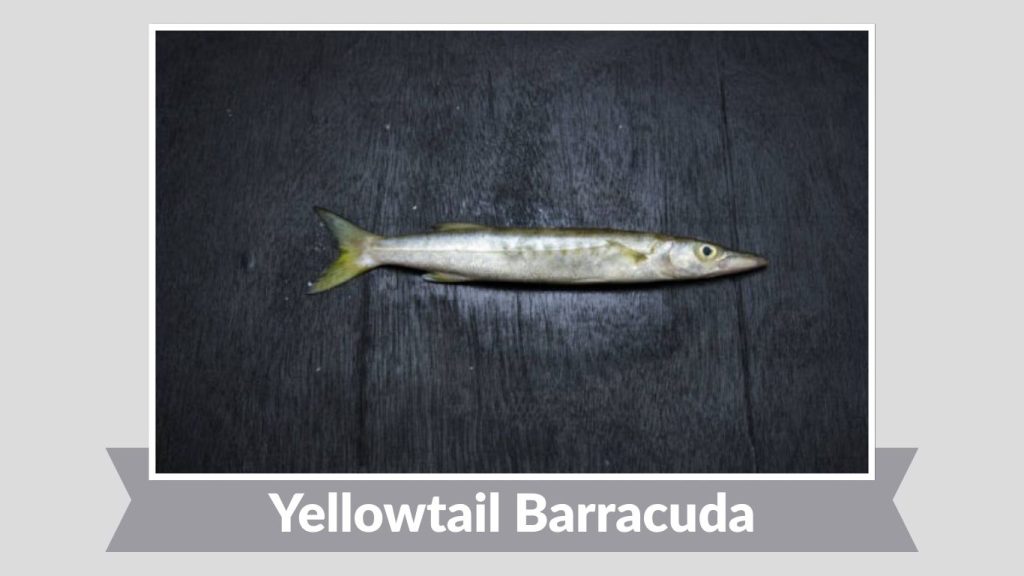
The yellowtail barracuda is a medium-sized species recognized by its distinctly yellow tail and sleek, silvery body. It is commonly seen moving in small groups around reefs and open coastal waters. Because of its elegant shape and active hunting style, this barracuda is a frequent sight for snorkelers and divers in tropical seas.
Identification
- Long, slender, streamlined body
- Bright yellow to yellow-green tail fin
- Silvery sides with a slightly darker back
- Pointed snout with sharp, visible teeth
- Large eyes adapted for clear-water hunting
- Typically grows up to about 2–3 feet (60–90 cm)
Habitat and Distribution
Yellowtail barracudas are widely distributed in the Indo-Pacific region, including the Indian Ocean, Southeast Asia, northern Australia, and many Pacific islands. They prefer coral reefs, lagoons, and coastal drop-offs, often swimming in mid-water near reef edges.
Diet and Hunting Behavior
This species feeds mainly on small schooling fish such as anchovies, silversides, and juvenile reef fish. Yellowtail barracudas often hunt in groups, using coordinated movements to confuse prey before striking quickly.
Size and Lifespan
Yellowtail barracudas are smaller than many other barracuda species, usually reaching around 2 to 3 feet in length. Their lifespan is estimated to be about 8 to 12 years in natural marine environments.
6. Chevron Barracuda (Sphyraena putnamae)
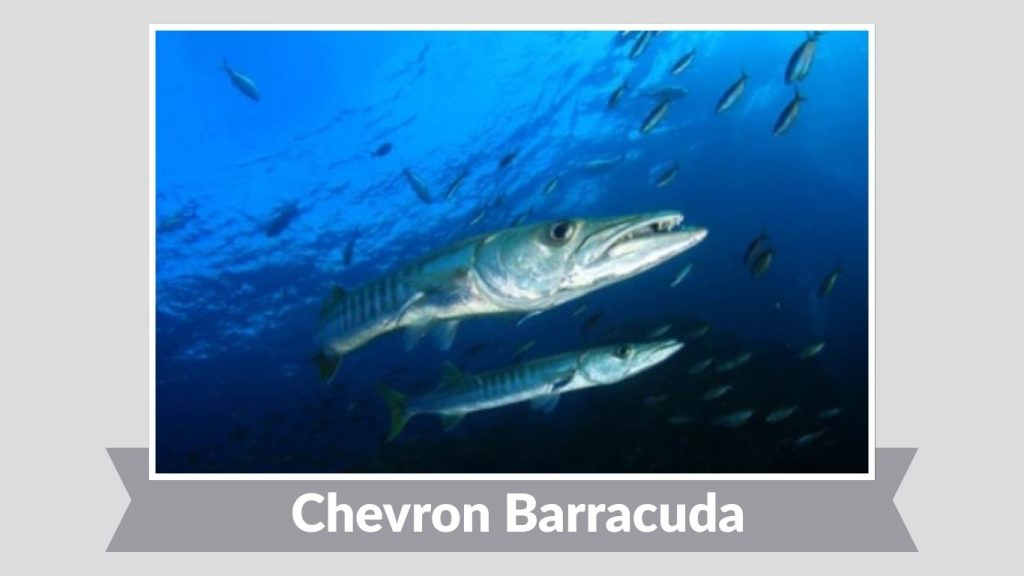
The chevron barracuda is named for the distinctive V-shaped or chevron-like markings along its sides. It is a sleek, fast-moving species commonly seen around coral reefs and coastal drop-offs. This barracuda is an active mid-water predator and is often observed alone or in loose groups.
Identification
- Elongated, torpedo-shaped body
- Silvery sides with dark chevron or zigzag markings
- Grayish-blue back and pale underside
- Long pointed snout with sharp, fang-like teeth
- Deeply forked tail for rapid swimming
- Commonly grows up to about 3 feet (90 cm)
Habitat and Distribution
Chevron barracudas are widely distributed across the Indo-Pacific, including the Red Sea, Indian Ocean, Southeast Asia, and the western Pacific. They inhabit coral reefs, lagoons, reef slopes, and nearby open waters, usually swimming in mid-water zones.
Diet and Hunting Behavior
They primarily feed on small fish such as anchovies, fusiliers, and juvenile reef species. Chevron barracudas hunt by slowly cruising before making quick, powerful strikes to seize prey.
Size and Lifespan
This species is considered medium-sized among barracudas, typically reaching around 2 to 3 feet in length. In the wild, chevron barracudas are believed to live close to a decade under favorable conditions.
7. Guachanche Barracuda (Sphyraena guachancho)
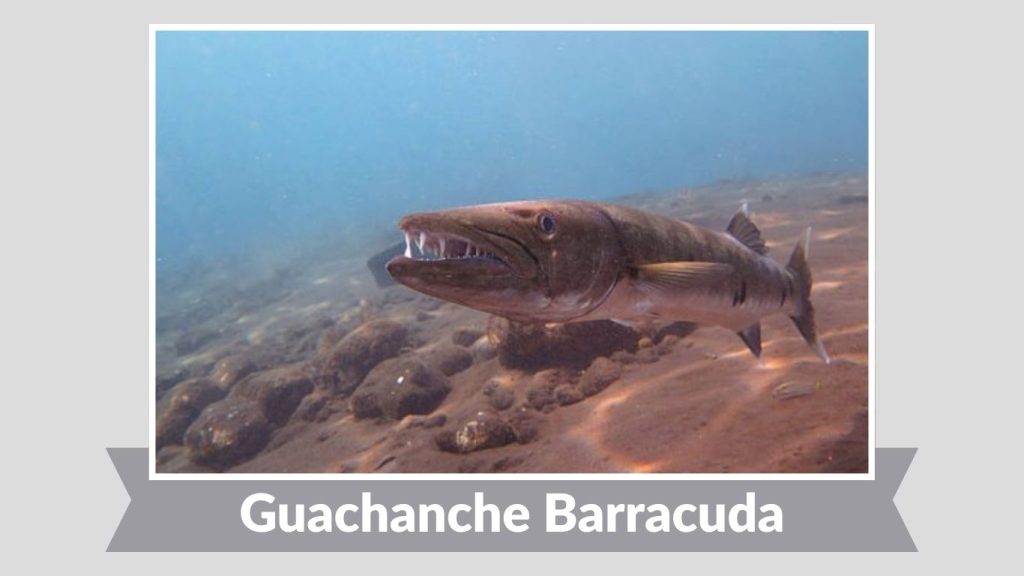
The guachanche barracuda is a slender, fast-swimming species commonly found in the eastern Atlantic Ocean. It is smaller than the great barracuda but still a skilled predator, often forming schools in coastal waters. This species is well known in regions around the Mediterranean and West Africa.
Identification
- Long, narrow, streamlined body
- Bright silver sides with a slightly darker back
- Pointed snout with sharp, visible teeth
- Large eyes positioned high on the head
- Forked tail built for speed
- Usually grows up to about 2–3 feet (60–90 cm)
Habitat and Distribution
Guachanche barracudas occur mainly in the eastern Atlantic, including the Mediterranean Sea, the Black Sea, and along the western coast of Africa. They prefer coastal waters, bays, estuaries, and areas near reefs, often swimming near the surface.
Diet and Hunting Behavior
They feed mostly on small schooling fish such as sardines, anchovies, and juvenile mackerel. Guachanche barracudas often hunt in groups, using speed and coordination to trap and strike their prey.
Size and Lifespan
This species is medium-sized, typically reaching about 2 to 3 feet in length. Guachanche barracudas can live around 8 to 10 years, depending on environmental conditions.
8. Pacific Barracuda (Sphyraena argentea)
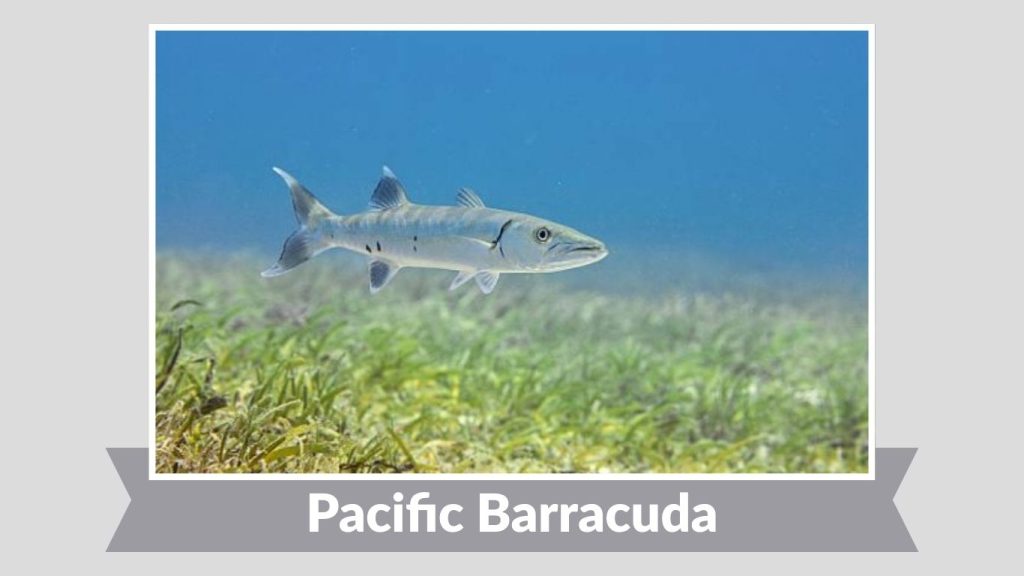
The Pacific barracuda is a slender, silver-colored species commonly found along the eastern Pacific coastline. It is known for its schooling behavior, speed, and sharp-toothed jaws. This barracuda is frequently seen near kelp forests, rocky reefs, and open coastal waters.
Identification
- Long, narrow, streamlined body
- Bright silver coloration with a darker back
- Pointed head with a slightly protruding lower jaw
- Sharp, needle-like teeth
- Large eyes and forked tail
- Typically grows up to about 3 feet (90 cm)
Habitat and Distribution
Pacific barracudas are found mainly in the eastern Pacific Ocean, ranging from Alaska to Baja California and into parts of the Gulf of California. They inhabit coastal waters, kelp forests, rocky reefs, and offshore zones.
Diet and Hunting Behavior
They feed on schooling fish such as anchovies, sardines, and small mackerel. Pacific barracudas often hunt in coordinated schools, using speed to chase and surround prey before striking.
Size and Lifespan
Pacific barracudas are medium-sized fish, usually reaching around 2 to 3 feet in length. Their lifespan is estimated to be about 10 to 12 years in the wild.
9. Obtuse Barracuda (Sphyraena obtusata)
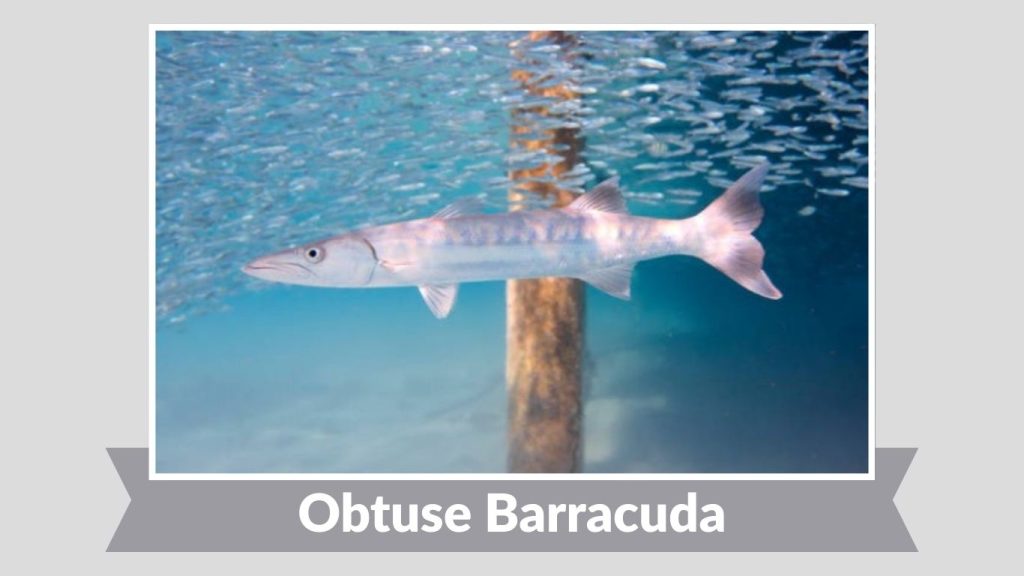
The obtuse barracuda is a relatively small and slender barracuda species known for its subtle coloring and streamlined shape. It is commonly seen in tropical Indo-Pacific waters, often swimming in shallow coastal areas and around coral reefs. Compared to larger barracudas, this species is less aggressive and more frequently observed in schools.
Identification
- Slim, elongated, cylindrical body
- Silvery sides with a light gray to greenish back
- Shorter, slightly blunt snout compared to larger species
- Small but sharp teeth
- Forked tail adapted for quick movement
- Usually grows up to about 1.5–2 feet (45–60 cm)
Habitat and Distribution
Obtuse barracudas are widely distributed throughout the Indo-Pacific region, including the Indian Ocean, Southeast Asia, northern Australia, and Pacific islands. They inhabit shallow coastal waters, coral reefs, lagoons, and sometimes estuaries.
Diet and Hunting Behavior
They mainly feed on small fish and crustaceans. Obtuse barracudas often hunt in groups, using quick bursts of speed to capture prey near reefs and in shallow waters.
Size and Lifespan
This is one of the smaller barracuda species, typically reaching under 2 feet in length. Their lifespan is believed to be around 6 to 9 years, depending on habitat conditions.
10. Australian Barracuda (Sphyraena novaehollandiae)
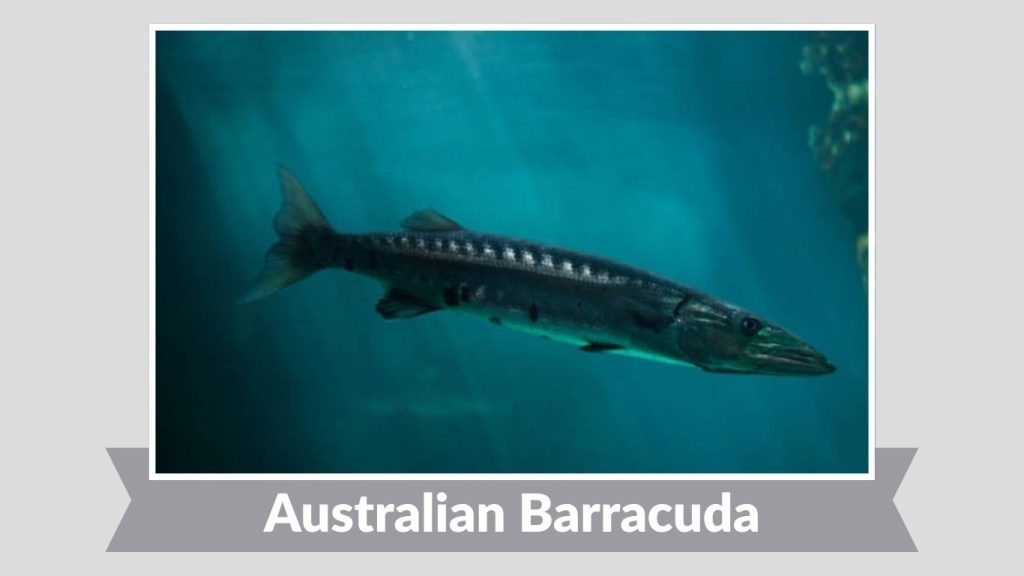
The Australian barracuda is a slender, fast-moving species native to coastal waters around Australia and nearby regions. It is sometimes called the yellowtail barracuda due to the faint yellow tint on its fins. This species is often seen in schools and plays an important role as a mid-level predator in marine ecosystems.
Identification
- Long, narrow, streamlined body
- Silvery sides with a bluish to greenish back
- Slight yellow tint on tail and fins
- Pointed snout with sharp, fine teeth
- Large eyes and forked tail
- Commonly grows up to about 2–3 feet (60–90 cm)
Habitat and Distribution
Australian barracudas are found mainly in the western Pacific, especially around Australia, New Zealand, and parts of Indonesia. They inhabit coastal waters, bays, reef edges, and open nearshore zones.
Diet and Hunting Behavior
They feed primarily on small fish such as anchovies, sardines, and juvenile reef fish. Australian barracudas often hunt in groups, using coordinated movement and speed to overwhelm prey.
Size and Lifespan
This species is medium-sized, generally reaching 2 to 3 feet in length. Their lifespan is estimated at around 8 to 12 years in the wild.
11. Mexican Barracuda (Sphyraena ensis)
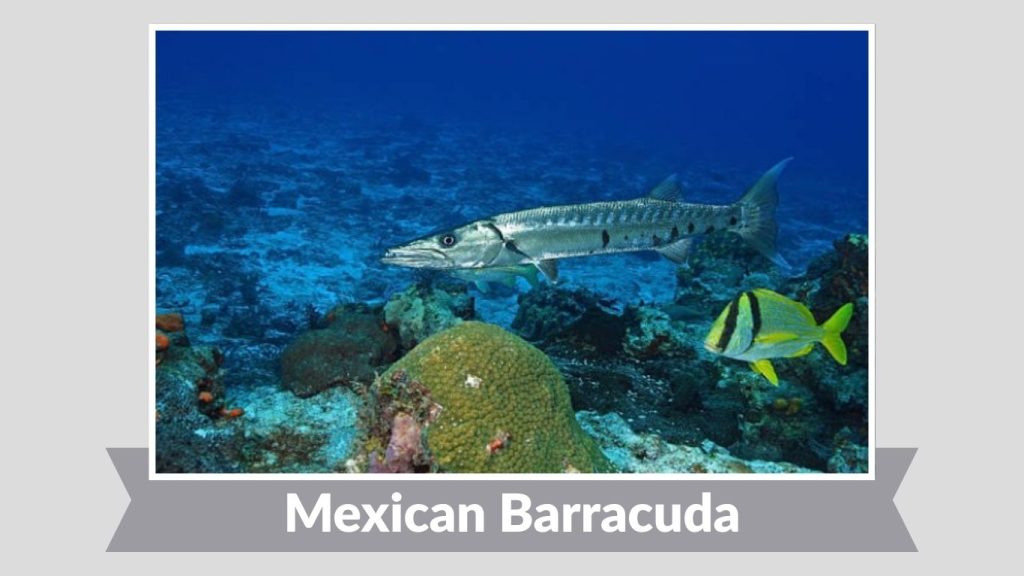
The Mexican barracuda is a slender, sharp-toothed species found mainly in the eastern Pacific Ocean. It is known for its narrow body, silvery coloration, and strong schooling behavior. This fast swimmer is often spotted in open coastal waters and around rocky reefs, where it hunts actively for small fish.
Identification
- Long, very slender, cylindrical body
- Bright silver sides with a bluish-gray back
- Narrow pointed head with sharp teeth
- Large eyes positioned forward on the head
- Deeply forked tail for fast swimming
- Usually grows up to about 2–3 feet (60–90 cm)
Habitat and Distribution
Mexican barracudas are found along the eastern Pacific coast, from California and the Gulf of California down to Peru. They inhabit open coastal waters, bays, rocky reefs, and sometimes offshore areas, often forming schools near the surface.
Diet and Hunting Behavior
They primarily feed on anchovies, sardines, and other small schooling fish. Mexican barracudas hunt actively, chasing prey in fast-moving groups and striking quickly with their sharp jaws.
Size and Lifespan
This species typically reaches around 2 to 3 feet in length. Mexican barracudas are believed to live about 8 to 10 years under natural marine conditions.
12. Bigeye Barracuda (Sphyraena forsteri)
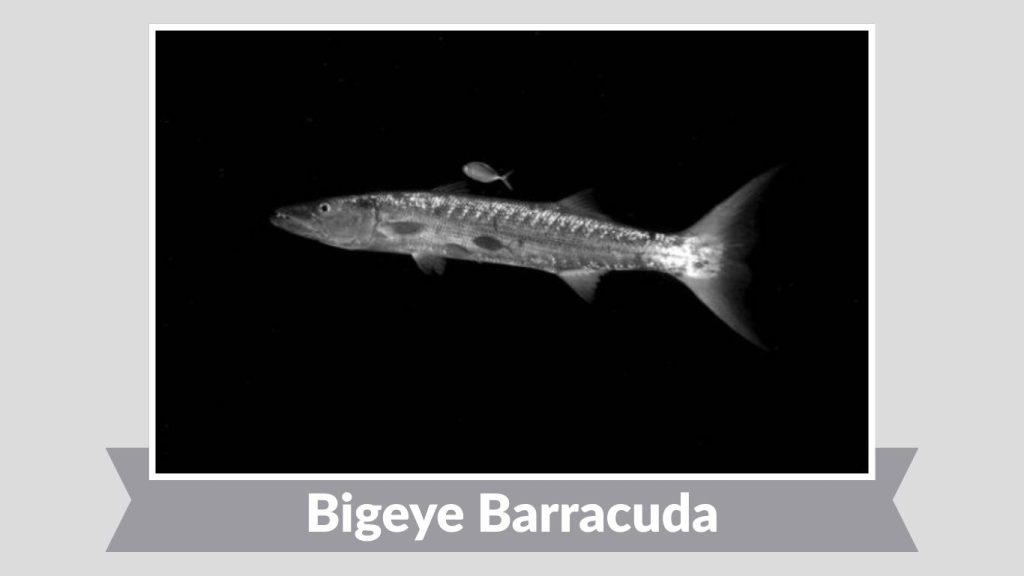
The bigeye barracuda is named for its noticeably large eyes, which help it hunt in deeper or low-light waters. It is a sleek, silver predator commonly found around coral reefs and offshore slopes. This species is often seen hovering in mid-water, sometimes in small groups.
Identification
- Elongated, slender, torpedo-shaped body
- Very large eyes compared to head size
- Silvery sides with a darker gray or bluish back
- Long pointed snout with sharp, fang-like teeth
- Forked tail built for quick bursts of speed
- Usually grows up to about 2.5–3 feet (75–90 cm)
Habitat and Distribution
Bigeye barracudas are widely distributed across the Indo-Pacific, including the Red Sea, Indian Ocean, and much of the Pacific. They are most often found around coral reefs, outer reef slopes, and deeper coastal waters.
Diet and Hunting Behavior
They mainly feed on small reef fish and mid-water schooling species. Bigeye barracudas rely on their strong vision to locate prey, then use sudden acceleration to capture fish with swift strikes.
Size and Lifespan
This species is medium-sized, commonly reaching up to about 3 feet in length. In the wild, bigeye barracudas are thought to live around 8 to 12 years, depending on food availability and habitat conditions.
13. Senegal Barracuda (Sphyraena afra)
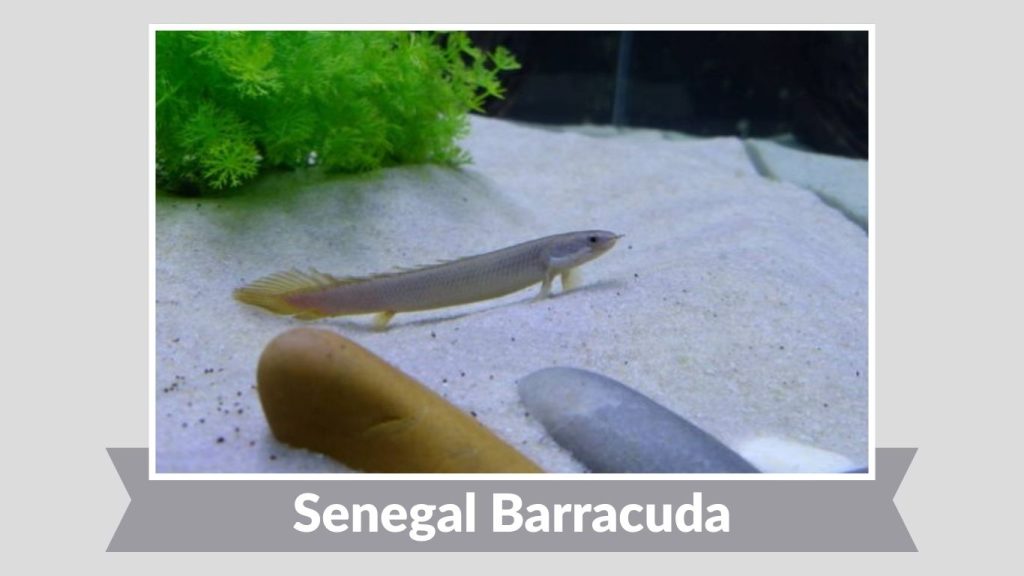
The Senegal barracuda is a lesser-known species native to the eastern Atlantic Ocean. It is a fast, streamlined predator with a bright silver body and powerful jaws. This species is usually seen in coastal waters and plays an important role in controlling populations of smaller fish.
Identification
- Long, slender, cylindrical body
- Shiny silver sides with a slightly darker back
- Pointed snout with sharp, uneven teeth
- Large eyes and deeply forked tail
- Smooth scales and streamlined profile
- Typically grows up to about 2–3 feet (60–90 cm)
Habitat and Distribution
Senegal barracudas are found mainly along the western coast of Africa, from Morocco to Senegal and the Gulf of Guinea. They inhabit coastal waters, bays, reef edges, and open nearshore zones.
Diet and Hunting Behavior
They feed mainly on small fish such as sardines, herrings, and juvenile reef species. Senegal barracudas hunt by patrolling coastal waters and striking rapidly when prey comes within range.
Size and Lifespan
This species is medium-sized, usually growing between 2 and 3 feet long. Their lifespan is estimated to be around 8 to 11 years in the wild.
14. Ruler Barracuda (Sphyraena helleri)
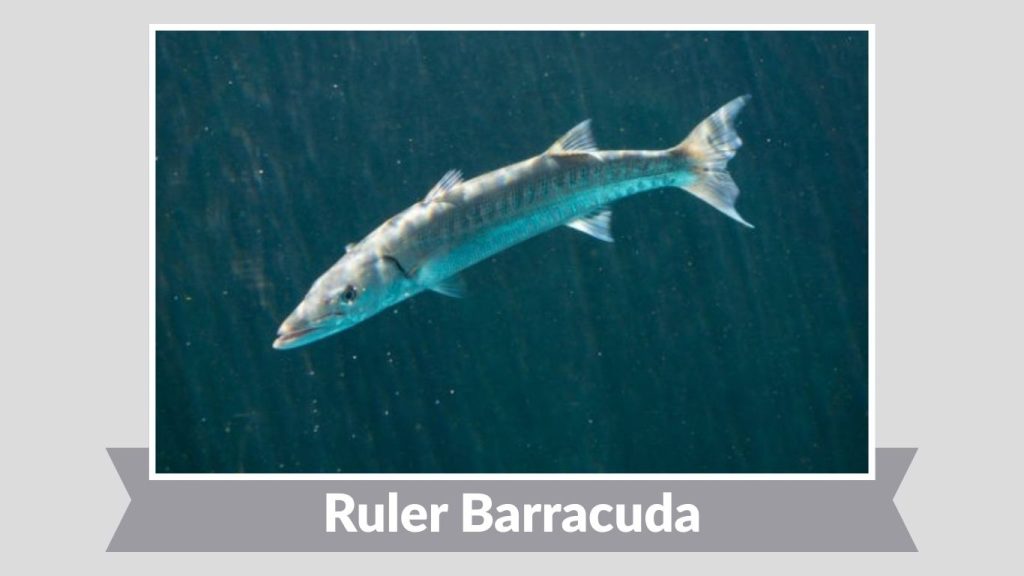
The ruler barracuda is a slender Indo-Pacific species named for the straight, ruler-like dark stripe that often runs along its silvery body. It is an agile swimmer commonly found near reefs and coastal drop-offs. This species is less massive than the great barracuda but is still an efficient and fast predator.
Identification
- Long, slim, streamlined body
- Silvery sides with a distinct dark horizontal stripe
- Grayish to bluish back with pale underside
- Pointed snout with sharp, needle-like teeth
- Large eyes and deeply forked tail
- Usually grows up to about 2–2.5 feet (60–75 cm)
Habitat and Distribution
Ruler barracudas are distributed across the Indo-Pacific region, including the Indian Ocean, Southeast Asia, and the western Pacific. They prefer coral reefs, lagoons, reef slopes, and open coastal waters, often swimming in mid-water.
Diet and Hunting Behavior
They mainly feed on small fish such as anchovies, fusiliers, and juvenile reef fish. Ruler barracudas hunt by slowly cruising near reefs before making sudden, fast lunges to capture prey.
Size and Lifespan
This species is relatively small to medium in size, typically reaching around 2 feet in length. Their lifespan is estimated to be about 7 to 10 years under natural conditions.
15. Sawtooth Barracuda (Sphyraena putnamae)
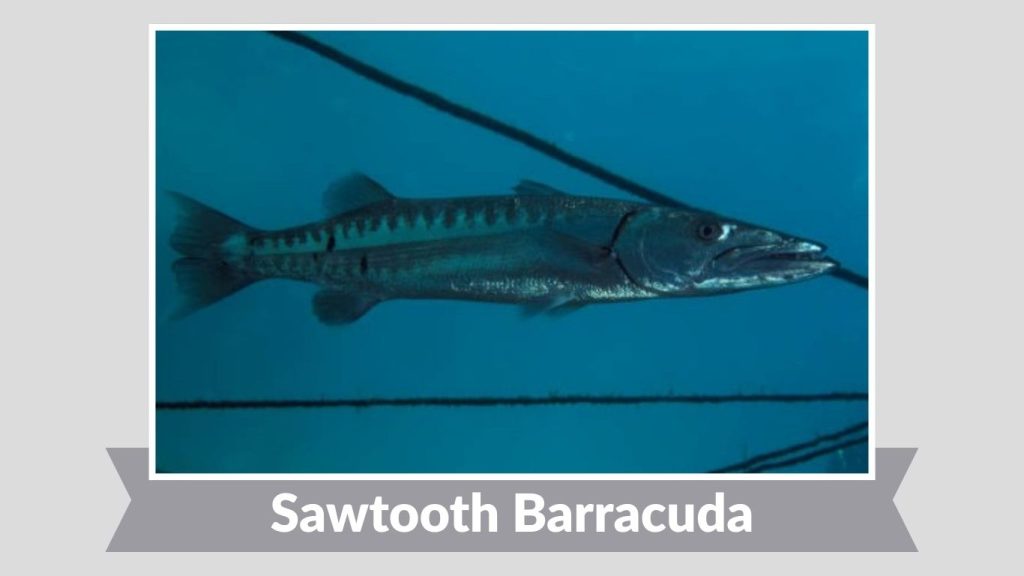
The sawtooth barracuda is a sleek, fast-moving species recognized for the sharp, saw-like teeth that give it its common name. It is an efficient predator commonly found in tropical Indo-Pacific waters. This barracuda is often seen around reefs and coastal slopes, either alone or in small groups.
Identification
- Long, torpedo-shaped, streamlined body
- Silvery sides with a slightly darker back
- Prominent, sharp, saw-like teeth
- Pointed snout and powerful jaws
- Large eyes and deeply forked tail
- Commonly grows up to about 3 feet (90 cm)
Habitat and Distribution
Sawtooth barracudas are widely distributed across the Indo-Pacific region, including the Red Sea, Indian Ocean, Southeast Asia, and the Pacific islands. They inhabit coral reefs, reef slopes, lagoons, and nearby open waters.
Diet and Hunting Behavior
They mainly feed on small to medium-sized fish and occasionally squid. Sawtooth barracudas hunt by cruising slowly and then launching sudden high-speed attacks to capture prey.
Size and Lifespan
This species typically reaches around 2 to 3 feet in length. In the wild, sawtooth barracudas are believed to live approximately 8 to 12 years, depending on environmental conditions.
FAQs
What is the biggest type of barracuda?
The great barracuda is the largest barracuda species in the world. It can grow over 6 feet long and weigh more than 45 kilograms. Because of its size, speed, and powerful jaws, it is considered the apex predator among all barracuda species.
Are barracuda dangerous to humans?
Barracudas are aggressive hunters, but attacks on humans are rare. Most incidents happen because the fish mistake shiny objects for prey. They are not naturally interested in people, and serious injuries are uncommon when divers and swimmers remain calm and cautious.
Where are barracudas usually found?
Barracudas are mainly found in tropical and subtropical oceans worldwide. They live around coral reefs, coastal waters, lagoons, mangroves, and sometimes in open seas. Different species prefer different depths, but most stay in warm marine environments.
What do barracuda fish eat?
Barracudas are carnivorous predators. They mainly eat smaller fish such as sardines, anchovies, mullet, and reef fish. Some larger species also consume squid and crustaceans. They hunt by using stealth followed by sudden bursts of speed.
How long do barracudas live?
Most barracuda species live between 8 and 15 years in the wild. Lifespan depends on the species, food availability, and environmental conditions. Larger species like the great barracuda tend to live longer than smaller barracuda types.