

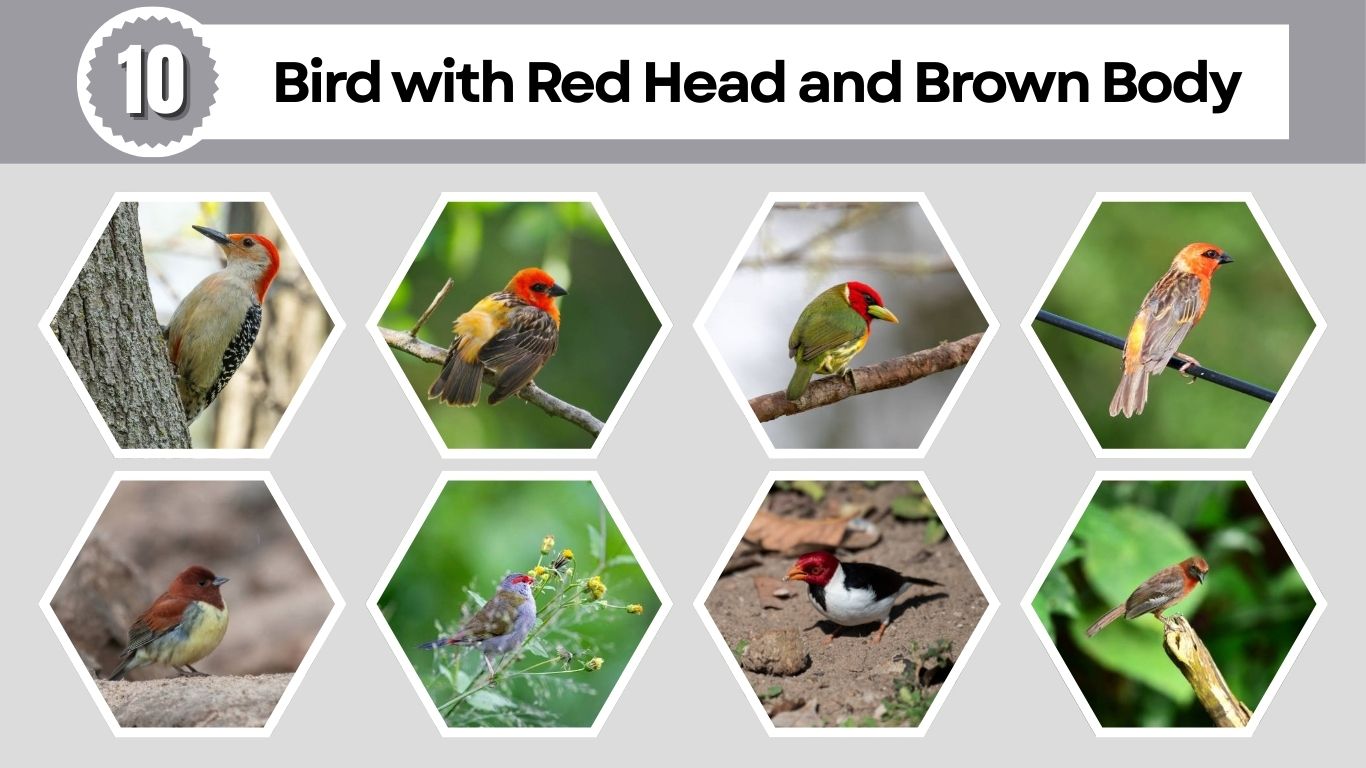
Birds with a red head and brown body are among the most visually striking species found across different parts of the world. The bold red coloring often plays an important role in communication and mating displays, while the brown body helps provide natural camouflage in trees, grasslands, and forest edges. From woodpeckers and buntings to weavers and finches, these birds live in a wide range of habitats and show fascinating differences in behavior, diet, and lifestyle.
1. Red-headed Woodpecker

The red-headed woodpecker is one of the most striking birds in North America, easily recognized by its bold color contrast and confident behavior. With a completely red head and rich brown-to-black body pattern, this medium-sized woodpecker stands out clearly in open woodlands, orchards, and forest edges. It is known for its strong flight, loud calls, and habit of storing food in tree crevices.
Identification
- Bright crimson-red head, neck, and throat
- Back and wings glossy dark brown to black
- Large white wing patches visible in flight
- Underparts clean white
- Medium-sized bird with a sturdy, straight bill
Size & Appearance
Red-headed woodpeckers typically measure about 19–23 cm (7.5–9 inches) in length with a wingspan of around 42 cm (16.5 inches). Their vivid red head covers the entire face and neck, sharply contrasting with the darker brown-black back and wings. The body looks compact and strong, built for climbing tree trunks and hammering into bark.
Habitat & Range
This species is commonly found in open woodlands, pine savannas, farmland edges, orchards, and parks. It prefers areas with scattered trees and plenty of dead wood for nesting. The red-headed woodpecker is mainly distributed across the eastern and central United States, with parts of southern Canada also included in its breeding range.
Diet & Feeding Behavior
Red-headed woodpeckers are omnivorous and highly versatile feeders. They eat insects, beetles, ants, grasshoppers, fruits, berries, nuts, seeds, and even small vertebrates on rare occasions. Uniquely among woodpeckers, they often catch insects in mid-air and are well known for storing acorns and seeds in tree bark for later use.
Behavior & Interesting Facts
This bird is bold, territorial, and surprisingly agile in flight. It often perches upright on exposed branches, making it easy to spot. Red-headed woodpeckers are one of the few woodpeckers that regularly cache food. Although once very common, their population has declined in some regions due to habitat loss, making conservation of open woodland habitats increasingly important.
2. Red-headed Weaver
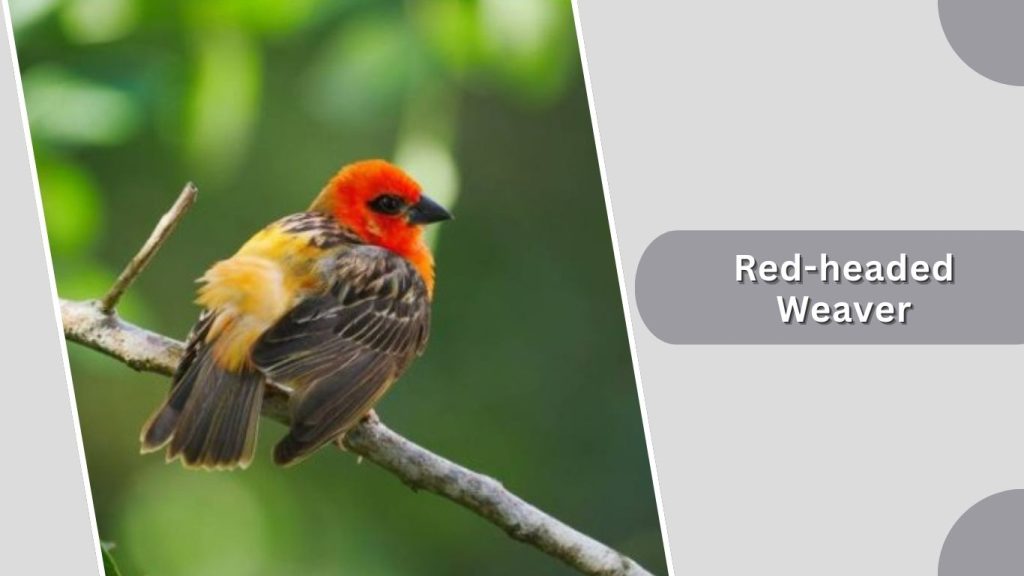
The red-headed weaver is a colorful and energetic bird found mainly in parts of East Africa. It is well known for its bright red head combined with a warm brown body and wings, giving it a striking, high-contrast appearance. This species is also famous for its intricate woven nests, often built in colonies near wetlands, rivers, and open grasslands.
Identification
- Bright red head and face (most vivid in breeding males)
- Brown to chestnut-brown back and wings
- Pale underparts, often cream or light buff
- Short, thick, conical bill adapted for seeds
- Compact body with relatively short tail
Size & Appearance
Red-headed weavers are small birds, usually about 13–15 cm (5–6 inches) long. Males display a much brighter red head during the breeding season, while females and non-breeding birds appear duller with more brown tones. Their overall shape is stocky, with a strong bill designed for cracking seeds.
Habitat & Range
This species inhabits savannas, grasslands, farmland edges, and wetland areas, especially where reeds, acacia trees, or tall grasses are available for nesting. It is most commonly found across parts of East Africa, including Kenya, Tanzania, Uganda, and neighboring regions.
Diet & Feeding Behavior
Red-headed weavers mainly feed on seeds, grains, and small insects. They often forage in flocks, moving through grasses and low vegetation in search of food. During the breeding season, insects become more important as a protein source for feeding chicks.
Behavior & Interesting Facts
These birds are highly social and usually nest in large colonies. Males construct elaborate woven nests to attract females, sometimes building several before one is accepted. Their noisy chatter, constant movement, and dense nesting groups make red-headed weavers a lively and noticeable presence in their habitats.
3. Red-headed Barbet

The red-headed barbet is a brightly colored tropical bird best known for its thick bill, loud calls, and fruit-loving habits. Its vivid red head contrasts strongly with its mostly brown body, making it easy to recognize in forests and woodland areas. This species is often heard before it is seen, thanks to its repetitive, rhythmic calling from treetops.
Identification
- Bright red head and face
- Brown to olive-brown back and wings
- Stout, thick bill with slight bristles at the base
- Compact body with short neck
- Often seen sitting upright on branches
Size & Appearance
Red-headed barbets are medium-sized birds, usually about 20–23 cm (8–9 inches) long. Their large head and heavy bill give them a chunky appearance. The red head is bold and glossy, while the rest of the body is mainly brown with subtle patterning, helping them blend into tree bark when not moving.
Habitat & Range
These birds are commonly found in tropical forests, open woodlands, plantations, and garden edges. They prefer areas with plenty of fruiting trees and dead wood for nesting. Red-headed barbets are mainly distributed across parts of South and Southeast Asia, depending on the exact species.
Diet & Feeding Behavior
Red-headed barbets are primarily frugivores, feeding on figs, berries, and other soft fruits. They also eat insects, especially during the breeding season. They forage quietly among branches, plucking fruit and swallowing it whole, which helps spread seeds through their droppings.
Behavior & Interesting Facts
Barbets nest in tree cavities, often excavating their own holes in soft or decaying wood. Both parents help incubate the eggs and feed the chicks. Their repeated “tuk-tuk” or “poop-poop” calls can echo through forests for long periods, making them one of the most recognizable voices of their habitat.
4. Red-headed Quelea
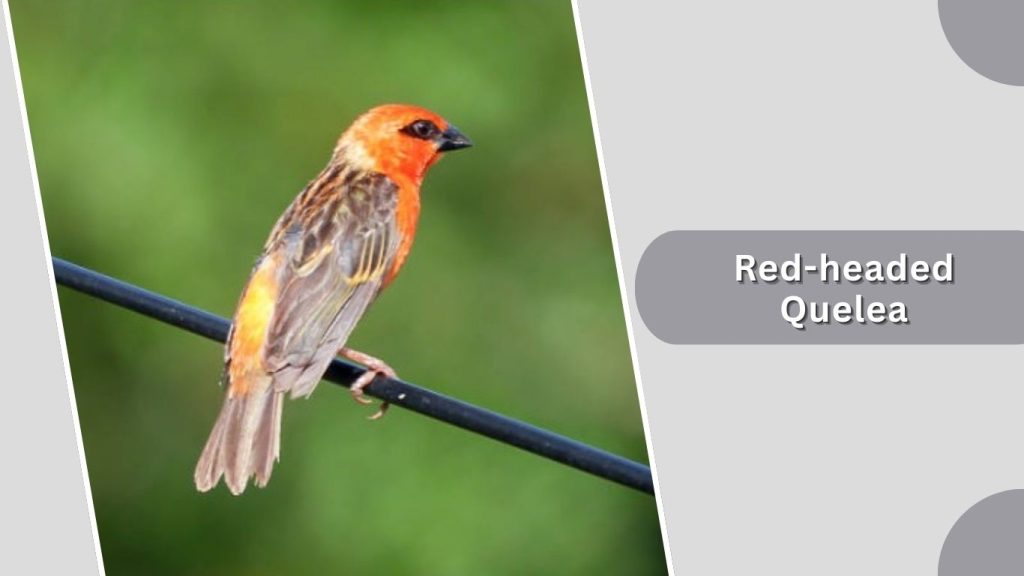
The red-headed quelea is a small, fast-moving bird best known for forming some of the largest bird flocks in the world. During the breeding season, males develop a striking red head that contrasts with their mostly brown body, making them especially noticeable in open landscapes. These birds are extremely social and are often seen in huge, noisy groups.
Identification
- Bright red head in breeding males
- Brown, streaked back and wings
- Pale underparts, often buff or light tan
- Short, thick, seed-eating bill
- Small, compact body with short tail
Size & Appearance
Red-headed queleas are small birds, measuring about 11–13 cm (4–5 inches) in length. Outside the breeding season, the red head fades, and birds appear mostly brown and beige. When in full color, the red face and head stand out sharply against the earth-toned body.
Habitat & Range
They inhabit grasslands, savannas, agricultural fields, and open scrublands, especially near water. Red-headed queleas are widely distributed across sub-Saharan Africa and are especially common in regions with extensive grain crops and seasonal grasses.
Diet & Feeding Behavior
Their diet mainly consists of grass seeds and cereal grains. Large flocks forage on the ground or in low vegetation, moving quickly and efficiently. They may also eat small insects, particularly during the breeding season when extra protein is needed.
Behavior & Interesting Facts
Red-headed queleas are famous for forming massive colonies that can include millions of birds. Their synchronized flight patterns create dramatic cloud-like shapes in the sky. Because of their huge numbers and appetite for grain, they are sometimes considered serious agricultural pests in parts of Africa.
5. Red-headed Bunting
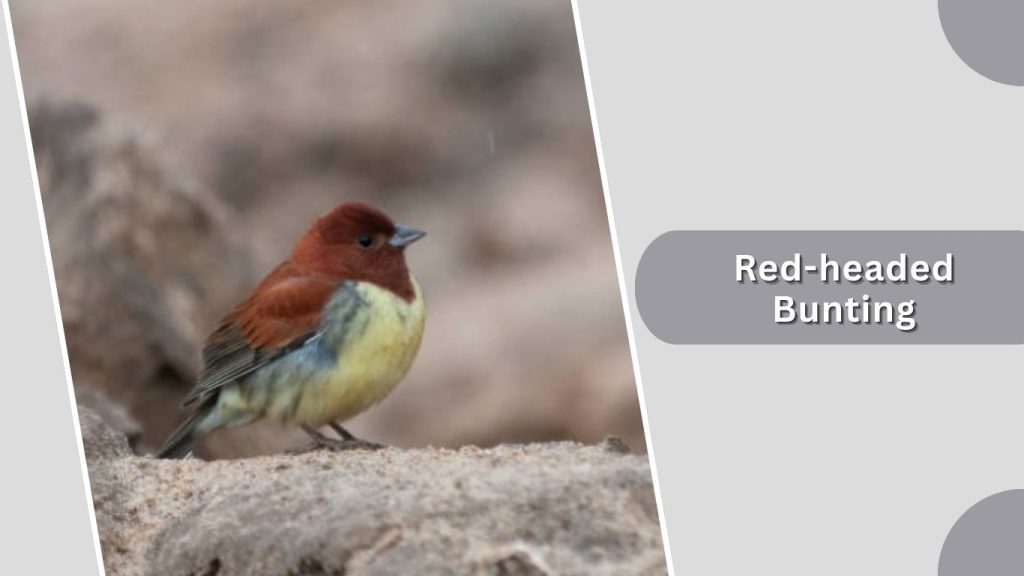
The red-headed bunting is a colorful migratory bird admired for the male’s bright red head and warm brown body. During the breeding season, males become especially vivid, making them easy to spot in open countryside. This species is commonly seen in fields, scrublands, and farmland, often perching on low bushes or wires.
Identification
- Bright red head and face in adult males
- Brown to chestnut-brown back and wings
- Yellowish to buff underparts
- Short, conical seed-eating bill
- Slender body with medium-length tail
Size & Appearance
Red-headed buntings are small to medium-sized birds, usually about 13–15 cm (5–6 inches) long. The male’s red head contrasts clearly with the brown upperparts, while females and non-breeding birds are more subdued, showing mostly brown and streaked tones. Their overall look is neat and compact.
Habitat & Range
This species breeds in parts of Central Asia and migrates south to South Asia during winter. It favors open grasslands, agricultural fields, scrubby areas, and lightly wooded regions where seeds and insects are abundant.
Diet & Feeding Behavior
Red-headed buntings feed mainly on seeds and grains but also eat insects, especially during the breeding season. They often forage on the ground in small groups, hopping and picking food from grasses and low plants.
Behavior & Interesting Facts
During migration and winter, these buntings can form loose flocks and sometimes mix with other small seed-eating birds. Males sing from exposed perches in the breeding season, producing soft, musical notes to defend territory and attract mates.
6. Red-faced Liocichla
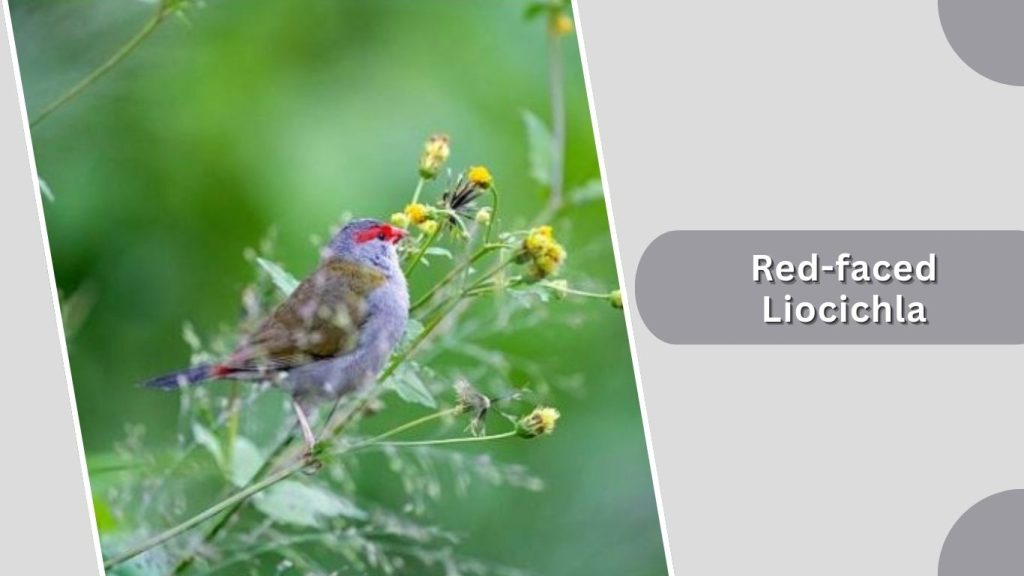
The red-faced liocichla is a shy but beautifully patterned bird of Asian hill forests. Although not completely red-headed, its bright red face and forehead stand out strongly against its mostly brown body, giving it a “red head and brown body” appearance. It is often heard rustling in dense undergrowth before it is seen.
Identification
- Bright red face and forehead
- Brown to olive-brown upperparts
- Yellow, black, and red markings on wings
- Slender, slightly curved bill
- Medium-length tail with subtle color accents
Size & Appearance
This bird measures about 21–23 cm (8–9 inches) long. Its body is mainly brown, but colorful wing patches and a vivid red facial area make it distinctive. The combination of earthy and bright tones gives it a unique, almost painted look.
Habitat & Range
Red-faced liocichlas live in subtropical and tropical mountain forests, thick shrubs, and bamboo thickets. They are mainly found in parts of China, Myanmar, Thailand, and neighboring regions, preferring higher elevations with dense cover.
Diet & Feeding Behavior
They feed on insects, small invertebrates, fruits, and berries. Most foraging happens low in vegetation, where they hop among leaves and branches, searching for hidden prey and soft fruits.
Behavior & Interesting Facts
Red-faced liocichlas are secretive birds that usually move in pairs or small family groups. They are strong singers, producing clear, melodious calls. Because they favor dense habitat, spotting one in the open is considered a special treat by birdwatchers.
7. Red-capped Cardinal
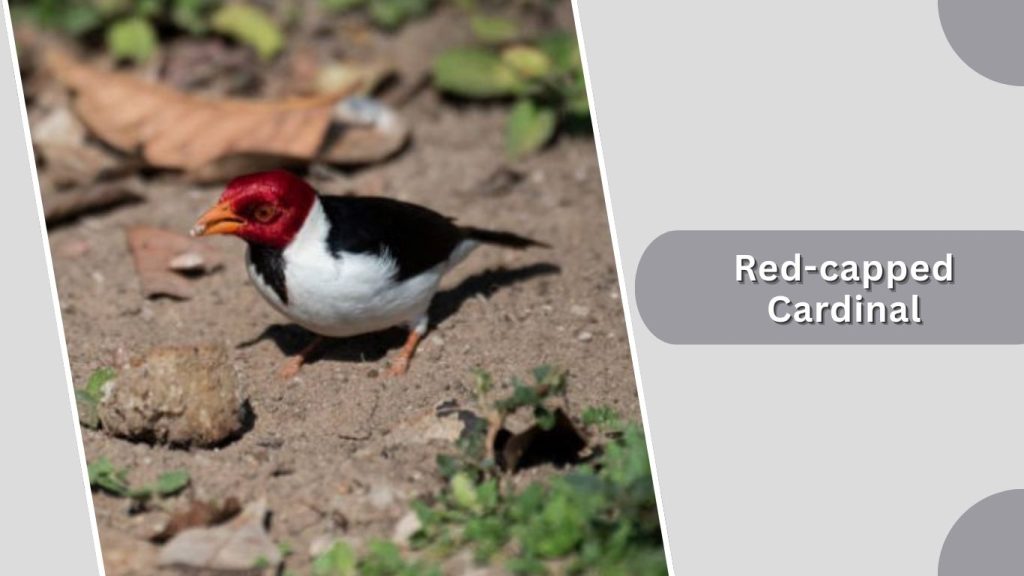
The red-capped cardinal is a striking South American bird known for its bright red head and rich brown body. Its sharp color contrast, upright posture, and musical calls make it popular among birdwatchers. This species is often seen in pairs or small groups, perching openly along forest edges and riversides.
Identification
- Bright red head and crest
- Dark brown to chestnut back and wings
- White throat and upper chest
- Strong, conical bill
- Medium-length tail and compact body
Size & Appearance
Red-capped cardinals are about 18–19 cm (7–7.5 inches) long. The vivid red head and crest are the most noticeable features, while the body is mostly brown with clean white underparts near the throat. Both males and females look similar, though males are often slightly brighter.
Habitat & Range
They are commonly found in tropical lowlands, forest edges, gallery forests, wetlands, and gardens. The red-capped cardinal ranges widely across northern and central South America, especially in Brazil, Venezuela, Colombia, and surrounding regions.
Diet & Feeding Behavior
This bird feeds on seeds, fruits, and insects. It forages both on the ground and in low vegetation, often hopping quietly while searching for food. Insects become especially important during the breeding season.
Behavior & Interesting Facts
Red-capped cardinals are known for their clear, whistling songs, often delivered from exposed branches. They build neat cup-shaped nests in shrubs. Because of their beauty and calm behavior, they are sometimes kept as cage birds in parts of their native range.
8. Red-headed Tanager
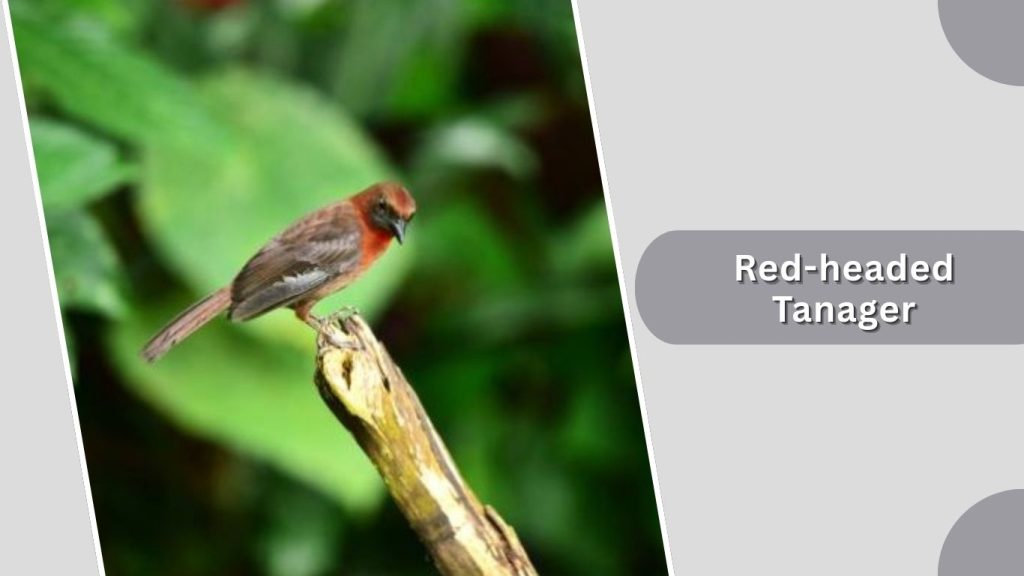
The red-headed tanager is a small but brilliantly colored tropical bird admired for its vivid red head and contrasting brownish body tones. It is active, quick-moving, and often seen hopping through trees in search of fruit. Its bright head makes it stand out clearly against green forest backgrounds.
Identification
- Bright red head and face
- Brown to olive-brown back and wings
- Darker tail and flight feathers
- Slender, pointed bill
- Small, compact body shape
Size & Appearance
Red-headed tanagers are usually around 13–15 cm (5–6 inches) long. The intense red head draws immediate attention, while the rest of the body remains more subdued in brown or olive shades. Their slim bill and smooth feathering give them a neat, elegant look.
Habitat & Range
These birds inhabit tropical and subtropical forests, forest edges, and plantations. They are mainly found in parts of Central and South America, where they move through mid-level vegetation and canopy layers.
Diet & Feeding Behavior
Their diet consists largely of fruits, berries, nectar, and small insects. They often forage alone or in pairs, sometimes joining mixed-species feeding flocks in fruiting trees.
Behavior & Interesting Facts
Red-headed tanagers are agile climbers and short-distance fliers. They play an important ecological role by dispersing seeds. Their soft, high-pitched calls and constant motion make them easier to detect by sound than by sight in dense foliage.
9. Red-headed Myzomela
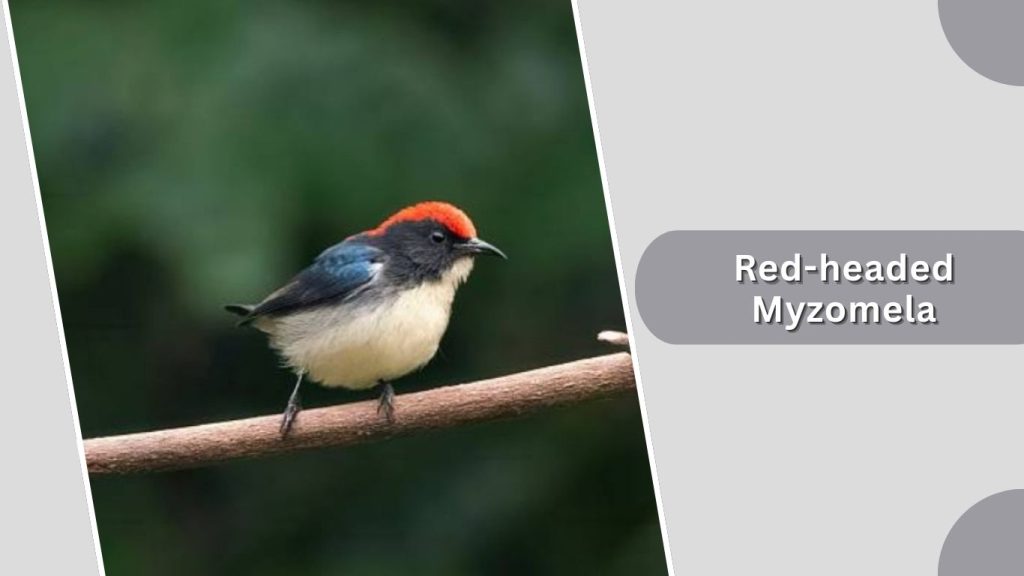
The red-headed myzomela is a tiny, energetic honeyeater known for its glowing red head and warm brown body. Despite its small size, it is highly active and often seen darting between flowers. Its bright head color makes it stand out even among colorful tropical birds.
Identification
- Bright red head and face
- Brown to dark brown back and wings
- Slender, slightly curved bill
- Small, compact body
- Fast, fluttering flight
Size & Appearance
This species is very small, measuring about 10–12 cm (4–4.7 inches) long. The red head contrasts strongly with the darker brown body and wings. Its thin, curved bill is perfectly shaped for feeding on nectar, giving it a delicate and agile appearance.
Habitat & Range
Red-headed myzomelas are found in tropical forests, coastal woodlands, mangroves, and flowering gardens. They occur mainly across parts of Indonesia, New Guinea, and nearby Pacific islands.
Diet & Feeding Behavior
They feed primarily on nectar, but also take small insects and spiders. Often seen hovering briefly at flowers, they also perch to probe blossoms with their curved bills.
Behavior & Interesting Facts
Red-headed myzomelas are restless and quick, rarely staying in one place for long. Their high-pitched calls and constant movement make them easy to notice. By visiting many flowers each day, they play an important role in pollination within their ecosystems.
10. Red-headed Finch
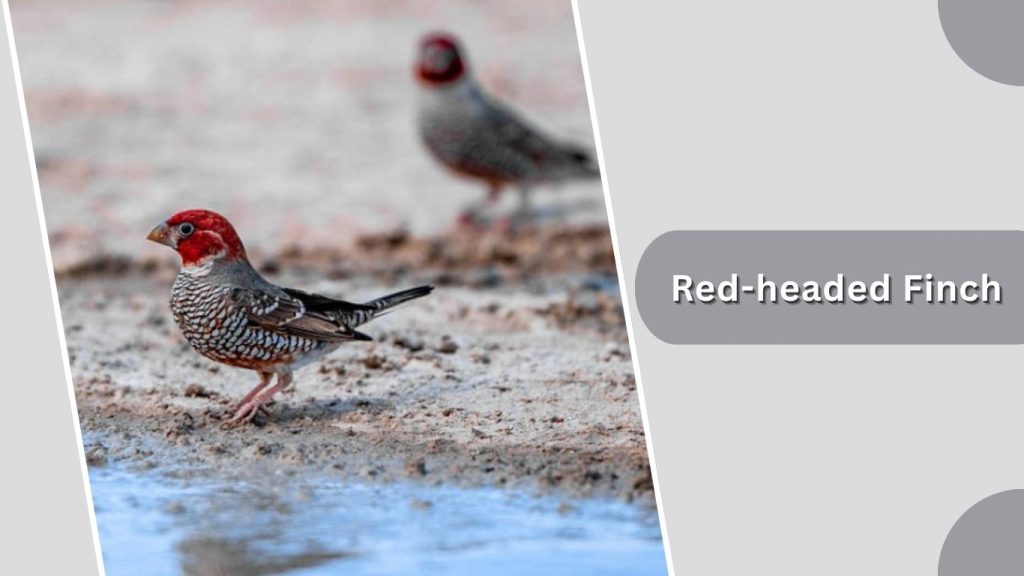
The red-headed finch is a small, attractive bird known for the male’s bright red head combined with a soft brown body. It is commonly seen in open countryside, grasslands, and lightly wooded areas, where it feeds quietly on seeds. Its gentle calls and colorful head make it a favorite among bird enthusiasts.
Identification
- Bright red head and face in adult males
- Brown to light brown back and wings
- Pale underparts, often buff or whitish
- Short, conical finch bill
- Slim body with medium-length tail
Size & Appearance
Red-headed finches are typically about 12–14 cm (4.7–5.5 inches) long. Males show a clear red head, while females are more subdued and mostly brown. The overall body is slim and delicate, well suited for quick movements among grasses and shrubs.
Habitat & Range
They inhabit grasslands, savannas, agricultural areas, and open woodland edges. Depending on the species, red-headed finches are found in parts of Africa, Australia, and South Asia.
Diet & Feeding Behavior
Their diet is mainly seeds and small grains, supplemented with insects during the breeding season. They usually forage on the ground in pairs or small groups, picking seeds from grasses and low plants.
Behavior & Interesting Facts
Red-headed finches are social outside the breeding season and often form small flocks. Males sing soft, pleasant songs to attract mates. Their calm nature and bright head color make them popular in aviculture and birdwatching alike.
FAQs
What birds commonly have a red head and brown body?
Many bird species show this color pattern, including red-headed woodpeckers, red-headed buntings, red-capped cardinals, red-headed weavers, and some tanagers and finches. The red head is often used for display or mating signals, while the brown body helps with camouflage.
Why do some birds have bright red heads?
Bright red heads usually play a role in attracting mates, defending territory, or signaling health and strength. Red pigments often come from a bird’s diet, so a vivid red head can indicate good feeding ability and overall fitness.
Are red-headed birds always male?
Not always, but in many species the brightest red coloring is seen in males, especially during the breeding season. Females and young birds often have duller or more brownish heads, which helps them stay less visible to predators.
Where can red-headed and brown-bodied birds be found?
These birds live across many parts of the world, including North America, South America, Africa, Asia, and the Pacific islands. They can be found in forests, grasslands, farmland, wetlands, and even gardens, depending on the species.
What do red-headed birds usually eat?
Their diets vary by species. Some mainly eat insects, others prefer seeds, fruits, or nectar. Many are omnivorous, switching between plant food and insects based on season and availability.