


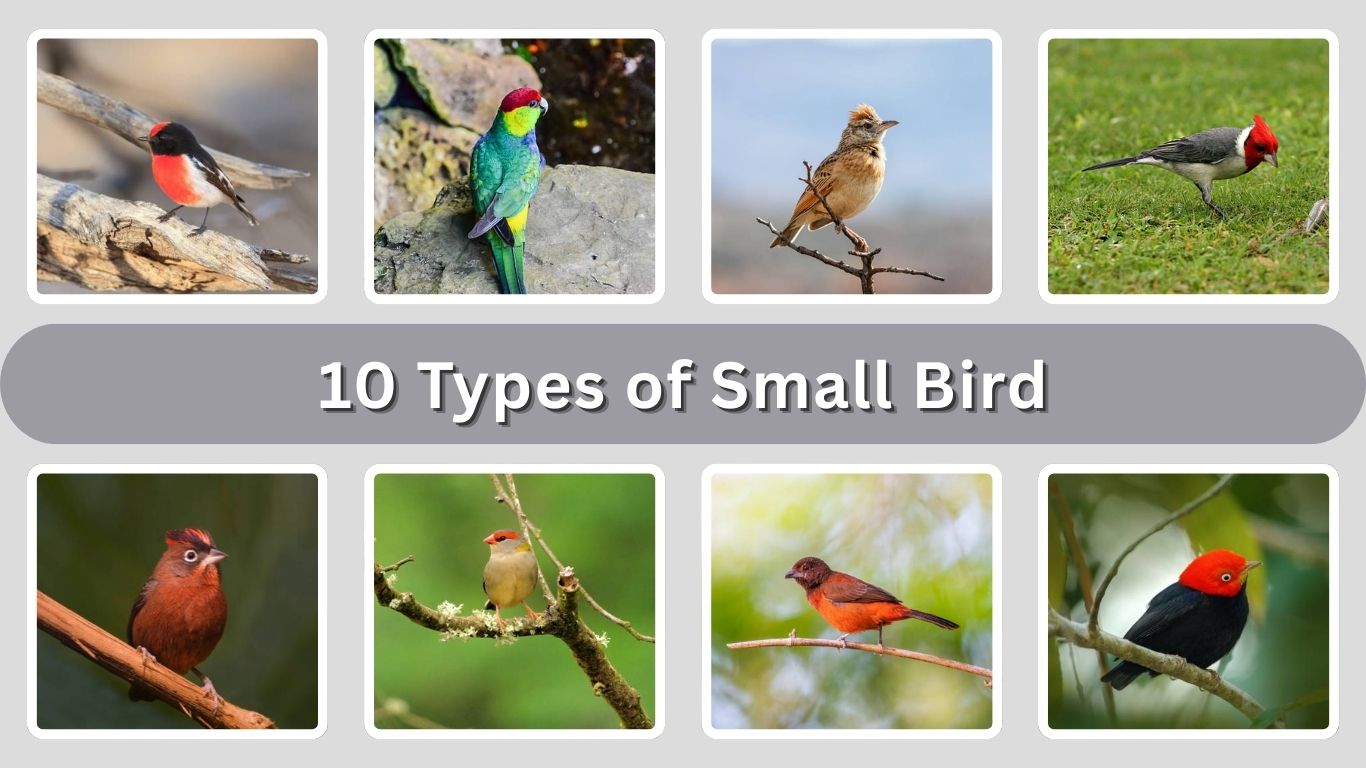
Small birds with red caps on their heads are some of the most charming and eye-catching species in the avian world. The bright splash of red adds instant character and helps distinguish these birds from others of similar size. Found in a variety of habitats ranging from forests and grasslands to shrublands and tropical regions, these birds display diverse behaviors, diets, and lifestyles. Their vivid markings often play an important role in communication, mating, and species identification.
1. Red-capped Robin
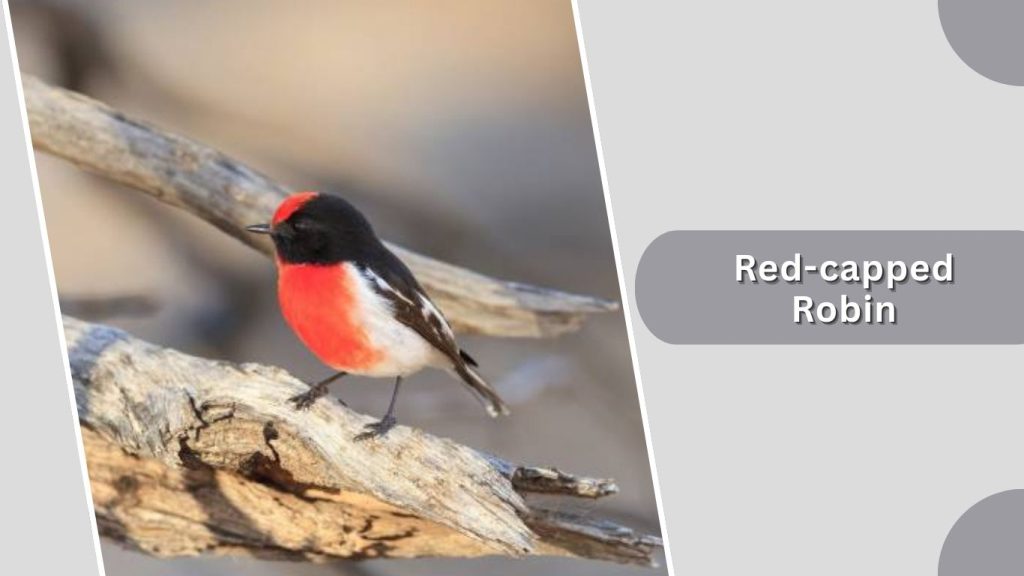
The Red-capped Robin is a small, active bird best known for the bright red patch on the top of its head. Its compact size and contrasting colors make it easy to spot, especially when it moves quickly along the ground in search of food.
Identification
- Bright red cap on the crown
- Dark gray to black upperparts
- White to pale underparts
- Slim, pointed bill
- Small, compact body
Habitat
Red-capped Robins are commonly found in open woodlands, dry forests, scrublands, and forest edges. They prefer areas with scattered trees and open ground, which allow them to forage easily.
Behavior
This species is energetic and alert. It is often seen hopping on the ground or making short flights from low perches. Red-capped Robins are usually solitary or found in pairs and can be territorial during the breeding season.
Diet
Their diet mainly consists of insects and small invertebrates such as ants, beetles, spiders, and larvae. They occasionally eat small fruits when insects are less available.
Lifespan
In the wild, Red-capped Robins typically live for around 5 to 8 years, depending on environmental conditions, predation, and food availability.
2. Red-capped Parrot
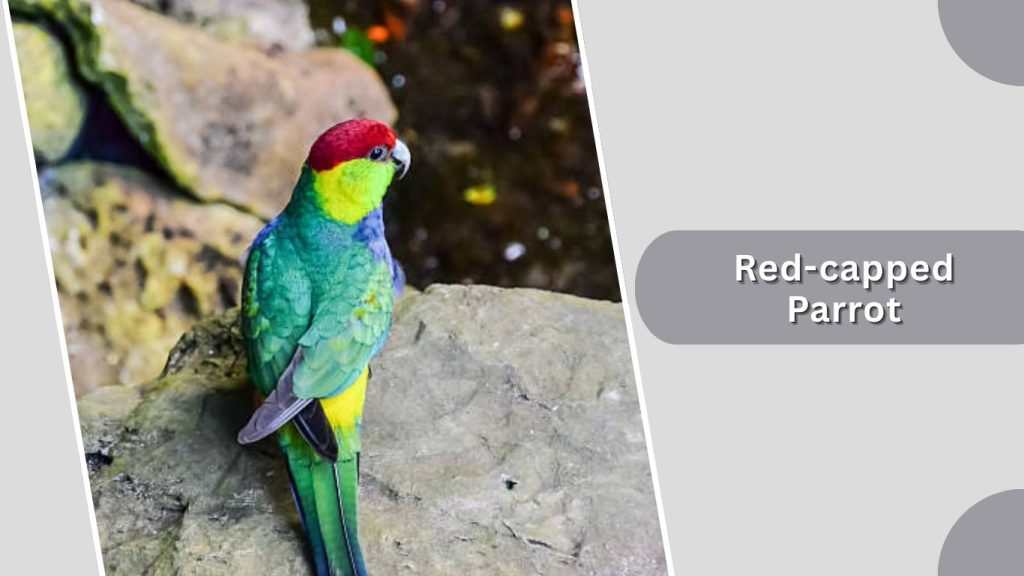
The Red-capped Parrot is a small, colorful parrot recognized for the bright red cap on its head and its lively, social nature. Its compact size and cheerful calls make it a noticeable species in its native habitats.
Identification
- Bright red cap on the crown
- Green body with darker wings
- Blue shading on the lower back and tail
- Short, curved parrot bill
- Small to medium body size
Habitat
Red-capped Parrots are typically found in woodlands, open forests, savannas, and forest edges. They often inhabit areas near water and regions with abundant flowering or fruiting trees.
Behavior
These parrots are highly social and usually seen in pairs or small flocks. They are active during the day, moving between trees while feeding and calling to one another. During the breeding season, they nest in tree hollows.
Diet
Their diet consists mainly of seeds, fruits, berries, nectar, and flowers. They may also feed on blossoms and occasionally insects.
Lifespan
In the wild, Red-capped Parrots generally live between 10 and 20 years, depending on habitat quality and environmental pressures.
3. Red-capped Lark
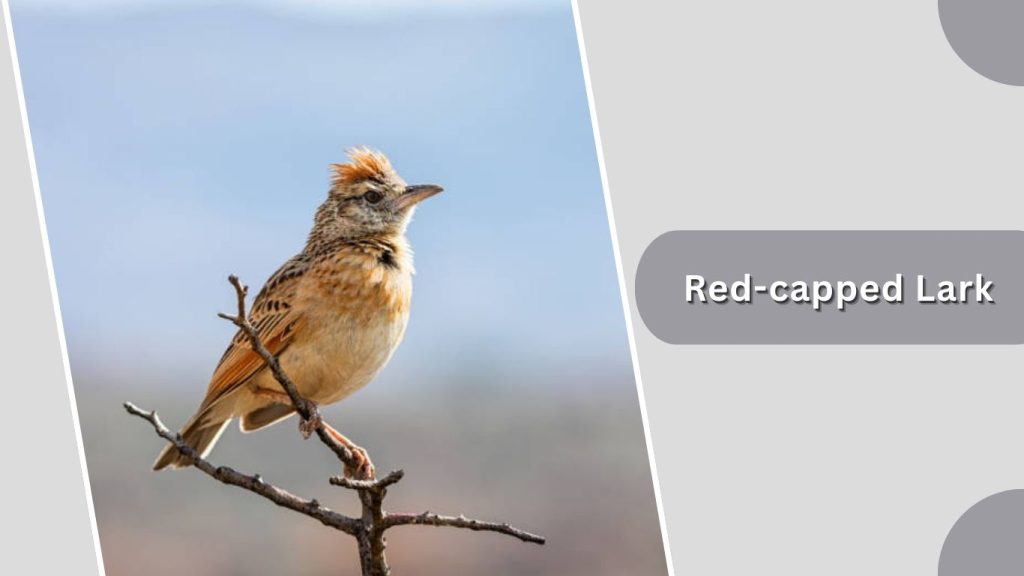
The Red-capped Lark is a small ground-dwelling bird known for the subtle but distinctive red crown that appears most clearly during the breeding season. It is admired for its delicate appearance, melodic song, and strong association with open landscapes.
Identification
- Small red cap on the crown (more vivid in breeding males)
- Sandy brown to grayish body with streaked upperparts
- Pale underparts
- Short, pointed bill
- Slim body with relatively long legs
Habitat
Red-capped Larks inhabit open grasslands, savannas, dry plains, and semi-arid regions. They prefer flat or gently rolling terrain with short vegetation, which allows easy ground foraging and nesting. These birds are rarely found in dense forests or heavily wooded areas.
Behavior
This species is mostly terrestrial and spends much of its time walking or running on the ground rather than hopping. During the breeding season, males perform aerial song displays, flying upward and singing before gliding back down. Outside breeding periods, they are often seen alone or in loose pairs.
Diet
Their diet consists mainly of seeds, grains, and grasses, supplemented by insects such as ants, beetles, and termites. Insects become especially important during the breeding season for feeding chicks.
Lifespan
Red-capped Larks typically live around 4 to 7 years in the wild. Survival depends on factors such as habitat conditions, food availability, and predation.
4. Red-capped Cardinal
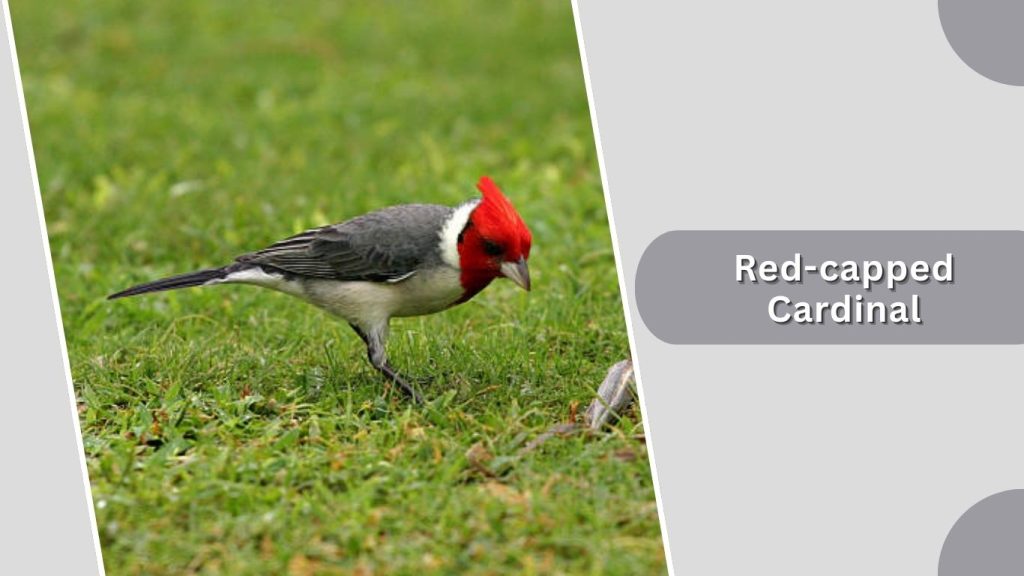
The Red-capped Cardinal is a small, attractive bird recognized for the vivid red cap on its head and its contrasting gray and white body. Despite its name, it is not a true cardinal but belongs to a different bird family.
Identification
- Bright red cap and face
- Gray upperparts
- White underparts
- Black mask around the eyes and bill
- Thick, conical bill
Habitat
This species is commonly found in open woodlands, savannas, grasslands, gardens, and agricultural areas. It adapts well to human-modified environments and is often seen near villages and farmland.
Behavior
Red-capped Cardinals are social birds, usually seen in pairs or small groups. They are active during the day and spend much of their time foraging on the ground. Their calls are sharp and repetitive, making them easy to detect.
Diet
Their diet mainly consists of seeds and grains, but they also eat fruits, berries, and small insects, especially during the breeding season.
Lifespan
In the wild, Red-capped Cardinals typically live for about 6 to 10 years, depending on environmental conditions and predation.
5. Red-crowned Finch
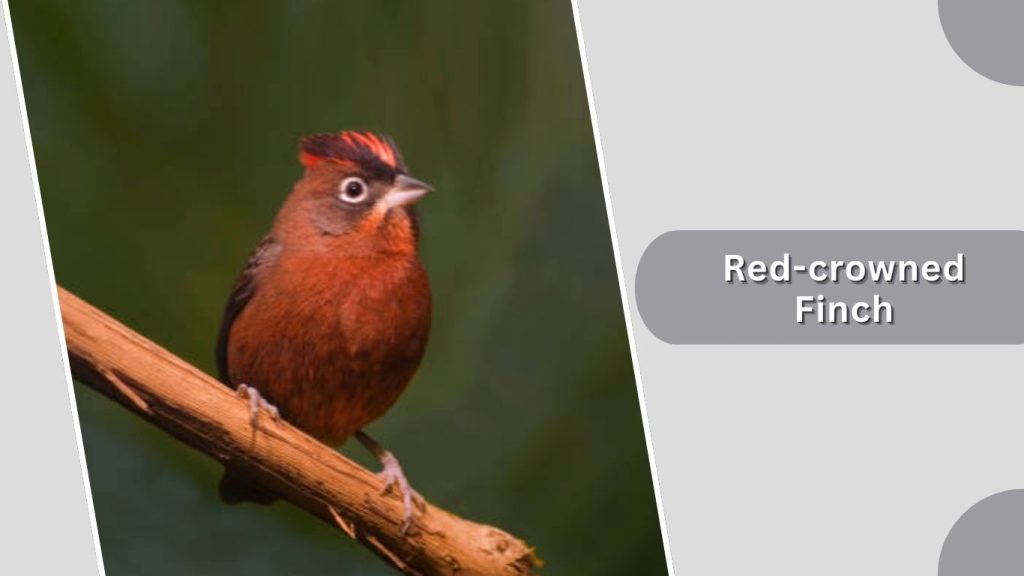
The Red-crowned Finch is a small, delicate bird admired for the bright red patch on the top of its head and its gentle, social nature. Its subtle beauty and constant activity make it a charming sight in open landscapes.
Identification
- Bright red crown on the head
- Brown to gray upperparts
- Pale underparts
- Short, conical bill
- Small, compact body
Habitat
Red-crowned Finches are typically found in grasslands, open woodlands, shrublands, and agricultural fields. They prefer areas with low vegetation and access to water, often gathering near streams or ponds.
Behavior
These finches are social and usually seen in pairs or small flocks. They spend much of their time foraging on the ground or low plants. During the breeding season, males may sing softly to attract mates and defend small territories.
Diet
Their diet mainly consists of grass seeds, small grains, and other plant material. They also consume small insects, particularly during breeding when extra protein is needed.
Lifespan
In the wild, Red-crowned Finches generally live around 5 to 8 years, depending on habitat quality, climate, and predation pressure.
6. Red-capped Finch
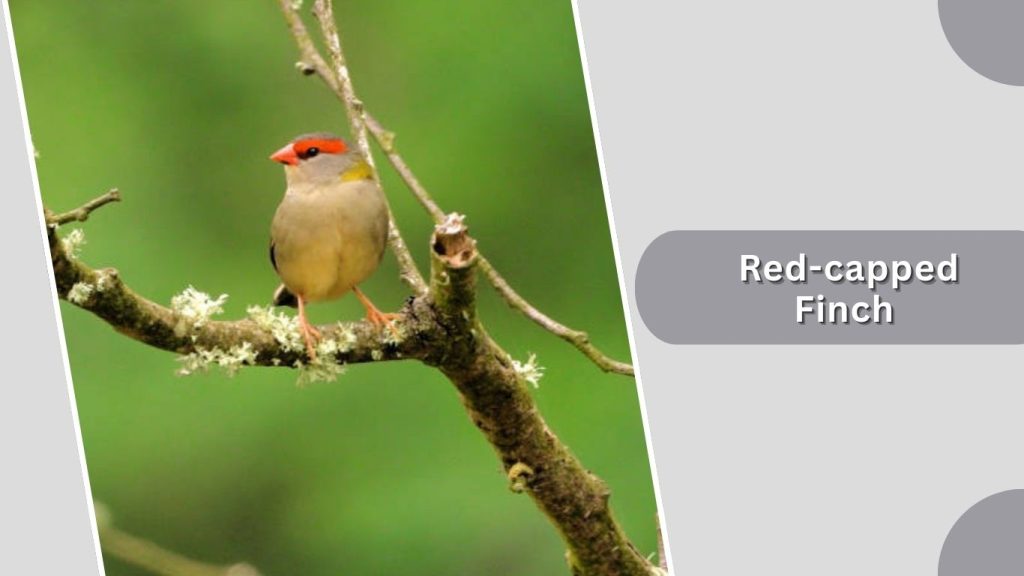
The Red-capped Finch is a small, lively bird known for the bright red cap on its head and its soft, earthy body colors. Its cheerful movements and social nature make it easy to notice in open and semi-open habitats.
Identification
- Bright red cap on the crown
- Brown to gray upperparts
- Pale or whitish underparts
- Short, strong conical bill
- Small, compact body
Habitat
Red-capped Finches are commonly found in grasslands, savannas, open woodlands, shrublands, and agricultural areas. They prefer regions with low vegetation and nearby water sources, which provide both food and nesting opportunities.
Behavior
These birds are social and often seen in pairs or small flocks. They spend much of their time foraging on the ground, hopping or walking while searching for food. During the breeding season, males may sing softly and become slightly territorial.
Diet
Their diet mainly consists of seeds and grasses. They also eat small insects and larvae, especially when feeding chicks or during the breeding season.
Lifespan
In the wild, Red-capped Finches typically live for about 5 to 7 years, though lifespan can vary based on environmental conditions and predation.
7. Red-crowned Ant Tanager
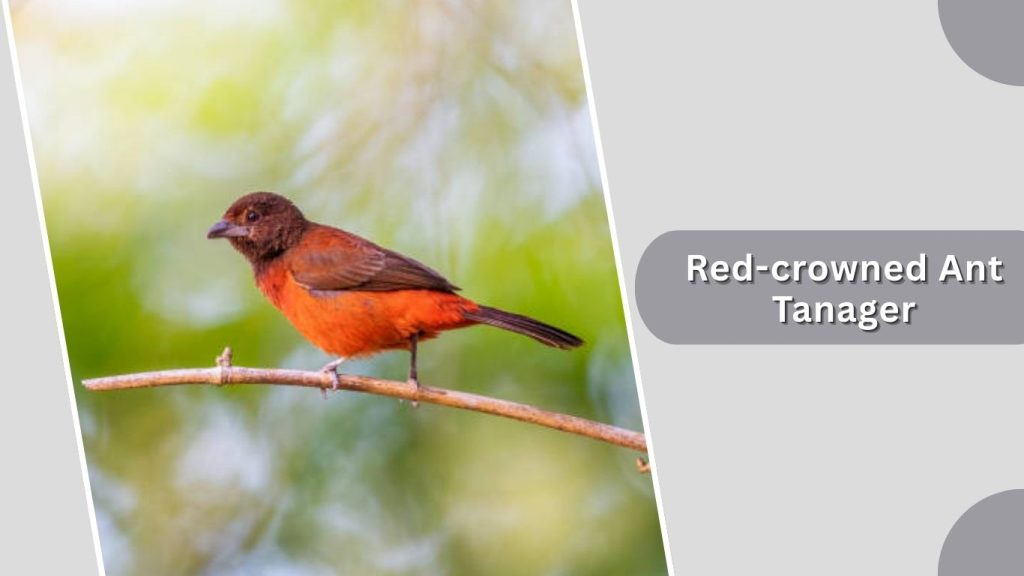
The Red-crowned Ant Tanager is a small, tropical bird recognized for the bright red patch on the crown of its head and its active behavior in forested habitats. It is often seen moving quickly through dense foliage.
Identification
- Bright red crown on the head
- Dark gray to blackish body
- Slender, pointed bill
- Small, compact size
Habitat
This species lives in tropical and subtropical forests, forest edges, and dense undergrowth. It prefers humid environments with thick vegetation, where it can forage safely and remain well hidden.
Behavior
Red-crowned Ant Tanagers are energetic and usually seen alone or in pairs. They actively forage by hopping through shrubs and low branches, often joining mixed-species feeding flocks. They are alert birds that quickly retreat into cover when disturbed.
Diet
Their diet mainly consists of insects and other small invertebrates such as ants, beetles, spiders, and larvae. They may also eat small fruits on occasion.
Lifespan
In the wild, Red-crowned Ant Tanagers are estimated to live around 4 to 7 years, depending on habitat conditions and predation.
8. Red-capped Manakin
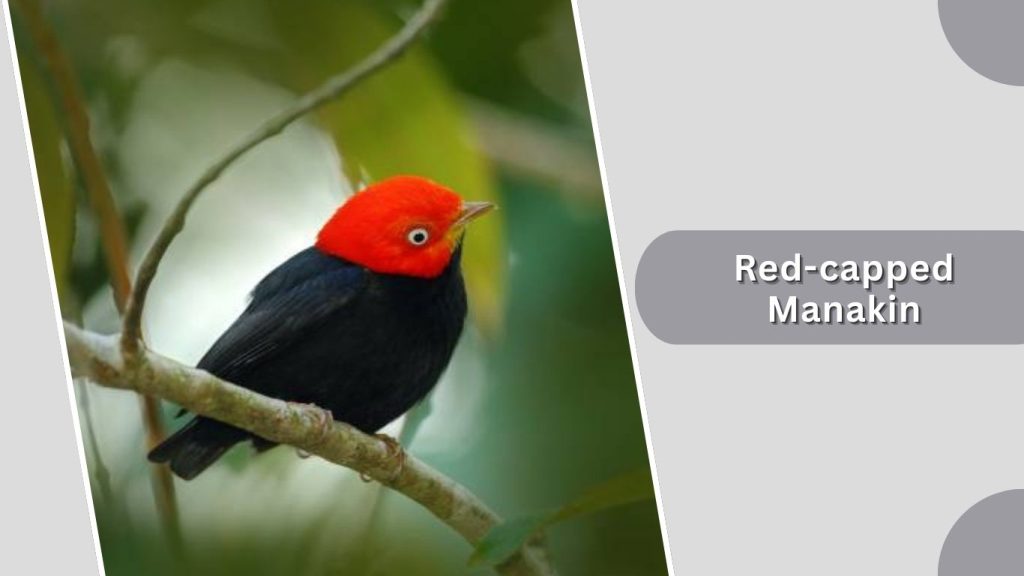
The Red-capped Manakin is a tiny, energetic bird famous for the bright red cap on the male’s head and its remarkable courtship displays. Despite its small size, it is one of the most fascinating birds of tropical forests.
Identification
- Bright red cap on the crown (adult males)
- Black body and wings
- Short tail
- Small, compact body
- Females are olive-green without a red cap
Habitat
Red-capped Manakins inhabit tropical rainforests, forest edges, and dense secondary growth. They are usually found in the lower and middle levels of the forest, where vegetation is thick and shaded.
Behavior
This species is best known for its elaborate courtship behavior. Males perform rapid wing snaps and quick movements on display perches to attract females. Outside of breeding displays, they are quiet and often remain hidden in foliage.
Diet
Their diet consists mainly of small fruits and berries. They also consume insects and spiders, which provide important protein, especially during the breeding season.
Lifespan
Red-capped Manakins typically live around 6 to 10 years in the wild, though lifespan varies depending on habitat quality and predation.
9. Red-crowned Warbler
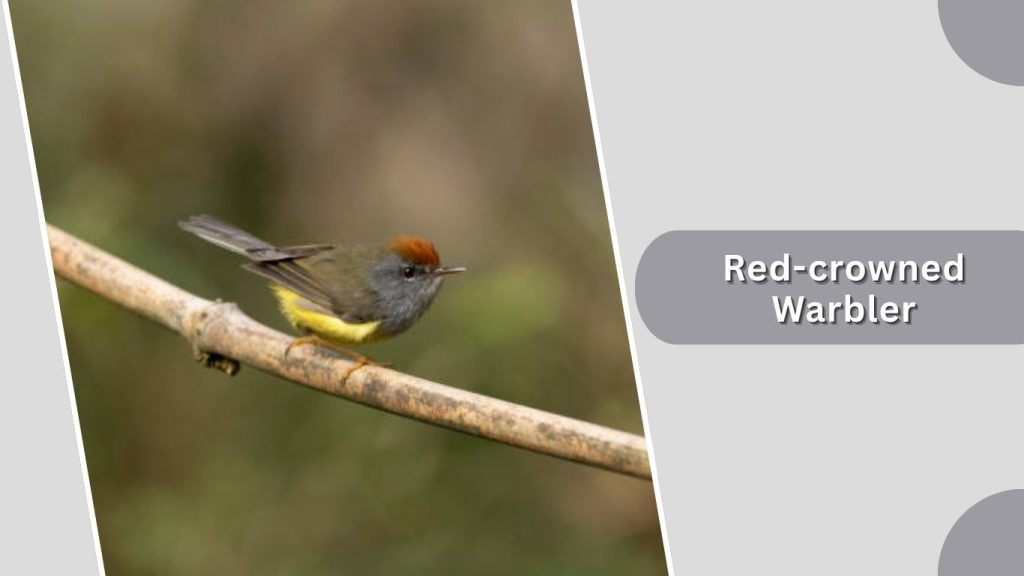
The Red-crowned Warbler is a small, energetic songbird recognized for the subtle red patch on the top of its head, which is often hidden and only visible at close range. Its quick movements and bright songs make it a lively presence in wooded habitats.
Identification
- Small red crown patch, often partially concealed
- Olive-green upperparts
- Yellowish underparts
- Thin, pointed bill
- Small, slender body
Habitat
Red-crowned Warblers are commonly found in pine–oak forests, montane woodlands, and forest edges. They prefer areas with dense foliage and are often seen at mid-levels of trees and shrubs.
Behavior
These warblers are highly active and constantly on the move. They forage by hopping along branches and leaves while searching for insects. Red-crowned Warblers are usually seen alone or in pairs and are known for their sharp, musical songs.
Diet
Their diet consists mainly of insects such as caterpillars, beetles, ants, and spiders. Occasionally, they may eat small berries or plant matter.
Lifespan
In the wild, Red-crowned Warblers typically live around 4 to 6 years, depending on environmental conditions and predation.
10. Red-capped Bushbird
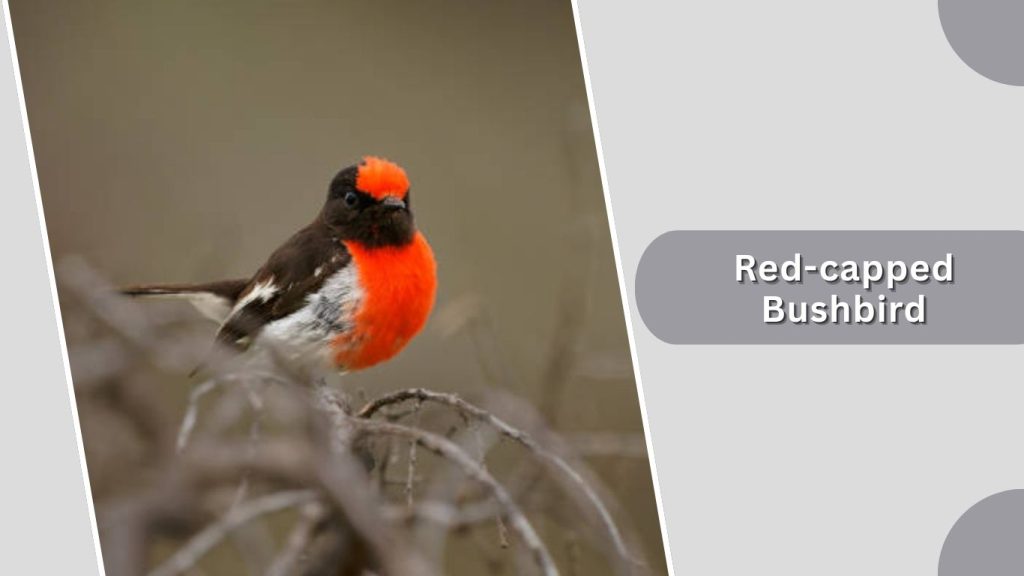
The Red-capped Bushbird is a small, secretive bird best known for the bright red cap on its head and its preference for dense, shrubby habitats. Its shy nature makes it more often heard than seen.
Identification
- Bright red cap on the crown
- Dark brown to blackish body
- Slender, pointed bill
- Small, compact size
Habitat
This species inhabits dense shrublands, forest undergrowth, thickets, and bushy areas. It prefers thick vegetation that provides good cover from predators.
Behavior
Red-capped Bushbirds are elusive and tend to stay low in dense cover. They move quickly through shrubs and are often detected by their sharp calls rather than direct observation. They are usually solitary or seen in pairs.
Diet
Their diet mainly consists of insects, spiders, and other small invertebrates. They forage by probing leaves, branches, and ground litter.
Lifespan
In the wild, Red-capped Bushbirds are estimated to live around 4 to 6 years, depending on habitat quality and environmental pressures.
FAQs
What does a red cap on a bird’s head indicate?
A red cap is often used for species recognition and mate attraction. In many small birds, the red crown is more visible in males and may play a role in courtship or territorial displays.
Are red-capped birds always small in size?
Not always, but many red-capped species tend to be small or medium-sized. Smaller birds often use bright head markings as visual signals within dense habitats.
Do female red-capped birds also have red caps?
In some species, females have a duller or smaller red cap, while in others only males display the red coloration. This difference helps with camouflage during nesting.
Where are small birds with red caps commonly found?
They are found worldwide, including in forests, grasslands, shrublands, and tropical regions. Each species has specific habitat preferences.
Are red-capped birds endangered?
Some species are common and stable, while others may face threats from habitat loss and environmental changes. Conservation status varies depending on species and location.