


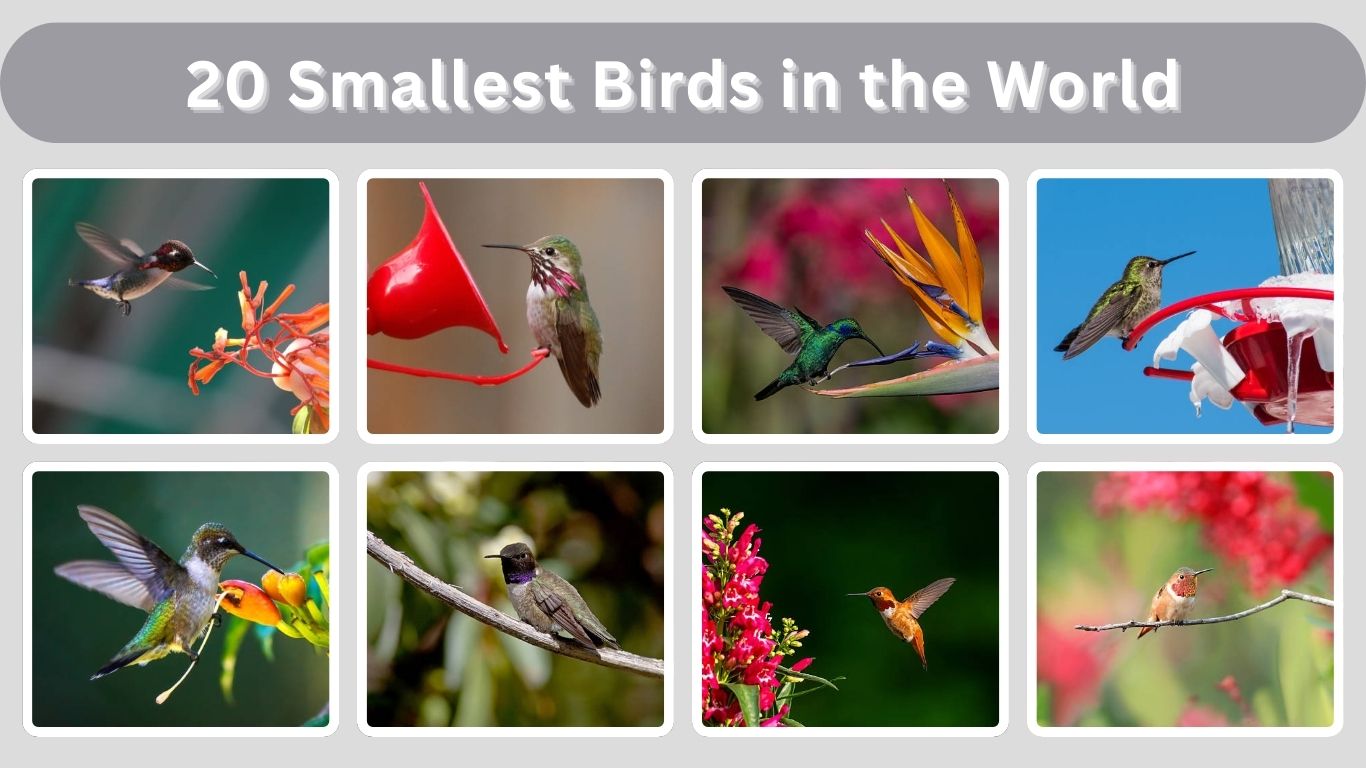
The world’s smallest birds are true marvels of nature, combining tiny size with remarkable energy, agility, and survival skills. From hummingbirds that weigh less than a coin to miniature songbirds thriving in forests, deserts, and gardens, these species prove that size is no limit to beauty or importance. Despite their delicate appearance, many of these birds migrate long distances, endure harsh climates, and play vital roles in pollination and insect control across different ecosystems.
1. Bee Hummingbird
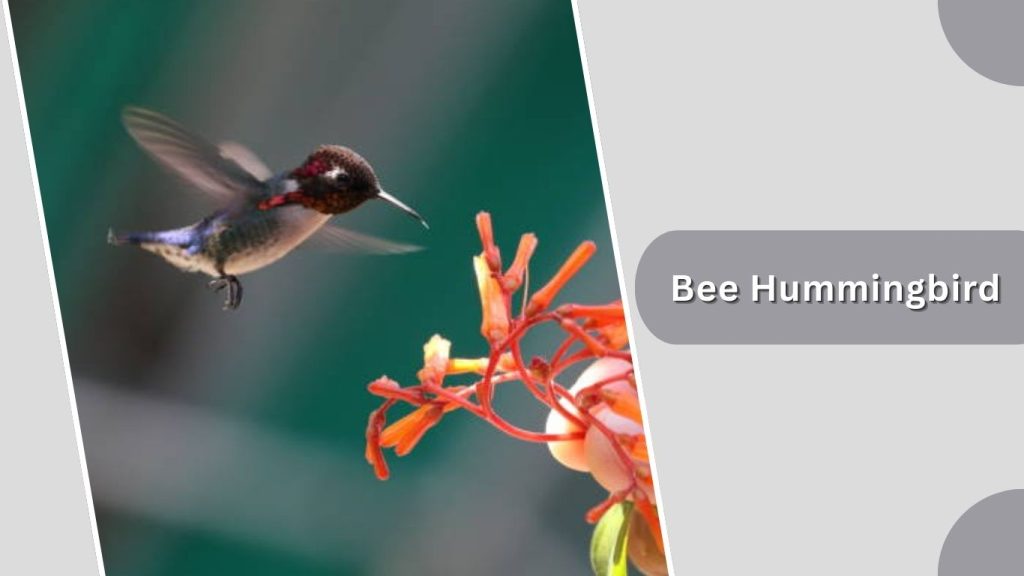
The Bee Hummingbird (Mellisuga helenae) is the smallest bird in the world and is often compared to a large bee because of its tiny size and rapid wingbeats. Native to Cuba, this remarkable bird is known for its brilliant colors, incredible agility, and ability to hover precisely while feeding on nectar.
Identification
- Tiny body with a very short bill
- Iridescent green back and bluish wings
- Male has a bright red to pink throat and head
- Female is slightly larger and duller in color
Size
The Bee Hummingbird measures about 5–6 cm (2–2.4 inches) in length and weighs roughly 1.6–2 grams, making it lighter than a penny.
Habitat
This species is found only in Cuba, where it inhabits forests, woodland edges, and gardens with abundant flowering plants.
Diet
The Bee Hummingbird feeds mainly on nectar from small flowers, supplemented by tiny insects and spiders to meet its protein needs.
2. Calliope Hummingbird
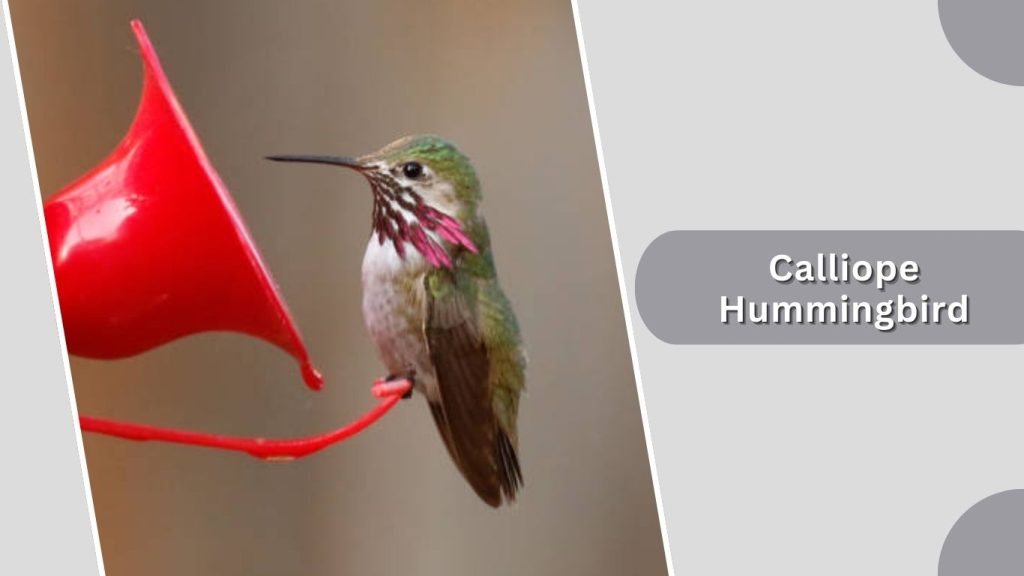
The Calliope Hummingbird (Selasphorus calliope) is the smallest bird native to North America and one of the most delicate-looking hummingbirds in the world. Despite its tiny size, it is a long-distance migrant, traveling thousands of kilometers between its breeding and wintering grounds. It is admired for its energetic flight, subtle beauty, and surprising toughness.
Identification
- Compact body with a short, straight bill
- Greenish upperparts with pale underparts
- Male has distinctive magenta, streaked throat feathers
- Female lacks bright throat colors and appears plainer
Size
The Calliope Hummingbird measures about 7–9 cm (2.8–3.5 inches) in length and weighs approximately 2–3 grams. Although slightly larger than the Bee Hummingbird, it is still among the smallest birds on Earth.
Habitat
During the breeding season, this species prefers mountain meadows, open woodlands, and forest edges in western North America. In winter, it migrates to Mexico and Central America, where it inhabits semi-open areas with abundant flowering plants.
Diet
Its diet consists mainly of nectar from flowers, especially tubular blooms. To balance its nutrition, the Calliope Hummingbird also consumes small insects and spiders, which provide essential protein and minerals needed for energy-intensive flight.
3. Costa’s Hummingbird
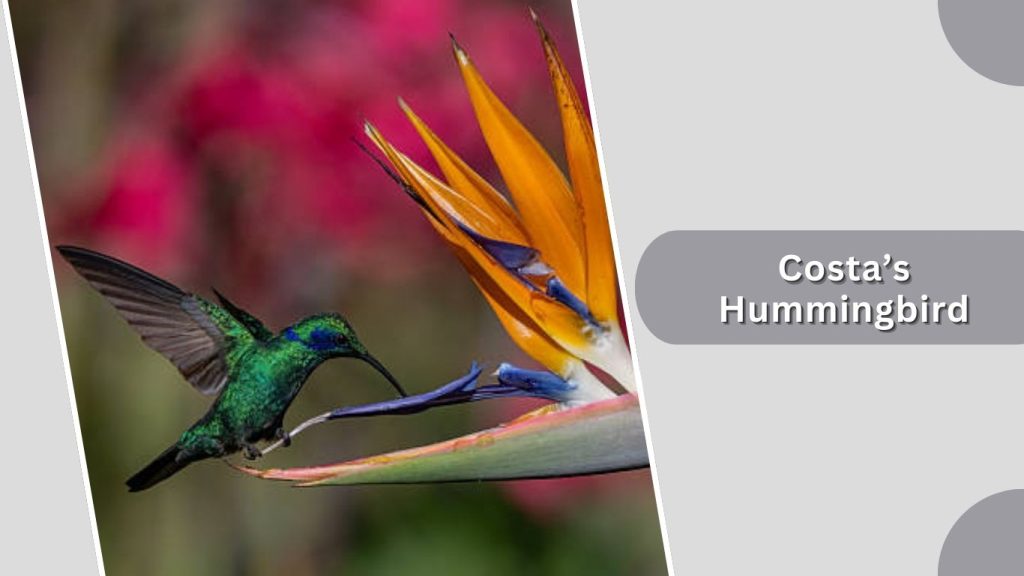
Costa’s Hummingbird (Calypte costae) is a small but striking species best known for its dramatic head and throat plumage. Native to the arid regions of the southwestern United States and northwestern Mexico, this bird thrives in harsh desert environments where few other birds of its size can survive.
Identification
- Short bill and compact body
- Green back with whitish underparts
- Male has a vivid purple crown and flared throat feathers
- Female is grayish with faint markings and no bright colors
Size
Costa’s Hummingbird typically measures 7.5–8.5 cm (3–3.3 inches) in length and weighs around 2–3 grams. Its small size helps it conserve energy and maneuver efficiently among desert flowers.
Habitat
This species is commonly found in deserts, scrublands, and dry coastal regions. It favors areas with flowering cacti, shrubs, and desert wildflowers, and it also adapts well to urban gardens that provide nectar sources.
Diet
Costa’s Hummingbird feeds primarily on nectar from desert plants, including cacti and chuparosa flowers. It also hunts tiny flying insects, which are essential for maintaining muscle strength and overall health in such an extreme climate.
4. Anna’s Hummingbird

Anna’s Hummingbird (Calypte anna) is one of the most familiar and widespread hummingbirds along the western coast of North America. Unlike many hummingbirds, it is not strictly migratory and can be seen year-round in many areas. It is well known for its bold personality, adaptability to urban environments, and brilliant coloration.
Identification
- Medium-small hummingbird with a straight, slender bill
- Green back and grayish underparts
- Male has a striking rose-pink iridescent head and throat
- Female has a green crown with a small red spot on the throat
Size
Anna’s Hummingbird measures about 9–10 cm (3.5–4 inches) in length and weighs roughly 3–6 grams. Though larger than many tiny hummingbirds, it is still considered small by bird standards.
Habitat
This species occupies a wide range of habitats including coastal scrub, open woodlands, gardens, parks, and suburban areas. Its ability to thrive near human settlements has helped expand its range northward over time.
Diet
Anna’s Hummingbird feeds mainly on nectar from flowering plants, especially those that bloom in winter. It also consumes small insects and spiders, and is known to visit sugar-water feeders frequently.
5. Ruby-throated Hummingbird
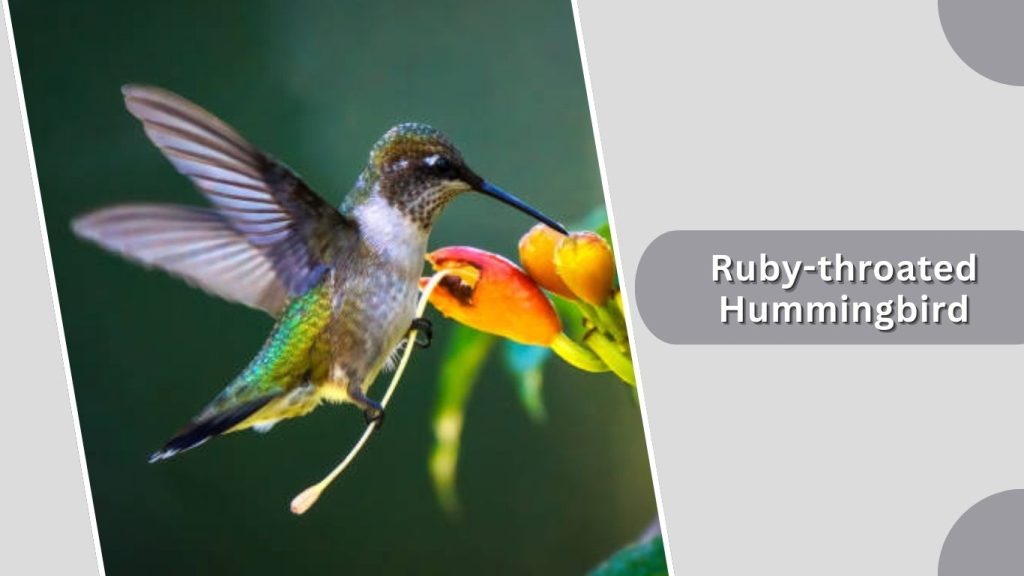
The Ruby-throated Hummingbird (Archilochus colubris) is the most common hummingbird in eastern North America and is famous for its remarkable long-distance migration across the Gulf of Mexico. Despite its tiny size, it is an incredibly resilient bird with high energy demands.
Identification
- Slender body with a long, straight bill
- Bright green upperparts with white to gray underparts
- Male has a vivid ruby-red throat that appears dark in low light
- Female lacks the red throat and has a plain white throat
Size
The Ruby-throated Hummingbird is about 7–9 cm (2.8–3.5 inches) long and weighs approximately 2–4 grams, making it one of the smallest breeding birds in North America.
Habitat
This species inhabits deciduous forests, forest edges, meadows, gardens, and orchards. During migration and winter, it can be found in Central America, favoring tropical and semi-open landscapes.
Diet
Its diet consists mainly of flower nectar, which provides the energy needed for constant flight. It also feeds on tiny insects, gnats, and spiders, helping meet its protein and nutrient requirements.
6. Black-chinned Hummingbird
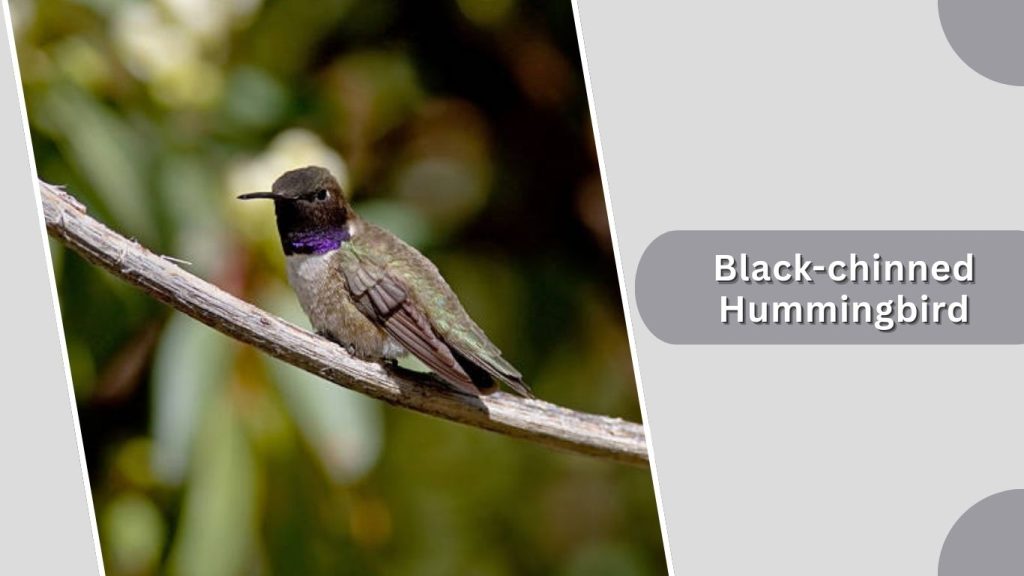
The Black-chinned Hummingbird (Archilochus alexandri) is a small, graceful hummingbird commonly found in western North America. It is often overlooked because of its subtle coloration, but it is an important pollinator and a highly adaptable species. Its calm behavior and soft buzzing wing sound make it a favorite among birdwatchers.
Identification
- Slim body with a straight, medium-length bill
- Green upperparts and pale gray underparts
- Male has a black chin with a narrow purple band below it
- Female lacks the dark chin and appears duller with faint throat markings
Size
The Black-chinned Hummingbird measures about 8–9 cm (3–3.5 inches) in length and weighs roughly 2.8–4.5 grams, placing it among the smaller hummingbird species.
Habitat
This species inhabits open woodlands, river corridors, deserts with vegetation, and suburban gardens. It often nests near water sources and adapts well to human-altered landscapes.
Diet
Its diet is primarily nectar from flowering plants, supplemented by small insects and spiders that provide essential protein for growth and energy.
7. Rufous Hummingbird
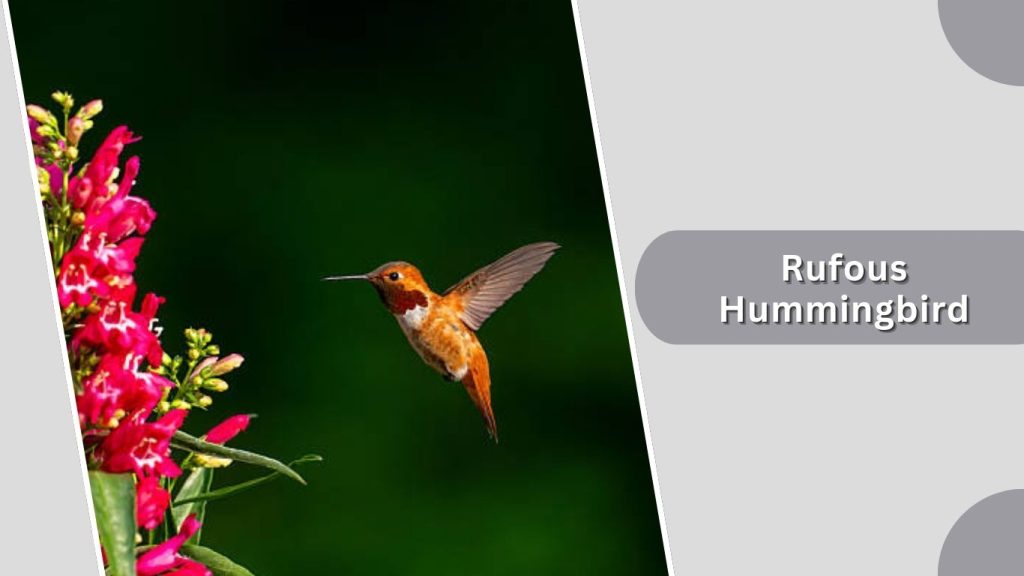
The Rufous Hummingbird (Selasphorus rufus) is known for its fiery coloration and aggressive nature. Despite its tiny size, it is highly territorial and fearless, often chasing away much larger birds. It also holds one of the longest migration routes relative to body size of any bird.
Identification
- Compact body with a short, straight bill
- Bright rufous-orange back and flanks
- Male has a brilliant orange-red throat
- Female shows green upperparts with rufous sides and a spotted throat
Size
The Rufous Hummingbird measures approximately 7–9 cm (2.8–3.5 inches) in length and weighs about 2–5 grams, making it one of the lightest birds in North America.
Habitat
This species breeds in coniferous forests and mountain meadows of the northwestern regions. During migration and winter, it occupies gardens, woodlands, and open areas across Mexico and the southern United States.
Diet
Rufous Hummingbirds rely heavily on nectar from a wide variety of flowers, along with small insects caught in midair or picked from vegetation to meet their high energy demands.
8. Allen’s Hummingbird
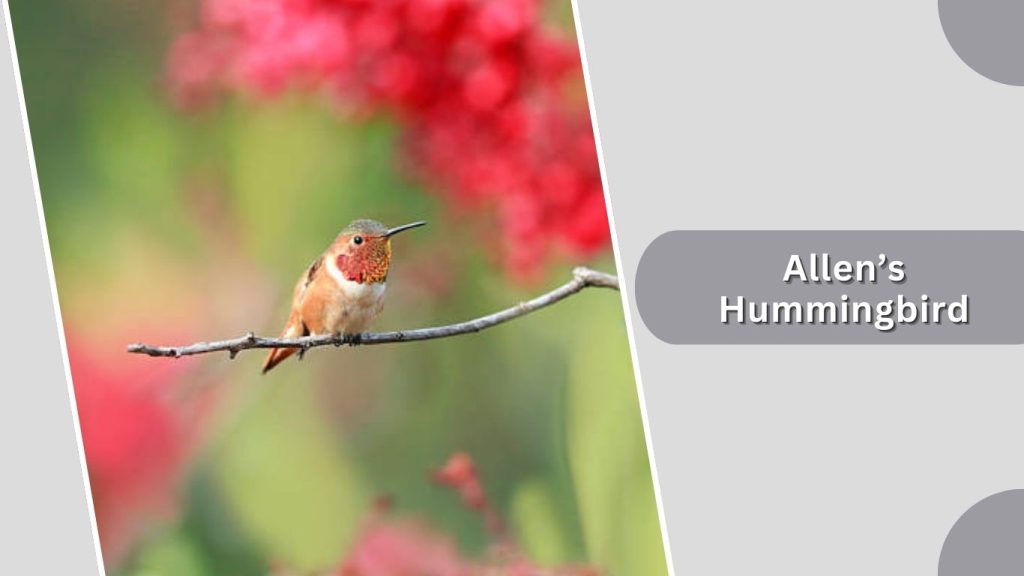
Allen’s Hummingbird (Selasphorus sasin) is a small and fast-moving hummingbird closely related to the Rufous Hummingbird. It is best known for its restricted breeding range and its strong association with coastal habitats. Despite its tiny size, it is highly territorial and actively defends feeding areas.
Identification
- Small body with a short, straight bill
- Green upperparts with rufous sides and tail
- Male has a bright orange-red throat
- Female appears green above with pale underparts and rufous flanks
Size
Allen’s Hummingbird measures about 7–8.5 cm (2.8–3.3 inches) in length and weighs roughly 2–4 grams, placing it among the smallest hummingbird species.
Habitat
This species breeds mainly in coastal scrub, chaparral, and forest edges along the Pacific coast. During migration and winter, it moves to southern California and Mexico, frequenting gardens and flowering shrubs.
Diet
Its diet consists largely of nectar from coastal flowering plants, along with small insects and spiders that provide protein essential for survival.
9. Broad-tailed Hummingbird
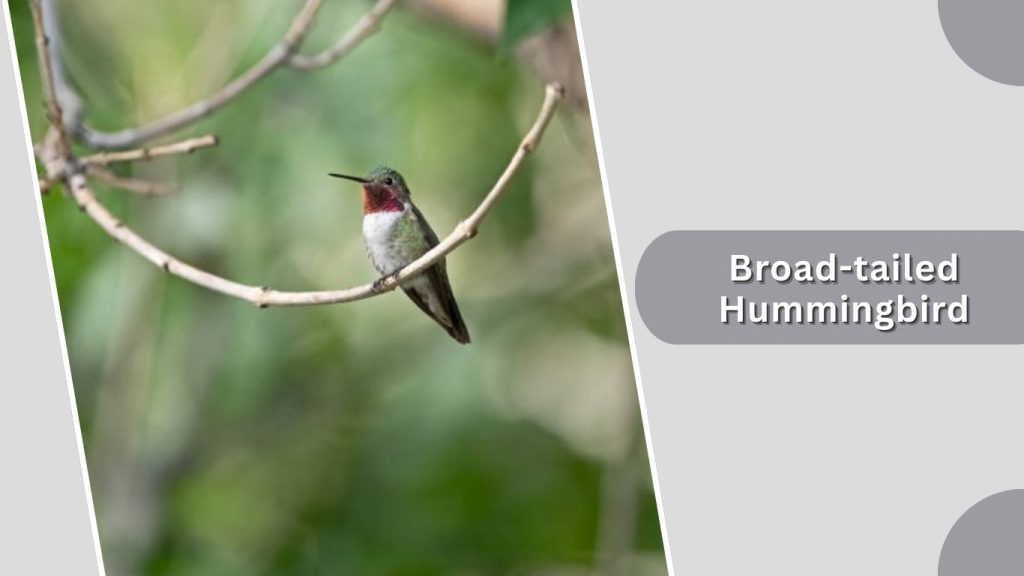
The Broad-tailed Hummingbird (Selasphorus platycercus) is a small hummingbird adapted to cooler, high-altitude environments. It is especially famous for the high-pitched trilling sound produced by the male’s wings during flight.
Identification
- Compact body with a straight bill
- Green back and pale gray underparts
- Male has a vivid rose-red throat
- Female has a white throat with fine dark spotting
Size
The Broad-tailed Hummingbird is typically 8–9 cm (3–3.5 inches) long and weighs around 3–4 grams, making it small but sturdy for life at higher elevations.
Habitat
This species is found in mountain meadows, open pine forests, and high-elevation woodlands. It breeds in the Rocky Mountains and migrates south to Mexico and Central America during winter.
Diet
It feeds primarily on nectar from alpine and woodland flowers, supplemented by small flying insects, which are crucial for maintaining energy in cooler climates.
10. Vervain Hummingbird
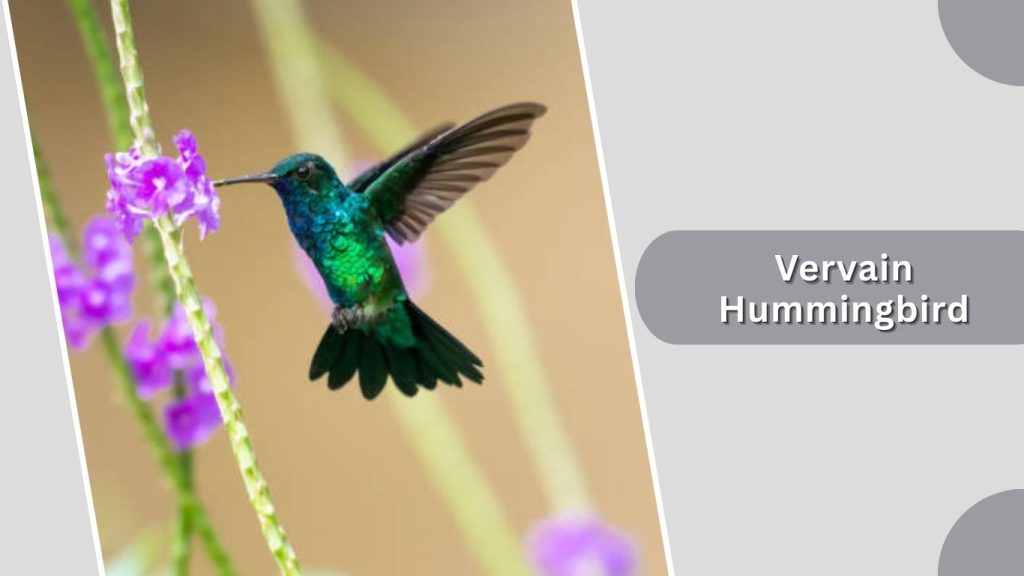
The Vervain Hummingbird (Mellisuga minima) is one of the smallest birds in the world and the tiniest bird found outside Cuba. Native to the Caribbean, this delicate species is admired for its fine structure, rapid wingbeats, and quiet behavior. Because of its minute size, it is often mistaken for a large insect when first seen.
Identification
- Extremely small body with a short, straight bill
- Metallic green upperparts with pale gray underparts
- Male has a subtle iridescent throat sheen
- Female appears slightly duller with faint facial markings
Size
The Vervain Hummingbird measures about 6–6.5 cm (2.4–2.6 inches) in length and weighs roughly 2–2.4 grams, making it the second-smallest bird in the world.
Habitat
This species inhabits dry scrub, gardens, forest edges, and coastal areas across the Caribbean islands. It favors low vegetation with abundant tiny flowers.
Diet
Its diet consists mainly of nectar from small flowers, complemented by tiny insects and spiders that supply essential nutrients.
11. Short-tailed Pygmy Tyrant
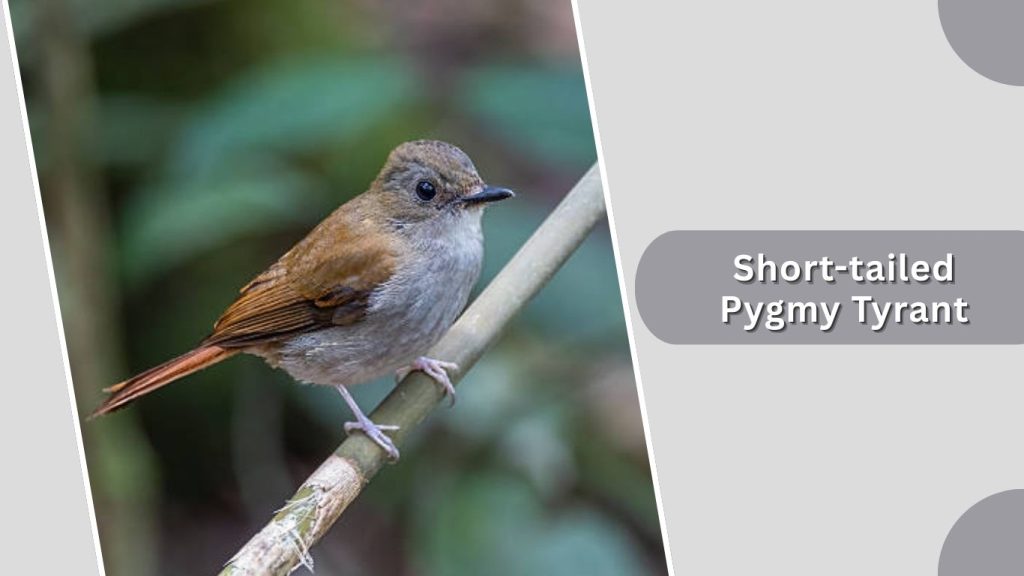
The Short-tailed Pygmy Tyrant (Myiornis ecaudatus) is the smallest passerine bird in the world and one of the tiniest birds overall. Found in tropical South America, it is rarely seen due to its size and preference for dense forest habitats. Despite its inconspicuous nature, it plays an important role in insect control.
Identification
- Minute body with an extremely short tail
- Olive-green upperparts and pale underparts
- Short bill adapted for catching tiny insects
- Overall plain appearance with subtle facial features
Size
This species measures approximately 6.5–7 cm (2.6–2.8 inches) in length and weighs about 3–4 grams, making it the smallest member of the tyrant flycatcher family.
Habitat
The Short-tailed Pygmy Tyrant lives in lowland tropical rainforests, favoring the understory and forest edges where insects are abundant.
Diet
It feeds almost entirely on tiny insects, which it catches while hovering briefly or making short flights from perches within dense vegetation.
12. Pale-billed Flowerpecker
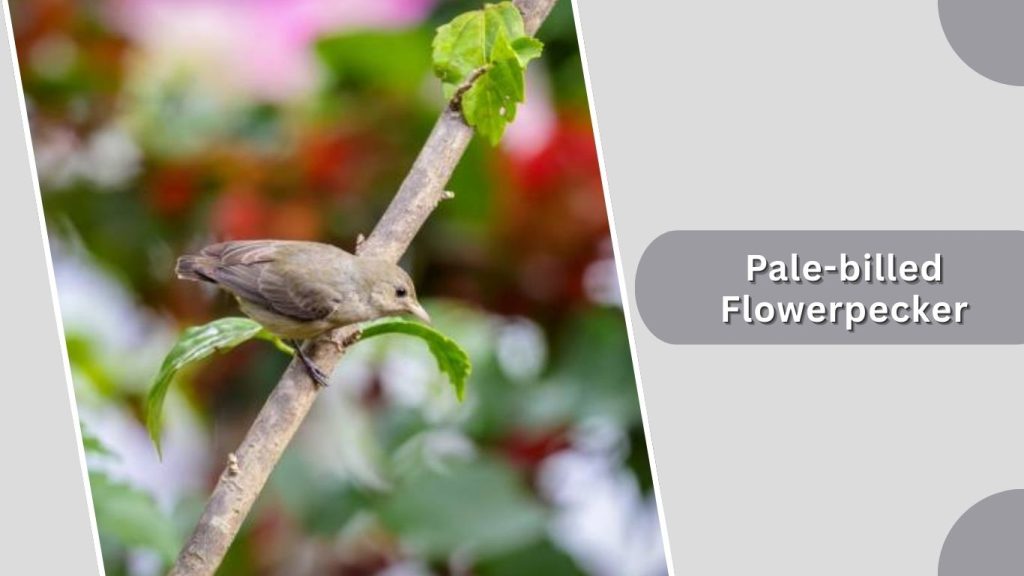
The Pale-billed Flowerpecker (Dicaeum erythrorhynchos) is a very small, active bird commonly found in South and Southeast Asia. Though tiny and often overlooked, it plays a key role in seed dispersal and pollination. Its constant movement among trees and shrubs makes it a familiar presence in gardens and forested areas.
Identification
- Very small, rounded body with a short pale bill
- Olive-green upperparts and light gray underparts
- Subtle reddish tones near the bill base
- Male and female look similar with minimal color contrast
Size
The Pale-billed Flowerpecker measures about 8–9 cm (3–3.5 inches) in length and weighs roughly 5–6 grams, making it one of the smallest birds in its range.
Habitat
This species inhabits woodlands, forest edges, gardens, and plantations. It adapts well to human-modified landscapes as long as fruiting trees are available.
Diet
Its diet mainly consists of small fruits, berries, and nectar, along with tiny insects that provide additional protein.
13. Weebill
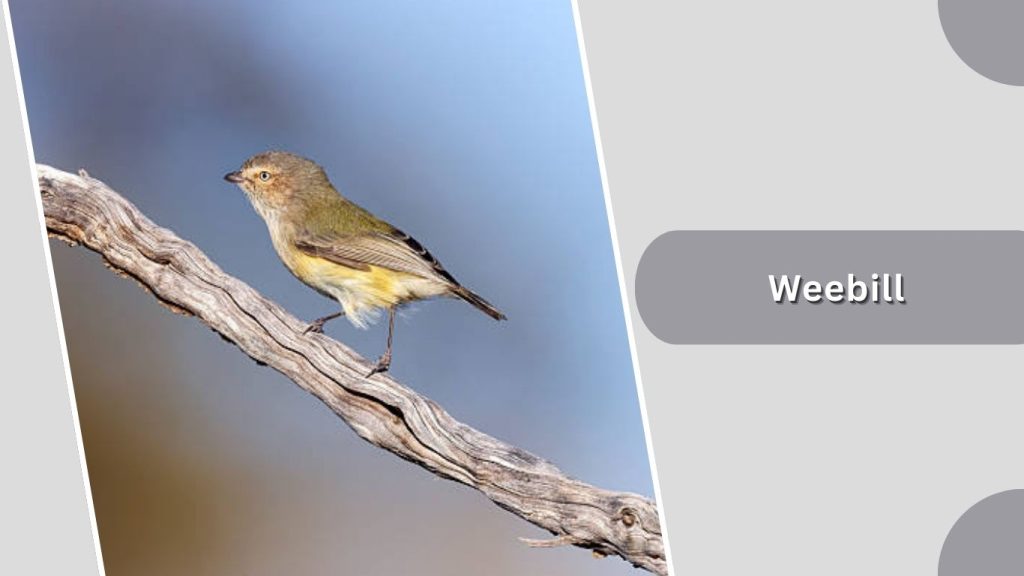
The Weebill (Smicrornis brevirostris) is Australia’s smallest bird and one of the tiniest passerines in the world. It is named for its unusually short, stubby bill and is known for its high-pitched calls and restless behavior among eucalyptus trees.
Identification
- Extremely small body with a very short bill
- Olive-gray upperparts with pale underparts
- Faint pale eyebrow visible at close range
- Compact shape with quick, darting movements
Size
The Weebill measures approximately 8–9 cm (3–3.5 inches) in length and weighs around 6 grams, making it the smallest bird species in Australia.
Habitat
This species is found mainly in eucalyptus woodlands and open forests across Australia, where it forages high in the canopy.
Diet
The Weebill feeds almost entirely on tiny insects and spiders, gleaned from leaves and branches during rapid, energetic foraging.
14. Goldcrest
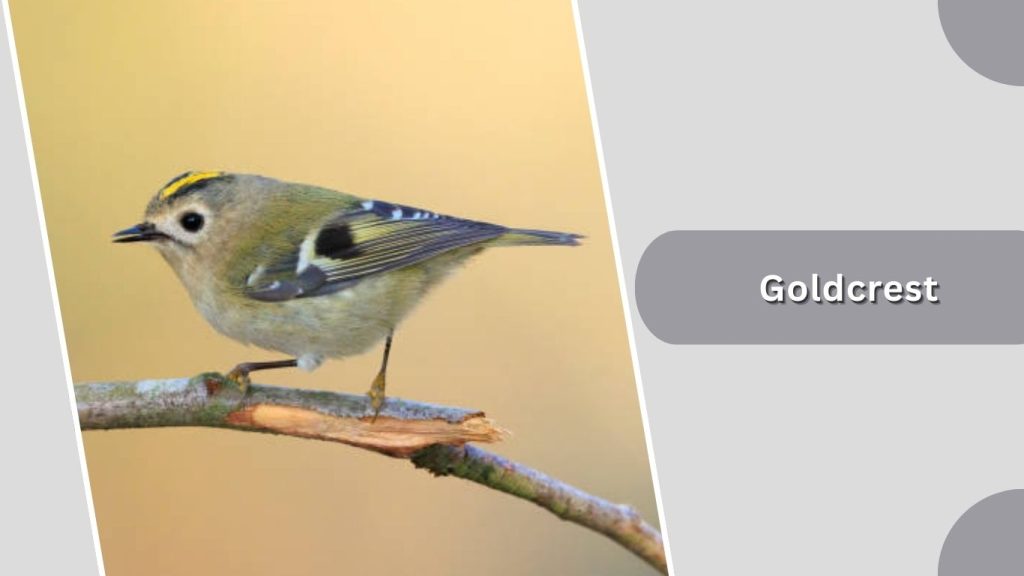
The Goldcrest (Regulus regulus) is the smallest bird in Europe and is instantly recognizable by the bright stripe on its head. Despite its tiny size, it is remarkably hardy and can survive cold winters by constantly foraging and maintaining a very high metabolism. Its soft, high-pitched calls are often heard before the bird is seen.
Identification
- Very small, round body with a thin bill
- Olive-green upperparts and whitish underparts
- Bright yellow crown stripe, edged with black
- Male shows an orange tint in the center of the crown
Size
The Goldcrest measures about 8.5–9.5 cm (3.3–3.7 inches) in length and weighs roughly 5–7 grams, making it the lightest bird in Europe.
Habitat
This species mainly inhabits coniferous forests, especially spruce and fir woodlands. It is also found in mixed forests and large parks with suitable tree cover.
Diet
Goldcrests feed primarily on tiny insects, larvae, and spiders, which they pick from needles and branches while constantly moving.
15. Lesser Goldcrest
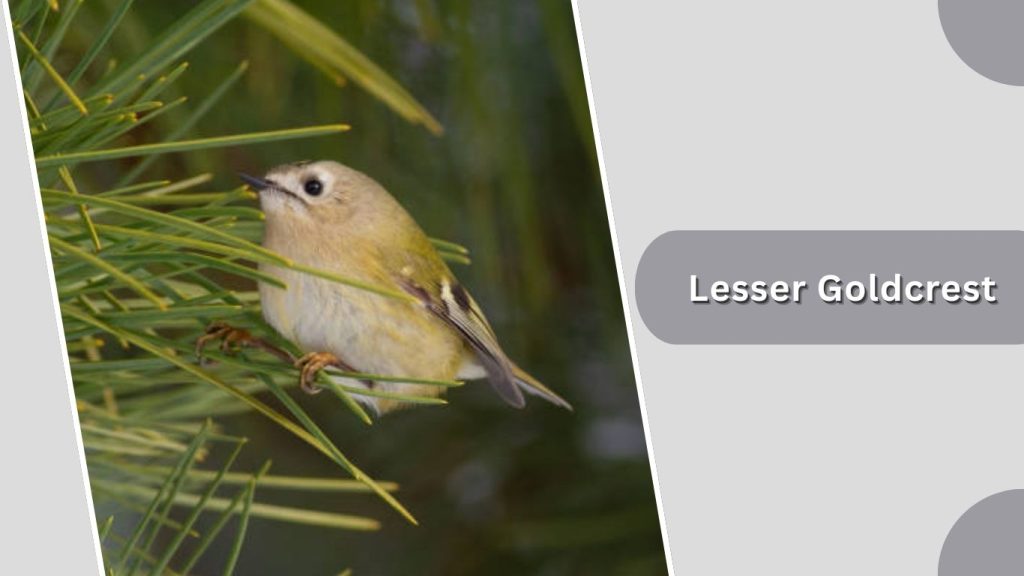
The Lesser Goldcrest (Regulus ignicapilla), also known as the Firecrest, is slightly larger than the Goldcrest but equally vibrant. It is admired for its striking facial pattern and energetic behavior. Although similar in appearance to the Goldcrest, it prefers warmer climates and different habitats.
Identification
- Small, compact body with a slender bill
- Greenish upperparts and pale underparts
- Bright orange crown stripe bordered by black
- Distinct bold white eyebrow and black eye stripe
Size
The Lesser Goldcrest measures approximately 9–10 cm (3.5–4 inches) in length and weighs about 5–7 grams, placing it among the smallest birds in Europe.
Habitat
This species is commonly found in mixed and deciduous forests, particularly oak and pine woodlands. It also occurs in gardens and wooded hillsides in warmer regions.
Diet
Its diet consists mainly of small insects and spiders, which it actively hunts among leaves and branches.
16. Zebra Finch
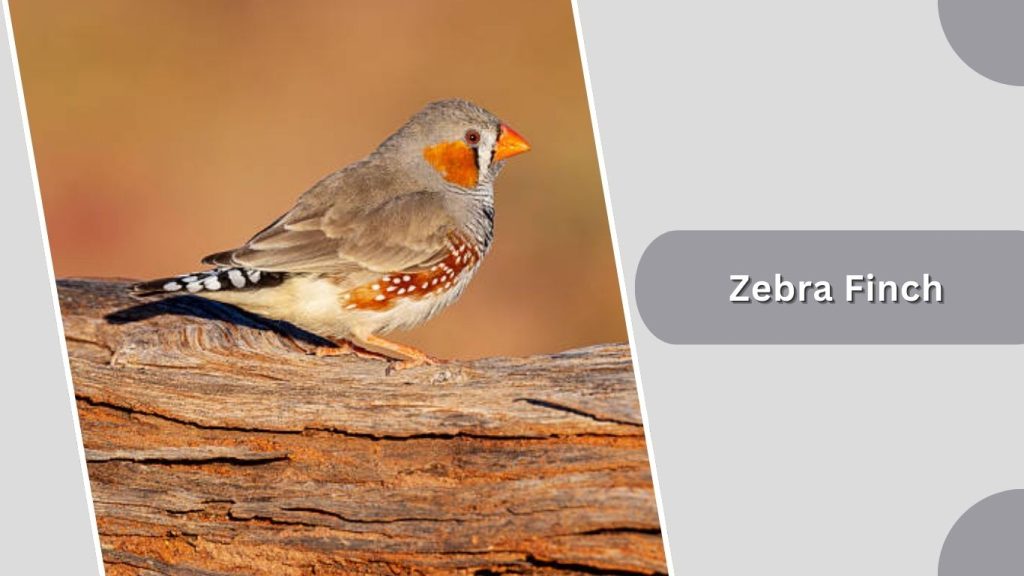
The Zebra Finch (Taeniopygia guttata) is a small, social bird best known for its striking patterns and cheerful calls. Native to Australia, it is one of the most studied bird species in the world due to its complex vocal behavior and adaptability. Though commonly kept as a pet, it thrives widely in the wild.
Identification
- Small, sturdy body with a thick orange bill
- Gray upperparts with white and black barring
- Male has black-and-white zebra stripes and orange cheek patches
- Female is plainer with a gray face and no cheek patches
Size
The Zebra Finch measures about 10–11 cm (4–4.3 inches) in length and weighs roughly 10–12 grams, making it small but heavier than many tiny insectivorous birds.
Habitat
This species inhabits grasslands, open woodlands, farmlands, and scrublands, usually near water sources. It adapts well to dry environments and human settlements.
Diet
Zebra Finches feed mainly on grass seeds, supplemented by small insects during the breeding season to provide protein for growing chicks.
17. Bushtit
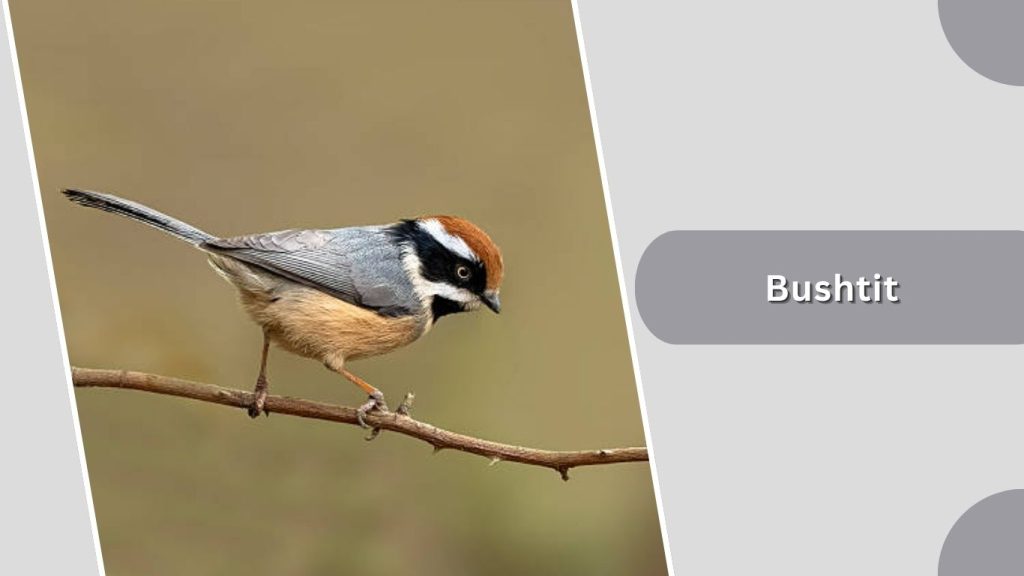
The Bushtit (Psaltriparus minimus) is a tiny, energetic bird found in western North America. It is highly social and often seen in large flocks moving rapidly through trees and shrubs. Its soft calls and constant motion make it a charming but easily overlooked species.
Identification
- Very small, round body with a short bill
- Gray-brown plumage with a long tail
- Male has dark eyes; female has pale yellow eyes
- Overall fluffy appearance
Size
The Bushtit measures approximately 10–11 cm (4–4.3 inches) in length and weighs about 5–6 grams, making it one of the smallest birds in North America.
Habitat
This species lives in woodlands, scrub, chaparral, and suburban gardens. It builds elaborate hanging nests made of moss, spider silk, and plant fibers.
Diet
Bushtits feed mainly on small insects and spiders, occasionally supplementing their diet with seeds and berries.
18. Long-tailed Tit
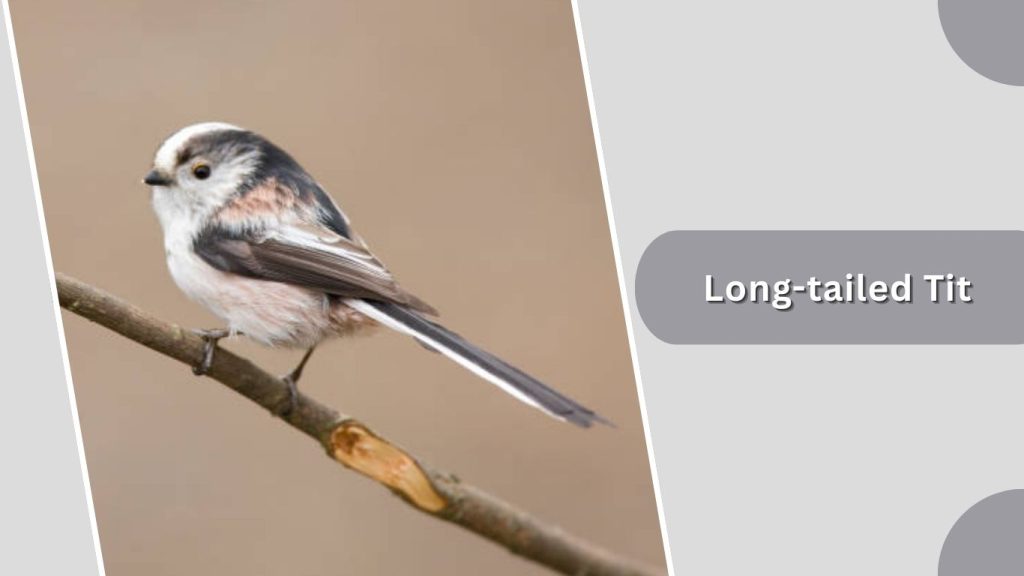
The Long-tailed Tit (Aegithalos caudatus) is a tiny, fluffy bird best known for its exceptionally long tail, which makes up nearly half of its total length. Found across Europe and parts of Asia, it is highly social and often seen in family groups moving together through trees.
Identification
- Small, round body with a very long tail
- Soft pinkish, black, and white plumage
- Short, stubby bill
- Pale face with dark eye markings
Size
The Long-tailed Tit measures about 13–15 cm (5–6 inches) in length, with the tail accounting for much of this size, and weighs roughly 7–9 grams.
Habitat
This species inhabits woodlands, hedgerows, orchards, parks, and gardens. It prefers areas with dense shrubs and trees for nesting.
Diet
Long-tailed Tits feed mainly on small insects, larvae, and spiders, especially during the breeding season. In winter, they may also eat seeds.
19. Pygmy Sunbird
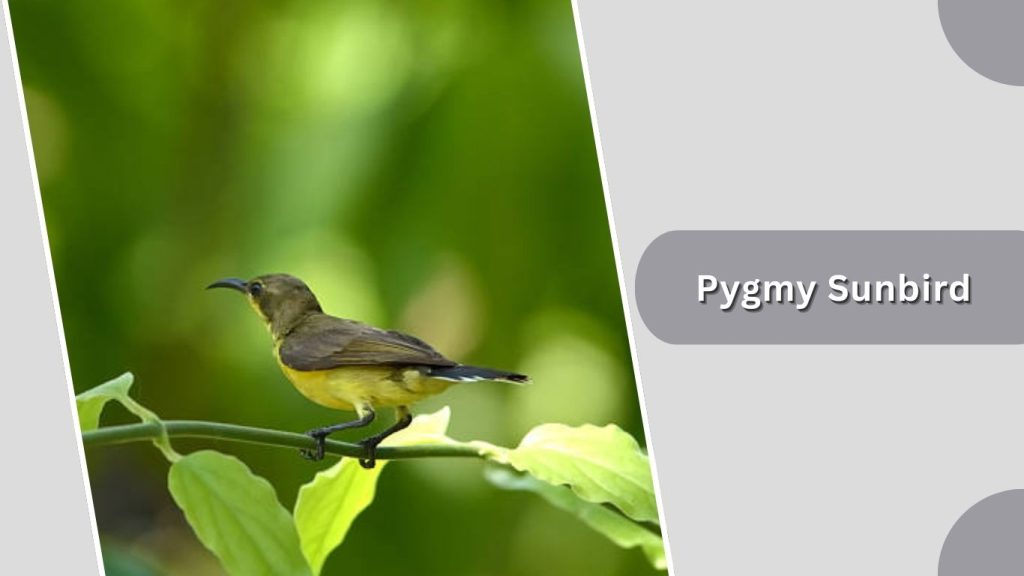
The Pygmy Sunbird (Hedydipna platura) is one of the smallest birds in Africa and is often compared to hummingbirds due to its nectar-feeding habits. Males are especially striking during the breeding season, while females remain more subdued in appearance.
Identification
- Very small body with a thin, curved bill
- Male has metallic green and purple plumage
- Female is duller with olive-gray tones
- Quick, hovering movements around flowers
Size
The Pygmy Sunbird measures approximately 7–8 cm (2.8–3.1 inches) in length and weighs around 4–6 grams, making it one of Africa’s tiniest bird species.
Habitat
This species is found in savannas, woodland edges, gardens, and dry forests across sub-Saharan Africa.
Diet
Its diet consists mainly of nectar from flowers, supplemented by small insects and spiders that provide essential protein.
20. Crimson Sunbird
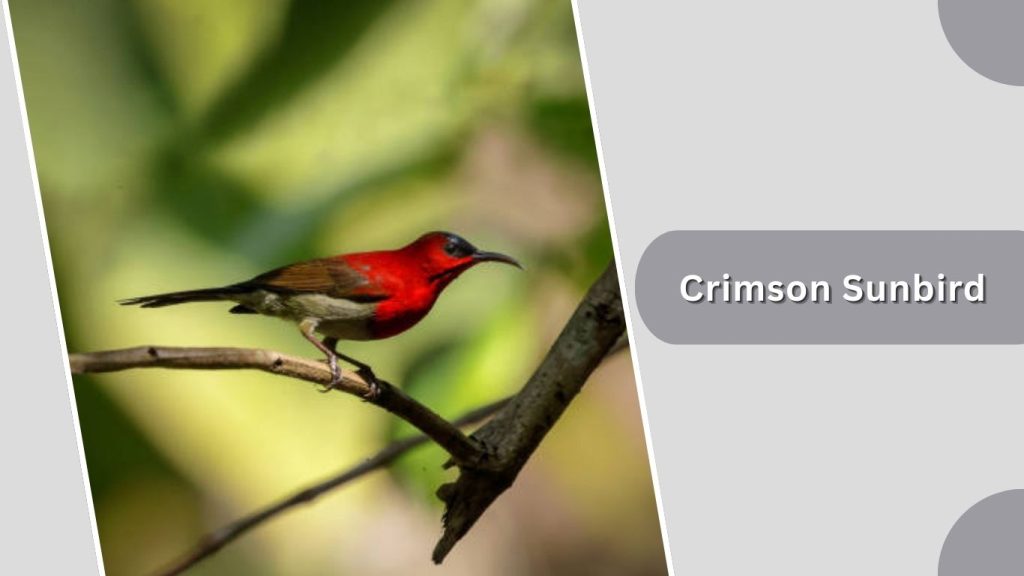
The Crimson Sunbird (Aethopyga siparaja) is a small yet brilliantly colored bird found across South and Southeast Asia. Though not as tiny as hummingbirds, it is still among the smaller bird species and is admired for its vivid red plumage and energetic feeding behavior. It plays an important role in pollination while moving rapidly between flowering plants.
Identification
- Small body with a slender, curved bill
- Male has bright crimson red upperparts with dark wings
- Female is olive-brown with yellowish underparts
- Fast, darting flight and frequent flower visits
Size
The Crimson Sunbird measures about 10–11 cm (4–4.3 inches) in length and weighs approximately 6–8 grams, making it small and lightweight among passerine birds.
Habitat
This species inhabits forests, forest edges, gardens, plantations, and mangroves. It adapts well to human environments and is often seen in flowering gardens and parks.
Diet
The Crimson Sunbird feeds mainly on nectar from flowers, using its curved bill to access deep blooms. It also eats small insects and spiders, especially during the breeding season, to meet its protein needs.