
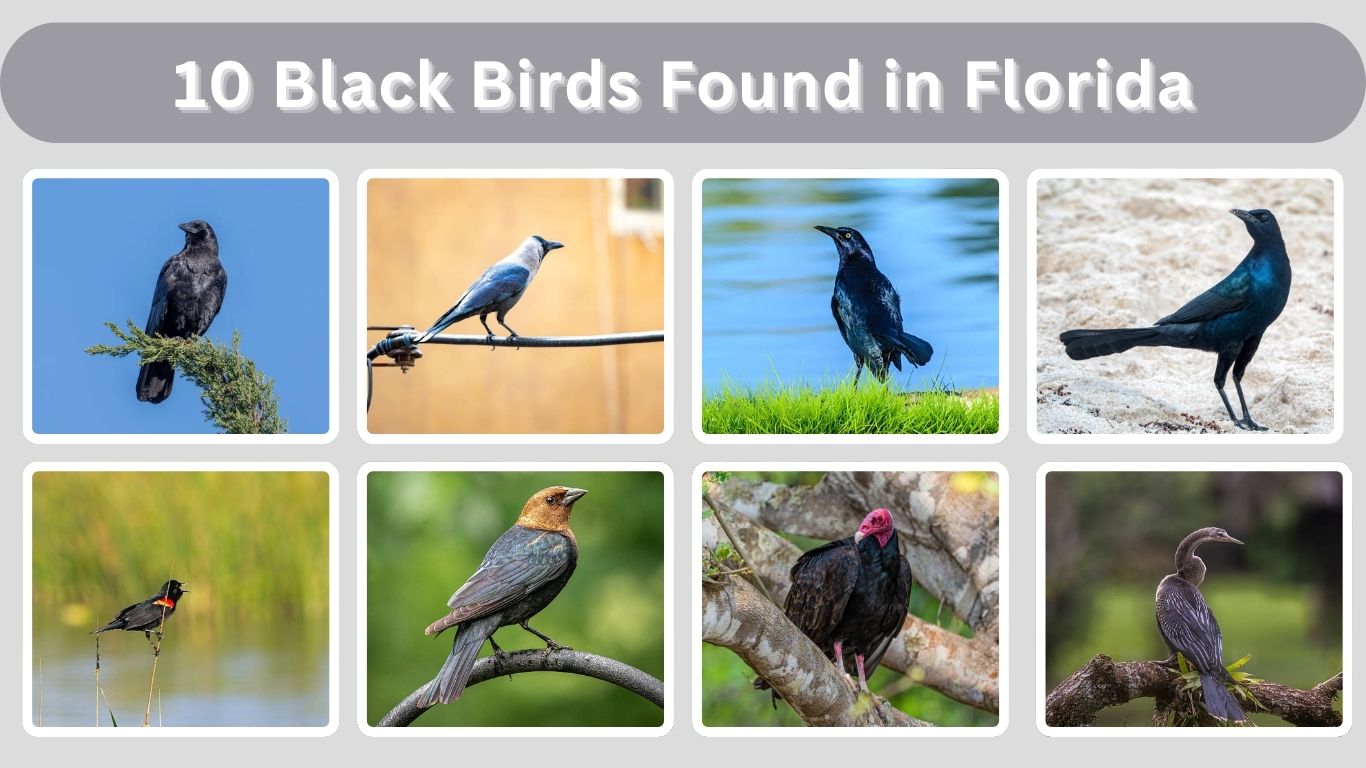
Florida’s diverse landscapes—ranging from wetlands and coastlines to cities and open countryside—support a wide variety of black birds. These species include intelligent crows, noisy blackbirds, graceful waterbirds, and important scavengers. Some are year-round residents, while others are more common near water or during certain seasons. With their bold coloring, distinctive calls, and essential ecological roles, black birds are among the most noticeable and fascinating birds you can observe throughout Florida.
1. American Crow
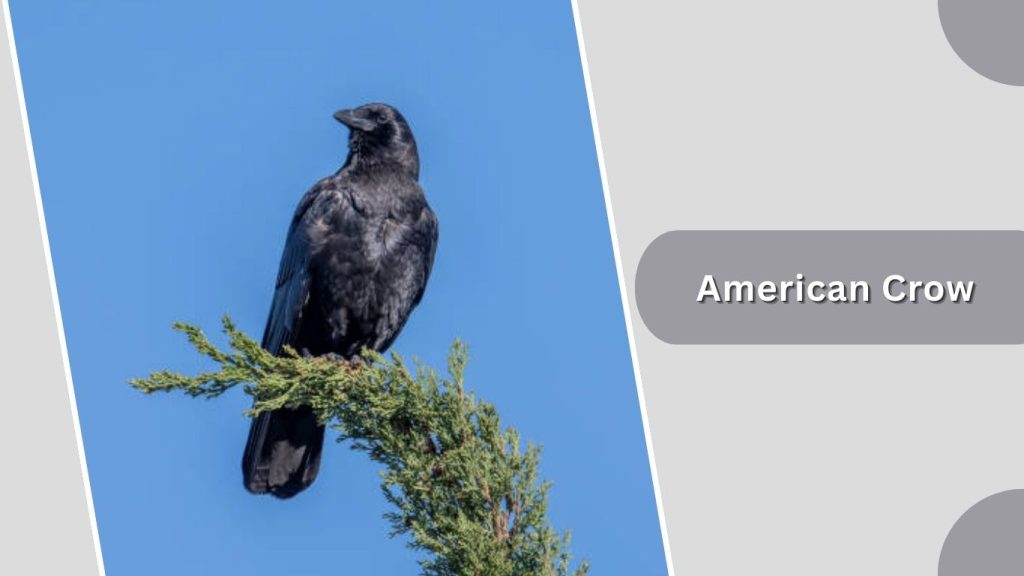
The American Crow (Corvus brachyrhynchos) is a common and easily recognized black bird found throughout much of Florida. Intelligent and highly adaptable, it thrives in cities, suburbs, farmland, and natural areas alike. Its loud calls, social behavior, and confidence around humans make it one of the most familiar birds in the state.
Identification
- Medium-to-large black bird with a stout, straight bill
- Fan-shaped tail visible in flight
- Smooth throat without shaggy feathers
- Loud, clear “caw” calls
Color
The American Crow is entirely black, including its bill, legs, and eyes. In bright sunlight, its feathers often show a subtle blue or purple iridescent sheen.
Habitat
In Florida, American Crows are found in urban areas, suburbs, agricultural lands, open woodlands, wetlands, and parks. They are especially common near human activity where food is readily available.
Diet
American Crows are omnivorous, feeding on insects, small animals, eggs, fruits, seeds, carrion, and human food scraps. Their flexible diet and intelligence allow them to survive in a wide variety of environments.
2. Fish Crow
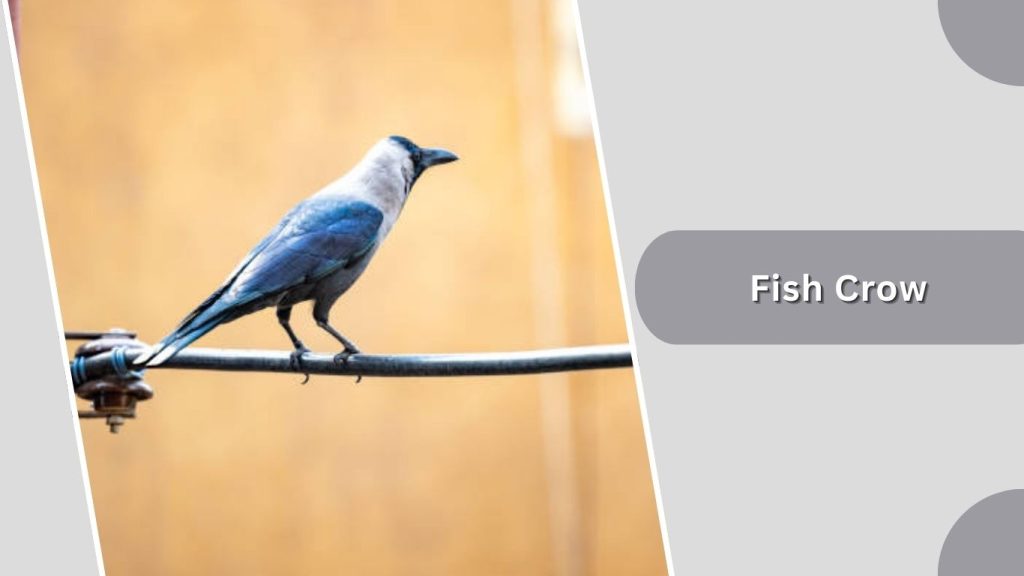
The Fish Crow (Corvus ossifragus) is a close relative of the American Crow and is commonly found in Florida, especially near water. Slightly smaller and slimmer, it is best identified by its nasal-sounding call. This species is highly adapted to coastal and wetland environments and is frequently seen scavenging along shorelines.
Identification
- Medium-sized black crow with a slimmer build
- Straight, slender bill
- Rounded tail compared to American Crow
- Distinct nasal “uh-uh” call
Color
Fish Crows are entirely black, but their feathers often show a greenish or bluish gloss in sunlight. The bill, legs, and eyes are also black.
Habitat
In Florida, Fish Crows are most common in coastal areas, estuaries, beaches, mangroves, rivers, and wetlands, though they also occur in cities near water.
Diet
They feed on fish, crabs, insects, eggs, carrion, and human food waste, often scavenging along shorelines and docks.
3. Common Grackle
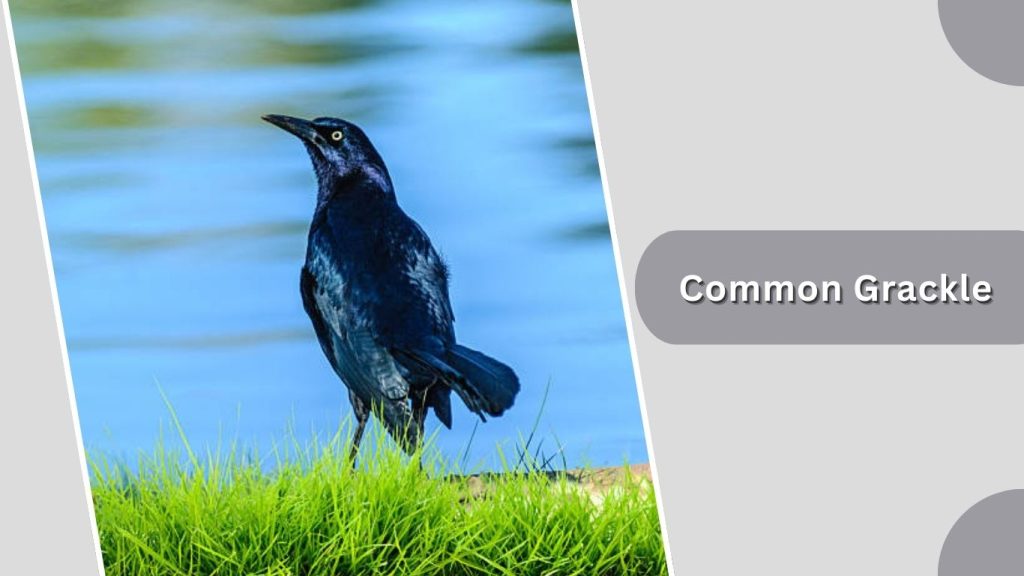
The Common Grackle (Quiscalus quiscula) is a widespread black bird throughout Florida and is especially noticeable in large, noisy flocks. Known for its glossy feathers and bright yellow eyes, it is highly adaptable and often dominates feeding areas and open spaces.
Identification
- Medium-to-large blackbird with a long tail
- Slender body and long legs
- Bright yellow eyes
- Strong, pointed bill
Color
Adult males are glossy black with a strong purple, blue, or green iridescent sheen. Females are slightly duller but still dark, lacking the intense shine of males.
Habitat
In Florida, Common Grackles are found in urban areas, wetlands, agricultural fields, parks, and open woodlands. They are especially common near water and human development.
Diet
Common Grackles are omnivorous, feeding on insects, seeds, grains, small fish, frogs, eggs, and food scraps.
4. Boat-tailed Grackle
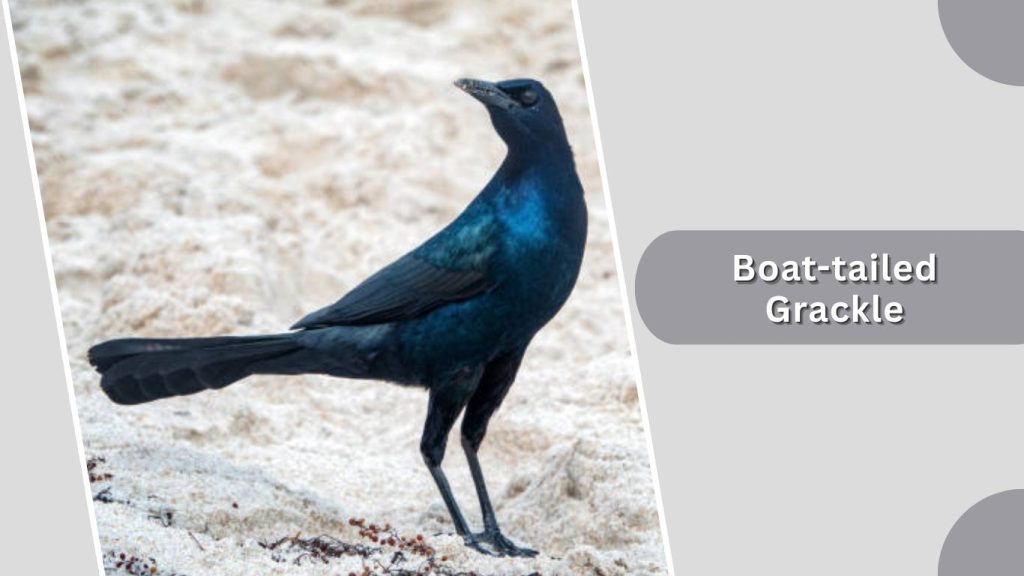
The Boat-tailed Grackle (Quiscalus major) is a large, striking black bird commonly found in Florida, especially near coastal and wetland areas. It gets its name from its long, keel-shaped tail, which resembles the hull of a boat. Bold and noisy, this species often dominates marshes, docks, and parking lots near water.
Identification
- Large blackbird with a very long, keel-shaped tail
- Thick neck and heavy bill
- Males much larger than females
- Often seen in loud, active groups
Color
Adult males are glossy black with a strong blue or purple iridescent sheen. Females are dark brown with a pale eye and lighter underparts.
Habitat
In Florida, Boat-tailed Grackles inhabit coastal marshes, mangroves, estuaries, beaches, and urban areas near water.
Diet
They are opportunistic feeders, eating insects, small fish, crustaceans, seeds, eggs, and human food scraps.
5. Red-winged Blackbird
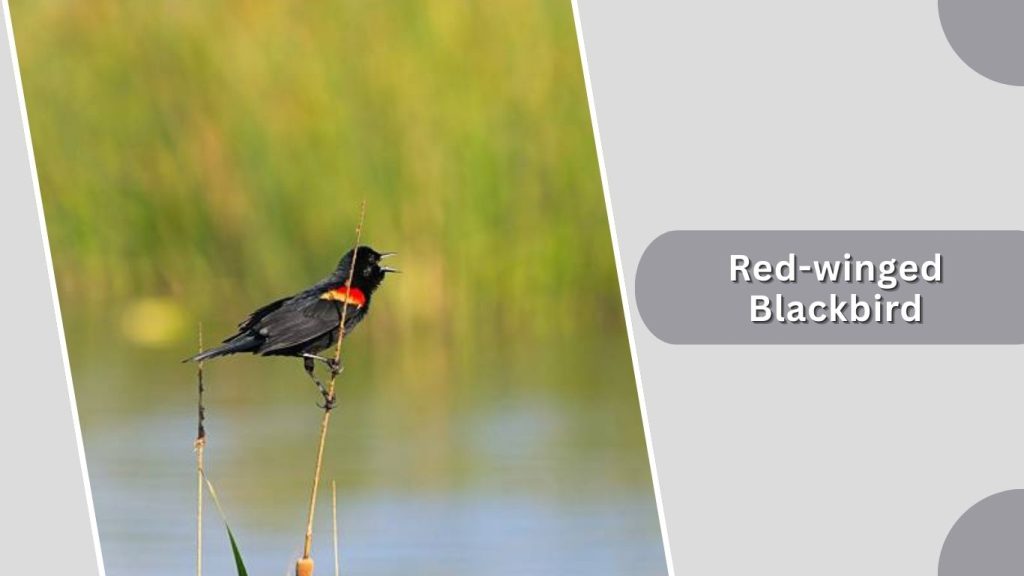
The Red-winged Blackbird (Agelaius phoeniceus) is a common and widespread black bird throughout Florida, especially in wetlands. Males are easily recognized by their bright shoulder patches, while females are more camouflaged.
Identification
- Medium-sized blackbird with a conical bill
- Males show bold shoulder patches
- Females are streaked brown
- Often perch on reeds and cattails
Color
Adult males are jet black with bright red shoulder patches bordered with yellow. Females are brown with heavy streaking and a pale eyebrow.
Habitat
This species is most common in marshes, swamps, wet fields, roadside ditches, and agricultural areas across Florida.
Diet
Red-winged Blackbirds feed on insects, seeds, grains, and plant matter, with insects forming a major part of the diet during breeding season.
6. Brown-headed Cowbird
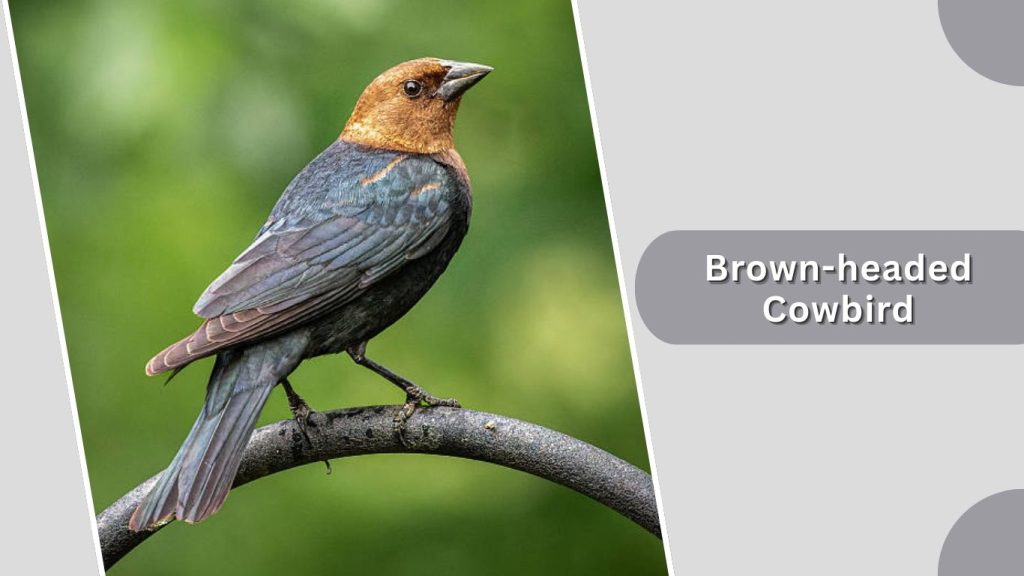
The Brown-headed Cowbird (Molothrus ater) is a small-to-medium black bird commonly found across Florida in open and semi-open habitats. It is well known for its unusual breeding strategy of laying eggs in the nests of other birds. Despite this, it is widespread and easy to spot, often feeding on the ground.
Identification
- Stocky body with a short, thick bill
- Relatively short tail
- Males darker and more contrasting than females
- Often seen in mixed flocks
Color
Adult males have a glossy black body with a rich chocolate-brown head. Females are gray-brown overall with a paler throat and subtle streaking.
Habitat
In Florida, Brown-headed Cowbirds are found in grasslands, pastures, agricultural fields, open woodlands, and suburban areas.
Diet
They feed mainly on seeds and insects, often foraging on the ground or following livestock and lawn equipment.
7. Black Vulture
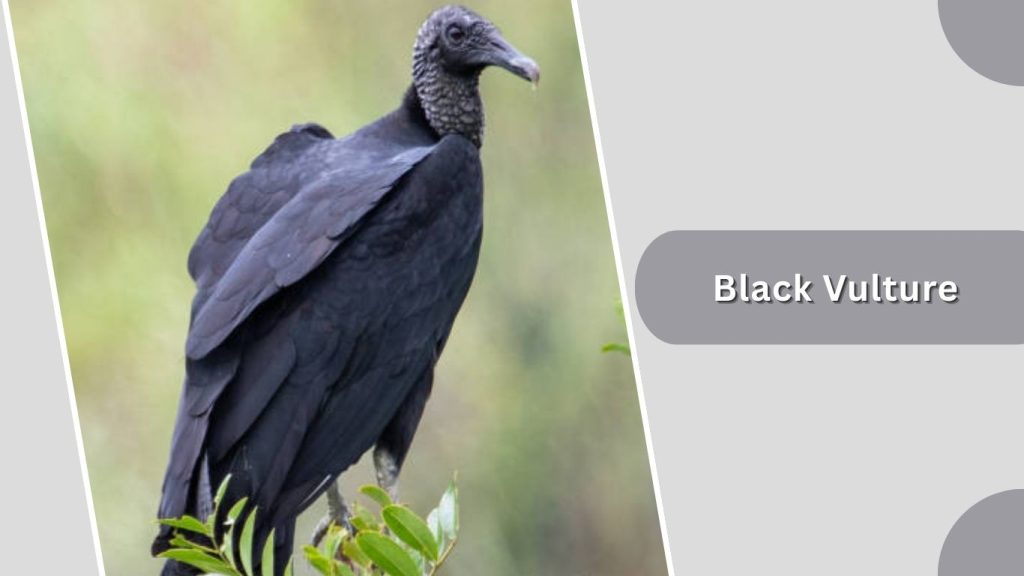
The Black Vulture (Coragyps atratus) is a large, dark bird commonly seen across Florida, especially soaring over roads and open areas. Social and bold, it often gathers in groups and plays an important role as a scavenger by cleaning up animal remains.
Identification
- Large black body with broad wings
- Short tail and compact shape
- Bare, wrinkled dark gray head
- White patches near wingtips visible in flight
Color
The Black Vulture is mostly black, with a dark gray to black bare head. In flight, the white wing patches contrast sharply against the dark wings.
Habitat
This species occupies open areas, forests, wetlands, coastal zones, and urban environments throughout Florida.
Diet
Black Vultures feed almost entirely on carrion, including dead mammals, birds, and fish, helping reduce the spread of disease.
8. Turkey Vulture
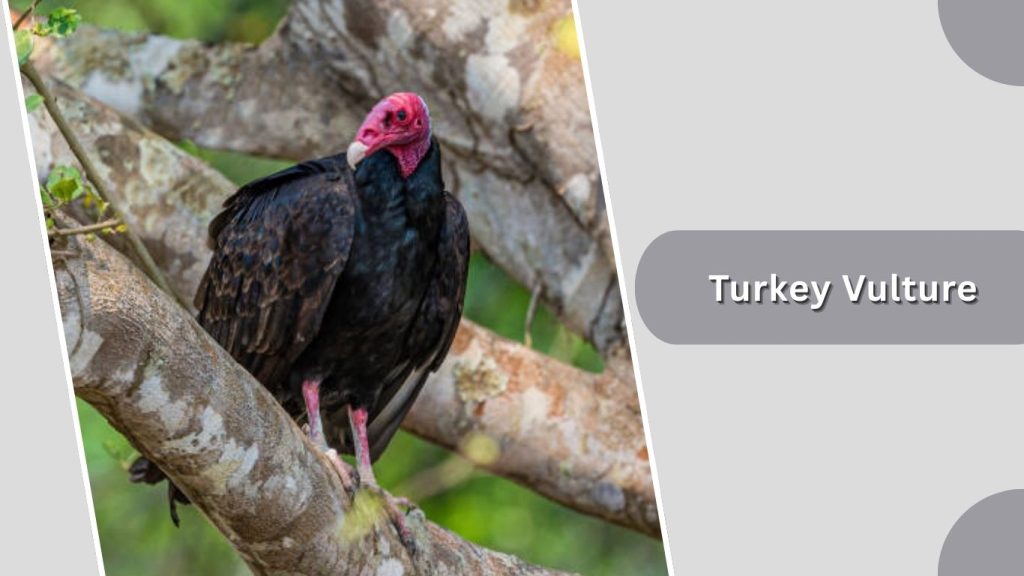
The Turkey Vulture (Cathartes aura) is one of the most common large black birds in Florida and is frequently seen soaring effortlessly in wide circles. It is easily recognized by its long wings and distinctive flight style. Although its appearance may seem intimidating, it is harmless and plays a vital ecological role.
Identification
- Very large bird with long, broad wings
- Small head with bare skin
- Long tail and narrow wings
- Soars with wings held in a shallow V-shape
Color
The body is dark brown to black, while adults have a red, featherless head. The underside of the wings appears two-toned, with lighter flight feathers contrasting with darker edges.
Habitat
In Florida, Turkey Vultures are found in open countryside, wetlands, forests, roadsides, grasslands, and suburban areas.
Diet
They feed almost entirely on carrion, using an exceptional sense of smell to locate dead animals, helping keep the environment clean.
9. Anhinga
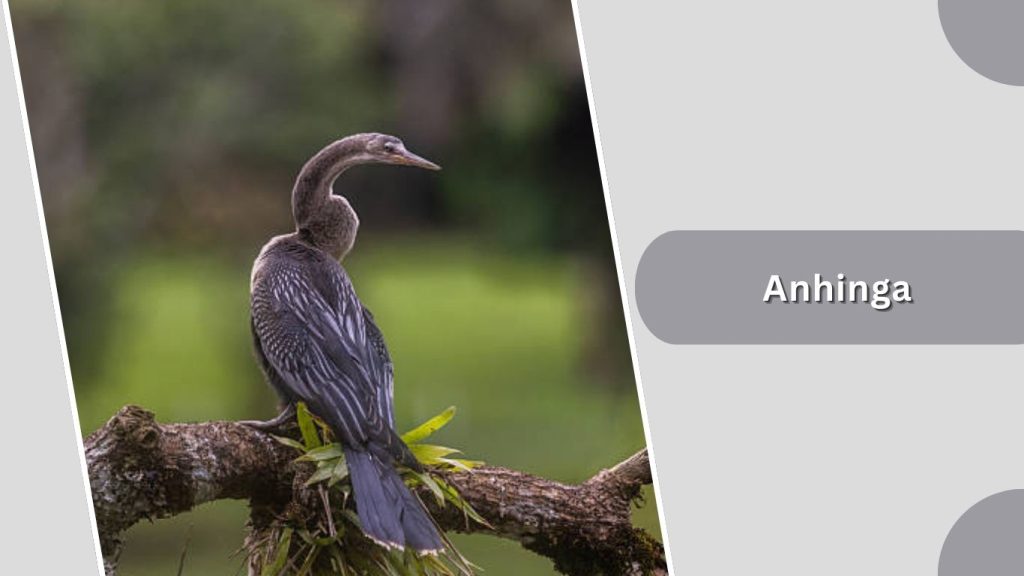
The Anhinga (Anhinga anhinga), often called the “snakebird,” is a large black waterbird commonly found in Florida’s wetlands. It is best known for swimming with only its head and neck visible above water, giving it a snake-like appearance.
Identification
- Long, slender neck and pointed bill
- Slim body compared to cormorants
- Often seen swimming low in the water
- Frequently perches with wings spread to dry
Color
Adult males are black with silvery-gray streaks on the wings and back. Females have a dark body with a paler head and neck, giving them a two-toned look.
Habitat
Anhingas inhabit freshwater swamps, marshes, lakes, slow-moving rivers, and ponds throughout Florida.
Diet
They feed mainly on fish, which they spear underwater with their sharp bills, along with occasional amphibians and aquatic insects.
10. Black Phoebe
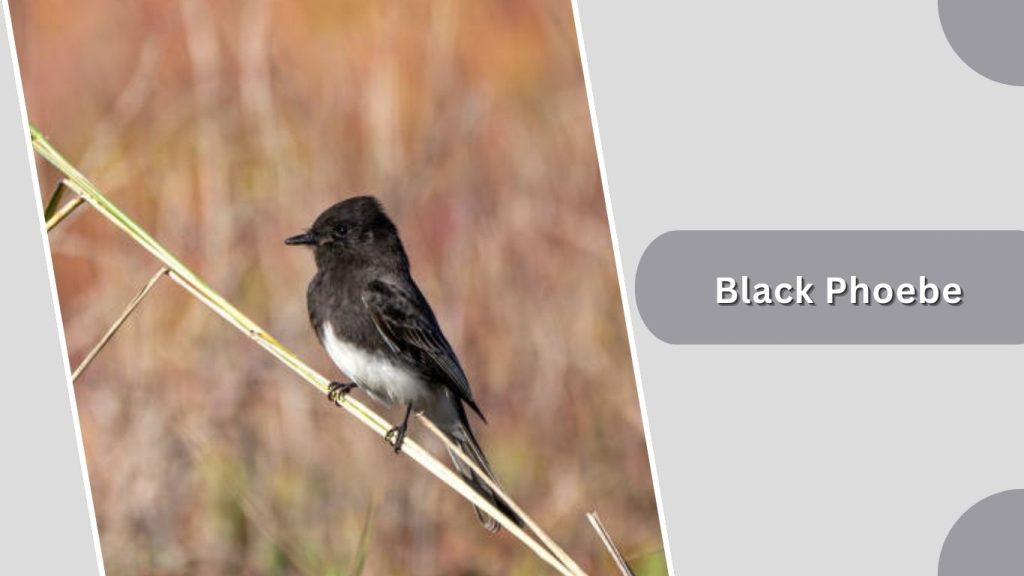
The Black Phoebe (Sayornis nigricans) is a small black-and-white flycatcher that can be found in parts of southern Florida, especially near water. Calm and methodical, it is often seen perched low and making short flights to catch insects. Its simple appearance and repetitive behavior make it easy to identify.
Identification
- Small bird with a compact body
- Black head, chest, and upperparts
- White belly and undertail
- Frequently wags its tail while perched
Color
The Black Phoebe has a black head, chest, back, and wings, sharply contrasting with its bright white belly and undertail coverts. The bill and legs are black.
Habitat
In Florida, Black Phoebes are found near streams, canals, ponds, wetlands, and human-made water features, often perching on bridges and structures.
Diet
They feed almost entirely on flying insects, which they catch by darting out from low perches and returning to the same spot.