




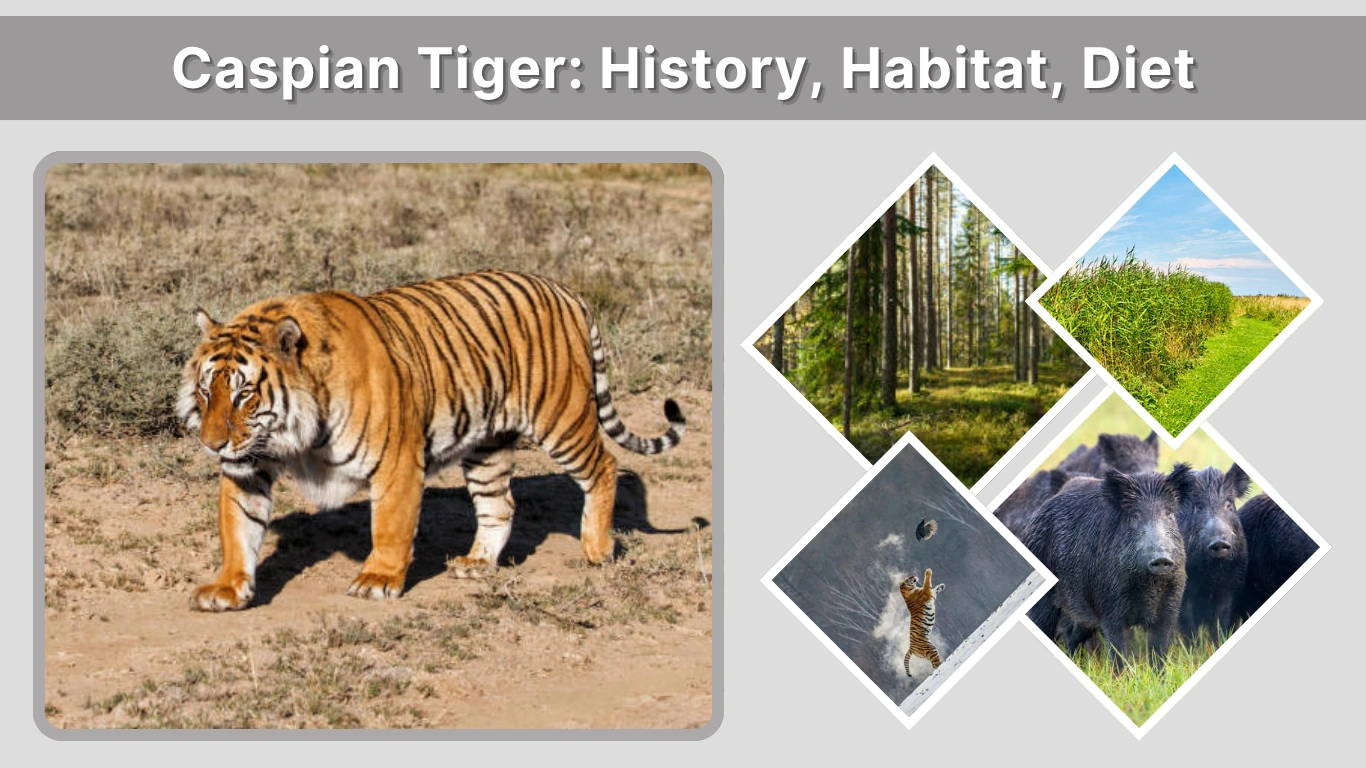
The Caspian tiger was once one of the most powerful and widespread tiger subspecies, roaming vast regions of Central Asia. Known for its large size and adaptability, it thrived in riverine forests and wetlands before disappearing in the 20th century. Its extinction highlights the severe impact of human activity on wildlife. Understanding the history, habitat, and causes of its decline not only sheds light on this lost predator but also offers important lessons for modern conservation efforts and the protection of endangered species worldwide.
What Was the Caspian Tiger?
The Caspian tiger (Panthera tigris virgata) was one of the largest and most powerful tiger subspecies that once roamed across Central Asia. Known for its strength, adaptability, and striking appearance, it lived in a wide range of environments, from dense forests to riverine wetlands. Unlike many other tigers, it was capable of surviving in colder climates, which made it unique among big cats.
Scientific Classification
The Caspian tiger belonged to the species Panthera tigris, which includes all tiger subspecies. It was classified as Panthera tigris virgata, distinguishing it from other regional variants such as the Bengal and Siberian tigers. Modern genetic studies have shown that the Caspian tiger was closely related to the Siberian tiger, suggesting they may have shared a common ancestor or even been part of a continuous population in the past.
Physical Characteristics
The Caspian tiger was notable for its large size and muscular build. Adult males could reach lengths of up to 3 meters, including the tail, and weighed between 170 to 240 kilograms. Its fur was typically pale orange with narrow, closely spaced black stripes, which helped it blend into its natural surroundings.
One distinctive feature was its thick, long fur, especially during winter, which allowed it to survive in colder environments. It also had a prominent ruff of fur around the neck, giving it a majestic appearance. Its strong limbs and sharp claws made it an efficient predator capable of taking down large prey.
Caspian Tiger Habitat and Geographic Range
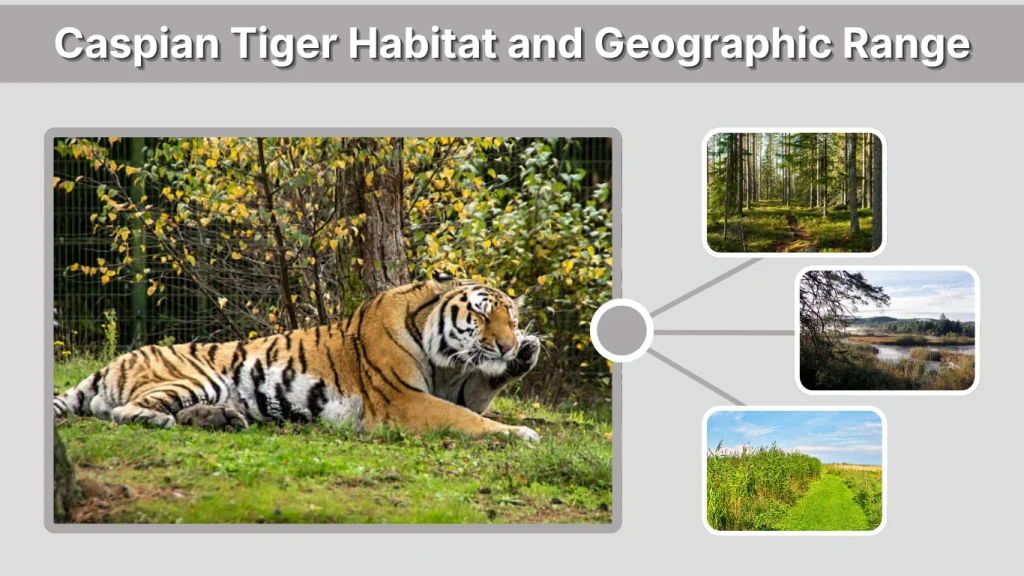
The Caspian tiger once occupied a vast range across Central Asia, making it one of the most widely distributed tiger subspecies. Its habitat was closely tied to water sources, which provided both prey and vegetation cover.
Regions It Inhabited
The Caspian tiger lived in several countries, including Iran, Turkey, Kazakhstan, Uzbekistan, Turkmenistan, and parts of western China. It was commonly found along major river systems such as the Amu Darya and Syr Darya. These regions offered a mix of dense vegetation and open spaces, ideal for hunting and movement.
Environmental Conditions
The preferred habitats of the Caspian tiger included riverine forests, wetlands, and reed beds. These environments provided excellent cover for stalking prey and access to water. Unlike tropical tigers, the Caspian tiger adapted to more temperate and even semi-arid climates.
Seasonal changes influenced its behavior and movement. During colder months, the tiger relied on its thick fur and often moved to areas with more shelter. In warmer seasons, it stayed near water sources to regulate its body temperature and find prey.
Caspian Tiger Diet and Hunting Behavior
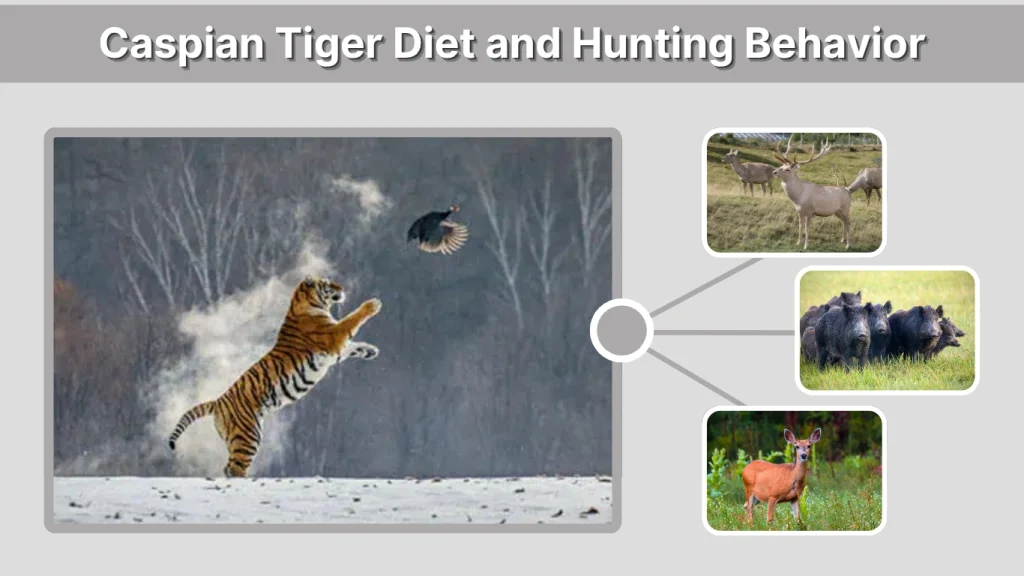
The Caspian tiger was a carnivorous predator and played a crucial role in maintaining the balance of its ecosystem. Its diet and hunting strategies were shaped by the availability of prey and the nature of its habitat.
Common Prey Species
The Caspian tiger primarily hunted large herbivores. Some of its most common prey included wild boar, deer species such as Bukhara deer, and occasionally smaller mammals. In times of scarcity, it could also prey on livestock, which often brought it into conflict with humans.
Hunting Techniques
Like other tigers, the Caspian tiger relied on stealth and ambush rather than speed. It would quietly approach its prey, using dense vegetation for cover, before launching a powerful attack. Its strong jaws and sharp teeth allowed it to deliver a fatal bite, usually to the neck.
The tiger was also highly territorial and often marked its territory to warn off rivals. It could travel long distances in search of food, demonstrating remarkable endurance and adaptability.
Key Facts About the Caspian Tiger
The Caspian tiger was a fascinating animal with several unique traits that set it apart from other tiger subspecies.
- One of the largest tiger subspecies in the world
- Adapted to colder climates with thick fur
- Strong swimmer capable of crossing rivers
- Closely related to the Siberian tiger
Differences Between Caspian and Other Tigers
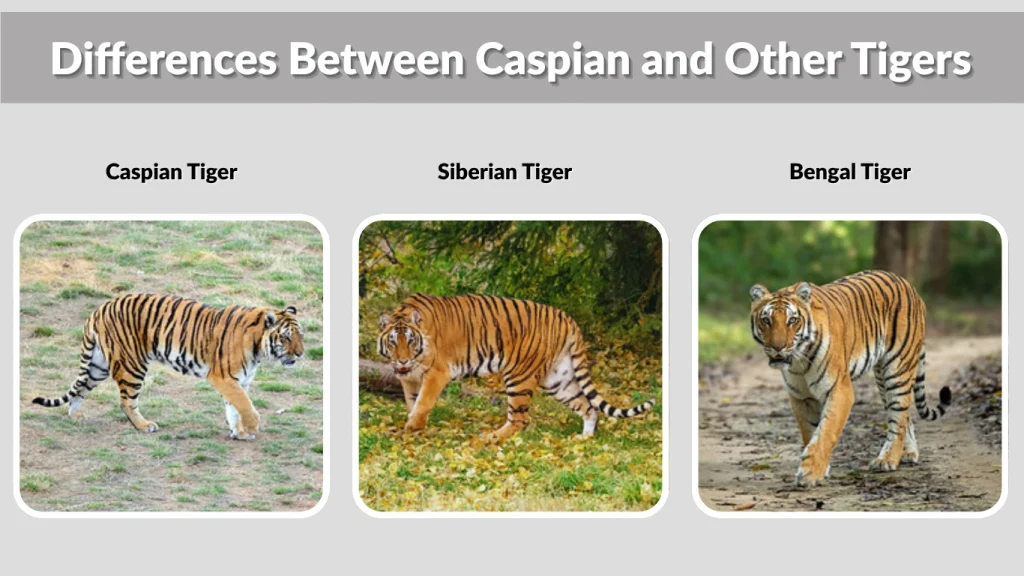
The Caspian tiger shared many similarities with other tiger subspecies but also had distinct differences shaped by its environment and evolution.
Caspian Tiger vs Siberian Tiger
The Caspian tiger and the Siberian tiger were genetically very similar. In fact, some studies suggest they may have been part of the same population in the past. Both were adapted to colder climates and had thick fur, but the Siberian tiger generally had a slightly larger body and lighter coat.
Caspian Tiger vs Bengal Tiger
Compared to the Bengal tiger, the Caspian tiger lived in a very different environment. While Bengal tigers inhabit tropical forests and grasslands, the Caspian tiger thrived in temperate regions with wetlands and riverine forests. Physically, the Bengal tiger tends to have brighter coloration and broader stripes, whereas the Caspian tiger had a paler coat with narrower stripes.
Reasons Behind the Extinction
The extinction of the Caspian tiger was not caused by a single factor but rather a combination of human activities and environmental changes.
- Excessive hunting and poaching by humans
- Expansion of agriculture reducing natural habitats
- Destruction of river ecosystems and forests
- Decline in prey species due to overhunting
Timeline of Decline
The disappearance of the Caspian tiger occurred gradually over several decades, reflecting increasing human pressure on its environment.
- 19th century: Widespread hunting begins across Central Asia
- Early 20th century: Rapid decline in population numbers
- Mid 20th century: Only a few scattered individuals remain
- Late 20th century: Species declared extinct
Ecological Importance and Impact of Extinction
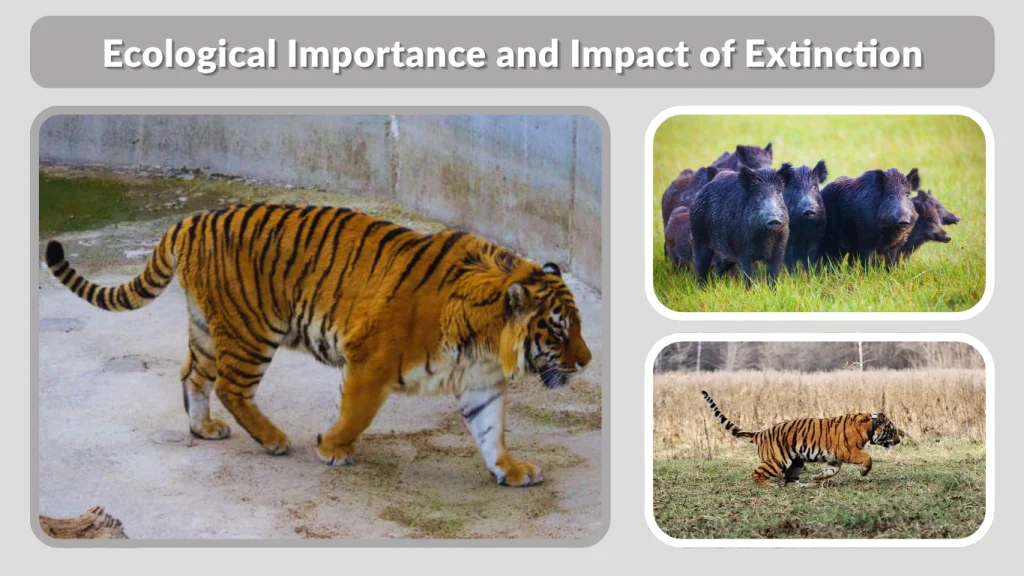
The Caspian tiger played a vital role as an apex predator in its ecosystem. By controlling populations of herbivores such as wild boar and deer, it helped maintain a balanced food chain. This balance ensured that vegetation was not overgrazed, allowing forests and wetlands to thrive naturally.
With the extinction of the Caspian tiger, this balance was disrupted. The absence of a top predator often leads to an increase in prey populations, which can result in overgrazing and habitat degradation. Over time, such ecological imbalances can affect biodiversity, leading to the decline of plant species and other animals dependent on the same environment.
The loss of the Caspian tiger also represents a broader issue—the irreversible consequences of human impact on nature. Its extinction serves as a reminder of how fragile ecosystems are and how the removal of a single species can create long-term environmental changes.
Possibility of Reintroduction
Although the Caspian tiger is extinct, scientists and conservationists have explored the idea of restoring its presence in the wild. Advances in genetic research have opened new possibilities for such efforts.
- Strong genetic similarity with the Siberian tiger
- Potential use of Siberian tigers as ecological replacements
- Proposed reintroduction projects in Central Asia
- Challenges in restoring suitable habitats
One of the most discussed approaches involves introducing Siberian tigers into regions where the Caspian tiger once lived. Since both subspecies share close genetic ties, Siberian tigers could potentially fill the ecological role left behind. However, this plan faces several obstacles, including habitat degradation, human settlements, and the need for long-term conservation support.
Lessons for Wildlife Conservation
The extinction of the Caspian tiger offers valuable lessons for modern conservation efforts. It highlights the importance of proactive measures to protect endangered species before their populations decline beyond recovery.
Importance of Habitat Protection
Preserving natural habitats is essential for the survival of wildlife. The destruction of forests, wetlands, and river systems played a major role in the disappearance of the Caspian tiger. Protecting these ecosystems ensures that animals have access to food, shelter, and breeding grounds.
Role of Conservation Policies
Effective laws and policies are crucial in preventing overhunting and habitat destruction. Strong enforcement of wildlife protection regulations, along with community awareness, can significantly reduce threats to endangered species. International cooperation is also important, as many species cross national boundaries.
FAQs
What caused the extinction of the Caspian tiger?
The Caspian tiger went extinct mainly due to human activities such as excessive hunting, habitat destruction, and the decline of its natural prey. Expansion of agriculture and settlements further reduced its living space, making survival increasingly difficult.
Where did the Caspian tiger live?
The Caspian tiger inhabited regions across Central Asia, including countries like Iran, Turkey, Kazakhstan, and Uzbekistan. It preferred riverine forests, wetlands, and areas near water sources that provided both shelter and prey.
When was the Caspian tiger declared extinct?
The Caspian tiger was declared extinct in the late 20th century. The last confirmed sightings occurred between the 1950s and 1970s, after which no reliable evidence of its existence was found.
Is the Caspian tiger related to the Siberian tiger?
Yes, genetic studies have shown that the Caspian tiger is closely related to the Siberian tiger. In fact, they share a common ancestry, and some scientists believe they were once part of a continuous population.
Can the Caspian tiger be brought back?
While the exact Caspian tiger cannot be revived, there are discussions about reintroducing Siberian tigers into its former habitat. Due to their genetic similarity, they could potentially restore the ecological balance once maintained by the Caspian tiger.
Conclusion
The story of the Caspian tiger is a powerful example of how human actions can lead to the loss of even the most formidable species. Once a dominant predator across Central Asia, it vanished within a relatively short period due to hunting, habitat destruction, and ecological disruption. Its extinction underscores the urgent need for conservation efforts to protect existing wildlife. By learning from the past and taking responsible action today, it is still possible to prevent similar losses and preserve the natural world for future generations.