




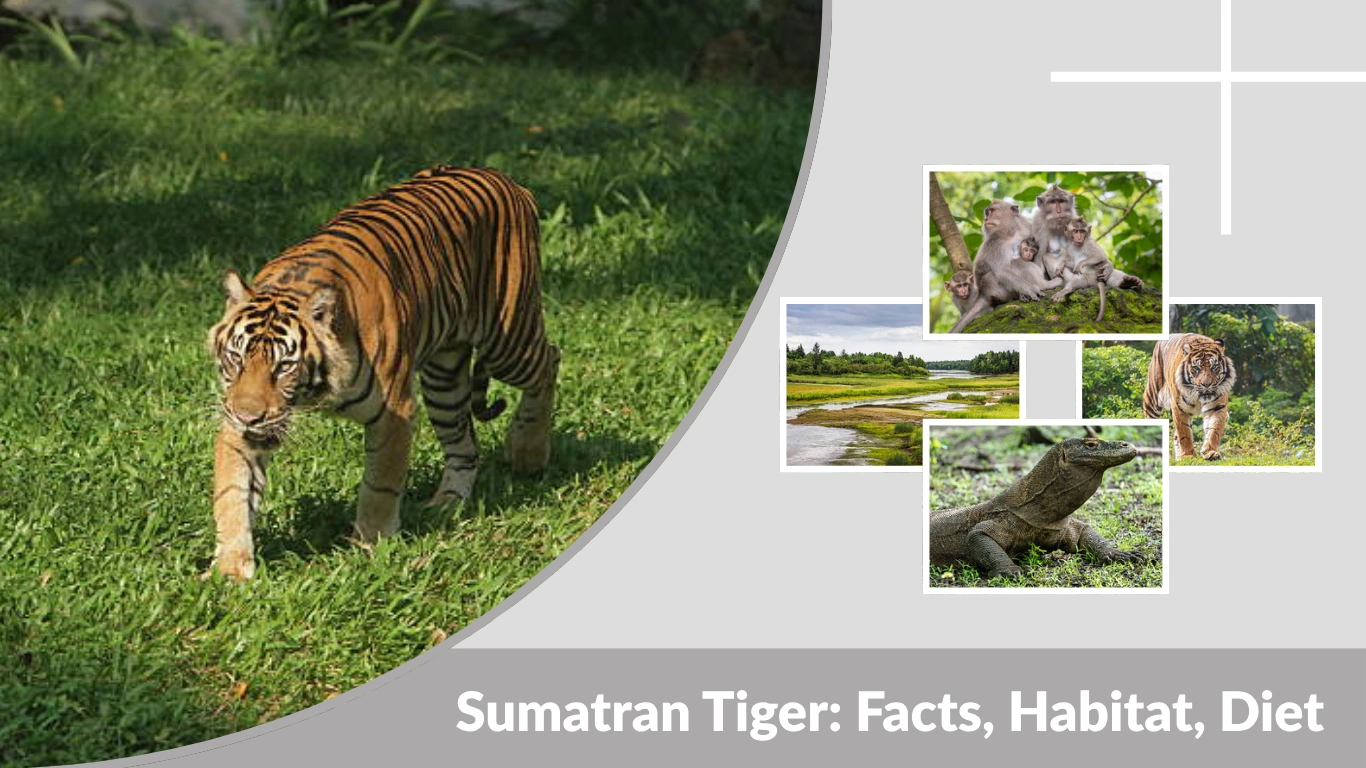
The Sumatran tiger (Panthera tigris sumatrae) is the smallest surviving tiger subspecies and is found only on the Indonesian island of Sumatra. Known for its striking appearance and adaptability to dense forests, this tiger plays a vital role in maintaining the ecological balance of its habitat. Unfortunately, it is classified as critically endangered, with fewer than 400 individuals remaining in the wild.
As the last surviving tiger of the Sunda Islands, the Sumatran tiger is of great conservation importance. It represents a unique genetic lineage and is a key symbol of Indonesia’s rich biodiversity. However, habitat destruction and illegal hunting continue to threaten its survival.
Sumatran Tiger Identification & Characteristics
Physical Appearance
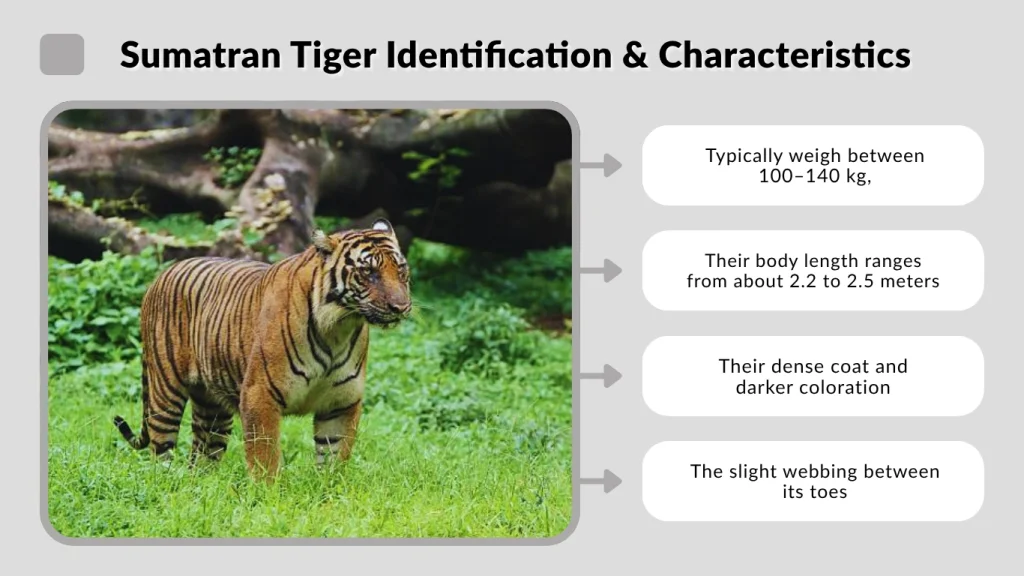
The Sumatran tiger has a darker orange coat compared to other tiger subspecies, with thick black stripes that are narrower and more closely spaced. These stripes often break into spots, helping the tiger blend into dense forest environments.
Its underside, chest, and parts of the face are white, creating a strong contrast with its dark stripes. Male Sumatran tigers often have a noticeable “mane” or beard-like fur around their neck, giving them a distinctive look.
Size and Body Structure
Sumatran tigers are the smallest of all tiger subspecies. Adult males typically weigh between 100–140 kg, while females weigh around 75–110 kg. Their body length ranges from about 2.2 to 2.5 meters, including the tail.
Their smaller size allows them to move easily through thick vegetation and narrow forest paths. They have a compact, muscular build designed for agility and speed rather than sheer strength.
Unique Characteristics
One of the most unique features of the Sumatran tiger is the slight webbing between its toes, which makes it an excellent swimmer. This adaptation allows it to navigate rivers and swampy areas with ease.
Their dense coat and darker coloration provide better camouflage in the shadowy rainforest. These adaptations make them highly efficient predators in their environment.
Sumatran Tiger Facts
The Sumatran tiger is full of fascinating traits that highlight its uniqueness and importance.
- Scientific name: Panthera tigris sumatrae
- Status: Critically endangered
- Population: Fewer than 400 individuals in the wild
- Location: Only found on Sumatra Island
- Behavior: Solitary and territorial
- Activity: Mostly nocturnal
- Excellent swimmers and climbers
Unlike other tiger subspecies that have wider ranges, the Sumatran tiger is isolated on a single island. This isolation makes it more vulnerable to environmental changes and human activities.
Sumatran Tiger Habitat
Natural Habitat
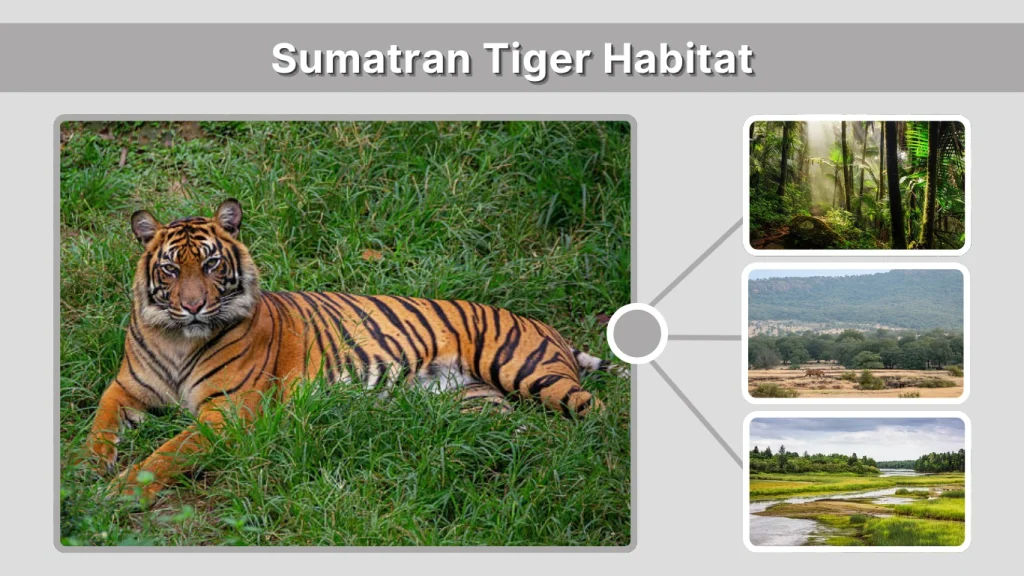
Sumatran tigers live in a variety of forest types, including tropical rainforests, lowland forests, peat swamps, and mountainous regions. These environments provide dense vegetation that helps them stay hidden while hunting.
They prefer areas with access to water, such as rivers and swamps, which support both their survival and hunting needs. The thick forest also offers protection from human disturbance.
Geographic Distribution
The Sumatran tiger is found exclusively on the island of Sumatra in Indonesia. Most of the remaining population lives in protected national parks such as Gunung Leuser National Park, Kerinci Seblat National Park, and Bukit Barisan Selatan National Park.
These protected areas are crucial for the survival of the species, as they provide safe habitats and help limit human interference.
Habitat Threats
Despite living in protected areas, Sumatran tigers face serious threats from habitat loss. Large sections of forest are cleared for agriculture, especially palm oil plantations. Logging and infrastructure development further reduce available habitat.
As forests shrink, tigers are forced into smaller areas, increasing competition for food and raising the risk of conflict with humans.
Sumatran Tiger Diet
Main Prey
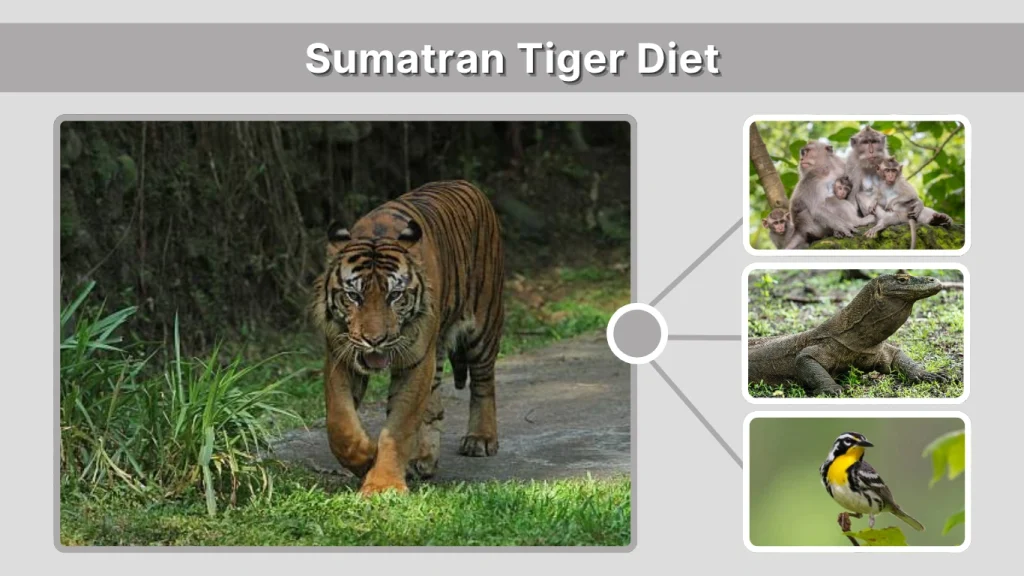
The Sumatran tiger is a carnivore that primarily hunts medium to large-sized animals. Its main prey includes deer species such as sambar and muntjac, as well as wild boar.
When larger prey is scarce, it may hunt smaller animals like birds, monkeys, and reptiles. The tiger’s diet depends heavily on the availability of prey within its habitat.
Feeding Behavior
After capturing its prey, the Sumatran tiger often drags the carcass to a hidden location before feeding. It may consume a large amount in one sitting and return to the remains later.
This feeding pattern helps reduce competition from other predators and scavengers. As an apex predator, it plays a crucial role in controlling prey populations and maintaining ecological balance.
Sumatran Tiger Hunting
Hunting Techniques
The Sumatran tiger is an ambush predator that relies on stealth and patience. It uses dense vegetation to approach its prey quietly, staying low and hidden until it is close enough to attack.
When the moment is right, it launches a powerful and sudden attack, using its strength and sharp claws to capture and kill the prey quickly.
Hunting Behavior
Most hunting takes place at night, when it is easier to remain undetected. The tiger’s striped coat helps it blend into the shadows of the forest, making it highly effective in low-light conditions.
Its ability to swim also allows it to hunt near rivers and swampy areas, giving it access to a wider range of prey.
Sumatran Tiger Lifespan
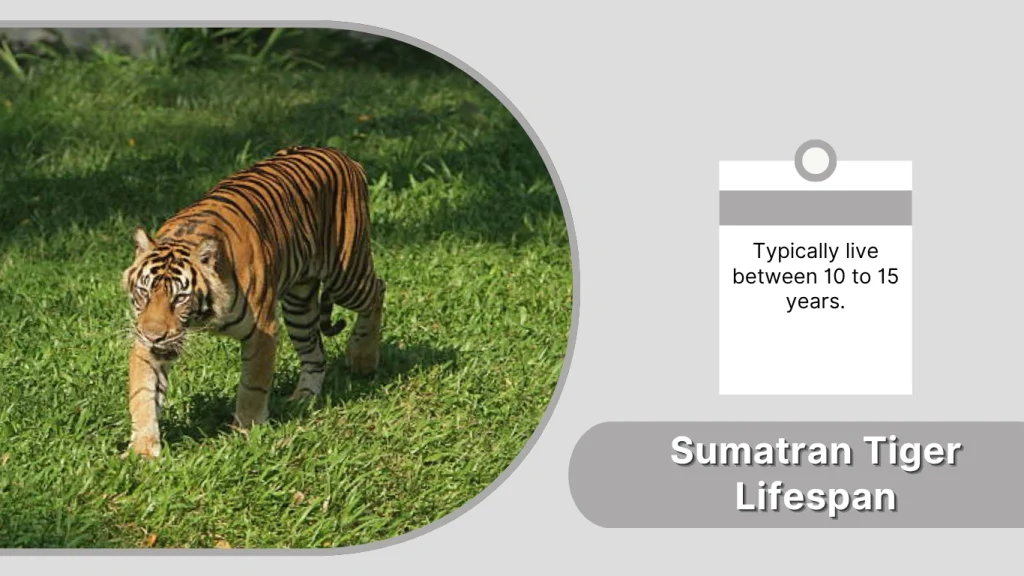
The lifespan of a Sumatran tiger depends on its environment and living conditions. In the wild, they typically live between 10 to 15 years. Survival in natural habitats can be challenging due to threats such as poaching, habitat loss, and competition for prey.
In captivity, where they receive proper care, nutrition, and protection, Sumatran tigers can live up to 20 years. Factors like healthcare, diet, and safe surroundings significantly contribute to their longer lifespan.
Sumatran Tiger Life Cycle
Birth and Cub Stage
Sumatran tiger cubs are born blind and helpless, relying entirely on their mother for survival. At birth, they are kept hidden in a secure den to protect them from predators and environmental dangers. The mother provides milk and constant care during this stage.
Juvenile Stage
As the cubs grow, they begin to explore their surroundings and develop important survival skills. They learn how to stalk and hunt by observing their mother. This stage is crucial for building strength, coordination, and independence.
Adult Stage
By the age of 2–3 years, Sumatran tigers reach adulthood and become independent. Adult tigers are solitary animals that establish their own territories. They rely on their hunting skills and physical strength to survive.
Reproduction
Female Sumatran tigers have a gestation period of about 3.5 months. A typical litter consists of 2–4 cubs. The mother raises the cubs alone, providing protection and teaching them how to hunt until they are ready to live independently.
Sumatran Tiger vs Bengal Tiger
Size Differences
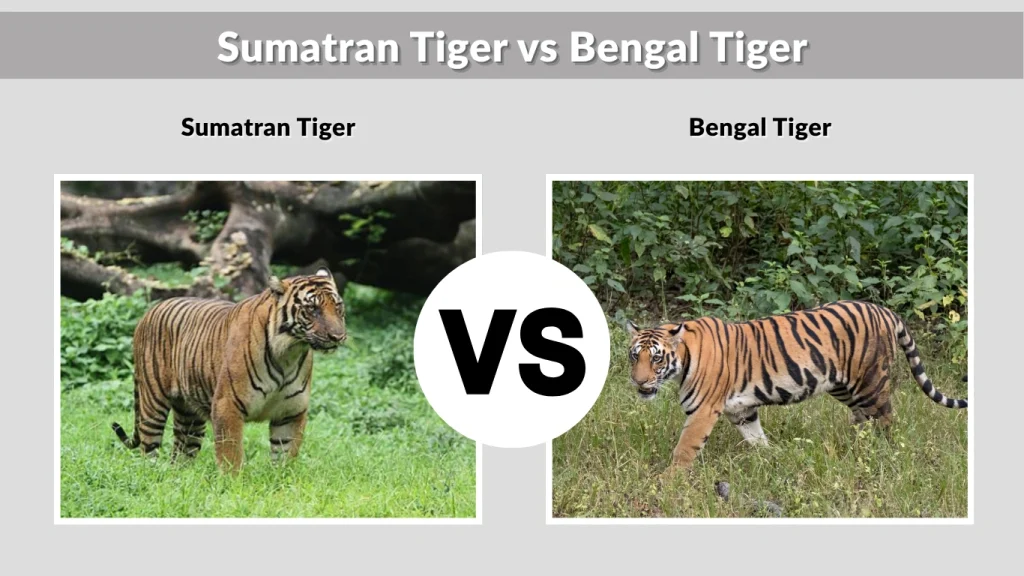
The Sumatran tiger is significantly smaller than the Bengal tiger. While Sumatran males weigh around 100–140 kg, Bengal tigers can exceed 200 kg. This size difference reflects their different environments and adaptations.
Habitat Differences
Sumatran tigers live in dense tropical forests on an island, while Bengal tigers inhabit a variety of environments, including grasslands, forests, and mangrove swamps in countries like India and Bangladesh.
Physical Differences
Sumatran tigers have darker coats and more closely spaced stripes, which help them blend into thick forests. Bengal tigers generally have lighter coats and fewer stripes, suited for more open environments.
Behavioral Differences
Sumatran tigers are highly adapted to dense jungle life, relying on agility and stealth. Bengal tigers are more versatile and can adapt to a wider range of habitats and hunting conditions.
Conservation Status and Threats
Current Status
The Sumatran tiger is classified as critically endangered, with a declining population of fewer than 400 individuals in the wild. It is one of the most threatened tiger subspecies today.
Major Threats
The biggest threats include habitat destruction, illegal poaching, and human-wildlife conflict. Forests are being cleared for agriculture, especially palm oil plantations, reducing the tiger’s natural habitat.
Conservation Efforts
Efforts to protect the Sumatran tiger include establishing protected national parks, anti-poaching patrols, and conservation programs. Breeding programs in captivity also aim to preserve the species.
Importance of the Sumatran Tiger
The Sumatran tiger plays a crucial role in maintaining the balance of its ecosystem. As an apex predator, it helps control populations of herbivores, preventing overgrazing and supporting forest health.
It is also an important symbol of Indonesia’s natural heritage. Protecting the Sumatran tiger means preserving biodiversity and ensuring the survival of many other species within the same ecosystem.
FAQs
What is the lifespan of a Sumatran tiger?
Sumatran tigers typically live around 10–15 years in the wild, depending on environmental conditions and threats. In captivity, where they are protected and receive proper care, they can live up to 20 years or more.
What do Sumatran tigers eat?
They mainly eat deer and wild boar, which provide essential nutrients for survival. They may also hunt smaller animals such as monkeys, birds, and reptiles when larger prey is not available.
Where do Sumatran tigers live?
Sumatran tigers live exclusively on the Indonesian island of Sumatra. They inhabit tropical rainforests, peat swamps, and mountainous regions, mainly within protected national parks.
How do Sumatran tigers hunt?
They are ambush predators that rely on stealth and camouflage. They quietly approach their prey through dense vegetation and launch a sudden, powerful attack when close enough.
What is the difference between Sumatran and Bengal tigers?
The Sumatran tiger is smaller, darker, and more adapted to dense forests, while the Bengal tiger is larger and lives in a variety of habitats. Their physical traits and behaviors reflect their different environments.
Conclusion
The Sumatran tiger is a unique and critically endangered subspecies that plays a vital role in its ecosystem. From its distinctive characteristics and hunting skills to its shrinking habitat, it faces serious challenges.
Protecting this tiger is essential for preserving biodiversity and maintaining ecological balance. Continued conservation efforts and global awareness are key to ensuring its survival for future generations.