




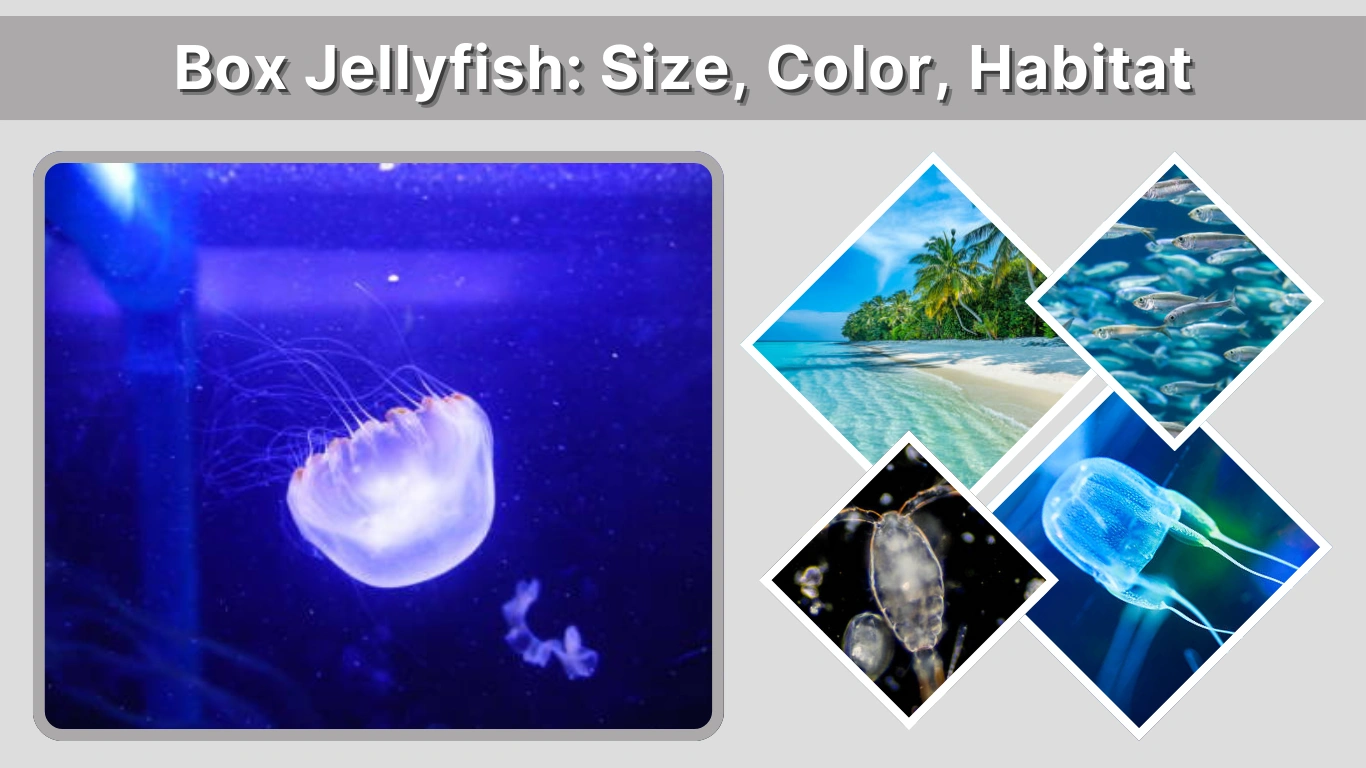
Box jellyfish are among the most fascinating yet dangerous marine animals in the world. Recognized by their cube-shaped bodies and powerful venom, they inhabit warm coastal waters where they actively hunt small fish and crustaceans. Unlike most jellyfish that drift with currents, box jellyfish are strong swimmers with surprisingly advanced vision. Their delicate, almost invisible appearance hides a highly efficient predator equipped with long tentacles and thousands of stinging cells. Understanding their size, color, habitat, and early life stages helps explain why these animals are both ecologically important and medically significant.
Physical Overview of Box Jellyfish
Box jellyfish belong to the class Cubozoa, a distinct group separated from true jellyfish because of their unique body structure and sensory abilities. Their bell is shaped like a cube rather than a dome, giving them four clearly defined sides. From each corner hangs a cluster of long, thin tentacles that trail behind the animal as it swims. These tentacles are lined with millions of nematocysts—microscopic stinging capsules that inject venom into prey or anything that brushes against them.
One of the most remarkable features of box jellyfish is their sensory system. Each individual has four clusters of eyes, known as rhopalia, giving them a total of up to twenty-four eyes. Some of these eyes are capable of forming images, allowing box jellyfish to detect obstacles, light, and movement. This visual ability supports their active lifestyle, helping them navigate complex coastal environments such as mangroves, reefs, and shallow lagoons.
Their bodies are mostly transparent and gelatinous, which reduces visibility in water and makes them difficult for both prey and predators to detect. Despite their fragile appearance, box jellyfish are agile swimmers, using rhythmic contractions of the bell to move with purpose rather than drifting passively.
Identification and Body Features
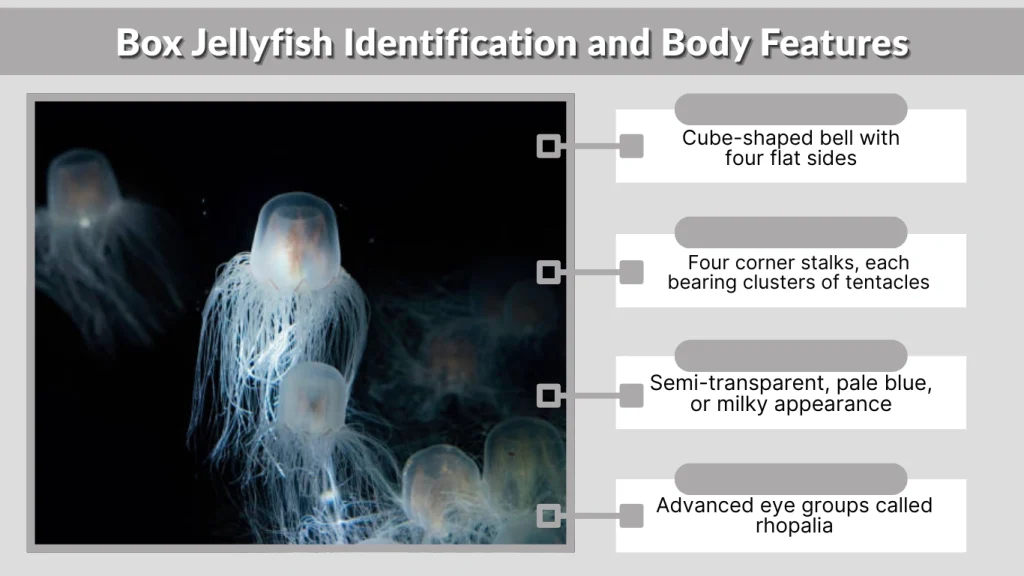
Box jellyfish can be identified by a combination of structural traits and behavioral characteristics.
- Cube-shaped bell with four flat sides
- Four corner stalks, each bearing clusters of tentacles
- Semi-transparent, pale blue, or milky appearance
- Advanced eye groups called rhopalia
- Strong swimming ability compared to other jellyfish
The bell itself is tall and box-like, often higher than it is wide. Along the edges of the bell are muscular structures that help pump water and control movement. The tentacles, though extremely thin, can extend several meters and are the primary tools for capturing prey and delivering venom. These features together make box jellyfish distinct from moon jellies, lion’s mane jellies, and other more familiar species.
Size and Weight Characteristics
Box jellyfish vary greatly in size depending on the species. Smaller species may have bells only a few centimeters tall, while large species such as the Australian box jellyfish can reach bell heights of 25 to 30 centimeters. Although the bell may seem modest in size, the full animal appears much larger because of its long trailing tentacles.
In terms of mass, box jellyfish are lightweight due to their high water content, often consisting of more than 95 percent water. However, their impact on the environment is far greater than their weight suggests. Their long tentacles dramatically increase their hunting range and stinging surface, allowing them to capture fast-moving fish in open water.
Larger individuals tend to be more powerful swimmers and possess more venom, making them more effective predators and more dangerous to potential threats. Growth rates can be rapid in favorable conditions, with juveniles developing into mature medusae within a few months.
Bell Size Variations
Bell size ranges from about 2–5 centimeters in small coastal species to nearly 30 centimeters in the largest forms. The bell houses the stomach, nerve ring, and sensory organs. As the bell grows, muscle development increases, giving adult box jellyfish their notable swimming strength and control.
Tentacle Length and Reach
Tentacle length is often far greater than bell height. In some species, tentacles can extend over 3 meters. Each tentacle contains thousands of stinging cells, greatly expanding the area in which prey can be detected and immobilized. This long reach allows box jellyfish to hunt efficiently without direct contact between their bell and prey.
Color Patterns and Appearance
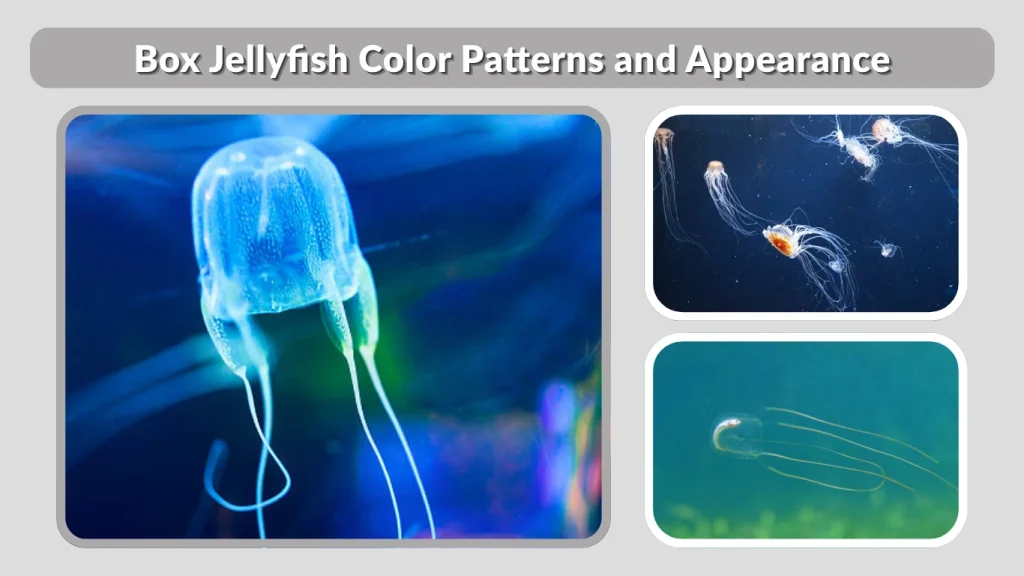
Most box jellyfish are nearly invisible in water. Their bells are usually transparent, pale blue, or faintly milky, sometimes with a slight greenish tint. This subtle coloration acts as camouflage, helping them blend into sunlit tropical waters. In certain lighting conditions, their bodies may shimmer, making them extremely difficult to spot.
The tentacles are often even harder to see than the bell. When fully extended, they appear as fine threads drifting through the water. This invisibility increases hunting success, as small fish and shrimp may swim directly into the stinging strands without detecting danger. Color intensity can change slightly depending on age, health, and water conditions, but bold patterns are rare among box jellyfish.
Habitat and Global Distribution
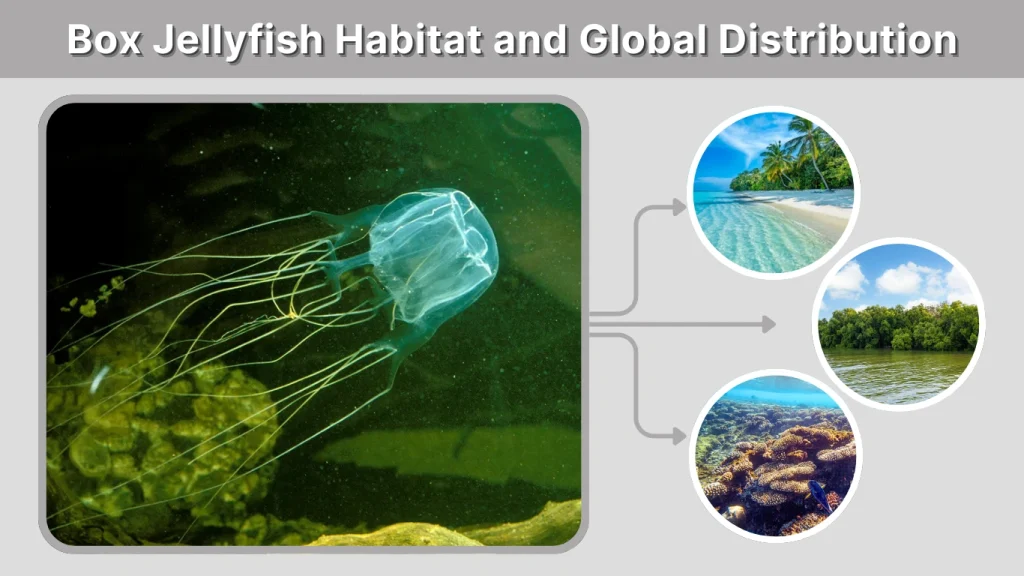
Box jellyfish are primarily found in warm, shallow marine environments. They are most common in the Indo-Pacific region, especially around northern Australia, Southeast Asia, the Philippines, and the coastal islands of the Pacific. Some species also occur in parts of the Indian Ocean and western Atlantic.
- Tropical coastal waters and beaches
- Mangrove forests and estuaries
- Shallow coral reef systems
- Sheltered bays and lagoons
- Calm, sunlit waters with abundant prey
They often move closer to shore during certain seasons, increasing encounters with swimmers. Box jellyfish favor environments where small fish are plentiful and water movement is gentle. Mangrove roots, in particular, provide ideal hunting grounds, offering both shelter and high prey density.
Life Cycle of Box Jellyfish
The life cycle of box jellyfish is complex and involves both stationary and free-swimming stages. Like many cnidarians, they alternate between a tiny bottom-dwelling form and the familiar jellyfish shape seen in open water. This process allows them to reproduce efficiently and spread across coastal ecosystems.
Fertilization and Planula Stage
Adult box jellyfish reproduce sexually. Males release sperm into the water, which is taken in by females and used to fertilize eggs internally or externally, depending on the species. After fertilization, the eggs develop into microscopic, free-swimming larvae called planulae. These larvae drift for a short time before settling onto hard surfaces such as rocks, shells, or mangrove roots.
Polyp Stage and Metamorphosis
Once attached, the planula transforms into a small polyp. This stationary stage resembles a tiny tube with a mouth and tentacles. The polyp can feed on plankton and grow while remaining anchored to a surface. Unlike many other jellyfish polyps that produce multiple offspring, box jellyfish polyps typically metamorphose directly into a single juvenile medusa. During this transformation, the polyp reshapes its body, develops sensory structures, and detaches from the surface.
Medusa Stage and Growth
The juvenile medusa is a miniature version of the adult box jellyfish. It swims into open water and begins actively hunting small prey. Over weeks or months, it grows rapidly, developing longer tentacles, stronger swimming muscles, and more potent venom. Once mature, the medusa becomes capable of reproduction, completing the life cycle.
Diet and Hunting Behavior
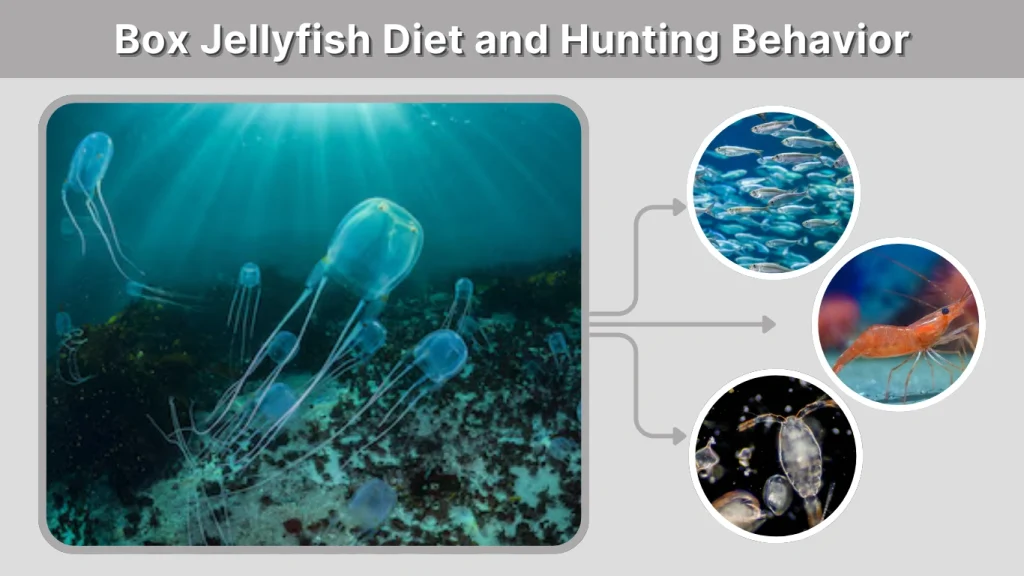
Box jellyfish are active predators rather than passive drifters. Their diet mainly consists of small fish, shrimp, prawns, and other zooplankton. Using their advanced visual system, they can detect movement, light patterns, and obstacles, allowing them to hunt with surprising accuracy.
They swim slowly through shallow waters, trailing their tentacles behind them like invisible nets. When a fish brushes against a tentacle, thousands of nematocysts fire instantly, injecting venom that rapidly paralyzes the prey. The tentacle then contracts, pulling the immobilized animal toward the bell, where it is transferred to the mouth and digested.
This fast-acting venom is essential for capturing agile prey. Without it, small fish would easily escape. Box jellyfish often hunt during daylight, unlike many other jellyfish species, further highlighting their reliance on vision rather than random encounters.
Venom, Predators, and Defense
Box jellyfish venom is among the most powerful in the animal kingdom. It contains toxins that affect the nervous system, heart, and skin cells. In humans, stings can cause extreme pain, skin necrosis, breathing difficulty, and in severe cases, cardiac arrest. The intensity of a sting depends on the species, the length of tentacle contact, and the victim’s health.
Despite their dangerous reputation, box jellyfish are not without predators. Certain species of sea turtles, particularly leatherbacks, feed on them with little apparent harm. Some fish may also consume juvenile box jellyfish. Their primary defenses are their transparency, speed, and venom, which deter most potential attackers.
Environmental threats pose a greater danger than natural predators. Habitat loss, pollution, and climate change can disrupt breeding areas and prey availability. Changes in water temperature may also influence their seasonal movements and population density.
Role in the Marine Ecosystem
Box jellyfish play an important role in coastal food webs. As predators, they help regulate populations of small fish and planktonic animals. This control can influence the structure of local ecosystems, preventing any single prey species from becoming overly dominant.
At the same time, box jellyfish serve as food for larger marine animals, linking lower trophic levels to top predators. Their presence often reflects the health and balance of nearshore environments. Sudden increases in box jellyfish populations may indicate ecological shifts, such as overfishing or changes in water quality.
FAQs
What makes box jellyfish different from other jellyfish?
Box jellyfish differ from most jellyfish by having cube-shaped bells, complex eyes capable of forming images, and strong swimming abilities. They actively hunt prey instead of drifting passively. Their venom is also significantly more potent than that of most other jellyfish, making them biologically unique.
How big can a box jellyfish grow?
Most box jellyfish have bells between 5 and 30 centimeters tall, but their tentacles can extend over 3 meters in length. Size varies by species, habitat, and food availability. Even smaller species can be extremely dangerous due to the strength of their venom.
Where are box jellyfish commonly found?
They are mainly found in warm coastal waters of the Indo-Pacific region, including northern Australia, Southeast Asia, and many Pacific islands. They prefer shallow bays, beaches, mangrove forests, and reef edges where prey is abundant and waters are relatively calm.
How does the box jellyfish life cycle work?
Box jellyfish start as fertilized eggs that become free-swimming larvae. These settle onto surfaces and develop into polyps. Each polyp then transforms into a juvenile medusa, which grows into an adult jellyfish capable of hunting and reproduction.
Why is box jellyfish venom so dangerous?
Their venom attacks multiple body systems, including the heart and nervous system. Thousands of stinging cells inject toxin at once, causing intense pain and potentially fatal reactions. This powerful venom allows box jellyfish to instantly disable fast-moving prey in open water.