

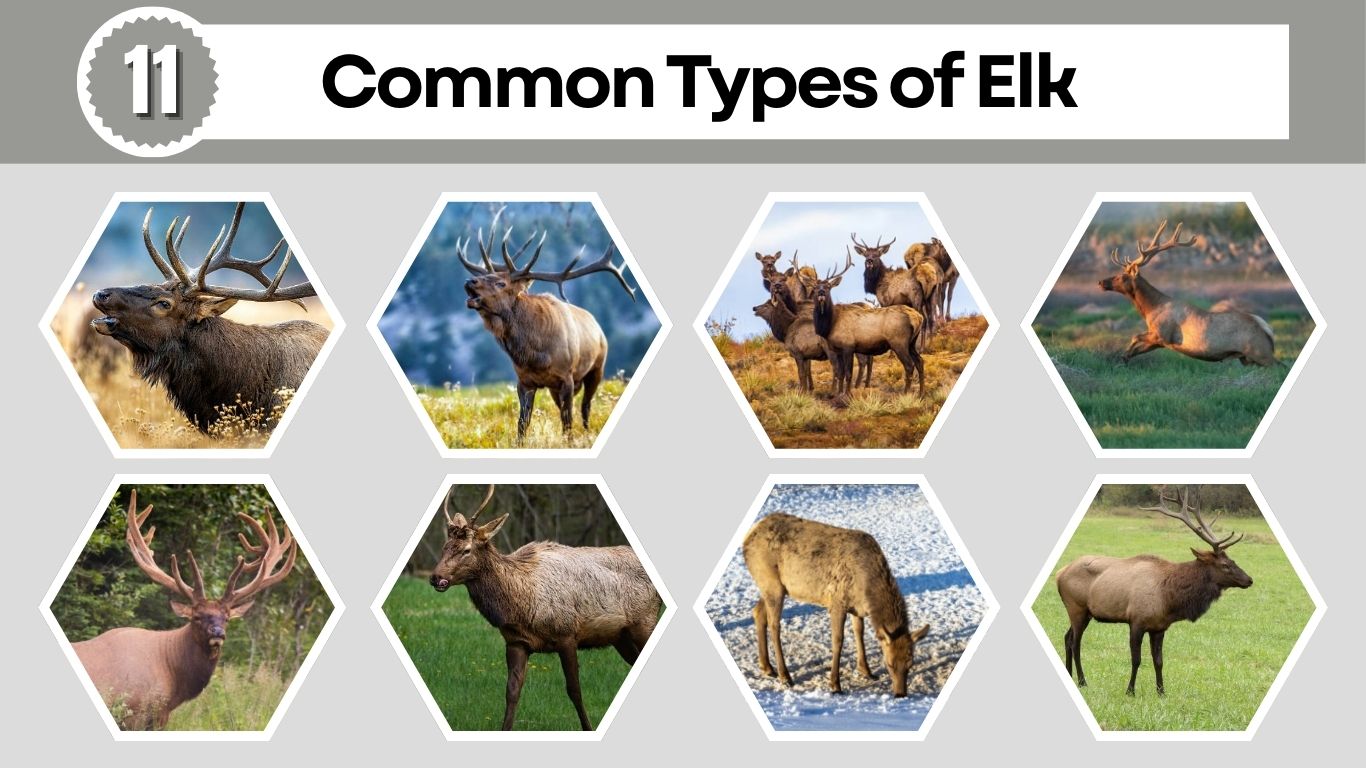
Elk are among the largest members of the deer family and are known for their impressive antlers, powerful bodies, and haunting bugling calls during the breeding season. They inhabit a wide range of environments, from mountain forests and alpine meadows to grasslands and cold northern woodlands. Found mainly in North America and Asia, elk play an important ecological role as grazers and browsers. This guide explores 11 common types of elk, highlighting the diversity, adaptations, and habitats of these magnificent animals.
1. American Elk (Wapiti)
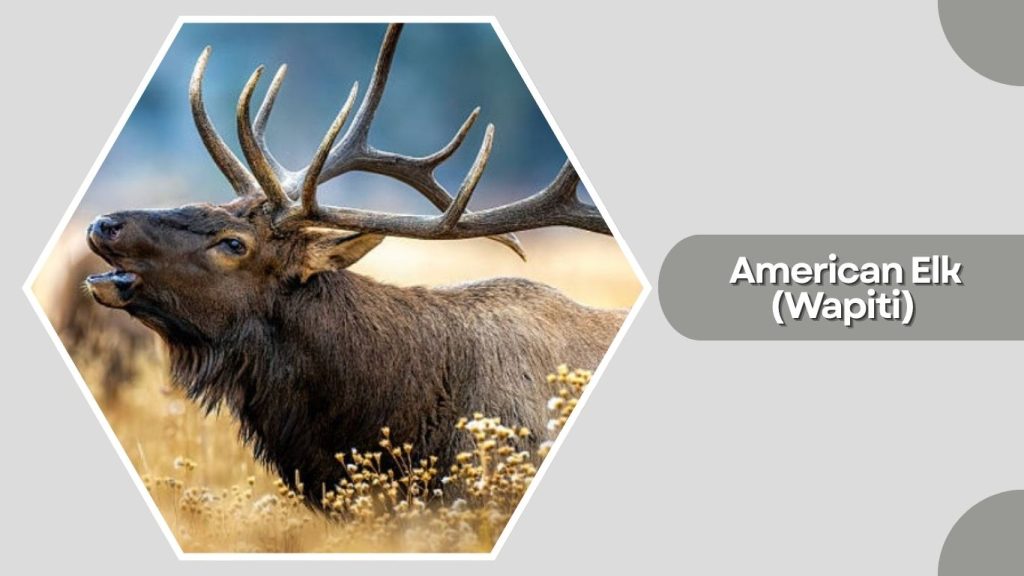
The American elk, also known as the wapiti, is one of the largest members of the deer family. It is native to North America and parts of eastern Asia and is famous for its impressive antlers, powerful build, and loud bugling calls during the breeding season.
Identification
- Large deer with long legs and heavy body
- Males grow massive branching antlers
- Reddish-brown coat with darker neck
- Pale rump patch
- Long face and large ears
- Males shed antlers every year
Habitat
American elk live in a wide variety of habitats, including forests, mountain valleys, grasslands, and forest edges. They often move between higher elevations in summer and lower valleys in winter.
Diet
They are herbivores that feed on grasses, sedges, leaves, shrubs, bark, and twigs. Their diet changes seasonally depending on what plants are available.
Behaviors and Lifecycle
American elk are social and usually live in herds. During the fall rut, males bugle loudly to attract females and challenge rivals. Females give birth to a single calf after about eight and a half months. Calves can stand within hours and stay with the herd.
2. American Elk (Wapiti)
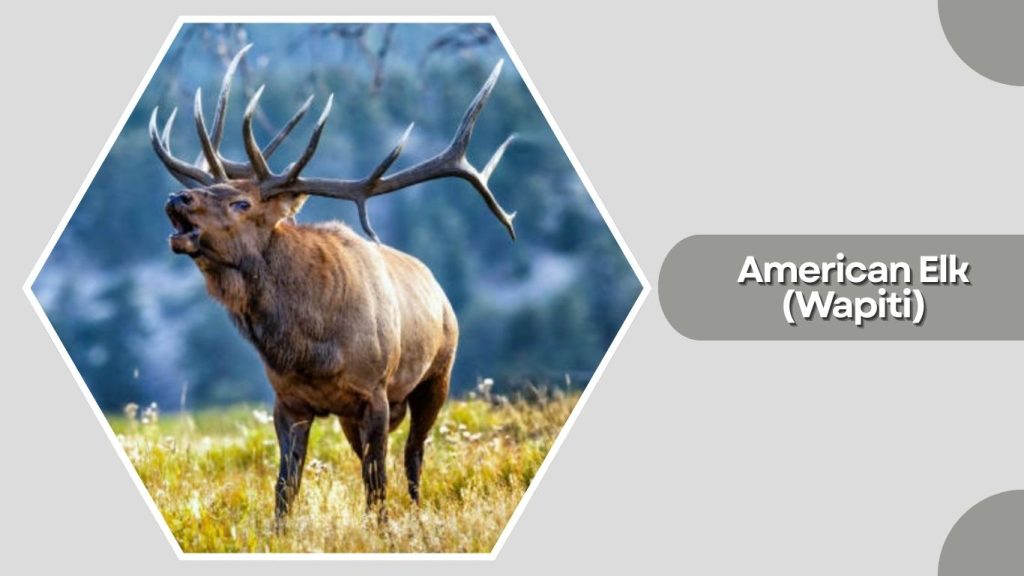
The American elk, also known as the wapiti, is one of the largest members of the deer family. It is native to North America and parts of eastern Asia and is famous for its impressive antlers, powerful build, and loud bugling calls during the breeding season.
Identification
- Large deer with long legs and heavy body
- Males grow massive branching antlers
- Reddish-brown coat with darker neck
- Pale rump patch
- Long face and large ears
- Males shed antlers every year
Habitat
American elk live in a wide variety of habitats, including forests, mountain valleys, grasslands, and forest edges. They often move between higher elevations in summer and lower valleys in winter.
Diet
They are herbivores that feed on grasses, sedges, leaves, shrubs, bark, and twigs. Their diet changes seasonally depending on what plants are available.
Behaviors and Lifecycle
American elk are social and usually live in herds. During the fall rut, males bugle loudly to attract females and challenge rivals. Females give birth to a single calf after about eight and a half months. Calves can stand within hours and stay with the herd.
3. Rocky Mountain Elk
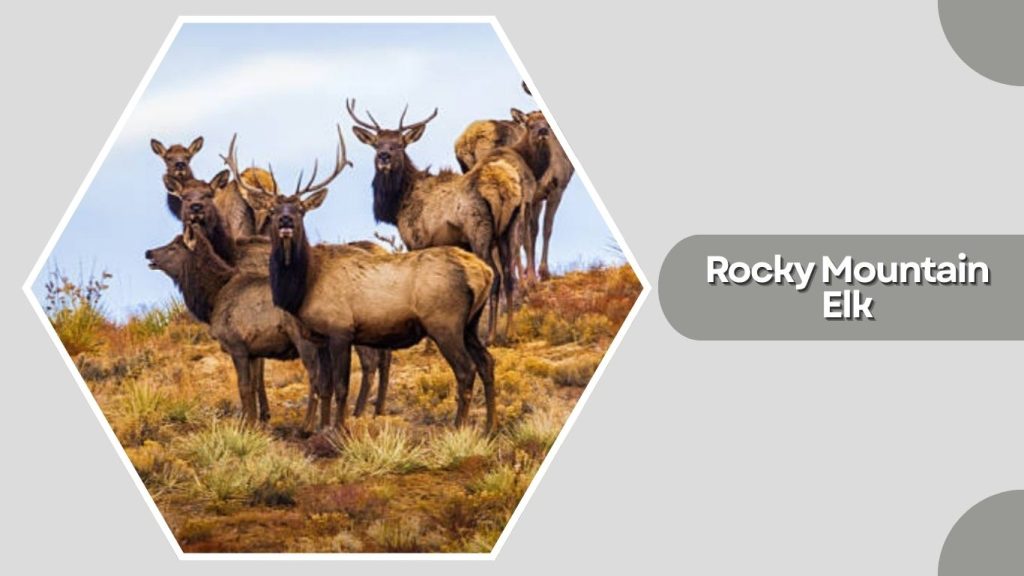
The Rocky Mountain elk is the most widespread elk subspecies in North America. It is slightly smaller than the Roosevelt elk but is highly adaptable and thrives in many different environments.
Identification
- Large deer with long legs and strong body
- Males have tall, branching antlers
- Light brown to tan coat
- Dark mane on the neck
- Cream-colored rump patch
- Slender face with large ears
Habitat
Rocky Mountain elk live in mountain forests, open woodlands, alpine meadows, grasslands, and forest edges. They often migrate seasonally between high summer ranges and lower winter grounds.
Diet
They are herbivores that feed on grasses, forbs, shrubs, leaves, bark, and twigs. Their diet shifts with the seasons, focusing on fresh grasses in summer and woody plants in winter.
Behaviors and Lifecycle
They are social animals and form large herds outside the breeding season. During the fall rut, males bugle loudly and compete for females. Females give birth to one calf in late spring or early summer.
4. Tule Elk
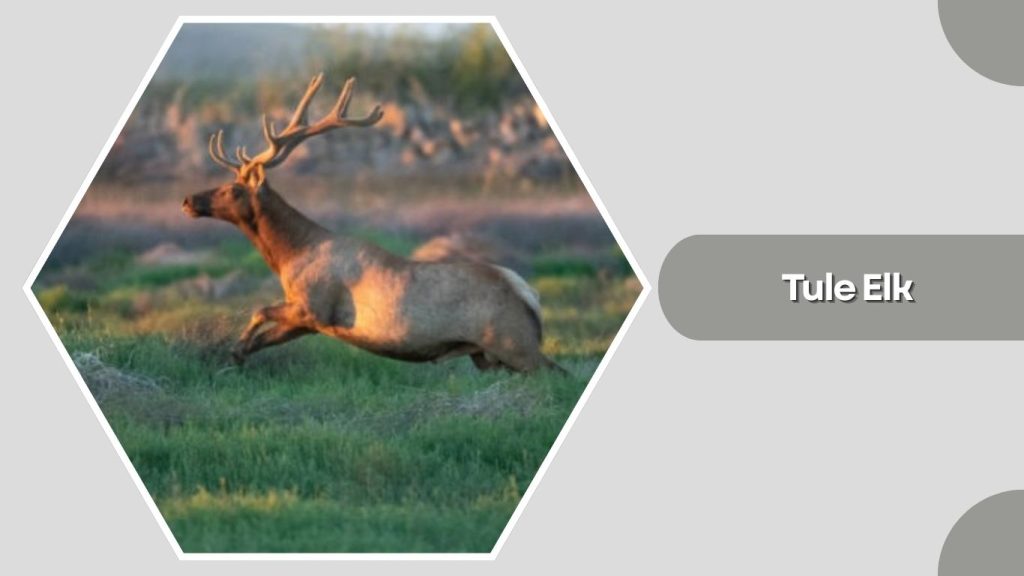
The tule elk is the smallest subspecies of American elk and is found only in California. Once nearly extinct, it has been successfully reintroduced and now survives in protected areas and reserves.
Identification
- Smallest elk subspecies
- Slender body and long legs
- Light brown to tan coat
- Darker neck and shoulders
- Creamy rump patch
- Males grow relatively thin antlers
Habitat
Tule elk inhabit grasslands, marshes, oak savannas, open valleys, and coastal plains. They prefer open habitats with nearby wetlands or freshwater sources.
Diet
They feed mainly on grasses, sedges, herbs, leaves, and shoots. In dry seasons, they also eat shrubs and bark.
Behaviors and Lifecycle
Tule elk live in herds and are most active in the early morning and evening. During the breeding season, males bugle and defend harems. Females give birth to a single calf after about eight and a half months of pregnancy.
5. Manitoban Elk
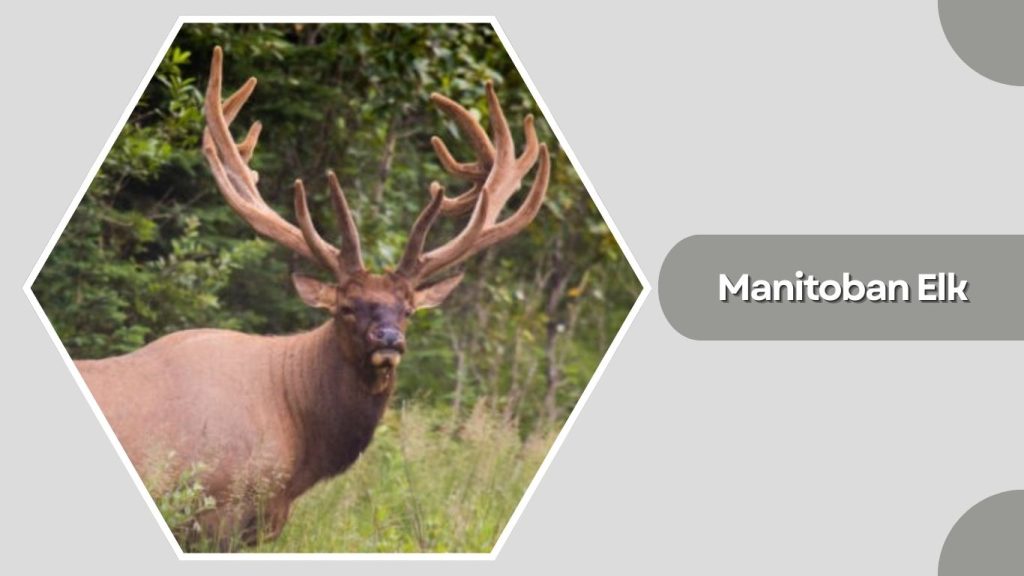
The Manitoban elk is a large and robust subspecies of American elk found mainly in central Canada and parts of the northern United States. It is well known for its heavy body, strong legs, and thick winter coat, which helps it survive long, cold winters. Because of its size and adaptability, the Manitoban elk has also been introduced into other regions for conservation and wildlife management.
Identification
The Manitoban elk is larger than the Rocky Mountain elk but usually slightly smaller than the Roosevelt elk. Males develop broad, heavy antlers with well-spaced tines that can spread widely. Their coat is dark brown to chocolate in winter, becoming lighter in summer. A pale yellowish rump patch is clearly visible. They have long legs, a thick neck mane in males, and a broad head with large, alert ears.
Habitat
Manitoban elk inhabit boreal forests, open woodlands, grasslands, parklands, and forest edges. They are commonly found near river valleys, lakes, and wetlands where vegetation is abundant. These elk often migrate short distances between seasonal feeding grounds, moving to sheltered forests in winter and open meadows in summer.
Diet
They are strict herbivores. Their diet includes grasses, sedges, herbs, leaves, shrubs, bark, and young tree shoots. In summer, they prefer fresh green plants, while in winter they rely more on woody vegetation and dried grasses dug out from under snow.
Behaviors and Lifecycle
Manitoban elk are social animals and usually live in herds separated by sex outside the breeding season. During the fall rut, males bugle loudly, wallow in mud, and compete with rival bulls. After a gestation of about 8.5 months, females give birth to a single calf in late spring. Calves can stand within hours and gradually join the herd within a few weeks.
6. Manitoban Elk
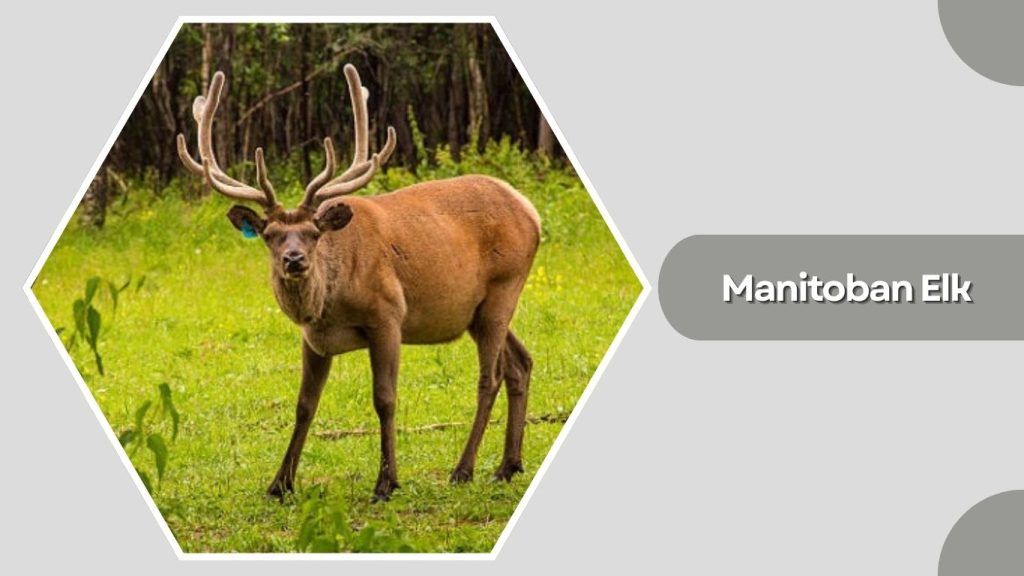
The Manitoban elk is a large and robust subspecies of American elk found mainly in central Canada and parts of the northern United States. It is well known for its heavy body, strong legs, and thick winter coat, which helps it survive long, cold winters. Because of its size and adaptability, the Manitoban elk has also been introduced into other regions for conservation and wildlife management.
Identification
The Manitoban elk is larger than the Rocky Mountain elk but usually slightly smaller than the Roosevelt elk. Males develop broad, heavy antlers with well-spaced tines that can spread widely. Their coat is dark brown to chocolate in winter, becoming lighter in summer. A pale yellowish rump patch is clearly visible. They have long legs, a thick neck mane in males, and a broad head with large, alert ears.
Habitat
Manitoban elk inhabit boreal forests, open woodlands, grasslands, parklands, and forest edges. They are commonly found near river valleys, lakes, and wetlands where vegetation is abundant. These elk often migrate short distances between seasonal feeding grounds, moving to sheltered forests in winter and open meadows in summer.
Diet
They are strict herbivores. Their diet includes grasses, sedges, herbs, leaves, shrubs, bark, and young tree shoots. In summer, they prefer fresh green plants, while in winter they rely more on woody vegetation and dried grasses dug out from under snow.
Behaviors and Lifecycle
Manitoban elk are social animals and usually live in herds separated by sex outside the breeding season. During the fall rut, males bugle loudly, wallow in mud, and compete with rival bulls. After a gestation of about 8.5 months, females give birth to a single calf in late spring. Calves can stand within hours and gradually join the herd within a few weeks.
7. Eastern Elk (Extinct)
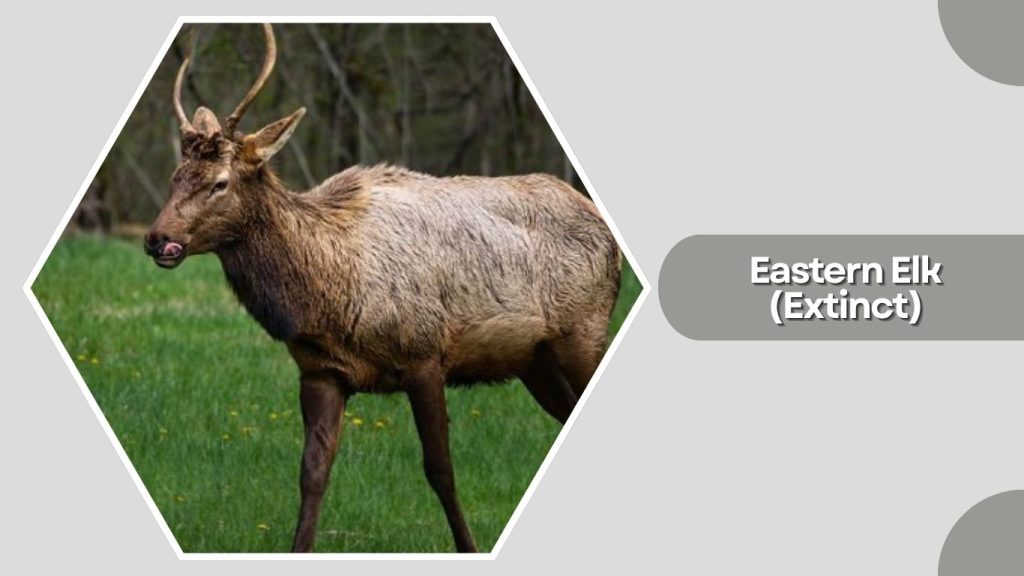
The eastern elk was once native to the eastern regions of North America. It disappeared in the late 1800s due to overhunting and habitat destruction following European settlement. It was one of the largest elk forms in North America.
Identification
- Very large and heavy-bodied elk
- Males had massive, wide-spreading antlers
- Dark brown body coat
- Thick neck and shoulders
- Pale rump patch
- Long, powerful legs
Habitat
Eastern elk lived in mixed forests, river valleys, open woodlands, and grasslands. They preferred forest edges and open clearings where grazing and browsing plants were both available.
Diet
They were herbivores that fed on grasses, leaves, shrubs, bark, twigs, and aquatic plants. Their flexible diet helped them survive across many habitat types.
Behaviors and Lifecycle
Eastern elk were social animals and lived in herds. During the fall rut, males bugled loudly and competed for females. Females gave birth to a single calf after about 8.5 months. Like modern elk, calves were hidden in vegetation during their early life.
8. Merriam’s Elk (Extinct)
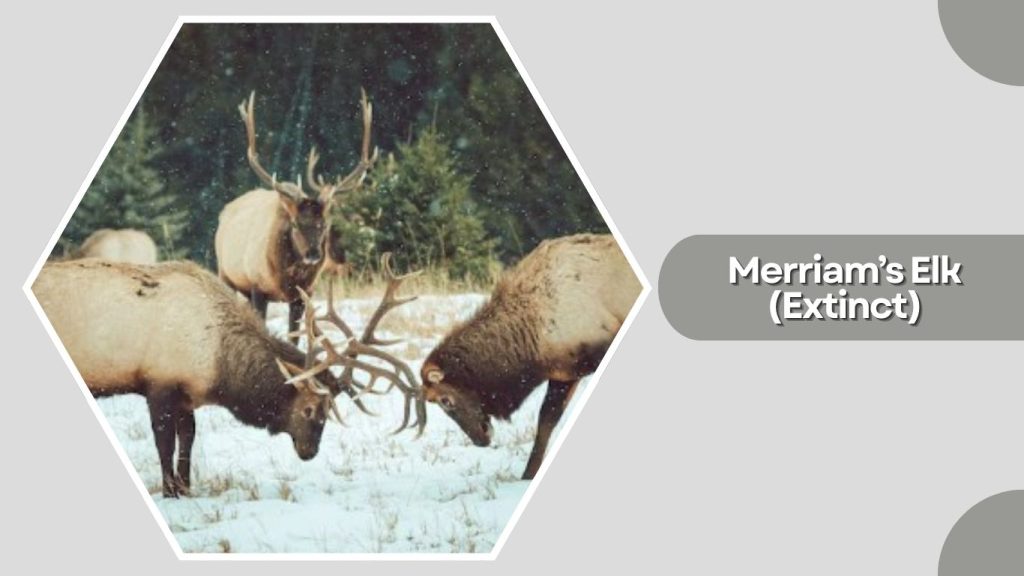
Merriam’s elk was a subspecies of American elk that once lived in the southwestern United States, especially Arizona and New Mexico. It became extinct in the early 1900s due to excessive hunting and loss of habitat.
Identification
- Large elk with long legs
- Males had tall, heavy antlers
- Dark brown body coat
- Thick neck mane
- Pale rump patch
- Broad head with large ears
Habitat
Merriam’s elk inhabited pine forests, mountain plateaus, open woodlands, and grassland valleys. They often moved between high elevations in summer and lower areas in winter.
Diet
They were herbivores that fed on grasses, shrubs, leaves, bark, and twigs. Seasonal plants formed the bulk of their diet.
Behaviors and Lifecycle
They lived in herds and followed seasonal migration patterns. During the breeding season, males competed for females and bugled loudly. Females gave birth to one calf after about eight and a half months of pregnancy.
9. Altai Elk
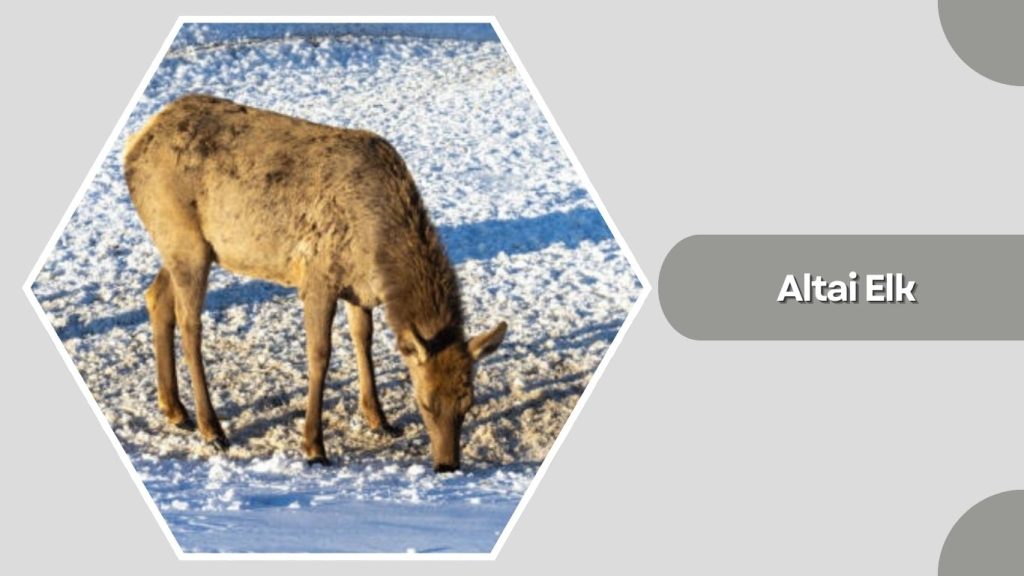
The Altai elk is a large Asian elk found in the Altai Mountains and surrounding regions of Central Asia. It is well adapted to cold climates and mountainous terrain, with strong legs and a thick winter coat.
Identification
- Large, heavy-bodied elk
- Males have long, wide antlers with multiple points
- Thick brown to dark brown coat
- Dense winter fur
- Pale rump patch
- Strong neck and shoulders
Habitat
Altai elk inhabit mountain forests, alpine meadows, river valleys, and cold temperate woodlands. They often migrate seasonally between high summer pastures and lower forested valleys in winter.
Diet
They feed on grasses, herbs, leaves, shrubs, bark, and young tree shoots. In winter, they rely heavily on woody plants and dried grasses.
Behaviors and Lifecycle
Altai elk live in herds and are well adapted to deep snow and rugged landscapes. During the breeding season, males bugle loudly and defend groups of females. Females give birth to a single calf in late spring or early summer.
10. Tien Shan Elk
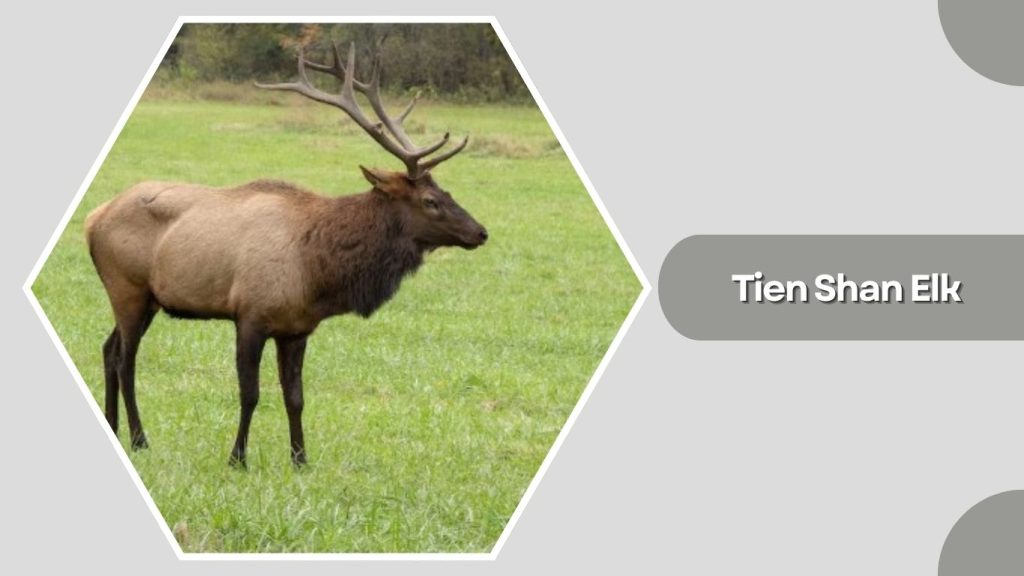
The Tien Shan elk is a large Asian elk found in the Tien Shan mountain range of Central Asia, including parts of Kazakhstan, Kyrgyzstan, and western China. It is adapted to high-altitude environments and cold winters.
Identification
- Large, powerful elk
- Males grow long, branching antlers
- Thick, dark brown winter coat
- Strong shoulders and long legs
- Pale rump patch
- Broad head with large ears
Habitat
Tien Shan elk inhabit mountain forests, alpine meadows, river valleys, and highland grasslands. They migrate seasonally, moving to higher elevations in summer and sheltered valleys in winter.
Diet
They feed on grasses, herbs, shrubs, leaves, bark, and young shoots. Seasonal vegetation forms the core of their diet.
Behaviors and Lifecycle
They live in herds and are active mainly at dawn and dusk. During the autumn rut, males bugle loudly and compete for females. After about 8.5 months of pregnancy, females give birth to a single calf, which stays hidden for the first few weeks.
11. Siberian Elk
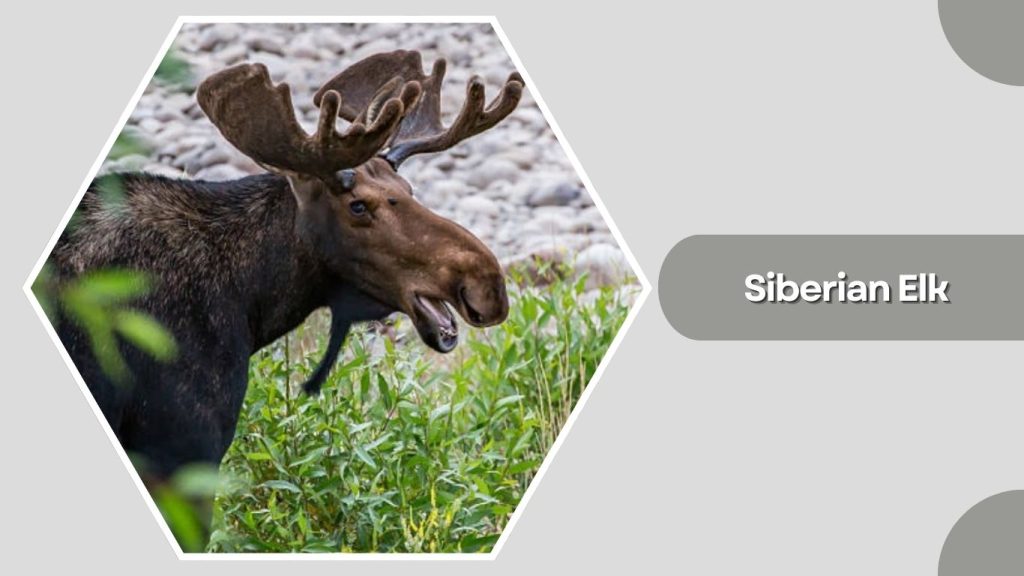
The Siberian elk is a large Asian elk found across Siberia and parts of northeastern Asia. It is one of the biggest Asian elk types and is well adapted to extremely cold climates.
Identification
- Very large, heavy-bodied elk
- Males have massive, wide antlers
- Thick dark brown winter coat
- Long legs built for deep snow
- Pale rump patch
- Broad head and thick neck
Habitat
Siberian elk inhabit boreal forests, taiga, mountain slopes, and river valleys. They prefer cold, forested regions with open clearings for grazing.
Diet
They are herbivores that feed on grasses, herbs, leaves, shrubs, bark, twigs, and aquatic plants. In winter, they rely heavily on woody vegetation.
Behaviors and Lifecycle
Siberian elk live in herds and are well adapted to harsh winters. During the breeding season, males bugle loudly and fight rivals. Females give birth to a single calf after about eight and a half months. Calves can walk within hours and stay with the herd.