





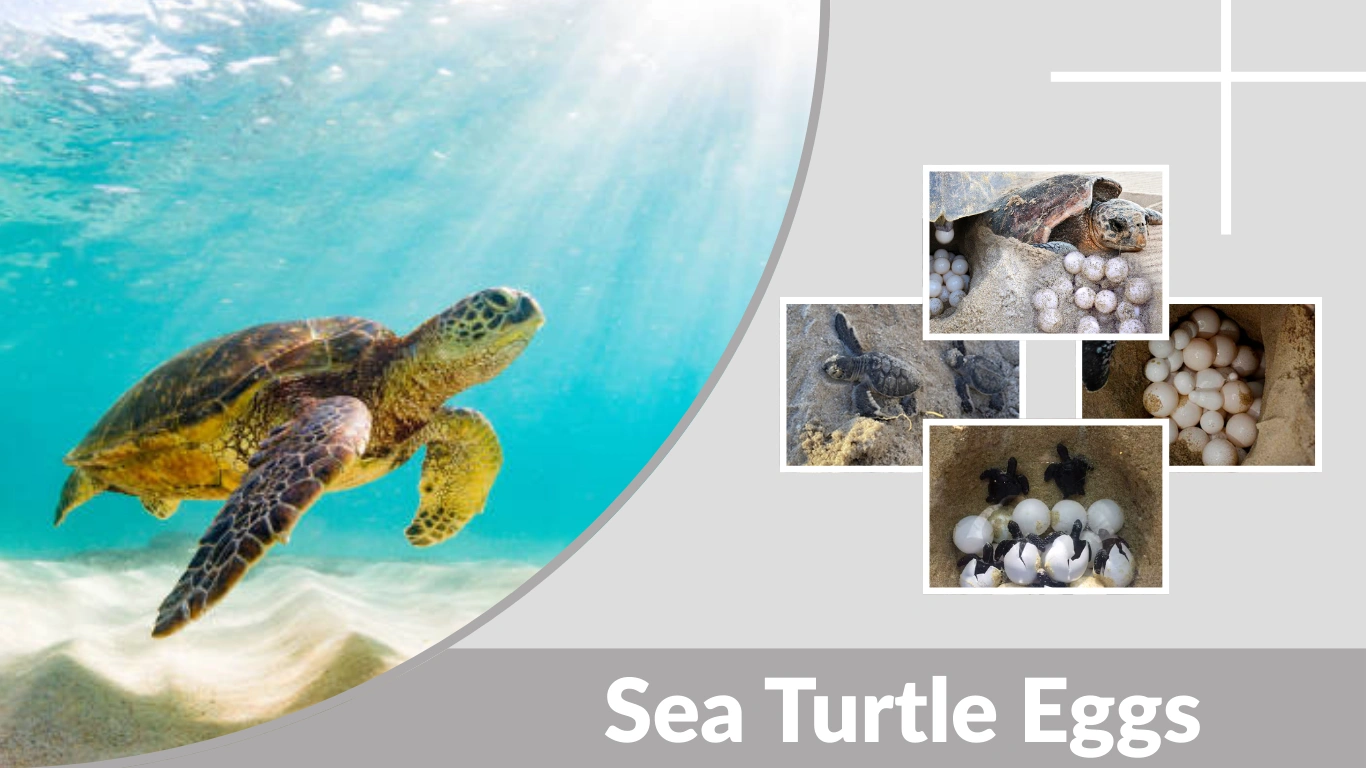
Sea turtle eggs are the beginning of one of the most remarkable life cycles in the natural world. Buried deep in warm beach sand, these soft-shelled eggs develop without any parental care, relying entirely on environmental conditions to survive. People often search for information about sea turtle eggs to learn how they are laid, how long they take to hatch, what they look like, and why so few survive. Understanding sea turtle eggs is essential to appreciating both the beauty and the vulnerability of these ancient marine reptiles.
What Are Sea Turtle Eggs?
Sea turtle eggs are soft, round, and leathery, very different from the hard eggs laid by birds. Their flexible shells allow them to absorb moisture and exchange gases through the sand, which is critical for embryo development. Each egg contains a yolk that provides all the nutrients needed for the growing hatchling.
Unlike birds, sea turtles do not incubate their eggs. Instead, warmth from the sun-heated sand controls development. This natural system has worked for millions of years, but modern threats now make egg survival far more difficult.
How Sea Turtles Lay Eggs
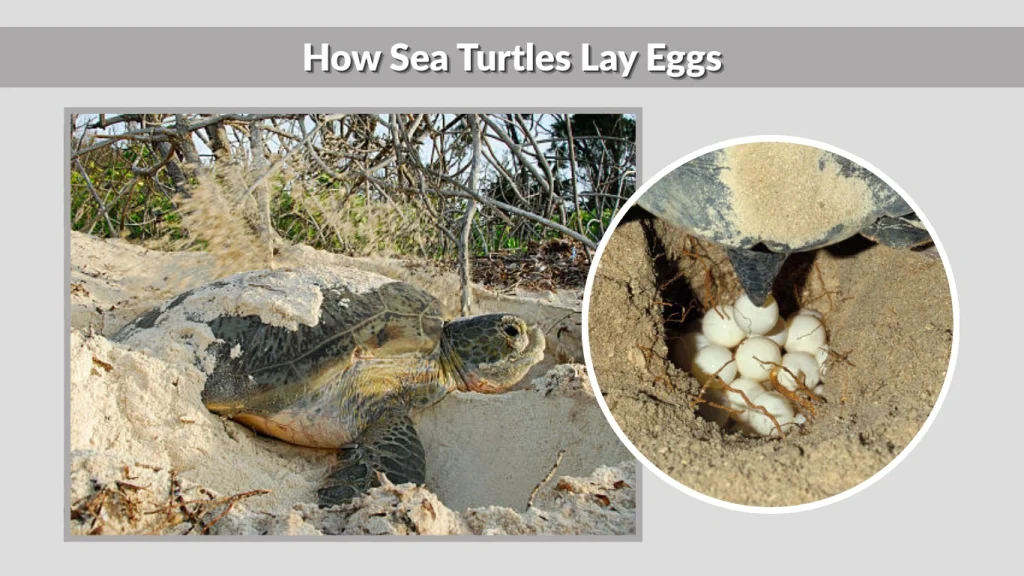
Female sea turtles return to sandy beaches to nest, often traveling hundreds or even thousands of miles back to the region where they were born. Nesting usually happens at night, when cooler temperatures and darkness reduce the risk of predators and overheating.
After emerging from the ocean, the female slowly crawls up the beach to a suitable nesting spot above the high-tide line. She uses her front flippers to dig a shallow body pit and her rear flippers to carve a deep, flask-shaped egg chamber.
Once the chamber is ready, the turtle enters a trance-like state and begins laying eggs, dropping them gently into the nest. After laying is complete, she carefully fills the hole with sand and uses her flippers to camouflage the site before returning to the sea, leaving the eggs to develop on their own.
Sea Turtle Nesting Process Step by Step
- Crawling ashore under darkness
- Digging a body pit and egg chamber
- Laying dozens of soft eggs
- Covering the nest with sand
- Disguising the area and returning to the ocean
What Do Sea Turtle Eggs Look Like?
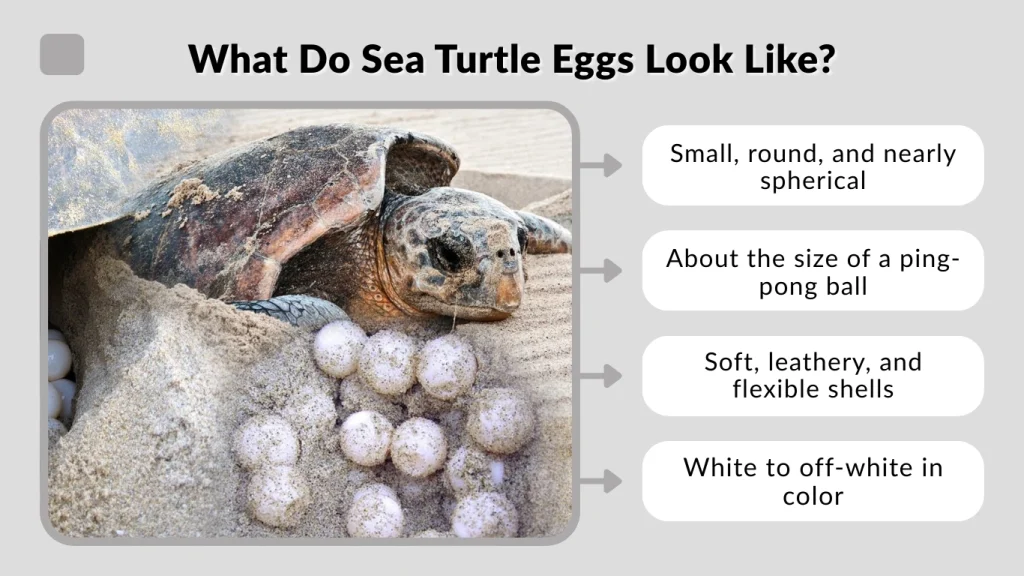
Sea turtle eggs are designed to survive burial in warm, shifting sand.
- Small, round, and nearly spherical
- About the size of a ping-pong ball
- Soft, leathery, and flexible shells
- White to off-white in color
- Laid in tightly packed clusters
Their soft texture prevents cracking when sand shifts and allows oxygen to pass through the shell as the embryo grows.
How Many Eggs Do Sea Turtles Lay?
The number of eggs laid varies by species, but most sea turtles lay between 80 and 120 eggs per nest. Larger species may lay even more. During a nesting season, a single female can create three to six nests, sometimes laying several hundred eggs in total.
Despite these large numbers, only a tiny percentage of hatchlings will survive to adulthood. This is why sea turtles evolved to lay many eggs rather than investing care in a few offspring.
Sea Turtle Egg Incubation
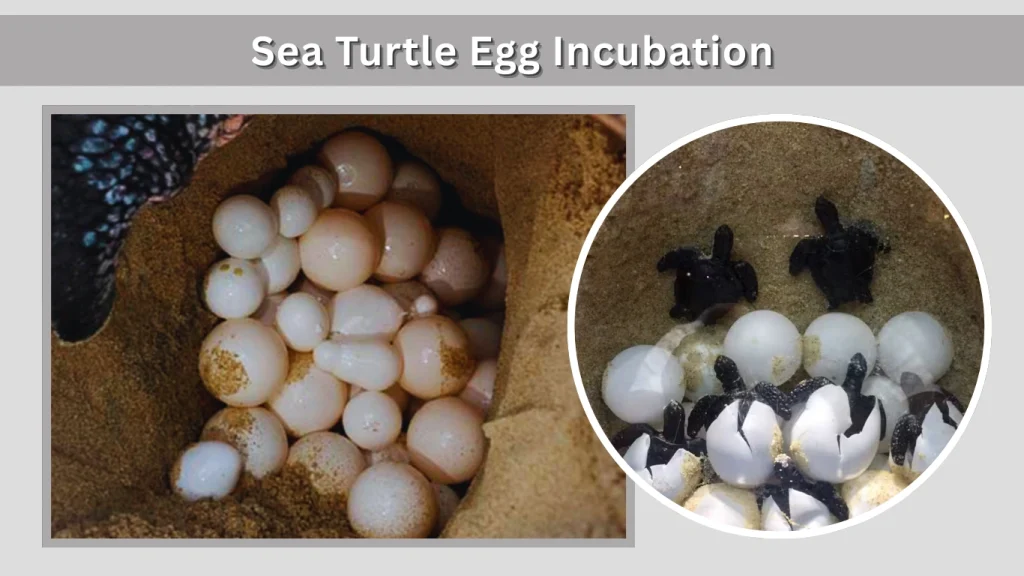
Once buried, sea turtle eggs incubate beneath the sand. The developing embryos rely on surrounding warmth, moisture, and oxygen. Unlike birds, sea turtles provide no further care.
Incubation usually lasts 45 to 70 days, depending on species and environmental conditions. Warmer sand speeds up development, while cooler sand slows it down. Rainfall can help regulate nest temperature but too much moisture may flood the nest and kill embryos.
How Long Do Sea Turtle Eggs Take to Hatch?
Most sea turtle eggs hatch after about two months, but this can range from six to ten weeks. Temperature, nest depth, and sand type all influence incubation time. Nests exposed to intense sun often hatch sooner than shaded nests.
Temperature and Sea Turtle Eggs
Temperature plays a powerful role in sea turtle egg development. Sea turtles exhibit temperature-dependent sex determination, meaning sand temperature controls whether hatchlings become male or female.
Cooler sand generally produces more males, while warmer sand produces more females. Extremely high temperatures can kill embryos. With global temperatures rising, many nesting beaches are producing mostly female hatchlings, which could threaten future breeding balance.
Sea Turtle Egg Predators
Sea turtle eggs are a valuable food source for many animals. Raccoons, crabs, birds, monitor lizards, pigs, and dogs often dig up nests. In some areas, humans still illegally collect eggs for food or sale.
Even when nests remain undisturbed, flooding, erosion, and beach development can destroy them. For this reason, egg survival rates are naturally low and even lower in heavily populated coastal areas.
Sea Turtle Egg Hatching Process

As hatchlings develop inside the eggs, they absorb the yolk and grow specialized egg teeth, which they use to break through the shell. Hatching usually happens at night when sand is cooler and predators are fewer.
After emerging from their shells, hatchlings work together to dig upward. This group movement loosens the sand and helps them reach the surface more easily.
After days of upward movement, the hatchlings finally break through the surface. Often, dozens emerge at once, rushing toward the brightest horizon, which under natural conditions is the reflection of moonlight on the ocean. This synchronized emergence overwhelms predators and increases the chance that some will survive the dangerous journey to the sea.
Why So Few Sea Turtle Eggs Survive
Although sea turtles lay large numbers of eggs, survival rates are extremely low. It is estimated that only about one in a thousand hatchlings will reach adulthood. Many eggs never hatch due to flooding, temperature extremes, fungal growth, or suffocation from compacted sand.
Even successfully hatched turtles face immediate danger. Birds, crabs, and mammals prey heavily on hatchlings as they cross the beach. Once in the ocean, fish and larger predators further reduce their numbers. This high natural mortality is why protecting eggs and nesting beaches is so critical to population survival.
Are Sea Turtle Eggs Protected by Law?
Sea turtle eggs are protected by international and national wildlife laws in most countries. All sea turtle species are listed under CITES, making it illegal to trade their eggs internationally. Many nations have additional laws that ban the collection, sale, or possession of sea turtle eggs.
These protections exist because harvesting eggs dramatically reduces future populations. Since sea turtles take decades to mature, the loss of eggs today affects ocean ecosystems for generations.
Conservation Efforts for Sea Turtle Eggs
Conservation organizations around the world work to protect sea turtle eggs through active beach monitoring programs. Volunteers patrol nesting beaches at night, marking nests, recording data, and protecting them from predators and human disturbance.
In high-risk areas, eggs may be relocated to hatcheries or safer zones away from flooding and heavy predation. Efforts are also made to control artificial lighting, which can disorient hatchlings and draw them away from the ocean.
Public education is another major focus. Signs, beach closures, and community outreach help ensure that tourists and locals respect nesting turtles and avoid damaging nests.
Interesting Facts About Sea Turtle Eggs
Sea turtle eggs are uniquely adapted for survival in sand. Their round shape allows them to fit tightly together, reducing air gaps and helping maintain stable temperatures. Hatchlings often delay emergence until most siblings are ready, allowing a mass breakout that improves survival chances.
Chemical signals released by the first hatchlings may help coordinate group movement. Some nests produce both male and female turtles simply because temperature varies between the top and bottom layers of sand.
FAQs
How long do sea turtle eggs take to hatch?
Sea turtle eggs usually take between 45 and 70 days to hatch. The exact time depends on species, sand temperature, moisture, and nest depth. Warmer sand speeds up development, while cooler sand slows it.
What do sea turtle eggs look like?
Sea turtle eggs are small, round, and white, with soft, leathery shells. They are about the size of a ping-pong ball and are laid in tightly packed clusters deep inside sandy nests.
Why are sea turtle eggs soft?
Their soft shells allow oxygen and moisture to pass through, which is necessary for embryo development underground. Flexible shells also prevent cracking as sand shifts above the nest.
Are sea turtle eggs edible?
Although sea turtle eggs have been eaten in some cultures, collecting or eating them is illegal in most countries. Removing eggs threatens sea turtle populations and is heavily regulated by wildlife protection laws.
How many sea turtle eggs survive?
Only a very small percentage of sea turtle eggs survive to adulthood, often estimated at one in a thousand. Predators, environmental conditions, and human activity all contribute to high mortality rates.