

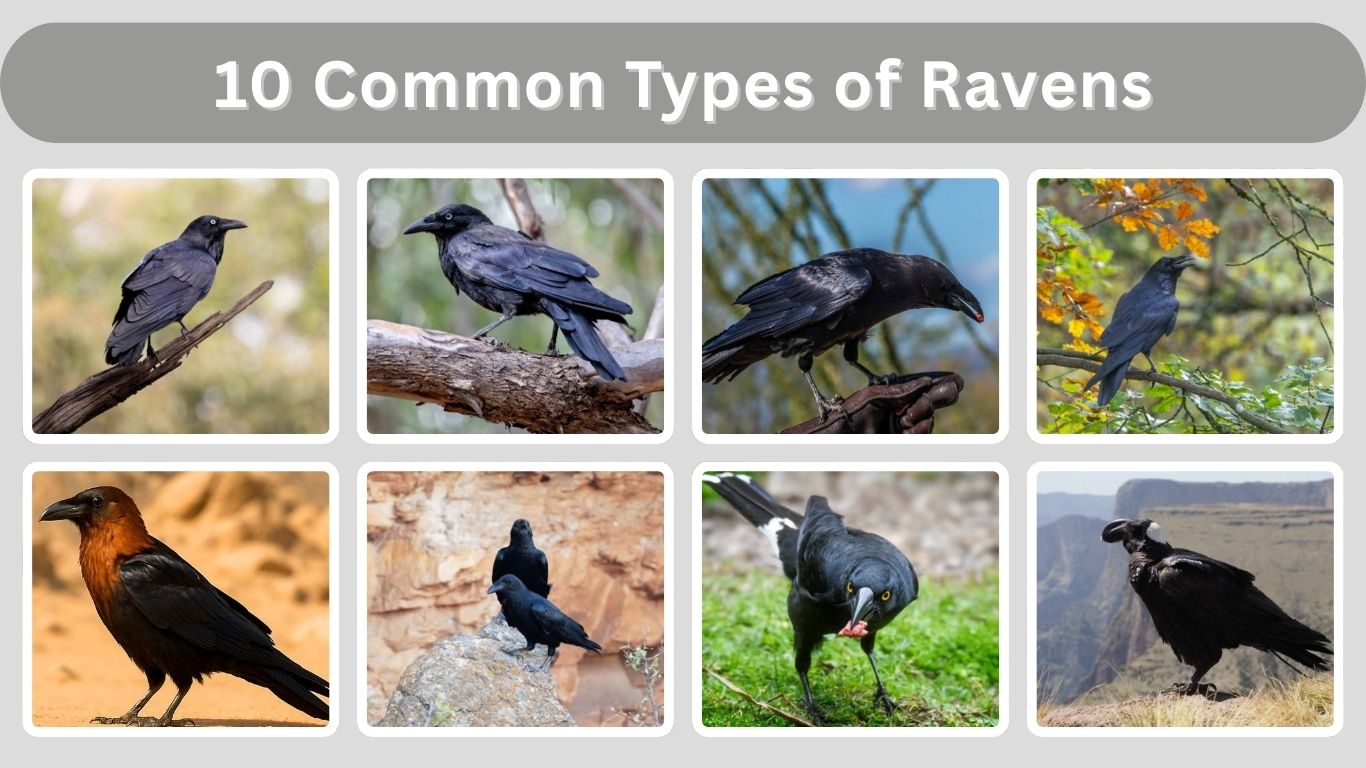
Ravens are large, intelligent birds known for their glossy black feathers, powerful beaks, and impressive problem-solving abilities. Found across many parts of the world, they thrive in forests, deserts, mountains, coastal regions, and even near human settlements. Ravens play important roles in ecosystems as scavengers and predators, helping to keep environments clean and balanced. Although they are often confused with crows, ravens are usually larger, louder, and more solitary. This guide introduces 10 common types of ravens, highlighting their diversity and global presence.
1. Common Raven
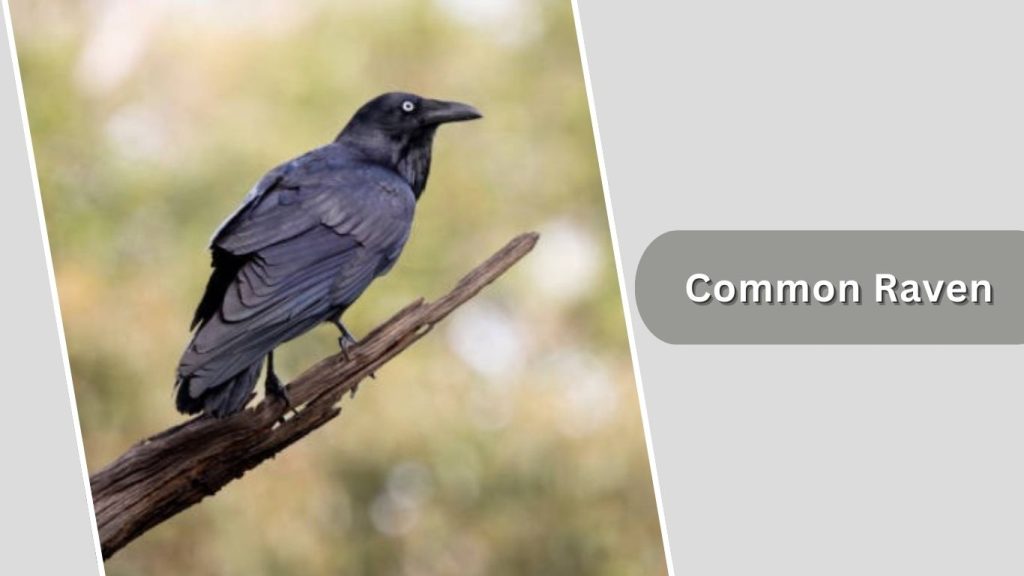
The common raven is one of the largest and most intelligent members of the crow family. It is found across the Northern Hemisphere and is known for its deep croaking call, glossy black feathers, and remarkable problem-solving abilities. Common ravens adapt easily to wild landscapes as well as areas close to human settlements.
Identification
- Large black bird with a thick, curved bill
- Shiny black feathers with a blue or purple gloss
- Long, wedge-shaped tail
- Strong wings with finger-like tips
- Heavy head and shaggy throat feathers
- Deep, harsh croaking call
Habitat
Common ravens live in a wide range of habitats including forests, mountains, tundra, deserts, coastal cliffs, and open countryside. They are also seen near farms and towns, especially where food is available. Their adaptability allows them to survive in both very cold and very hot environments.
Diet
Common ravens are omnivorous. They eat insects, small mammals, birds, eggs, carrion, fruits, seeds, and human food scraps. They are also known to store extra food and return later, showing strong memory skills.
Behaviors and Lifecycle
Common ravens are highly intelligent and playful birds. They often soar, tumble in the air, and use tools. They usually mate for life and build large stick nests on cliffs or tall trees. Both parents care for the chicks, which fledge after about five to six weeks.
2. Australian Raven
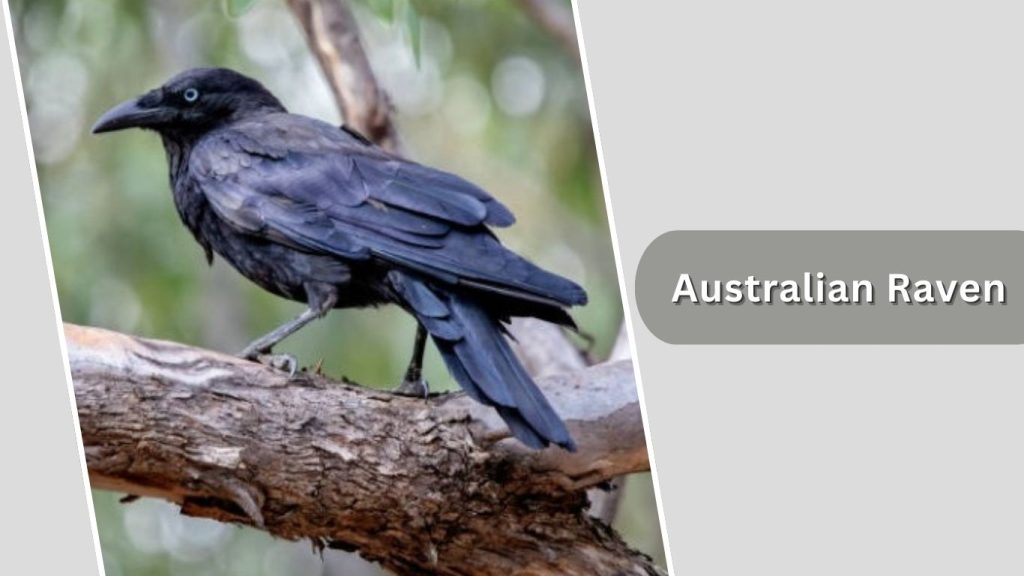
The Australian raven is the largest and most widespread raven species in Australia. It is a highly intelligent, adaptable bird known for its loud, drawn-out calls and glossy black appearance. Australian ravens are commonly seen flying over open country, perched on trees, or walking confidently on the ground while searching for food.
Identification
- Large black bird with glossy feathers
- Thick, powerful black bill
- Long wings with finger-like tips
- Shaggy throat feathers visible when calling
- Long, slightly wedge-shaped tail
- Pale eyes in adults
Habitat
Australian ravens live in woodlands, open forests, grasslands, farmland, coastal regions, and even large cities. They avoid very dense rainforests but thrive in open or semi-open landscapes where trees are scattered and food is easy to find.
Diet
They are omnivorous and highly opportunistic. Their diet includes insects, small animals, eggs, carrion, grains, fruits, nectar, and human food waste. They are also known to raid nests and scavenge along roadsides.
Behaviors and Lifecycle
Australian ravens are usually seen in pairs or small groups, though large flocks may gather around food sources. They mate for life and build large stick nests high in trees. Both parents care for the young. Chicks leave the nest after about five to six weeks but remain dependent for some time.
3. Little Raven
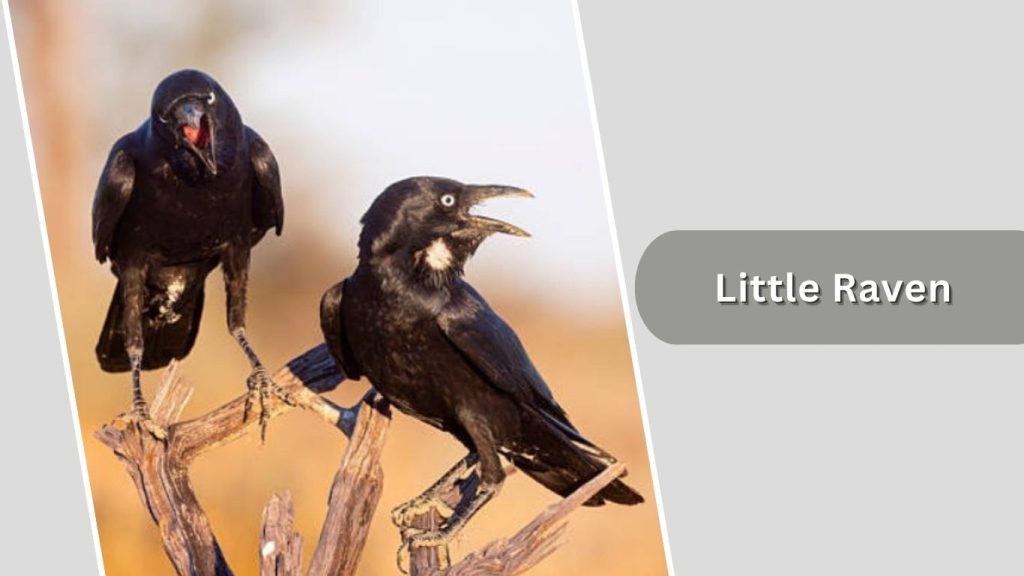
The little raven is a medium-sized raven species native to southern Australia. Despite its name, it is still a fairly large bird, closely related to the Australian raven, and is known for its intelligence, strong flight, and loud, harsh calls.
Identification
- Slightly smaller than the Australian raven
- Entirely black body with glossy sheen
- Thick black bill
- Shaggy throat feathers
- Long wings with fingered tips
- Pale eyes in adults
Habitat
Little ravens inhabit open forests, woodlands, grasslands, farmland, and coastal areas. They are especially common in southern Australia and Tasmania, often seen foraging on the ground or soaring high overhead.
Diet
They are omnivorous and feed on insects, grubs, small reptiles, carrion, seeds, fruits, grain, and food scraps. They frequently follow farming activity to catch disturbed insects.
Behaviors and Lifecycle
Little ravens are social birds, often seen in pairs or small flocks. They mate for life and build large stick nests in tall trees. Both parents share incubation and feeding duties. Young ravens fledge after about five weeks but may remain with the parents for several months.
4. Forest Raven
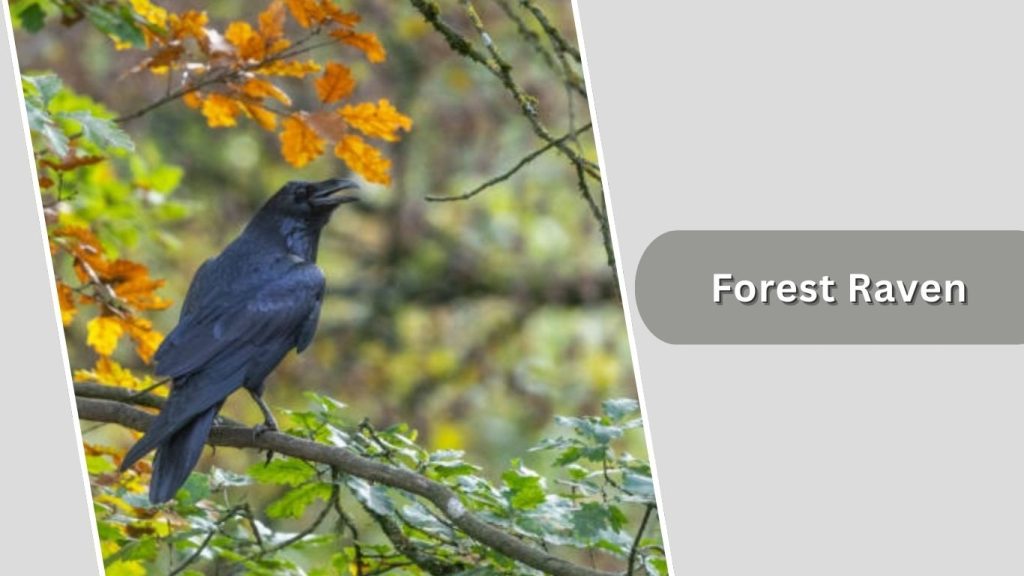
The forest raven is a large black raven native mainly to Tasmania and parts of southern Australia. It is well known for its deep, harsh calls and preference for forested landscapes. Compared to other Australian ravens, it often appears bulkier with a heavier bill.
Identification
- Large, heavy-bodied black bird
- Thick, powerful bill
- Shiny black feathers
- Shaggy throat feathers
- Broad wings with fingered tips
- Pale eyes in adults
Habitat
Forest ravens mainly inhabit temperate forests, coastal woodlands, mountain forests, and nearby open areas. They are especially common in Tasmania but are also found in parts of southern mainland Australia.
Diet
They are omnivorous and feed on insects, small animals, eggs, carrion, fruits, seeds, and human food waste. They often scavenge along coastlines and roadsides.
Behaviors and Lifecycle
Forest ravens are intelligent and adaptable. They usually live in pairs or family groups. Breeding pairs build large stick nests high in trees or on cliffs. Both parents incubate the eggs and care for the chicks until they fledge at about five to six weeks.
5. Chihuahuan Raven
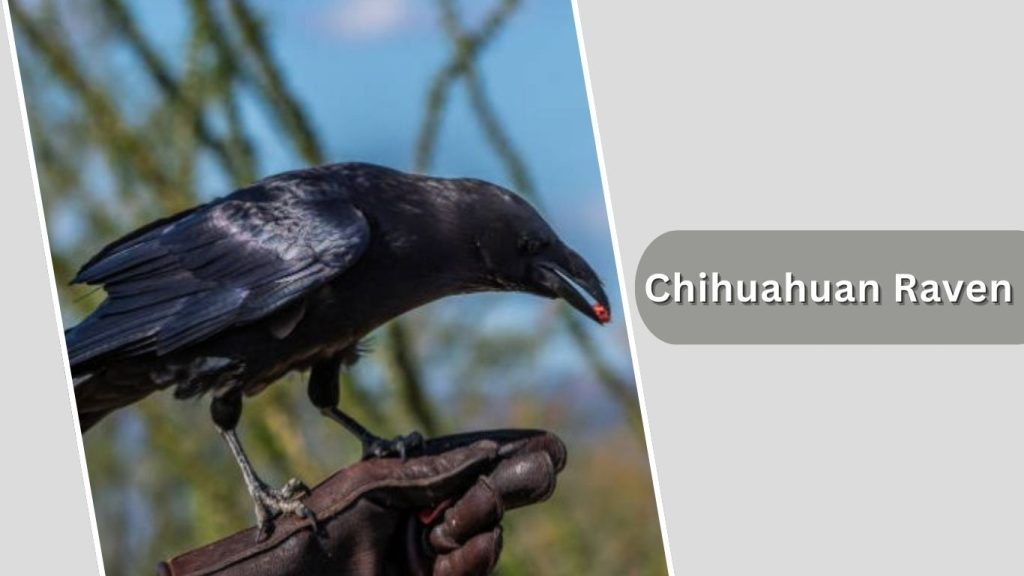
The Chihuahuan raven is a medium-sized raven native to the southwestern United States and northern Mexico. It is slimmer and more agile than the common raven and is well adapted to hot, dry landscapes where it often forages in open areas.
Identification
- Medium-sized black raven
- Slender bill compared to common raven
- Shiny black feathers
- Long narrow wings
- Wedge-shaped tail
- Shaggy throat feathers
Habitat
Chihuahuan ravens inhabit deserts, semi-deserts, grasslands, scrublands, and open plains. They are often seen near ranches, farmlands, and roadsides where food is available.
Diet
They are omnivorous and eat insects, small mammals, eggs, carrion, grains, fruits, seeds, and human food scraps. They commonly forage on the ground and follow livestock to catch disturbed insects.
Behaviors and Lifecycle
Chihuahuan ravens are usually seen in pairs or small flocks. They mate for life and build stick nests in trees, shrubs, or on man-made structures. Both parents incubate the eggs and feed the chicks. Young birds fledge after about five weeks.
6. Brown-necked Raven
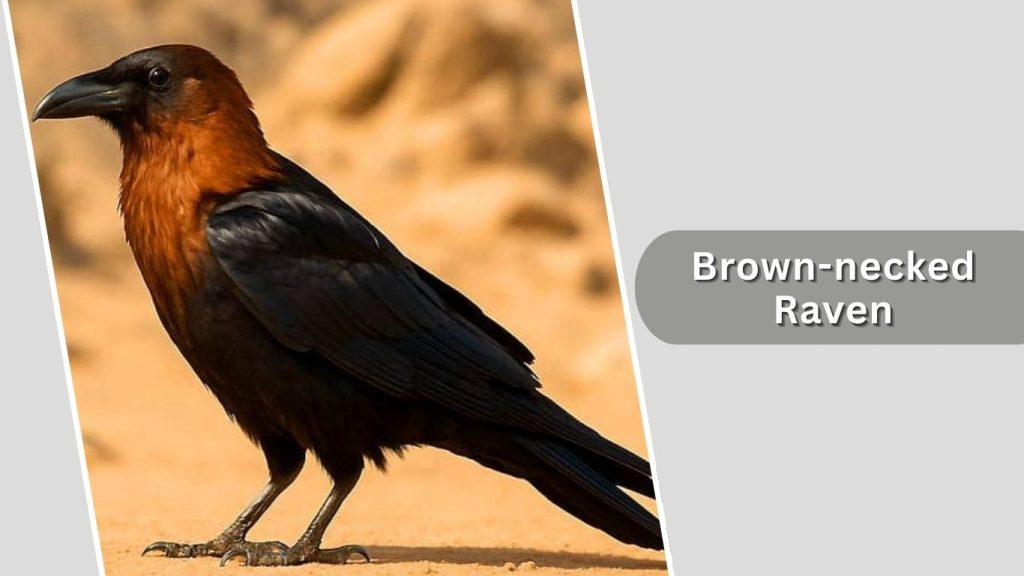
The brown-necked raven is a desert-adapted raven found across North Africa, the Middle East, and parts of South Asia. It is named for the faint brownish sheen on the neck and upper body, which is often visible in strong sunlight.
Identification
- Medium to large black raven
- Slight brownish tone on neck and head
- Strong curved bill
- Shiny black wings and tail
- Shaggy throat feathers
- Wedge-shaped tail
Habitat
Brown-necked ravens live in deserts, rocky valleys, dry savannas, and semi-arid plains. They are commonly seen around oases, coastal cliffs, and even cities in arid regions.
Diet
They are omnivorous and highly opportunistic. Their diet includes insects, small reptiles, rodents, eggs, carrion, fruits, seeds, and human food waste.
Behaviors and Lifecycle
Brown-necked ravens are intelligent and cautious birds. They are often seen alone or in pairs, but may gather in groups at feeding sites. They build nests on cliffs, rocky ledges, or tall structures. Both parents raise the chicks, which fledge after about five to six weeks.
7. Fan-tailed Raven
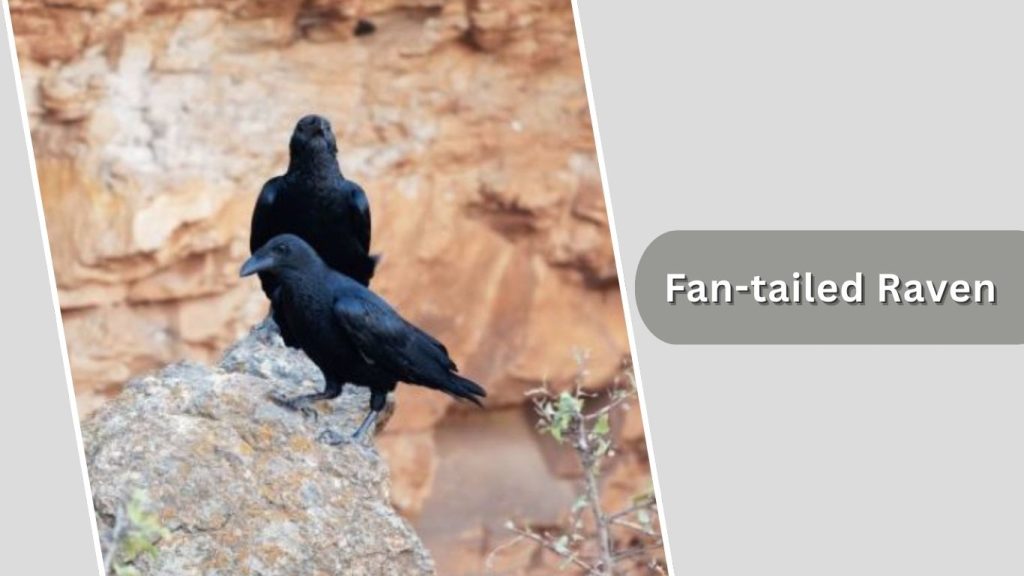
The fan-tailed raven is a striking raven species native to the Middle East, northeastern Africa, and parts of the Arabian Peninsula. It is named for its broad, fan-shaped tail, which is especially noticeable during flight.
Identification
- Medium-sized black raven
- Broad, fan-shaped tail
- Glossy black feathers
- Thick black bill
- Shaggy throat feathers
- Strong, broad wings
Habitat
Fan-tailed ravens inhabit rocky deserts, mountain slopes, dry valleys, and arid highlands. They are often seen soaring over cliffs and rugged terrain.
Diet
They eat insects, small animals, eggs, carrion, fruits, seeds, and food scraps. They are active foragers and often search rocky ground for prey.
Behaviors and Lifecycle
Fan-tailed ravens are usually found in pairs. They nest on cliffs and rocky ledges, building bulky stick nests. Both parents care for the young. Chicks leave the nest after about five to six weeks but stay nearby under parental care.
8. Pied Raven
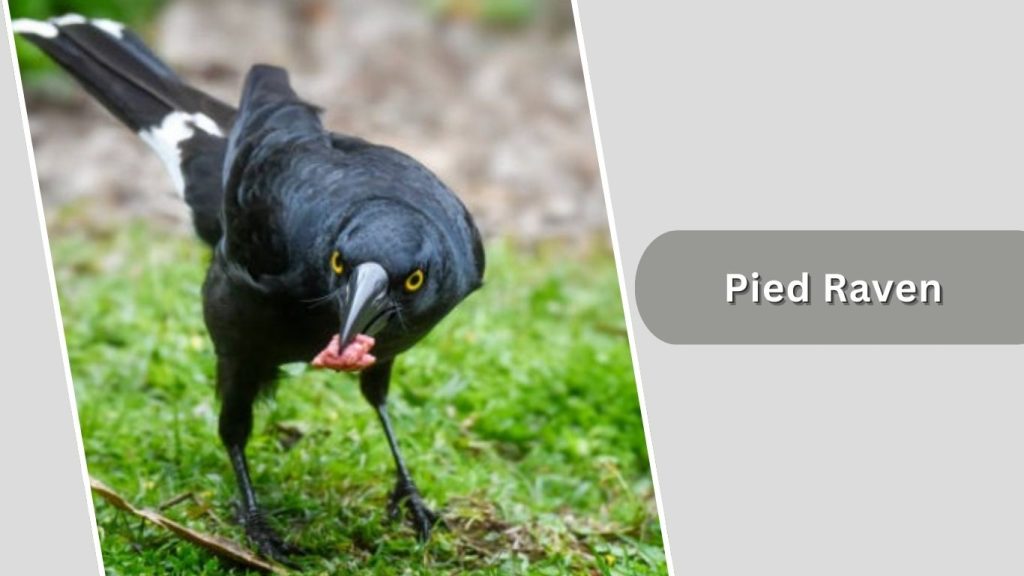
The pied raven is a distinctive black-and-white raven native to eastern and southern Africa. It is easily recognized by its contrasting white chest patch and black head, wings, and tail.
Identification
- Black head, wings, and tail
- Large white chest and belly patch
- Strong black bill
- Shaggy throat feathers
- Broad wings
- Wedge-shaped tail
Habitat
Pied ravens inhabit open savannas, grasslands, farmland, coastal plains, and mountainous regions. They are often seen near human settlements, roads, and agricultural areas.
Diet
They are omnivorous and feed on insects, small mammals, eggs, carrion, fruits, seeds, and human food waste. They are frequent scavengers and nest raiders.
Behaviors and Lifecycle
Pied ravens are intelligent and bold. They often live in pairs or small groups. Nests are built in tall trees, on cliffs, or on power structures. Both parents care for the chicks, which fledge after about five weeks.
9. Thick-billed Raven
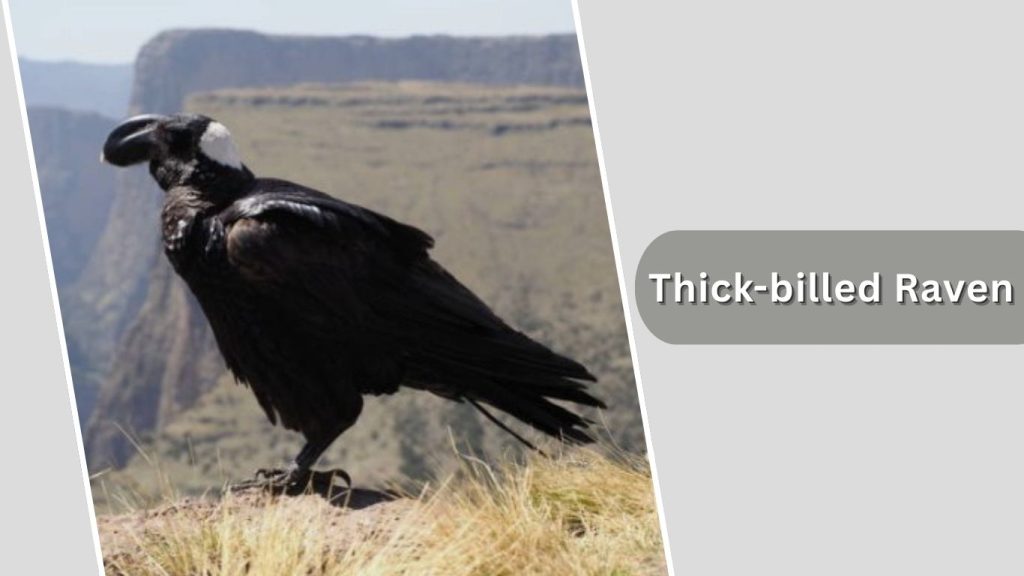
The thick-billed raven is the largest raven in the world and is native to the highlands of Ethiopia and nearby regions. It is famous for its massive curved bill and powerful appearance, making it one of the most striking members of the raven family.
Identification
- Very large raven with heavy body
- Extremely thick, curved black bill
- Glossy black feathers with slight brown sheen
- Long broad wings
- Shaggy throat feathers
- Wedge-shaped tail
Habitat
Thick-billed ravens mainly inhabit highland plateaus, rocky mountains, cliffs, open grasslands, and farmland in northeastern Africa. They are often seen soaring over deep valleys and rugged terrain.
Diet
They are omnivorous and eat insects, small animals, eggs, carrion, grains, fruits, seeds, and human food scraps. They are strong scavengers and can tear tough food with their powerful bills.
Behaviors and Lifecycle
Thick-billed ravens are intelligent and confident birds. They usually live in pairs but gather in groups where food is plentiful. They nest on cliffs or tall trees. Both parents raise the chicks, which leave the nest after about five to six weeks.
10. White-necked Raven
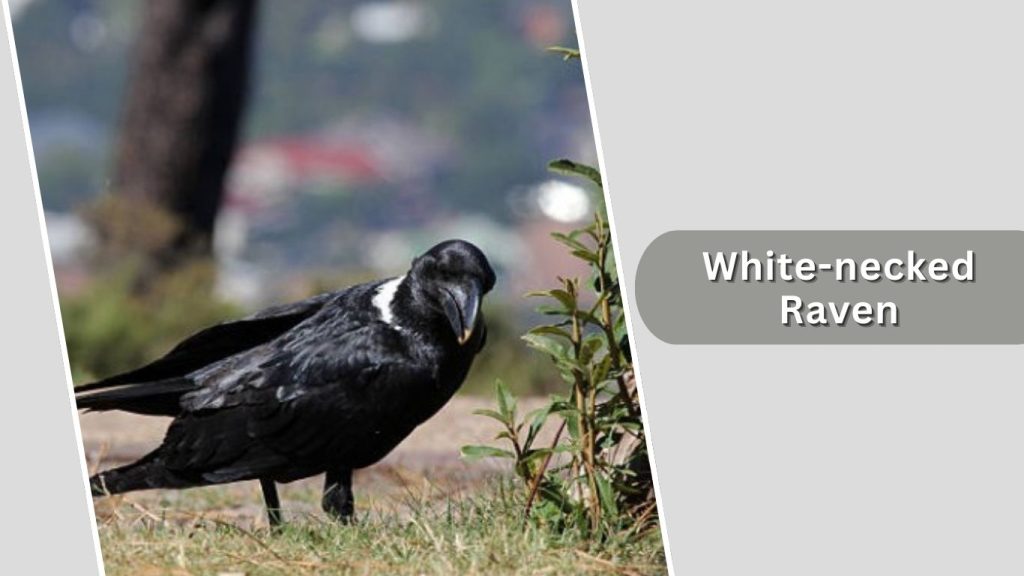
The white-necked raven is a large raven native to eastern and southern Africa. It is named for the pale or whitish area on the back of its neck, which can be seen clearly when the feathers are raised or in strong light.
Identification
- Large black raven
- Pale or whitish patch on the back of the neck
- Thick, powerful black bill
- Glossy black feathers
- Shaggy throat feathers
- Broad wings and wedge-shaped tail
Habitat
White-necked ravens inhabit mountain ranges, rocky hills, highland grasslands, coastal cliffs, and open countryside. They are often seen soaring over valleys and perching on cliffs or tall trees.
Diet
They are omnivorous and feed on insects, small mammals, eggs, carrion, fruits, seeds, and human food scraps. They are skilled scavengers and also hunt small animals.
Behaviors and Lifecycle
White-necked ravens are intelligent and adaptable birds. They usually live in pairs or small family groups. Nests are built on cliffs, rocky ledges, or tall trees. Both parents incubate the eggs and feed the chicks, which fledge after about five to six weeks.