




The Continental Giant Rabbit, often mistaken for a small dog at first glance, is one of the largest and most majestic rabbit breeds in the world. Originating in Europe and admired for both its size and gentle demeanor, this rabbit breed has become increasingly popular among pet owners, breeders, and rabbit enthusiasts alike. Whether you’re considering one as a pet or just curious about this remarkable breed, this complete guide covers everything from size and weight to adoption, care, and more.
What Is a Continental Giant Rabbit?
The Continental Giant Rabbit, sometimes called the “German Giant,” is a domesticated rabbit breed that traces its roots back to the Flemish Giant. Originally bred in Belgium and Germany for meat and fur, Continental Giants have evolved into beloved companions. Their calm nature, intelligence, and sheer size have made them especially popular in homes with the space and time to care for them properly.
Size: How Big Do Continental Giant Rabbits Get?

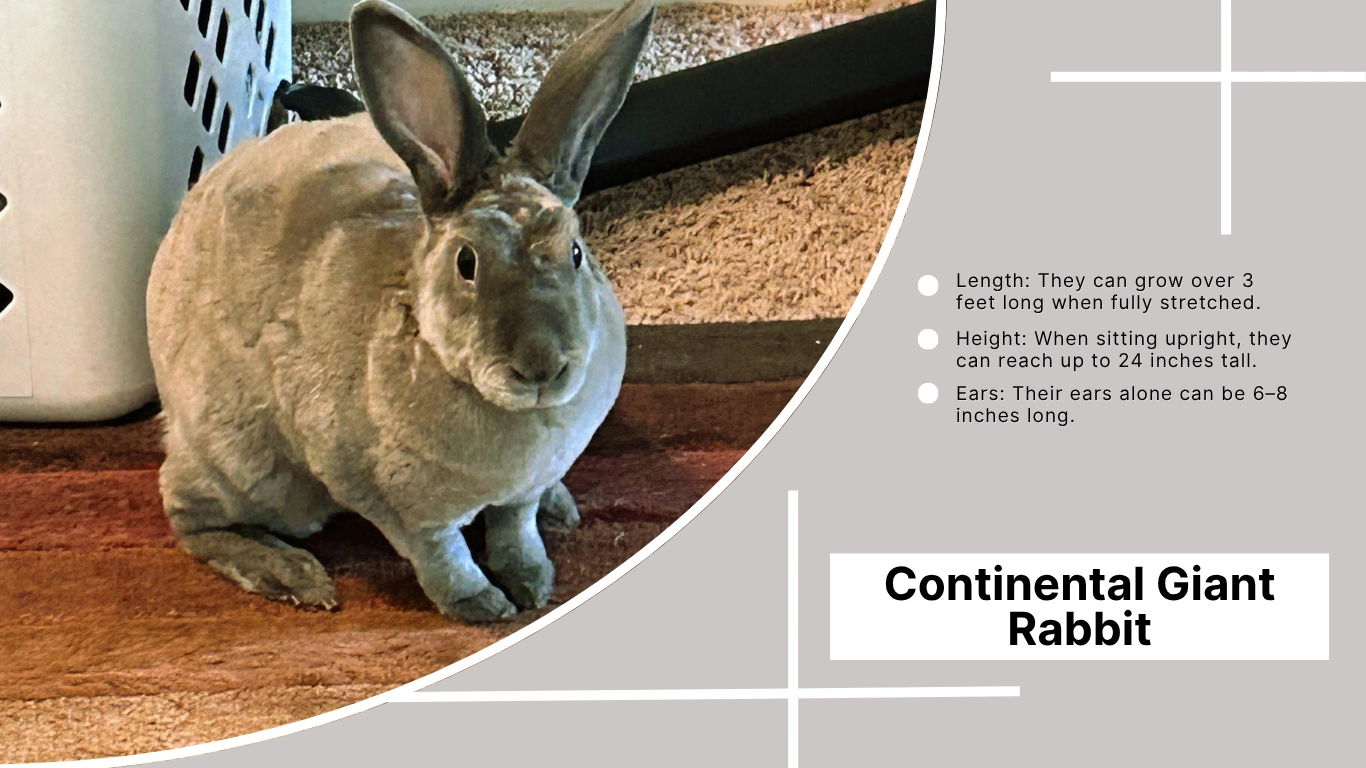
Continental Giants are among the largest rabbit breeds in the world.
- Length: They can grow over 3 feet long when fully stretched.
- Height: When sitting upright, they can reach up to 24 inches tall.
- Ears: Their ears alone can be 6–8 inches long.
These rabbits are robust, heavy-boned, and muscular. Because of their massive size, they require significantly more space than smaller rabbits.
Unlike some other breeds, Continental Giants continue growing beyond their first year, and their full adult size may not be reached until 14–18 months of age.
Weight: Continental Giant Rabbit Average Weight
The average weight of a Continental Giant rabbit is:
- 15 to 25 pounds
- Exceptional individuals may weigh up to 30 pounds
Their size and weight are influenced by diet, genetics, activity level, and gender. Males tend to be slightly larger than females, but both are heavy compared to standard rabbits (which average just 4–6 pounds).
Due to their large bone structure and thick muscle mass, it’s essential to avoid obesity by monitoring diet and ensuring adequate exercise.
Colors: Common and Rare Continental Giant Rabbit Coats

Continental Giants come in a variety of colors, making them visually stunning pets. Some of the most common include:
- Black
- White
- Steel Gray
- Agouti
- Sandy
- Light Gray
Black Continental Giant Rabbit
One of the most popular and elegant colors is black. These rabbits have a deep, jet-black coat that shines in natural light. The contrast of their size and color often makes them a favorite in shows.
While all colors require regular grooming, darker coats tend to show less dirt and staining than lighter ones.
Origin: Where Did Continental Giant Rabbits Come From?
The Continental Giant Rabbit originated in Europe, particularly in Belgium and Germany, during the 19th century. They were selectively bred from large rabbit breeds like the Flemish Giant for their meat-producing capabilities.
The breed gained popularity in the UK and was later recognized by various rabbit breeding associations across Europe. Unlike in the U.S., where they are still considered exotic, Continental Giants are relatively common in parts of Europe.
Although similar in many ways to the Flemish Giant, the Continental Giant has been bred separately for generations, with some lines focused on show standards and others on companion traits.
Adoption: Choosing to Adopt a Continental Giant Rabbit

Adoption is a great way to give a Continental Giant a second chance at a happy life. Many rabbit rescues and animal shelters occasionally have this breed available due to improper care by previous owners who underestimated their size and needs.
Why Adopt Instead of Buy?
- Lower cost than breeders
- Many are already spayed/neutered
- You’ll be helping reduce shelter populations
- Adopted rabbits are often socialized and litter trained
When adopting, ensure the rabbit has been examined by a vet and is free from signs of neglect or abuse. Be ready for an adjustment period—some rescue rabbits need time to trust again.
For Sale: Buying a Continental Giant Rabbit
If you choose to purchase a Continental Giant, always look for reputable breeders who follow ethical practices and provide clean, healthy living environments for their animals.
What to Expect from a Breeder
- A detailed record of vaccinations and health history
- Opportunity to meet the parents and littermates
- Guidance on feeding, housing, and grooming
- Prices typically range from $200 to $600 depending on lineage, color, and breeder reputation
Avoid buying from pet stores or unverified online sellers, as these sources may contribute to irresponsible breeding and could lead to receiving an unhealthy or poorly socialized rabbit.
Continental Giant Rabbits in Australia

Australia has strict biosecurity laws regarding the importation of rabbits. Continental Giant Rabbits are not commonly available in most Australian states and may be subject to additional restrictions. Anyone in Australia interested in owning a rabbit of this size should first:
- Check with local animal control or agriculture departments
- Consult rabbit breeder associations for updates on legal availability
- Look for Australian rabbit clubs that may specialize in large breeds or similar alternatives
In some regions, rabbits are banned entirely due to their environmental impact—especially in Queensland and other sensitive ecosystems.
Housing and Care Needs
Due to their size, Continental Giants need spacious housing and thoughtful care. A typical cage for a standard rabbit won’t work.
Housing Requirements
- Minimum 8 ft x 4 ft space for indoor setups
- Outdoor hutches must be weatherproof, secure from predators, and tall enough for full upright sitting
- Solid flooring is a must—wire mesh floors can cause sore hocks in large breeds
Exercise and Enrichment
They need several hours of free-roam or supervised exercise daily. These rabbits enjoy chewing, digging, and social interaction. Toys, tunnels, and wooden blocks help prevent boredom.
Feeding and Diet
A Continental Giant’s diet is similar to other rabbit breeds, just scaled up in quantity.
- 80% hay (timothy or meadow)
- 10–15% leafy greens
- 5% pellets (high-quality, plain, no added seeds or treats)
- Fresh water available 24/7
Because of their size, they consume more food and produce more waste, so be prepared for daily cleanup and higher food costs.
Conclusion:
Continental Giant Rabbits are beautiful, calm, and intelligent animals that make excellent pets for the right owner. But they’re not for everyone. Their large size requires spacious housing, higher food costs, and more time for daily care. If you have the space, patience, and resources, a Continental Giant can be an affectionate and awe-inspiring addition to your family.
Whether you choose to adopt or buy, understanding the breed’s size, care needs, and long-term commitment will help you build a healthy and happy relationship with your gentle giant.