




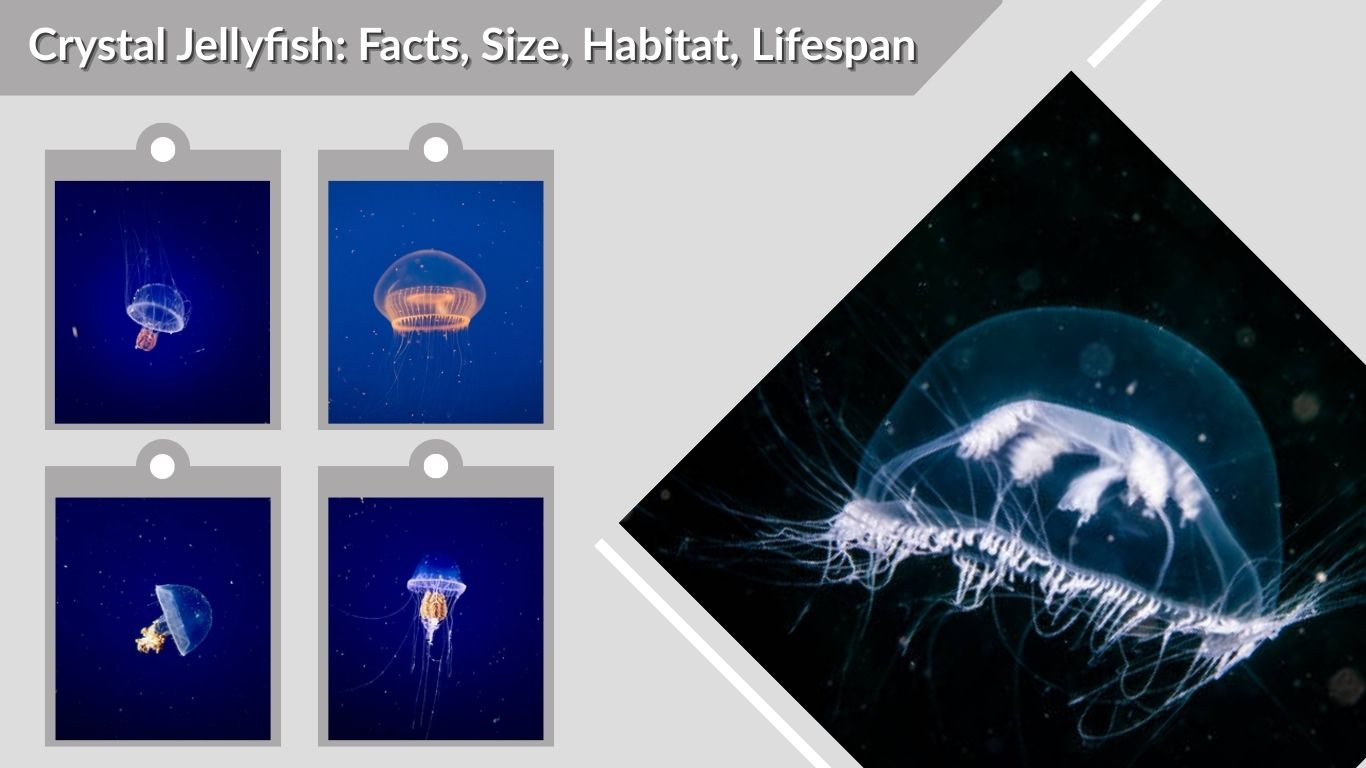
Crystal jellyfish are among the most beautiful and scientifically important jellyfish in the ocean. Known for their nearly invisible bodies and soft blue glow, these delicate creatures have fascinated marine biologists and aquarium visitors alike. Scientifically named Aequorea victoria, crystal jellyfish are best known for their role in the discovery of green fluorescent protein (GFP), a breakthrough that transformed biological research. In this article, we explore essential crystal jellyfish facts, including their size, habitat, anatomy, bioluminescence, and diet.
What Is a Crystal Jellyfish?
The crystal jellyfish (Aequorea victoria) is a hydrozoan, meaning it is not a true jellyfish like moon or cannonball jellyfish. Instead, it belongs to the class Hydrozoa, which includes smaller, more delicate jellyfish species. The name “crystal jellyfish” comes from its almost completely transparent body, which makes it difficult to see in open water.
Unlike many jellyfish, crystal jellyfish have a fragile structure and lack thick bells or long trailing tentacles. They drift gracefully with ocean currents and rely on simple sensory systems rather than active movement or hunting. Despite their delicate appearance, crystal jellyfish have had an enormous impact on science.
Crystal Jellyfish Size and Appearance
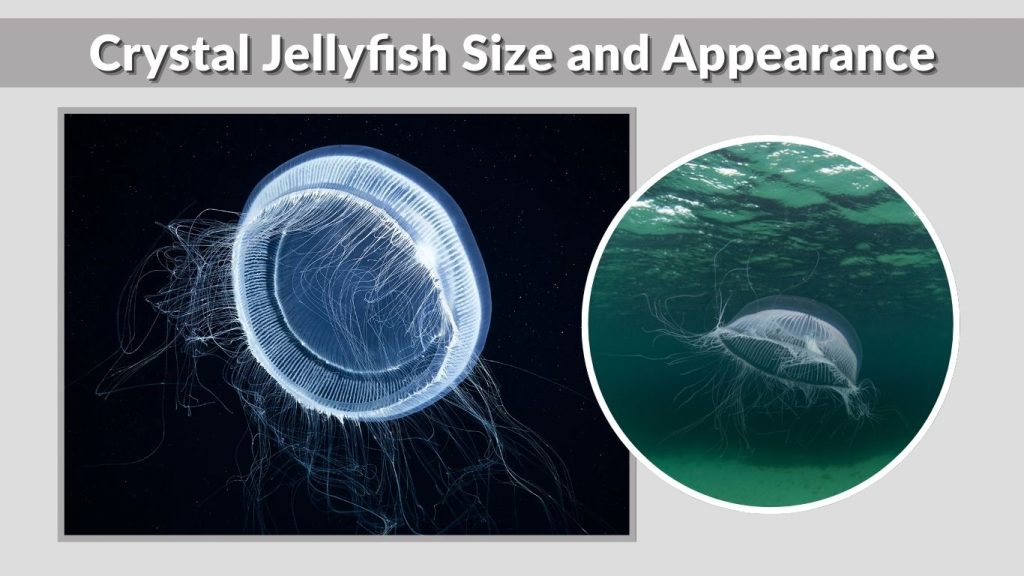
Crystal jellyfish are medium-sized jellyfish with a broad, flat bell. The average crystal jellyfish size ranges from 6 to 10 inches (15–25 cm) in diameter. Their bell is thin and glass-like, giving them a shimmering, crystal-clear appearance in the water.
Around the edge of the bell are dozens of fine, short tentacles used for feeding. These tentacles are barely visible unless the jellyfish is illuminated. When light hits the bell at certain angles, crystal jellyfish may appear to glow faintly, enhancing their ethereal look.
Crystal Jellyfish Habitat and Range
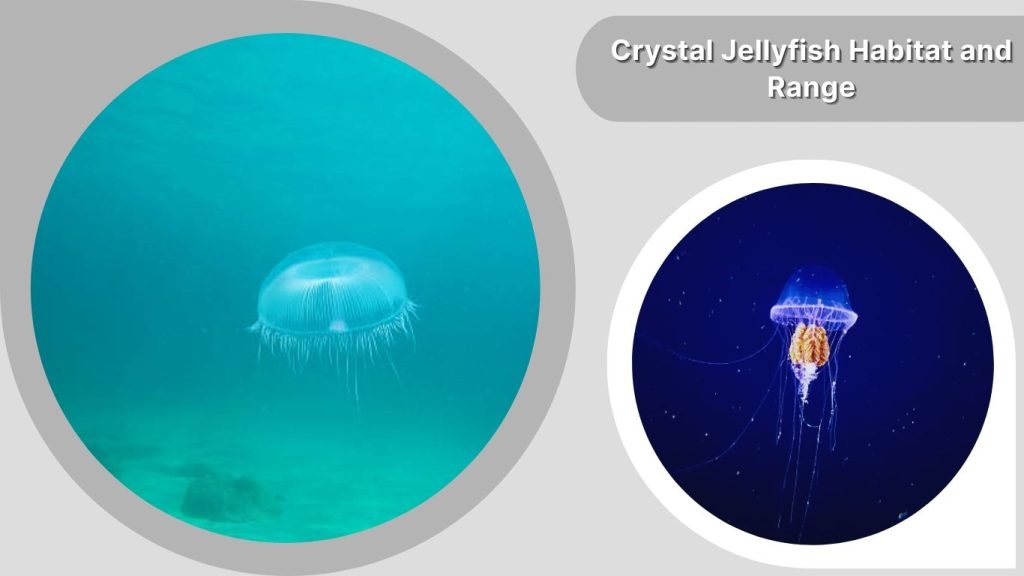
The crystal jellyfish habitat is primarily located in the Pacific Ocean, especially along the west coast of North America. They are commonly found in coastal and offshore waters from British Columbia to Southern California.
Crystal jellyfish tend to inhabit deeper waters during the day and migrate closer to the surface at night to feed. Their distribution is influenced by ocean currents, temperature, and plankton availability. Seasonal appearances are common, with larger populations often observed during warmer months when food is abundant.
Where Are Crystal Jellyfish Found?
Crystal jellyfish are most frequently found along the Pacific Northwest coastline, including Washington, Oregon, and California. They are also present offshore in open ocean environments, where they drift with currents rather than staying near the shoreline.
Unlike some jellyfish species, crystal jellyfish are rarely seen washed up on beaches. Their delicate bodies break down quickly once out of the water, making beach encounters uncommon compared to sturdier species like cannonball or moon jellyfish.
Crystal Jellyfish Bioluminescence
One of the most fascinating features of crystal jellyfish is their bioluminescence. When disturbed, crystal jellyfish emit a soft blue-green light around the edge of their bell. This glow is produced by a protein called aequorin, which reacts with calcium ions inside the jellyfish.
The discovery of aequorin led to the identification of green fluorescent protein (GFP), a substance now widely used in genetics, medicine, and molecular biology. This makes the crystal jellyfish one of the most important marine animals in scientific history.
Crystal Jellyfish Anatomy
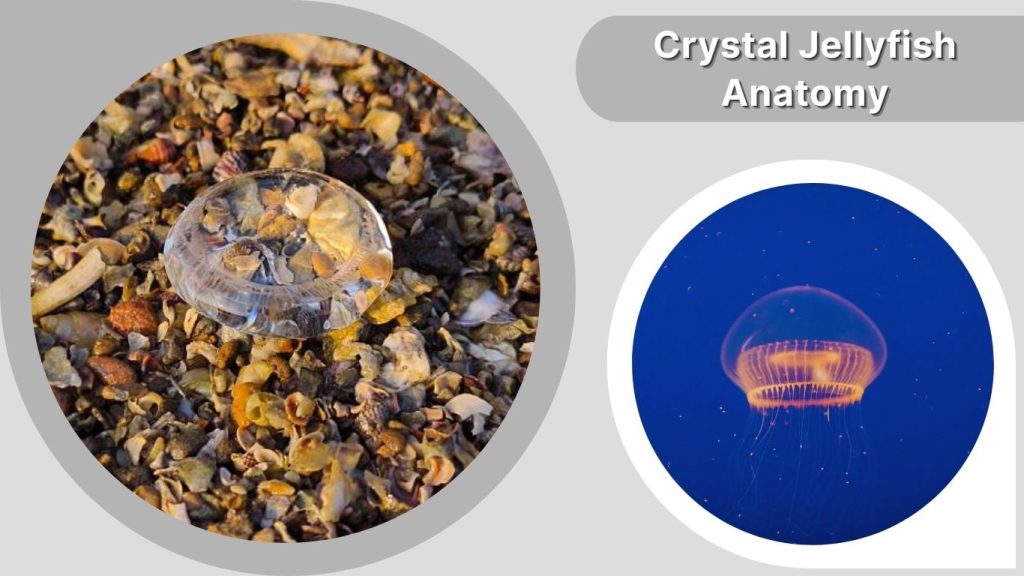
Crystal jellyfish anatomy is simple yet efficient. Their bodies consist of a thin, gelatinous bell with a central mouth on the underside. Like most jellyfish, they lack a brain, heart, and bones. Instead, they rely on a basic nerve net to sense their environment.
Their tentacles contain mild stinging cells used to capture tiny prey. Compared to other jellyfish, these stinging cells are weak and pose little threat to humans.
Crystal Jellyfish Diet
Crystal jellyfish feed mainly on zooplankton, including tiny crustaceans and microscopic organisms drifting in the water. Their diet may also include fish eggs and larvae when available.
Because crystal jellyfish are passive feeders, they rely on ocean currents to bring food to them rather than actively hunting.
How Do Crystal Jellyfish Eat?
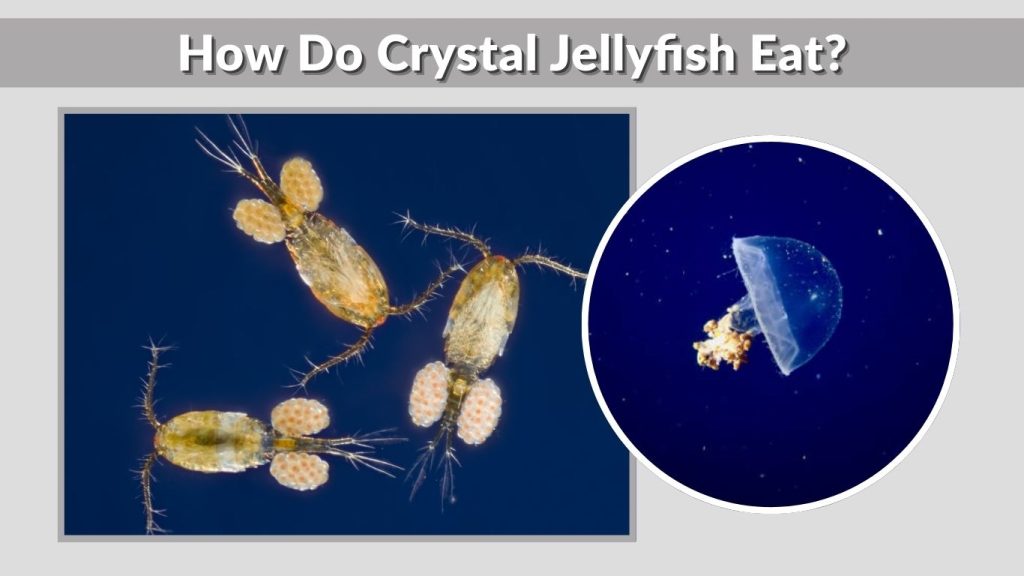
Crystal jellyfish eat by extending their fine tentacles into the surrounding water. When small prey touches the tentacles, it becomes trapped by sticky mucus and mild stinging cells. Cilia then move the food toward the mouth, where digestion occurs inside the gastrovascular cavity.
This low-energy feeding strategy allows crystal jellyfish to survive in nutrient-rich waters without expending much effort.
Crystal Jellyfish Lifespan
The crystal jellyfish lifespan is relatively short, similar to many gelatinous marine animals. Most crystal jellyfish live for six to twelve months, depending on environmental conditions such as water temperature, food availability, and predation. Their life cycle allows them to grow quickly, reproduce, and maintain stable populations despite their fragile bodies.
Because crystal jellyfish are sensitive to changes in their environment, shifts in ocean temperature or plankton levels can strongly influence how long they survive. Seasonal population fluctuations are common, with numbers increasing during periods of high food availability.
Crystal Jellyfish in Aquariums and Scientific Research
Crystal jellyfish are rarely kept in home aquariums due to their delicate structure and specialized care requirements. However, they are sometimes displayed in advanced public aquariums designed to support fragile jellyfish species. These exhibits use gentle circular water flow systems to prevent damage to their thin bells and tentacles.
Beyond aquariums, crystal jellyfish are most famous for their role in scientific research. The discovery of green fluorescent protein (GFP) from crystal jellyfish revolutionized modern biology. GFP is now widely used to track gene expression, study diseases, and visualize cellular processes in living organisms, earning its discoverers a Nobel Prize.
Are Crystal Jellyfish Dangerous?
Crystal jellyfish are not dangerous to humans. Their stinging cells are very mild and rarely cause noticeable irritation. Most people who come into contact with a crystal jellyfish experience little to no discomfort.
Despite this, direct handling is still discouraged, as crystal jellyfish are extremely fragile and can be easily damaged. Observing them in the water or in aquariums is the best way to appreciate their beauty without causing harm.
Interesting Crystal Jellyfish Facts
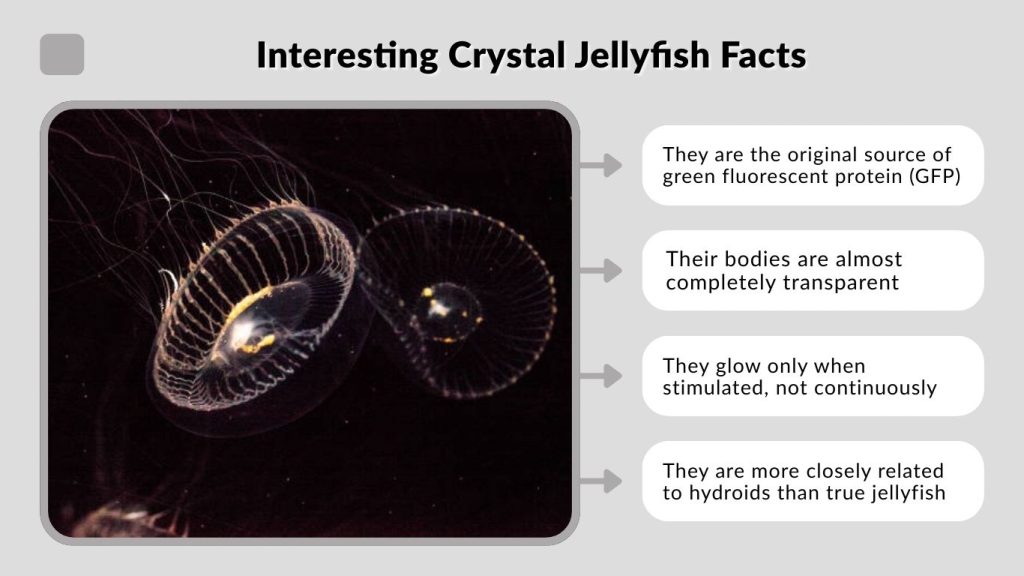
Crystal jellyfish have several fascinating characteristics that set them apart from other jellyfish species:
- They are the original source of green fluorescent protein (GFP)
- Their bodies are almost completely transparent
- They glow only when stimulated, not continuously
- They are more closely related to hydroids than true jellyfish
These unique traits make crystal jellyfish one of the most scientifically valuable marine animals ever studied.
Ecological Importance of Crystal Jellyfish
Crystal jellyfish play an important role in marine ecosystems by feeding on plankton and serving as prey for larger animals. Their presence helps regulate plankton populations and supports the flow of energy through the food web.
Because they are sensitive to environmental changes, crystal jellyfish populations can also provide clues about ocean health. Scientists sometimes study their distribution patterns to better understand shifts in marine ecosystems.
Conservation and Environmental Awareness
While crystal jellyfish are not currently considered endangered, they are affected by broader environmental issues such as climate change, ocean warming, and pollution. Changes in plankton availability or water chemistry can impact their survival and reproduction.
Protecting marine habitats and maintaining healthy oceans helps ensure that species like the crystal jellyfish continue to thrive and contribute to scientific discovery.
FAQs
What is a crystal jellyfish?
A crystal jellyfish (Aequorea victoria) is a transparent marine animal belonging to the class Hydrozoa. It is known for its delicate appearance and its ability to produce bioluminescent light. Unlike true jellyfish, it has a thinner bell and plays a major role in scientific research.
Why do crystal jellyfish glow?
Crystal jellyfish glow due to a protein called aequorin, which emits blue-green light when it reacts with calcium inside the jellyfish. This bioluminescence occurs when the jellyfish is disturbed and helped scientists discover green fluorescent protein (GFP), widely used in biology.
Where are crystal jellyfish found?
Crystal jellyfish are found mainly in the Pacific Ocean along the west coast of North America. They are commonly seen from British Columbia to California, drifting in coastal and offshore waters influenced by ocean currents and plankton availability.
Are crystal jellyfish dangerous to humans?
Crystal jellyfish are not dangerous to humans. Their stinging cells are very mild and rarely cause irritation. While they are safe to observe, touching them is discouraged because their bodies are extremely fragile and easily damaged.
How long do crystal jellyfish live?
The average crystal jellyfish lifespan ranges from six to twelve months. Their survival depends on environmental conditions such as water temperature, food availability, and predation, with populations often fluctuating seasonally.