



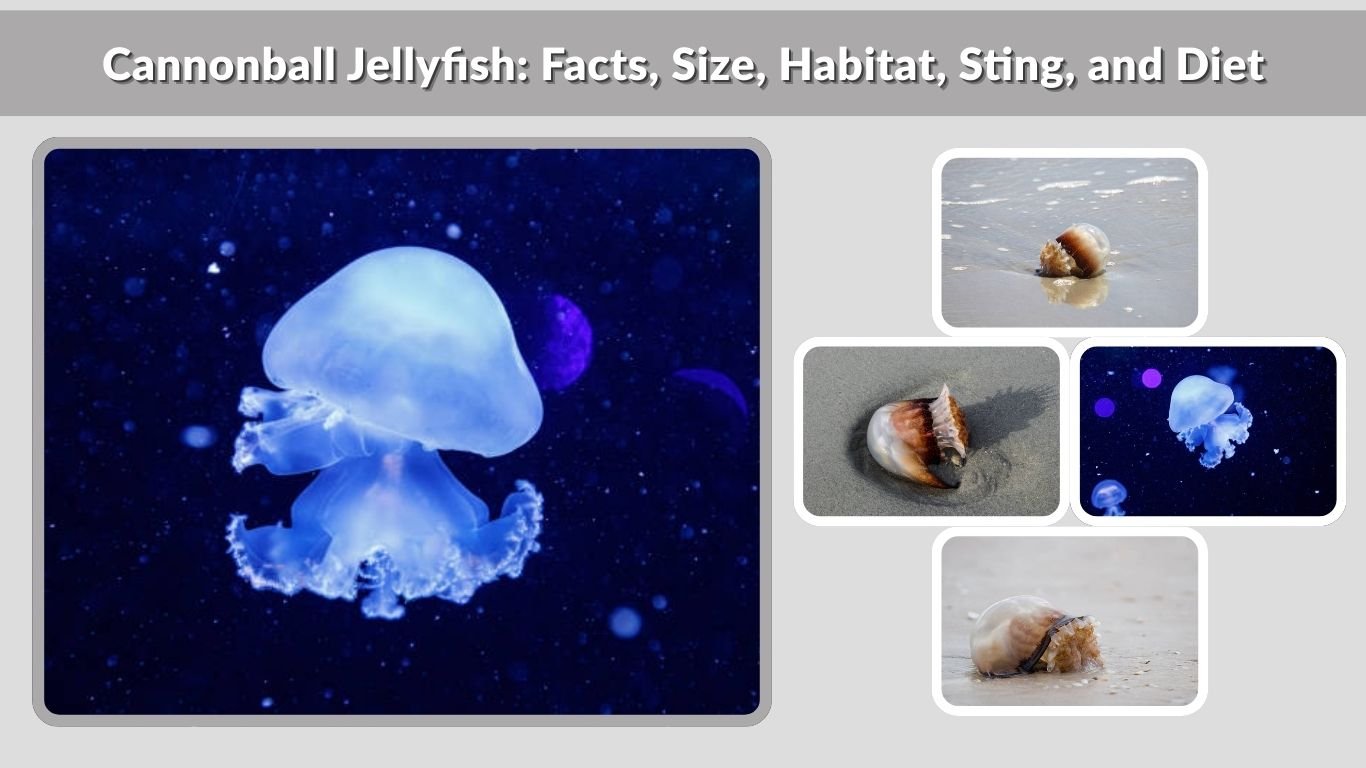
Cannonball jellyfish are among the most commonly seen jellyfish in coastal waters, especially along the southeastern United States. Named for their round, firm appearance, these jellyfish often wash up on beaches in large numbers, sparking curiosity and sometimes concern. Unlike many jellyfish species, cannonball jellyfish are generally harmless to humans. In this article, we’ll explore essential cannonball jellyfish facts, including their size, habitat, sting risk, diet, and role in marine ecosystems.
What Is a Cannonball Jellyfish?
The cannonball jellyfish, scientifically known as Stomolophus meleagris, is a true jellyfish belonging to the class Scyphozoa. It is also commonly called the cabbagehead jellyfish due to its rounded, compact shape. Cannonball jellyfish are known for their dense, muscular bells and lack of long trailing tentacles, which sets them apart from many other jellyfish species.
Because of their mild sting and predictable movement, cannonball jellyfish are considered one of the safest jellyfish species encountered by swimmers. Their presence is often more of a visual nuisance than a physical threat.
Cannonball Jellyfish Size and Appearance
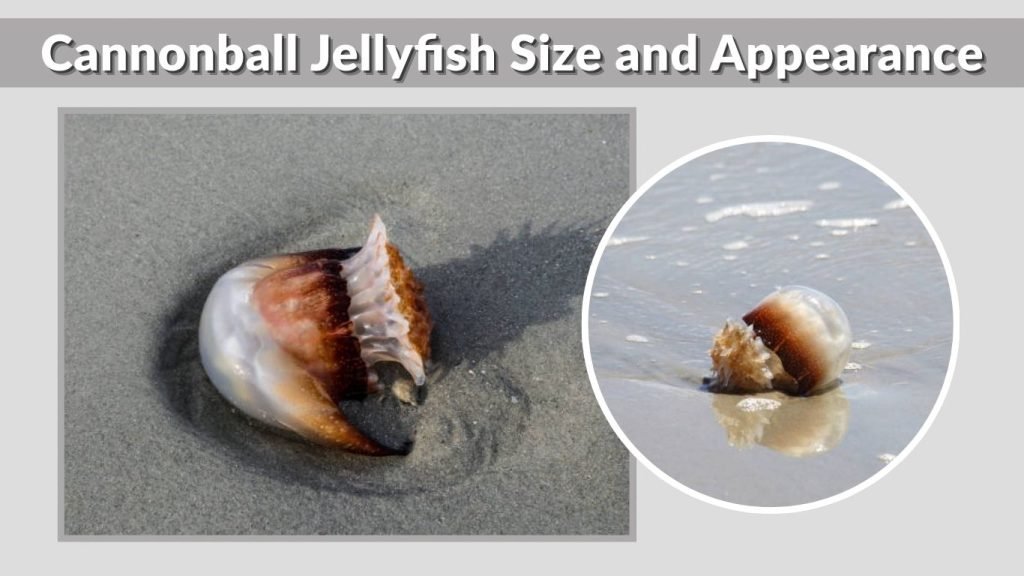
Cannonball jellyfish are medium-sized jellyfish with a solid, dome-shaped bell. The average cannonball jellyfish size ranges from 5 to 10 inches (12–25 cm) in diameter. Their bodies feel firmer than most jellyfish due to the thickness of their bell tissue.
Coloration varies depending on location and water conditions. Most cannonball jellyfish appear white or milky, but some have blue, brown, or purple hues. Unlike many jellyfish, cannonball jellyfish do not have long, thin tentacles. Instead, they possess short oral arms that hang beneath the bell and are used primarily for feeding.
Cannonball Jellyfish Habitat and Range
The cannonball jellyfish habitat consists mainly of coastal and nearshore waters. They prefer warm, temperate environments and are commonly found in bays, estuaries, and continental shelf waters. Cannonball jellyfish often stay close to the surface but can move deeper when feeding.
Their range includes the western Atlantic Ocean, the Gulf of Mexico, and parts of the eastern Pacific. Large seasonal blooms are common, especially during spring and early summer, when water temperatures rise and food becomes abundant.
Where Are Cannonball Jellyfish Found?
Cannonball jellyfish are most frequently observed along the southeastern coast of the United States, including Florida, Georgia, and the Carolinas. They are also common in the Gulf of Mexico and have been reported off the coasts of Brazil and Argentina.
In some regions, cannonball jellyfish are harvested commercially and exported for food, particularly to Asian markets. Their predictable seasonal appearance makes them an important species both ecologically and economically.
Cannonball Jellyfish Sting: Are They Dangerous?
Many people worry about being stung by jellyfish, but the cannonball jellyfish sting is generally very mild or nonexistent. Cannonball jellyfish possess stinging cells, but their venom is weak and rarely affects humans.
Most people can touch a cannonball jellyfish without experiencing pain, although sensitive individuals may feel slight irritation. Compared to species like box jellyfish or Portuguese Man o’ War, cannonball jellyfish are considered one of the least dangerous jellyfish species.
Cannonball Jellyfish Diet
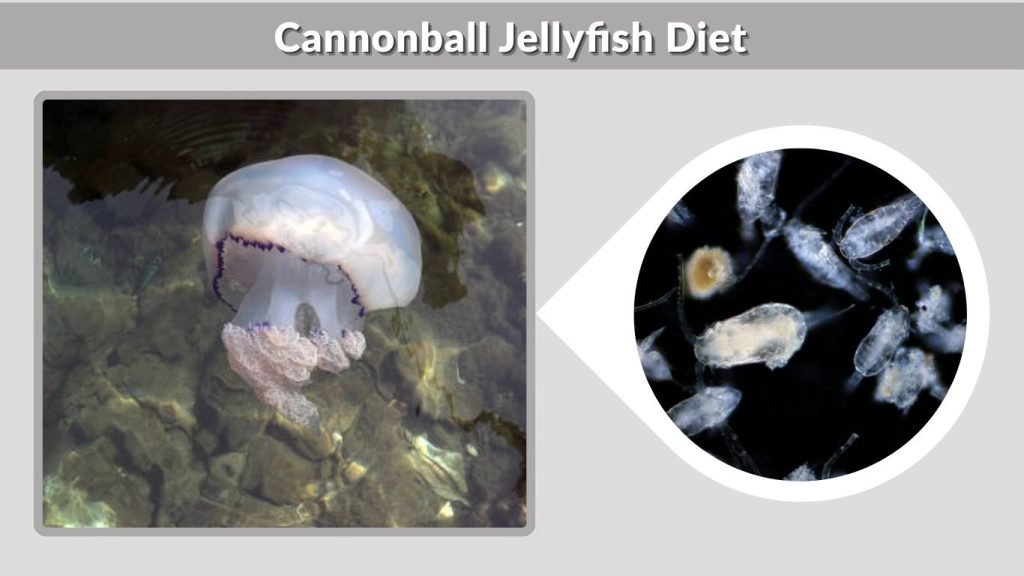
Cannonball jellyfish feed primarily on zooplankton, playing an important role in controlling plankton populations. Their diet includes microscopic organisms, fish eggs, and larvae that drift through the water.
Because they lack long tentacles, cannonball jellyfish rely on filtering food from the water rather than actively capturing prey. Their feeding habits are efficient and well-suited to nutrient-rich coastal environments.
How Do Cannonball Jellyfish Eat?
Cannonball jellyfish eat by contracting their bell to draw water into their body cavity. As water flows through, tiny prey become trapped in mucus on their oral arms. Microscopic cilia then move the food toward the mouth for digestion.
This passive feeding strategy allows cannonball jellyfish to consume large quantities of plankton without expending much energy, helping them thrive during seasonal blooms.
Cannonball Jellyfish Lifespan
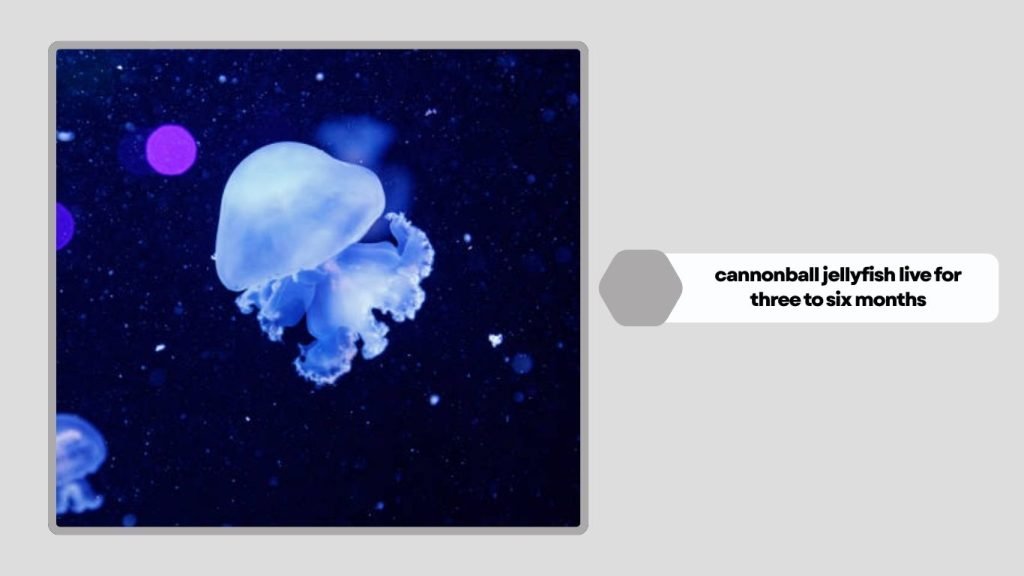
The cannonball jellyfish lifespan is relatively short, as is the case with many jellyfish species. Most cannonball jellyfish live for three to six months, completing their entire life cycle within a single season. Their lifespan is closely tied to water temperature, food availability, and environmental conditions.
During warmer months, cannonball jellyfish grow rapidly and reproduce before dying off as temperatures cool. Their short lifespan is balanced by high reproduction rates, which allows large populations to appear suddenly during jellyfish blooms.
Cannonball Jellyfish Predators
Despite their firm bodies, cannonball jellyfish are an important food source for several marine animals. Their primary predators include sea turtles, particularly loggerhead turtles, as well as ocean sunfish and some species of fish.
By serving as prey, cannonball jellyfish help transfer energy from plankton to larger marine animals. This makes them an important link in coastal food webs, especially during seasonal population increases.
Cannonball Jellyfish and Humans
Cannonball jellyfish generally coexist peacefully with humans. Because they are not aggressive and rarely sting, swimmers often encounter them without incident. However, large blooms can interfere with fishing nets, cooling systems for power plants, and recreational activities.
In some regions, cannonball jellyfish are harvested commercially. They are processed and exported as a food product, primarily to Asian markets, where jellyfish are considered a delicacy. This has led to increased interest in sustainable harvesting practices.
Are Cannonball Jellyfish Safe to Touch?
Although cannonball jellyfish are considered safe compared to other species, direct handling is still not recommended. While most people experience no reaction, sensitive individuals may develop mild skin irritation. Additionally, rough handling can harm the jellyfish.
Beachgoers are encouraged to admire cannonball jellyfish visually and allow them to return to the water if found stranded, using tools rather than bare hands.
Interesting Cannonball Jellyfish Facts
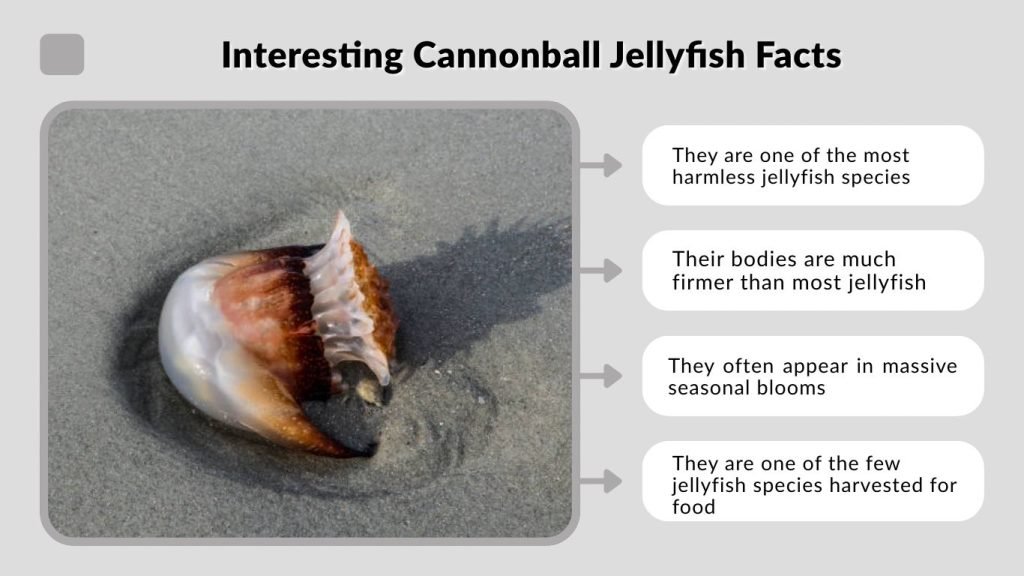
Cannonball jellyfish have several unique traits that make them stand out:
- They are one of the most harmless jellyfish species
- Their bodies are much firmer than most jellyfish
- They often appear in massive seasonal blooms
- They are one of the few jellyfish species harvested for food
These characteristics have made cannonball jellyfish a frequent subject of marine research and coastal studies.
Ecological Importance of Cannonball Jellyfish
Cannonball jellyfish play a vital role in maintaining balance in coastal ecosystems. By feeding on plankton, they help regulate populations that might otherwise grow unchecked. Their presence can also indicate changes in water temperature and nutrient levels.
When populations grow too large, cannonball jellyfish blooms may signal environmental shifts, such as warming seas or changes in ocean currents. Scientists often monitor these blooms as indicators of ecosystem health.
FAQs
What is a cannonball jellyfish?
A cannonball jellyfish, scientifically known as Stomolophus meleagris, is a true jellyfish recognized by its round, firm body. It is commonly found in coastal waters and is also called the cabbagehead jellyfish. Unlike many jellyfish, it is generally harmless to humans.
Are cannonball jellyfish dangerous?
Cannonball jellyfish are considered one of the least dangerous jellyfish species. Their sting is very mild or nonexistent for most people. While they do have stinging cells, the venom is weak and rarely causes irritation, making them much safer than box jellyfish or sea nettles.
Where are cannonball jellyfish commonly found?
Cannonball jellyfish are most commonly found along the southeastern United States, especially in the Atlantic Ocean and Gulf of Mexico. They prefer warm, coastal waters and are often seen in bays and nearshore areas during spring and early summer.
What do cannonball jellyfish eat?
Cannonball jellyfish feed mainly on zooplankton, fish eggs, and larvae. They use a passive feeding method, filtering food particles from the water as they pulse their bell. This feeding behavior helps regulate plankton populations in coastal ecosystems.
How long do cannonball jellyfish live?
The average cannonball jellyfish lifespan is relatively short, usually lasting between three and six months. They grow quickly, reproduce during warmer months, and typically die off as water temperatures cool, completing their life cycle within a single season.