




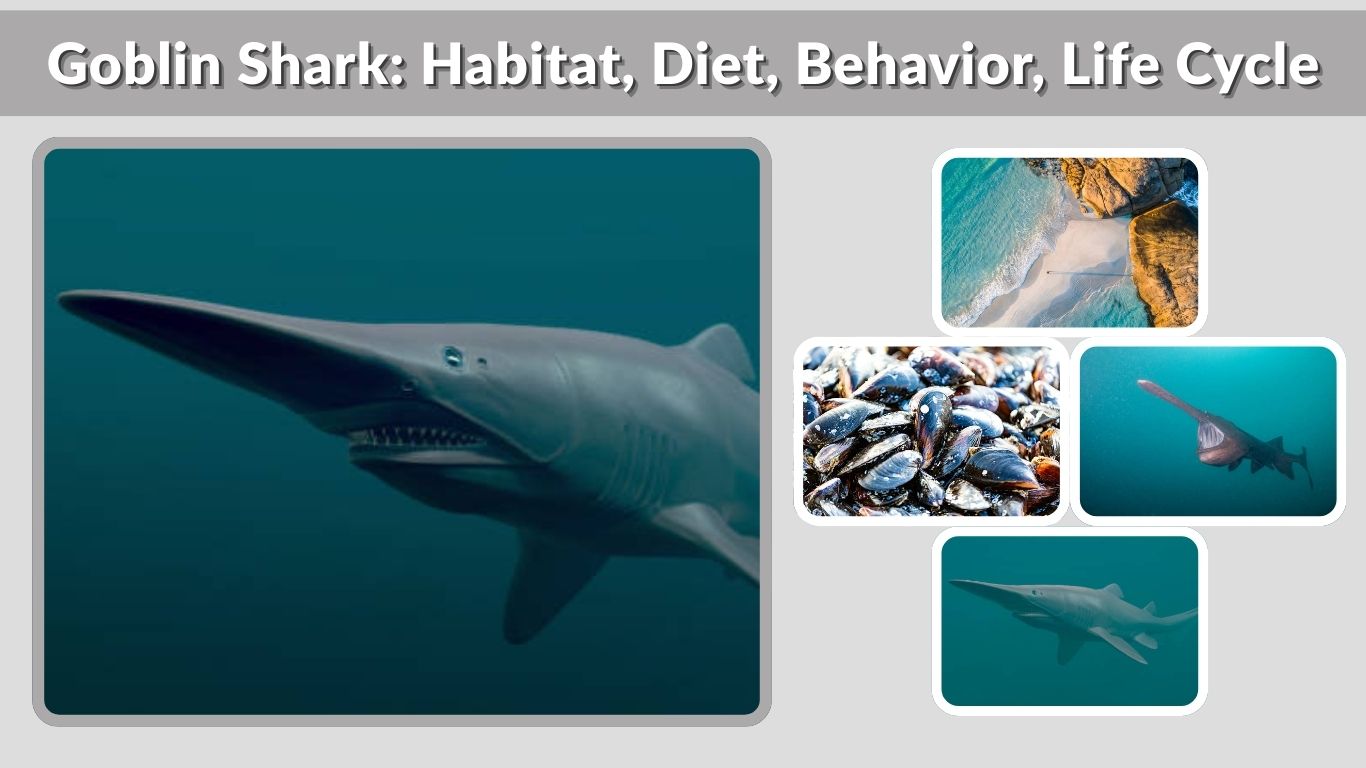
The goblin shark is one of the most mysterious and unusual creatures living in the deep ocean. Known for its long snout and protruding jaws, this rare shark species looks almost prehistoric. Scientists often call it a “living fossil” because its lineage dates back more than 100 million years. Unlike many other sharks, the goblin shark lives far below the ocean’s surface, where sunlight barely reaches. In this guide, you’ll learn about the goblin shark’s habitat, diet, behavior, bite, and life cycle.
What Is a Goblin Shark?
The goblin shark (Mitsukurina owstoni) is a deep-sea shark species and the only living member of the Mitsukurinidae family. It was first discovered in 1898 near the coast of Japan. Since then, only a limited number of specimens have been recorded, making it one of the rarest sharks in the world.
One of the goblin shark’s most striking features is its long, flattened snout. This extended snout, called a rostrum, contains specialized sensory organs that help detect electrical signals produced by other marine animals. Its pale pink or grayish skin gives it a ghostly appearance, which is another reason for its unusual name.
Perhaps the most fascinating feature of the goblin shark is its protrusible jaws. Unlike most sharks, its jaws can extend forward rapidly to catch prey. This unique feeding adaptation allows it to survive in the deep ocean, where food can be scarce. Compared to powerful predators like the great white shark, the goblin shark is slower and more specialized for deep-sea living.
Goblin Shark Habitat
Where Do Goblin Sharks Live?
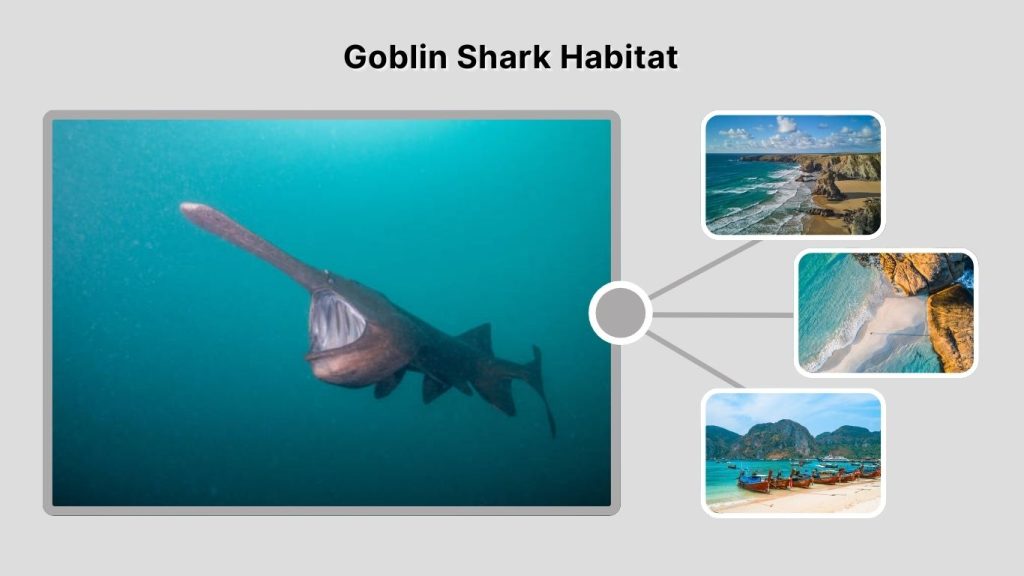
Goblin sharks live in deep-sea environments around the world. They are most commonly found along continental slopes, submarine canyons, and seamounts. These areas provide the dark, high-pressure conditions that the species is adapted to survive in.
Most goblin sharks are found at depths ranging from about 100 to 1,300 meters (330 to 4,265 feet). However, some have been recorded even deeper. Because they inhabit such extreme depths, encounters with humans are extremely rare.
Geographically, goblin sharks have been discovered in several parts of the world. They are most frequently reported near Japan, where the first specimen was identified. Other sightings have occurred in the Gulf of Mexico, the Atlantic Ocean, and parts of the Indian Ocean. Despite this wide distribution, they are not commonly seen due to their deep habitat.
Why They Prefer Deep Waters
Goblin sharks prefer deep waters because their bodies are specially adapted to life in darkness. At such depths, sunlight does not penetrate, so the shark relies on electroreception rather than vision to locate prey. The long snout is filled with sensory organs that detect tiny electrical signals from fish and other animals.
Living deep underwater also reduces competition with faster, more aggressive predators. While shallow waters are crowded with marine life, the deep sea has fewer predators and less competition for food. This environment suits the goblin shark’s slow-moving and energy-efficient lifestyle.
Goblin Shark Diet
What Do Goblin Sharks Eat?
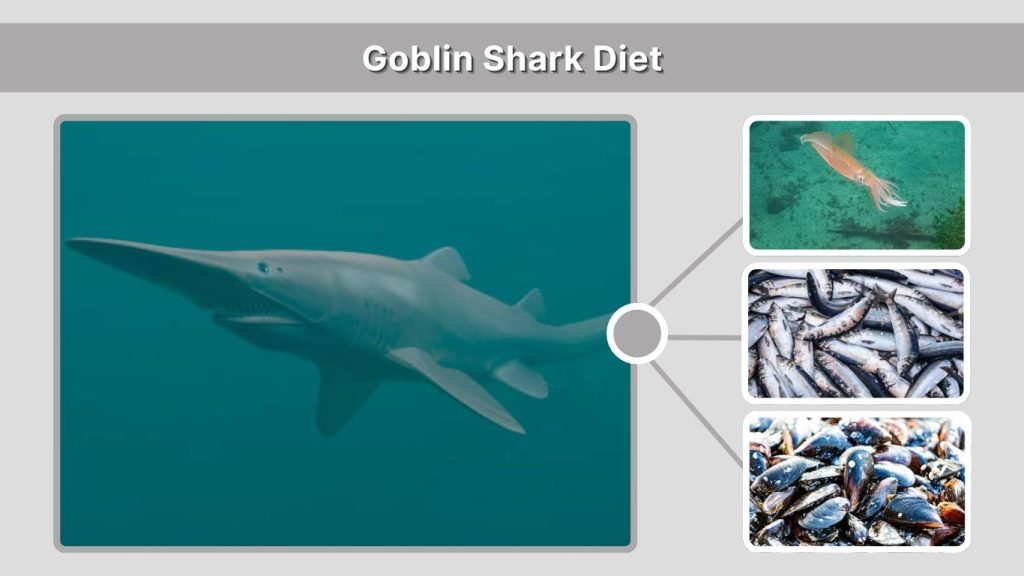
The goblin shark diet mainly consists of deep-sea fish, squid, and crustaceans. Because it lives near the ocean floor, it often feeds on species that swim close to the seabed. Some known prey items include dragonfish, rattails, and various types of cephalopods.
These prey animals are usually soft-bodied and adapted to deep-water conditions. The goblin shark’s narrow, pointed teeth are perfect for gripping slippery prey rather than crushing hard shells.
How They Hunt in the Deep Ocean
Hunting in the deep sea requires specialized adaptations. Goblin sharks move slowly through the water, conserving energy. Instead of chasing prey over long distances, they rely on ambush tactics.
When the shark detects electrical signals from a nearby animal, it quickly extends its jaws forward in a rapid snapping motion. This “slingshot feeding” mechanism allows the shark to capture prey before it has a chance to escape. The jaw extension happens in just fractions of a second, making it one of the fastest feeding movements among sharks.
Goblin Shark Behavior
Are Goblin Sharks Aggressive?
Despite their frightening appearance, goblin sharks are not considered aggressive. In fact, there are no confirmed reports of goblin shark attacks on humans. Their deep-sea habitat keeps them far away from swimmers and divers.
Because they are rarely observed in the wild, much of what scientists know about goblin shark behavior comes from specimens caught accidentally in fishing nets. Based on these findings, researchers believe goblin sharks are relatively slow-moving and solitary creatures.
Their soft bodies and reduced muscle mass suggest they are not built for high-speed chases. Instead, they rely on stealth and sudden jaw extension to secure food. Overall, goblin sharks pose little to no threat to humans due to their habitat and behavior.
Goblin Shark Bite
How Strong Is a Goblin Shark Bite?
The goblin shark bite is unique compared to other shark species. While it may not have the crushing power of a great white shark, its bite is highly specialized for catching prey in the deep sea. Its long, slender teeth are sharp and pointed, making them ideal for gripping soft-bodied fish and squid.
What makes the goblin shark’s bite remarkable is the speed of its jaw projection. When prey is detected, the jaws can shoot forward dramatically, extending outward from the mouth in a rapid snapping motion. This sudden extension increases the shark’s reach and allows it to grab prey before it can escape. The bite relies more on precision and speed than brute force.
Has a Goblin Shark Ever Attacked a Human?
There are no confirmed cases of a goblin shark attacking a human. Because these sharks live at extreme depths, they rarely come into contact with people. Most sightings occur when individuals are accidentally caught in deep-sea fishing nets.
Even if encountered, goblin sharks are not considered dangerous. Their slow movement and deep-water lifestyle make them unlikely to pose any threat. Although their appearance may seem intimidating, they are among the least harmful shark species to humans.
Goblin Shark Life Cycle
Reproduction
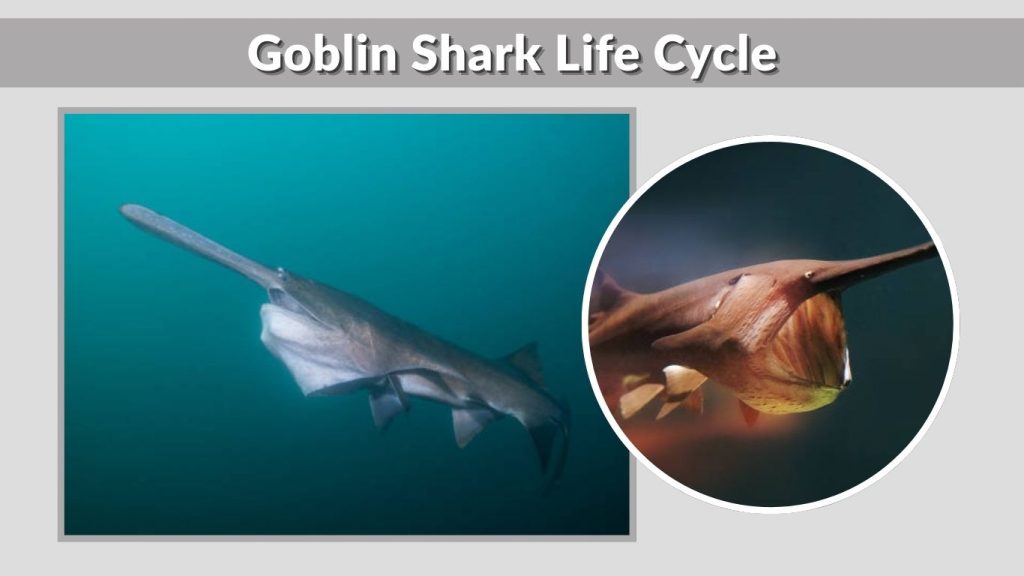
Very little is known about the goblin shark life cycle due to the difficulty of studying animals in deep-sea environments. However, scientists believe that goblin sharks are ovoviviparous. This means that eggs develop and hatch inside the mother’s body, and the young are born alive.
This reproductive strategy is common among many shark species. Embryos likely feed on unfertilized eggs inside the mother’s body before birth, a process known as oophagy. Because sightings are rare, pregnant females have almost never been observed, leaving many aspects of their reproduction a mystery.
Growth and Development
Although exact details are limited, researchers estimate that newborn goblin sharks are already relatively large at birth compared to many fish species. As they grow, they gradually adapt to deeper waters.
Adult goblin sharks can reach lengths of 3 to 4 meters (10 to 13 feet), though most recorded individuals are slightly smaller. Their slow metabolism and deep-sea lifestyle suggest gradual growth over many years. Like other deep-water species, they likely mature later in life compared to sharks living in shallower waters.
Goblin Shark Lifespan
The goblin shark lifespan is not precisely known, but scientists estimate they may live between 30 and 60 years. This estimate is based on comparisons with similar deep-sea shark species.
Deep-water animals often grow slowly and live longer than species in more active, competitive environments. The goblin shark’s slow movement, low-energy lifestyle, and stable deep-sea habitat may contribute to a relatively long life expectancy. However, because of limited research data, the exact lifespan remains uncertain.
Why Is the Goblin Shark Called a “Living Fossil”?
The goblin shark is often described as a “living fossil” because its lineage dates back more than 100 million years. Fossil evidence shows that its ancestors existed during the time of dinosaurs. Unlike many species that evolved dramatically over time, the goblin shark’s basic body structure has changed very little.
Its long snout and jaw mechanism resemble ancient shark relatives found in fossil records. This makes the goblin shark extremely important for scientists studying shark evolution. By examining this species, researchers can better understand how modern sharks developed from prehistoric ancestors.
Conservation Status
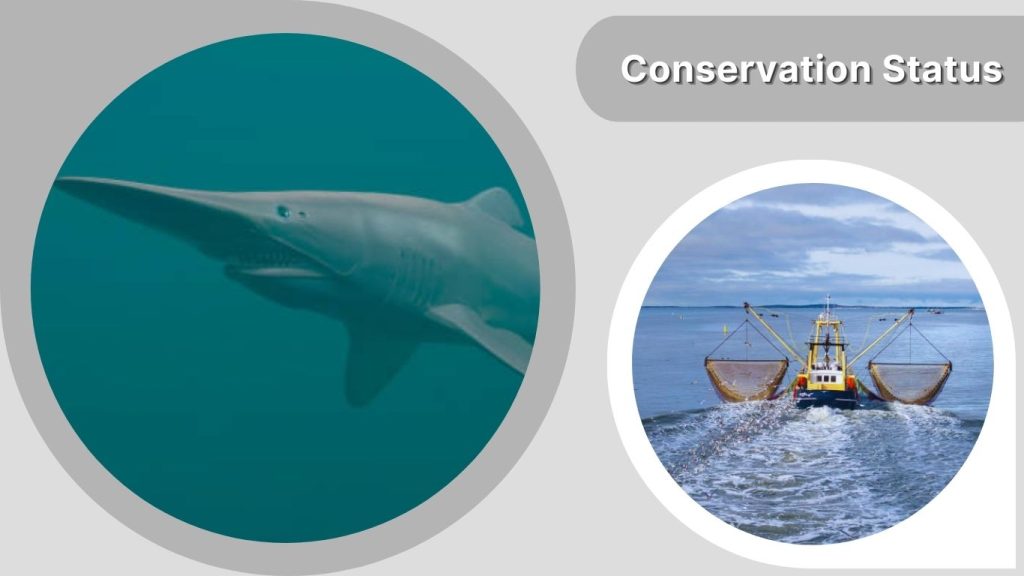
The International Union for Conservation of Nature (IUCN) currently lists the goblin shark as a species of Least Concern. This classification is mainly due to its wide geographic distribution and deep-sea habitat, which provides some natural protection.
However, goblin sharks can still be affected by deep-sea fishing activities. Most recorded specimens have been caught accidentally as bycatch. Because so little is known about their population size and reproduction rates, continued research is important to ensure their long-term survival.
FAQs
Where do goblin sharks live?
Goblin sharks live in deep-sea environments along continental slopes and submarine canyons. They are usually found at depths between 100 and 1,300 meters. Sightings have occurred near Japan, in the Gulf of Mexico, and in parts of the Atlantic and Indian Oceans.
What do goblin sharks eat?
Goblin sharks feed mainly on deep-sea fish, squid, and crustaceans. They use their specialized jaws and electroreceptors to detect and capture prey in dark ocean waters.
Are goblin sharks dangerous to humans?
No, goblin sharks are not considered dangerous. There are no confirmed attacks on humans, and their deep-sea habitat keeps them far away from people.
How long do goblin sharks live?
Scientists estimate that goblin sharks may live between 30 and 60 years. However, the exact lifespan is unknown due to limited research.
Why do goblin sharks have long noses?
Their long snouts contain sensory organs that detect electrical signals from prey. This adaptation helps them hunt effectively in the dark depths of the ocean.