




The basking shark is one of the ocean’s most fascinating giants. As the second-largest fish in the world—after the whale shark—it can grow to astonishing lengths while feeding peacefully near the surface of the sea. Despite its massive size and wide-open mouth, this shark is not a fearsome predator. Instead, it survives on tiny marine organisms. In this guide, we’ll explore basking shark facts, diet, habitat, and lifespan, while also answering a common question: are basking sharks dangerous?
What Is a Basking Shark?
The basking shark (Cetorhinus maximus) is a large, slow-moving filter-feeding shark found in temperate oceans around the world. Its name comes from its habit of “basking” at the surface, often swimming slowly with its mouth open as it feeds.
Unlike predatory sharks such as great whites, basking sharks do not hunt large prey. Instead, they filter microscopic food from seawater. Their enormous size and unusual feeding behavior make them one of the most recognizable sharks in the ocean.
Basking sharks are the second-largest fish species alive today. Adults commonly measure between 20 and 26 feet long, though some individuals may grow even larger. Despite their intimidating appearance, they are known for their calm and non-aggressive nature.
Basking Shark Facts
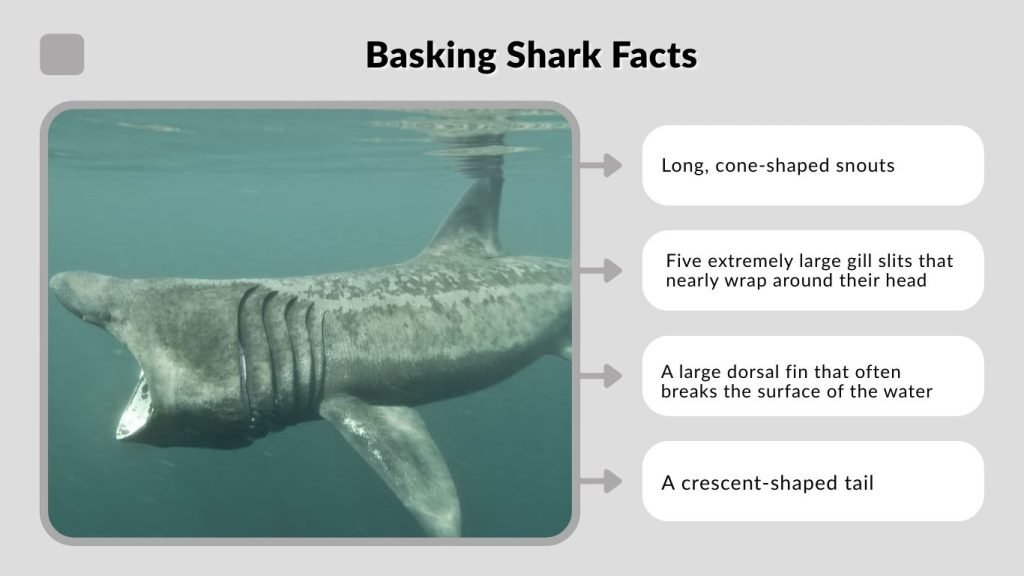
Size and Physical Characteristics
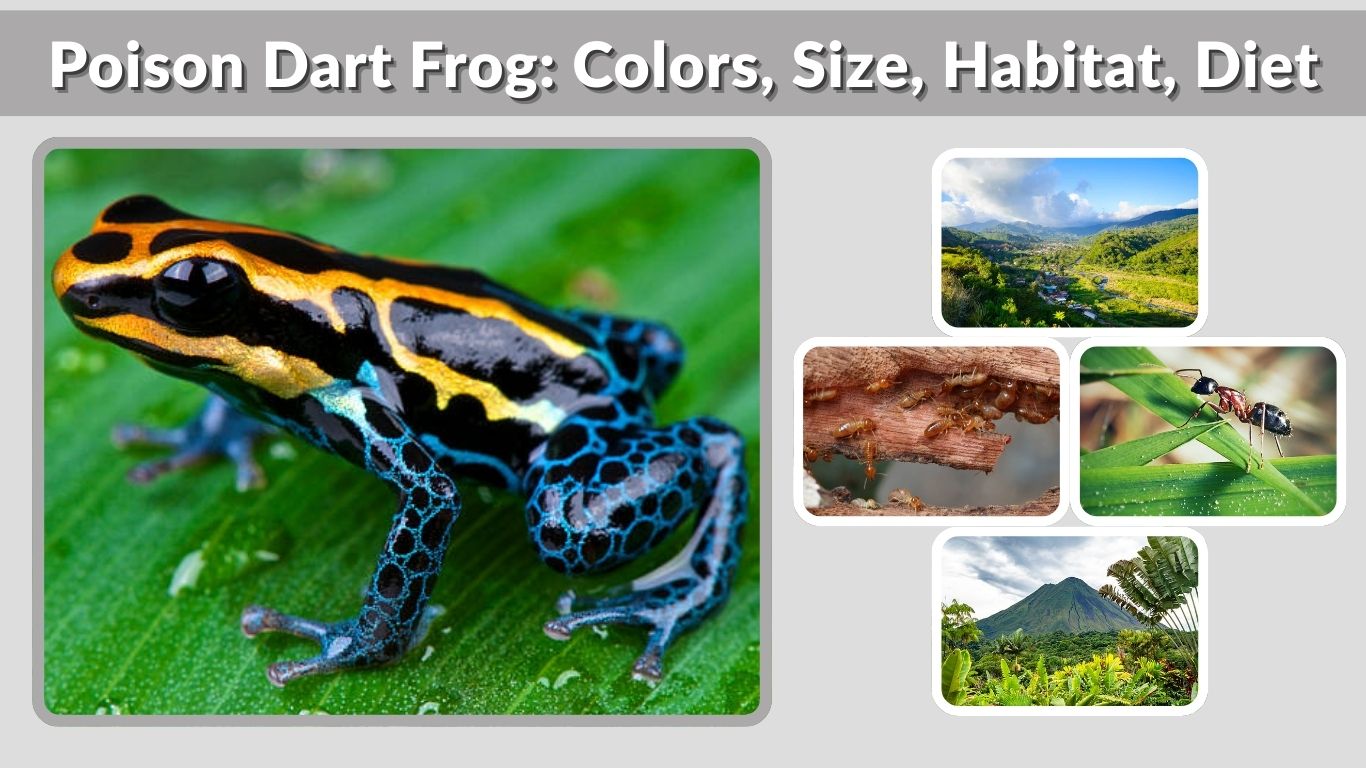
Basking sharks are true ocean giants. Most adults reach lengths of 20 to 26 feet and can weigh up to 5 tons. Their most striking feature is their enormous mouth, which can stretch more than three feet wide when fully open.
They also have:
- Long, cone-shaped snouts
- Five extremely large gill slits that nearly wrap around their head
- A large dorsal fin that often breaks the surface of the water
- A crescent-shaped tail
Their skin is rough and covered with tiny tooth-like structures called dermal denticles. These help reduce drag as they move through the water.
Despite their size, basking sharks are surprisingly slow swimmers. They typically cruise at about 2 miles per hour while feeding.
Unique Features
One of the most remarkable basking shark facts is their specialized filter-feeding system. Inside their mouths are structures called gill rakers. These comb-like filters trap tiny organisms while allowing water to pass through.
When feeding, a basking shark swims forward with its mouth wide open. Water flows in, plankton is trapped, and filtered water exits through the gills. This process allows them to feed efficiently without chasing prey.
Another interesting trait is their ability to shed and regrow their gill rakers. This helps maintain effective feeding throughout their lives.
Behavior and Migration
Basking sharks are known for their seasonal migration patterns. During warmer months, they are often seen near the surface in coastal waters where plankton blooms are abundant. In colder months, they may migrate to deeper offshore waters.
They are usually solitary animals but can sometimes be seen in small groups, especially in areas with rich food supplies. In some cases, dozens of basking sharks have been observed feeding in the same region.
Scientists believe they undertake long-distance migrations across ocean basins, although much about their deep-water behavior remains a mystery.
Basking Shark Diet
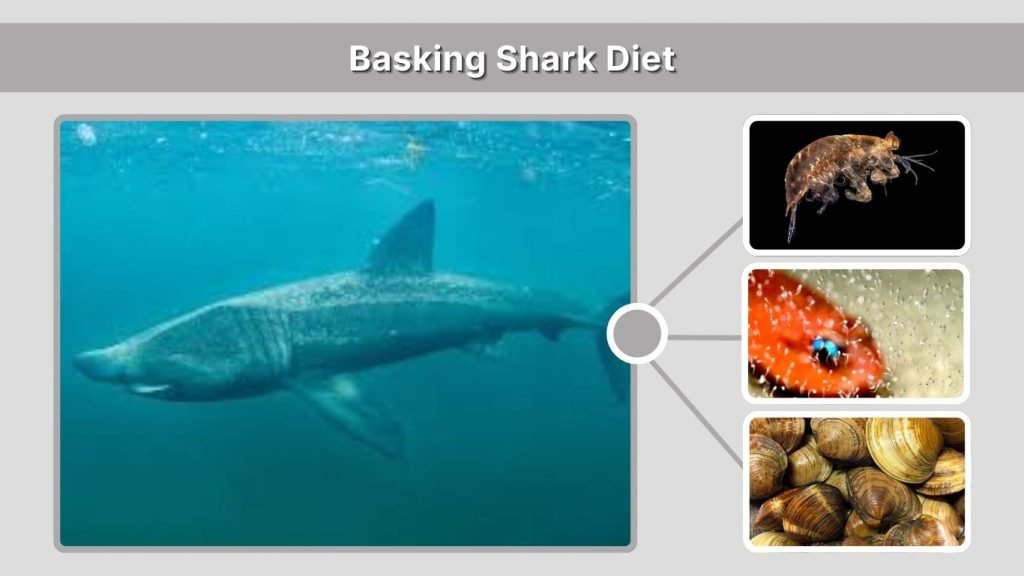
What Do Basking Sharks Eat?
Many people wonder: what do basking sharks eat?
Despite their massive size, basking sharks feed primarily on tiny organisms. Their diet mainly consists of:
- Zooplankton
- Fish eggs
- Larval fish
- Small crustaceans
They do not hunt seals, fish, or marine mammals. Their feeding strategy is completely different from predatory sharks.
In fact, basking sharks must consume large amounts of plankton daily to maintain their energy needs. Because plankton is small and dispersed, they rely on areas where these organisms are highly concentrated.
How Do Basking Sharks Feed?
Basking sharks are ram filter feeders. This means they swim forward with their mouths open to collect food. Unlike whale sharks, which can actively suck in water, basking sharks depend on forward motion to push water through their mouths.
Here’s how the process works:
- The shark swims slowly with its mouth open.
- Water enters the mouth.
- Plankton becomes trapped in the gill rakers.
- Filtered water exits through the gill slits.
They can filter thousands of tons of water per hour. When plankton levels drop, basking sharks may close their mouths and swim normally until they locate another rich feeding area.
Basking Shark Habitat
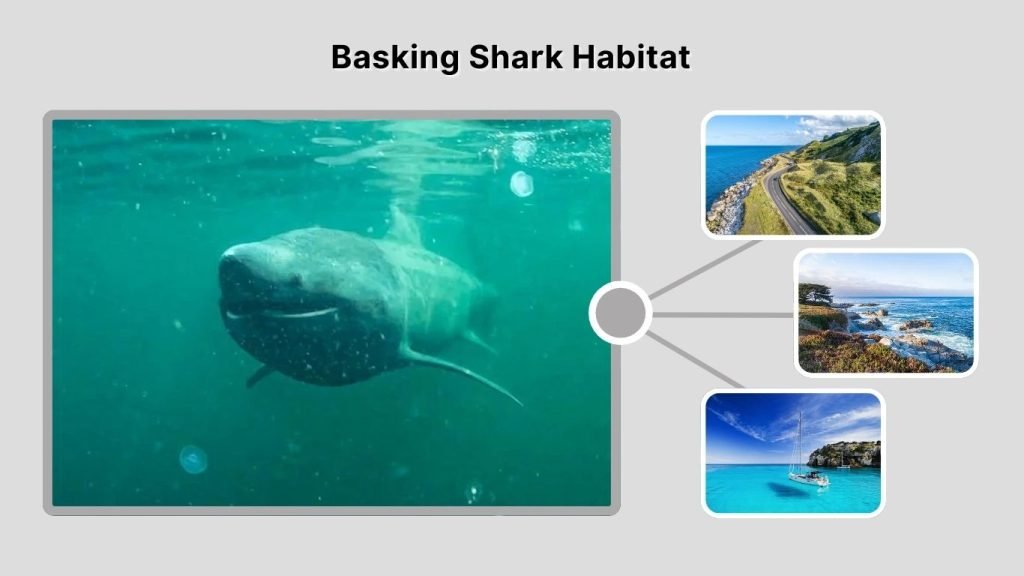
Where Do Basking Sharks Live?
Basking sharks live in temperate oceans around the world. They are commonly found in:
- The North Atlantic Ocean
- The North Pacific Ocean
- Waters around Europe
- Coastal regions of North America
- Parts of the Southern Hemisphere
They prefer cooler waters compared to whale sharks, which typically inhabit tropical seas.
During spring and summer, basking sharks often appear near coastlines where plankton blooms occur. These seasonal blooms provide the dense food sources they need to survive.
Basking Shark Lifespan and Reproduction
Basking sharks are long-lived animals, though determining their exact lifespan has been challenging. Scientists estimate that they can live 50 years or more, with some research suggesting they may reach even older ages.
One reason their populations grow slowly is their delayed maturity. Basking sharks may not reach reproductive age until they are between 12 and 20 years old. This slow growth rate makes them especially vulnerable to overfishing and environmental changes.
Basking sharks are believed to be ovoviviparous, meaning eggs develop inside the mother’s body and hatch internally before live young are born. Litters are thought to be small, though detailed reproductive data is limited due to the rarity of observing pregnant females.
Because they reproduce slowly and mature late, basking shark populations take a long time to recover if numbers decline.
Basking Shark vs Whale Shark
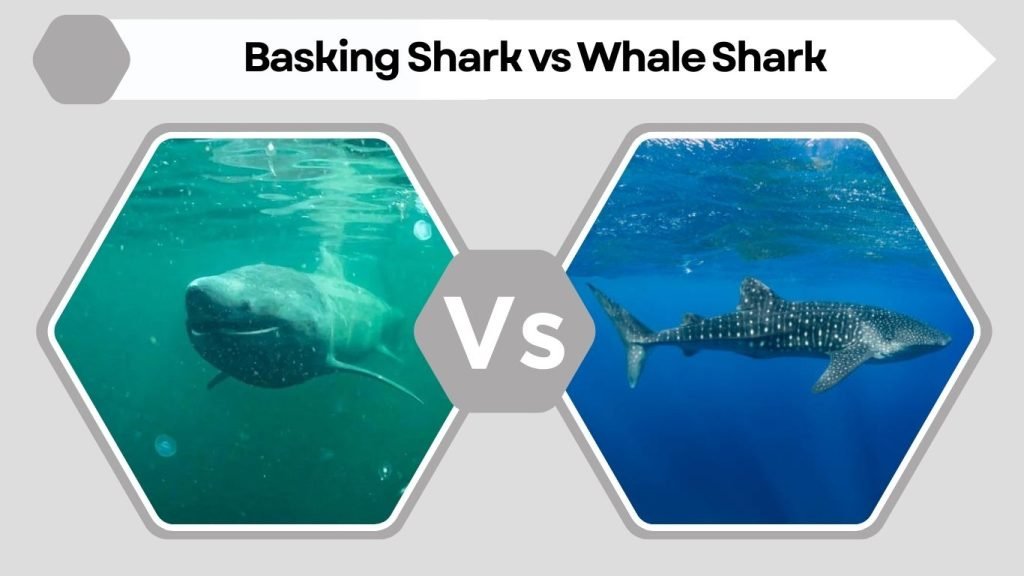
Although they are often confused, basking sharks and whale sharks are different species with several key differences.
Size Comparison
The whale shark holds the title of the largest fish in the world, reaching lengths of up to 40 feet or more. In comparison, basking sharks typically grow between 20 and 26 feet.
While both are enormous, whale sharks are generally longer and heavier.
Appearance Differences
One of the easiest ways to tell them apart is by their markings.
- Whale sharks have distinctive white spots and stripes across their dark bodies.
- Basking sharks are usually grayish-brown with no bold patterns.
Their mouth placement also differs. Whale sharks have a wide mouth positioned at the very front of their head. Basking sharks have a slightly more elongated snout, and their mouths appear to stretch widely across the head when open.
Additionally, basking sharks have extremely large gill slits that almost encircle their head, which is less pronounced in whale sharks.
Habitat and Behavior Differences
Whale sharks prefer tropical and warm waters, often near coral reefs and equatorial regions. Basking sharks, on the other hand, are found in cooler temperate waters.
Both species are filter feeders and feed primarily on plankton. However, whale sharks can actively suction-feed, while basking sharks rely more on passive ram feeding.
In terms of temperament, both species are considered gentle and pose little threat to humans.
Are Basking Sharks Dangerous?
Given their massive size and wide-open mouths, many people assume basking sharks are dangerous. However, there are no confirmed records of basking sharks attacking humans.
They are slow-moving, non-aggressive filter feeders that have no interest in large prey. Divers and snorkelers who encounter basking sharks often report calm and peaceful interactions.
Their intimidating appearance—especially when swimming with their mouth wide open—can create fear, but this behavior is simply part of their feeding process.
While they are not dangerous, it is still important to observe them responsibly. Getting too close or interfering with their movement can stress the animal and disrupt its natural behavior.
In short, basking sharks may look frightening, but they are among the ocean’s gentlest giants.
Conservation Status and Threats
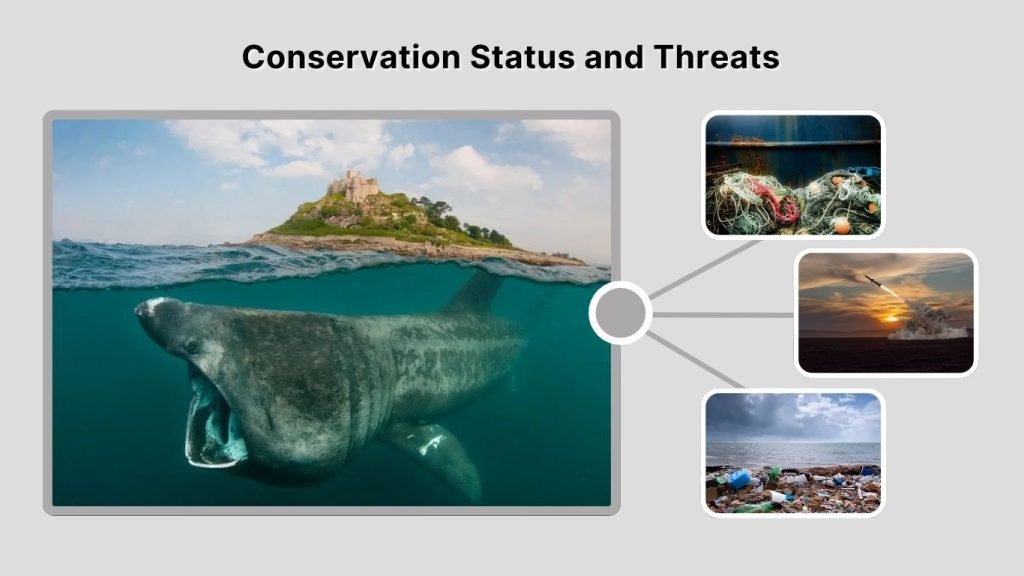
Basking sharks have faced significant threats throughout history. In the past, they were heavily hunted for their liver oil, meat, and fins. Because they grow slowly and reproduce infrequently, populations declined rapidly in some regions.
Today, basking sharks are listed as Endangered globally on the IUCN Red List. Although commercial hunting has decreased in many areas, they still face modern threats such as:
- Accidental capture in fishing gear (bycatch)
- Boat strikes
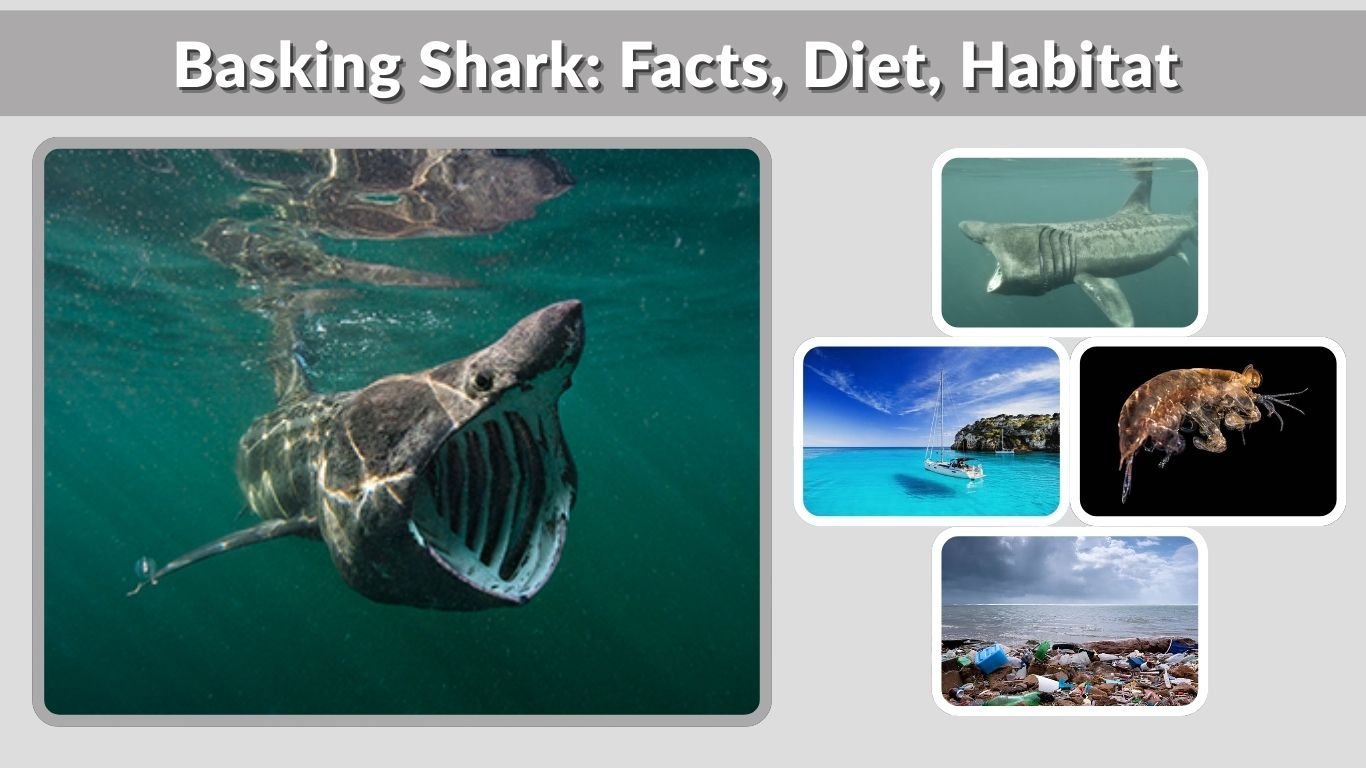
- Ocean pollution
- Climate change affecting plankton distribution
Many countries now protect basking sharks through conservation laws and marine protected areas. Continued research and international cooperation are essential to ensure their survival.
FAQs
What do basking sharks eat?
Basking sharks primarily eat zooplankton, fish eggs, and small crustaceans. They filter these tiny organisms from seawater using specialized gill rakers while swimming with their mouths open.
How big is a basking shark?
Most basking sharks grow between 20 and 26 feet long and can weigh up to 5 tons, making them the second-largest fish in the world.
Are basking sharks dangerous to humans?
No, basking sharks are not dangerous. There are no confirmed reports of attacks on humans. They are slow-moving filter feeders that consume plankton, not large animals.
Where do basking sharks live?
They live in temperate oceans worldwide, particularly in the North Atlantic and North Pacific. They are often seen near coastal waters during plankton-rich seasons.
How long do basking sharks live?
Scientists estimate that basking sharks can live for 50 years or more, although exact lifespans are still being studied.