

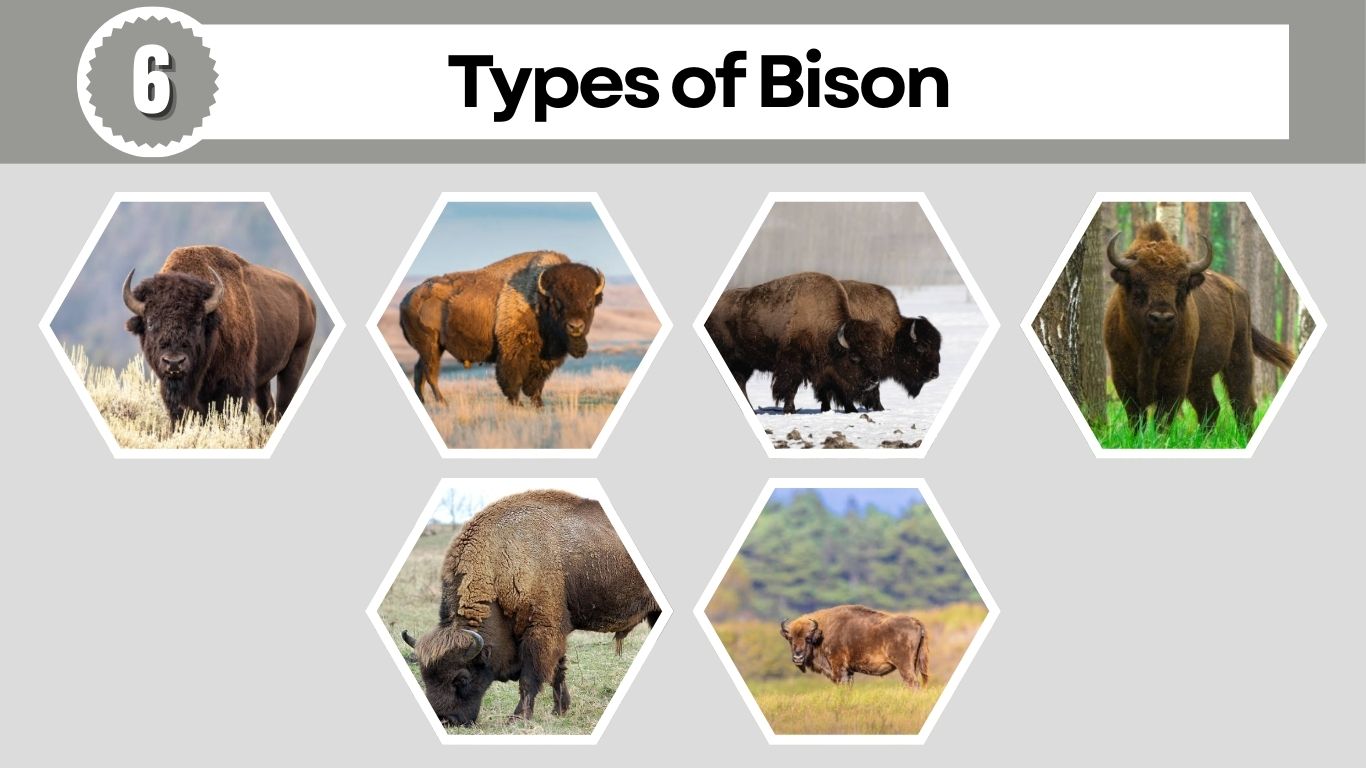
Bison are massive, powerful herbivores that have played a vital role in shaping grassland and forest ecosystems for thousands of years. Known for their huge heads, muscular shoulder humps, and thick fur, bison are perfectly adapted to cold winters and wide open landscapes. From the iconic American bison of North America to the European wisent and extinct Ice Age giants, these animals show remarkable diversity. This guide explores six major types of bison, highlighting both living species and important extinct forms.
1. American Bison
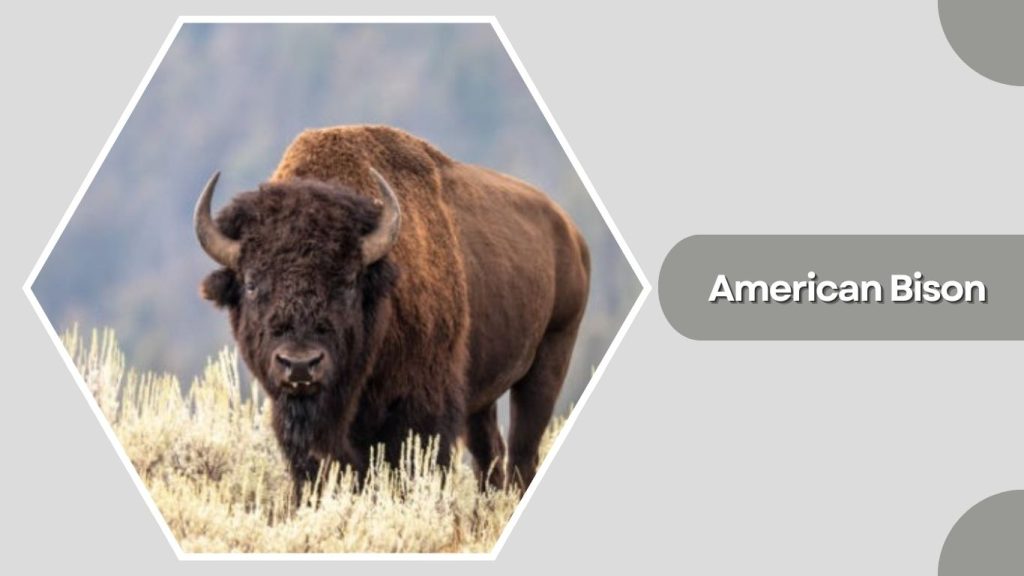
The American bison is the largest land mammal in North America and one of the most powerful grazing animals on the continent. Often called the “buffalo” in the United States, this massive herbivore once roamed the Great Plains in enormous herds numbering in the millions. Today, the American bison is a conservation success story, surviving in national parks, protected reserves, and managed herds. Its huge head, shoulder hump, and thick fur make it perfectly adapted to cold winters, open grasslands, and long seasonal migrations.
Identification
- Massive, heavy-bodied mammal weighing up to 2,000 pounds
- Large head with a thick beard and short curved horns
- Prominent shoulder hump made of strong muscles
- Dark brown fur, thicker on head, neck, and shoulders
- Short tail with a tuft at the end
- Powerful legs built for running and plowing through snow
Habitat
American bison primarily live in grasslands, prairies, open plains, river valleys, and parklands. Historically, they ranged from Canada to Mexico, following seasonal grasses. Today, they are found in protected areas such as Yellowstone National Park, grassland reserves, and large ranches. They prefer wide, open spaces where they can graze freely and move in response to weather and food availability.
Diet
Bison are strict herbivores. Their diet mainly consists of grasses, sedges, herbs, and low shrubs. During warmer months, they feed on fresh green grasses, while in winter they use their massive heads to sweep snow aside and reach buried plants. Their multi-chambered stomach allows them to digest tough plant fibers efficiently, helping them survive in harsh environments.
Behaviors and Lifecycle
American bison are social animals and usually live in herds. Females and calves form family groups, while adult males often stay alone or in small bachelor groups except during the breeding season. The breeding period, called the rut, occurs in summer, when males compete for females through displays and occasional fights. After about nine months of pregnancy, a single calf is born in spring. Calves can stand and walk within minutes and stay close to their mothers for protection. Bison can live 15–25 years in the wild. They are surprisingly fast, able to run up to 35 miles per hour, and can jump and turn quickly despite their enormous size.
2. Plains Bison
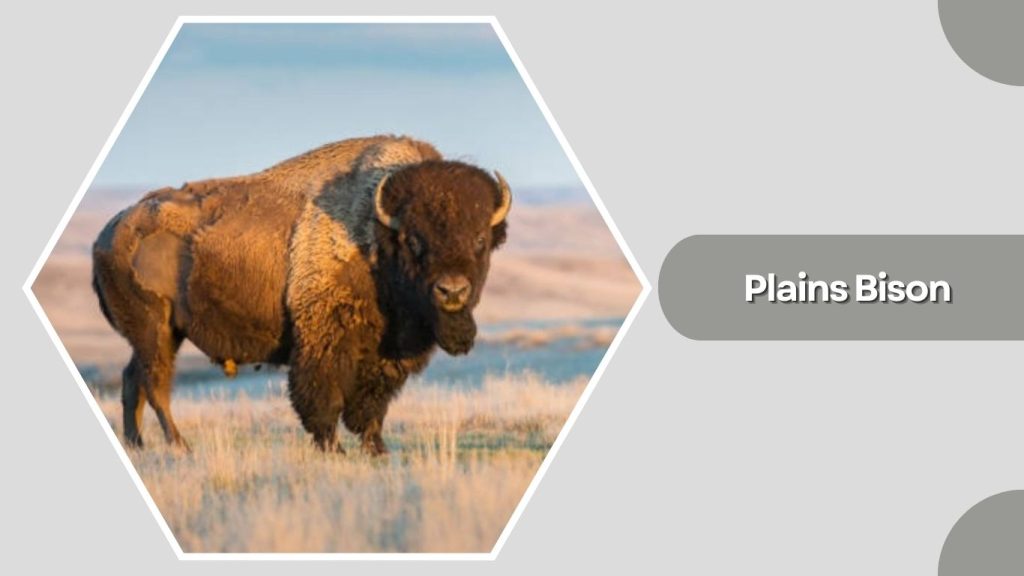
The plains bison is a subspecies of the American bison and historically formed the largest wildlife populations in North America. These bison once dominated the Great Plains, moving in massive migratory herds that shaped the grassland ecosystem. Their grazing patterns helped maintain prairie health, spread seeds, and support countless other species. Although their numbers were nearly wiped out in the 1800s, plains bison have been successfully reintroduced to parks, reserves, and conservation lands.
Identification
- Slightly smaller and leaner than wood bison
- Large shoulder hump
- Broad head with thick curly fur
- Short, curved black horns
- Dark brown coat, lighter in summer
- Strong, muscular build
Habitat
Plains bison mainly inhabit open grasslands, prairies, and rolling plains. Historically, they ranged from central Canada through the United States and into northern Mexico. Today, they are found in protected grasslands, national parks, tribal lands, and managed conservation herds. They favor wide open areas with abundant grasses and access to seasonal water sources.
Diet
Plains bison are herbivores that feed mostly on prairie grasses, sedges, and flowering plants. During spring and summer, they graze on fresh shoots and herbs. In winter, they dig through snow with their massive heads to reach dried grasses. Their efficient digestive system allows them to survive on coarse, fibrous vegetation.
Behaviors and Lifecycle
Plains bison live in herds that can range from small family groups to large seasonal gatherings. Cows and calves stay together, while bulls often form separate groups. The breeding season occurs in mid-summer, when males compete for mates by bellowing, wallowing, and sometimes fighting. After about nine months, a single calf is born, usually in late spring. Calves are reddish-orange at birth and become darker as they grow. Young bison are able to run within hours and are fiercely protected by the herd.
3. Wood Bison
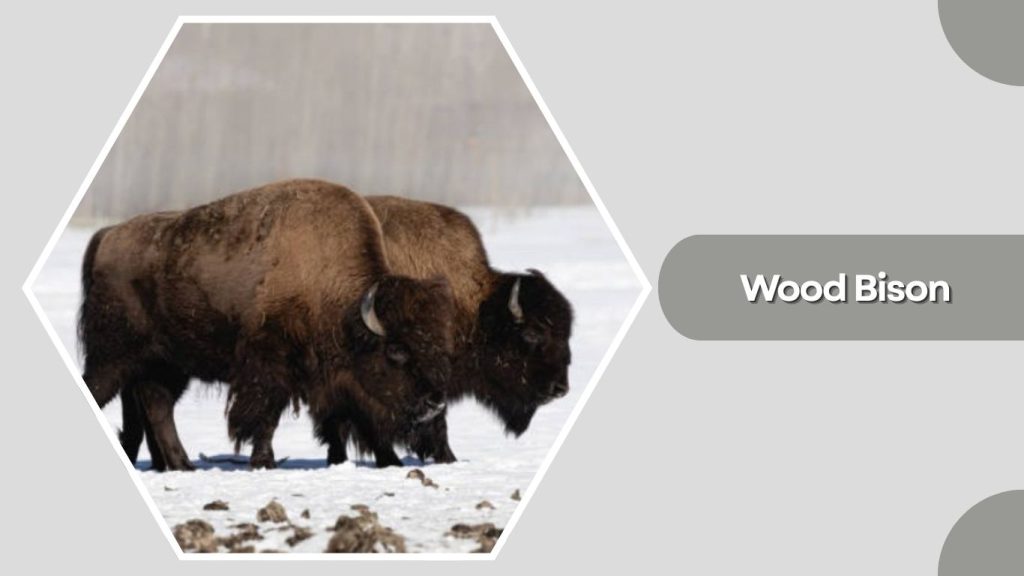
The wood bison is the largest and heaviest living type of bison. It is a northern subspecies of the American bison and is specially adapted to cold climates, deep snow, and forested landscapes. Wood bison once ranged widely across Alaska and northern Canada. Today, they survive mainly in protected reserves and national parks, where conservation programs are helping restore their populations.
Identification
- Larger and taller than plains bison
- Higher and more square-shaped shoulder hump
- Broader head with less curly hair
- Longer legs and slimmer body profile
- Dark brown to black coat
- Short, thick, curved horns
Habitat
Wood bison inhabit boreal forests, river valleys, open meadows, wetlands, and subarctic plains. Unlike plains bison, they spend more time in forest edges and grassy clearings. These habitats provide a mix of grasses, sedges, shrubs, and winter forage. Today, wood bison are mainly found in northern Canada and parts of Alaska.
Diet
Wood bison are herbivores that feed on grasses, sedges, willows, herbs, and aquatic plants. In summer, they graze in open meadows and wetlands. In winter, they dig through deep snow to reach frozen grasses and sedges, using their powerful heads and necks to clear feeding spots.
Behaviors and Lifecycle
Wood bison are social and usually live in small herds. Cows and calves form stable groups, while bulls often roam alone or in bachelor herds. The breeding season occurs in summer. Males compete by posturing, roaring, and sometimes clashing horns. After a pregnancy of about nine months, a single calf is born in spring. Calves can stand within minutes and quickly learn to follow the herd. Wood bison can live up to 20 years or more in the wild.
4. European Bison
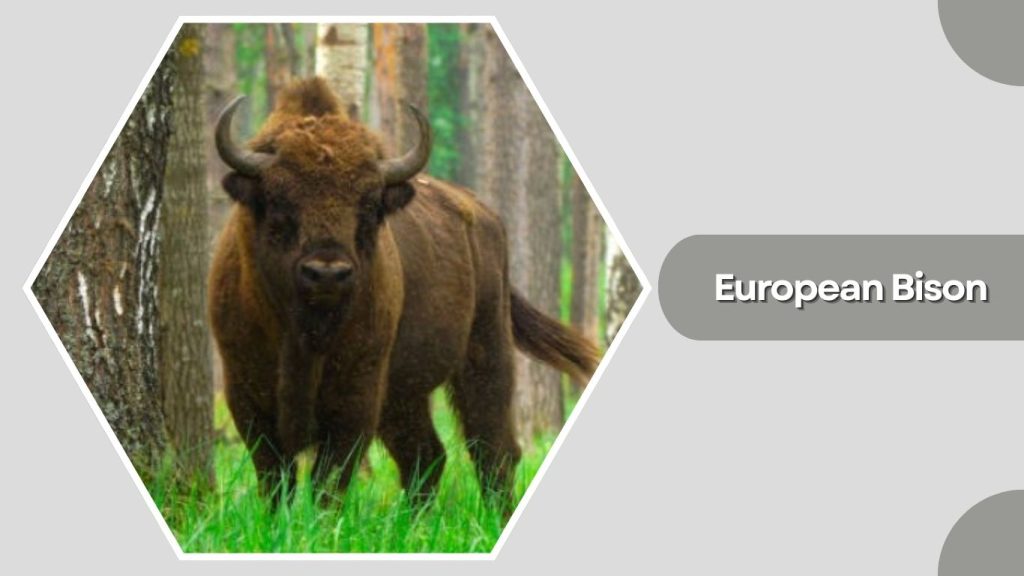
The European bison, also known as the wisent, is the largest land mammal in Europe. It once roamed widely across European forests but was driven to extinction in the wild in the early 20th century. Thanks to intensive conservation and breeding programs, European bison have been successfully reintroduced into forests and reserves across several European countries.
Identification
- Tall, heavy-bodied bison with long legs
- Large head with a broad forehead
- Thick fur on head, neck, and shoulders
- Less shaggy beard than American bison
- Dark brown coat
- Short, curved horns pointing outward
Habitat
European bison mainly inhabit mixed and deciduous forests, forest edges, meadows, and river valleys. Unlike American bison, they prefer woodland habitats but also graze in open clearings and grasslands. Today, they are found in protected forests and national parks across Eastern and Central Europe.
Diet
European bison are herbivores that feed on grasses, leaves, bark, twigs, herbs, and shrubs. In summer, they graze in forest openings and meadows. In winter, they browse on woody plants and strip bark from trees when grass is scarce.
Behaviors and Lifecycle
European bison usually live in small herds made up of females and young. Adult males are mostly solitary except during the breeding season. The rut occurs in late summer, when bulls compete for mates through displays and fighting. After about nine months, a single calf is born in late spring. Calves remain with their mothers and are protected by the herd. European bison can live 20 years or longer in the wild.
5. Steppe Bison — Extinct
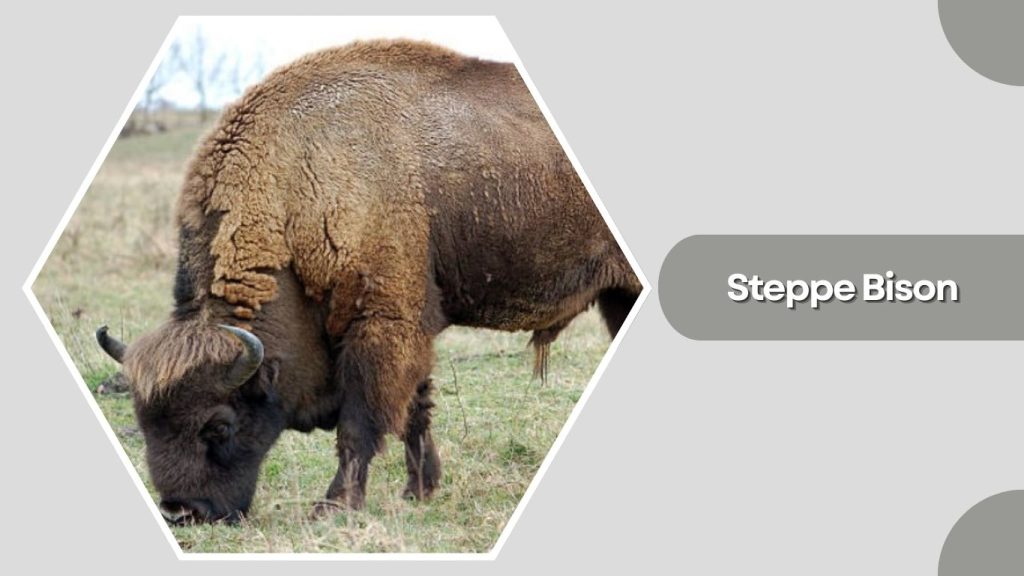
The steppe bison was an ancient species of bison that lived across Europe, Asia, and North America during the Ice Age. It was one of the most widespread large herbivores of the Pleistocene epoch and is believed to be an ancestor of modern bison species. Cave paintings created by early humans often depict this powerful animal.
Identification
- Very large body, often larger than modern bison
- Massive curved horns with wide spread
- Thick shaggy fur adapted to cold climates
- Strong shoulder hump
- Heavy head and thick neck
- Powerful legs built for long-distance travel
Habitat
Steppe bison lived in cold grasslands, tundra, open steppes, and glacial plains. These vast open environments supported large herds of grazing animals during the Ice Age. The steppe bison migrated seasonally following plant growth and snow patterns.
Diet
The steppe bison was a herbivore that fed mainly on grasses, sedges, herbs, and low shrubs. Its strong teeth and large digestive system allowed it to survive on tough, frozen vegetation during long, harsh winters.
Behaviors and Lifecycle
Steppe bison likely lived in large herds for protection from predators such as saber-toothed cats and cave lions. Breeding probably followed a seasonal pattern similar to modern bison, with calves born in spring. They went extinct around 10,000 years ago, likely due to climate change and human hunting.
6. Ancient Bison — Extinct
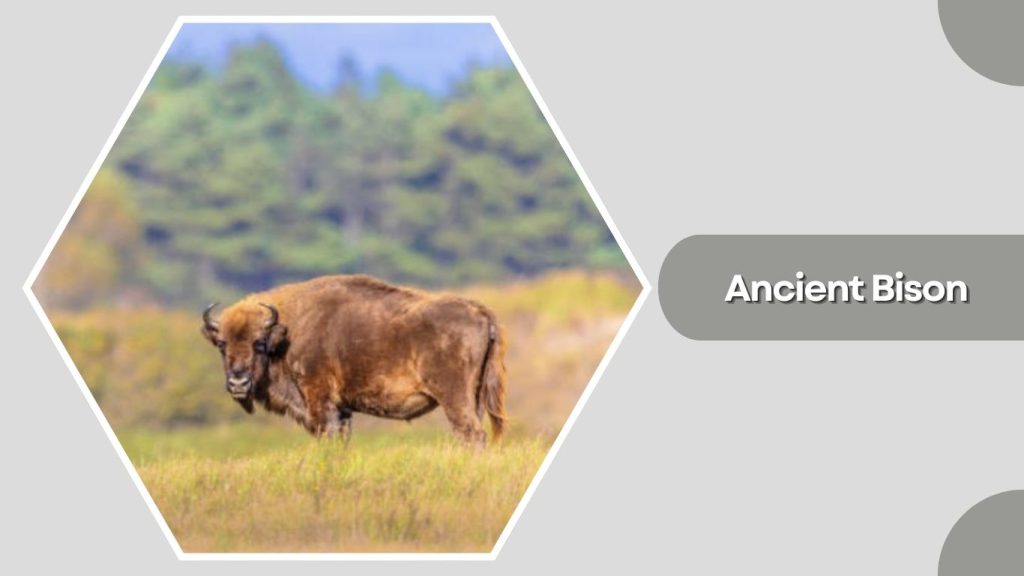
The ancient bison refers to early prehistoric bison species that lived millions of years ago and played a major role in the evolution of modern bison. These animals were among the dominant grazing mammals of prehistoric grasslands and are considered ancestors of both the American and European bison.
Identification
- Large, heavy-bodied prehistoric bison
- Extremely long and sometimes widely curved horns
- Thick, muscular neck and shoulder hump
- Dense fur adapted to cold and variable climates
- Broad skull and powerful jaws
- Strong legs built for migration
Habitat
Ancient bison lived in vast grasslands, open steppes, floodplains, and cold tundra regions across Asia, Europe, and North America. These habitats supported massive herds and many large predators.
Diet
They were strict herbivores, feeding mainly on grasses, sedges, herbs, and other tough vegetation. Their complex digestive systems allowed them to extract nutrients from coarse plant material.
Behaviors and Lifecycle
Ancient bison likely lived in large herds and migrated seasonally. Breeding occurred seasonally, with calves born in spring. Over time, changing climates and human pressure led to the extinction of many ancient bison forms, while others gradually evolved into modern species.
FAQs
What is the largest type of bison?
The wood bison is the largest living type of bison. Adult males can weigh over 2,000 pounds and stand taller at the shoulder than plains bison. Among extinct forms, the steppe bison may have been even larger than today’s biggest bison.
Are bison and buffalo the same animal?
In North America, bison are often called “buffalo,” but true buffalo are different animals found in Africa and Asia. American and European bison belong to a separate group with thicker fur, a large shoulder hump, and different horn shapes.
Where do bison live today?
Today, bison live in North America and Europe. American bison are found in national parks, reserves, and conservation herds, while European bison live mainly in protected forests and rewilding areas across Eastern and Central Europe.
What do bison eat?
Bison are herbivores that mainly eat grasses, sedges, herbs, and shrubs. In winter, they use their large heads to sweep away snow and reach buried vegetation. Their strong digestive systems help them survive on tough, fibrous plants.
Why are bison important to ecosystems?
Bison are considered a keystone species. Their grazing patterns help maintain healthy grasslands, create habitats for other animals, and recycle nutrients into the soil. Their wallowing also forms small wetlands that benefit many plants and insects.