
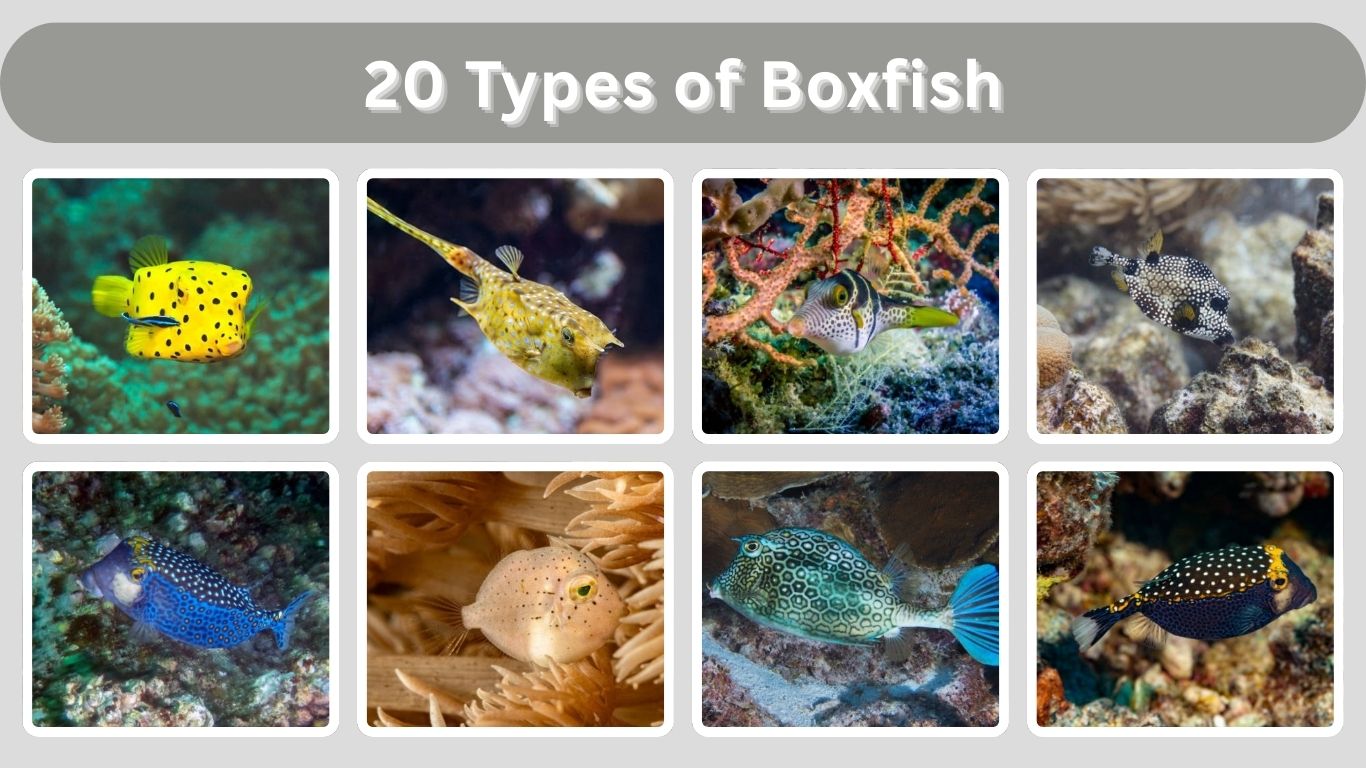
Boxfish are some of the most unusual and fascinating fish found in tropical oceans. Their bodies are enclosed in hard, box-like armor made of fused bony plates, giving them a rigid shape unlike most other fish. Instead of swimming fast, boxfish move slowly and precisely, hovering around coral reefs and lagoons. Known for their bright colors, spots, and strange “cow-like” horns in some species, boxfish are popular among divers and marine life enthusiasts worldwide.
1. Yellow Boxfish (Ostracion cubicus)
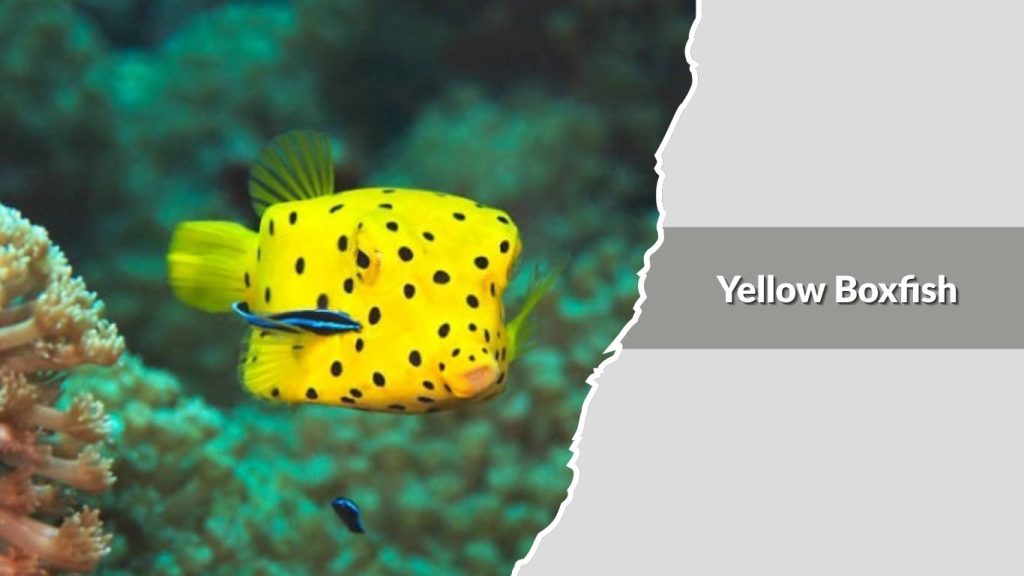
The yellow boxfish is one of the most recognizable boxfish species, famous for its bright yellow color and cube-shaped body. Juveniles look like small swimming dice with black spots, while adults become more oval and develop blue or dark markings. They are slow swimmers and rely on their hard, box-like armor for protection rather than speed.
Identification
- Bright yellow body in juveniles with black spots
- Box-shaped, rigid body covered in bony plates
- Adults turn greenish-yellow to brown with blue or dark patterns
- Small mouth, protruding eyes, and tiny fins used for precise movement
Habitat
Yellow boxfish are commonly found in warm tropical waters of the Indo-Pacific region. They prefer coral reefs, lagoons, and sheltered coastal areas where they can hide among corals and rocks. Juveniles often stay in shallow reef flats, while adults move to deeper reef slopes.
Behavior
This species is slow and deliberate in movement, using its pectoral, dorsal, and anal fins to hover and maneuver. When stressed, yellow boxfish can release a toxic substance called ostracitoxin, which can harm nearby fish. They are usually solitary and not aggressive.
Diet
Yellow boxfish are omnivorous. They feed on algae, small crustaceans, sponges, worms, and other tiny invertebrates found on reefs. Their small mouth is adapted for picking food from crevices and coral surfaces.
Lifespan
In the wild, yellow boxfish can live around 5 to 10 years, depending on environmental conditions and predation. In protected reef environments and aquariums, they may live longer with stable water quality and proper nutrition.
2. Longhorn Cowfish (Lactoria cornuta)
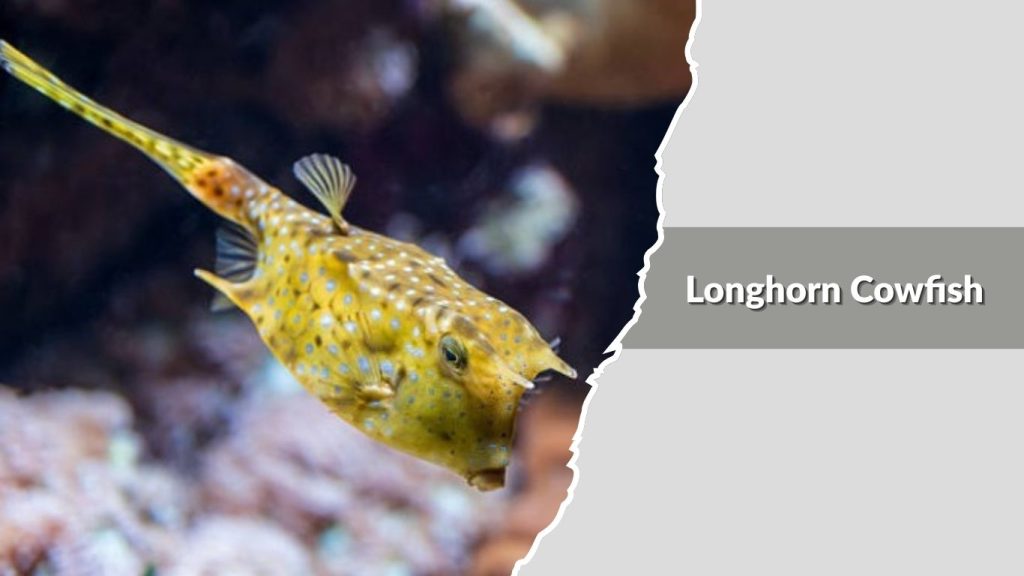
The longhorn cowfish is a striking relative of boxfish, easily recognized by the long, horn-like projections extending from the front of its head. Its rigid, box-shaped body and bright spotted pattern make it one of the most unusual-looking reef fish. Despite its awkward shape, it moves gracefully and is well adapted to calm reef environments.
Identification
- Long, forward-pointing horns above the eyes
- Box-shaped, armored body made of bony plates
- Yellow to olive body with white or blue spots
- Small mouth, large eyes, and short tail fin
Habitat
Longhorn cowfish live in warm tropical waters of the Indo-Pacific, especially around coral reefs, lagoons, and sheltered bays. They are often seen near sandy bottoms and reef edges where food is abundant and currents are gentle.
Behavior
They are slow, peaceful swimmers that rely on their hard body and horns for defense. When threatened or extremely stressed, they can release a toxic secretion into the water. Longhorn cowfish are usually solitary and spend much of their time calmly searching for food.
Diet
Their diet consists mainly of small invertebrates such as crustaceans, worms, mollusks, and sponges, along with some algae. They use their small mouths to pick prey from sand, rocks, and coral surfaces.
Lifespan
Longhorn cowfish generally live around 8 to 15 years in the wild. In stable reef environments and well-maintained aquariums, some individuals may survive even longer.
3. Spotted Boxfish (Ostracion meleagris)
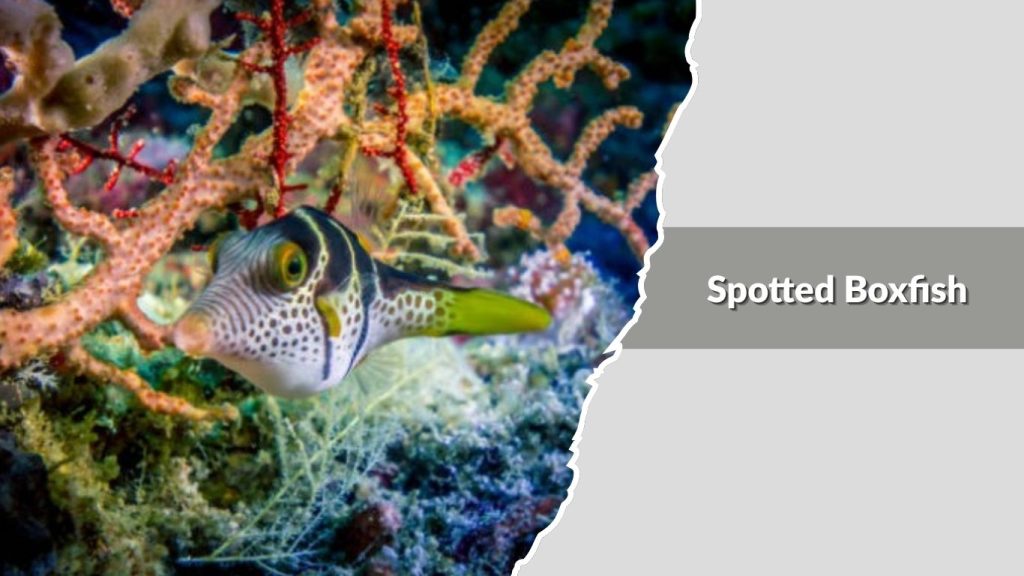
The spotted boxfish is a colorful and eye-catching species known for its dramatic difference between males and females. Females are usually dark with white spots, while males display bright blue bodies with black patterns. Its rigid, box-like body gives strong protection, allowing it to move slowly and confidently around coral reefs.
Identification
- Hard, box-shaped body covered with bony plates
- Females are black or dark brown with white spots
- Males are bright blue with black markings and yellow edges
- Small fins, rounded tail, and protruding eyes
Habitat
Spotted boxfish inhabit coral reefs, lagoons, and reef slopes throughout the Indo-Pacific region. They are commonly found swimming close to reef structures, where they can shelter among corals and rocky crevices.
Behavior
This species is generally solitary and calm. It moves using gentle fin motions rather than strong tail beats. Like other boxfish, it can release a toxic substance when severely stressed, which helps deter predators.
Diet
Spotted boxfish feed on algae, sponges, small crustaceans, worms, and other tiny invertebrates. They often graze along reef surfaces, picking food from coral and rock.
Lifespan
In the wild, spotted boxfish typically live around 7 to 12 years, depending on habitat quality and predation pressure.
4. Smooth Trunkfish (Lactophrys triqueter)
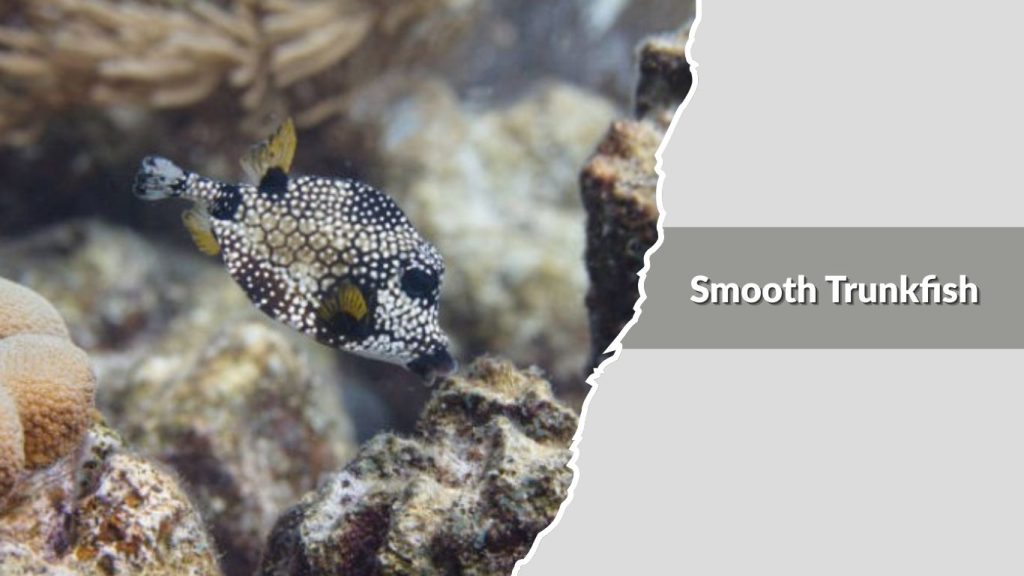
The smooth trunkfish is a distinctive Caribbean boxfish species recognized for its triangular body shape and bright blue markings on a darker background. Its rigid, armor-like body provides strong protection, allowing it to cruise slowly over reefs and sandy bottoms. Despite its stiff appearance, it is highly maneuverable and can make precise movements among corals.
Identification
- Triangular, box-like body with smooth bony plates
- Dark brown to black base color with bright blue spots and lines
- Yellow to orange highlights along edges and fins
- Small mouth, large eyes, and short, rounded tail
Habitat
Smooth trunkfish are found in the western Atlantic, including the Caribbean Sea and Gulf of Mexico. They prefer coral reefs, seagrass beds, and sandy lagoons, often staying close to the bottom near reef structures.
Behavior
They are slow-moving and usually solitary, spending much of their time hovering near the reef while searching for food. When threatened, smooth trunkfish may release a toxic mucus into the water as a defense mechanism.
Diet
Their diet includes small crustaceans, mollusks, worms, sponges, and algae. They use their small mouths to pick prey from sand and reef surfaces.
Lifespan
Smooth trunkfish can live approximately 6 to 12 years in the wild, with longevity influenced by habitat stability and predation levels.
5. Blue-spotted Boxfish (Ostracion solorensis)
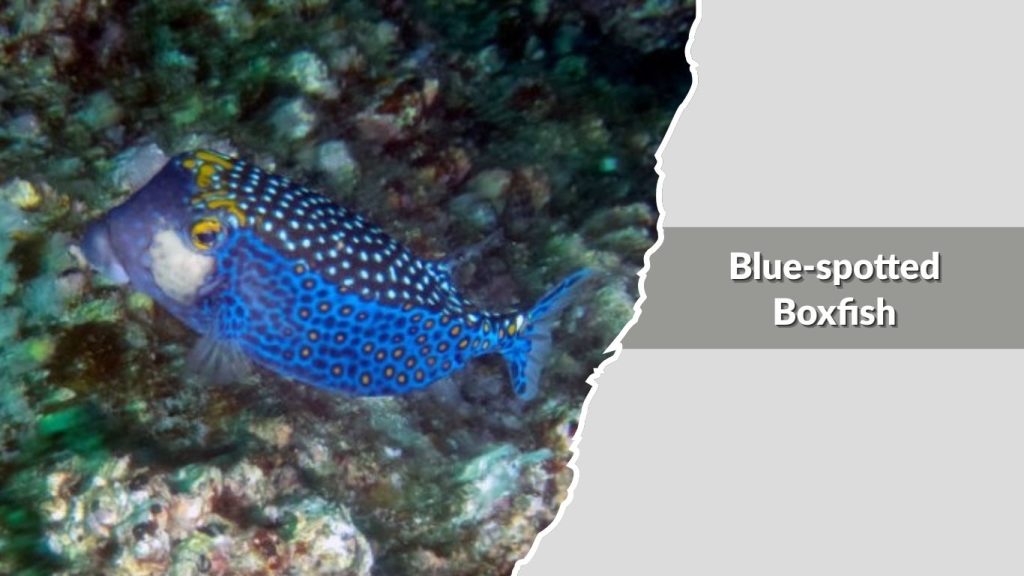
The blue-spotted boxfish is a striking Indo-Pacific species known for its pale body covered in vivid blue spots. Its compact, box-like shape and bright pattern make it easy to recognize on coral reefs. Like other boxfish, it depends more on its tough, armored skin than speed for protection.
Identification
- Box-shaped body with rigid, bony plates
- Light yellow to whitish body covered in bright blue spots
- Rounded profile with small fins and short tail
- Prominent eyes and small, puckered mouth
Habitat
Blue-spotted boxfish inhabit coral reefs, reef flats, and lagoons throughout the Indo-Pacific region. They are commonly seen in sheltered reef areas where coral growth is rich and water movement is moderate.
Behavior
This species is slow and methodical, often seen hovering close to coral heads while feeding. It is usually solitary and non-aggressive. When severely threatened, it can release toxins into the surrounding water.
Diet
They feed mainly on algae, sponges, small crustaceans, worms, and other tiny invertebrates found on reef surfaces.
Lifespan
Blue-spotted boxfish generally live about 6 to 10 years in the wild, depending on environmental conditions.
6. Thornback Cowfish (Lactoria fornasini)
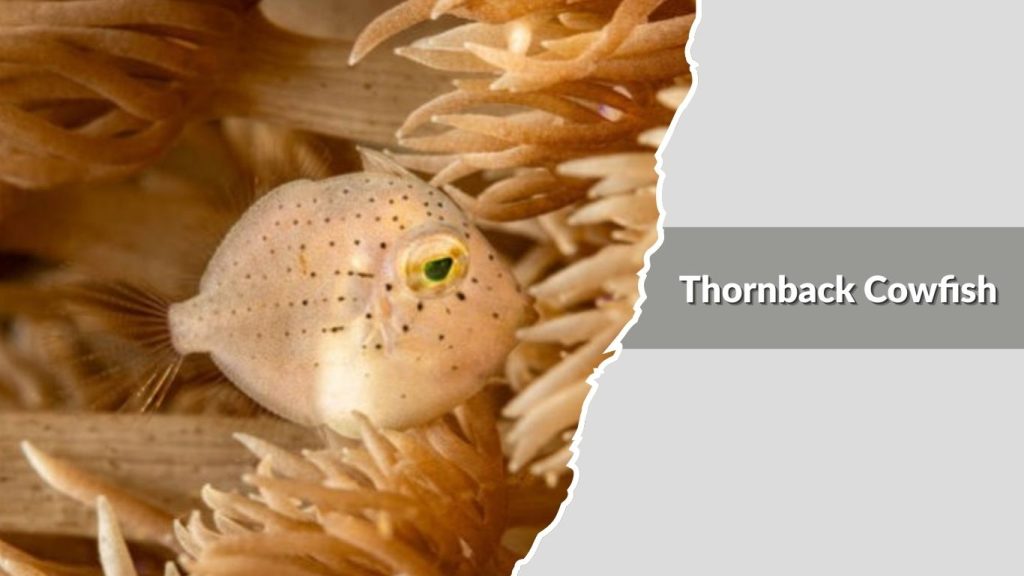
The thornback cowfish is a rare and unusual-looking boxfish relative, distinguished by the spines scattered across its rigid body. Its box-shaped form and thorny texture give it strong protection against predators. This species is less commonly seen than other cowfish and is mostly associated with deeper or less disturbed reef habitats.
Identification
- Box-like, rigid body covered with sharp spines
- Short horn-like projections near the head
- Yellowish to brown body with darker markings
- Small mouth, large eyes, and narrow tail fin
Habitat
Thornback cowfish are found in parts of the Indo-Pacific region, living around coral reefs, reef slopes, and sandy areas near reefs. They often stay near the bottom, where they can move slowly among rocks and coral structures.
Behavior
They are slow-moving and generally solitary fish. Because of their heavy armor and spiny body, they rely more on defense than escape. Like other boxfish, they can release toxins when extremely stressed.
Diet
Their diet consists of small invertebrates such as crustaceans, worms, and mollusks, along with algae and sponges picked from reef surfaces.
Lifespan
Very little is documented about the exact lifespan of thornback cowfish, but it is believed they live roughly 6 to 10 years in natural reef environments.
7. Honeycomb Cowfish (Acanthostracion polygonius)
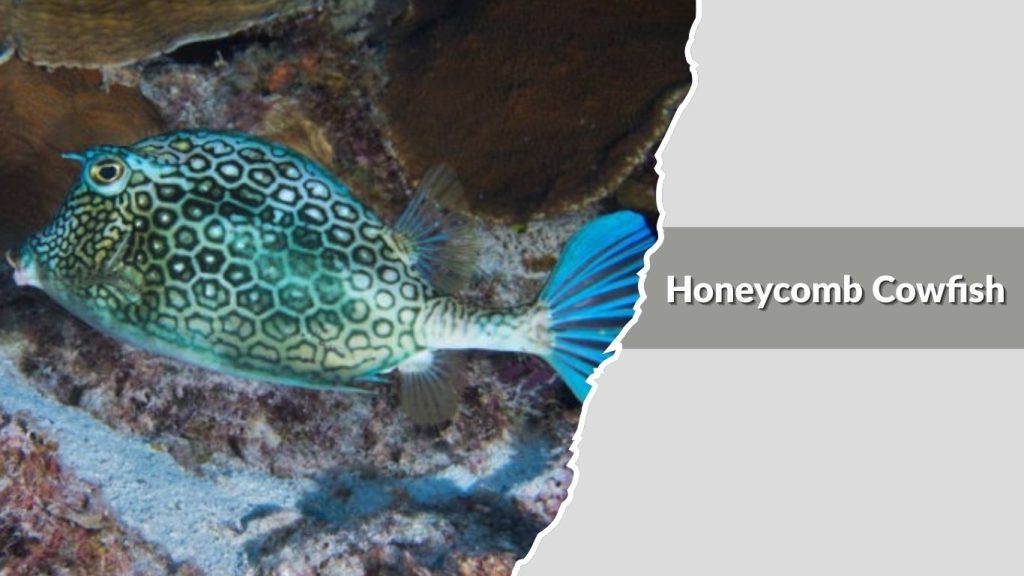
The honeycomb cowfish is named for the distinctive hexagonal, honeycomb-like pattern that covers its rigid body. This attractive design, along with its boxy shape, makes it a favorite among divers in the Atlantic. It is a slow-moving reef fish that depends on its tough armor rather than speed for survival.
Identification
- Box-shaped body with a honeycomb or net-like pattern
- Brown, tan, or yellow base color with dark-edged polygons
- Small mouth, prominent eyes, and short tail fin
- Slight horn-like bumps above the eyes
Habitat
Honeycomb cowfish are found in the western Atlantic Ocean, including the Caribbean Sea, Gulf of Mexico, and Florida reefs. They inhabit coral reefs, rocky areas, and seagrass beds, often staying close to reef structures.
Behavior
They are calm, solitary fish that swim slowly using gentle fin movements. When frightened or severely stressed, honeycomb cowfish may release a toxic substance into the surrounding water as a defensive response.
Diet
Their diet includes small crustaceans, mollusks, worms, sponges, and algae. They forage along the reef, picking food from hard surfaces.
Lifespan
Honeycomb cowfish typically live between 8 and 12 years in the wild under favorable conditions.
8. Whitespotted Boxfish (Ostracion rhinorhynchos)
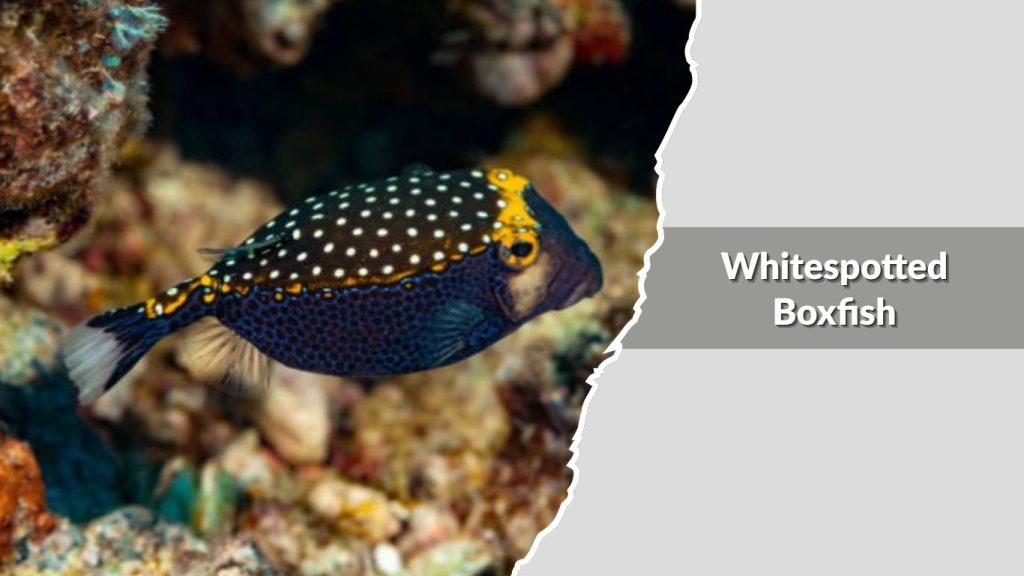
The whitespotted boxfish is an attractive Indo-Pacific species recognized for its dark body sprinkled with bright white spots. Its compact, armored form allows it to move slowly and precisely among coral reefs. This fish is often seen hovering near reef walls and coral heads, where it blends surprisingly well with its surroundings.
Identification
- Rigid, box-shaped body covered in bony plates
- Dark brown to black body with many small white spots
- Small fins, rounded tail, and prominent eyes
- Slightly pointed snout compared to some other boxfish
Habitat
Whitespotted boxfish live in tropical Indo-Pacific waters, especially around coral reefs, lagoons, and reef slopes. They are usually found near complex reef structures that offer shelter and abundant feeding opportunities.
Behavior
They are generally solitary and slow-moving, relying on precise fin motions to hover and maneuver. When seriously threatened, whitespotted boxfish can secrete toxins into the water as a last line of defense.
Diet
This species feeds on algae, sponges, small crustaceans, worms, and other tiny invertebrates collected from reef surfaces.
Lifespan
Whitespotted boxfish are believed to live about 7 to 11 years in natural reef habitats.
9. Scrawled Cowfish (Acanthostracion quadricornis)
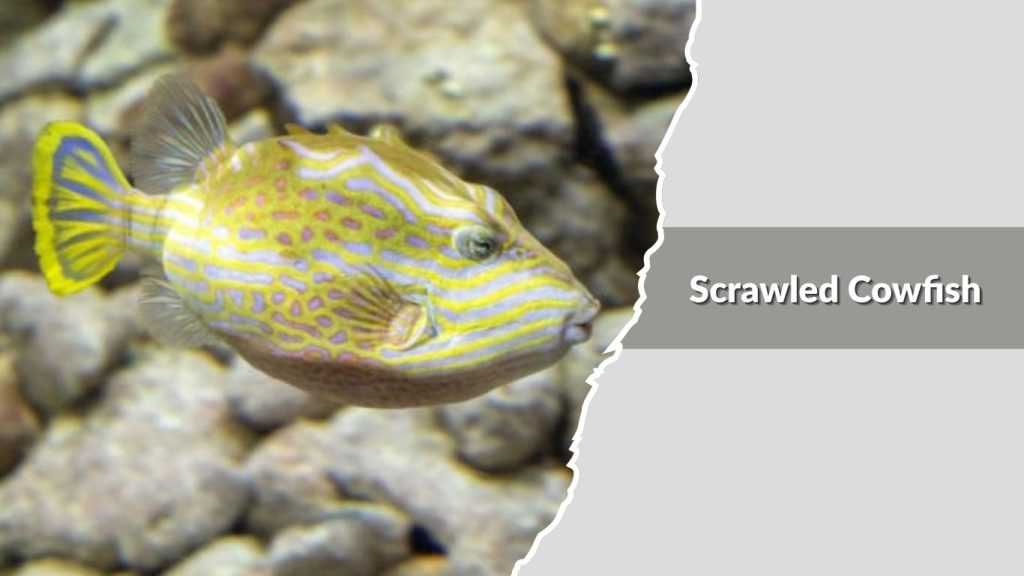
The scrawled cowfish is a striking Atlantic species known for its irregular blue lines and scribble-like markings over a yellow or tan body. It also has small horn-like projections above the eyes, giving it the “cowfish” appearance. Its rigid, box-shaped body offers strong protection, allowing it to drift calmly over reefs.
Identification
- Box-like, rigid body with bony plates
- Yellow to tan body covered in blue, scrawled markings
- Two short horn-like projections above the eyes
- Small mouth, large eyes, and short tail fin
Habitat
Scrawled cowfish are found in the western Atlantic, including the Caribbean Sea, Gulf of Mexico, and Florida coast. They inhabit coral reefs, rocky bottoms, and sandy reef edges, often staying near the seafloor.
Behavior
They are slow-moving, peaceful fish that usually live alone. Scrawled cowfish rely on their armored bodies for defense and may release toxins if extremely stressed.
Diet
Their diet consists mainly of small crustaceans, worms, mollusks, sponges, and algae picked from reef surfaces.
Lifespan
Scrawled cowfish can live approximately 8 to 13 years in the wild, depending on habitat quality and predation levels.
10. Polka-dot Boxfish (Ostracion meleagris – juvenile form)
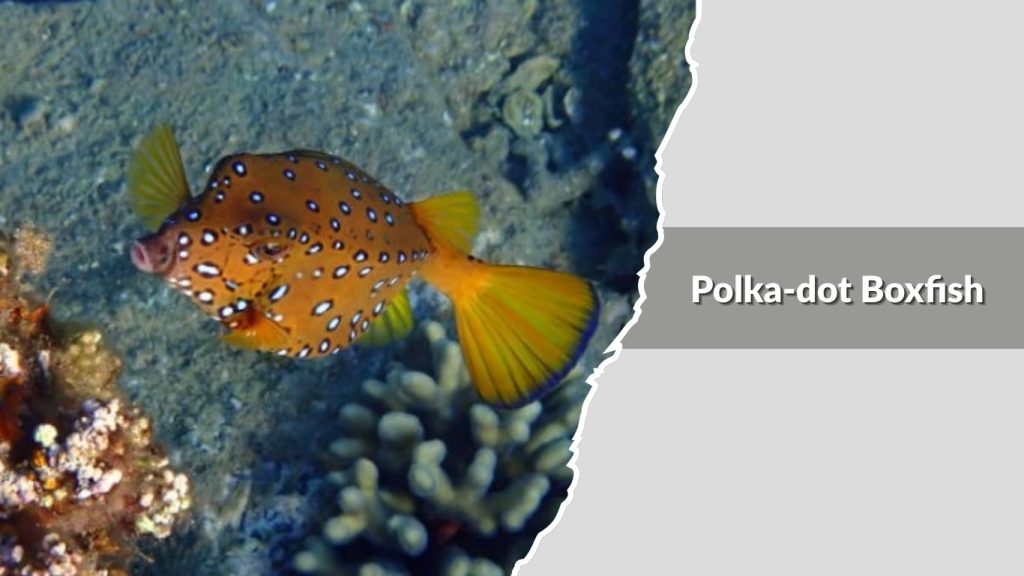
The polka-dot boxfish is the juvenile stage of the spotted boxfish and is especially famous for its bright colors and neat dot patterns. Young individuals are jet black with white spots and electric-blue rings, making them one of the most photographed juvenile reef fish. As they grow, their color pattern changes dramatically.
Identification
- Small, box-shaped body with hard bony plates
- Black body covered with white spots and blue-ringed dots
- Bright yellow edging on fins in some juveniles
- Large eyes and short, rounded tail
Habitat
Polka-dot boxfish are found in shallow coral reefs, lagoons, and reef flats of the Indo-Pacific region. Juveniles prefer protected reef areas with plenty of hiding spots among corals and rocks.
Behavior
They are slow, curious swimmers and usually stay close to shelter. Juveniles are mostly solitary and spend much of their time grazing and exploring small reef territories.
Diet
Their diet includes tiny crustaceans, algae, sponges, and microorganisms found on reef surfaces.
Lifespan
After maturing into spotted boxfish, their total lifespan is estimated to be around 7 to 12 years in the wild.
11. Black Boxfish (Ostracion cubicus – dark adult phase)
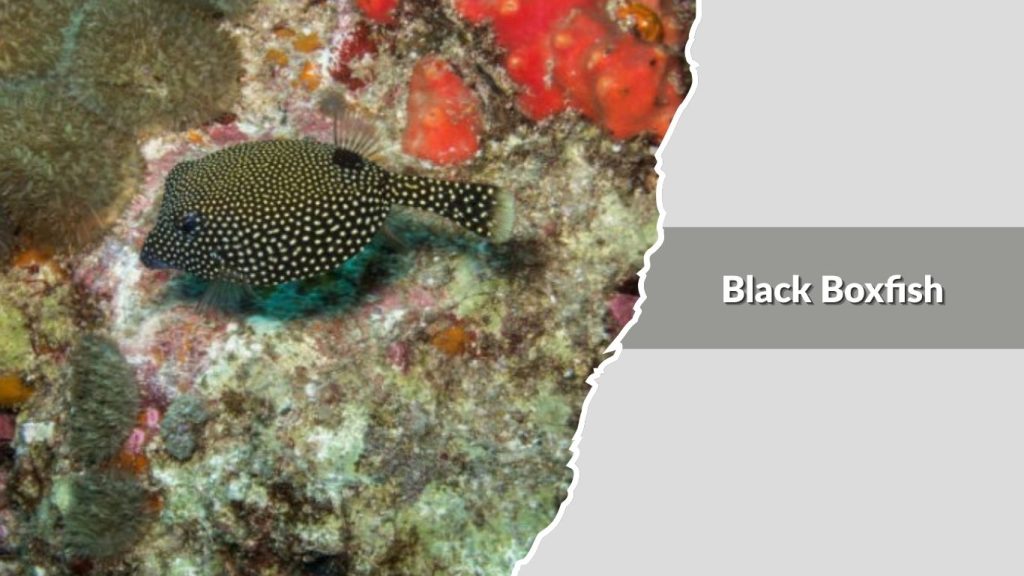
The black boxfish refers to the darker adult form of the yellow boxfish, which gradually changes color as it matures. Adults often lose the bright yellow juvenile color and become dark brown to nearly black with subtle spots or bluish markings. The rigid, cube-like body shape remains, giving strong protection against predators.
Identification
- Box-shaped, armored body with bony plates
- Dark brown to black coloration in adults
- Faint pale or bluish spots and markings
- Small mouth, prominent eyes, and short tail fin
Habitat
Black boxfish are found on coral reefs, lagoons, and reef slopes across the Indo-Pacific. Adults are more often seen in deeper reef zones compared to brightly colored juveniles.
Behavior
They are slow-moving and solitary fish that rely on their tough exterior rather than speed. When severely threatened, they may release toxins into the surrounding water.
Diet
Their diet consists of algae, sponges, small crustaceans, worms, and other tiny invertebrates grazed from reef surfaces.
Lifespan
The full lifespan, including the yellow juvenile stage, is typically around 5 to 10 years in the wild.
12. Trunkfish (Lactophrys trigonus)
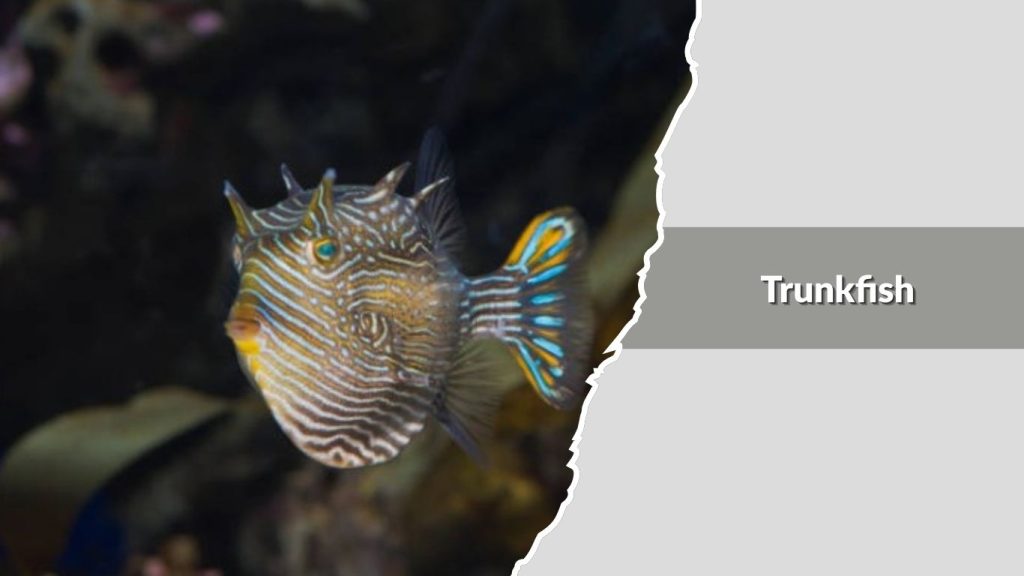
The trunkfish is a boxfish species known for its angular body shape and bold, contrasting patterns. Its rigid, armor-like plates give it a solid, triangular profile, which inspired the common name “trunkfish.” It moves slowly but is very precise in its movements, allowing it to navigate coral reefs with surprising control.
Identification
- Triangular, box-shaped body with hard bony plates
- Yellow, brown, or bluish patterns over a darker base
- Prominent eyes and small, puckered mouth
- Short tail and small dorsal and anal fins
Habitat
Trunkfish are found mainly in the western Atlantic, including coral reefs of the Caribbean and Gulf of Mexico. They inhabit reefs, lagoons, and rocky coastal areas, usually close to the bottom.
Behavior
They are peaceful, solitary fish that spend most of their time slowly cruising near reef structures. When threatened, trunkfish may release a toxic secretion as a defense.
Diet
Their diet includes small crustaceans, worms, mollusks, sponges, and algae collected from reef surfaces.
Lifespan
Trunkfish generally live about 7 to 12 years in natural reef environments.
13. Spiny Boxfish (Acanthostracion spinosissimus)
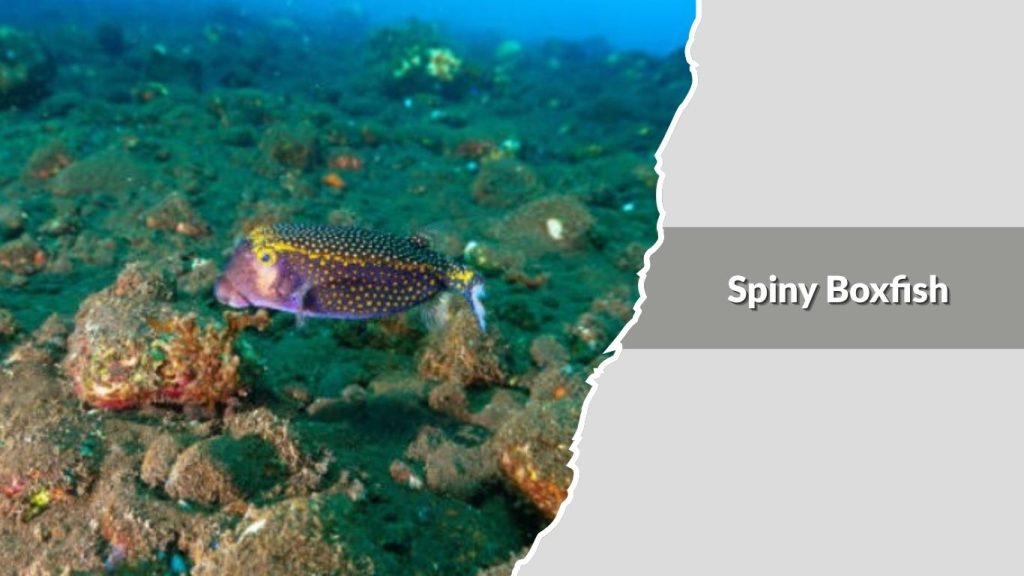
The spiny boxfish is named for the small, sharp spines scattered across its rigid body, giving it a rough, armored appearance. This Atlantic species is less smooth than many other boxfish and relies heavily on its tough, spiked exterior for protection. Its slow, hovering swimming style is typical of boxfish.
Identification
- Rigid, box-shaped body covered with short spines
- Brown, gray, or yellowish base color with subtle spots
- Prominent eyes and very small mouth
- Short tail and compact fins
Habitat
Spiny boxfish inhabit coral reefs, rocky bottoms, and sandy areas in the western Atlantic Ocean, especially in the Caribbean Sea and Gulf of Mexico. They usually stay near the reef structure where shelter and food are abundant.
Behavior
They are slow-moving, solitary fish that spend much of their time close to the seafloor. When under extreme stress, they may release toxins into the water as a defense.
Diet
Their diet consists of small crustaceans, worms, mollusks, sponges, and algae scraped from reef surfaces.
Lifespan
Spiny boxfish are believed to live approximately 6 to 11 years in the wild.
14. Buffalo Trunkfish (Lactophrys trigonus)
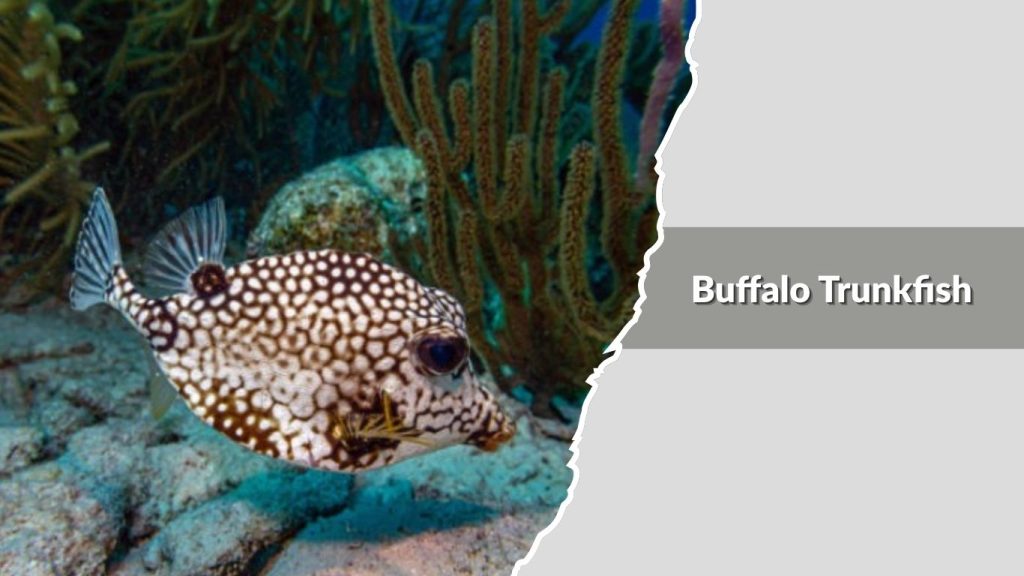
The buffalo trunkfish is a common Caribbean boxfish known for its thick, angular body and bull-like profile, which inspired its name. It has a rigid, triangular shape with bold lines and spots across its body. Although it looks clumsy, it is highly maneuverable and can hover precisely near reef surfaces.
Identification
- Thick, triangular, box-shaped body
- Yellow to brown coloration with blue or dark lines
- Slight humpbacked or bulky appearance
- Small mouth, large eyes, and short tail fin
Habitat
Buffalo trunkfish are found in the western Atlantic Ocean, especially around Florida, the Caribbean Sea, and the Gulf of Mexico. They live on coral reefs, rocky ledges, and sandy areas near reefs.
Behavior
They are calm, slow swimmers that usually live alone. Buffalo trunkfish spend much of their time searching for food along the reef and may release toxins if severely stressed.
Diet
Their diet includes small crustaceans, worms, mollusks, sponges, and algae.
Lifespan
Buffalo trunkfish generally live around 8 to 12 years in the wild.
15. Short-horned Boxfish (Acanthostracion quadricornis – juvenile form)
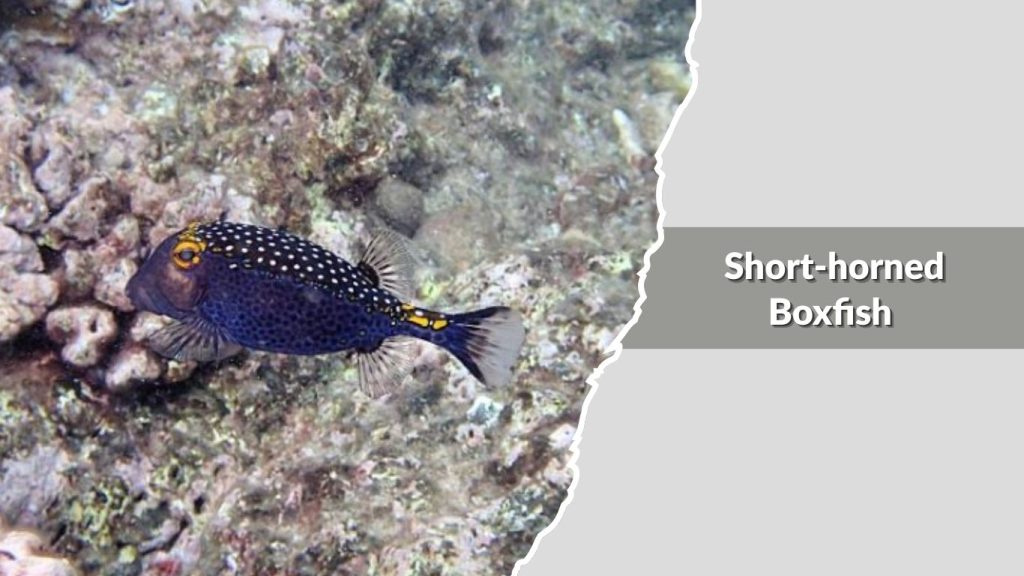
The short-horned boxfish refers to young stages of certain cowfish species that show only small, stubby horn-like projections instead of long horns. These juveniles have compact, box-shaped bodies and often display brighter or simpler patterns than adults. As they mature, their horns and markings become more pronounced.
Identification
- Small, rigid, box-shaped body
- Very short horn-like bumps above the eyes
- Yellowish to brown base color with spots or lines
- Large eyes and tiny mouth
Habitat
Short-horned boxfish are usually found in shallow coral reefs, lagoons, and protected reef flats. Juveniles prefer calm waters with dense coral cover where they can hide from predators.
Behavior
They are slow-moving and cautious, often staying close to reef structures. Juveniles are typically solitary and rely on camouflage and their hard body for protection.
Diet
They feed on tiny crustaceans, algae, sponges, and microorganisms found on coral and rock surfaces.
Lifespan
After growing into adult cowfish forms, their total lifespan is estimated to range between 7 and 12 years.
16. Reticulated Boxfish (Ostracion nasus)
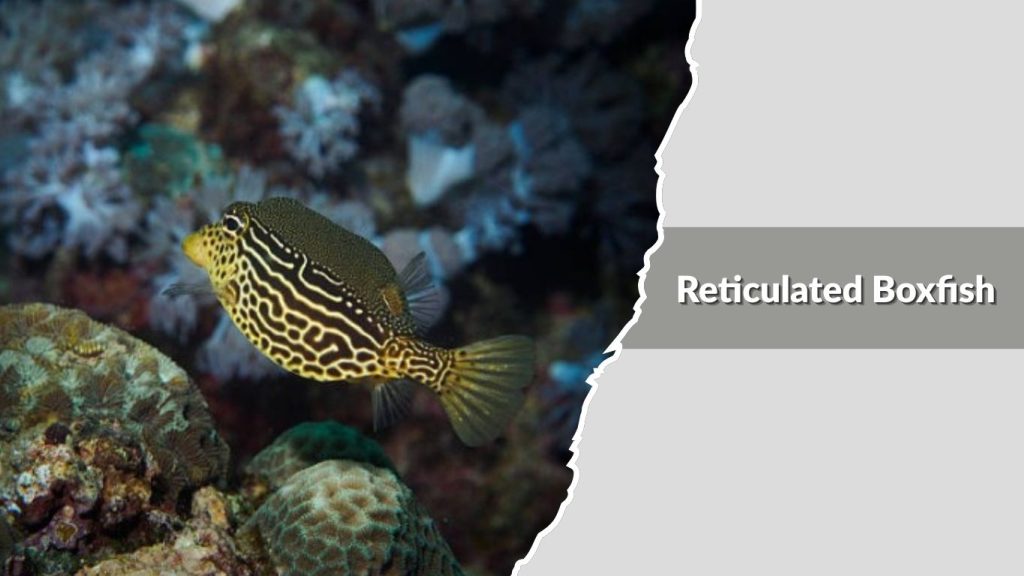
The reticulated boxfish is named for the net-like, reticulated pattern that covers its rigid body. This beautiful design, combined with its boxy shape, makes it stand out on Indo-Pacific reefs. It moves slowly and steadily, hovering close to coral heads and reef walls while searching for food.
Identification
- Box-shaped, rigid body with a net-like pattern
- Yellow to tan base color with dark reticulated lines
- Slightly elongated snout compared to other boxfish
- Small fins, short tail, and prominent eyes
Habitat
Reticulated boxfish are found in tropical Indo-Pacific waters, living on coral reefs, lagoons, and reef slopes. They are usually seen near complex reef structures that provide both food and shelter.
Behavior
They are calm, solitary fish that rely on precise fin movements to maneuver. When extremely stressed, they can release toxins into the surrounding water.
Diet
Their diet consists of algae, sponges, small crustaceans, worms, and other tiny invertebrates.
Lifespan
Reticulated boxfish are believed to live about 7 to 11 years in natural reef habitats.
17. Humpback Boxfish (Tetrosomus gibbosus)
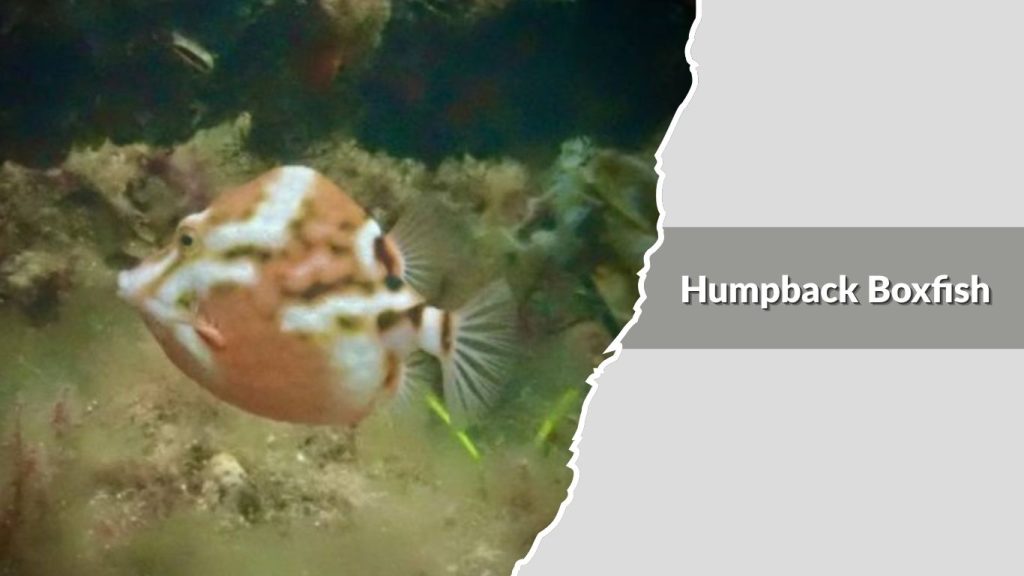
The humpback boxfish is easily recognized by the raised, humped profile on its back, giving it a distinctive silhouette. Its rigid, box-like body is often decorated with contrasting spots and lines. This unusual shape provides extra protection and makes it a fascinating sight on Indo-Pacific coral reefs.
Identification
- Box-shaped, armored body with a noticeable hump on the back
- Brown, yellow, or olive coloration with lighter spots or markings
- Short snout, large eyes, and small mouth
- Small fins and a short, rounded tail
Habitat
Humpback boxfish inhabit coral reefs, lagoons, and reef slopes across the Indo-Pacific region. They are commonly seen near coral heads, rocky crevices, and reef walls.
Behavior
They are slow-moving and generally solitary. Using gentle fin motions, they hover close to the reef while searching for food. Like other boxfish, they may release toxins when under extreme stress.
Diet
They feed on algae, sponges, worms, small crustaceans, and other tiny invertebrates found on reef surfaces.
Lifespan
Humpback boxfish are thought to live around 6 to 10 years in the wild.
18. Orange Boxfish (Ostracion immaculatus)
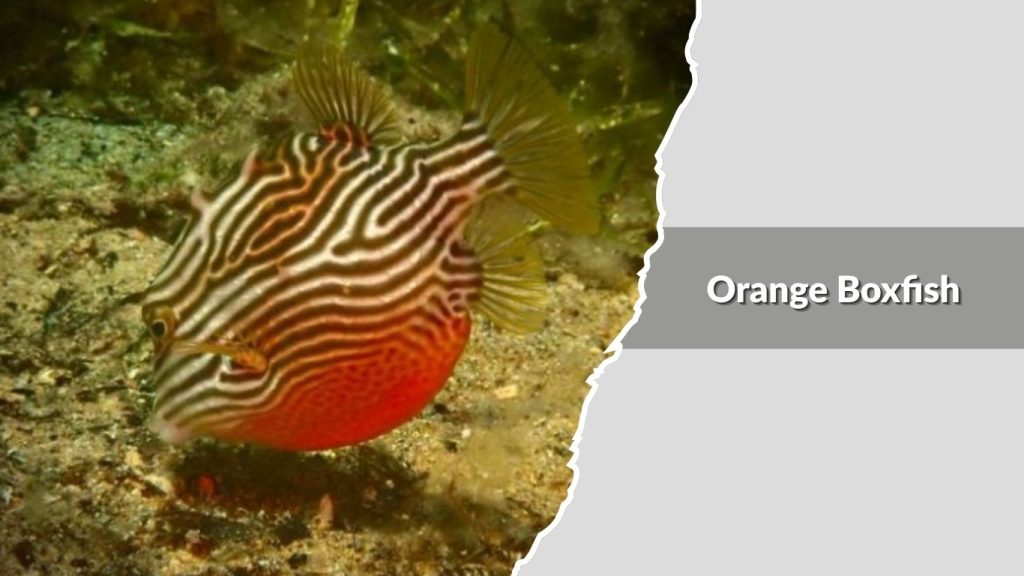
The orange boxfish is known for its warm orange to yellowish body tones and smooth, rigid shape. Compared to more heavily patterned species, it often appears cleaner and less spotted, giving it a distinctive look on coral reefs. Like all boxfish, it relies on its hard, bony armor rather than speed for protection.
Identification
- Rigid, box-shaped body with smooth bony plates
- Orange to yellowish overall coloration
- Rounded profile with small fins and short tail
- Prominent eyes and small, puckered mouth
Habitat
Orange boxfish are found in parts of the Indo-Pacific, especially around coral reefs, reef slopes, and sheltered lagoons. They are usually seen close to reef structures where they can forage and hide.
Behavior
They are slow, calm swimmers and usually solitary. Orange boxfish hover near corals and rocks while feeding and may release toxins if extremely stressed.
Diet
Their diet includes algae, sponges, small crustaceans, worms, and other tiny invertebrates.
Lifespan
Orange boxfish are believed to live approximately 6 to 10 years in the wild.
19. Turretfish (Tetrosomus concatenatus)
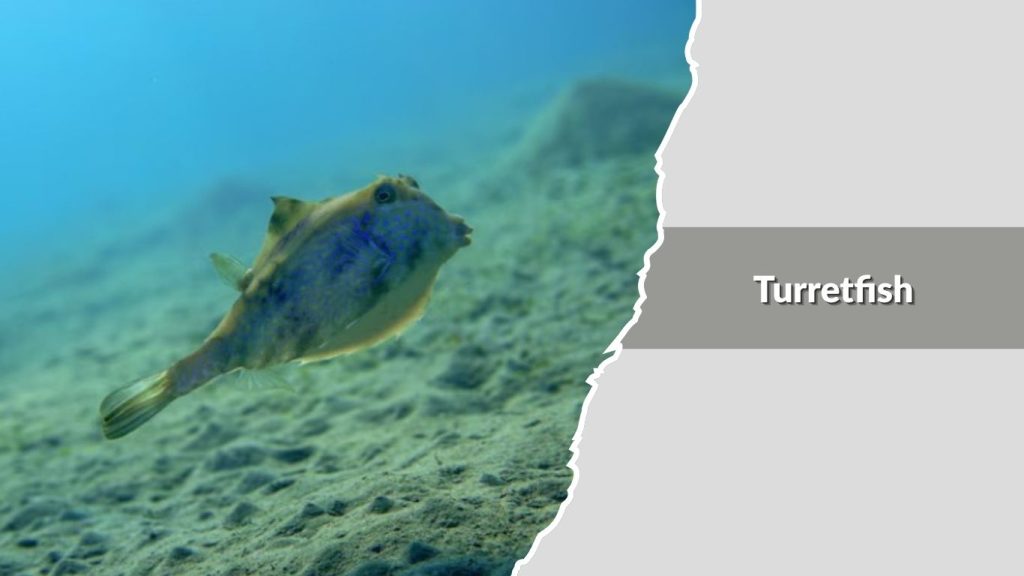
The turretfish is a close relative of boxfish, recognized for its tall, angular body and turret-like appearance. Its rigid armor of bony plates forms a boxy structure that gives excellent protection from predators. Subtle patterns and a high-backed profile make it easy to distinguish from other trunkfish species.
Identification
- Tall, box-shaped body with a high, turret-like profile
- Brown to olive coloration with lighter markings
- Prominent eyes and a small mouth at the front
- Short tail and compact fins
Habitat
Turretfish are found in tropical Indo-Pacific waters, inhabiting coral reefs, reef slopes, and lagoon environments. They are often seen hovering near reef walls and coral outcrops.
Behavior
They are slow, controlled swimmers that rely on precise fin movements. Usually solitary, turretfish spend much of their time calmly foraging. Like other boxfish, they may release toxins when severely stressed.
Diet
They feed mainly on algae, sponges, small crustaceans, worms, and other tiny invertebrates.
Lifespan
Turretfish typically live around 7 to 12 years in natural reef habitats.
20. Camel Cowfish (Tetrosomus gibbosus)
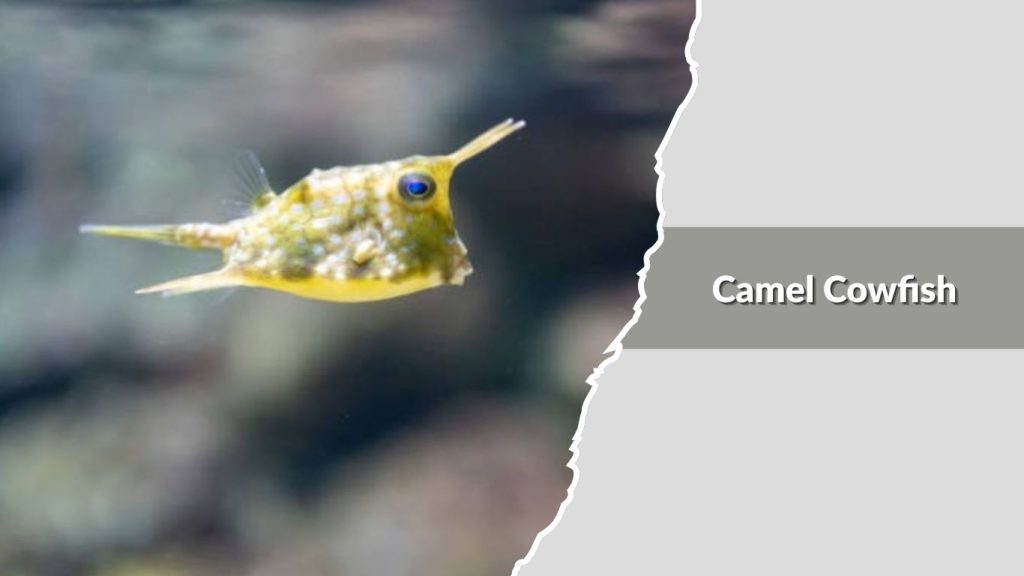
The camel cowfish gets its name from the raised, camel-like hump on its back, which gives it a distinctive curved profile. Its rigid, box-shaped body is covered with hard bony plates that act like natural armor. This unusual shape, combined with subtle colors and patterns, makes it a fascinating reef fish to observe.
Identification
- Box-shaped, armored body with a noticeable hump on the back
- Brown, yellowish, or olive coloration with faint spots or markings
- Short snout, small mouth, and prominent eyes
- Small fins and a short, rounded tail
Habitat
Camel cowfish are found in tropical Indo-Pacific waters, especially around coral reefs, reef slopes, and sheltered lagoons. They usually stay close to coral heads and rocky structures.
Behavior
They are slow, calm swimmers that rely on precise fin movements to hover. Usually solitary, they may release toxins when extremely stressed.
Diet
Their diet includes algae, sponges, small crustaceans, worms, and other tiny invertebrates picked from reef surfaces.
Lifespan
Camel cowfish are believed to live around 6 to 10 years in the wild under natural reef conditions.
FAQs
What is a boxfish?
A boxfish is a marine fish with a hard, box-shaped body made of fused bony plates. This natural “armor” protects it from predators. Boxfish belong to the family Ostraciidae and are closely related to cowfish and trunkfish.
Are boxfish poisonous?
Yes, many boxfish can release a toxic substance called ostracitoxin when they are extremely stressed or dying. This toxin can harm or even kill nearby fish in confined spaces, such as aquariums, but it is rarely a problem in the open ocean.
Where do boxfish live?
Boxfish mainly live in warm tropical and subtropical seas. They are most commonly found on coral reefs, in lagoons, and around sheltered coastal areas where there are plenty of hiding places and food sources.
What do boxfish eat?
Boxfish are omnivores. They feed on algae, sponges, worms, small crustaceans, mollusks, and other tiny invertebrates. They usually pick food from reef surfaces using their small mouths.
Can boxfish be kept in aquariums?
Some boxfish can be kept in large, well-maintained marine aquariums, but they are challenging fish. They need stable water conditions, peaceful tank mates, and special care because stress can cause them to release toxins.