



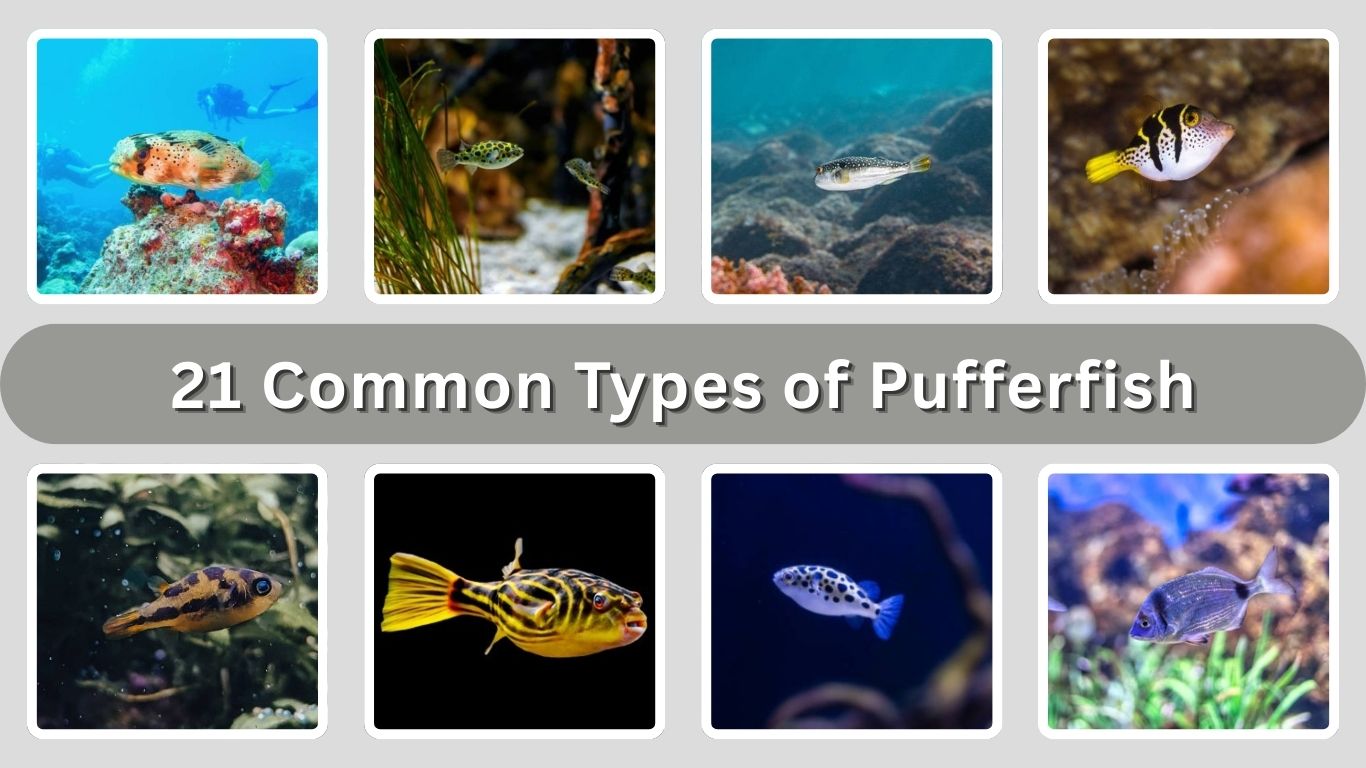
Pufferfish are some of the most fascinating fish in the world, known for their round bodies, big eyes, and incredible ability to inflate like a balloon when threatened. They live in oceans, brackish waters, and even freshwater rivers, depending on the species. From tiny dwarf puffers to massive giant freshwater puffers, these fish show remarkable diversity in size, color, and behavior. Their strong beak-like teeth, curious nature, and unique defense system make them especially interesting to aquarists and marine life enthusiasts.
1. Porcupine Puffer
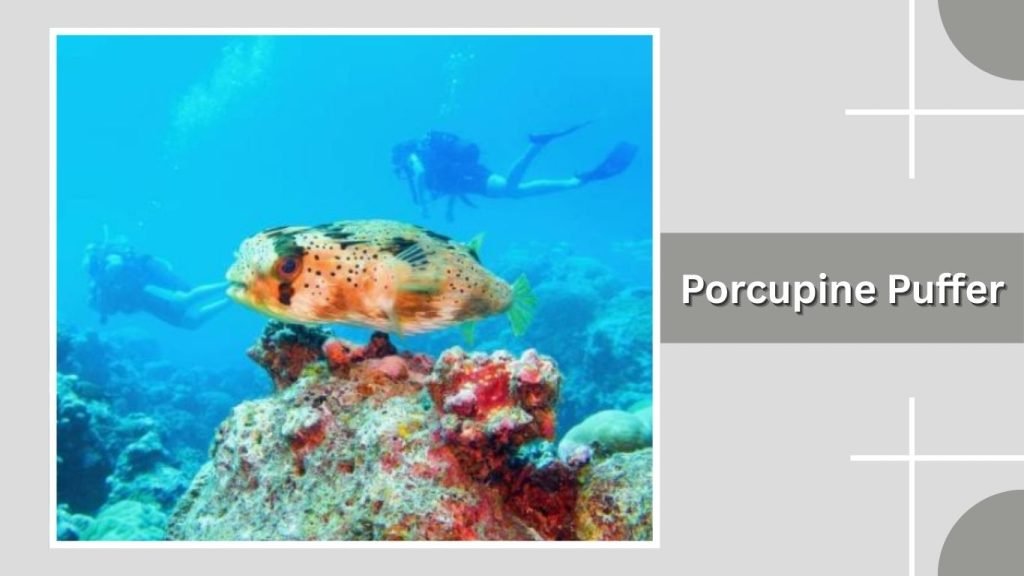
The porcupine puffer is one of the most recognizable pufferfish in the world, famous for its large eyes, blunt face, and long movable spines. It is found mainly in warm tropical and subtropical oceans, where it slowly cruises over reefs and rocky seabeds. When threatened, it inflates its body with water or air, making the spines stand out to scare predators.
Identification
- Large, round body with long, sharp spines
- Big protruding eyes and a beak-like mouth
- Usually yellowish-brown, tan, or gray with dark spots
- Can inflate dramatically into a ball shape
Habitat
Porcupine puffers live in tropical and subtropical seas around the world. They are commonly found near coral reefs, rocky shores, lagoons, and sometimes seagrass beds. During the day, they often hide in crevices, caves, or reef structures and come out more actively at night.
Behavior
This species is slow-moving and generally solitary. When disturbed, it inflates its body and erects its spines as a strong defense mechanism. Porcupine puffers are curious fish and are sometimes seen approaching divers. They are mostly nocturnal, becoming more active after sunset.
Diet and Lifespan
Porcupine puffers feed mainly on hard-shelled prey such as crabs, snails, sea urchins, and small crustaceans. Their strong beak-like teeth help them crush shells easily. In the wild, they can live for around 10 years or more, depending on environmental conditions and predation.
2. Green Spotted Puffer
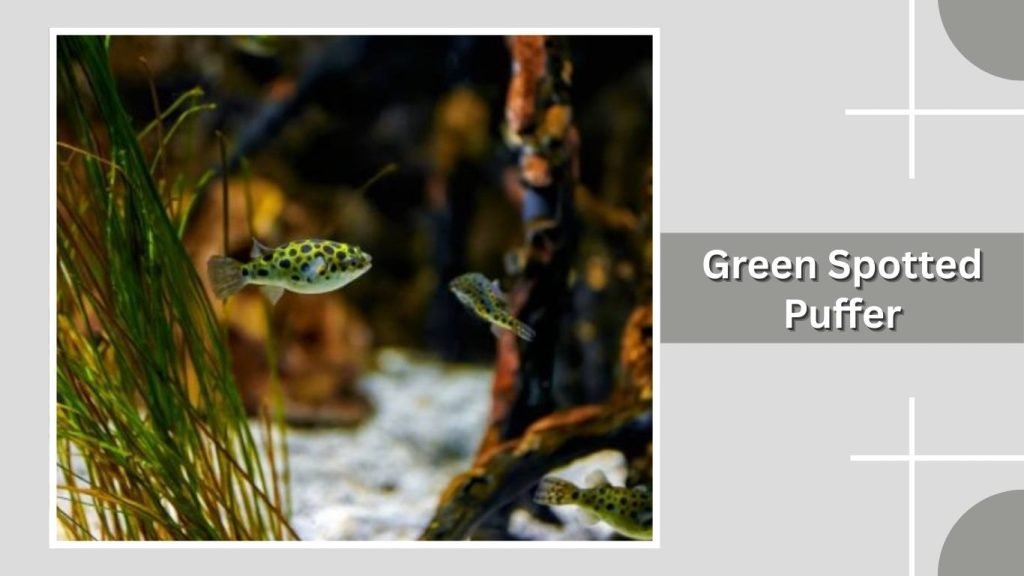
The green spotted puffer is a small but striking pufferfish known for its bright green body covered in bold black spots. It is very popular in the aquarium trade because of its intelligence and personality. Although often sold as a freshwater fish, it naturally lives in brackish and coastal waters and needs gradually saltier conditions as it matures.
Identification
- Bright green to yellow-green body with black spots
- White or pale underside
- Large eyes and a short, rounded snout
- Grows much smaller than most marine puffers
Habitat
Green spotted puffers are native to Southeast Asia, where they live in estuaries, mangroves, river mouths, and coastal lagoons. Juveniles are often found in freshwater or mildly brackish areas, while adults usually move toward brackish to marine environments.
Behavior
This species is very alert, curious, and active. It recognizes its environment and often interacts with what is happening outside the tank. Green spotted puffers can be territorial and nippy, especially as they grow older, so they are usually kept alone or with carefully chosen tank mates.
Diet and Lifespan
Green spotted puffers feed on snails, small crabs, insects, worms, and other hard-shelled foods. Their teeth grow continuously, so crunchy prey is important. With proper care, they can live around 8 to 10 years, sometimes longer in well-maintained conditions.
3. Dogface Puffer

The dogface puffer is a large, friendly-looking pufferfish named for its blunt snout and expressive eyes that resemble a dog’s face. It is well known among divers for its curious nature and is often seen hovering around coral reefs. This species is also popular in large marine aquariums because of its intelligence and bold personality.
Identification
- Thick, rounded body with smooth skin (no long spines)
- Blunt “dog-like” face with large eyes
- Color varies from yellow and brown to gray or black
- Able to inflate its body when threatened
Habitat
Dogface puffers are found in tropical oceans, especially in the Indo-Pacific region. They usually inhabit coral reefs, rocky reefs, and coastal slopes, where they hide in caves and crevices during the day and move around more openly at night.
Behavior
They are slow swimmers but very aware of their surroundings. Dogface puffers are known to recognize divers and aquarium keepers. When threatened, they inflate their bodies as a defense. They are generally solitary and may become aggressive toward smaller fish.
Diet and Lifespan
Dogface puffers eat crustaceans, mollusks, sea urchins, and other hard-shelled invertebrates. Their strong beak helps them crush tough prey. In the wild and in captivity, they can live 10 years or more with proper care.
4. Figure Eight Puffer
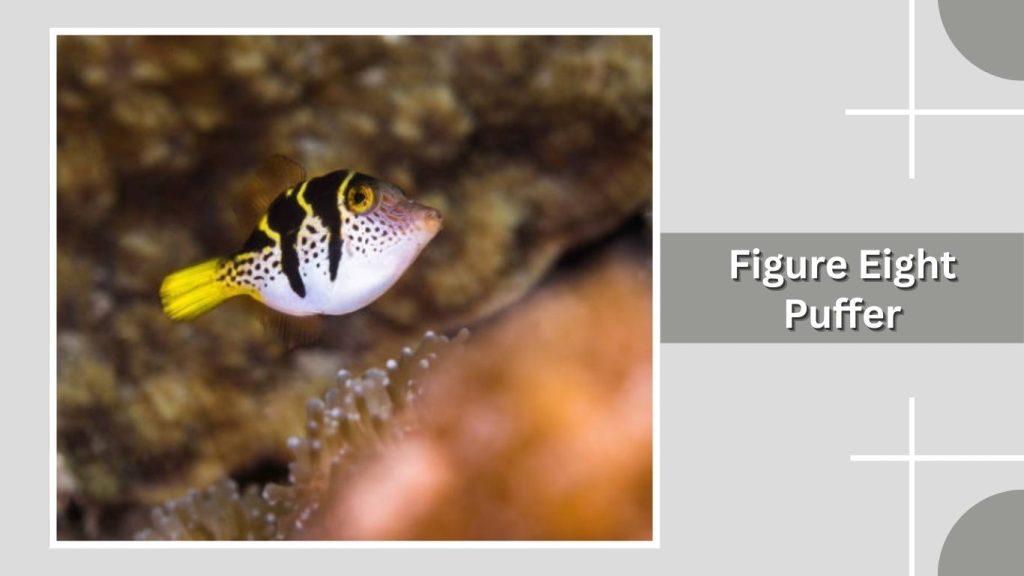
The figure eight puffer is a small, beautifully patterned pufferfish named for the dark markings on its back that often resemble the number “8.” It is highly valued in the aquarium hobby because of its bright colors and alert behavior. Despite its size, it has the classic puffer personality and requires careful care.
Identification
- Yellow-gold body with dark figure-eight–like markings
- White to pale underside
- Short, rounded body with large eyes
- Small adult size compared to most puffers
Habitat
Figure eight puffers are native to Southeast Asia. They naturally live in slow-moving rivers, estuaries, and mangrove areas where freshwater mixes with seawater. They prefer brackish environments with plenty of hiding places such as roots, plants, and rocks.
Behavior
This species is curious, active, and very observant. It often watches movement outside the water and explores its surroundings. Figure eight puffers can be territorial, especially in small spaces, and may nip fins, so tank setup and tank mates must be chosen carefully.
Diet and Lifespan
Figure eight puffers feed on snails, insect larvae, small crustaceans, and worms. Hard foods are important to prevent their teeth from overgrowing. With good care, they can live about 5 to 8 years, sometimes longer in well-maintained aquariums.
5. Mbu Puffer
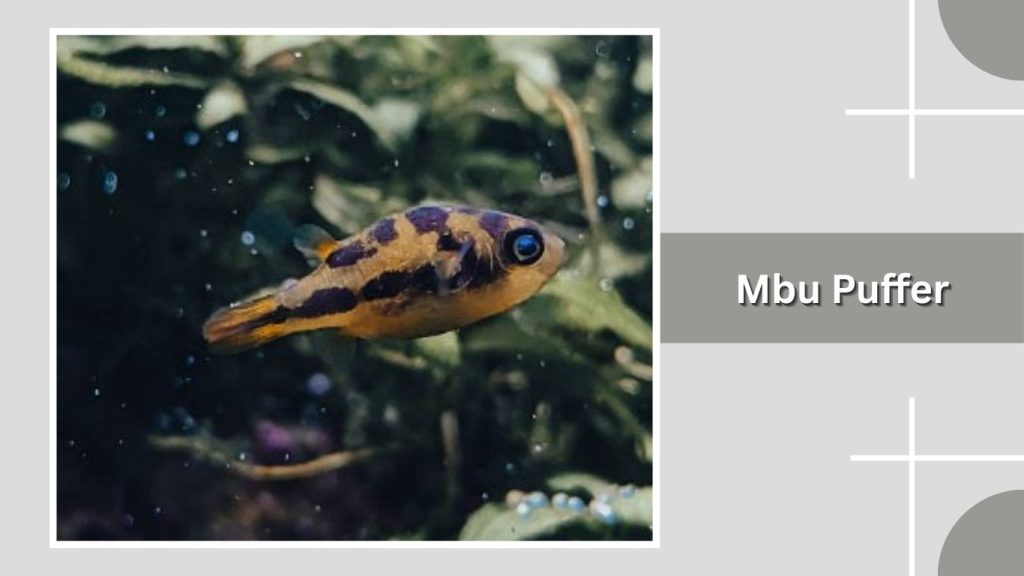
The mbu puffer is the largest freshwater pufferfish in the world and one of the most impressive members of the puffer family. Native to Africa, it is famous for its massive size, thick body, and intelligent behavior. Because of its growth potential, it is only suitable for very large aquariums or public displays.
Identification
- Extremely large, heavy-bodied freshwater puffer
- Smooth skin with dark spots and patterns
- Broad head with powerful beak-like teeth
- Can inflate to an enormous round shape
Habitat
Mbu puffers are native to the Congo River Basin in Central Africa. They live in large rivers and lakes with slow to moderate currents, often staying near deep channels, submerged logs, and rocky structures.
Behavior
They are slow-moving but very aware of their environment. Mbu puffers are intelligent and often recognize their caretakers. They can be territorial and aggressive toward other large fish, especially in confined spaces.
Diet and Lifespan
Mbu puffers feed on crustaceans, mollusks, snails, and sometimes small fish. Their powerful jaws easily crush shells. With proper conditions, they can live for several decades, often 20 years or more in captivity.
6. Fahaka Puffer

The fahaka puffer is a large, striking freshwater pufferfish known for its bold patterns and powerful personality. Native to Africa, it is often called the Nile puffer and is admired for its intelligence and dramatic appearance. Because of its size and aggression, it is best kept by experienced keepers.
Identification
- Long, thick body with dark irregular bands and spots
- Pale to white belly
- Strong beak-like teeth
- Capable of rapid inflation when threatened
Habitat
Fahaka puffers are found mainly in the Nile River system and other large African rivers and lakes. They prefer slow-moving waters with sandy or muddy bottoms, submerged roots, and rocky hiding areas.
Behavior
This species is highly territorial and usually aggressive toward other fish. Fahaka puffers are very alert and often watch activity outside the tank. They are mostly solitary and can deliver serious bites if provoked.
Diet and Lifespan
Fahaka puffers feed on snails, crabs, insects, and other hard-shelled prey. Their continuously growing teeth require crunchy foods. With proper care, they can live 10 to 15 years, and sometimes longer in ideal conditions.
7. Dwarf Puffer (Pea Puffer)
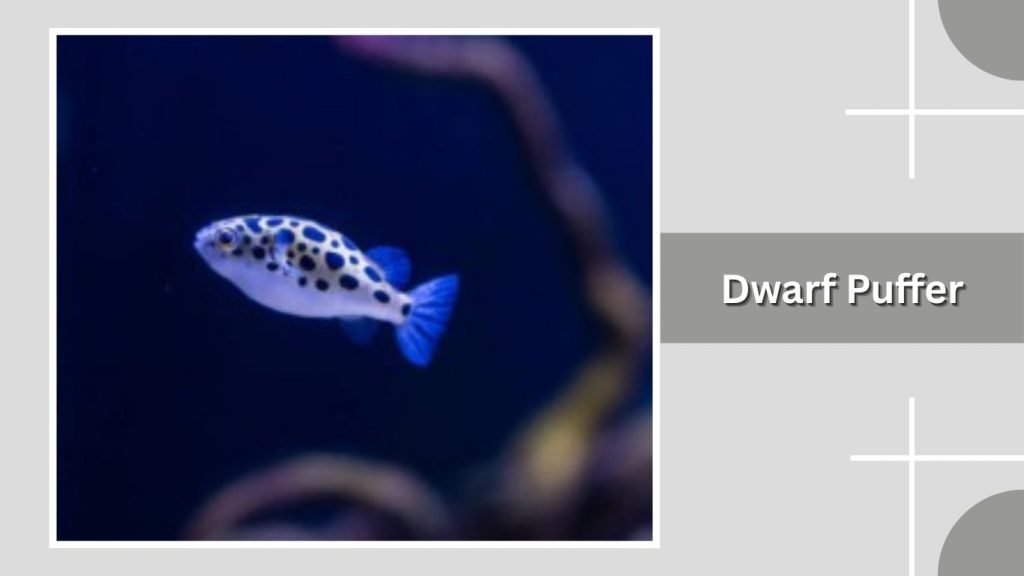
The dwarf puffer, also known as the pea puffer, is the smallest pufferfish in the world. Despite its tiny size, it is full of personality and intelligence. This freshwater species is extremely popular in aquariums because of its expressive eyes, active behavior, and bright yellow-green coloration.
Identification
- Very small size, usually around 1 inch
- Rounded body with large, movable eyes
- Yellow-green color with dark spots
- Males often show darker eye lines and brighter color
Habitat
Dwarf puffers are native to India, where they live in slow-moving rivers, streams, and heavily planted waters. They prefer calm environments with dense vegetation that provides cover and hunting grounds.
Behavior
They are curious, energetic, and highly observant. Dwarf puffers can be territorial, especially males, and may chase or nip other fish. They do best in species-only tanks or carefully planned setups.
Diet and Lifespan
Dwarf puffers feed on small snails, insect larvae, worms, and tiny crustaceans. They rarely accept dry food. With good care, they usually live about 4 to 6 years.
8. Amazon Puffer
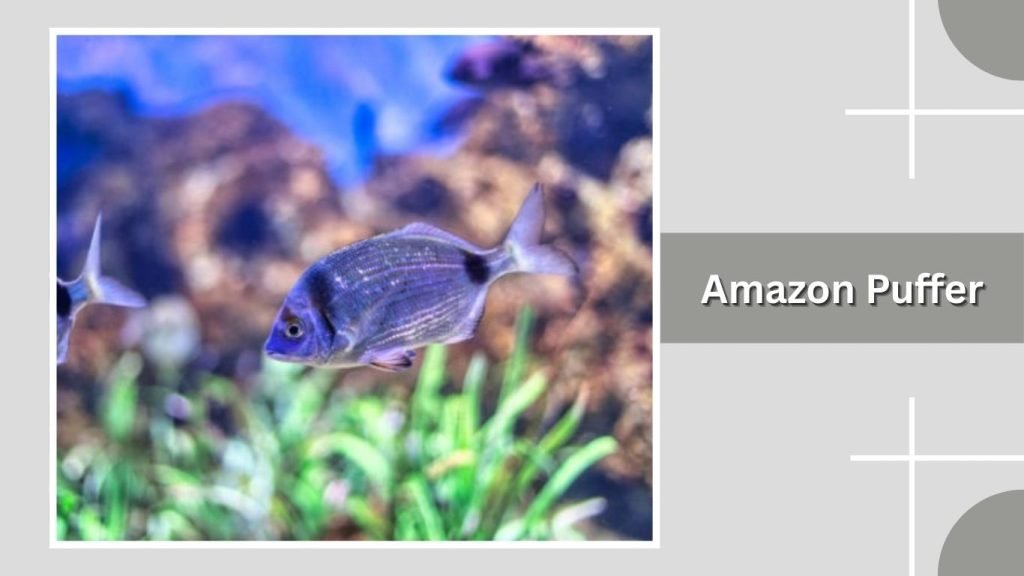
The Amazon puffer is a unique South American pufferfish that spends its entire life in freshwater, unlike many puffers that move between salt and fresh environments. It is well known for its expressive face, strong personality, and ability to adapt to river systems. This species is popular among advanced aquarium keepers.
Identification
- Small to medium-sized freshwater puffer
- Rounded body with smooth skin
- Brownish to yellow base color with darker markings
- Large eyes and a blunt snout
Habitat
Amazon puffers are native to the Amazon River Basin. They inhabit slow-moving rivers, floodplains, and forest streams, often among submerged roots, leaf litter, and aquatic plants.
Behavior
They are intelligent, alert, and often interact with their environment. Amazon puffers can be territorial, especially in smaller spaces, and may show aggression toward tank mates. They are active hunters and enjoy exploring.
Diet and Lifespan
Amazon puffers feed on snails, insects, worms, crustaceans, and other small aquatic invertebrates. Hard foods are necessary to control tooth growth. With proper care, they can live around 8 to 10 years.
9. Golden Puffer
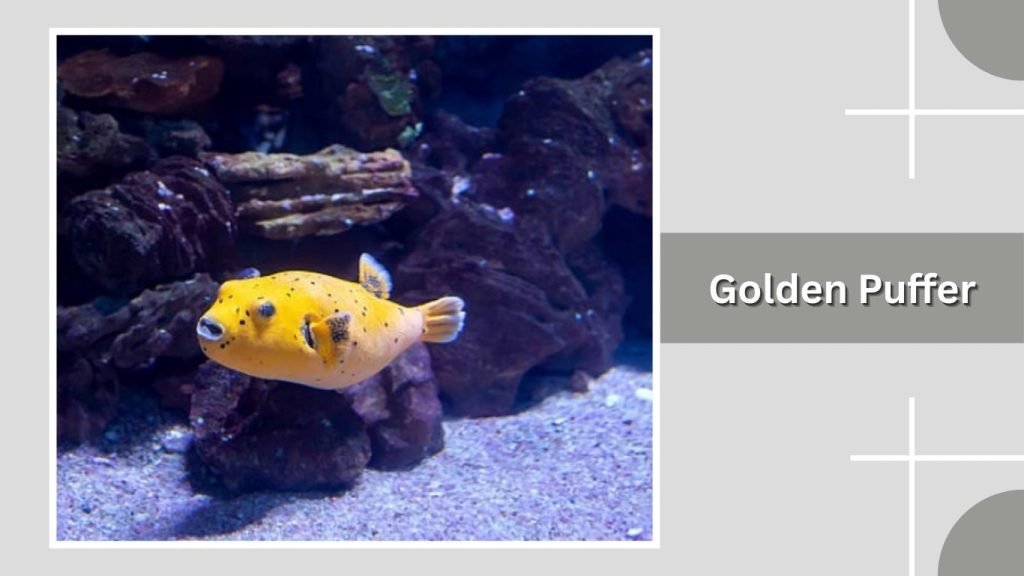
The golden puffer is admired for its warm yellow to golden body color and gentle, rounded appearance. It is often confused with other freshwater puffers, but it stands out because of its solid coloration and expressive eyes. This species is commonly found in Asian river systems and is popular in the aquarium trade.
Identification
- Yellow to golden body coloration
- Smooth skin without long spines
- Rounded shape with large eyes
- Pale or whitish underside
Habitat
Golden puffers are native to parts of South and Southeast Asia. They live in slow-moving rivers, streams, and floodplains, often in areas with soft substrates, plants, and submerged wood.
Behavior
They are intelligent and curious fish that often recognize feeding routines. Golden puffers can be territorial and may show aggression toward other fish, especially in limited space. They prefer well-structured tanks with hiding spots.
Diet and Lifespan
Golden puffers feed mainly on snails, crustaceans, insect larvae, and worms. Crunchy foods are important to maintain healthy teeth. With good care, they usually live between 8 and 12 years.
10. Congo Puffer
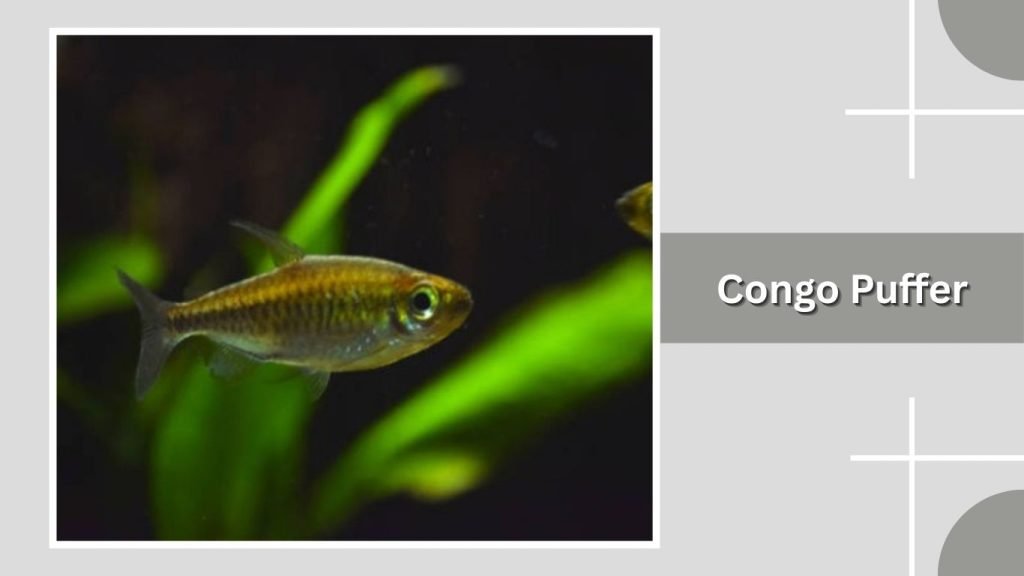
The Congo puffer is a lesser-known freshwater pufferfish native to Central Africa. It is valued for its natural patterns, strong hunting instincts, and intelligent behavior. Because it is more delicate than many puffers, it is usually recommended for experienced keepers who can provide stable water conditions.
Identification
- Medium-sized freshwater puffer
- Brown to olive body with darker markings
- Smooth skin and rounded shape
- Prominent eyes and a short snout
Habitat
Congo puffers are native to the Congo River Basin. They live in slow to moderately flowing rivers with sandy bottoms, submerged roots, and rocky shelters.
Behavior
They are alert, curious, and sometimes shy when newly introduced. Congo puffers can become territorial as they mature and may not tolerate other fish well. They spend much of their time exploring the bottom and mid-water areas.
Diet and Lifespan
Congo puffers feed on snails, insect larvae, crustaceans, and small invertebrates. Their strong beaks help crush shells. With proper care, they can live around 6 to 10 years.
11. Valentini Puffer

The Valentini puffer, also called the saddleback puffer, is a small marine pufferfish famous for its bold black markings and expressive swimming style. It is commonly seen around coral reefs and is popular in saltwater aquariums due to its active and curious nature.
Identification
- Cream to white body with black saddle-like patches
- Bright yellow tail and highlights
- Small, compact body shape
- Large eyes and a pointed snout
Habitat
Valentini puffers are found throughout the Indo-Pacific region. They live around coral reefs, reef flats, and lagoons, usually staying close to shelter among rocks and coral heads.
Behavior
They are active, alert, and often interact with their surroundings. Valentini puffers can be territorial and may nip fins or bite invertebrates. They are usually kept alone or in carefully managed marine tanks.
Diet and Lifespan
Valentini puffers feed on small crustaceans, mollusks, algae, and sometimes coral polyps. Their strong beak allows them to crush hard foods. With proper care, they typically live 5 to 8 years.
12. Map Puffer
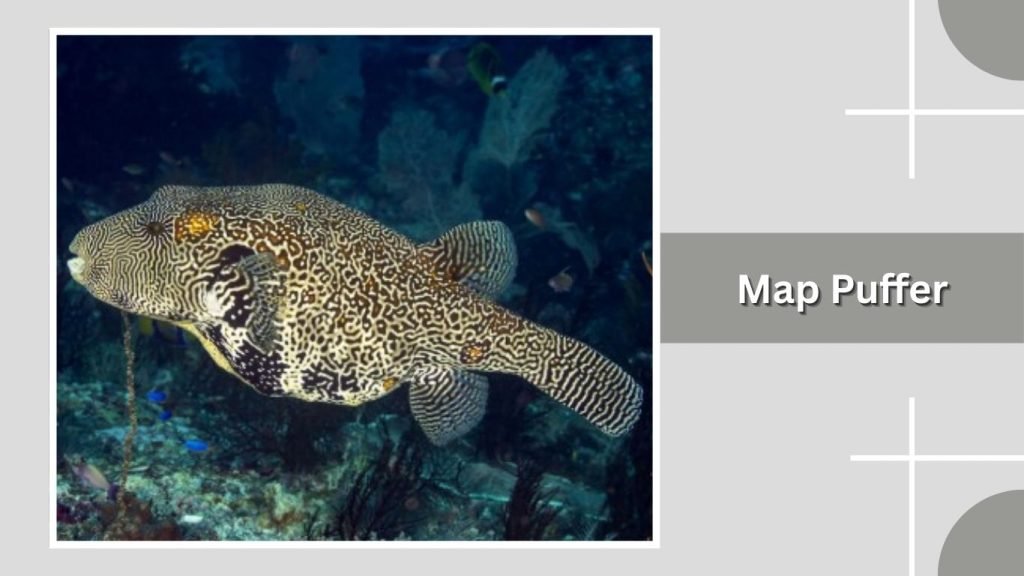
The map puffer gets its name from the maze-like lines and markings across its back that resemble a map pattern. It is a freshwater pufferfish known for its bold appearance, strong jaws, and intelligent behavior. Because of its size and temperament, it is usually recommended for experienced aquarium keepers.
Identification
- Thick, oval-shaped body
- Light base color with dark, map-like lines and spots
- Large head with powerful beak-like teeth
- Capable of inflating when threatened
Habitat
Map puffers are native to South and Southeast Asia. They inhabit slow-moving rivers, streams, floodplains, and sometimes large ponds, often near sandy bottoms, rocks, and submerged roots.
Behavior
They are alert, curious, and often territorial. Map puffers may become aggressive toward tank mates, especially as they grow larger. They frequently explore their surroundings and quickly learn feeding routines.
Diet and Lifespan
Map puffers feed on snails, crustaceans, insect larvae, worms, and other hard-shelled prey. Crunchy foods are essential to control tooth growth. With good care, they can live around 8 to 12 years.
13. Stars and Stripes Puffer
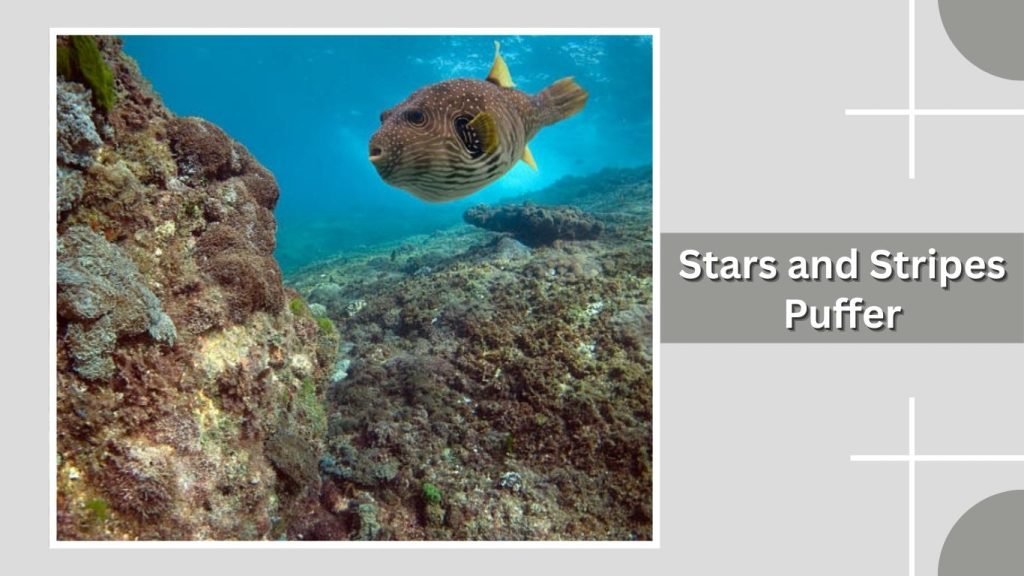
The stars and stripes puffer is a marine pufferfish named for its striking pattern of pale spots and bold lines across the body. It is well known among divers for its expressive face and curious behavior. This species is often seen hovering around reefs and rocky coastal areas.
Identification
- Gray to brown body with white spots and dark stripes
- Rounded shape with a blunt snout
- Smooth skin without long spines
- Able to inflate its body when threatened
Habitat
Stars and stripes puffers are found mainly in the western Atlantic Ocean, including the Caribbean Sea and the Gulf of Mexico. They inhabit coral reefs, rocky bottoms, and coastal slopes.
Behavior
They are slow swimmers but highly alert. These puffers often investigate divers and objects in their environment. They can be territorial and may show aggression toward smaller fish or invertebrates.
Diet and Lifespan
Stars and stripes puffers feed on crabs, mollusks, sea urchins, and other hard-shelled invertebrates. Their strong teeth easily crush shells. In the wild, they can live around 10 years or more.
14. Spotted Green Puffer
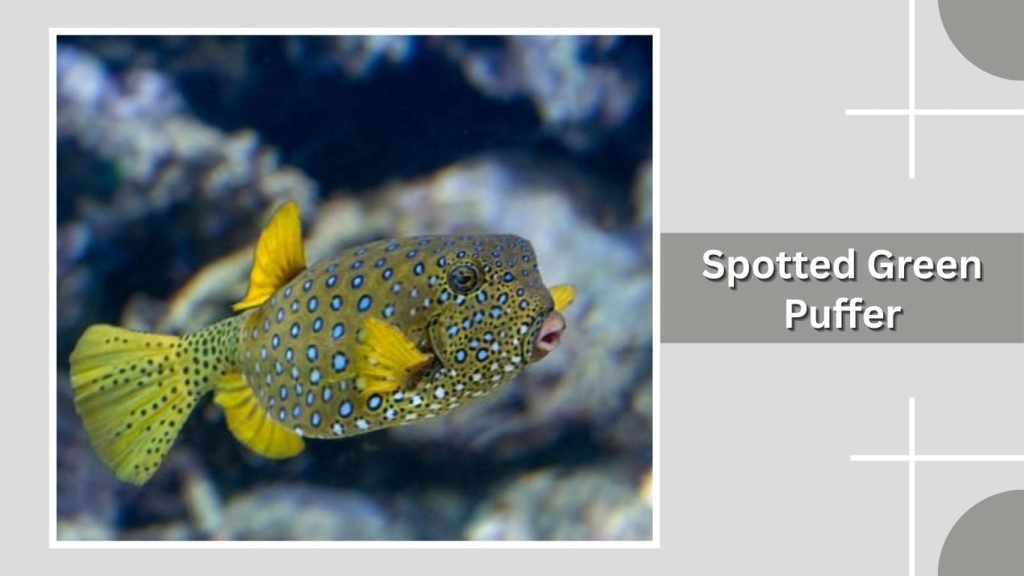
The spotted green puffer is often confused with the green spotted puffer, but it is usually used as a general name for small, bright green puffers covered in dark spots. These fish are highly active, intelligent, and popular in the aquarium trade. They require brackish to marine conditions as they mature.
Identification
- Bright green body with bold black spots
- White or pale underside
- Rounded body with large eyes
- Small to medium adult size
Habitat
Spotted green puffers are native to Southeast Asia. They inhabit estuaries, mangroves, river mouths, and coastal waters, moving between fresh and brackish environments depending on age.
Behavior
They are very curious and interactive fish. Spotted green puffers often watch activity outside the tank and explore constantly. They can be territorial and may nip fins, especially in cramped conditions.
Diet and Lifespan
They feed on snails, insects, crustaceans, and worms. Hard foods are necessary to keep their teeth worn down. With good care, they typically live 8 to 10 years.
15. Narrow-Lined Puffer
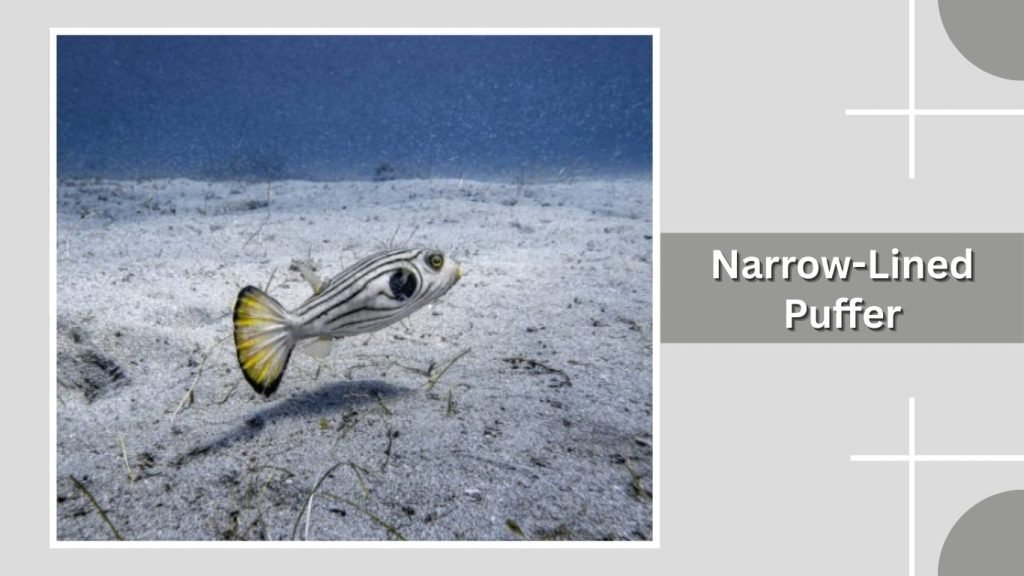
The narrow-lined puffer is known for the thin, dark lines that run across its body, giving it a neatly patterned appearance. It is a freshwater to brackish pufferfish appreciated for its intelligence and bold personality. This species is less common in the aquarium trade but is admired by experienced keepers.
Identification
- Light-colored body with thin, dark horizontal lines
- Rounded shape with smooth skin
- Prominent eyes and a short snout
- Inflates when threatened
Habitat
Narrow-lined puffers are found in parts of South and Southeast Asia. They live in slow-moving rivers, estuaries, and floodplain waters with sandy bottoms and dense vegetation.
Behavior
They are curious, observant, and can become territorial. Narrow-lined puffers often patrol their environment and may show aggression toward tank mates, especially in small aquariums.
Diet and Lifespan
They feed mainly on snails, crustaceans, insect larvae, and worms. Crunchy foods are essential for dental health. With proper care, they can live about 7 to 10 years.
16. Black-Spotted Puffer
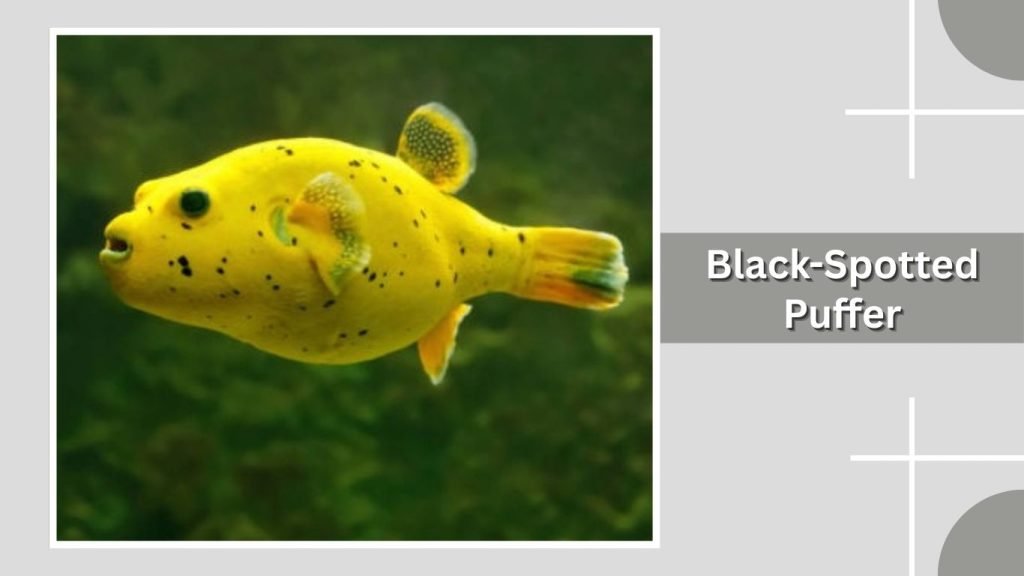
The black-spotted puffer is a visually striking pufferfish recognized for the dark spots scattered across its lighter body. It can be found in both freshwater and brackish environments depending on species and age. Because of its awareness and strong feeding response, it is popular among dedicated puffer keepers.
Identification
- Light base color with distinct black spots
- Rounded body with smooth skin
- Large, expressive eyes
- Inflates when stressed or threatened
Habitat
Black-spotted puffers are native to parts of Asia and Africa, depending on the species. They inhabit rivers, estuaries, mangroves, and sometimes coastal waters, often around sandy bottoms, rocks, and submerged roots.
Behavior
They are alert, curious, and often territorial. Black-spotted puffers may chase or nip other fish and usually do best in species-only or carefully planned tanks.
Diet and Lifespan
They feed on snails, crustaceans, insect larvae, and small invertebrates. Hard foods are necessary to prevent overgrown teeth. With good care, they can live between 6 and 10 years.
17. Milk-Spotted Puffer
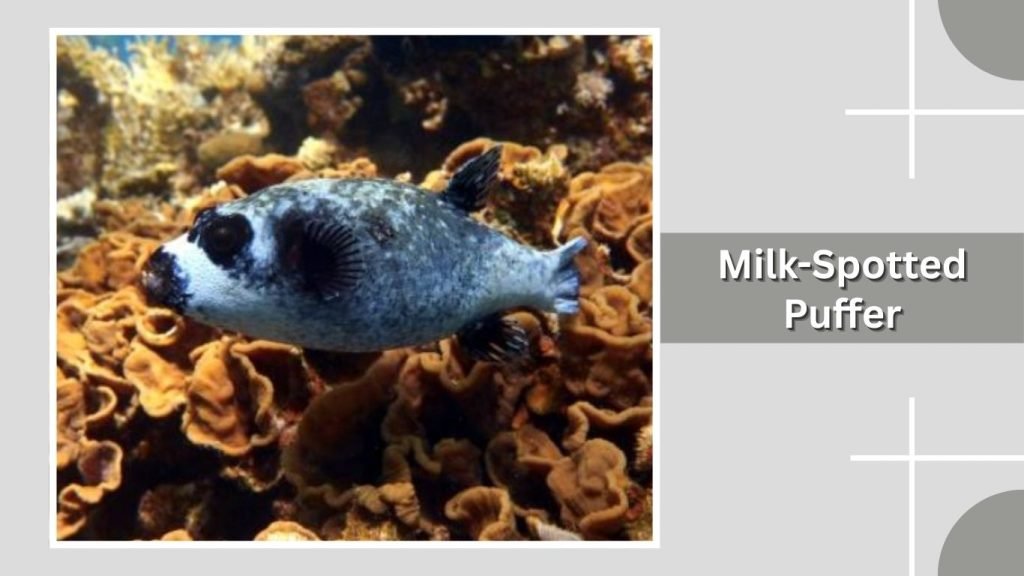
The milk-spotted puffer is named for the pale, milky spots that stand out against its darker body. It is a marine pufferfish admired for its unique pattern and expressive face. This species is commonly seen around coral reefs and rocky coastal areas.
Identification
- Dark body covered with pale, milk-like spots
- Rounded shape with a blunt snout
- Smooth skin without long spines
- Capable of inflating its body
Habitat
Milk-spotted puffers are found in tropical and subtropical oceans, especially across the Indo-Pacific region. They inhabit coral reefs, lagoons, and rocky reef slopes where there are many hiding places.
Behavior
They are slow swimmers but very alert and curious. Milk-spotted puffers often hover near reef structures and may investigate divers. They can be territorial and may bite invertebrates or smaller fish.
Diet and Lifespan
They feed mainly on crustaceans, mollusks, sea urchins, and other hard-shelled prey. Their strong beaks easily crush shells. With good conditions, they can live around 8 to 12 years.
18. Giant Freshwater Puffer
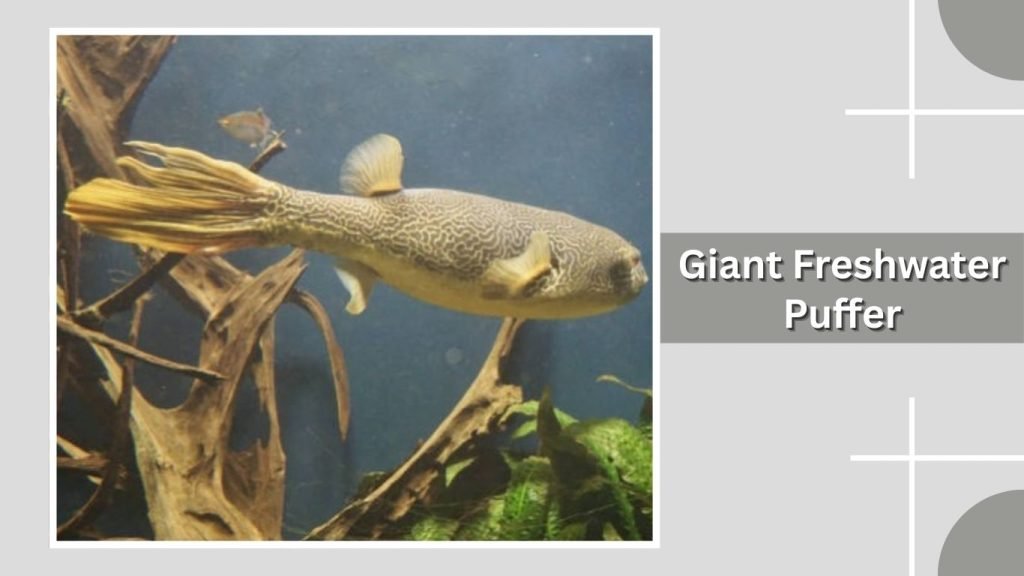
The giant freshwater puffer is one of the largest freshwater pufferfish species in the world, known for its thick body, powerful jaws, and high intelligence. It is an impressive but demanding fish that requires very large tanks and excellent water quality, making it suitable mainly for advanced keepers or public aquariums.
Identification
- Very large, heavy-bodied freshwater puffer
- Smooth skin with scattered dark markings
- Broad head with strong beak-like teeth
- Able to inflate into a large round shape
Habitat
Giant freshwater puffers are native to major river systems of South and Southeast Asia. They live in slow-moving rivers, floodplains, and large freshwater lakes with muddy or sandy bottoms and submerged structures.
Behavior
They are slow but highly aware of their surroundings. Giant freshwater puffers are intelligent and often recognize their caretakers. They can be territorial and aggressive, especially toward other large fish.
Diet and Lifespan
They feed on snails, crabs, mussels, and other hard-shelled animals. Their strong jaws easily crush tough prey. With proper care, they can live 15 to 20 years or more.
19. Leopard Puffer
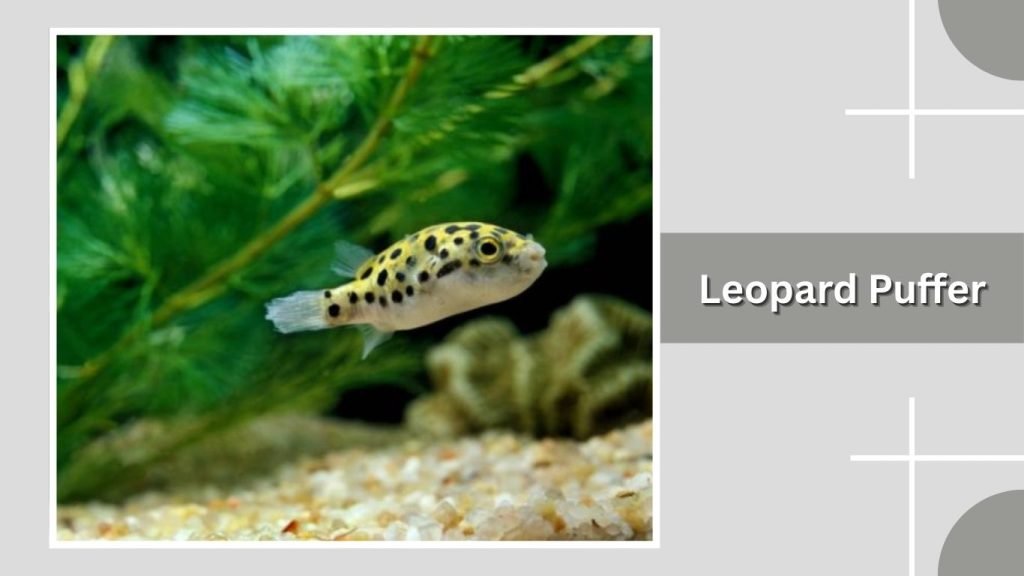
The leopard puffer is named for the dark, irregular spots that cover its body, giving it a leopard-like appearance. It is a marine pufferfish admired for its bold pattern, expressive eyes, and slow, hovering swimming style. Divers often encounter this species resting near reefs or rocky structures.
Identification
- Light body covered with dark leopard-like spots
- Rounded shape with a blunt snout
- Smooth skin without long spines
- Inflates when threatened
Habitat
Leopard puffers are found in tropical and subtropical oceans, especially in the Indo-Pacific region. They inhabit coral reefs, rocky reefs, and coastal lagoons, usually staying close to shelter.
Behavior
They are calm but very alert fish. Leopard puffers often watch divers and explore their surroundings. They can be territorial and may bite invertebrates or smaller fish if kept in captivity.
Diet and Lifespan
They feed on crabs, snails, sea urchins, and other hard-shelled invertebrates. Their strong beak helps crush shells. With proper conditions, they can live around 8 to 12 years.
20. Smooth Puffer
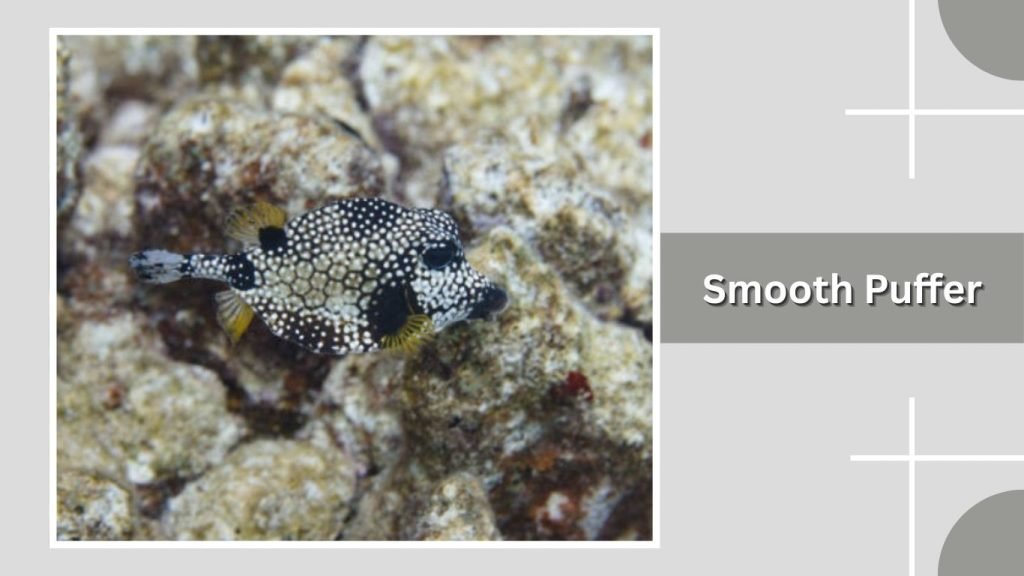
The smooth puffer is named for its sleek, spineless skin and streamlined, rounded body. It is a marine pufferfish commonly found in coastal and open-water environments. Compared to spiny puffers, it has a softer appearance but uses inflation and strong jaws as its main defenses.
Identification
- Smooth skin without long spines
- Rounded, slightly elongated body
- Gray to brown coloration, sometimes with faint spots
- Large eyes and blunt snout
Habitat
Smooth puffers are found in tropical and temperate oceans around the world. They live in coastal waters, sandy bottoms, seagrass beds, and sometimes venture into open sea areas.
Behavior
They are slow but steady swimmers and often cruise close to the seabed. Smooth puffers are alert and may investigate objects in their surroundings. They can be territorial and defensive if threatened.
Diet and Lifespan
They feed on crustaceans, mollusks, worms, and other small marine animals. Their strong teeth easily crush shells. With good environmental conditions, they can live 7 to 10 years.
21. Balloon Puffer
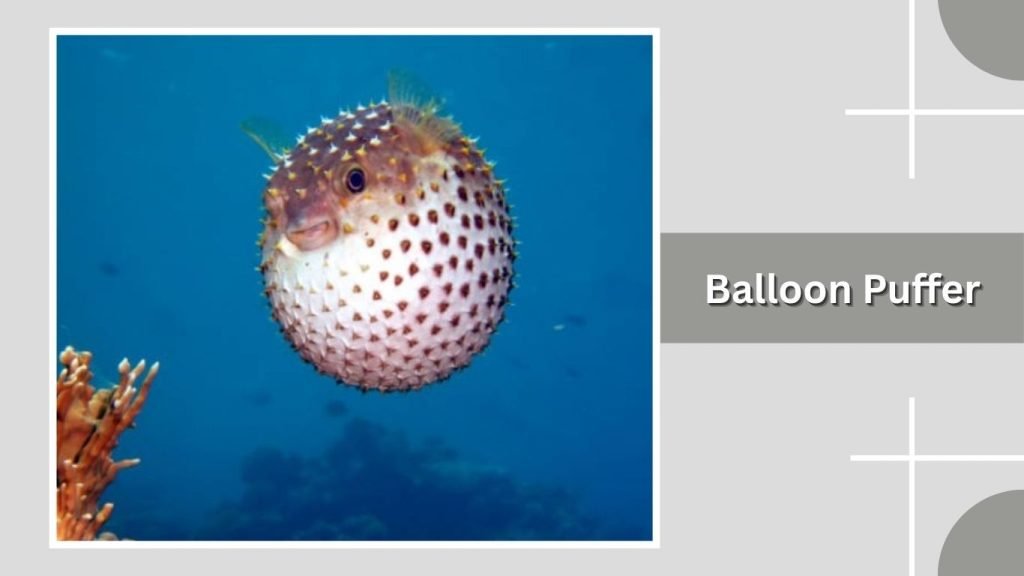
The balloon puffer is named for its remarkable ability to inflate its body into a near-perfect round shape when threatened. It is a marine pufferfish admired for its expressive eyes, blunt face, and calm, hovering swimming style. This dramatic inflation response makes it one of the most recognizable puffers in the ocean.
Identification
- Rounded body that inflates into a balloon shape
- Smooth to lightly spined skin
- Gray, brown, or yellowish coloration
- Large eyes and a short, blunt snout
Habitat
Balloon puffers are found in warm tropical and subtropical oceans worldwide. They inhabit coral reefs, lagoons, and coastal waters, often staying near rocky shelters and reef structures.
Behavior
They are slow swimmers and rely on camouflage and inflation for defense. Balloon puffers are curious and may approach divers. They are generally solitary and can become territorial.
Diet and Lifespan
They feed on crabs, snails, sea urchins, and other hard-shelled invertebrates. Their powerful beak crushes tough prey easily. With suitable conditions, they can live around 8 to 12 years.
FAQs
Are pufferfish poisonous to humans?
Yes, many pufferfish contain a powerful toxin called tetrodotoxin, which is extremely dangerous if ingested. The toxin is mainly concentrated in the liver, ovaries, and skin. In some countries, specially trained and licensed chefs prepare pufferfish safely, but improper handling can be fatal.
Can pufferfish really inflate their bodies?
Yes, pufferfish can rapidly inflate by gulping water or air when they feel threatened. This makes them appear much larger and harder for predators to swallow. Some species also raise spines during inflation, adding extra protection against attacks.
Are pufferfish good pets?
Pufferfish can be kept as pets, but they are not easy fish to care for. They need excellent water quality, species-appropriate environments, and a diet that includes hard foods to wear down their teeth. Many species are aggressive and best kept alone.
What do pufferfish eat in the wild?
In the wild, pufferfish mainly eat hard-shelled prey such as snails, crabs, shrimp, mollusks, and sea urchins. Their strong beak-like teeth are specially adapted to crush shells, allowing them to access animals that many other fish cannot eat.
How long do pufferfish live?
Pufferfish lifespans vary by species. Smaller species may live around 4 to 8 years, while large species like the mbu puffer or giant freshwater puffer can live 15 to 20 years or even longer under good conditions.