




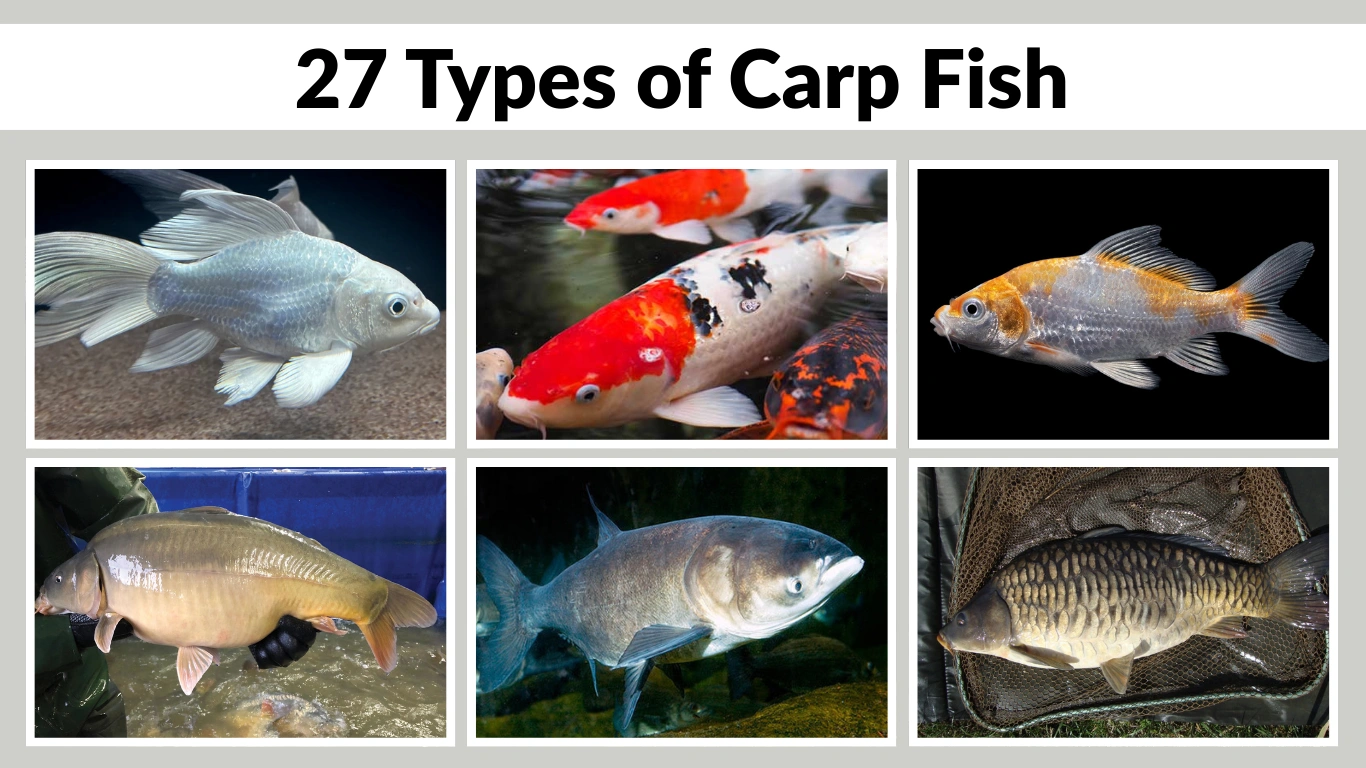
Carp fish are among the most diverse and widely distributed freshwater species in the world, valued for their adaptability, beauty, and importance in both aquaculture and sport fishing. From the wild common carp to ornamental koi and specialized hybrids, each variety has unique traits. This guide explores 27 types of carp fish, highlighting their identification, habitat, and behavior for anglers, breeders, and enthusiasts alike.
1. Common Carp (Cyprinus carpio)

The Common Carp is one of the most widespread and well-known freshwater fish in the world. Valued for its adaptability, it thrives in a variety of water conditions and is a popular target for both commercial fisheries and sport anglers. With its robust body and golden-brown scales, it is easily recognizable and often kept for food or ornamental purposes.
Identification
- Scientific Name: Cyprinus carpio
- Body Size: Typically 40–80 cm, can exceed 1 meter
- Weight: Commonly 4–10 kg, record specimens over 30 kg
- Color: Golden-brown to olive, darker on the back and lighter on the belly
- Fins: Dorsal fin long with a serrated spine; paired pectoral, pelvic, and anal fins
- Scales: Large, regular scales covering the entire body
Habitat and Distribution
Common Carp inhabit lakes, rivers, ponds, and reservoirs across Europe, Asia, and North America, often preferring slow-moving or still waters with muddy bottoms.
Behavior and Diet
They are omnivorous, feeding on aquatic plants, insects, crustaceans, and detritus. Known for their bottom-feeding habits, they can disturb sediment while foraging.
2. Mirror Carp (Cyprinus carpio carpio)

The Mirror Carp is a distinctive variety of the common carp, easily recognized by its irregular and patchy scale pattern. Its unique appearance makes it a favorite among anglers, particularly in the sport fishing community. Mirror carp can grow to impressive sizes and are known for their strong fighting ability when hooked.
Identification
- Scientific Name: Cyprinus carpio carpio
- Body Size: Typically 50–90 cm, can exceed 1 meter
- Weight: Commonly 5–15 kg, record specimens over 30 kg
- Color: Golden-brown to bronze, with a lighter belly
- Scales: Large, irregularly placed scales with some bare skin patches
- Fins: Long dorsal fin with serrated spine; well-developed pectoral, pelvic, and anal fins
Habitat and Distribution
Mirror Carp are found in lakes, ponds, and slow-moving rivers across Europe, Asia, and introduced regions such as North America and Australia.
Behavior and Diet
They are omnivores, feeding on aquatic vegetation, insects, mollusks, and detritus. Their growth rate is often faster than that of fully scaled common carp.
3. Leather Carp (Cyprinus carpio carpio)

The Leather Carp is a rare and unique variety of the common carp, notable for its almost completely scale-less body. Its smooth, leathery skin and large size make it a prized catch among sport anglers. This variety is less common than mirror or common carp, often found in managed fisheries.
Identification
- Scientific Name: Cyprinus carpio carpio
- Body Size: Typically 50–90 cm, can exceed 1 meter
- Weight: Commonly 5–15 kg, record specimens over 30 kg
- Color: Dark olive to golden-brown with a pale underside
- Scales: Very few or no scales at all, usually only near the dorsal fin or tail
- Fins: Long dorsal fin with serrated spine; strong pectoral, pelvic, and anal fins
Habitat and Distribution
Leather Carp are usually found in stocked lakes, ponds, and slow-moving rivers in Europe and introduced regions worldwide.
Behavior and Diet
They are bottom feeders, consuming aquatic plants, invertebrates, and organic debris. Their smooth skin makes them more vulnerable to handling damage, so careful catch-and-release is important.
4. Grass Carp (Ctenopharyngodon idella)

The Grass Carp is a large, herbivorous freshwater fish known for its elongated body and appetite for aquatic vegetation. Originally from East Asia, it has been introduced worldwide for aquatic weed control. Its rapid growth and size make it both a beneficial management tool and a challenging catch for anglers.
Identification
- Scientific Name: Ctenopharyngodon idella
- Body Size: Commonly 60–100 cm, can exceed 1.2 meters
- Weight: Typically 8–15 kg, record specimens over 40 kg
- Color: Olive-green to silvery gray with a lighter belly
- Scales: Large, uniform, and neatly arranged
- Fins: Short dorsal fin; strong, pointed pectoral and pelvic fins
Habitat and Distribution
Grass Carp thrive in large rivers, reservoirs, and lakes with abundant vegetation. Native to China and eastern Russia, they are now found in many parts of Europe, North America, and Asia.
Behavior and Diet
Primarily herbivorous, they feed on aquatic plants but may also consume detritus and small invertebrates. They are fast swimmers and can be difficult to catch on rod and reel.
5. Silver Carp (Hypophthalmichthys molitrix)

The Silver Carp is a fast-growing, plankton-feeding fish recognized for its silver-colored body and tendency to leap from the water when startled. Originally from East Asia, it has been introduced to many countries for aquaculture and water quality control but has become invasive in some areas.
Identification
- Scientific Name: Hypophthalmichthys molitrix
- Body Size: Typically 60–100 cm, can exceed 1.2 meters
- Weight: Commonly 8–20 kg, record specimens over 40 kg
- Color: Bright silver with a white belly, darkening slightly with age
- Scales: Small and smooth, covering the entire body
- Fins: Short dorsal fin; long, pointed pectoral fins
Habitat and Distribution
Silver Carp inhabit large rivers, lakes, and reservoirs. Native to China, they have spread to Europe, North America, and other regions due to human introduction.
Behavior and Diet
They are filter feeders, consuming phytoplankton and zooplankton, which makes them important for controlling algae blooms. Known for their powerful jumps, they can be hazardous to boaters in infested waters.
6. Bighead Carp (Hypophthalmichthys nobilis)

The Bighead Carp is a large, fast-growing freshwater fish known for its disproportionately large head and wide mouth. It is a filter feeder, consuming mainly plankton, and plays a role in controlling algae and improving water quality. Like its close relative, the Silver Carp, it is considered invasive in some introduced regions.
Identification
- Scientific Name: Hypophthalmichthys nobilis
- Body Size: Commonly 60–110 cm, can exceed 1.3 meters
- Weight: Typically 10–25 kg, record specimens over 40 kg
- Color: Silver-gray body with dark, irregular blotches
- Scales: Small, covering the entire body
- Fins: Short dorsal fin; long pectoral fins; large, rounded head
Habitat and Distribution
Bighead Carp thrive in large rivers, reservoirs, and lakes. Native to China, they have been introduced to many countries in Asia, Europe, and North America for aquaculture and water management.
Behavior and Diet
They are filter feeders, consuming primarily zooplankton and phytoplankton. Their rapid growth and high reproduction rate contribute to their invasiveness in non-native habitats.
7. Black Carp (Mylopharyngodon piceus)

The Black Carp is a large, bottom-dwelling freshwater fish known for its dark coloration and strong jaws, which are adapted for crushing mollusk shells. Originally from East Asia, it has been introduced to various countries for controlling snail populations, particularly those that serve as hosts for fish parasites.
Identification
- Scientific Name: Mylopharyngodon piceus
- Body Size: Commonly 60–120 cm, can exceed 1.5 meters
- Weight: Typically 10–30 kg, record specimens over 70 kg
- Color: Dark gray to nearly black on the back, lighter belly
- Scales: Large, thick, and uniform
- Fins: Short dorsal fin; broad, strong pectoral and pelvic fins
Habitat and Distribution
Black Carp prefer large rivers, lakes, and reservoirs with slow-moving or still water. Native to China and parts of Russia, they have been introduced to regions in Southeast Asia and North America.
Behavior and Diet
Primarily molluscivorous, they feed on snails, mussels, and clams, using their powerful pharyngeal teeth to crush shells. In non-native areas, they can pose a threat to native mollusk populations.
8. Crucian Carp (Carassius carassius)

The Crucian Carp is a hardy, slow-growing freshwater fish valued for its adaptability to various environmental conditions. Known for its deep-bodied shape and golden coloration, it is popular among coarse anglers in Europe and Asia. Unlike many other carp species, the Crucian Carp can survive in low-oxygen waters and even under ice in winter.
Identification
- Scientific Name: Carassius carassius
- Body Size: Commonly 15–35 cm, rarely exceeding 50 cm
- Weight: Typically 0.5–3 kg, exceptional specimens up to 4–5 kg
- Color: Golden-bronze with a darker back and lighter belly
- Scales: Small, uniform, and smooth-edged
- Fins: Rounded dorsal fin; no barbels around the mouth
Habitat and Distribution
Crucian Carp inhabit ponds, lakes, and slow-moving rivers across Europe and parts of Asia. They prefer vegetated, shallow waters and can tolerate poor water quality.
Behavior and Diet
They are omnivorous, feeding on aquatic plants, insects, crustaceans, and detritus. Crucian Carp are shy feeders, often requiring delicate angling techniques for a successful catch.
9. Koi Carp (Cyprinus rubrofuscus)

Koi Carp are ornamental varieties of the common carp, selectively bred for their striking colors, patterns, and scalation. Originating in Japan, they are now cherished worldwide as decorative pond fish and symbols of prosperity, perseverance, and good fortune.
Identification
- Scientific Name: Cyprinus rubrofuscus
- Body Size: Commonly 30–60 cm, but can exceed 1 meter in large ponds
- Weight: Typically 2–10 kg, with record specimens over 20 kg
- Color: Wide range including white, red, orange, yellow, black, and blue in various patterns
- Scales: Large and smooth, sometimes metallic in sheen
- Fins: Well-developed dorsal and pectoral fins; graceful tail fin
Habitat and Distribution
Koi are primarily kept in ornamental ponds and garden water features, though they can live in lakes and slow-moving rivers in warmer climates. They are found in collections across the world.
Behavior and Diet
They are omnivorous, feeding on pellets, vegetables, insects, and algae. Koi are social fish, often interacting with humans, and can live for several decades under proper care.
10. Ghost Carp (Cyprinus carpio)

The Ghost Carp is a hybrid variety of common carp and ornamental koi, known for its shimmering, metallic appearance. Highly visible in clear water, they are popular in angling lakes for their beauty and strong fighting ability.
Identification
- Scientific Name: Cyprinus carpio
- Body Size: Commonly 40–80 cm, can exceed 1 meter
- Weight: Typically 5–12 kg, record specimens over 20 kg
- Color: Pale silver, white, or gold with metallic sheen; may have darker patches
- Scales: Large and reflective, sometimes patchy like mirror carp
- Fins: Long dorsal fin with serrated spine; strong pectoral and tail fins
Habitat and Distribution
Ghost Carp are found in stocked lakes, ponds, and fisheries, primarily in Europe but also in parts of Asia and North America.
Behavior and Diet
They are omnivorous, feeding on aquatic plants, insects, mollusks, and pellets. Known for their speed and power, Ghost Carp are prized among sport anglers for the challenge they present.
11. Wild Carp (Cyprinus carpio)

The Wild Carp is the original, non-domesticated form of the common carp, known for its streamlined body and adaptability to diverse habitats. Unlike many bred varieties, wild carp retain their natural survival instincts, making them more elusive and challenging to catch.
Identification
- Scientific Name: Cyprinus carpio
- Body Size: Typically 40–80 cm, can exceed 1 meter
- Weight: Commonly 5–15 kg, record specimens over 30 kg
- Color: Dark olive to bronze with a lighter underside
- Scales: Large, uniform, and neatly arranged over the body
- Fins: Long dorsal fin with serrated spine; powerful tail for swimming in currents
Habitat and Distribution
Wild Carp inhabit rivers, lakes, and floodplains across Europe and Asia, preferring natural waters with diverse food sources. They have also been introduced to other continents.
Behavior and Diet
They are omnivorous bottom feeders, consuming aquatic plants, insects, mollusks, and detritus. Wild Carp are strong swimmers and often more wary of anglers than domesticated varieties.
12. Fully Scaled Carp (Cyprinus carpio)

The Fully Scaled Carp is a visually striking variety of the common carp, known for having large, evenly distributed scales covering its entire body. Its symmetrical scaling pattern and robust build make it a favorite among specimen anglers and ornamental pond keepers alike.
Identification
- Scientific Name: Cyprinus carpio
- Body Size: Typically 40–90 cm, can exceed 1 meter
- Weight: Commonly 5–15 kg, record specimens over 25 kg
- Color: Golden-bronze to dark brown with a lighter belly
- Scales: Large, uniform, and fully covering the body
- Fins: Long dorsal fin with serrated spine; well-developed pectoral and pelvic fins
Habitat and Distribution
Fully Scaled Carp are found in lakes, ponds, and slow-moving rivers across Europe, Asia, and introduced regions worldwide. They are often stocked in managed fisheries.
Behavior and Diet
They are omnivores, feeding on aquatic plants, invertebrates, and organic matter from the bottom. Known for their strength and endurance, they provide a challenging catch for anglers.
13. Linear Carp (Cyprinus carpio)

The Linear Carp is a distinctive variety of mirror carp, named for its unique scale pattern that often forms a neat, linear row along the lateral line. Its striking appearance makes it highly sought after by anglers and ornamental fish enthusiasts.
Identification
- Scientific Name: Cyprinus carpio
- Body Size: Typically 40–90 cm, can exceed 1 meter
- Weight: Commonly 5–15 kg, record specimens over 25 kg
- Color: Golden-bronze to dark brown with lighter underbelly
- Scales: Large, irregular scales arranged in one or two rows along each side
- Fins: Long dorsal fin with serrated spine; strong pectoral and tail fins
Habitat and Distribution
Linear Carp are commonly found in stocked lakes, ponds, and slow-moving rivers across Europe and other introduced regions.
Behavior and Diet
They are bottom-feeding omnivores, consuming aquatic vegetation, insects, mollusks, and detritus. Known for their beauty and strength, they are a prized catch in sport fishing circles.
14. F1 Hybrid Carp (Cyprinus carpio × Carassius carassius)

The F1 Hybrid Carp is a crossbreed between the Common Carp and the Crucian Carp, selectively bred for fast growth, resilience, and strong fighting ability. Popular in commercial fisheries, this hybrid combines desirable traits from both parent species.
Identification
- Scientific Name: Cyprinus carpio × Carassius carassius
- Body Size: Typically 30–50 cm, can grow larger in ideal conditions
- Weight: Commonly 1–4 kg, with exceptional specimens exceeding 6 kg
- Color: Golden-bronze to olive, often with a crucian-like body shape
- Scales: Small, uniform, and smooth
- Fins: Rounded dorsal fin without the pronounced serrated spine of common carp
Habitat and Distribution
F1 Hybrid Carp are mainly found in stocked lakes and ponds, particularly in the UK and Europe, where they are bred for recreational angling.
Behavior and Diet
They are omnivorous, feeding on pellets, aquatic plants, insects, and small crustaceans. Known for their rapid growth and aggressive feeding habits, they are a favorite for match fishing.
15. Israeli Carp (Cyprinus carpio)

The Israeli Carp is a selectively bred strain of common carp developed in Israel, valued for its rapid growth, adaptability, and suitability for aquaculture. It is widely farmed for food production and is also stocked in recreational fishing waters.
Identification
- Scientific Name: Cyprinus carpio
- Body Size: Typically 50–90 cm, can exceed 1 meter in optimal conditions
- Weight: Commonly 5–15 kg, with some specimens over 25 kg
- Color: Golden-brown to dark olive with lighter belly
- Scales: Large, uniform, covering the entire body
- Fins: Long dorsal fin with serrated spine; strong pectoral and caudal fins
Habitat and Distribution
Israeli Carp are found in aquaculture ponds, lakes, reservoirs, and slow-moving rivers across Asia, Europe, Africa, and the Americas due to widespread farming and stocking.
Behavior and Diet
They are omnivorous, feeding on aquatic plants, invertebrates, plankton, and commercial feed. Their hardiness and fast growth make them a staple in commercial fish farming worldwide.
16. King Carp (Cyprinus carpio)

The King Carp is a large, fast-growing strain of common carp selectively bred for size and strength, making it a favorite target for specimen anglers. Known for its impressive weight potential, it can reach record-breaking sizes in well-managed waters.
Identification
- Scientific Name: Cyprinus carpio
- Body Size: Typically 60–100 cm, can exceed 1.2 meters
- Weight: Commonly 10–20 kg, record specimens over 40 kg
- Color: Golden-bronze to dark olive with lighter underside
- Scales: Large, uniform, fully covering the body
- Fins: Long dorsal fin with serrated spine; strong, broad tail for powerful swimming
Habitat and Distribution
King Carp are stocked in lakes, reservoirs, and slow-moving rivers throughout Europe and other regions where carp fishing is popular.
Behavior and Diet
They are omnivorous bottom feeders, consuming aquatic plants, invertebrates, and detritus. Known for their strength and stamina, they provide a challenging fight for anglers seeking trophy-sized fish.
17. Leather Mirror Carp (Cyprinus carpio)

The Leather Mirror Carp is a rare and unique variety of carp that combines traits of both leather carp and mirror carp. It typically has very few large, irregular scales, often concentrated along the lateral line or near the dorsal area, with most of the body smooth and scale-less.
Identification
- Scientific Name: Cyprinus carpio
- Body Size: Typically 50–90 cm, can exceed 1 meter
- Weight: Commonly 5–15 kg, exceptional specimens over 25 kg
- Color: Dark olive to bronze, lighter on the belly
- Scales: Very few large, irregular scales; most of the skin smooth and leathery
- Fins: Long dorsal fin with serrated spine; strong pectoral and tail fins
Habitat and Distribution
Leather Mirror Carp are mainly found in stocked lakes and ponds across Europe and in managed fisheries in other parts of the world.
Behavior and Diet
They are omnivorous, feeding on aquatic vegetation, insects, mollusks, and detritus. Anglers prize them for their distinctive appearance and powerful fight when hooked.
18. Grass Silver Carp Hybrid (Ctenopharyngodon idella × Hypophthalmichthys molitrix)

The Grass Silver Carp Hybrid is a cross between the Grass Carp and the Silver Carp, selectively bred to combine the rapid growth and plankton-feeding ability of the Silver Carp with the vegetation-eating habits of the Grass Carp. This hybrid is often used in aquaculture and water management.
Identification
- Scientific Name: Ctenopharyngodon idella × Hypophthalmichthys molitrix
- Body Size: Typically 60–100 cm, can exceed 1.2 meters
- Weight: Commonly 8–20 kg, with some individuals surpassing 30 kg
- Color: Silvery-gray body with a slightly greenish back
- Scales: Medium to large, uniform across the body
- Fins: Short dorsal fin; strong, elongated pectoral fins
Habitat and Distribution
This hybrid thrives in lakes, reservoirs, and slow-moving rivers with abundant vegetation and plankton. It is mainly found in stocked waters for aquaculture or aquatic weed control in Asia, Europe, and North America.
Behavior and Diet
It has a mixed diet, feeding on both aquatic plants and plankton. Its adaptability and rapid growth make it valuable for commercial and ecological purposes.
19. Ornamental Carp (Cyprinus carpio)

The Ornamental Carp refers to a wide range of selectively bred common carp varieties prized for their vibrant colors, unique patterns, and decorative appeal. While Koi are the most famous ornamental carp, other decorative strains are bred for ponds and water gardens around the world.
Identification
- Scientific Name: Cyprinus carpio
- Body Size: Commonly 30–70 cm, can exceed 90 cm in large ponds
- Weight: Typically 2–10 kg, with some reaching over 15 kg
- Color: Wide range including white, red, orange, yellow, black, and metallic shades
- Scales: Large and smooth; can also include mirror or leather-type scalation
- Fins: Graceful, well-developed pectoral and tail fins
Habitat and Distribution
Found in ornamental ponds, garden water features, and managed fisheries worldwide, particularly in Asia, Europe, and North America.
Behavior and Diet
They are omnivorous, feeding on pellets, insects, aquatic plants, and algae. Known for being hardy and long-lived, ornamental carp can thrive for decades in well-maintained pond environments.
20. Wild Amur Carp (Cyprinus rubrofuscus amurensis)

The Wild Amur Carp is a natural subspecies of the Amur carp, considered the ancestral form of many ornamental koi varieties. Native to East Asia, it has a streamlined body and strong swimming ability, making it well-adapted to river life.
Identification
- Scientific Name: Cyprinus rubrofuscus amurensis
- Body Size: Typically 50–90 cm, can exceed 1 meter
- Weight: Commonly 5–15 kg, record specimens over 25 kg
- Color: Dark olive to bronze with a lighter belly
- Scales: Large, uniform, covering the entire body
- Fins: Long dorsal fin; powerful tail for swimming in currents
Habitat and Distribution
Native to the Amur River basin along the border of Russia and China, and found in connected waterways throughout East Asia.
Behavior and Diet
They are omnivorous, feeding on aquatic plants, insects, crustaceans, and detritus. Known for their resilience, they are a key genetic source for breeding ornamental koi strains.
21. Scaly Carp (Cyprinus carpio)

The Scaly Carp is a fully scaled variety of common carp known for its uniform, large, and shiny scales that cover the entire body. It is a classic representation of carp in both wild and stocked waters, admired for its beauty and strength.
Identification
- Scientific Name: Cyprinus carpio
- Body Size: Typically 40–90 cm, can exceed 1 meter
- Weight: Commonly 5–15 kg, with record specimens over 25 kg
- Color: Golden-bronze to olive-brown with lighter underside
- Scales: Large, evenly spaced, and covering the whole body
- Fins: Long dorsal fin with serrated spine; strong pectoral and caudal fins
Habitat and Distribution
Found in lakes, ponds, slow-moving rivers, and reservoirs across Europe, Asia, and many introduced regions worldwide.
Behavior and Diet
They are bottom-feeding omnivores, consuming aquatic vegetation, insects, mollusks, and detritus. Known for their stamina, Scaly Carp are a favorite target among sport anglers for their hard fights.
22. Red Cap Oranda Carp (Carassius auratus)

The Red Cap Oranda Carp is a striking ornamental variety of goldfish, closely related to carp, known for its distinctive red head growth (wen) and flowing fins. Although primarily kept in aquariums and ponds, it is admired worldwide for its beauty and elegance.
Identification
- Scientific Name: Carassius auratus
- Body Size: Typically 15–30 cm, can reach up to 35 cm in large ponds
- Weight: Usually under 1 kg
- Color: White or pearl body with a bright red head growth
- Scales: Small, smooth, and metallic in appearance
- Fins: Long, flowing dorsal, pectoral, and tail fins
Habitat and Distribution
Bred for ornamental purposes, they are found in aquariums, garden ponds, and decorative water features worldwide.
Behavior and Diet
They are omnivorous, feeding on pellets, flakes, vegetables, and small invertebrates. Red Cap Orandas are peaceful, slow swimmers that thrive in calm waters with good filtration.
23. Albino Grass Carp (Ctenopharyngodon idella)
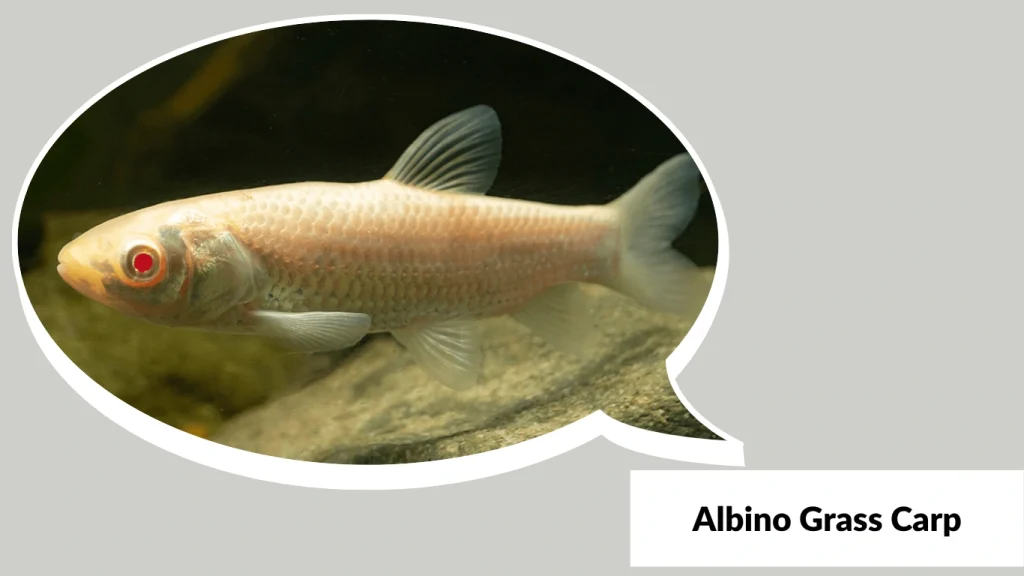
The Albino Grass Carp is a rare color variation of the common grass carp, easily recognized by its pale, whitish-gold body and pinkish eyes. It is valued both for its beauty in ornamental ponds and for its usefulness in controlling aquatic vegetation.
Identification
- Scientific Name: Ctenopharyngodon idella
- Body Size: Typically 60–100 cm, can exceed 1.2 meters
- Weight: Commonly 8–15 kg, record specimens over 30 kg
- Color: Creamy white to pale gold with pink or red eyes
- Scales: Large, uniform, and reflective
- Fins: Short dorsal fin; strong, pointed pectoral and pelvic fins
Habitat and Distribution
Albino Grass Carp are found in ornamental ponds, stocked lakes, reservoirs, and slow-moving rivers in many parts of the world, especially where aquatic weed control is needed.
Behavior and Diet
They are primarily herbivorous, feeding on aquatic plants but also consuming algae and organic debris. Their striking appearance makes them a favorite in decorative water settings.
24. Jumbo Koi Carp (Cyprinus rubrofuscus)

The Jumbo Koi Carp is a selectively bred variety of koi known for its impressive size and vibrant coloration. These koi are prized in ornamental ponds and competitions, where size, pattern, and color intensity are highly valued. With proper care and space, they can grow to remarkable lengths.
Identification
- Scientific Name: Cyprinus rubrofuscus
- Body Size: Typically 60–90 cm, can exceed 1 meter in optimal conditions
- Weight: Commonly 8–15 kg, exceptional specimens over 20 kg
- Color: Wide range of colors including red, white, orange, black, yellow, and blue in various patterns
- Scales: Large, smooth, sometimes metallic in sheen
- Fins: Broad, graceful pectoral fins and strong tail for slow, elegant swimming
Habitat and Distribution
Primarily kept in large ornamental ponds, especially in Japan, Europe, and North America, where koi keeping is popular.
Behavior and Diet
They are omnivorous, feeding on pellets, vegetables, insects, and algae. With the right conditions, Jumbo Koi Carp can live for decades and become the centerpiece of any pond.
25. Metallic Koi Carp (Cyprinus rubrofuscus)
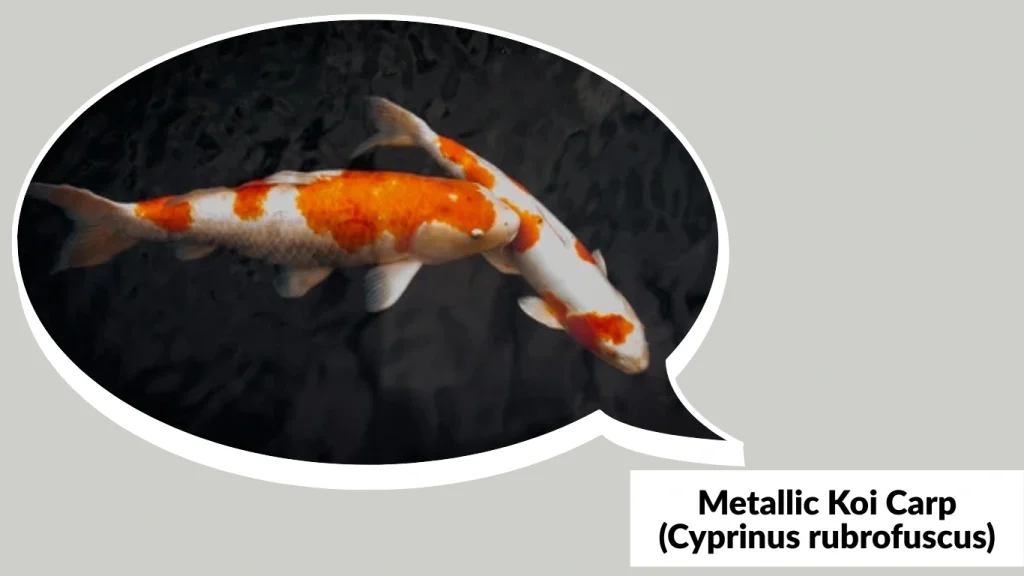
The Metallic Koi Carp is an ornamental koi variety distinguished by its shimmering, reflective scales that give it a metallic appearance. Popular in decorative ponds, these koi stand out due to their vivid colors and lustrous sheen, making them favorites among koi collectors and breeders.
Identification
- Scientific Name: Cyprinus rubrofuscus
- Body Size: Typically 40–80 cm, can exceed 90 cm in ideal conditions
- Weight: Commonly 5–12 kg, with larger specimens over 15 kg
- Color: Wide range, including metallic gold, silver, platinum, and copper, often combined with other koi color patterns
- Scales: Large, smooth, with a bright metallic finish
- Fins: Graceful, translucent fins with metallic highlights
Habitat and Distribution
Found in ornamental ponds and water gardens worldwide, particularly in Japan, Europe, and North America.
Behavior and Diet
They are omnivorous, feeding on pellets, aquatic plants, insects, and algae. Metallic Koi Carp are hardy, long-lived fish that add vibrant beauty to any pond environment.
26. Ghost Koi Carp (Cyprinus rubrofuscus)

The Ghost Koi Carp is a hybrid between a common carp and a metallic-colored koi, resulting in a hardy fish with a striking, ghostly appearance. Known for their fast growth and resilience, Ghost Koi are popular in ornamental ponds and among anglers for their strength.
Identification
- Scientific Name: Cyprinus rubrofuscus
- Body Size: Typically 50–90 cm, can exceed 1 meter
- Weight: Commonly 6–12 kg, exceptional specimens over 15 kg
- Color: Metallic silver, white, or gold, sometimes with darker patches or shading
- Scales: Large, reflective, with a metallic sheen
- Fins: Strong, well-developed pectoral and tail fins for swift swimming
Habitat and Distribution
Kept in ornamental ponds, stocked lakes, and fisheries worldwide, especially in Europe and North America.
Behavior and Diet
They are omnivorous, feeding on pellets, insects, aquatic vegetation, and small crustaceans. Ghost Koi Carp are hardy, adaptable, and often among the first fish to approach humans for feeding.
27. Butterfly Koi Carp (Cyprinus rubrofuscus)
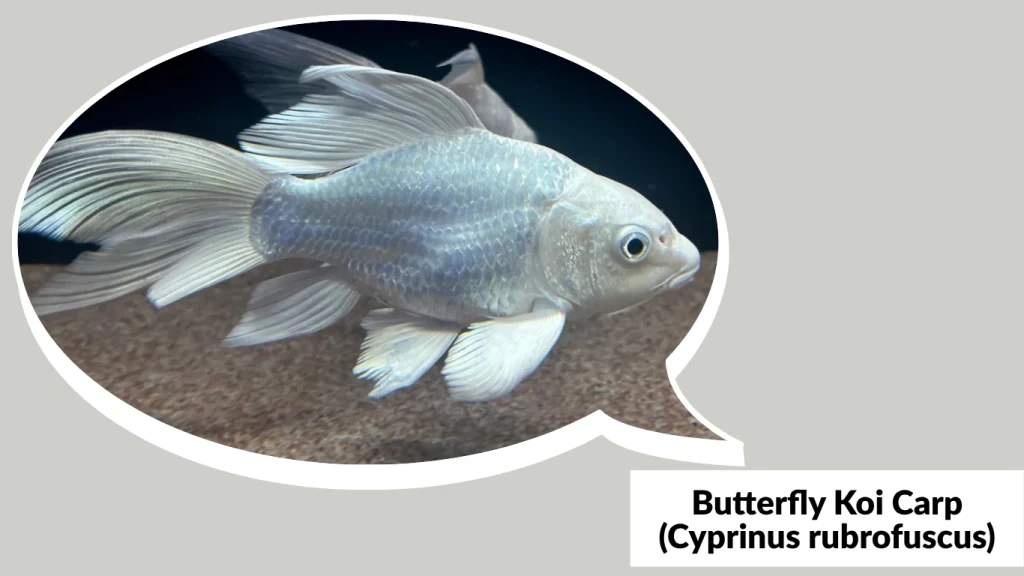
The Butterfly Koi Carp, also known as Longfin Koi or Dragon Carp, is a stunning ornamental variety distinguished by its long, flowing fins and graceful swimming style. Developed by crossbreeding koi with long-finned Asian carp, it has become a favorite in decorative ponds worldwide.
Identification
- Scientific Name: Cyprinus rubrofuscus
- Body Size: Typically 40–80 cm, can exceed 90 cm in optimal conditions
- Weight: Commonly 4–10 kg, with exceptional specimens over 12 kg
- Color: Wide variety of koi patterns including white, red, orange, yellow, and black combinations
- Scales: Large, smooth, sometimes metallic depending on variety
- Fins: Extra-long, flowing pectoral, dorsal, and tail fins that create an elegant appearance in motion
Habitat and Distribution
Primarily kept in ornamental ponds and water gardens across Japan, Europe, North America, and Asia.
Behavior and Diet
They are omnivorous, feeding on pellets, vegetables, insects, and algae. Butterfly Koi Carp are hardy, adaptable, and prized for their beauty, longevity, and tranquil swimming display.