




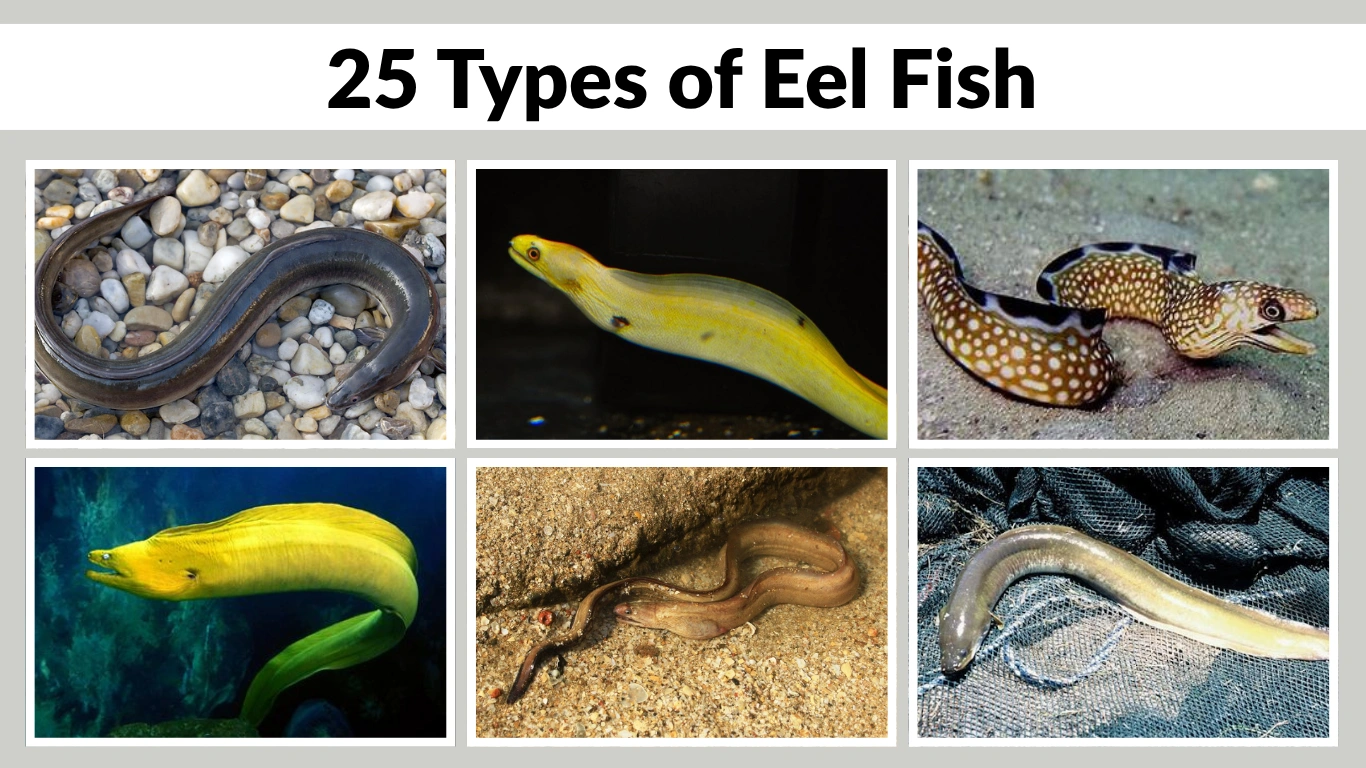
Eels are a diverse group of elongated fish found in oceans, rivers, and lakes worldwide, ranging from tiny burrow dwellers to massive deep-sea predators. Known for their unique life cycles, striking appearances, and varied diets, eels play vital roles in aquatic ecosystems. This guide explores 25 types of eel fish, highlighting their identification, habitats, and behaviors for enthusiasts, divers, and marine life researchers.
1. American Eel (Anguilla rostrata)
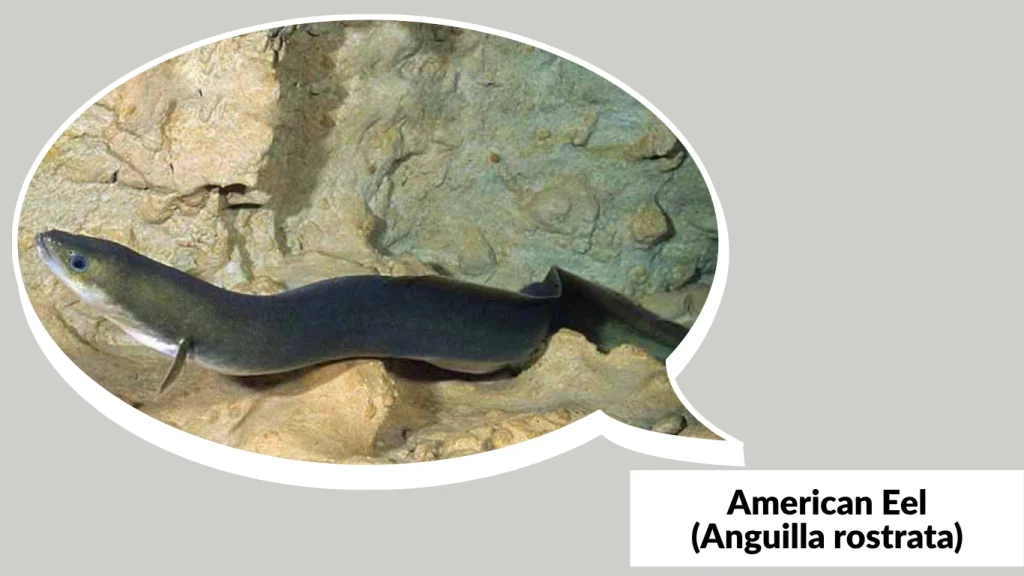
The American Eel is a fascinating migratory fish found along the Atlantic coast of North America. Known for its remarkable life cycle, it hatches in the Sargasso Sea, migrates to freshwater rivers and lakes to grow, and then returns to the ocean to spawn. Its elongated body and adaptability make it an important species both ecologically and economically.
Identification
- Scientific Name: Anguilla rostrata
- Body Size: Typically 60–100 cm, can reach up to 1.2 meters
- Weight: Commonly 0.5–3.5 kg, record specimens over 5 kg
- Color: Olive-green to brown back with yellowish sides and pale belly
- Body Shape: Long, slender, and snake-like with a continuous dorsal, caudal, and anal fin
- Head: Small, with a pointed snout and sharp teeth
Habitat and Distribution
American Eels inhabit freshwater rivers, lakes, and coastal estuaries along the eastern coast of North America, from Greenland to northern South America.
Behavior and Diet
They are nocturnal predators, feeding on fish, crustaceans, insects, and other aquatic organisms. Their catadromous migration is one of the most extraordinary in the fish world.
2. European Eel (Anguilla anguilla)
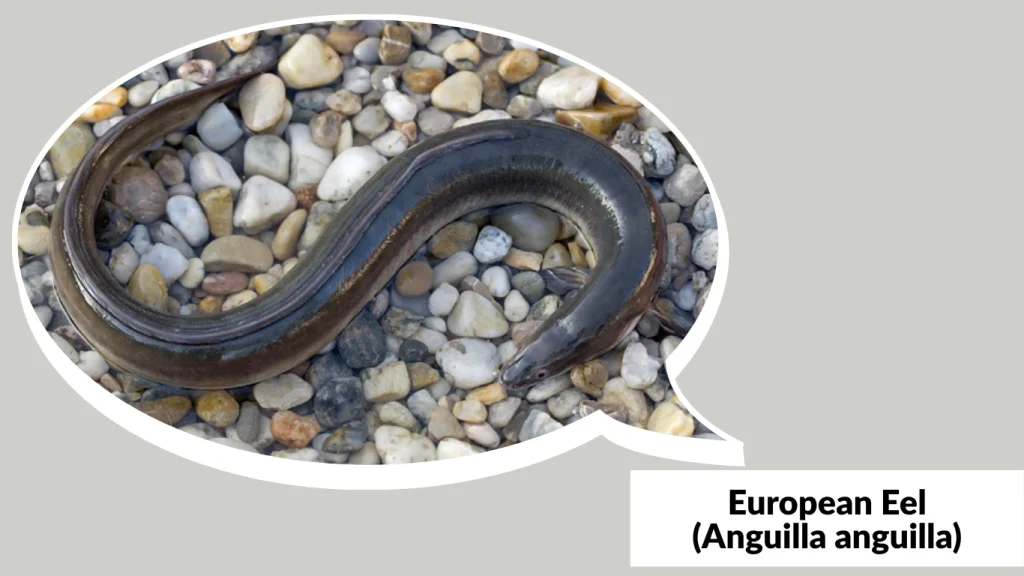
The European Eel is a long-distance migratory species famous for its mysterious breeding journey to the Sargasso Sea. It spends most of its life in European rivers, lakes, and estuaries before making the epic migration to spawn and die. This species has a complex life cycle with several stages, including the transparent glass eel phase.
Identification
- Scientific Name: Anguilla anguilla
- Body Size: Typically 60–80 cm, can reach up to 1.3 meters
- Weight: Commonly 0.5–4 kg, record specimens over 6 kg
- Color: Yellow-brown to olive back with a lighter belly; turns silvery before migration
- Body Shape: Long, slender, with a continuous dorsal, caudal, and anal fin
- Head: Narrow snout with small, sharp teeth
Habitat and Distribution
Found throughout rivers, lakes, and coastal waters of Europe, North Africa, and parts of the Middle East, migrating to the Sargasso Sea to breed.
Behavior and Diet
They are nocturnal feeders, consuming fish, invertebrates, and carrion. Their migration and breeding habits remain one of the great mysteries of marine biology.
3. Japanese Eel (Anguilla japonica)

The Japanese Eel is a culturally and economically important species in East Asia, prized as a delicacy in Japanese, Chinese, and Korean cuisine. Like other freshwater eels, it has a catadromous life cycle, breeding in the ocean and growing in rivers and lakes before returning to sea to spawn.
Identification
- Scientific Name: Anguilla japonica
- Body Size: Typically 60–100 cm, can reach up to 1.3 meters
- Weight: Commonly 0.5–3 kg, with larger specimens exceeding 6 kg
- Color: Dark olive to brown back, yellowish sides, and pale belly; silvery during migration
- Body Shape: Long, snake-like body with continuous dorsal, caudal, and anal fins
- Head: Slightly pointed snout with small, sharp teeth
Habitat and Distribution
Native to rivers, lakes, and coastal waters of Japan, Korea, China, Taiwan, and northern Vietnam, migrating to the western Pacific near the Mariana Islands to breed.
Behavior and Diet
They are nocturnal hunters, feeding on fish, crustaceans, insects, and worms. The Japanese Eel is a significant aquaculture species, although wild populations are declining due to overfishing and habitat loss.
4. Longfin Eel (Anguilla dieffenbachii)

The Longfin Eel is New Zealand’s largest freshwater eel species and one of the longest-lived freshwater fish in the world. Recognized by its long dorsal fin and impressive size, it is a top predator in its habitat and a taonga (treasured) species for the Māori people.
Identification
- Scientific Name: Anguilla dieffenbachii
- Body Size: Commonly 1–1.3 meters, can exceed 2 meters
- Weight: Typically 5–20 kg, record specimens over 25 kg
- Color: Dark brown to black back with lighter belly
- Body Shape: Long, muscular body with extended dorsal fin reaching further forward than in shortfin species
- Head: Broad, rounded head with large mouth and strong jaws
Habitat and Distribution
Found throughout New Zealand’s rivers, lakes, and wetlands, from lowland streams to alpine waterways.
Behavior and Diet
They are nocturnal ambush predators, feeding on fish, birds, insects, and crustaceans. Longfin Eels can live for more than 60 years before making a one-way migration to the tropical Pacific to spawn.
5. Shortfin Eel (Anguilla australis)

The Shortfin Eel is a common freshwater eel found in Australia, New Zealand, and nearby islands. Known for its adaptability, it thrives in a wide range of habitats from coastal lagoons to inland rivers. Like other anguillid eels, it migrates to the ocean to spawn before dying.
Identification
- Scientific Name: Anguilla australis
- Body Size: Typically 60–110 cm, can reach up to 1.2 meters
- Weight: Commonly 1–4 kg, with exceptional specimens exceeding 6 kg
- Color: Olive-brown to dark brown back, lighter belly
- Body Shape: Long, smooth body with a dorsal fin starting behind the pectoral fins
- Head: Narrow, with a slightly pointed snout and small teeth
Habitat and Distribution
Found in rivers, lakes, estuaries, and wetlands of southeastern Australia, Tasmania, New Zealand, and nearby Pacific islands.
Behavior and Diet
They are opportunistic feeders, consuming fish, insects, crustaceans, and mollusks. Shortfin Eels are known to travel overland in wet conditions to reach new waterways.
6. Giant Mottled Eel (Anguilla marmorata)

The Giant Mottled Eel is one of the largest freshwater eels in the world, known for its marbled body pattern and impressive migratory range. It inhabits tropical and subtropical waters and can be found in both freshwater and coastal environments.
Identification
- Scientific Name: Anguilla marmorata
- Body Size: Typically 1–1.5 meters, can exceed 2 meters
- Weight: Commonly 5–20 kg, record specimens over 30 kg
- Color: Brown to dark olive with distinctive marbled or mottled markings
- Body Shape: Thick, muscular body with continuous dorsal, caudal, and anal fins
- Head: Broad with a rounded snout and strong jaws
Habitat and Distribution
Found in rivers, lakes, estuaries, and coastal waters across the Indo-Pacific, including East Africa, Southeast Asia, Japan, and Pacific islands.
Behavior and Diet
They are nocturnal predators, feeding on fish, crabs, shrimp, and mollusks. Giant Mottled Eels undertake long migrations to spawn in the open ocean, although their exact breeding grounds remain a mystery.
7. African Longfin Eel (Anguilla mossambica)

The African Longfin Eel is a large, migratory freshwater eel native to rivers and lakes across sub-Saharan Africa. Known for its elongated dorsal fin and powerful body, it is an important species for local fisheries and plays a key role as a predator in freshwater ecosystems.
Identification
- Scientific Name: Anguilla mossambica
- Body Size: Typically 80–120 cm, can exceed 1.5 meters
- Weight: Commonly 2–8 kg, with exceptional specimens over 12 kg
- Color: Dark brown to olive-green back, lighter belly
- Body Shape: Long, muscular body with an extended dorsal fin that begins well forward on the back
- Head: Broad head with a rounded snout and sharp teeth
Habitat and Distribution
Found in rivers, lakes, estuaries, and coastal lagoons throughout sub-Saharan Africa, Madagascar, and nearby islands.
Behavior and Diet
They are nocturnal hunters, feeding on fish, crustaceans, amphibians, and insects. African Longfin Eels migrate to the Indian Ocean to spawn, after which the adults die.
8. Indonesian Shortfin Eel (Anguilla bicolor bicolor)

The Indonesian Shortfin Eel is a widespread tropical eel species found across Southeast Asia and parts of the Indian Ocean. It is valued both for its role in local diets and as a target for aquaculture, thanks to its adaptability to various freshwater habitats.
Identification
- Scientific Name: Anguilla bicolor bicolor
- Body Size: Typically 60–100 cm, can exceed 1.2 meters
- Weight: Commonly 1–5 kg, with larger individuals over 8 kg
- Color: Dark brown to olive-black back with a lighter, sometimes yellowish belly
- Body Shape: Slender, smooth body with a dorsal fin starting just behind the pectoral fins
- Head: Moderately narrow snout with small, sharp teeth
Habitat and Distribution
Found in rivers, lakes, estuaries, and coastal waters throughout Indonesia, Malaysia, Thailand, India, and surrounding regions.
Behavior and Diet
They are opportunistic feeders, eating fish, crustaceans, mollusks, and insects. Like other eels, they are catadromous, migrating to the ocean to spawn before dying.
9. Speckled Longfin Eel (Anguilla reinhardtii)

The Speckled Longfin Eel is a large, powerful eel native to Australia and Papua New Guinea, recognized for its distinctive speckled markings along the body. It is an important predator in freshwater ecosystems and can live for decades before undertaking its oceanic spawning migration.
Identification
- Scientific Name: Anguilla reinhardtii
- Body Size: Typically 1–1.5 meters, can exceed 2 meters
- Weight: Commonly 4–12 kg, record specimens over 20 kg
- Color: Dark brown to olive with lighter underside and scattered pale speckles
- Body Shape: Thick, muscular body with a long dorsal fin extending well forward
- Head: Broad with a rounded snout and strong jaws
Habitat and Distribution
Found in rivers, lakes, estuaries, and coastal wetlands of eastern Australia and Papua New Guinea.
Behavior and Diet
They are nocturnal predators, feeding on fish, crustaceans, insects, and even small mammals or birds. Speckled Longfin Eels migrate to the Coral Sea to spawn, after which the adults die.
10. Slender Giant Moray (Strophidon sathete)

The Slender Giant Moray is the longest moray eel species in the world, known for its extremely elongated body and impressive length. Despite its size, it is a reclusive species, often hiding in burrows or crevices during the day and emerging at night to hunt.
Identification
- Scientific Name: Strophidon sathete
- Body Size: Commonly 2–3 meters, can exceed 4 meters in exceptional cases
- Weight: Typically 8–20 kg, with very large individuals heavier
- Color: Brown to grayish-brown, sometimes with faint mottling
- Body Shape: Extremely elongated, slender body with continuous dorsal, caudal, and anal fins
- Head: Long, narrow head with sharp teeth and large jaws
Habitat and Distribution
Found in coastal waters, estuaries, and occasionally rivers throughout the Indo-Pacific, including the Red Sea, East Africa, Southeast Asia, and northern Australia.
Behavior and Diet
They are nocturnal ambush predators, feeding mainly on fish, crustaceans, and cephalopods. The Slender Giant Moray’s length allows it to occupy deep burrows and strike quickly at passing prey.
11. Green Moray Eel (Gymnothorax funebris)

The Green Moray Eel is one of the largest and most well-known moray eel species in the western Atlantic. Despite its name, its green appearance is due to a yellow mucus layer covering its dark blue skin. It is a solitary predator that spends most of its time hiding in reef crevices.
Identification
- Scientific Name: Gymnothorax funebris
- Body Size: Typically 1.2–2 meters, can reach up to 2.5 meters
- Weight: Commonly 12–30 kg, with some individuals exceeding 35 kg
- Color: Olive-green appearance due to yellow mucus over dark skin
- Body Shape: Thick, muscular body with continuous dorsal, caudal, and anal fins
- Head: Large mouth with sharp, backward-pointing teeth
Habitat and Distribution
Found in rocky reefs, coral reefs, and coastal waters of the western Atlantic, from New Jersey to Brazil, including the Gulf of Mexico and the Caribbean Sea.
Behavior and Diet
They are nocturnal hunters, feeding on fish, crustaceans, and octopuses. Green Morays are generally not aggressive toward divers unless provoked but can deliver a strong bite if threatened.
12. Yellow Moray Eel (Gymnothorax prasinus)

The Yellow Moray Eel is a striking species recognized for its bright yellow to golden-brown coloration. It is a common sight in coastal reefs and rocky shorelines, where it shelters in crevices during the day and emerges at night to hunt.
Identification
- Scientific Name: Gymnothorax prasinus
- Body Size: Typically 1–1.5 meters, occasionally larger
- Weight: Commonly 4–10 kg
- Color: Bright yellow to golden-brown, sometimes with a slight greenish hue
- Body Shape: Elongated, muscular body with continuous dorsal, caudal, and anal fins
- Head: Narrow head with large eyes and sharp teeth
Habitat and Distribution
Found in rocky reefs, kelp forests, and coastal waters of New Zealand and southern Australia.
Behavior and Diet
They are nocturnal predators, feeding on fish, crustaceans, and cephalopods. The Yellow Moray Eel’s vivid color makes it one of the most visually distinctive eel species in its range.
13. Snowflake Moray Eel (Echidna nebulosa)

The Snowflake Moray Eel is a small to medium-sized moray species, popular in the aquarium trade for its striking black, white, and yellow mottled pattern. Unlike many morays, it has blunt teeth adapted for crushing rather than tearing, making it less dangerous to humans.
Identification
- Scientific Name: Echidna nebulosa
- Body Size: Typically 60–100 cm, rarely exceeding 1.2 meters
- Weight: Usually 1–3 kg
- Color: White or cream body with irregular black and yellow blotches, giving a “snowflake” appearance
- Body Shape: Slender, elongated body with continuous dorsal, caudal, and anal fins
- Head: Short snout with blunt, molar-like teeth
Habitat and Distribution
Found in coral reefs, rocky shorelines, and lagoons across the Indo-Pacific, from East Africa to Hawaii, including northern Australia.
Behavior and Diet
Feeds mainly on crustaceans, mollusks, and small fish. Snowflake Moray Eels are generally docile and adapt well to captivity, though they are still capable of delivering a defensive bite if provoked.
14. Zebra Moray Eel (Gymnomuraena zebra)

The Zebra Moray Eel is a distinctive and easily recognizable species, named for its bold black-and-white striped pattern. Unlike many moray eels, it is known for being relatively docile and feeding primarily on hard-shelled prey. Its striking appearance makes it a popular species in public aquariums.
Identification
- Scientific Name: Gymnomuraena zebra
- Body Size: Typically 50–150 cm, with some individuals reaching 1.5 meters
- Weight: Commonly 2–5 kg
- Color: Alternating black and white bands covering the entire body
- Body Shape: Thick, muscular body with continuous dorsal, caudal, and anal fins
- Head: Blunt snout with strong, molar-like teeth for crushing shells
Habitat and Distribution
Found in coral reefs, rocky crevices, and lagoons throughout the Indo-Pacific, from East Africa to Hawaii, including the Red Sea and northern Australia.
Behavior and Diet
Feeds mainly on crabs, sea urchins, and mollusks. Zebra Moray Eels are generally shy, spending most of the day hidden in rocky shelters and emerging at night to hunt.
15. Dragon Moray Eel (Enchelycore pardalis)

The Dragon Moray Eel is one of the most visually striking eels in the world, known for its vibrant colors, long tubular nostrils, and fierce-looking jaws. Despite its intimidating appearance, it is a secretive species that spends most of its time hidden within reef crevices.
Identification
- Scientific Name: Enchelycore pardalis
- Body Size: Typically 80–120 cm, occasionally larger
- Weight: Commonly 2–5 kg
- Color: Bright orange, yellow, white, and brown patterns with irregular spots and stripes
- Body Shape: Slender, elongated body with continuous dorsal, caudal, and anal fins
- Head: Long, narrow head with curved jaws and distinct, horn-like tubular nostrils
Habitat and Distribution
Found in coral reefs and rocky shorelines across the Indo-Pacific, including Hawaii, Japan, and Polynesia.
Behavior and Diet
Feeds on fish and crustaceans, using quick strikes to capture prey. The Dragon Moray Eel is highly prized in the aquarium trade, though it requires expert care due to its size and specialized diet.
16. Spotted Moray Eel (Gymnothorax moringa)

The Spotted Moray Eel is a medium to large species recognized by its cream-colored body covered in numerous dark brown spots. Common in tropical western Atlantic waters, it is an important reef predator and a frequent sight for divers exploring coral habitats.
Identification
- Scientific Name: Gymnothorax moringa
- Body Size: Typically 60–120 cm, can reach up to 2 meters
- Weight: Commonly 2–6 kg
- Color: Light cream or yellowish body with dense dark brown or black spots
- Body Shape: Thick, elongated body with continuous dorsal, caudal, and anal fins
- Head: Broad head with strong jaws and sharp teeth
Habitat and Distribution
Found in coral reefs, rocky outcrops, and seagrass beds of the western Atlantic, from Bermuda and Florida to Brazil, including the Gulf of Mexico and the Caribbean Sea.
Behavior and Diet
Feeds mainly on fish, crustaceans, and cephalopods. The Spotted Moray Eel is solitary and territorial, spending daylight hours hidden in reef crevices and emerging at night to hunt.
17. Chain Moray Eel (Echidna catenata)
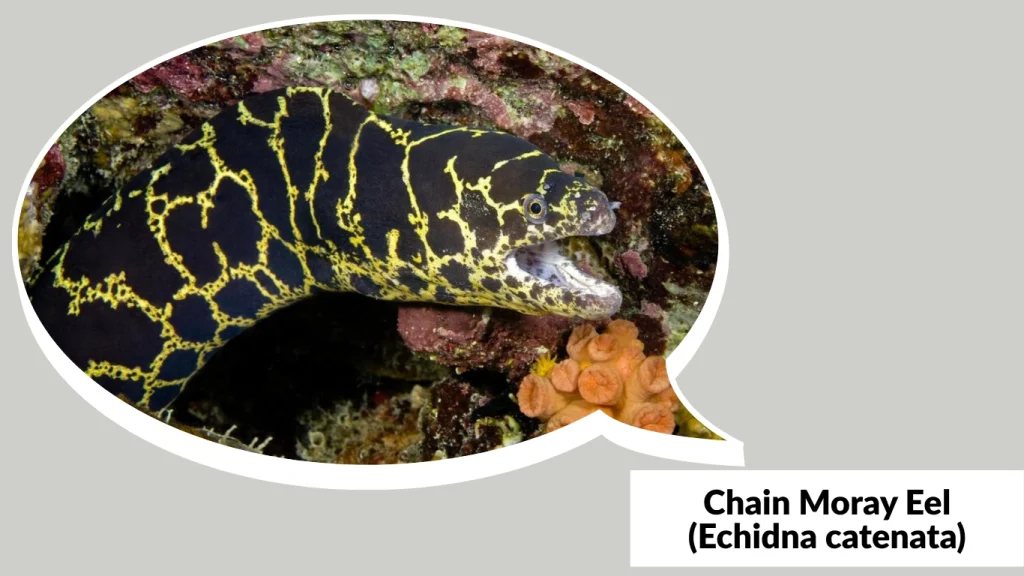
The Chain Moray Eel is a smaller moray species named for its striking yellow body patterned with interlinked black chain-like markings. It is one of the most recognizable eels in the Caribbean and is often seen by snorkelers and divers in shallow reef areas.
Identification
- Scientific Name: Echidna catenata
- Body Size: Typically 30–60 cm, rarely exceeding 70 cm
- Weight: Commonly under 1 kg
- Color: Bright yellow body with distinctive black chain-link patterns along the length
- Body Shape: Slender body with continuous dorsal, caudal, and anal fins
- Head: Short, blunt snout with molar-like teeth suited for crushing crustacean shells
Habitat and Distribution
Found in coral reefs, rocky shores, and seagrass beds of the western Atlantic, including the Caribbean Sea, Bahamas, and along the coasts of Central and South America.
Behavior and Diet
Feeds primarily on crabs, shrimp, and other crustaceans. The Chain Moray Eel is generally docile toward humans but will bite if provoked or handled.
18. Blackedge Moray Eel (Gymnothorax nigromarginatus)

The Blackedge Moray Eel is a large and powerful species, named for the distinctive black edging along its dorsal and anal fins. It is a lesser-known moray but is admired by divers for its striking appearance and imposing size.
Identification
- Scientific Name: Gymnothorax nigromarginatus
- Body Size: Typically 1–1.5 meters, can exceed 1.8 meters
- Weight: Commonly 5–12 kg
- Color: Light to golden brown body with fine mottling and black fin edges
- Body Shape: Thick, muscular body with continuous dorsal, caudal, and anal fins
- Head: Large, robust head with strong jaws and sharp teeth
Habitat and Distribution
Found in coral reefs and rocky coastal areas across the Indo-Pacific, including East Africa, the Red Sea, Southeast Asia, and northern Australia.
Behavior and Diet
Feeds on fish, cephalopods, and crustaceans, ambushing prey from reef crevices. The Blackedge Moray Eel is solitary and nocturnal, often remaining hidden during the day.
19. White-Mouth Moray Eel (Gymnothorax meleagris)

The White-Mouth Moray Eel is a visually striking species, easily recognized by the stark white interior of its mouth, which contrasts with its dark, spotted body. This unique feature is often visible when the eel opens and closes its mouth to breathe.
Identification
- Scientific Name: Gymnothorax meleagris
- Body Size: Typically 1–1.5 meters, occasionally larger
- Weight: Commonly 4–10 kg
- Color: Dark brown to black body covered with numerous small white spots; mouth interior bright white
- Body Shape: Thick, elongated body with continuous dorsal, caudal, and anal fins
- Head: Broad head with a short, blunt snout and sharp teeth
Habitat and Distribution
Found in coral reefs, rocky shorelines, and lagoons across the Indo-Pacific, from East Africa to Hawaii, including the Red Sea.
Behavior and Diet
Feeds on fish, crustaceans, and octopuses. The White-Mouth Moray Eel is primarily nocturnal, hunting at night and spending the day concealed in reef crevices.
20. Banana Eel (Gymnothorax melatremus)
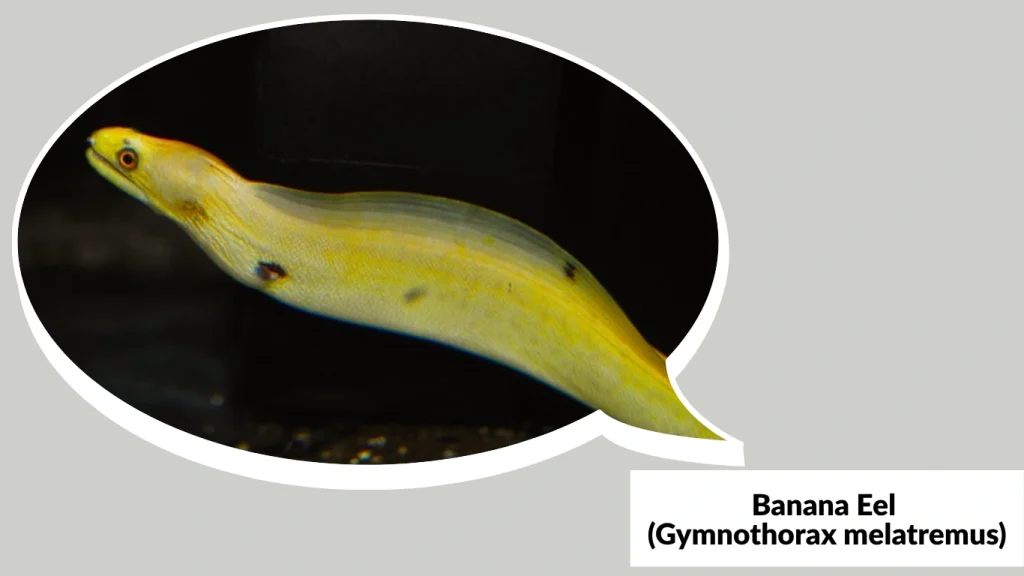
The Banana Eel, also known as the Golden Dwarf Moray, is a small, brightly colored moray eel species popular in the marine aquarium trade. Its vivid yellow coloration and relatively small size make it a standout among reef fish.
Identification
- Scientific Name: Gymnothorax melatremus
- Body Size: Typically 40–60 cm
- Weight: Usually under 0.5 kg
- Color: Bright banana-yellow body, sometimes with subtle orange tones
- Body Shape: Slender, elongated body with continuous dorsal, caudal, and anal fins
- Head: Small, narrow head with proportionally large eyes and sharp teeth
Habitat and Distribution
Found in coral reefs and rocky areas across the Indo-Pacific, particularly around Indonesia, the Philippines, and Hawaii.
Behavior and Diet
Feeds primarily on small fish and crustaceans. The Banana Eel is shy and reclusive, often hiding in narrow reef crevices during the day and emerging at night to hunt.
21. Conger Eel (Conger conger)

The Conger Eel is one of the largest true eels in the world, famous for its immense size and powerful body. It is a marine species, unlike freshwater eels, and is known to inhabit rocky coastal areas, deep reefs, and wrecks. Some specimens have been recorded at lengths over 3 meters, making them a formidable predator in their habitat.
Identification
- Scientific Name: Conger conger
- Body Size: Typically 1–2 meters, can exceed 3 meters
- Weight: Commonly 10–30 kg, record specimens over 70 kg
- Color: Dark gray to bluish-black back with a lighter gray belly
- Body Shape: Thick, elongated body without scales; continuous dorsal, caudal, and anal fins
- Head: Large, broad head with a strong jaw and sharp teeth
Habitat and Distribution
Found in the eastern Atlantic Ocean, Mediterranean Sea, and parts of the Black Sea. They prefer rocky crevices, shipwrecks, and caves from shallow coastal waters to depths exceeding 500 meters.
Behavior and Diet
Conger Eels are nocturnal predators, feeding on fish, squid, and crustaceans. They are solitary and territorial, often returning to the same shelter for years. Females die after a single spawning event in the deep ocean.
22. Black Conger Eel (Conger cinereus)
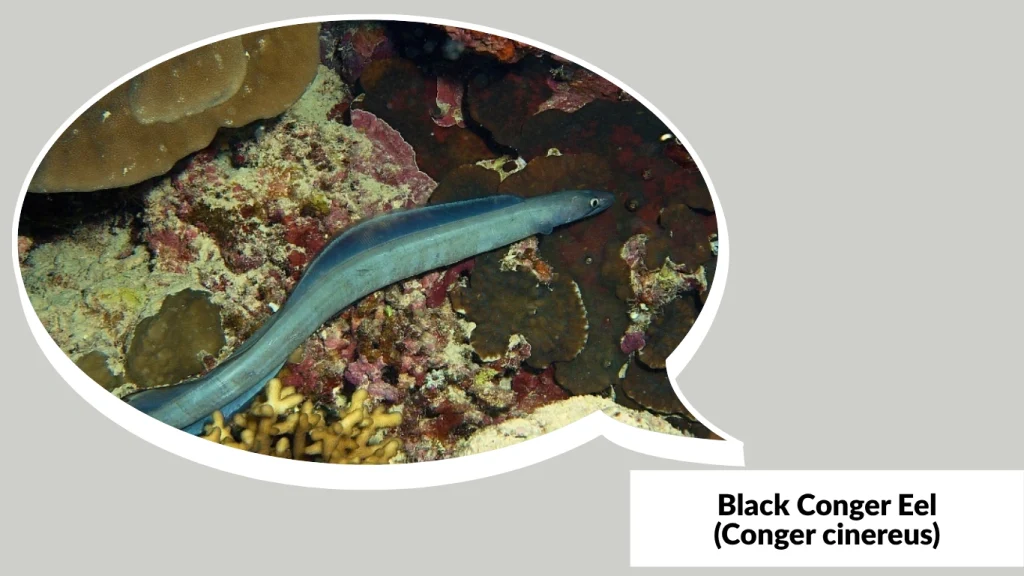
The Black Conger Eel is a smaller and more slender relative of the common conger eel, recognized for its darker coloration and preference for tropical waters. It is a lesser-known species but is sometimes caught by coastal fishermen.
Identification
- Scientific Name: Conger cinereus
- Body Size: Typically 60–120 cm
- Weight: Usually under 5 kg
- Color: Dark gray to nearly black body with a lighter underside
- Body Shape: Long, smooth body with continuous fins and no scales
- Head: Narrow head with pointed snout and sharp teeth
Habitat and Distribution
Found in tropical and subtropical coastal waters of the Indo-Pacific, including the Red Sea, East Africa, Southeast Asia, and northern Australia.
Behavior and Diet
Feeds mainly on small fish, crabs, and shrimp. Black Conger Eels are nocturnal hunters that hide in rocky crevices during the day and emerge at night to forage.
23. Garden Eel (Heteroconger hassi)

The Garden Eel is a fascinating and unusual species best known for living in large colonies on sandy sea floors, where hundreds of individuals protrude from their burrows like blades of grass. They rarely leave their burrows, instead swaying with ocean currents to capture drifting food.
Identification
- Scientific Name: Heteroconger hassi
- Body Size: Typically 40–60 cm
- Weight: Very light, usually under 200 g
- Color: Pale body covered in small black spots with larger dark markings along the side
- Body Shape: Slender, tubular body adapted for burrow dwelling
- Head: Small head with large, round eyes and a small mouth
Habitat and Distribution
Found in sandy slopes and sea floors near coral reefs in tropical waters of the Indo-Pacific and Red Sea, usually at depths of 7–50 meters.
Behavior and Diet
They are planktivores, feeding on zooplankton carried by currents. Garden Eels live in colonies numbering in the hundreds and quickly retreat into their burrows when threatened.
24. Spaghetti Eel (Moringua edwardsi)

The Spaghetti Eel, also known as the Slender Eel, is a small, extremely elongated eel species that resembles a piece of spaghetti. It is a burrowing eel found in tropical coastal waters and is rarely seen in the open.
Identification
- Scientific Name: Moringua edwardsi
- Body Size: Typically 30–60 cm, very slender
- Weight: Usually under 150 g
- Color: Pale brown to translucent white
- Body Shape: Very thin, worm-like body with small pectoral fins
- Head: Small, narrow head with tiny mouth adapted for soft prey
Habitat and Distribution
Inhabits sandy or muddy bottoms of shallow coastal waters and estuaries in the tropical Atlantic, including the Caribbean and western Africa.
Behavior and Diet
Feeds on small crustaceans, worms, and other tiny invertebrates. Spaghetti Eels spend most of their lives buried in the substrate, emerging mainly at night to feed.
25. Slender Snipe Eel (Nemichthys scolopaceus)

The Slender Snipe Eel is a deep-sea eel species notable for its extremely elongated body and long, beak-like jaws lined with fine teeth. It is one of the most unique-looking eels in the ocean, living at great depths far from shore.
Identification
- Scientific Name: Nemichthys scolopaceus
- Body Size: Commonly 1–1.5 meters, but extremely thin and lightweight
- Weight: Usually less than 200 g despite its length
- Color: Dark brown to black, sometimes with a reddish tint
- Body Shape: Very slender with tiny fins and elongated jaws
- Head: Long, thin beak-like mouth designed for catching small prey
Habitat and Distribution
Found in deep oceanic waters worldwide, typically at depths of 200–2,000 meters.
Behavior and Diet
Feeds mainly on small crustaceans and gelatinous plankton. Slender Snipe Eels are rarely seen alive, with most specimens studied being caught in deep-sea trawls.